
The Sharing Economy and the Impact on Workers

- Slides: 43
The “Sharing Economy” and the Impact on Workers Compensation Research Institute Annual Conference Boston, MA March 11, 2016 Download at www. iii. org/presentations Robert P. Hartwig, Ph. D. , CPCU, President & Economist Insurance Information Institute 110 William Street New York, NY 10038 Tel: 212. 346. 5520 Cell: 917. 453. 1885 bobh@iii. org www. iii. org
The Sharing Economy The Sharing (On-Demand or ‘Gig’) Economy Will Transform the American Workforce and the P/C Insurance Industry Too 2
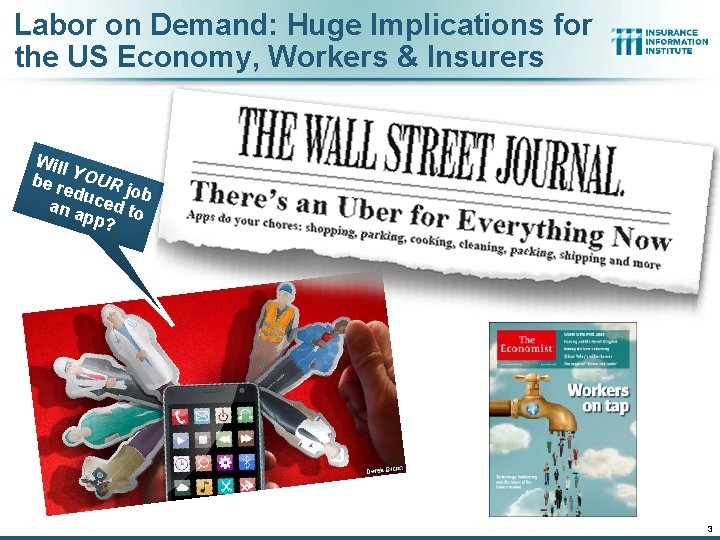
Labor on Demand: Huge Implications for the US Economy, Workers & Insurers Will be r YOUR job edu c e d an a pp? to 3
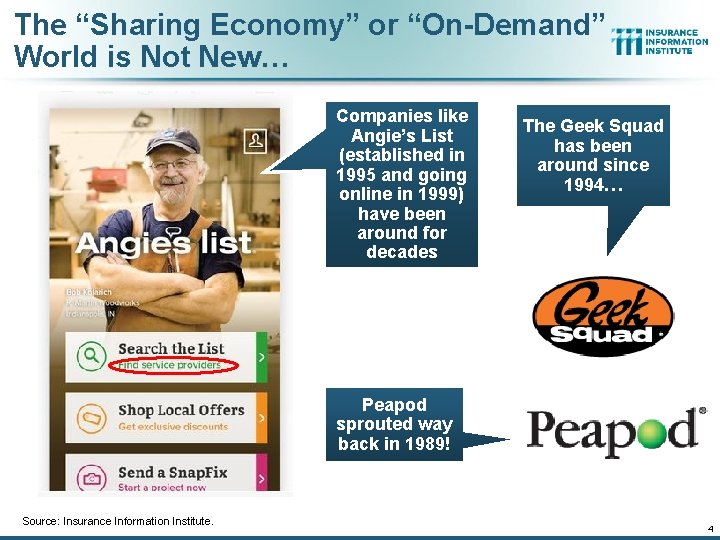
The “Sharing Economy” or “On-Demand” World is Not New… Companies like Angie’s List (established in 1995 and going online in 1999) have been around for decades The Geek Squad has been around since 1994… Peapod sprouted way back in 1989! Source: Insurance Information Institute. 4
…But the “On-Demand” World is Exploding as Is the Demand for “On-Tap” Workers Need something done around the house…Click on Handy Hate doing laundry? Washio will do it for you… Hate doing just about everything? Taskrabbit will take on virtually all your “tasks”… Source: Insurance Information Institute. 5
You Can Live Your Life with the Swipe of a Finger… Get married… …Move …And if it doesn’t work out… 6
Some Players in the Sharing Economy Have Become Household Names Rent a place… …Need a Lyft? …This ride has taken Wall Street to the stratosphere 7
On-Demand/Sharing/Peer-to-Peer Economy Impacts Many Lines of Insurance n The “On-Demand” Economy is or will impact many segments of the economy important to P/C insurers w Auto (personal and commercial) w Homeowners/Renters w Many Liability Coverages w Professional Liability w Workers Comp n Many insurance questions arise— some fairly simple, some complex n Insurance solutions are increasingly available to fill the many insurance gaps that arise n Some regulatory issues remain 8
Regulation, Politics and the Sharing Economy Insurers, Including Workers Comp Insurers Need to Operate in a Complex and Rapidly Changing Regulatory Environment 9
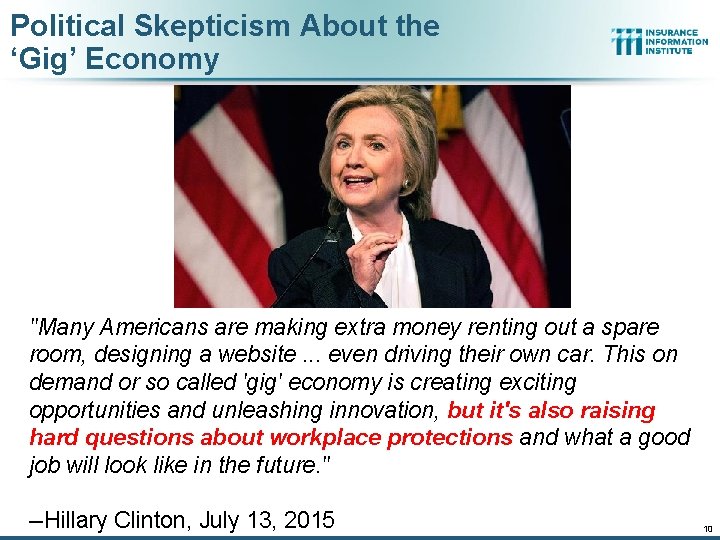
Political Skepticism About the ‘Gig’ Economy "Many Americans are making extra money renting out a spare room, designing a website. . . even driving their own car. This on demand or so called 'gig' economy is creating exciting opportunities and unleashing innovation, but it's also raising hard questions about workplace protections and what a good job will look like in the future. " --Hillary Clinton, July 13, 2015 10
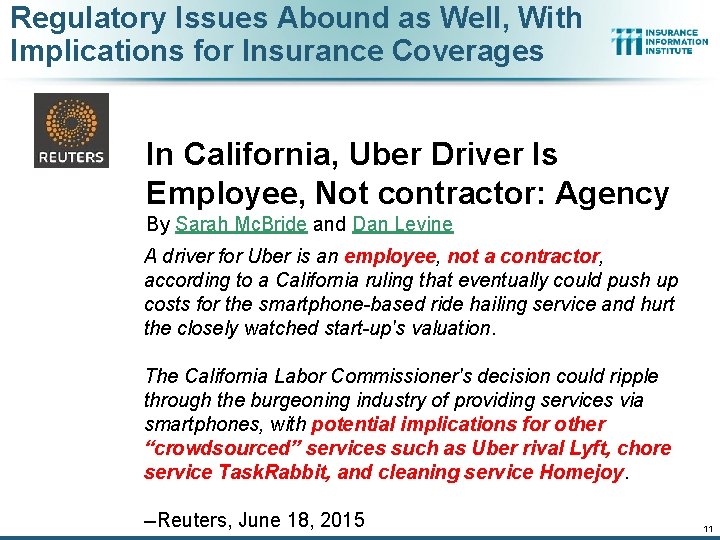
Regulatory Issues Abound as Well, With Implications for Insurance Coverages In California, Uber Driver Is Employee, Not contractor: Agency By Sarah Mc. Bride and Dan Levine A driver for Uber is an employee, not a contractor, according to a California ruling that eventually could push up costs for the smartphone-based ride hailing service and hurt the closely watched start-up's valuation. The California Labor Commissioner's decision could ripple through the burgeoning industry of providing services via smartphones, with potential implications for other “crowdsourced” services such as Uber rival Lyft, chore service Task. Rabbit, and cleaning service Homejoy. --Reuters, June 18, 2015 11
Technology and Employment What Makes the On-Demand Economy Possible? Why Does It Matter for Insurers? 12
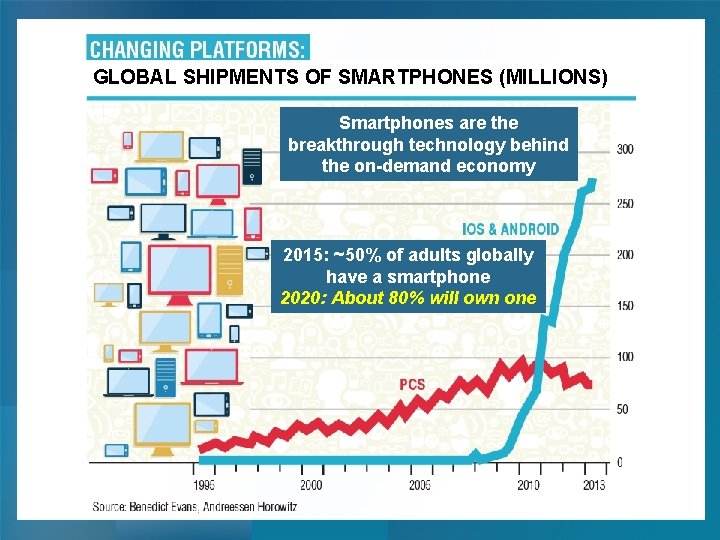
GLOBAL SHIPMENTS OF SMARTPHONES (MILLIONS) Smartphones are the breakthrough technology behind the on-demand economy 2015: ~50% of adults globally have a smartphone 2020: About 80% will own one
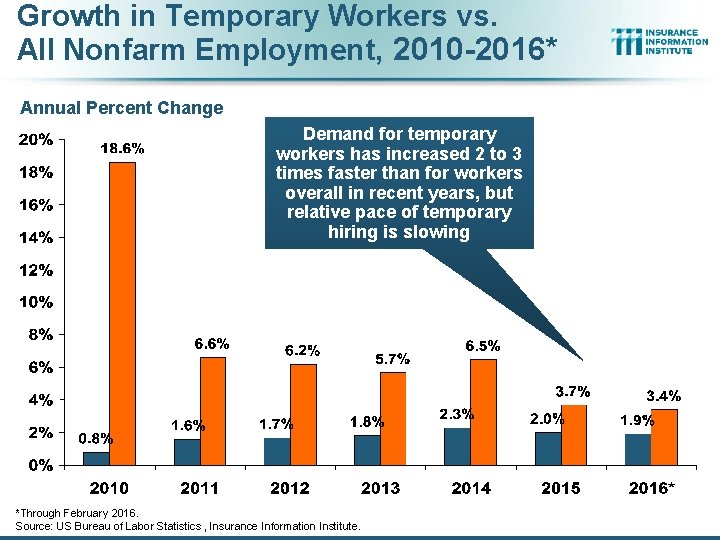
Growth in Temporary Workers vs. All Nonfarm Employment, 2010 -2016* Annual Percent Change Demand for temporary workers has increased 2 to 3 times faster than for workers overall in recent years, but relative pace of temporary hiring is slowing *Through February 2016. Source: US Bureau of Labor Statistics , Insurance Information Institute.
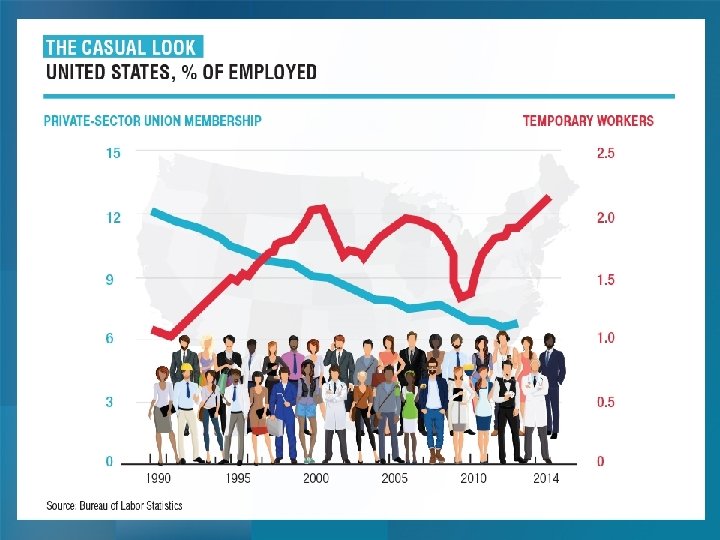
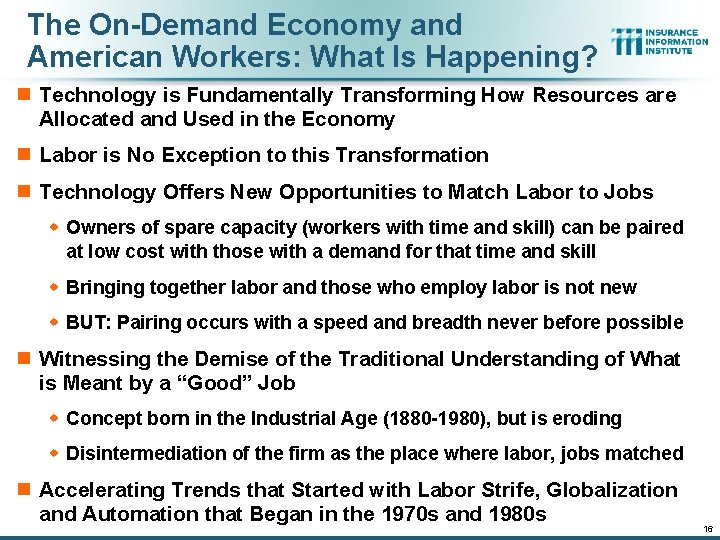
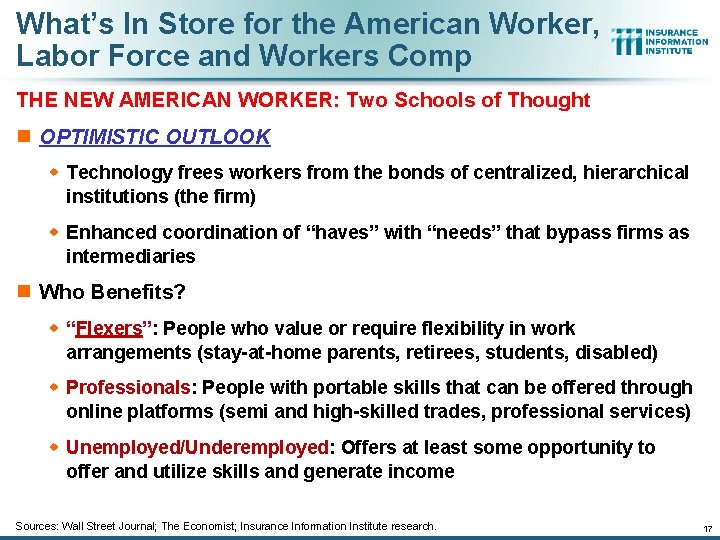
The On-Demand Economy and American Workers: What Is Happening? n Technology is Fundamentally Transforming How Resources are Allocated and Used in the Economy n Labor is No Exception to this Transformation n Technology Offers New Opportunities to Match Labor to Jobs w Owners of spare capacity (workers with time and skill) can be paired at low cost with those with a demand for that time and skill w Bringing together labor and those who employ labor is not new w BUT: Pairing occurs with a speed and breadth never before possible n Witnessing the Demise of the Traditional Understanding of What is Meant by a “Good” Job w Concept born in the Industrial Age (1880 -1980), but is eroding w Disintermediation of the firm as the place where labor, jobs matched n Accelerating Trends that Started with Labor Strife, Globalization and Automation that Began in the 1970 s and 1980 s 16
What’s In Store for the American Worker, Labor Force and Workers Comp THE NEW AMERICAN WORKER: Two Schools of Thought n OPTIMISTIC OUTLOOK w Technology frees workers from the bonds of centralized, hierarchical institutions (the firm) w Enhanced coordination of “haves” with “needs” that bypass firms as intermediaries n Who Benefits? w “Flexers”: People who value or require flexibility in work arrangements (stay-at-home parents, retirees, students, disabled) w Professionals: People with portable skills that can be offered through online platforms (semi and high-skilled trades, professional services) w Unemployed/Underemployed: Offers at least some opportunity to offer and utilize skills and generate income Sources: Wall Street Journal; The Economist; Insurance Information Institute research. 17
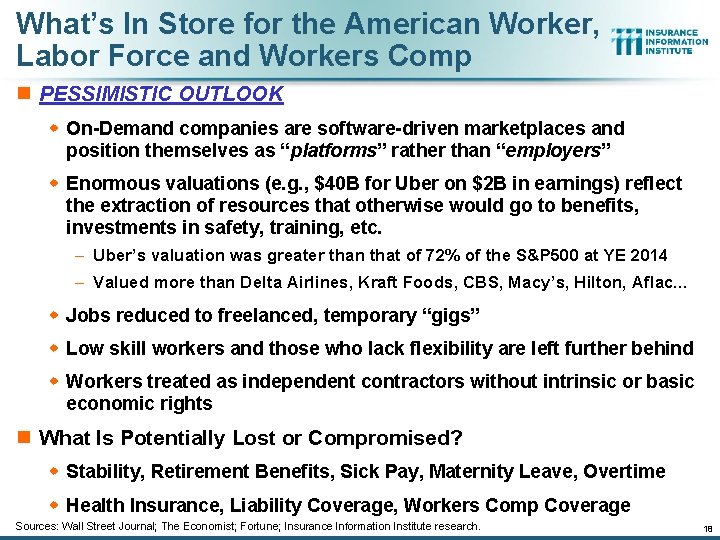
What’s In Store for the American Worker, Labor Force and Workers Comp n PESSIMISTIC OUTLOOK w On-Demand companies are software-driven marketplaces and position themselves as “platforms” rather than “employers” w Enormous valuations (e. g. , $40 B for Uber on $2 B in earnings) reflect the extraction of resources that otherwise would go to benefits, investments in safety, training, etc. – Uber’s valuation was greater than that of 72% of the S&P 500 at YE 2014 – Valued more than Delta Airlines, Kraft Foods, CBS, Macy’s, Hilton, Aflac… w Jobs reduced to freelanced, temporary “gigs” w Low skill workers and those who lack flexibility are left further behind w Workers treated as independent contractors without intrinsic or basic economic rights n What Is Potentially Lost or Compromised? w Stability, Retirement Benefits, Sick Pay, Maternity Leave, Overtime w Health Insurance, Liability Coverage, Workers Comp Coverage Sources: Wall Street Journal; The Economist; Fortune; Insurance Information Institute research. 18
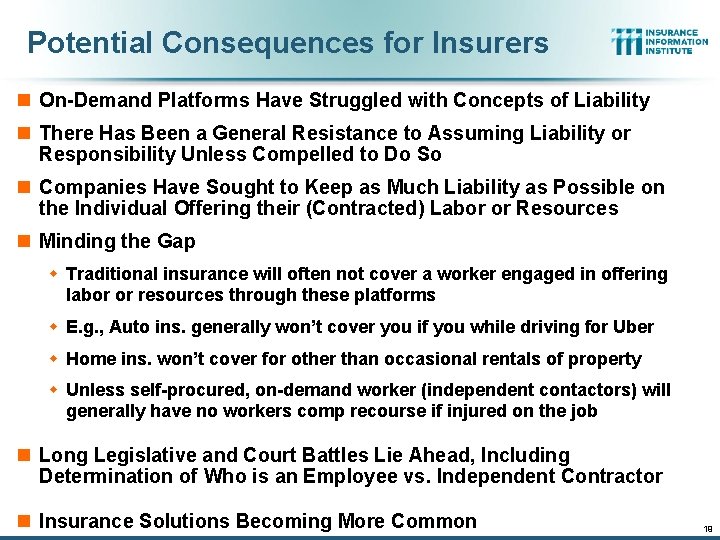
Potential Consequences for Insurers n On-Demand Platforms Have Struggled with Concepts of Liability n There Has Been a General Resistance to Assuming Liability or Responsibility Unless Compelled to Do So n Companies Have Sought to Keep as Much Liability as Possible on the Individual Offering their (Contracted) Labor or Resources n Minding the Gap w Traditional insurance will often not cover a worker engaged in offering labor or resources through these platforms w E. g. , Auto ins. generally won’t cover you if you while driving for Uber w Home ins. won’t cover for other than occasional rentals of property w Unless self-procured, on-demand worker (independent contactors) will generally have no workers comp recourse if injured on the job n Long Legislative and Court Battles Lie Ahead, Including Determination of Who is an Employee vs. Independent Contractor n Insurance Solutions Becoming More Common 19
On-Demand Workers Who Are They? And Who’s Driving Demand for Them? 20
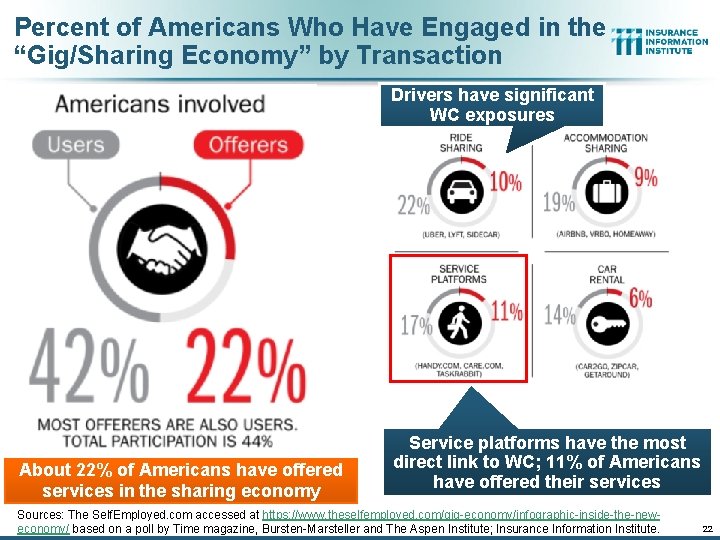
Percent of Americans Who Have Engaged in the “Gig/Sharing Economy” by Transaction Drivers have significant WC exposures About 22% of Americans have offered services in the sharing economy Service platforms have the most direct link to WC; 11% of Americans have offered their services Sources: The Self. Employed. com accessed at https: //www. theselfemployed. com/gig-economy/infographic-inside-the-neweconomy/ based on a poll by Time magazine, Bursten-Marsteller and The Aspen Institute; Insurance Information Institute. 22
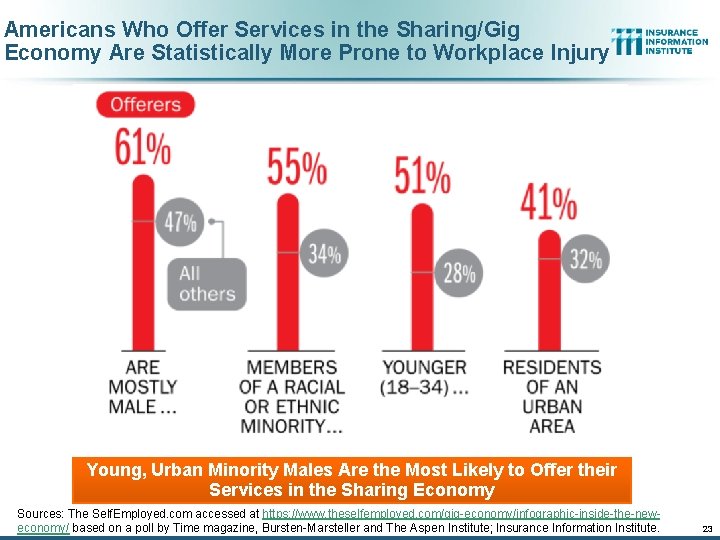
Americans Who Offer Services in the Sharing/Gig Economy Are Statistically More Prone to Workplace Injury Young, Urban Minority Males Are the Most Likely to Offer their Services in the Sharing Economy Sources: The Self. Employed. com accessed at https: //www. theselfemployed. com/gig-economy/infographic-inside-the-neweconomy/ based on a poll by Time magazine, Bursten-Marsteller and The Aspen Institute; Insurance Information Institute. 23
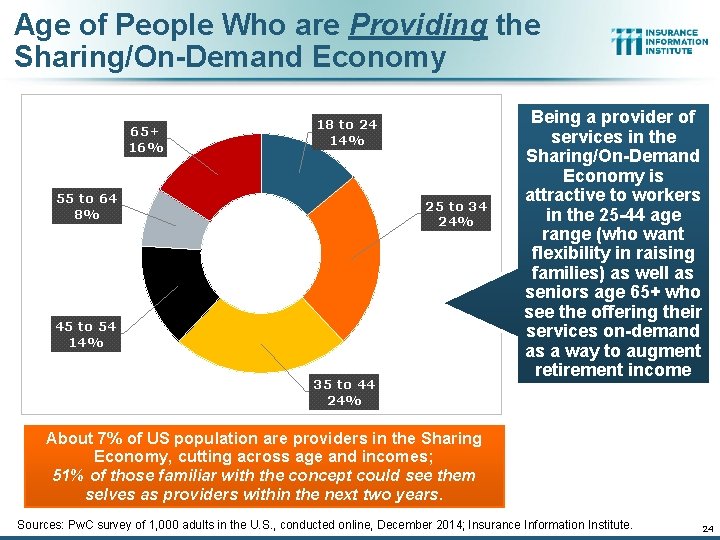
Age of People Who are Providing the Sharing/On-Demand Economy 65+ 16% 18 to 24 14% 55 to 64 8% 25 to 34 24% 45 to 54 14% 35 to 44 24% Being a provider of services in the Sharing/On-Demand Economy is attractive to workers in the 25 -44 age range (who want flexibility in raising families) as well as seniors age 65+ who see the offering their services on-demand as a way to augment retirement income About 7% of US population are providers in the Sharing Economy, cutting across age and incomes; 51% of those familiar with the concept could see them selves as providers within the next two years. Sources: Pw. C survey of 1, 000 adults in the U. S. , conducted online, December 2014; Insurance Information Institute. 24
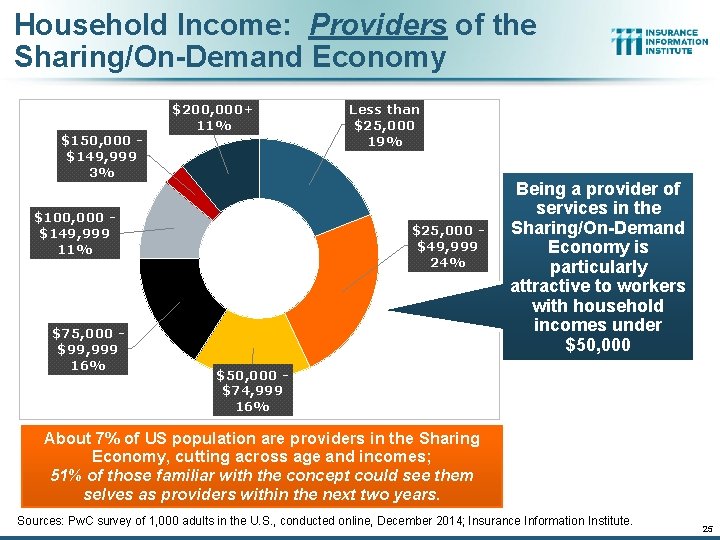
Household Income: Providers of the Sharing/On-Demand Economy $150, 000 $149, 999 3% $200, 000+ 11% $100, 000 $149, 999 11% $75, 000 $99, 999 16% Less than $25, 000 19% $25, 000 $49, 999 24% Being a provider of services in the Sharing/On-Demand Economy is particularly attractive to workers with household incomes under $50, 000 $74, 999 16% About 7% of US population are providers in the Sharing Economy, cutting across age and incomes; 51% of those familiar with the concept could see them selves as providers within the next two years. Sources: Pw. C survey of 1, 000 adults in the U. S. , conducted online, December 2014; Insurance Information Institute. 25
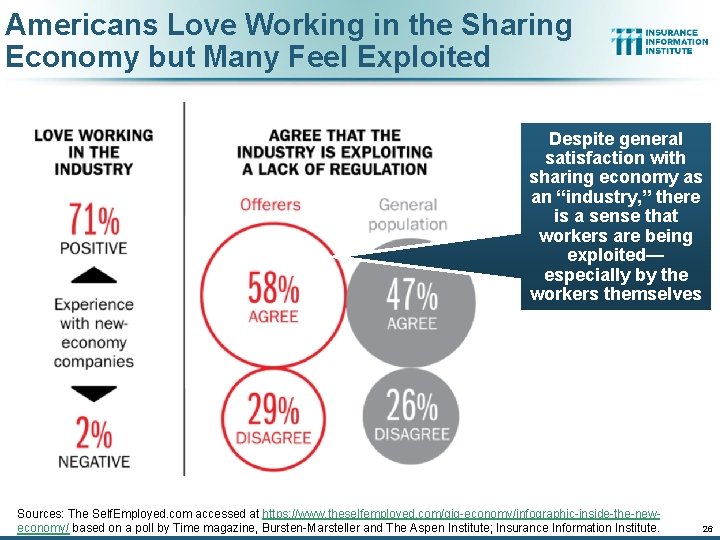
Americans Love Working in the Sharing Economy but Many Feel Exploited Despite general satisfaction with sharing economy as an “industry, ” there is a sense that workers are being exploited— especially by the workers themselves Sources: The Self. Employed. com accessed at https: //www. theselfemployed. com/gig-economy/infographic-inside-the-neweconomy/ based on a poll by Time magazine, Bursten-Marsteller and The Aspen Institute; Insurance Information Institute. 26
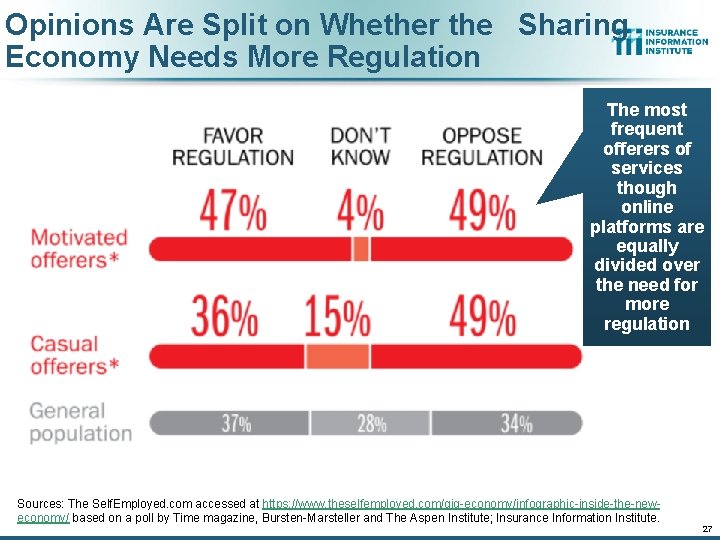
Opinions Are Split on Whether the Sharing Economy Needs More Regulation The most frequent offerers of services though online platforms are equally divided over the need for more regulation Sources: The Self. Employed. com accessed at https: //www. theselfemployed. com/gig-economy/infographic-inside-the-neweconomy/ based on a poll by Time magazine, Bursten-Marsteller and The Aspen Institute; Insurance Information Institute. 27
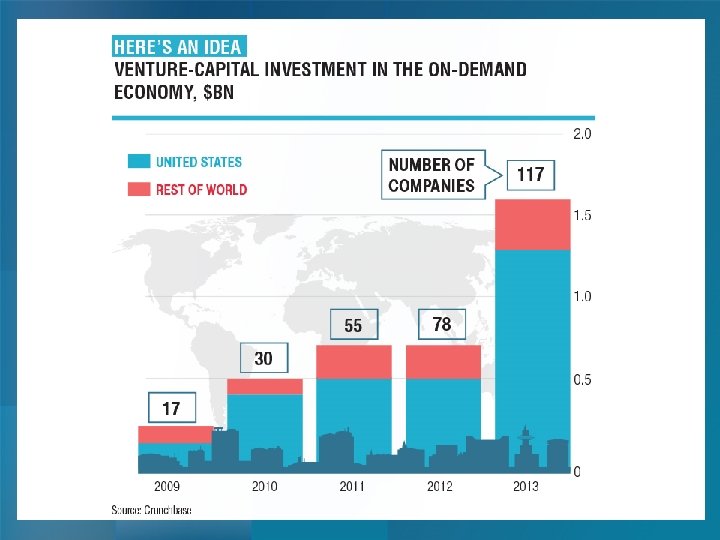
The On-Demand Economy and Wall Street Loves the On-Demand Economy Labor Markets, Insurance Markets Will Be Impacted 28
An UBER Case Study Uber is the Best Known of the On-Demand Companies Wall Street Loves Uber Vested Interests Hate Uber 30
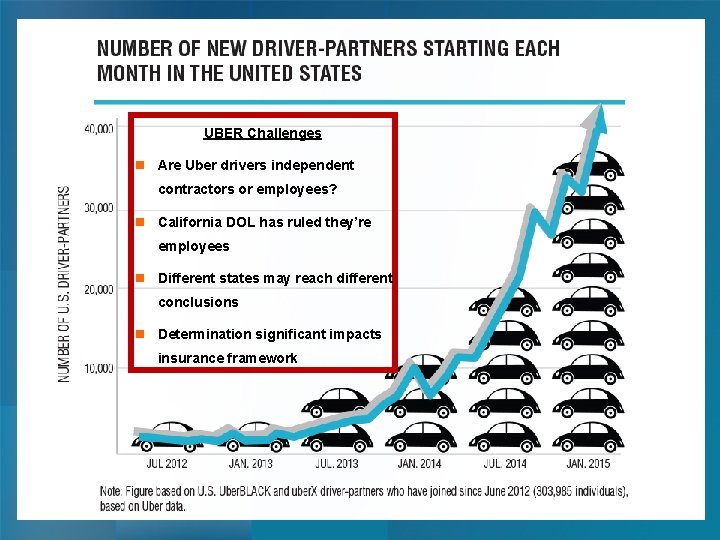
UBER Challenges n Are Uber drivers independent contractors or employees? n California DOL has ruled they’re employees n Different states may reach different conclusions n Determination significant impacts insurance framework
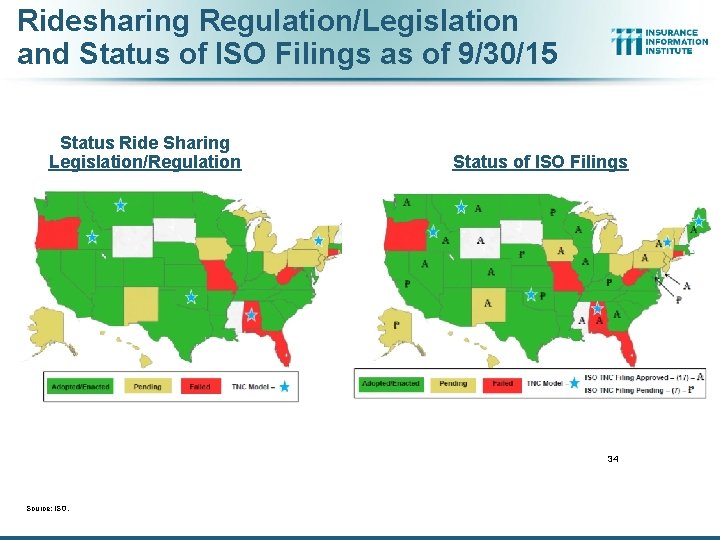
Ridesharing Regulation/Legislation and Status of ISO Filings as of 9/30/15 Status Ride Sharing Legislation/Regulation Status of ISO Filings 34 Source: ISO.
FROM GIG TO GONE Will Robots and Automation Destroy the Gig Economy? 35
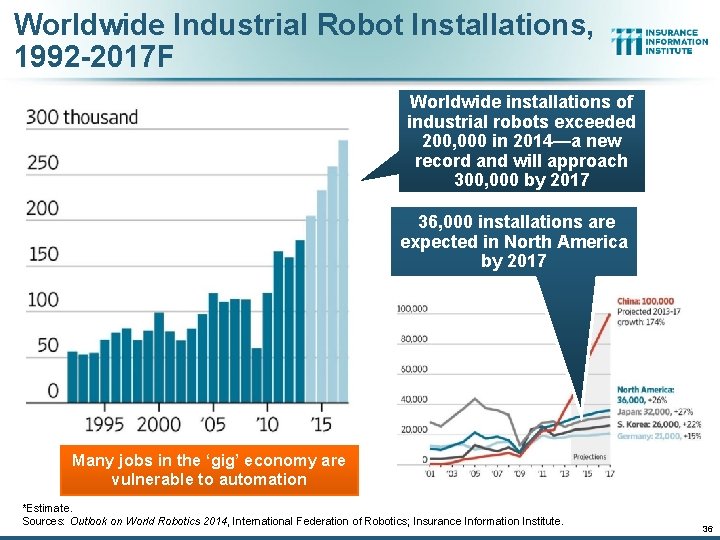
Worldwide Industrial Robot Installations, 1992 -2017 F Worldwide installations of industrial robots exceeded 200, 000 in 2014—a new record and will approach 300, 000 by 2017 36, 000 installations are expected in North America by 2017 Many jobs in the ‘gig’ economy are vulnerable to automation *Estimate. Sources: Outlook on World Robotics 2014, International Federation of Robotics; Insurance Information Institute. 36
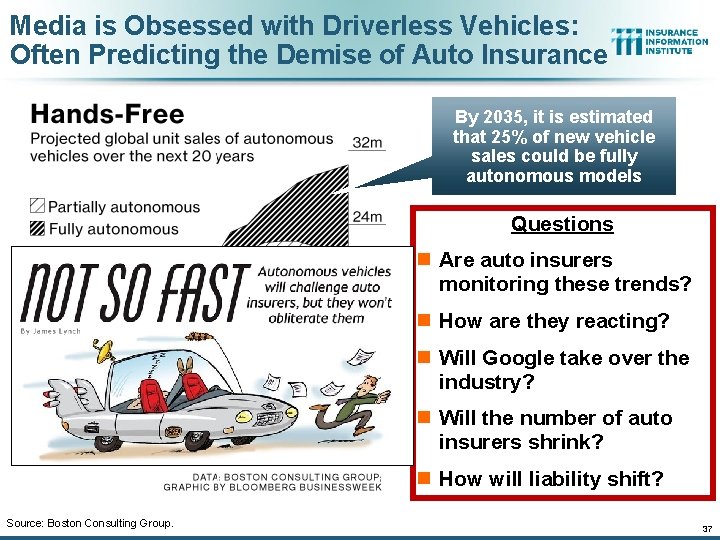
Media is Obsessed with Driverless Vehicles: Often Predicting the Demise of Auto Insurance By 2035, it is estimated that 25% of new vehicle sales could be fully autonomous models Questions n Are auto insurers monitoring these trends? n How are they reacting? n Will Google take over the industry? n Will the number of auto insurers shrink? n How will liability shift? Source: Boston Consulting Group. 37
The Internet of Things and the Sharing/Gig Economy Capturing Economic Value Amid a Shifting Insurer Value Chain 38
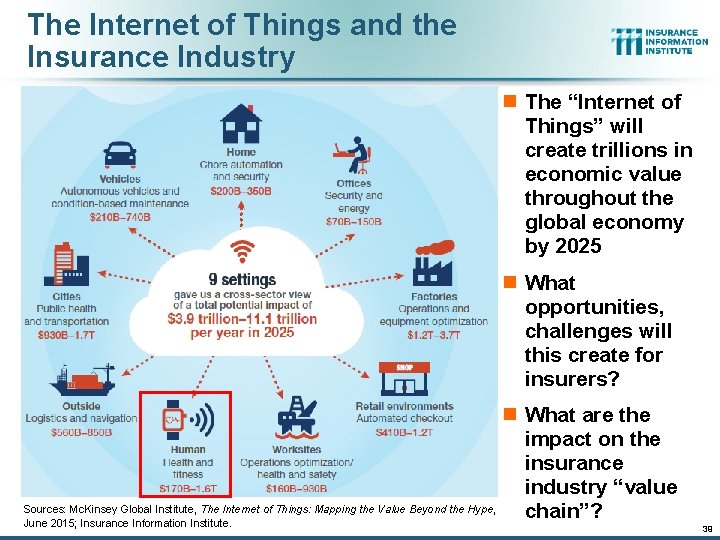
The Internet of Things and the Insurance Industry n The “Internet of Things” will create trillions in economic value throughout the global economy by 2025 n What opportunities, challenges will this create for insurers? n What are the impact on the insurance industry “value Sources: Mc. Kinsey Global Institute, The Internet of Things: Mapping the Value Beyond the Hype, chain”? June 2015; Insurance Information Institute. 39
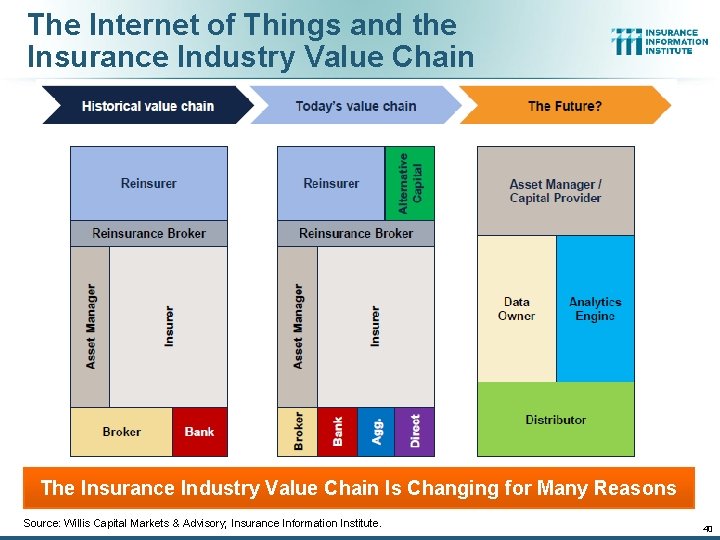
The Internet of Things and the Insurance Industry Value Chain The Insurance Industry Value Chain Is Changing for Many Reasons Source: Willis Capital Markets & Advisory; Insurance Information Institute. 40
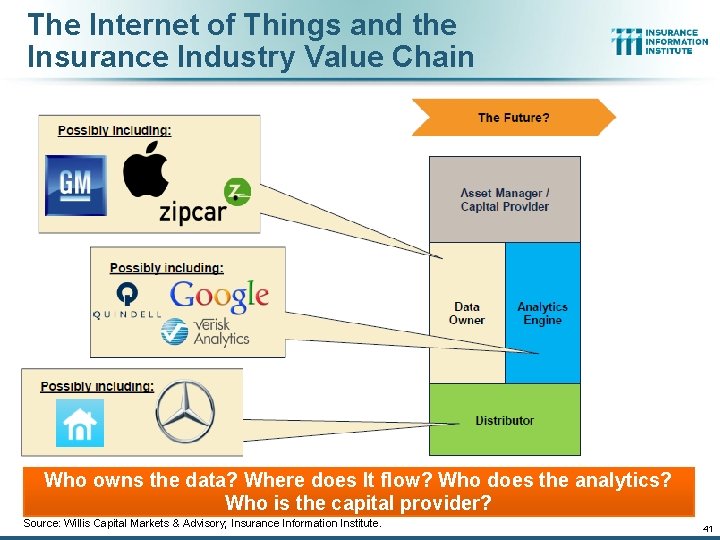
The Internet of Things and the Insurance Industry Value Chain Who owns the data? Where does It flow? Who does the analytics? Who is the capital provider? Source: Willis Capital Markets & Advisory; Insurance Information Institute. 41
Wearables and Beyond… Where The Internet of Things Meets Worker Comp 42
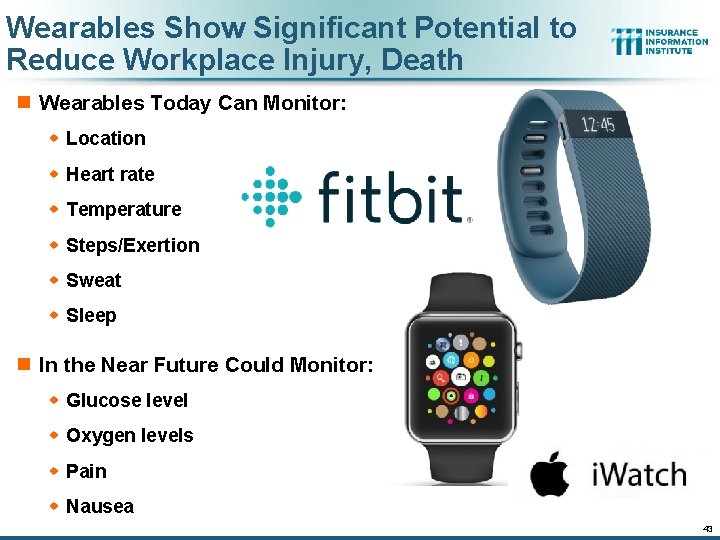
Wearables Show Significant Potential to Reduce Workplace Injury, Death n Wearables Today Can Monitor: w Location w Heart rate w Temperature w Steps/Exertion w Sweat w Sleep n In the Near Future Could Monitor: w Glucose level w Oxygen levels w Pain w Nausea 43
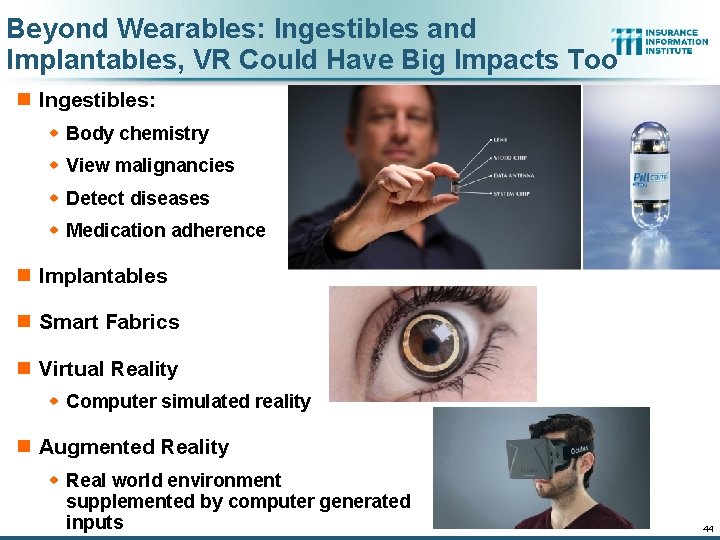
Beyond Wearables: Ingestibles and Implantables, VR Could Have Big Impacts Too n Ingestibles: w Body chemistry w View malignancies w Detect diseases w Medication adherence n Implantables n Smart Fabrics n Virtual Reality w Computer simulated reality n Augmented Reality w Real world environment supplemented by computer generated inputs 44
Insurance Information Institute Online: www. iii. org Thank you for your time and your attention! Twitter: twitter. com/bob_Hartwig Download at www. iii. org/presetations 45