
THE SHALLOWS WHAT THE INTERNET IS DOING TO
- Slides: 39
THE SHALLOWS: WHAT THE INTERNET IS DOING TO OUR BRAINS Author: Nicholas Carr Presented by: Anna Vanche & Nicole Schultz
AUTHORITY Nicholas Carr is a 2011 Pulitzer Prize nominee (for “The Shallows”) Author of two other notable books—his works have been translated into 20 different languages. He is a member of the Encyclopedia Britannica’s editorial board of advisors
THE WATCHDOG AND THE THIEF § “The medium is the message” – Marshall Mc. Luhan, author of Understanding Media: The Extensions of Man § Is technology strictly a tool under our control? § “The content of a medium is just the juicy piece of meat carried by the burglar to distract the watchdog of the mind. ” - Mc. Luhan
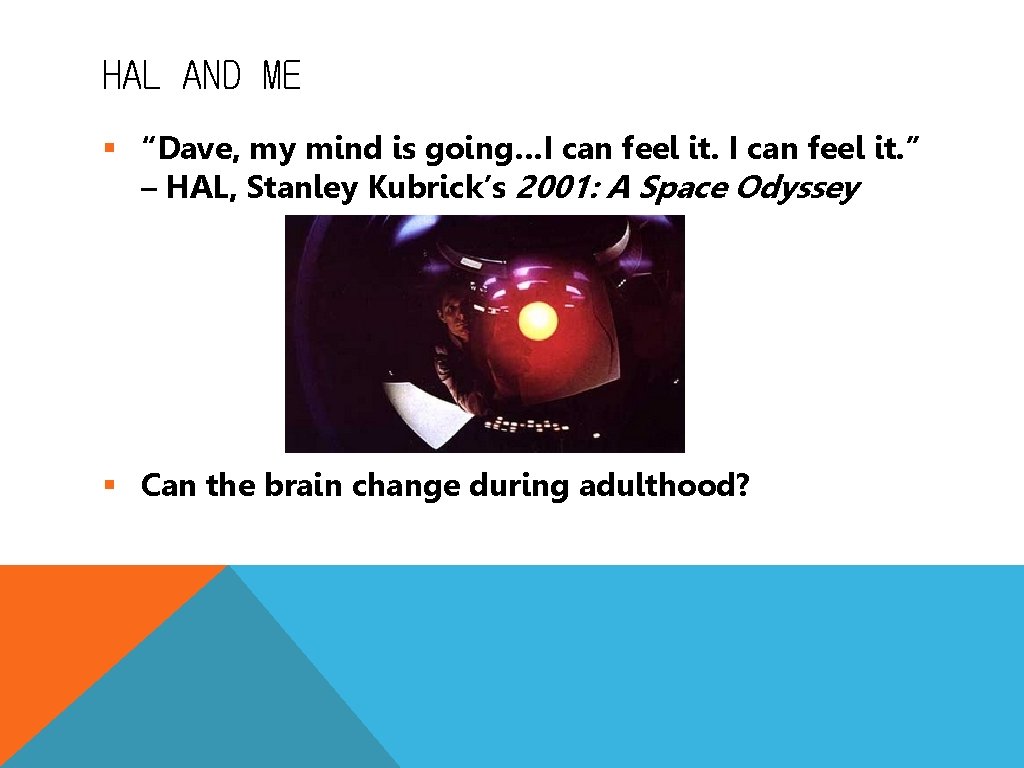
HAL AND ME § “Dave, my mind is going…I can feel it. ” – HAL, Stanley Kubrick’s 2001: A Space Odyssey § Can the brain change during adulthood?
HAL AND ME § Linear, literary mind vs. networked thinking § Sacrifices and benefits § Example: Joe O’Shea § “As soon as you learn to be ‘a skilled hunter’ online…books become superfluous. ” (pp 9)
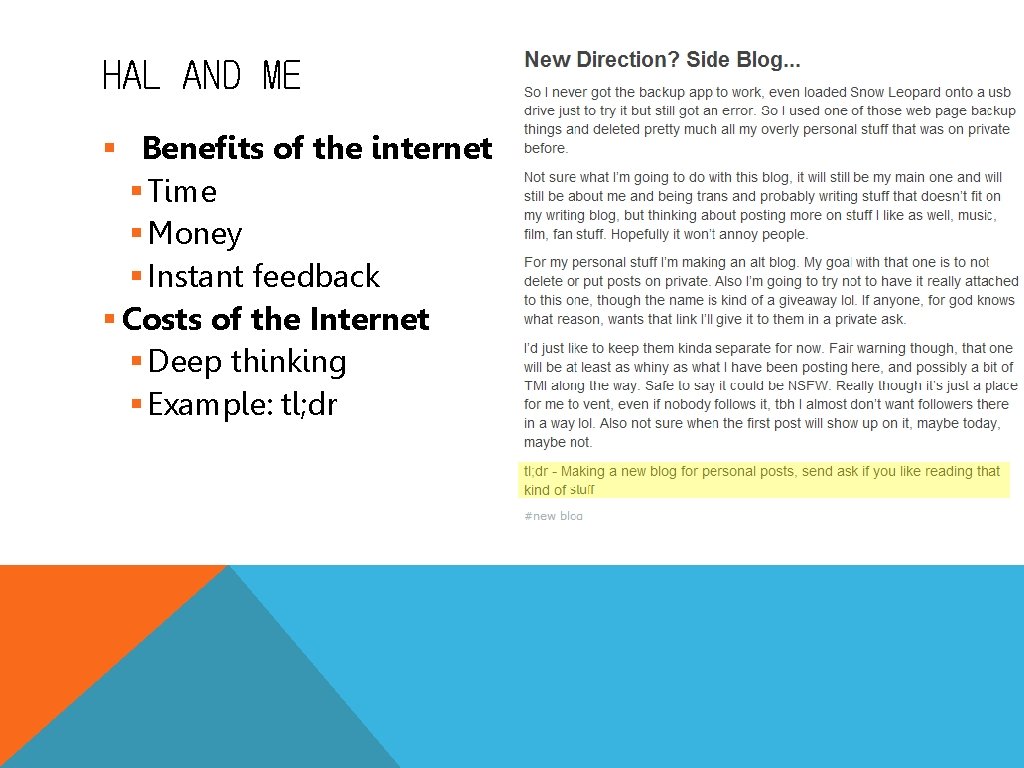
HAL AND ME § Benefits of the internet § Time § Money § Instant feedback § Costs of the Internet § Deep thinking § Example: tl; dr
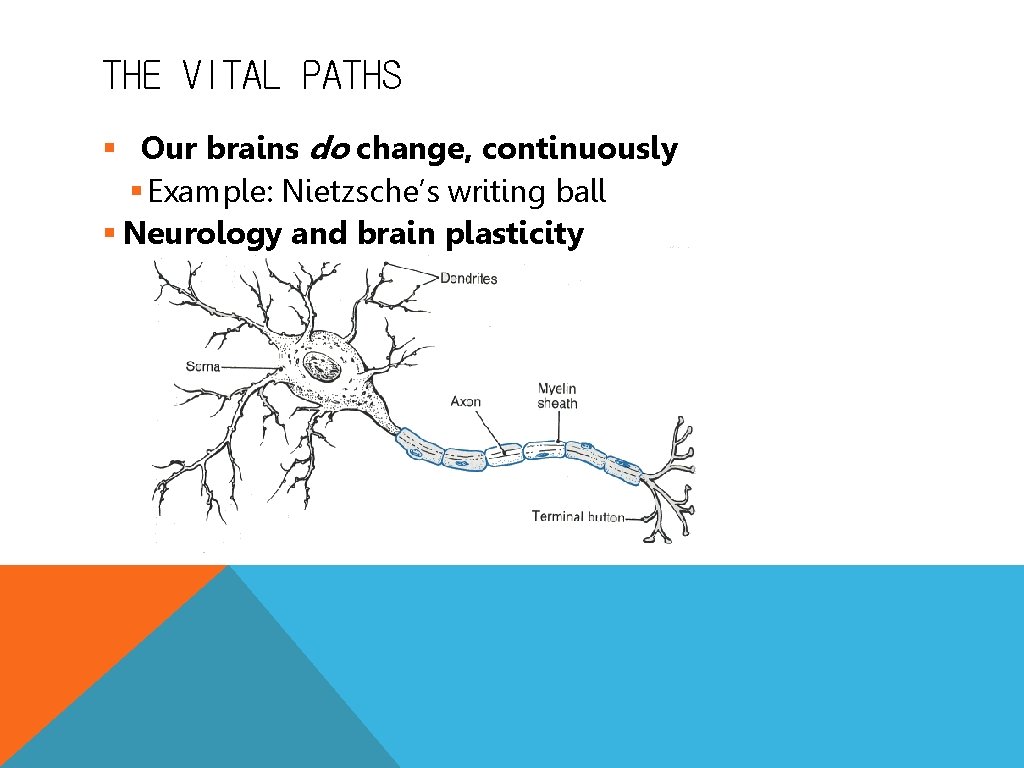
THE VITAL PATHS § Our brains do change, continuously § Example: Nietzsche’s writing ball § Neurology and brain plasticity
THE VITAL PATHS Rene Descartes § Meditations (1641) § Dualism Enlightenment leading to the 20 th century § Reason is God § “A thinking machine” metaphor
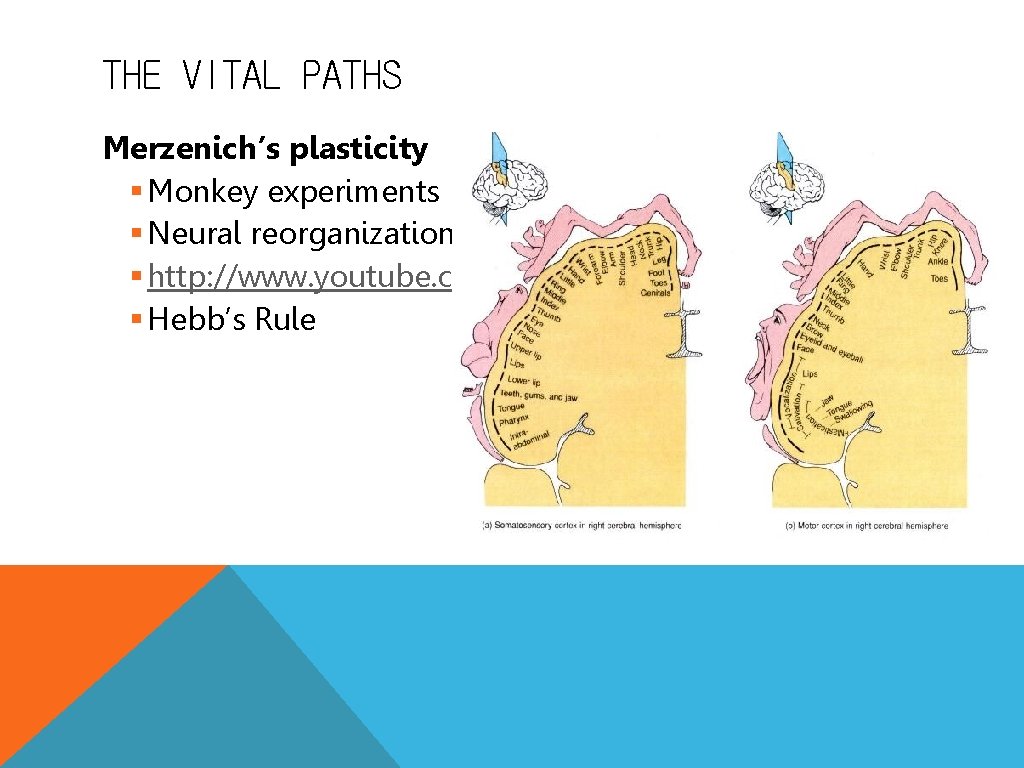
THE VITAL PATHS Merzenich’s plasticity § Monkey experiments § Neural reorganization § http: //www. youtube. com/watch? v=sxwn 1 w 7 MJvk § Hebb’s Rule
THE VITAL PATHS The siren’s call of the Internet and computer technology § We, and our brains, want constant stimulation § Repeated usage leads to neural ‘rewiring’
TECHNOLOGIES “Every technology is an expression of human will” (44) Advancement of technology in four parts: § Extends physical strength, dexterity, or resilience § Extends the range or sensitivity of senses § Reshape nature to better serve needs or desires § Intellectual technologies: extend or support our mental powers
INTELLECTUAL TECHNOLOGY § Find & classify information § Formulate & articulate Ideas § Share knowledge § Take measurements & preform calculations § Expand the capacity of our memory
EARLY TECHNOLOGIES Pictures or maps of our surroundings § “The technology of the map gave to man a new and more comprehending mind, better able to understand the unseen forces that shape his surroundings and his existence” (43)
EARLY TECHNOLOGIES Time Keeping § The mind begins to stress the mental work of division and measurement § Begin to see things as pieces of a whole
INTELLECTUAL TECHNOLOGIES AND THE MIND “Sometimes our tools do what we tell them to. Other times, we adapt ourselves to our tools’ requirements” Difficult to discern the influence of intellectual technologies on the brain
THE DEEPENING PAGE Scratch marks on rocks, scraps of wood, bark, cloth, bone, broken pottery Ø Cheap & plentiful, small, irregular shape, easily lost, broken Cuneiform on clay tablets 2500 B. C. Egyptians manufactured scrolls from papyrus The wax tablet
THE DEEPENING PAGE Speech influencing writing and book form § scriptura continua Middle Ages: personal instruction and improvement § Spaces and punctuation § Possibility to read quickly, silently, and with great comprehension
THE DEEPENING PAGE § Reading the printed page set off intellectual vibrations within the mind § Readers disengaged from the outward flow of stimuli and engaged inwardly to words, ideas, and emotions
DEEPENING PAGE § 1439, Johannes Gutenberg and the Gutenberg Press § Positive and negative responses: “So many books--so much confusion! All around us an ocean of print! And most of it covered in froth” -Lope de Vega, All Citizens Are Soldiers
THE NET Bidirectional § Send and receive messages § Download and upload information § Personal and commercial broadcast § The world’s “meetinghouse”
THE NET § “As the uses of the Internet have proliferated, time we devote to the medium has grown apace” (56) § As Net use goes up, T. V. viewing has either remained the same or increased (56 -7) § As Net use grows, time spent reading print publications decreases.
THE NET Web document/page similar to book page § BUT it involves physical actions and sensory stimuli different than reading a book or magazine page Hyperlinks propel us toward supplemental works
THE NET Becoming more web-like § T. V. & Movies § “Crawls” & “Flippers” § Highlights from readings Rejecting web-like strategies § Magazines
THE VERY IMAGE OF A BOOK § Books resisted the influence of the digital age for longer than most other media § Taking your monitor and tower to the beach? § Now: “the e-book has started to take hold. ” – Brad Stone, New York Times § New technologies (i. e. Vizplex)
THE VERY IMAGE OF A BOOK Blinded by benefits? § “Change in a medium’s form is also a change in its content. ” (pp. 102) § “An e-book is no more a book than an online newspaper is a newspaper. ” (pp. 103)
THE VERY IMAGE OF A BOOK Predicted and ongoing changes § Reading § Writing § Maho no i-rando § Instant community feedback § “Vooks” Doomsayers through the ages
THE JUGGLER’S BRAIN What can science tell us about the actual effects that Internet use is having on the way our minds work?
THE JUGGLER’S BRAIN Promotes: § Cursory reading § Hurried Distracted thinking § Superficial Learning § Profiling self The Net engages all of our senses simultaneously, except smell & taste
THE JUGGLER’S BRAIN § The Net indulges the craving for metal stimulation § Gary Small’s, the daily use of computers causes extensive brain changes § The Web as a return to scriptura continua § Changes deep thinking into a buzzing mind Ø The hypertext reader in schools
THE JUGGLER’S BRAIN Promotes interrupted thought and distraction § Every time we shift our attention, the brain needs to reorient itself § Wanting to be interrupted because it bring new information The digital environment encourages people to explore many topics
THE CHURCH OF GOOGLE Frederick Winslow Taylor § Man as machine § “In the past the man has been first, in the future the system must be first. ” – Taylor (pp. 150) The science behind Google’s seduction § Despite the seeming simplicity of Google’s design and products, there is extensive testing going on behind the scenes.
THE CHURCH OF GOOGLE The message preached: § Google is a “moral force” – Google’s former CEO, Eric Schmidt Evolution of Google § Created by Larry Page and Sergey Brin—its success is due to intelligent search algorithms tied to savvy ad placement strategies based on traffic and quality Goals of Google § “Our goal is to get users in and out really quickly. ” – Irene Au
THE CHURCH OF GOOGLE Google Book Search project’s slice and dice § “It’s not a library of books. It’s a library of snippets. ” (pp. 66) The Ultimate Version of Google § “Artificial intelligence would be the ultimate version of Google. ” – Larry Page, creator of Google § “Human beings are ashamed to have been born instead of made. ” – 20 th century philosopher Gunther Anders
SEARCH, MEMORY No longer efficient to use our brain to store information We store information digitally, and memorize what we store The web encourages us to think like it does § Hardly any deep knowledge
SEARCH, MEMORY William James, Eddinghaus’ tests (1890) § Primary memories leave the mind soon after the event § Secondary memories which the brain holds on to indefinitely
SEARCH, MEMORY Kandel, In Search of Memory, 2006 § Long-term memory persists for as long as the anatomical changes are maintained § Our experiences continually shape our behavior and identity
SEARCH, MEMORY Differentiates us from the ‘artificial brain’ § Computer: Stores information immediately § Human brain: Processes information long after it is received
A THING LIKE ME The power of a tool The price of a tool What is the overall usefulness of our tools? Is it worth slowing down?
DISCUSSION & QUESTIONS Is Google making us stupid? Do the benefits outweigh what we lose in the process? Do you think we can find that “happy medium” where we use tools/technology, but remain unaffected?