
THE SHAKESPEAREAN SONNET A SONNET IS A lyric



- Slides: 11
THE SHAKESPEAREAN SONNET
A SONNET IS A lyric poem consisting of fourteen lines Written in iambic pentameter with a definite rhyme scheme and a definite thought structure
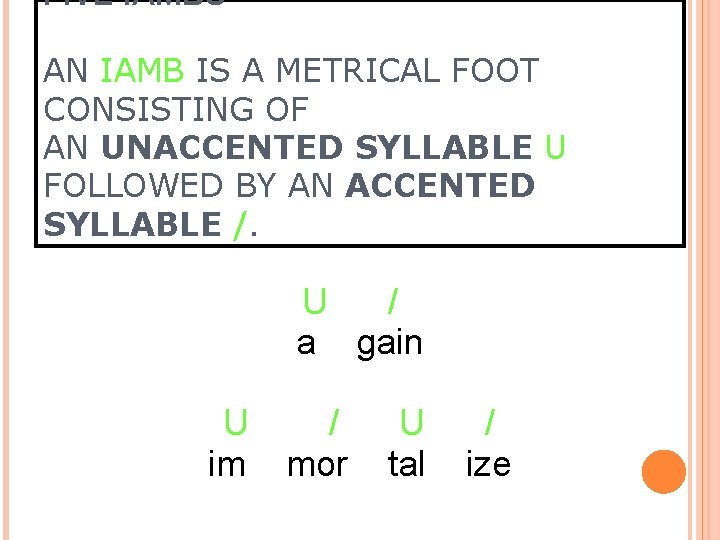
FIVE IAMBS AN IAMB IS A METRICAL FOOT CONSISTING OF AN UNACCENTED SYLLABLE U FOLLOWED BY AN ACCENTED SYLLABLE /. U / a gain U im / mor U tal / ize
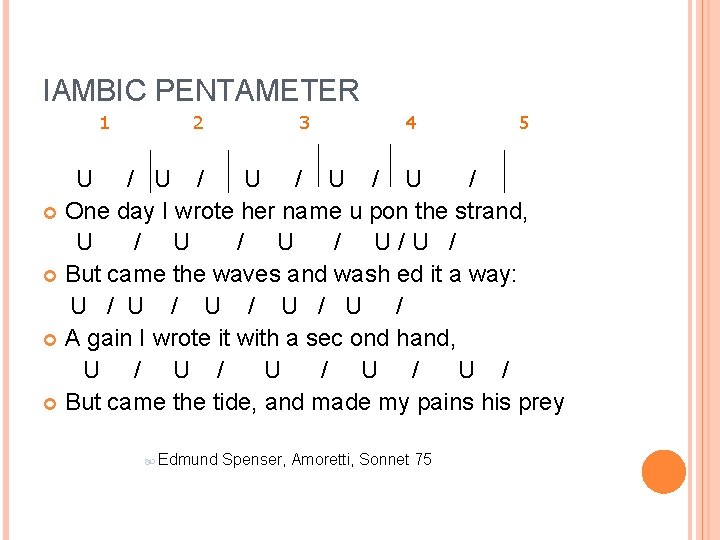
IAMBIC PENTAMETER 1 2 3 4 5 U / U / U / One day I wrote her name u pon the strand, U / U / U/U / But came the waves and wash ed it a way: U / U / U / A gain I wrote it with a sec ond hand, U / U / U / But came the tide, and made my pains his prey Edmund Spenser, Amoretti, Sonnet 75
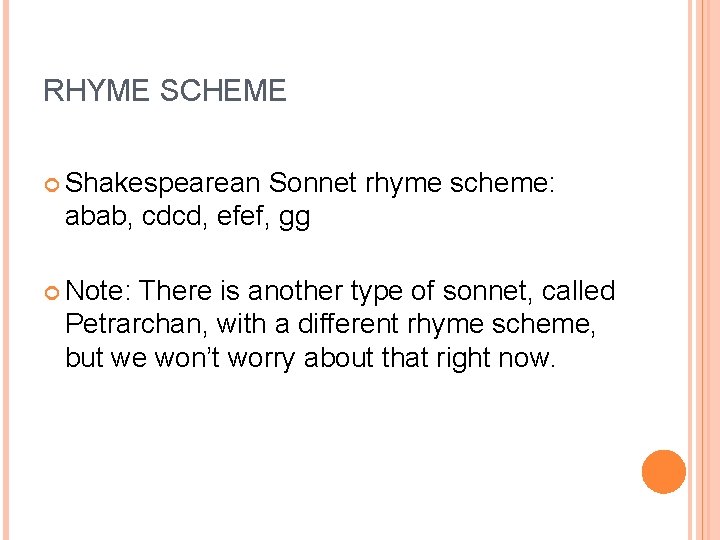
RHYME SCHEME Shakespearean Sonnet rhyme scheme: abab, cdcd, efef, gg Note: There is another type of sonnet, called Petrarchan, with a different rhyme scheme, but we won’t worry about that right now.
SHAKESPEARE’S SONNET 18 Shall I compare thee to a summer's day? Thou art more lovely and more temperate: Rough winds do shake the darling buds of May, And summer's lease hath all too short a date: Sometime too hot the eye of heaven shines, And often is his gold complexion dimmed, And every fair from fair sometime declines, By chance, or nature's changing course untrimmed: But thy eternal summer shall not fade, Nor lose possession of that fair thou ow'st, Nor shall death brag thou wander'st in his shade, When in eternal lines to time thou grow'st, So long as men can breathe, or eyes can see, So long lives this, and this gives life to thee. A B C D E F G G
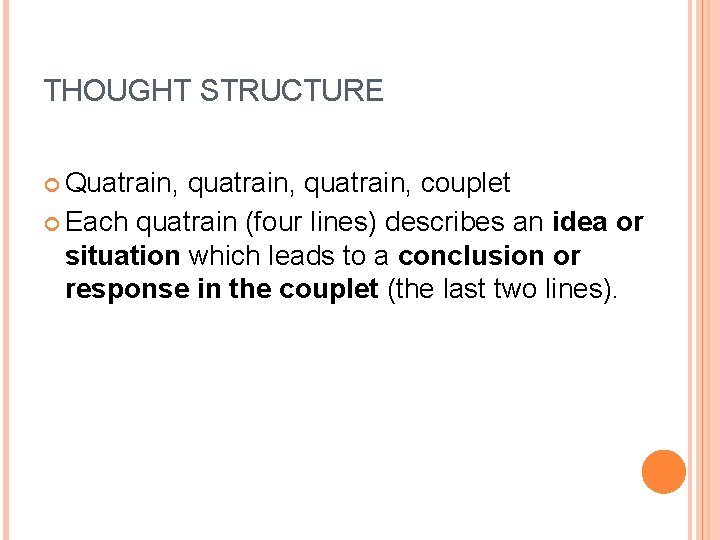
THOUGHT STRUCTURE Quatrain, quatrain, couplet Each quatrain (four lines) describes an idea or situation which leads to a conclusion or response in the couplet (the last two lines).
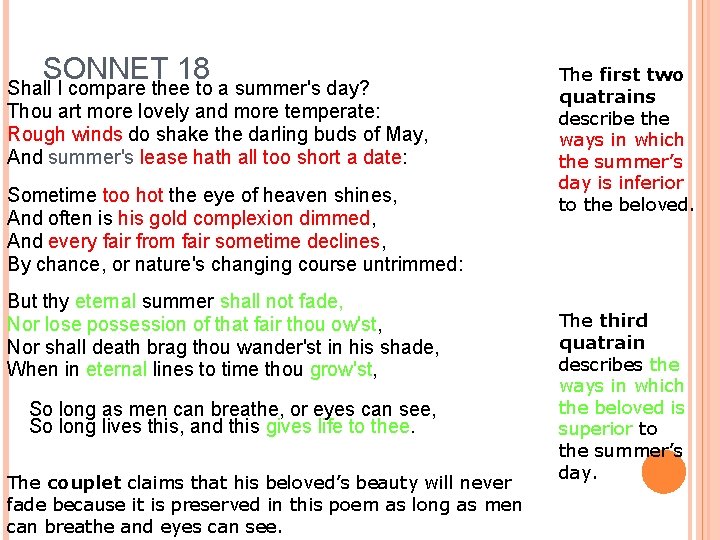
SONNET 18 Shall I compare thee to a summer's day? Thou art more lovely and more temperate: Rough winds do shake the darling buds of May, And summer's lease hath all too short a date: Sometime too hot the eye of heaven shines, And often is his gold complexion dimmed, And every fair from fair sometime declines, By chance, or nature's changing course untrimmed: But thy eternal summer shall not fade, Nor lose possession of that fair thou ow'st, Nor shall death brag thou wander'st in his shade, When in eternal lines to time thou grow'st, So long as men can breathe, or eyes can see, So long lives this, and this gives life to thee. The couplet claims that his beloved’s beauty will never fade because it is preserved in this poem as long as men can breathe and eyes can see. The first two quatrains describe the ways in which the summer’s day is inferior to the beloved. The third quatrain describes the ways in which the beloved is superior to the summer’s day.
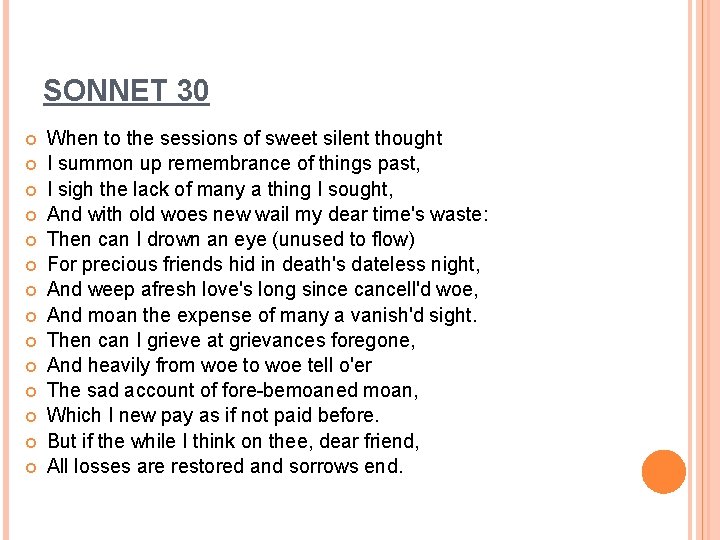
SONNET 30 When to the sessions of sweet silent thought I summon up remembrance of things past, I sigh the lack of many a thing I sought, And with old woes new wail my dear time's waste: Then can I drown an eye (unused to flow) For precious friends hid in death's dateless night, And weep afresh love's long since cancell'd woe, And moan the expense of many a vanish'd sight. Then can I grieve at grievances foregone, And heavily from woe to woe tell o'er The sad account of fore-bemoaned moan, Which I new pay as if not paid before. But if the while I think on thee, dear friend, All losses are restored and sorrows end.
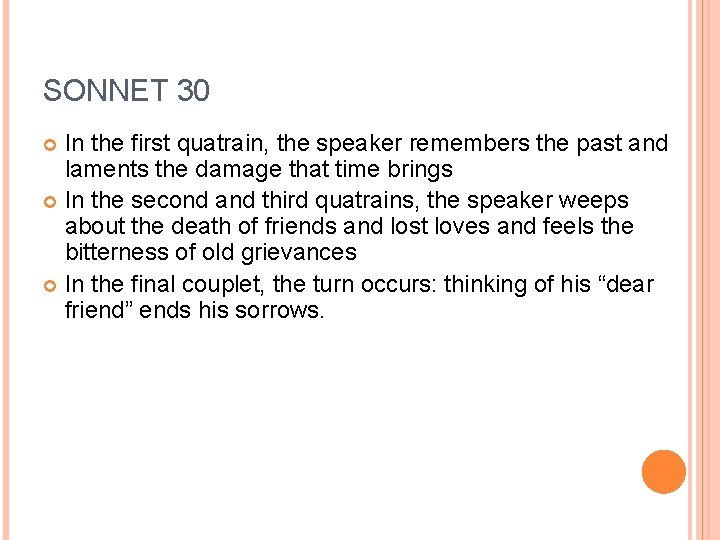
SONNET 30 In the first quatrain, the speaker remembers the past and laments the damage that time brings In the second and third quatrains, the speaker weeps about the death of friends and lost loves and feels the bitterness of old grievances In the final couplet, the turn occurs: thinking of his “dear friend” ends his sorrows.