
The Seven Principles of Government Wayne Davidson M
- Slides: 19
The Seven Principles of Government Wayne Davidson M. Ed Da Vinci School for Science and the Arts The Constitution is built upon seven basic principles of government. The Framers of the Constitution used these principles to create the “supreme law” of our land.
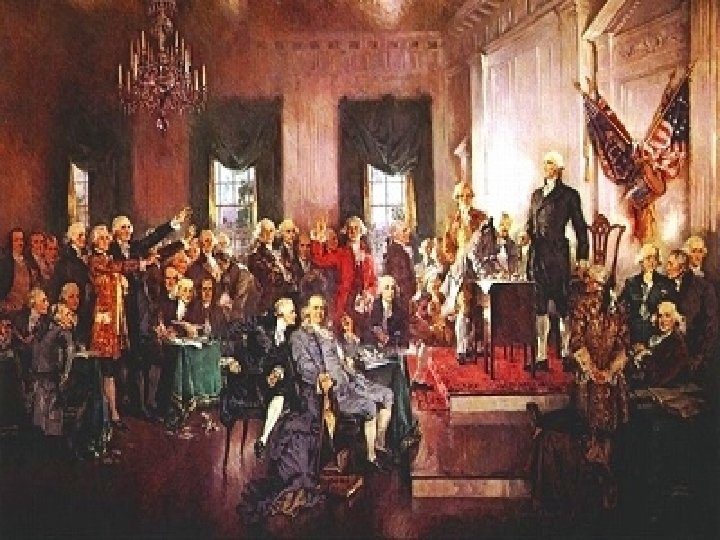
Who were the framers? The framers were the builders of our Constitution These men debated for the interests of their states, the people, and the nation. . Basic Principles 2
Basic Principles 3
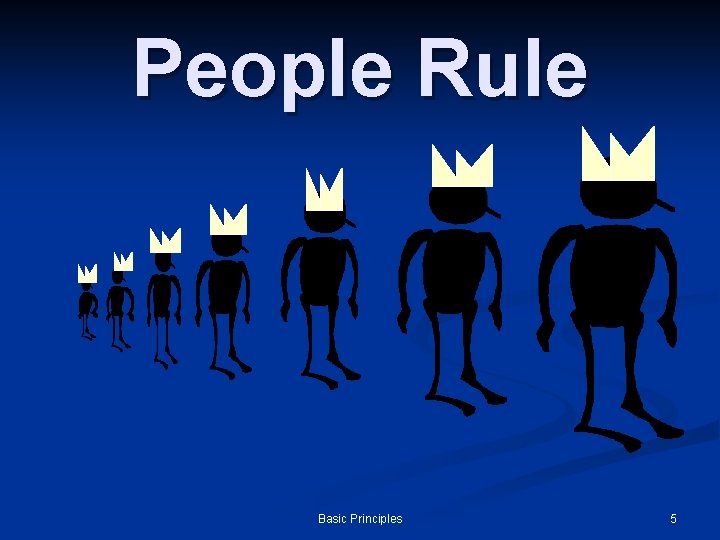
Popular Sovereignty Definiton: What does popular refer to? Population, or people. A sovereign king does what? Rule So together, Popular Sovereignty means? Basic Principles 4
People Rule Basic Principles 5
Popular Sovereignty (people rule) The Preamble to the Constitution begins with this bold phrase, “We the People. . . ” These words announce that in the United States, the people establish government and give it its power. The people are sovereign. Since the government receives it power from the people, it can govern only with their consent. Basic Principles 6
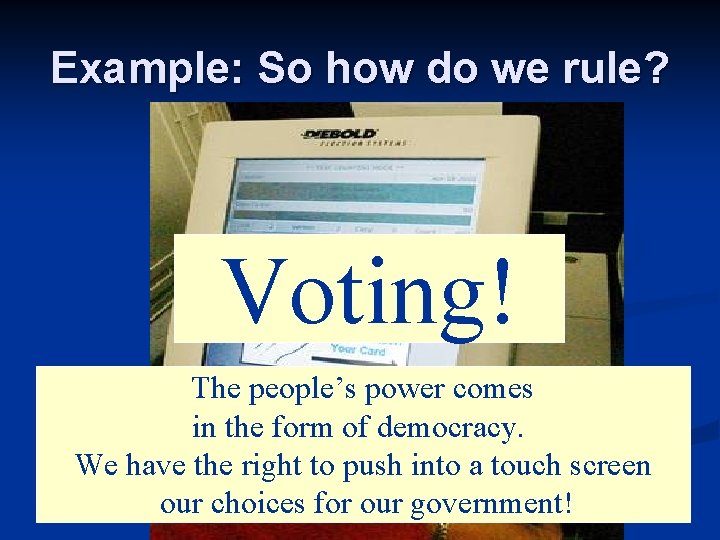
Example: So how do we rule? Voting! The people’s power comes in the form of democracy. We have the right to push into a touch screen our choices for our government! Basic Principles 7
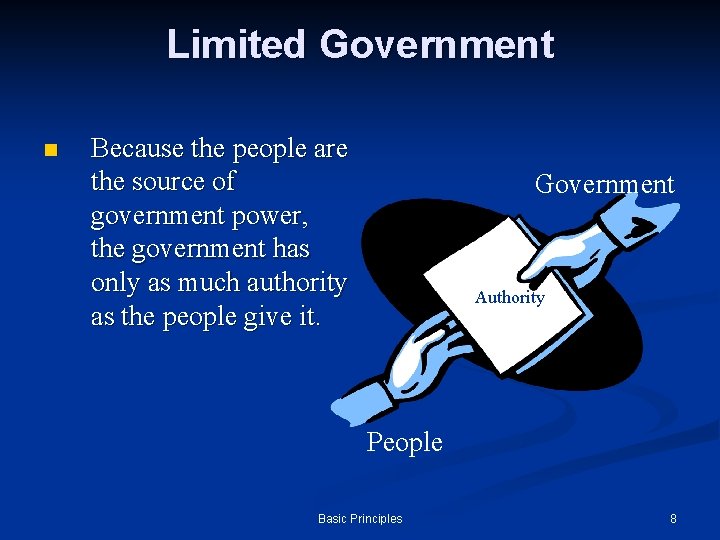
Limited Government n Because the people are the source of government power, the government has only as much authority as the people give it. Government Authority People Basic Principles 8
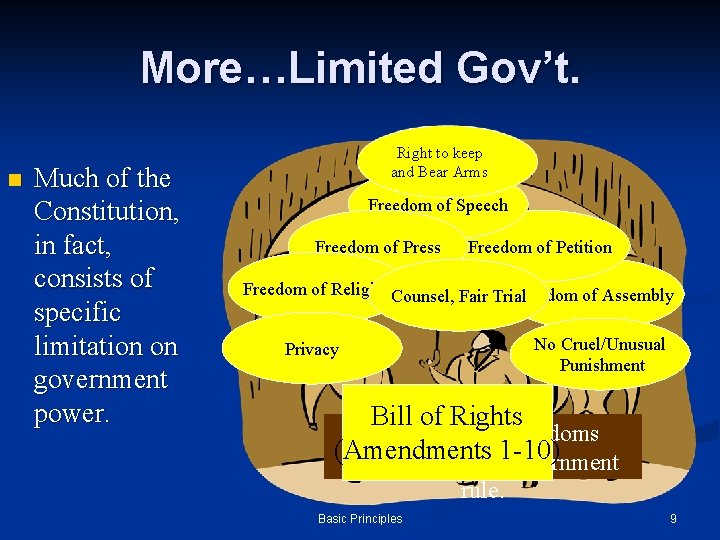
More…Limited Gov’t. n Much of the Constitution, in fact, consists of specific limitation on government power. Right to keep and Bear Arms Freedom of Speech Bill of Rights Freedom of Press Freedom of Petition Freedom of Religion. Counsel, Fair Trial Freedom of Assembly No Cruel/Unusual Punishment Privacy Bill of Rights Our rights and freedoms (Amendments 1 -10) protect us from Government rule. Basic Principles 9
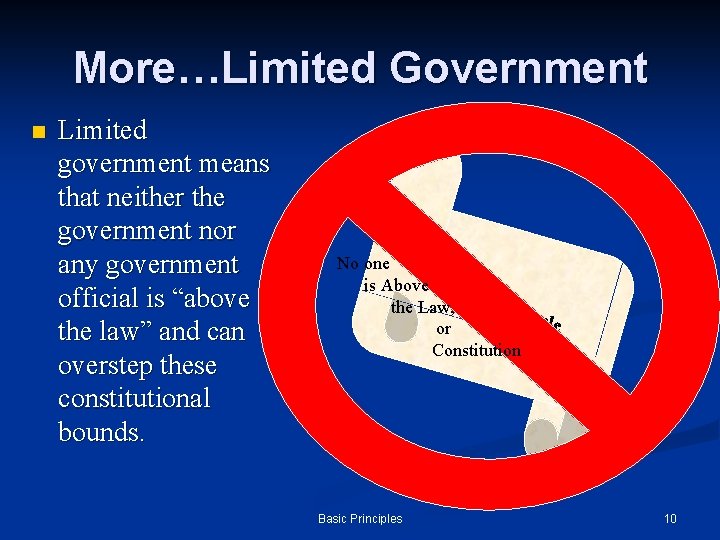
More…Limited Government n Limited government means that neither the government nor any government official is “above the law” and can overstep these constitutional bounds. No one is Above W the Law, e the Pe ople or Constitution Basic Principles 10
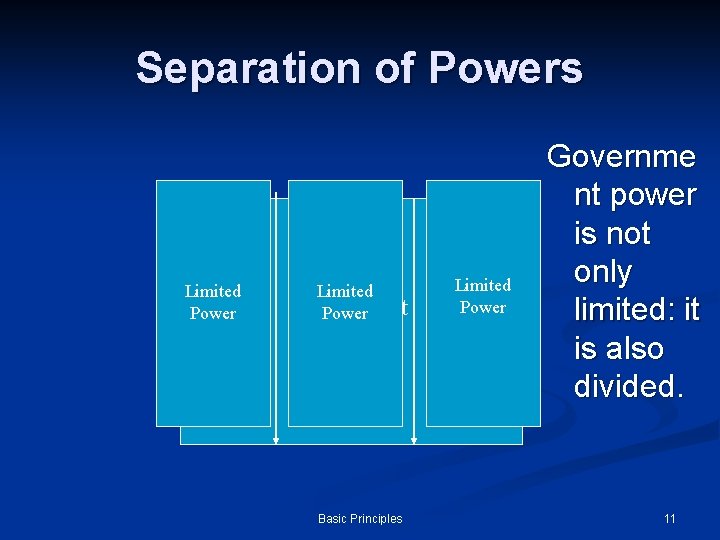
Separation of Powers Limited Power Limited Government Power Basic Principles Limited Power Governme nt power is not only limited: it is also divided. 11
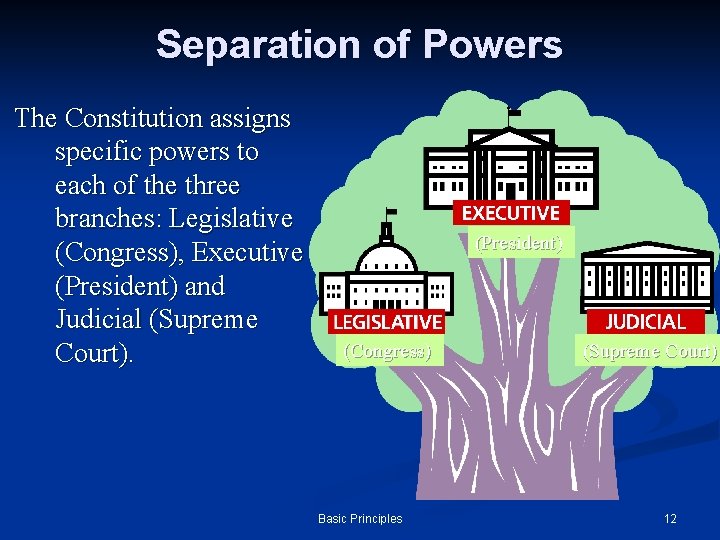
Separation of Powers The Constitution assigns specific powers to each of the three branches: Legislative (Congress), Executive (President) and Judicial (Supreme Court). (President) (Congress) Basic Principles (Supreme Court) 12
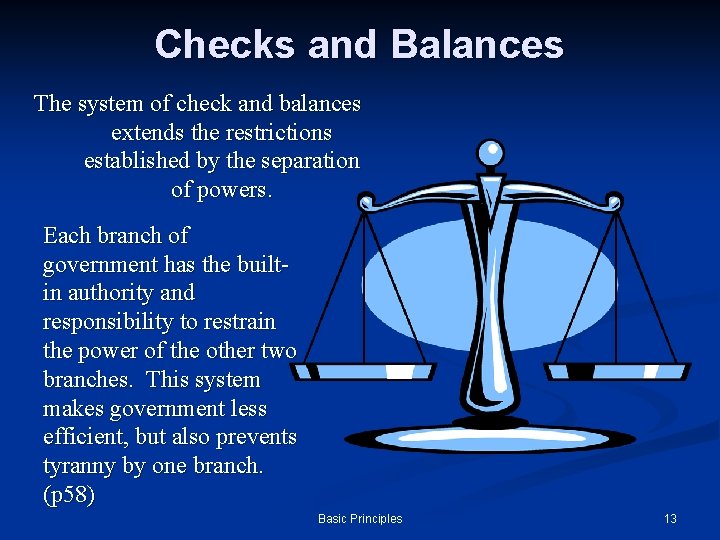
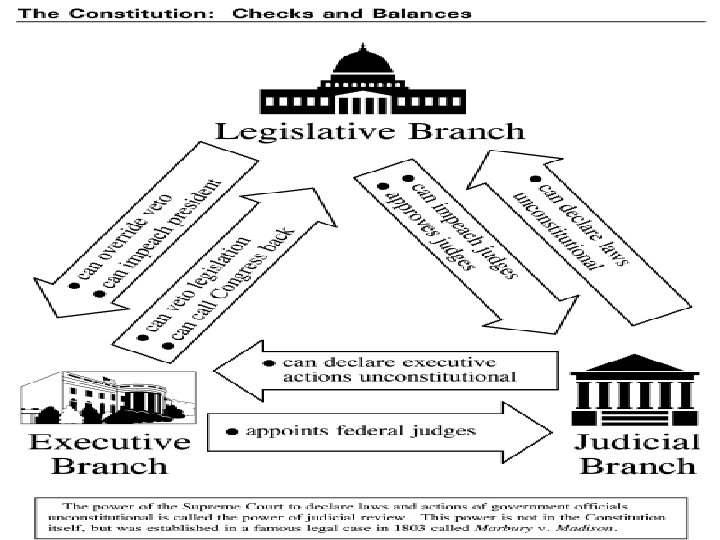
Checks and Balances The system of check and balances extends the restrictions established by the separation of powers. Each branch of government has the builtin authority and responsibility to restrain the power of the other two branches. This system makes government less efficient, but also prevents tyranny by one branch. (p 58) Basic Principles 13
Basic Principles 14
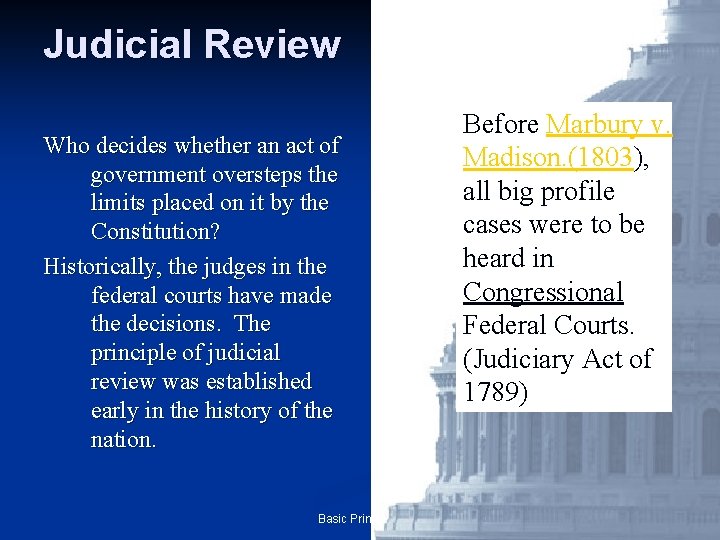
Judicial Review Who decides whether an act of government oversteps the limits placed on it by the Constitution? Historically, the judges in the federal courts have made the decisions. The principle of judicial review was established early in the history of the nation. Basic Principles Before Marbury v. Madison. (1803), all big profile cases were to be heard in Congressional Federal Courts. (Judiciary Act of 1789) 15
Marbury v Madison n n In 1800 Thomas Jefferson wins the presidency. Defeats John Adams. Before Jefferson actually begins his term, (March 4, 1801), William Marbury wants the position of Justice of the Peace in Washington DC He was approved by the Senate, and (soon-tobe-leaving office), John Adams signs the appointment to JP. Jefferson tells Secretary of State James Madison, “No way, new sheriff in town. Window is closed. ” Marbury sues Madison for not delivering his appointment to office. Where do two high ranking officials face -off in court? Basic Principles 16
Judicial Review Declared Chief Justice John Marshall declares the Supreme Court’s power to review government acts, including cases with government officials, states, treaties. . Judicial Review is born. It means that federal courts have the power to review government acts and to nullify, or cancel, any that are unconstitutional, or violate the provision of the Constitution. Basic Principles 17
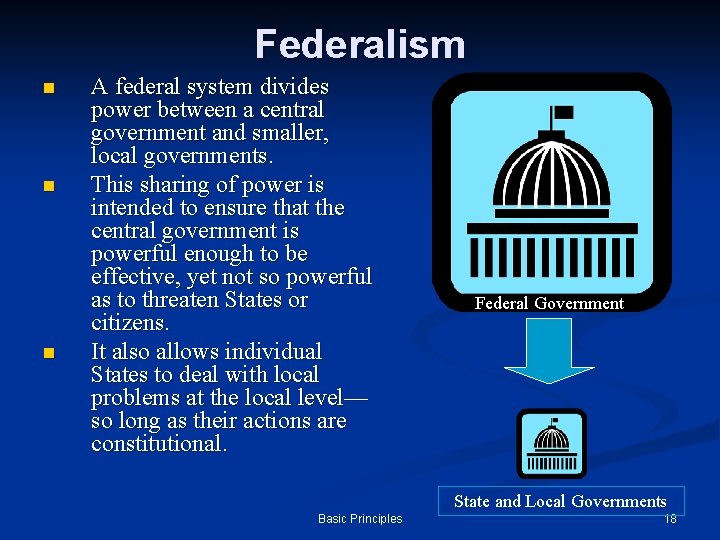
Federalism n n n A federal system divides power between a central government and smaller, local governments. This sharing of power is intended to ensure that the central government is powerful enough to be effective, yet not so powerful as to threaten States or citizens. It also allows individual States to deal with local problems at the local level— so long as their actions are constitutional. Federal Government State and Local Governments Basic Principles 18
Republicanism ***Not listed in your text*** In outlining our government “ of the people and by the people, ” the Constitution connects the citizenry of the United States to our government positions by way of elections. This election process confirms the principle of popular sovereignty by allowing the people of America to choose their leaders. Basic Principles 19