
The Settlement of the Middle Colonies New York

- Slides: 11
The Settlement of the Middle Colonies New York New Jersey Pennsylvania Delaware
New York � 1609 - Henry Hudson explores New York � 1621 - Dutch West India Company is granted permission to colonize New Netherland �A diverse colony: Dutch, German, French, Scandinavian and slaves will ultimately live in New Netherlands �The Dutch capitalize on the fur trade and foster good relations with the Iroquois
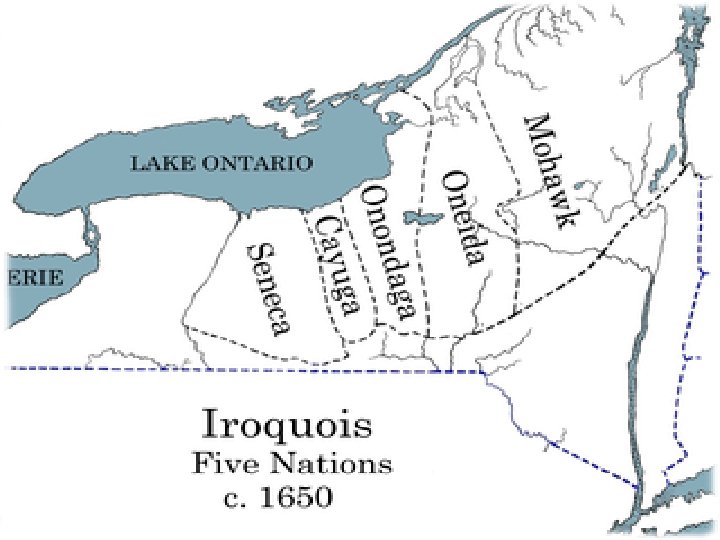
The Iroquois �“The • • • League of Five Nations”: Mohawk Oneida Onondaga Cayuga Seneca
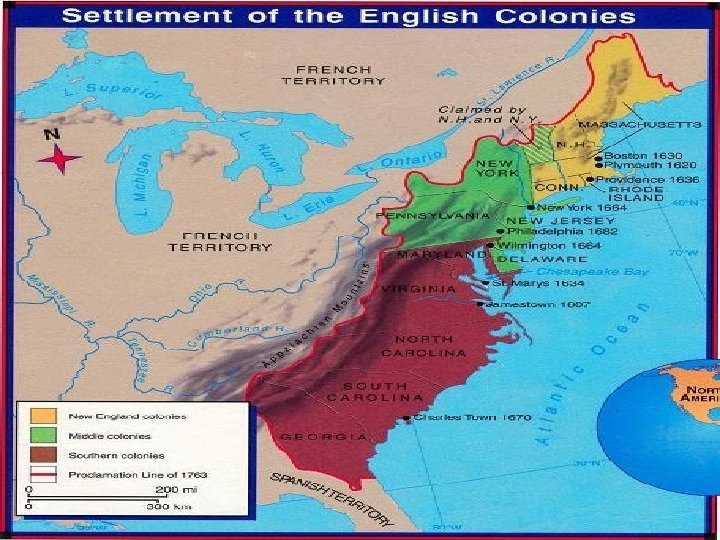
“A Dutch Wedge” �British came to view Dutch New Netherland as an obstacle to their power in America (separating New England) � 1664 – King Charles II authorizes his brother, the Duke of York to seize control of New Netherland �Dutch Colonial Governor Peter Stuyvesant concedes defeat �New York and later New Jersey would ultimately become proprietary colonies
Pennsylvania: “The Holy Experiment” �Settled by William Penn (1660 s) �Populated largely by Quakers / Religious Society of Friends �Quakers were unwelcome in England due to their radical views – ex: pacifism �Penn grants religious freedom and forms a representative assembly – all adult males can vote �Delaware would ultimately separate from Pennsylvania
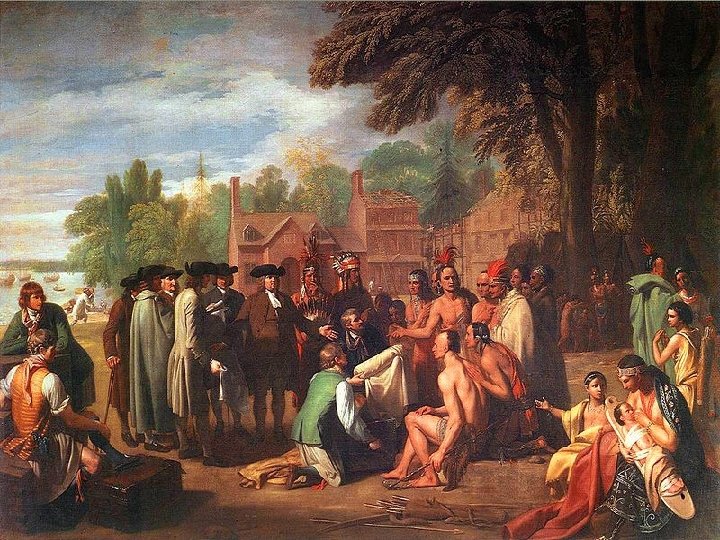
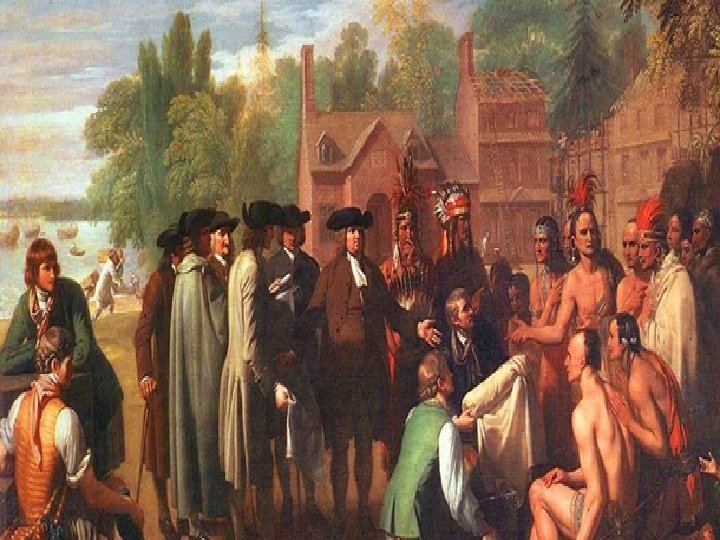
William Penn and Native Americans � Pennsylvania, unlike other colonies has no outbreak of violence between settlers and Native Americans � 1683 – Penn’s Treaty set the tone of peace which would last for 100 years: � “We meet on the broad pathway of good faith and good-will; no advantage shall be taken on either side, but all shall be openness and love. We are the same as if one man’s body was to be divided into two parts; we are of one flesh and one blood. ” – William Penn
Wrap up Q: �What does “religious freedom” mean in Massachusetts vs. Pennsylvania?