
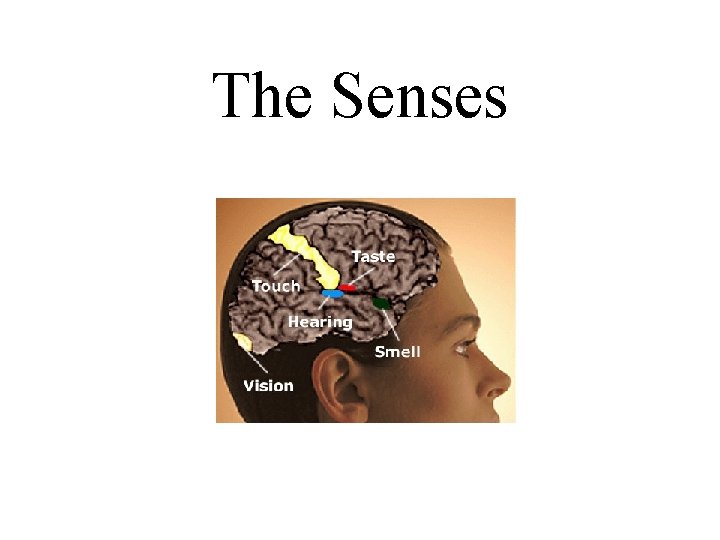
The Senses Sensory Receptors Five general categories Pain
- Slides: 27
The Senses
Sensory Receptors Five general categories • Pain receptors • Thermoreceptors • Mechanorecptors • Chemoreceptors • Photoreceptors
Pain Receptors • Located throughout body except the brain • Respond to chemicals released from damaged cells • Allow us to recognize injury, danger or disease
Thermoreceptors • Found in skin, body core and hypothalamus • Detect variations in temperature
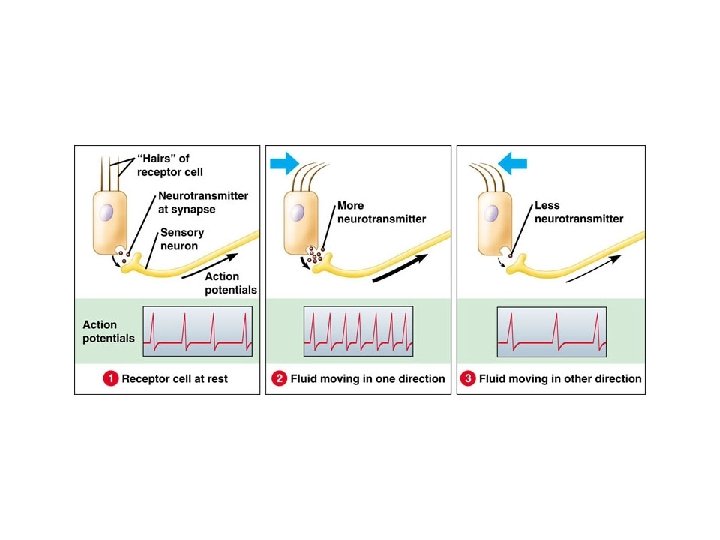
Mechanoreceptors • Found in skin, skeletal muscle, & inner ear • Sensitive to: – Sound – Touch – Pressure – Stretching of muscles – Motion
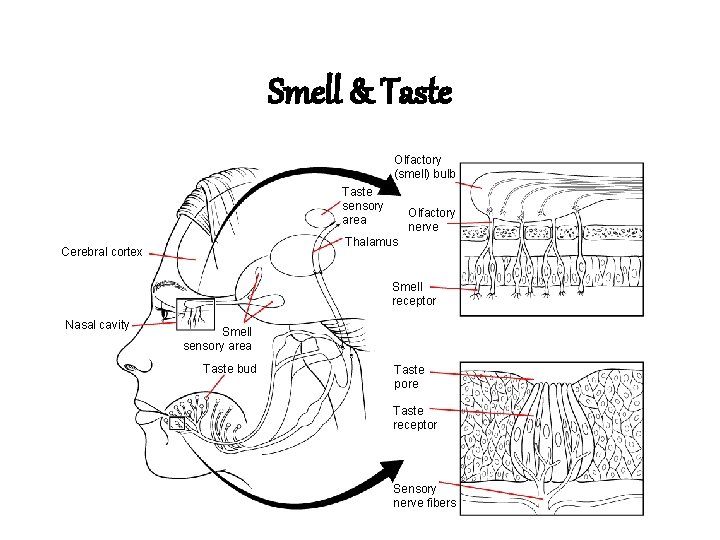
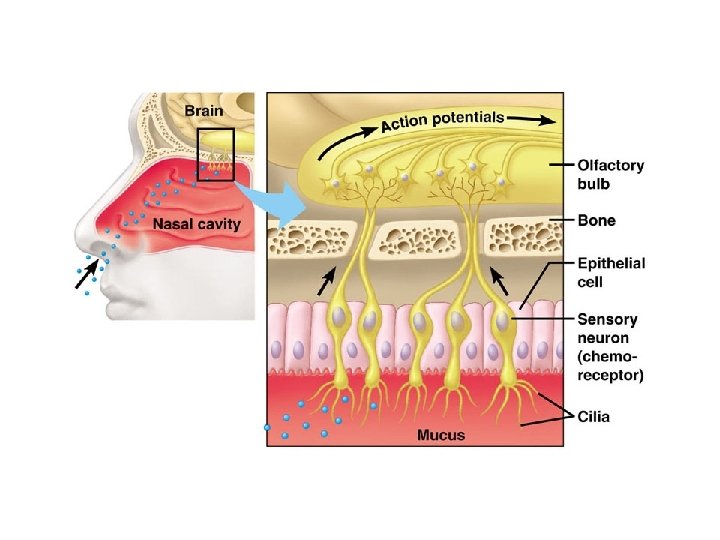
Chemoreceptors • Found in nose and taste buds • Sensitive to chemicals in external environment (unlike pain receptors)
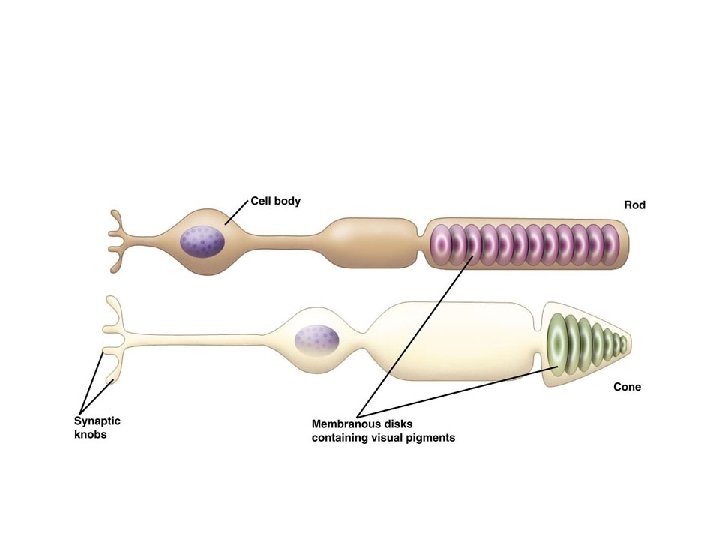
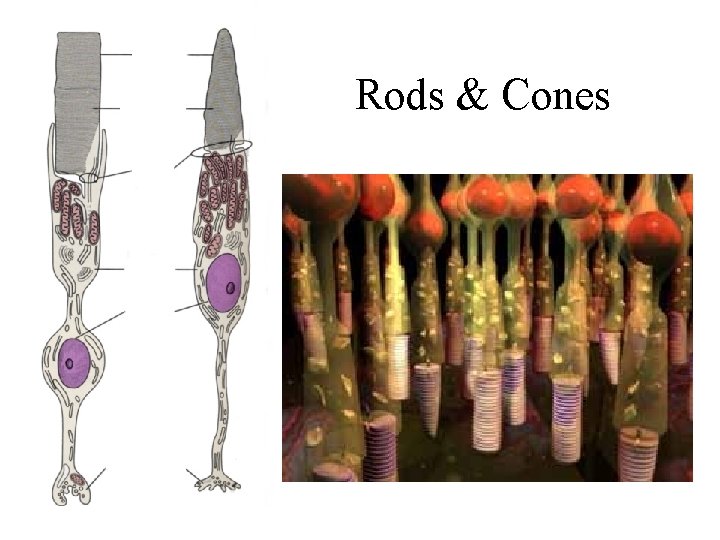
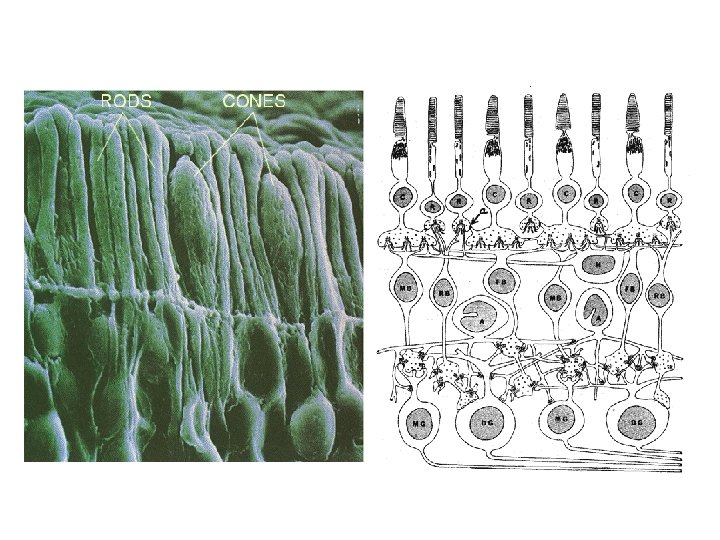
Photorecptors • Found in eyes • Sensitive to light – Cones are sensitive to colour – Rods are sensitive to the intensity of light
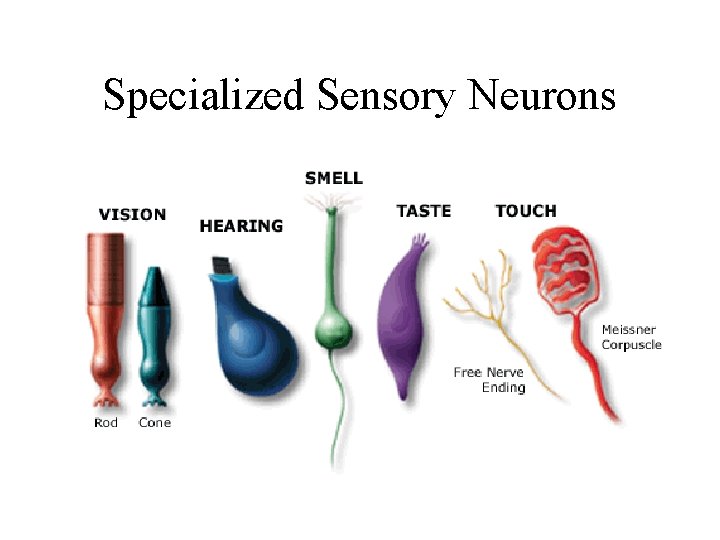
Specialized Sensory Neurons
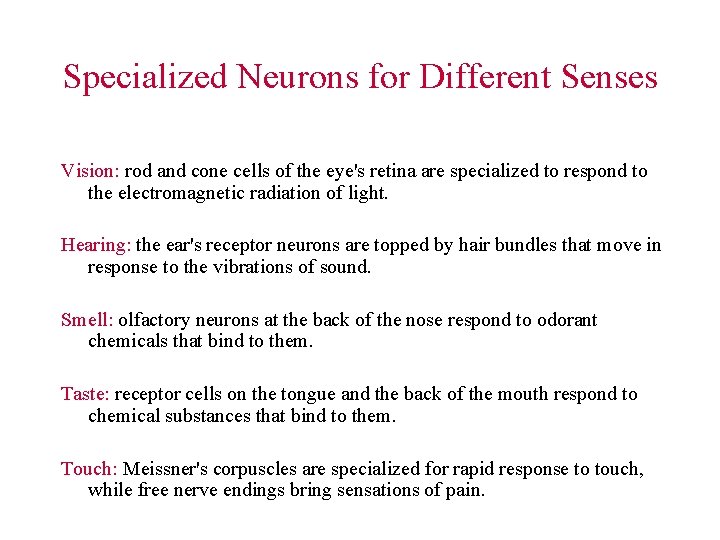
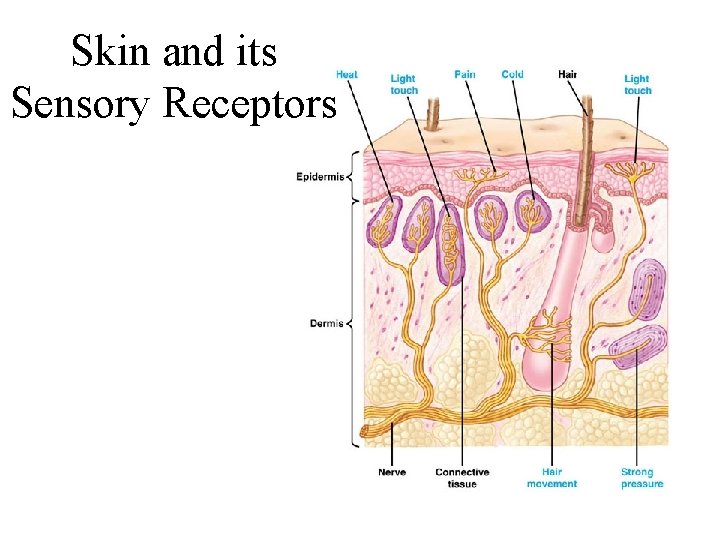
Specialized Neurons for Different Senses Vision: rod and cone cells of the eye's retina are specialized to respond to the electromagnetic radiation of light. Hearing: the ear's receptor neurons are topped by hair bundles that move in response to the vibrations of sound. Smell: olfactory neurons at the back of the nose respond to odorant chemicals that bind to them. Taste: receptor cells on the tongue and the back of the mouth respond to chemical substances that bind to them. Touch: Meissner's corpuscles are specialized for rapid response to touch, while free nerve endings bring sensations of pain.
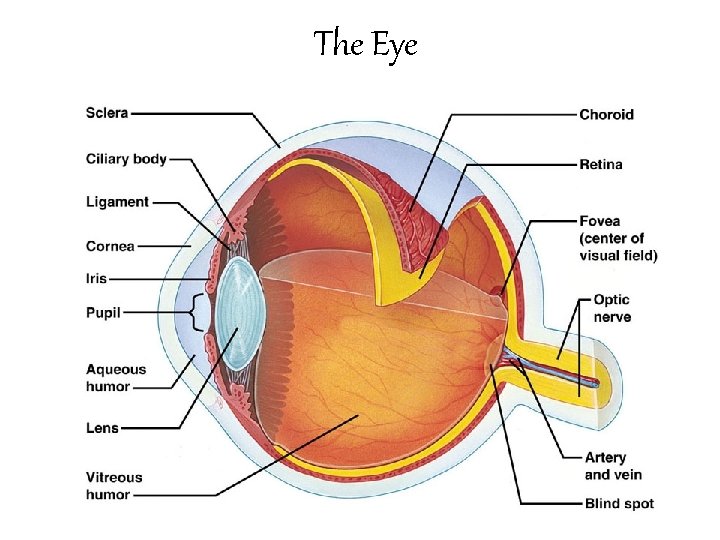
The Eye
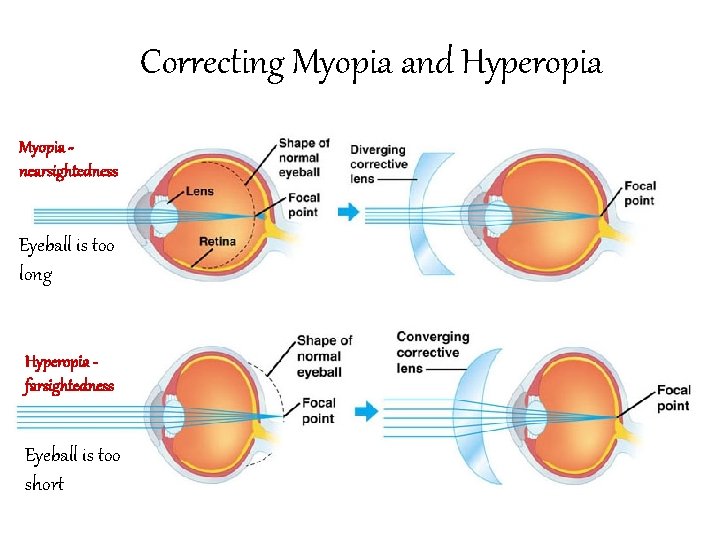
Correcting Myopia and Hyperopia Myopia nearsightedness Eyeball is too long Hyperopia farsightedness Eyeball is too short
Rods & Cones
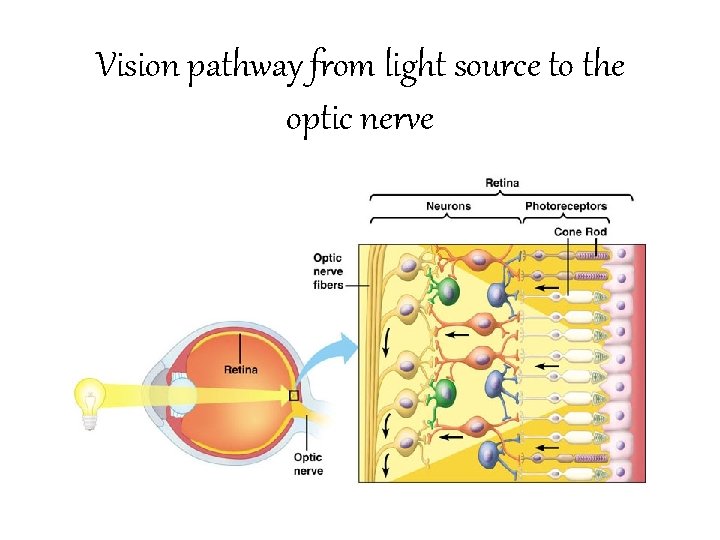
Vision pathway from light source to the optic nerve
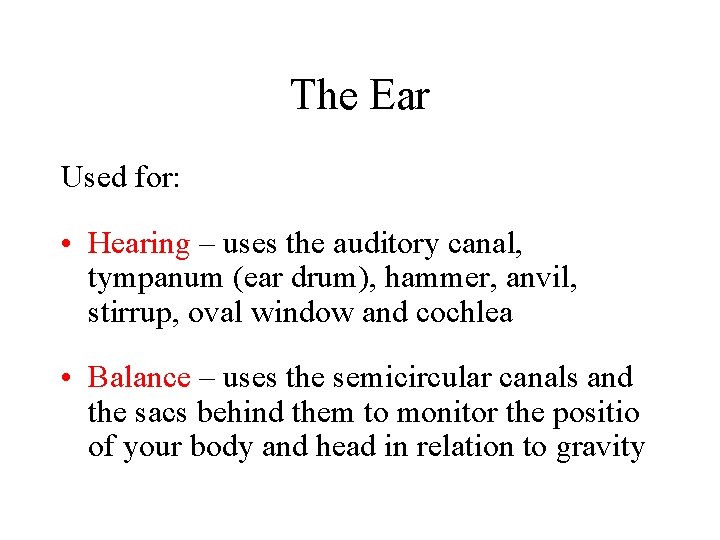
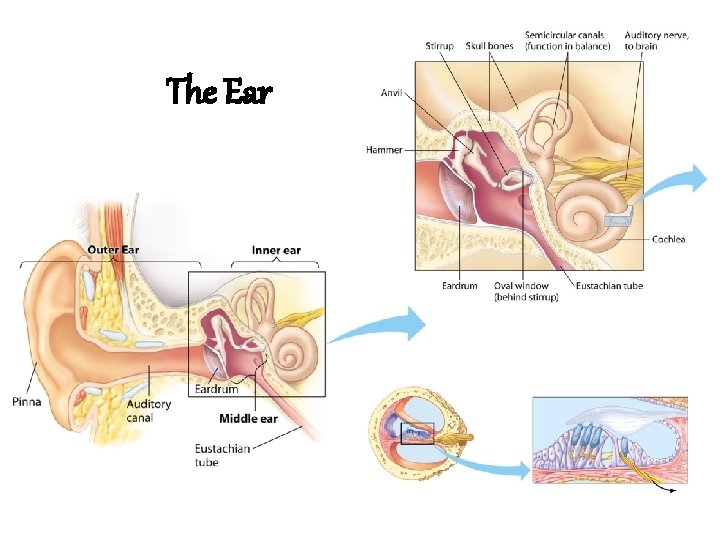
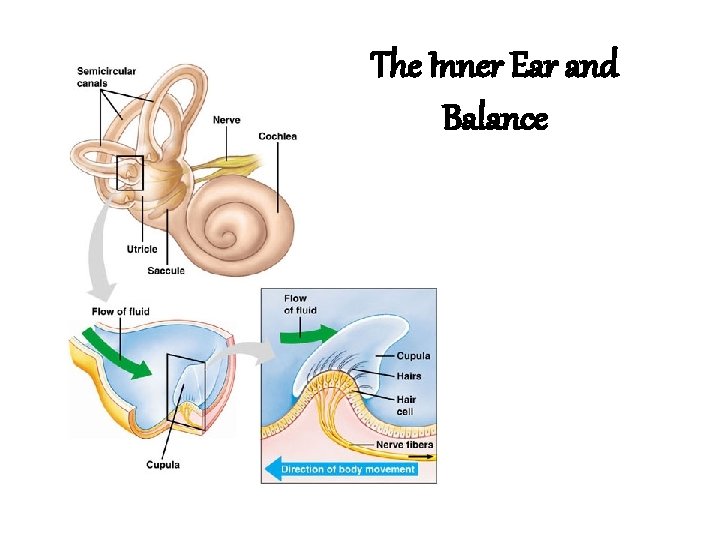
The Ear Used for: • Hearing – uses the auditory canal, tympanum (ear drum), hammer, anvil, stirrup, oval window and cochlea • Balance – uses the semicircular canals and the sacs behind them to monitor the positio of your body and head in relation to gravity
The Ear
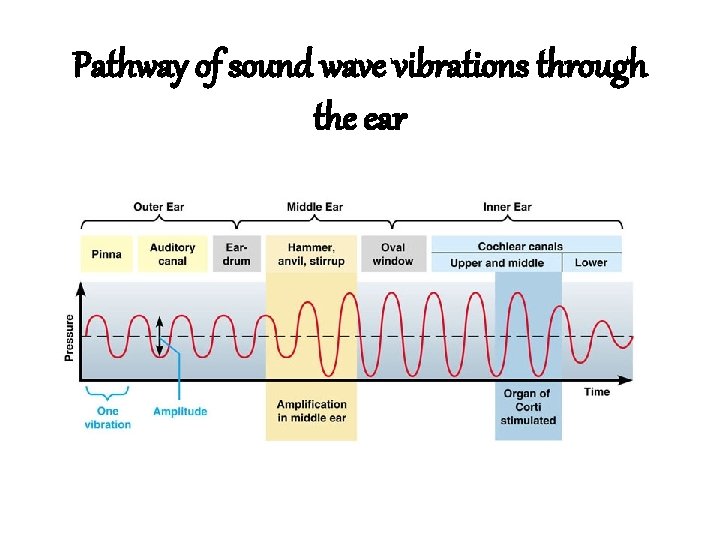
Pathway of sound wave vibrations through the ear
The Inner Ear and Balance
Smell & Taste Olfactory (smell) bulb Taste sensory area Olfactory nerve Thalamus Cerebral cortex Smell receptor Nasal cavity Smell sensory area Taste bud Taste pore Taste receptor Sensory nerve fibers
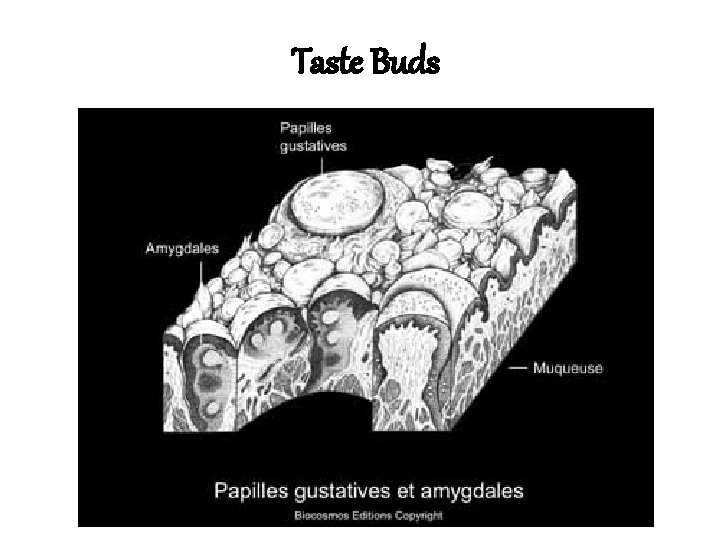
Taste Buds
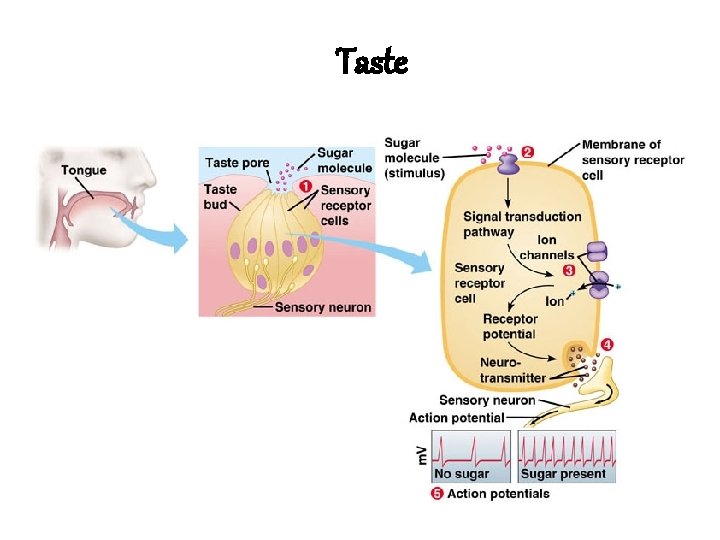
Taste
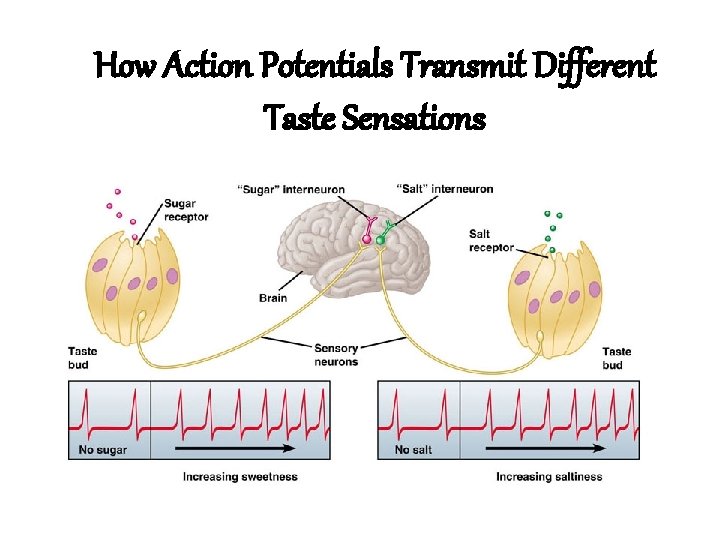
How Action Potentials Transmit Different Taste Sensations
Skin and its Sensory Receptors