
The Senses Introduction Senses of the Body SIGHT
The Senses
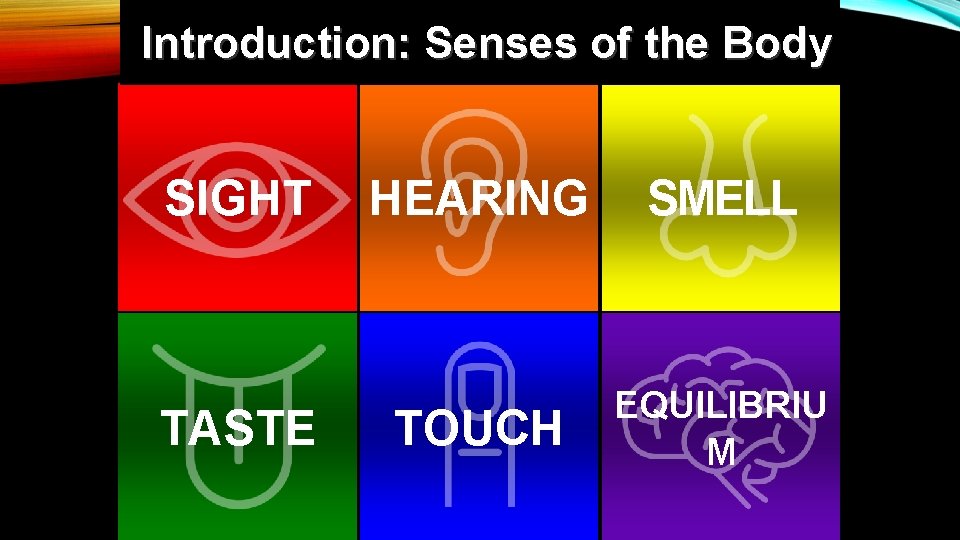
Introduction: Senses of the Body SIGHT TASTE HEARING SMELL TOUCH EQUILIBRIU M
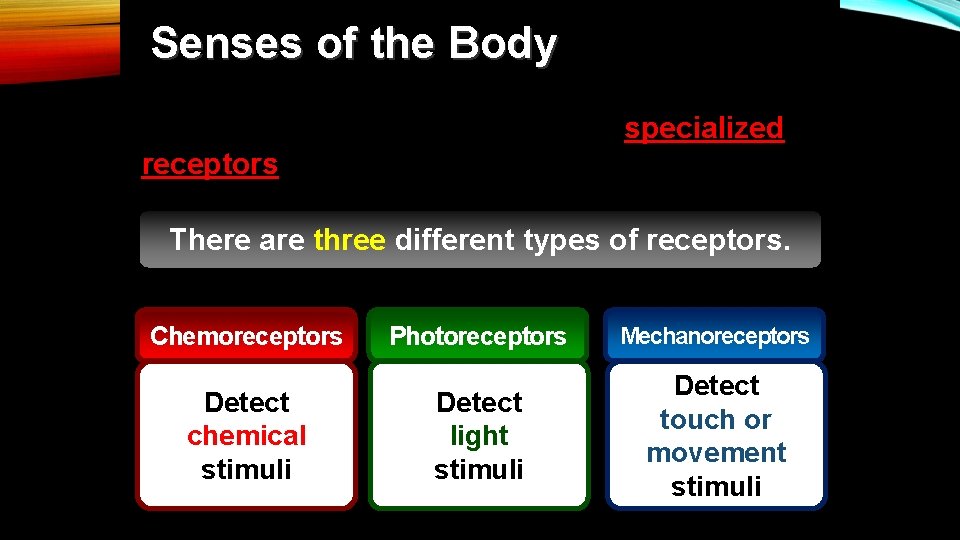
Senses of the Body The senses of the body rely on specialized receptors that allow them to respond to stimuli. There are three different types of receptors. Chemoreceptors Detect chemical stimuli Photoreceptors Mechanoreceptors Detect light stimuli Detect touch or movement stimuli
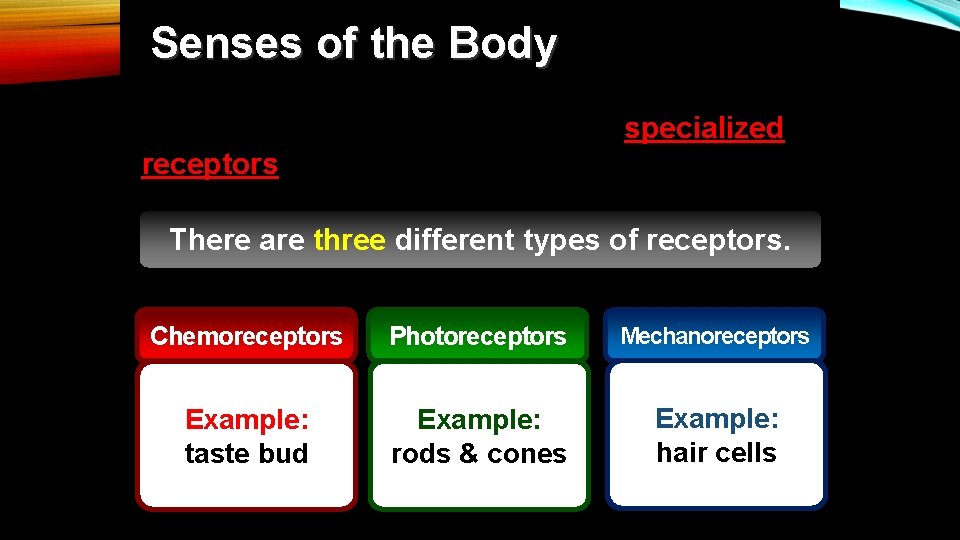
Senses of the Body The senses of the body rely on specialized receptors that allow them to respond to stimuli. There are three different types of receptors. Chemoreceptors Detect Example: chemical taste bud stimuli Photoreceptors Mechanoreceptors Detect Example: light rods & cones stimuli Detect Example: touch or hair cells movement stimuli
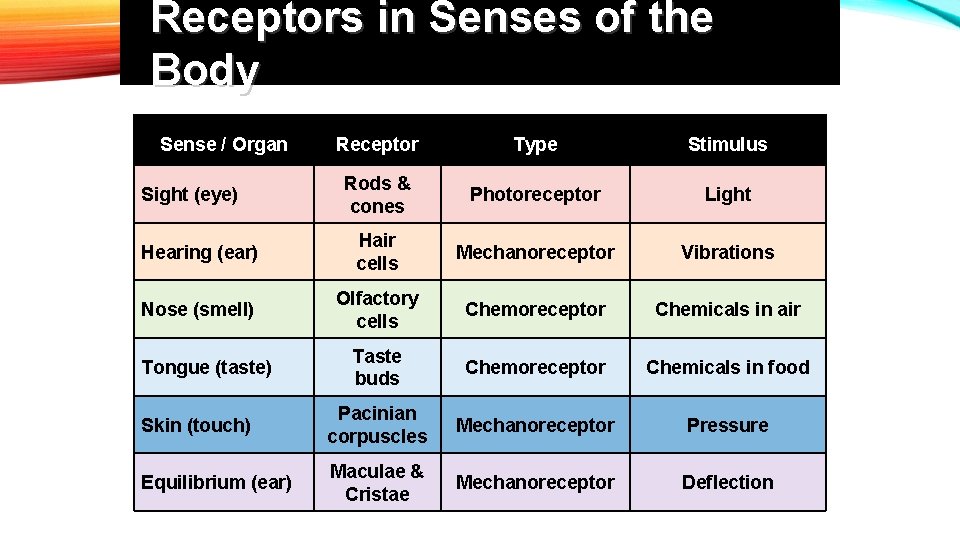
Receptors in Senses of the Body Sense / Organ Receptor Type Stimulus Rods & cones Photoreceptor Light Hearing (ear) Hair cells Mechanoreceptor Vibrations Nose (smell) Olfactory cells Chemoreceptor Chemicals in air Taste buds Chemoreceptor Chemicals in food Skin (touch) Pacinian corpuscles Mechanoreceptor Pressure Equilibrium (ear) Maculae & Cristae Mechanoreceptor Deflection Sight (eye) Tongue (taste)
Sensory Cortexes in the Brain All stimuli received by the different receptors mentioned is carried along sensory neurons to a specific area of the brain. The sensory cortex refers to the multiple areas of the brain where senses are received and are processed. There are six in total. The 6 different cortexes are shown in the following diagram.
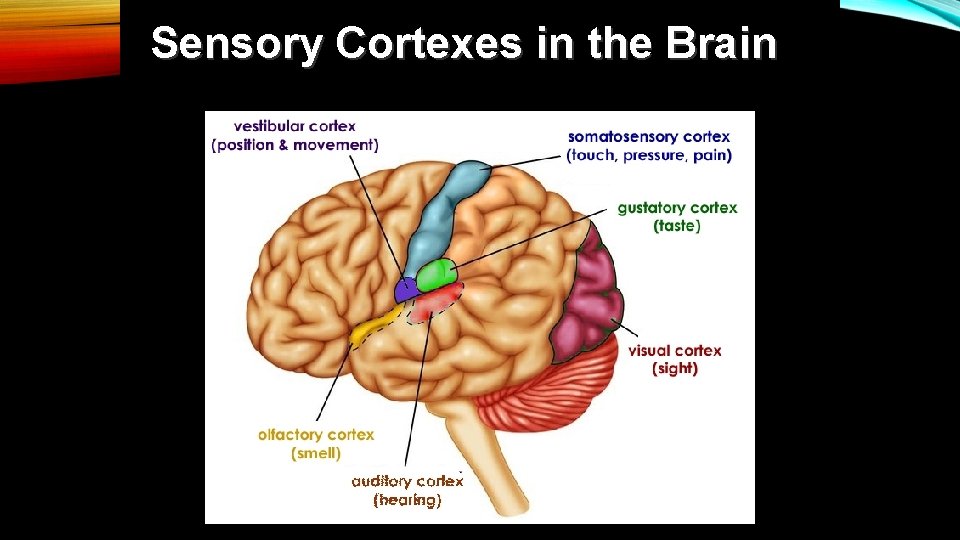
Sensory Cortexes in the Brain
Any Questions?
- Slides: 8