
The Seminole Wars 1817 to 1858 U S

- Slides: 60
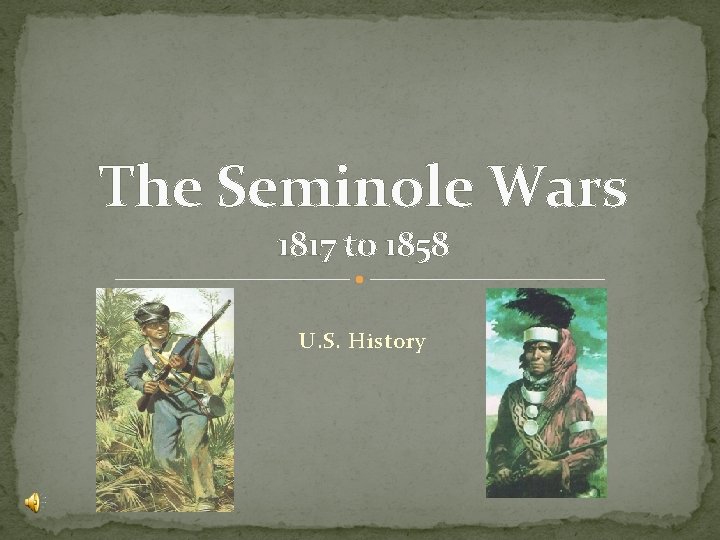
The Seminole Wars 1817 to 1858 U. S. History
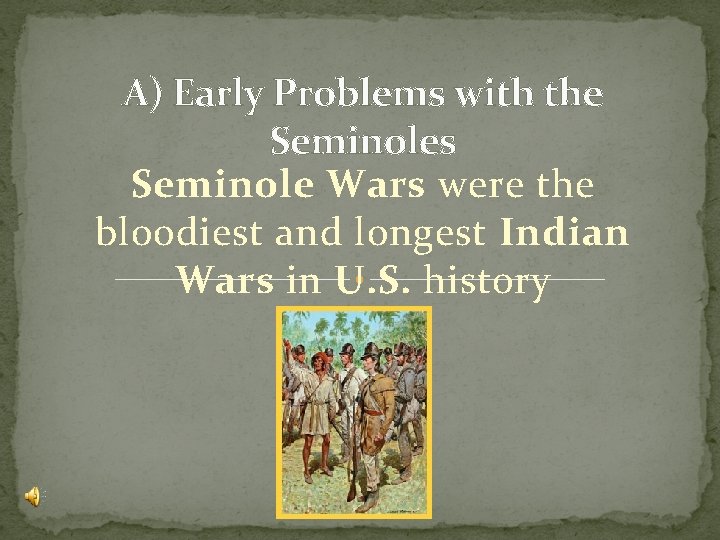
A) Early Problems with the Seminoles Seminole Wars were the bloodiest and longest Indian Wars in U. S. history
“Seminoles” (“runaway or wild ones”) • The “Seminoles” were actually Oconee Creek Indians who fled Georgia in the 1700’s to escape American colonial immigration west (“cimmarones” to Spanish)
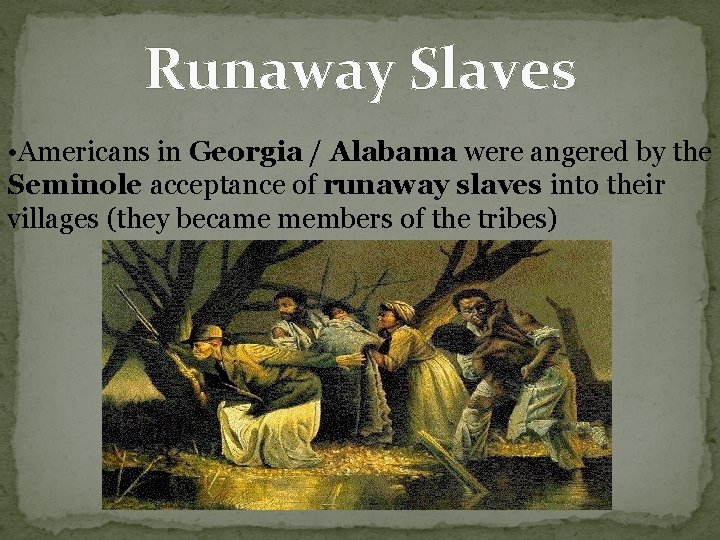
Runaway Slaves • Americans in Georgia / Alabama were angered by the Seminole acceptance of runaway slaves into their villages (they became members of the tribes)
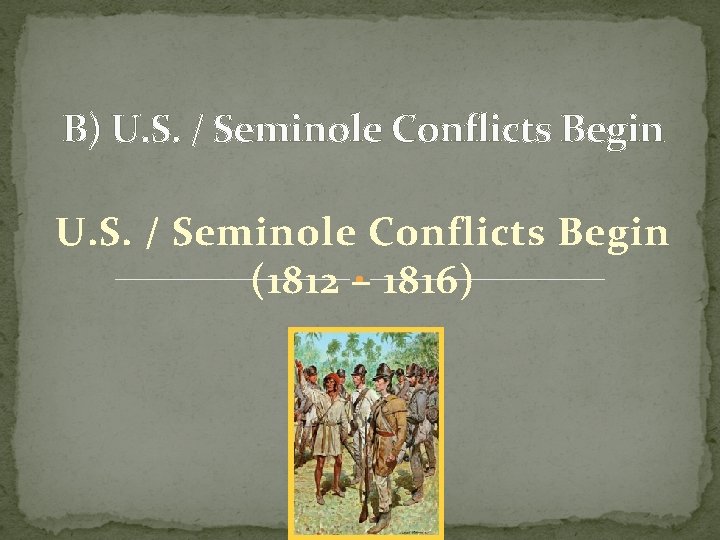
B) U. S. / Seminole Conflicts Begin (1812 – 1816)
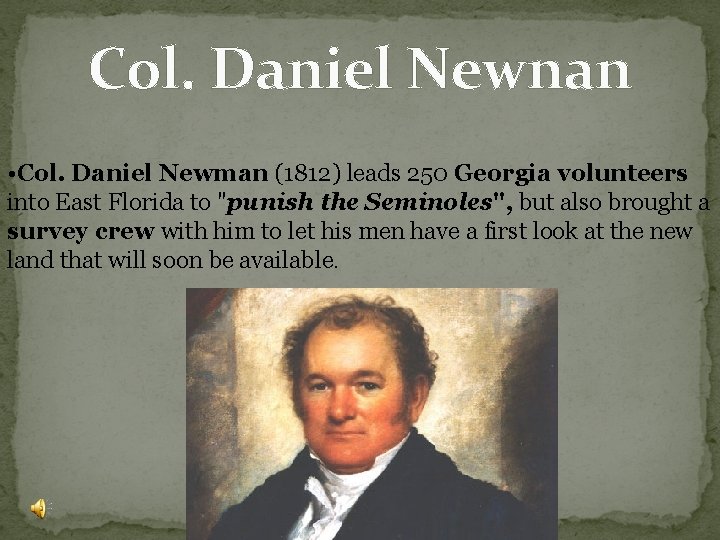
Col. Daniel Newnan • Col. Daniel Newman (1812) leads 250 Georgia volunteers into East Florida to "punish the Seminoles", but also brought a survey crew with him to let his men have a first look at the new land that will soon be available.
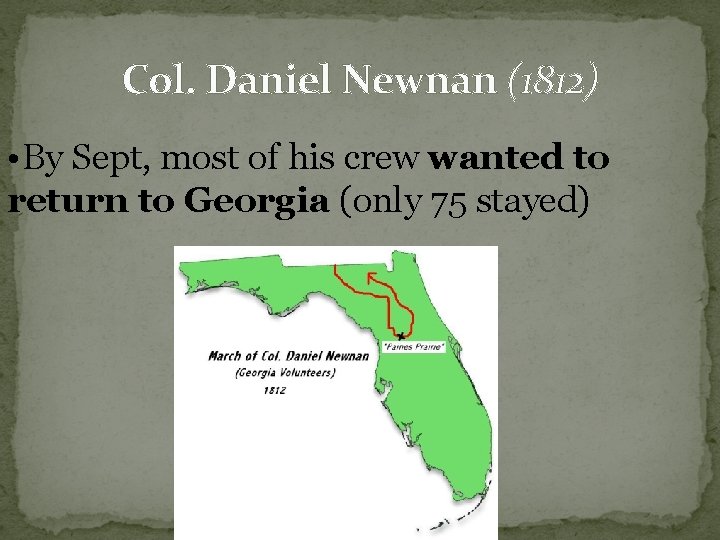
Col. Daniel Newnan (1812) • By Sept, most of his crew wanted to return to Georgia (only 75 stayed)
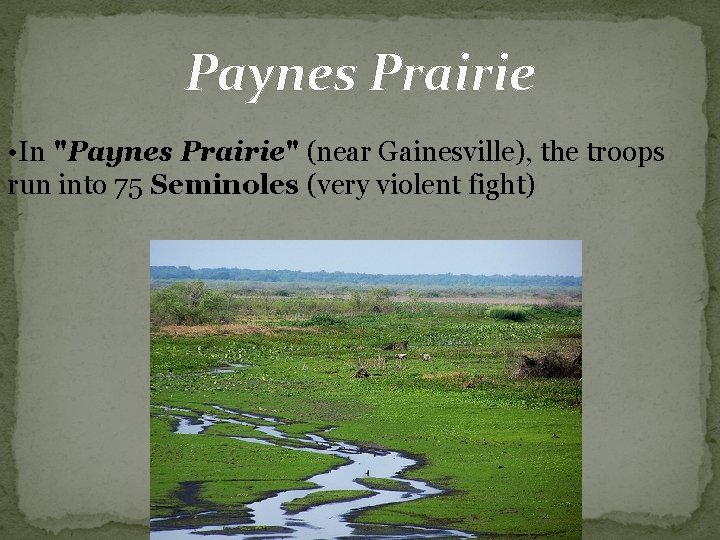
Paynes Prairie • In "Paynes Prairie" (near Gainesville), the troops run into 75 Seminoles (very violent fight)
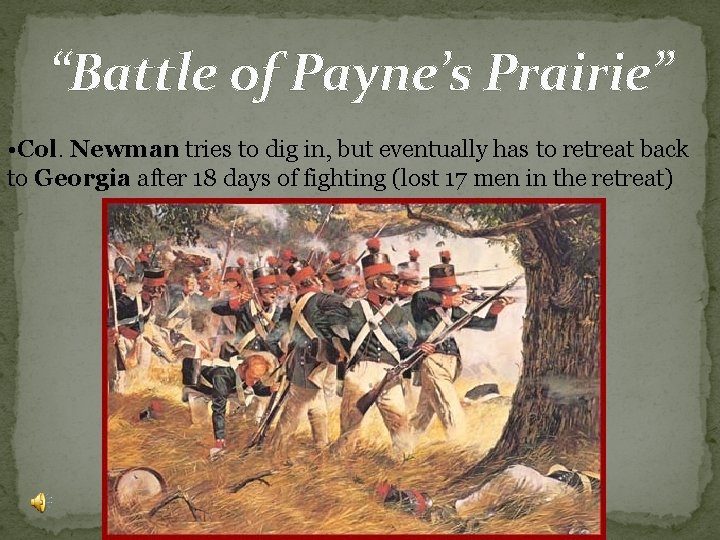
“Battle of Payne’s Prairie” • Col. Newman tries to dig in, but eventually has to retreat back to Georgia after 18 days of fighting (lost 17 men in the retreat)
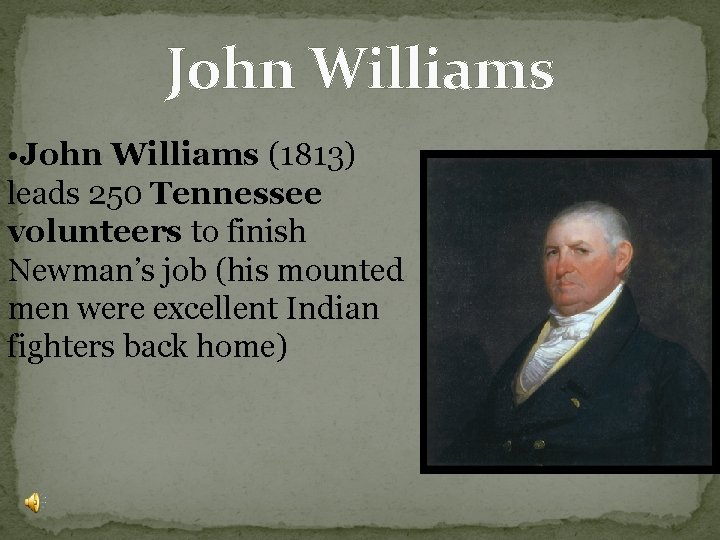
John Williams • John Williams (1813) leads 250 Tennessee volunteers to finish Newman’s job (his mounted men were excellent Indian fighters back home)
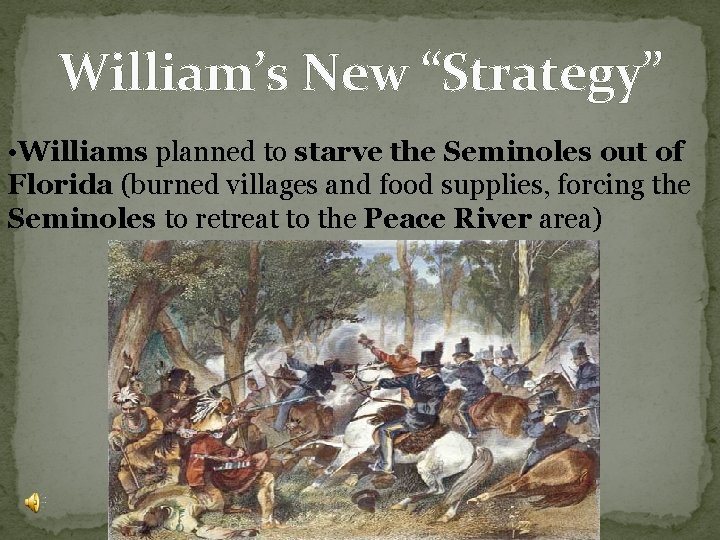
William’s New “Strategy” • Williams planned to starve the Seminoles out of Florida (burned villages and food supplies, forcing the Seminoles to retreat to the Peace River area)
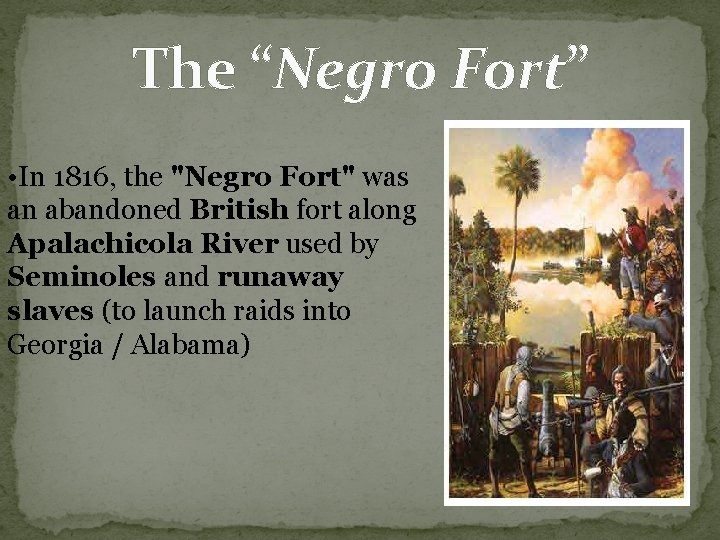
The “Negro Fort” • In 1816, the "Negro Fort" was an abandoned British fort along Apalachicola River used by Seminoles and runaway slaves (to launch raids into Georgia / Alabama)
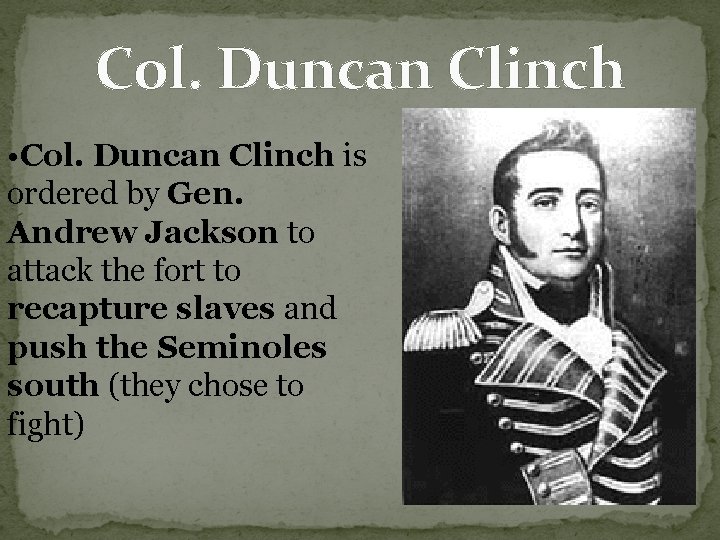
Col. Duncan Clinch • Col. Duncan Clinch is ordered by Gen. Andrew Jackson to attack the fort to recapture slaves and push the Seminoles south (they chose to fight)
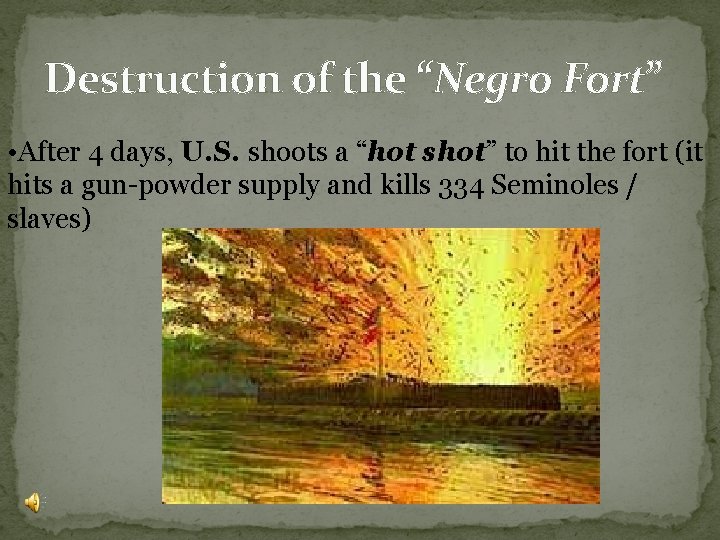
Destruction of the “Negro Fort” • After 4 days, U. S. shoots a “hot shot” to hit the fort (it hits a gun-powder supply and kills 334 Seminoles / slaves)
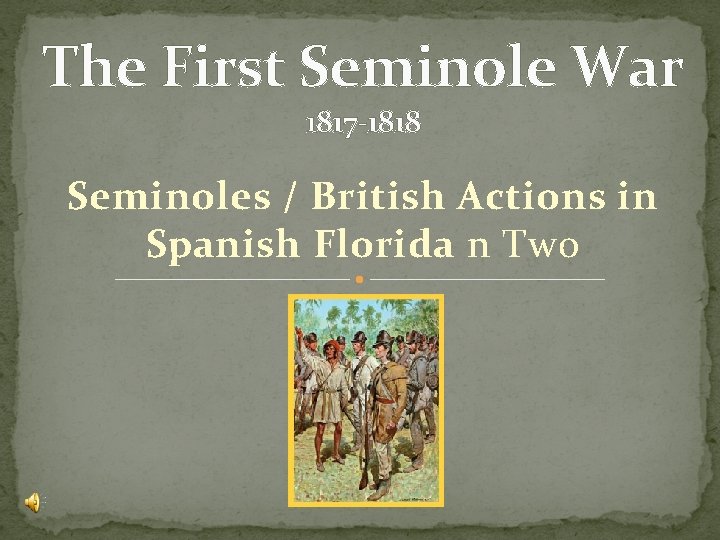
The First Seminole War 1817 -1818 Seminoles / British Actions in Spanish Florida n Two
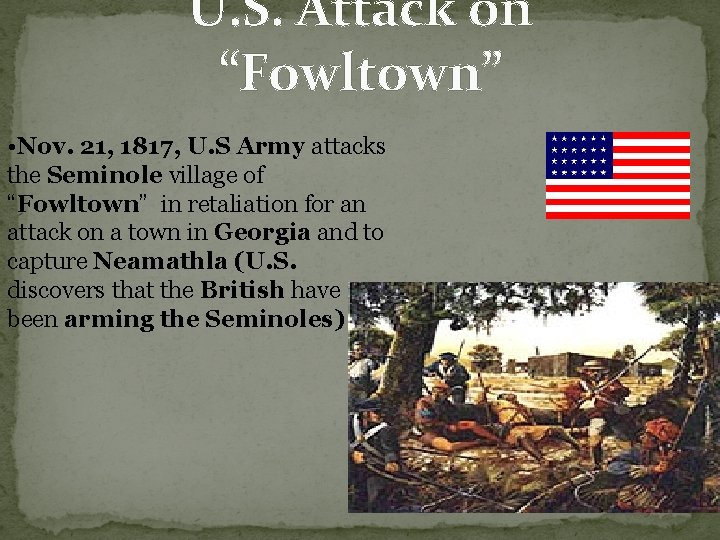
U. S. Attack on “Fowltown” • Nov. 21, 1817, U. S Army attacks the Seminole village of “Fowltown” in retaliation for an attack on a town in Georgia and to capture Neamathla (U. S. discovers that the British have been arming the Seminoles)
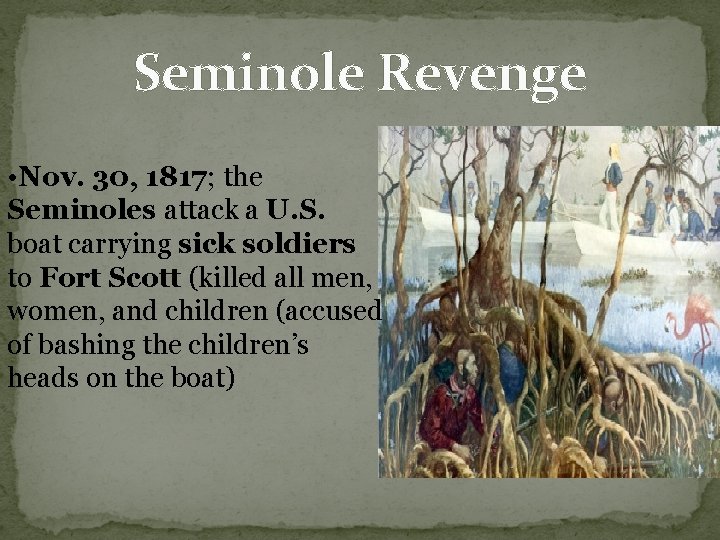
Seminole Revenge • Nov. 30, 1817; the Seminoles attack a U. S. boat carrying sick soldiers to Fort Scott (killed all men, women, and children (accused of bashing the children’s heads on the boat)
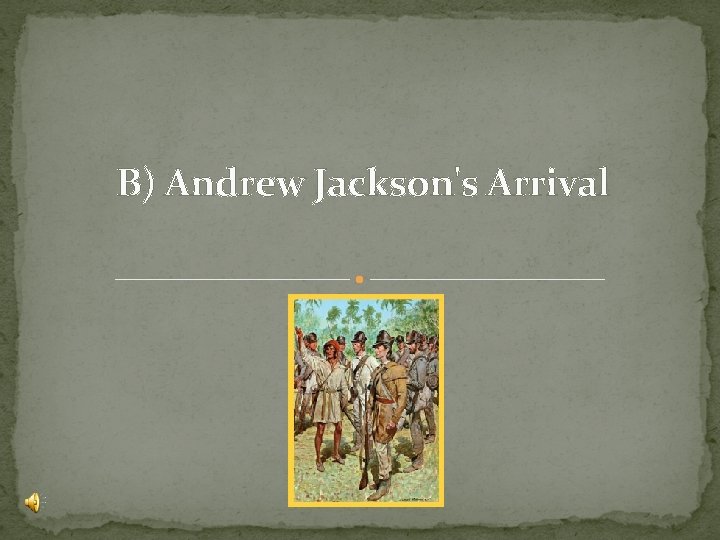
B) Andrew Jackson's Arrival
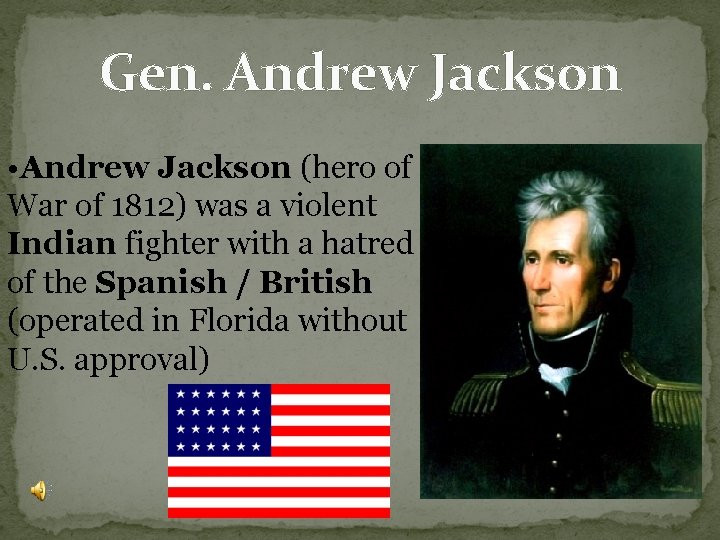
Gen. Andrew Jackson • Andrew Jackson (hero of War of 1812) was a violent Indian fighter with a hatred of the Spanish / British (operated in Florida without U. S. approval)
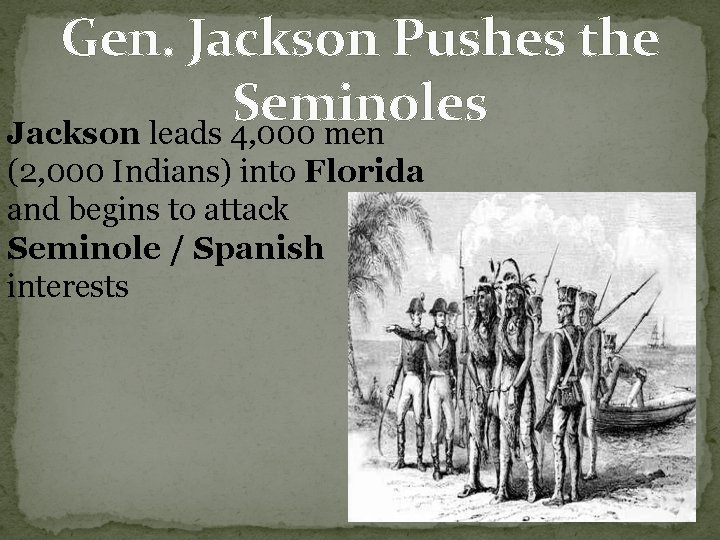
Gen. Jackson Pushes the Seminoles Jackson leads 4, 000 men (2, 000 Indians) into Florida and begins to attack Seminole / Spanish interests
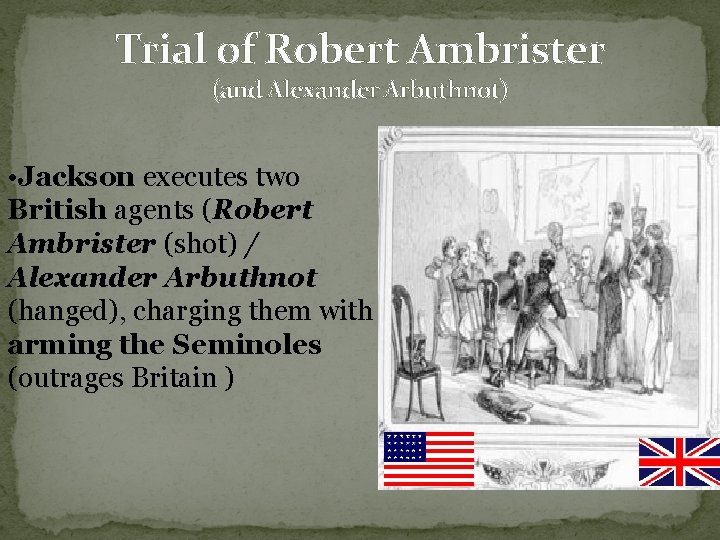
Trial of Robert Ambrister (and Alexander Arbuthnot) • Jackson executes two British agents (Robert Ambrister (shot) / Alexander Arbuthnot (hanged), charging them with arming the Seminoles (outrages Britain )
Florida Joins the U. S. • By the time he leaves, Jackson has pushed the Seminoles away from Georgia and shut down the escape routes of runaway slaves and eventually leads to Spain ceding Florida to the United States.
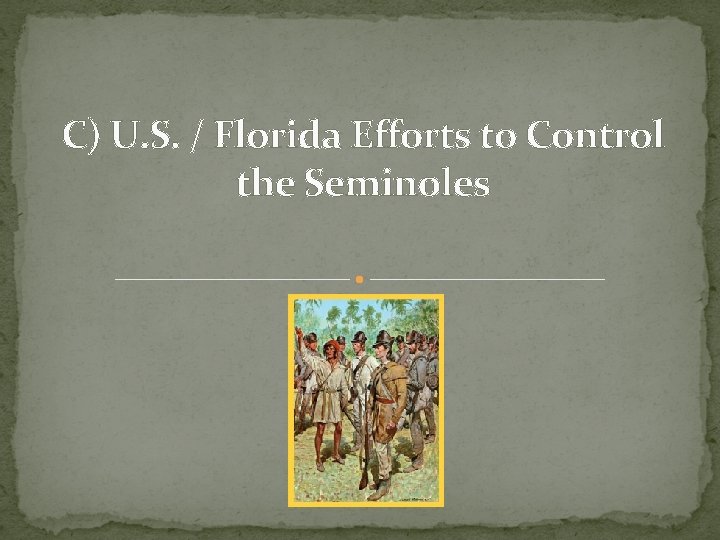
C) U. S. / Florida Efforts to Control the Seminoles
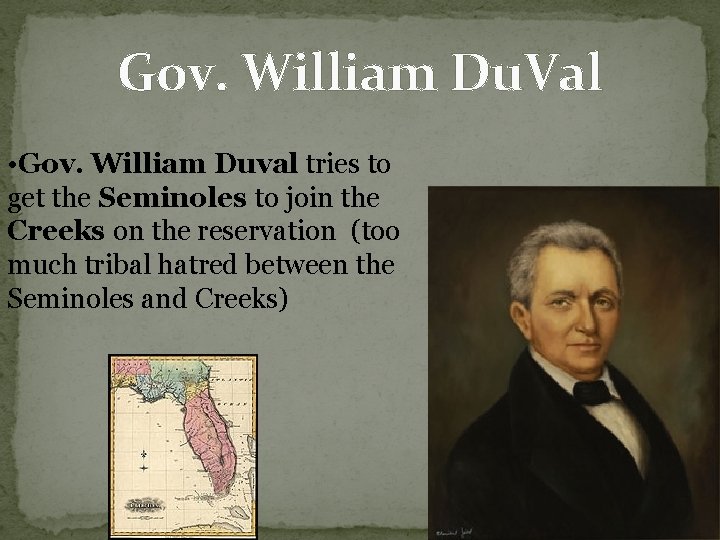
Gov. William Du. Val • Gov. William Duval tries to get the Seminoles to join the Creeks on the reservation (too much tribal hatred between the Seminoles and Creeks)
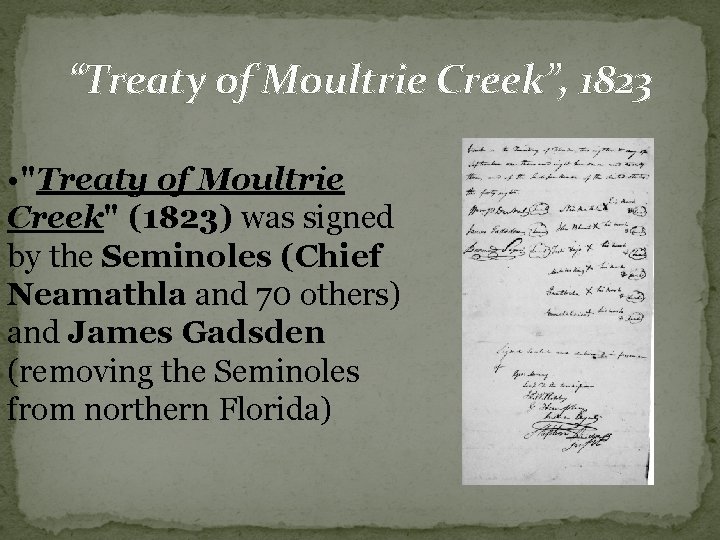
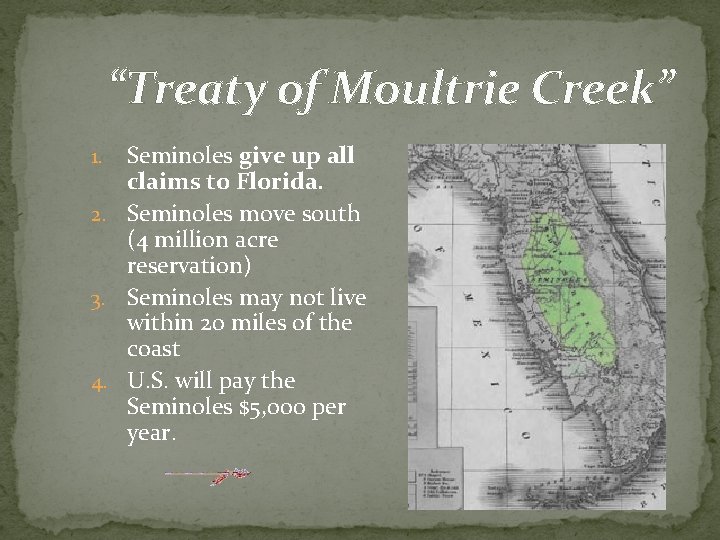
“Treaty of Moultrie Creek”, 1823 • "Treaty of Moultrie Creek" (1823) was signed by the Seminoles (Chief Neamathla and 70 others) and James Gadsden (removing the Seminoles from northern Florida)
“Treaty of Moultrie Creek” Seminoles give up all claims to Florida. 2. Seminoles move south (4 million acre reservation) 3. Seminoles may not live within 20 miles of the coast 4. U. S. will pay the Seminoles $5, 000 per year. 1.
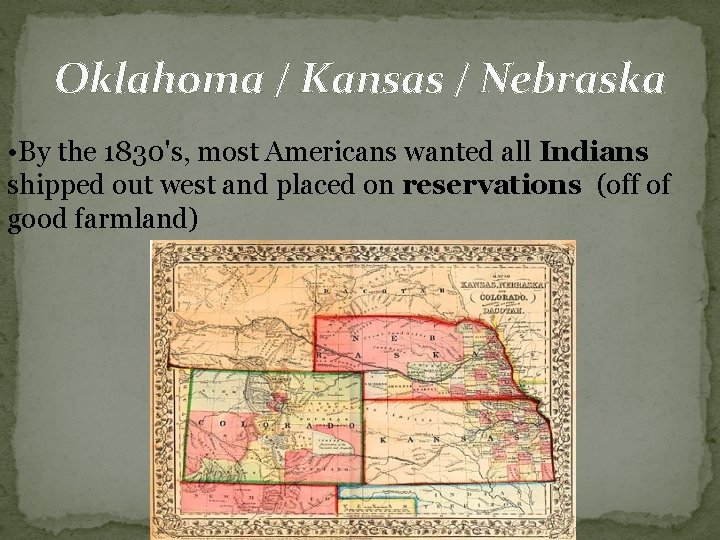
Oklahoma / Kansas / Nebraska • By the 1830's, most Americans wanted all Indians shipped out west and placed on reservations (off of good farmland)
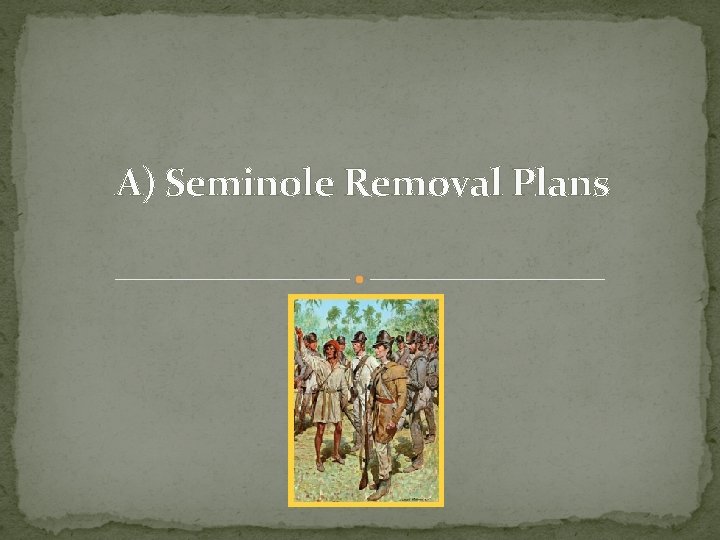
A) Seminole Removal Plans
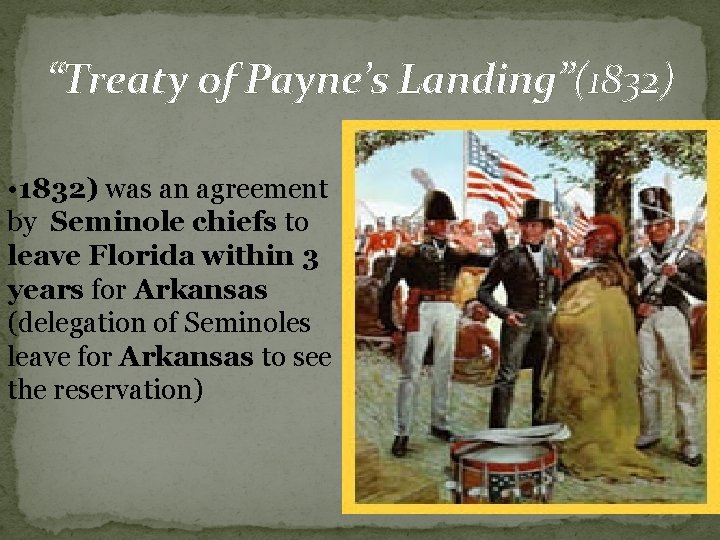
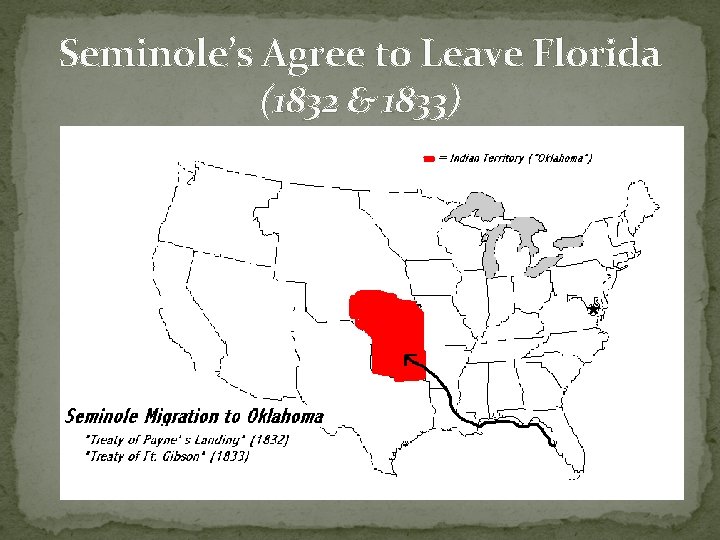
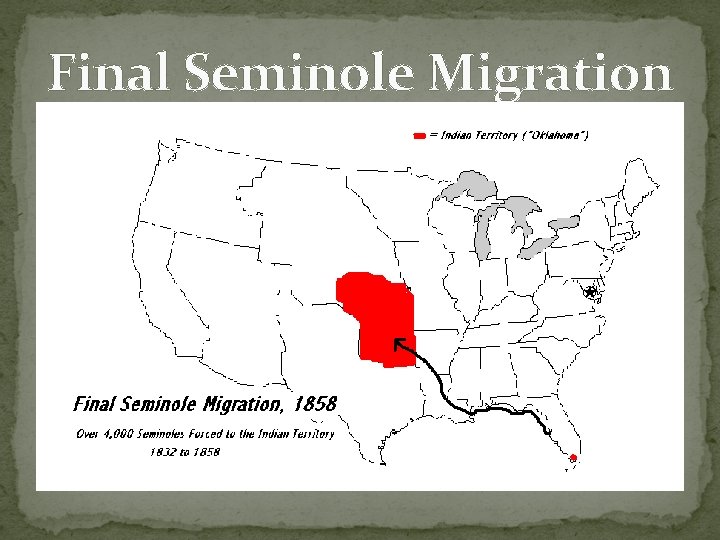
“Treaty of Payne’s Landing”(1832) • 1832) was an agreement by Seminole chiefs to leave Florida within 3 years for Arkansas (delegation of Seminoles leave for Arkansas to see the reservation)
Seminole’s Agree to Leave Florida (1832 & 1833)
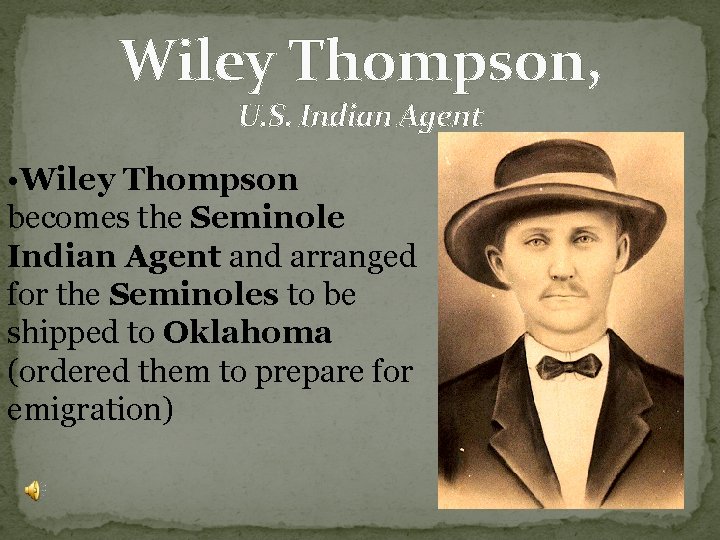
Wiley Thompson, U. S. Indian Agent • Wiley Thompson becomes the Seminole Indian Agent and arranged for the Seminoles to be shipped to Oklahoma (ordered them to prepare for emigration)
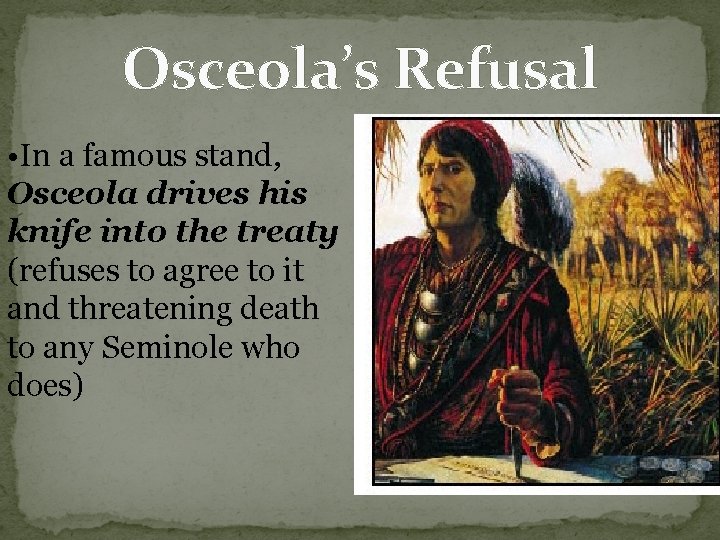
Osceola’s Refusal • In a famous stand, Osceola drives his knife into the treaty (refuses to agree to it and threatening death to any Seminole who does)
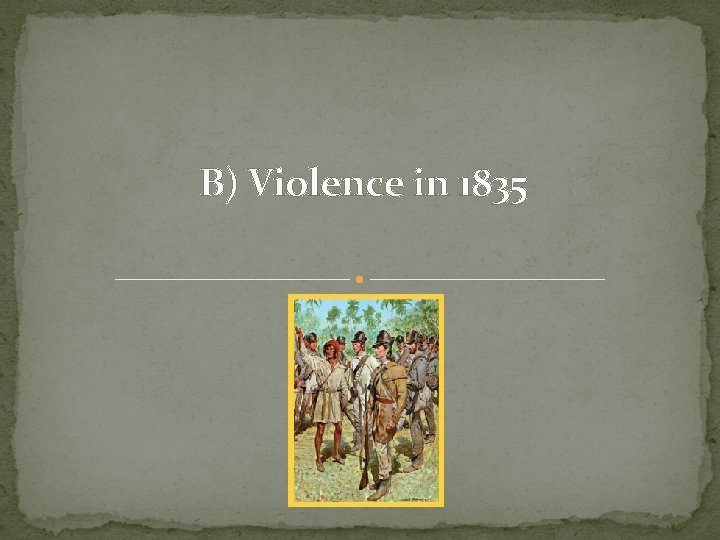
B) Violence in 1835
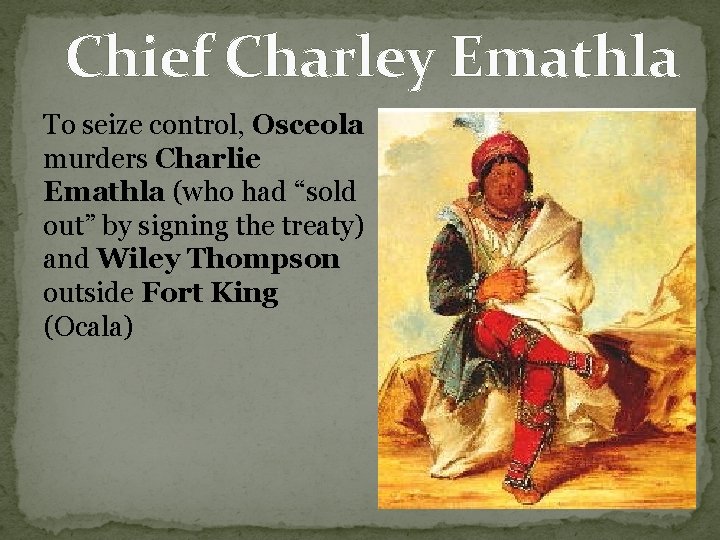
Chief Charley Emathla To seize control, Osceola murders Charlie Emathla (who had “sold out” by signing the treaty) and Wiley Thompson outside Fort King (Ocala)
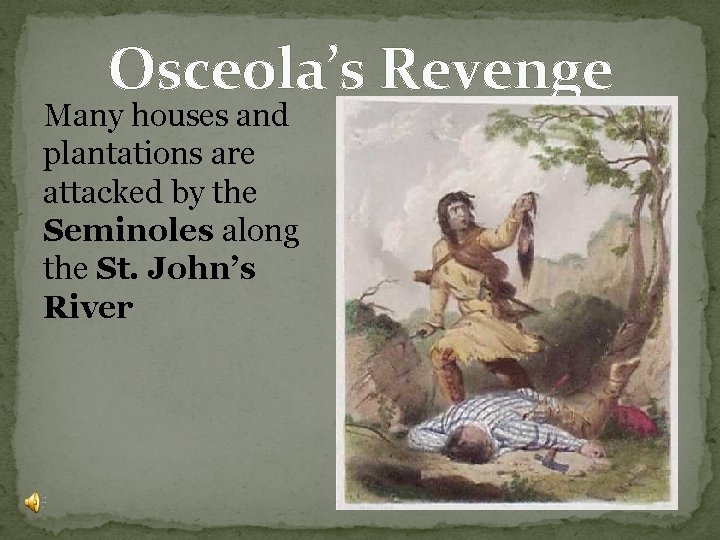
Osceola’s Revenge Many houses and plantations are attacked by the Seminoles along the St. John’s River
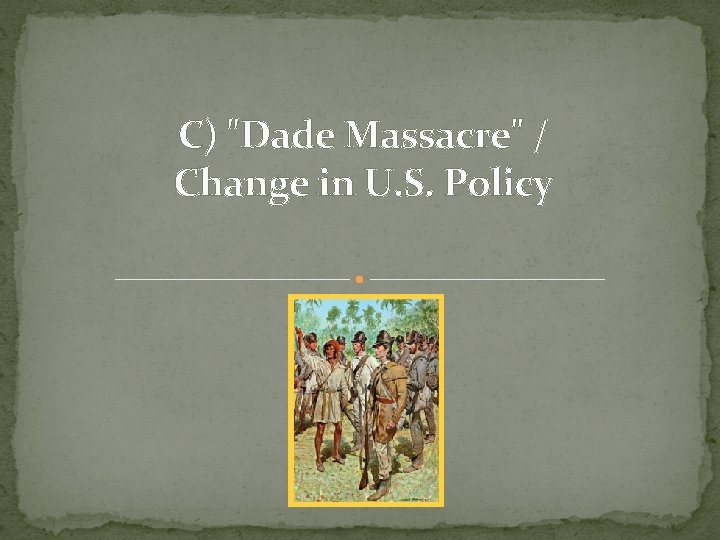
C) "Dade Massacre" / Change in U. S. Policy
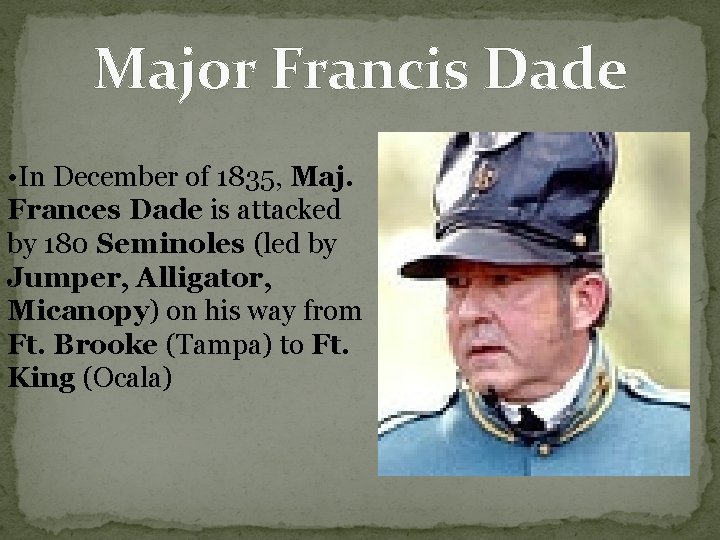
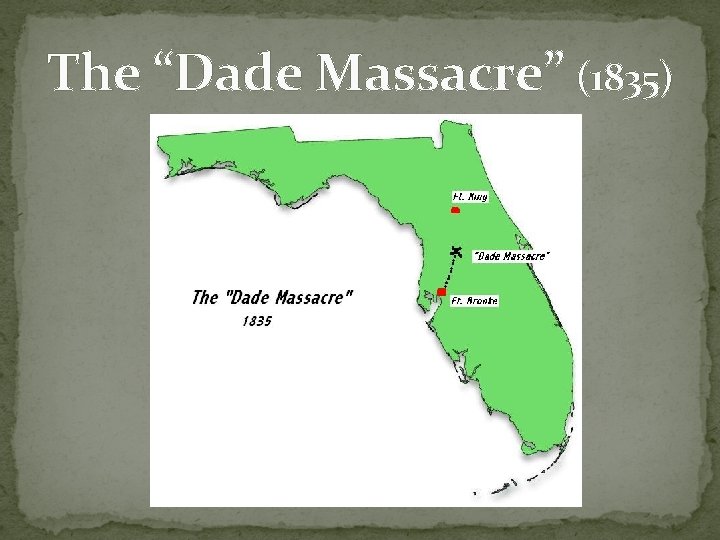
Major Francis Dade • In December of 1835, Maj. Frances Dade is attacked by 180 Seminoles (led by Jumper, Alligator, Micanopy) on his way from Ft. Brooke (Tampa) to Ft. King (Ocala)
The “Dade Massacre” (1835)
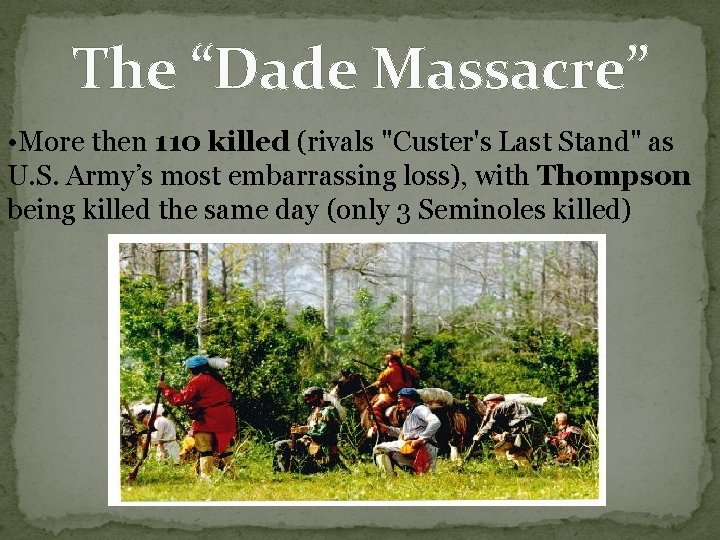
The “Dade Massacre” • More then 110 killed (rivals "Custer's Last Stand" as U. S. Army’s most embarrassing loss), with Thompson being killed the same day (only 3 Seminoles killed)
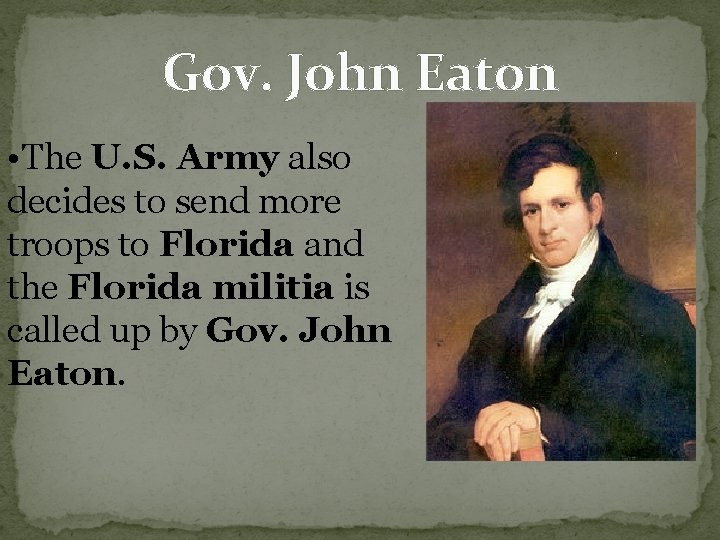
Gov. John Eaton • The U. S. Army also decides to send more troops to Florida and the Florida militia is called up by Gov. John Eaton.
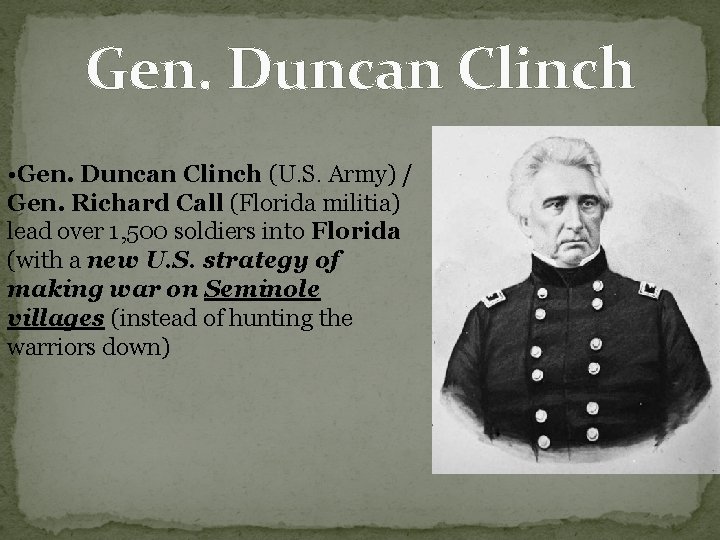
Gen. Duncan Clinch • Gen. Duncan Clinch (U. S. Army) / Gen. Richard Call (Florida militia) lead over 1, 500 soldiers into Florida (with a new U. S. strategy of making war on Seminole villages (instead of hunting the warriors down)
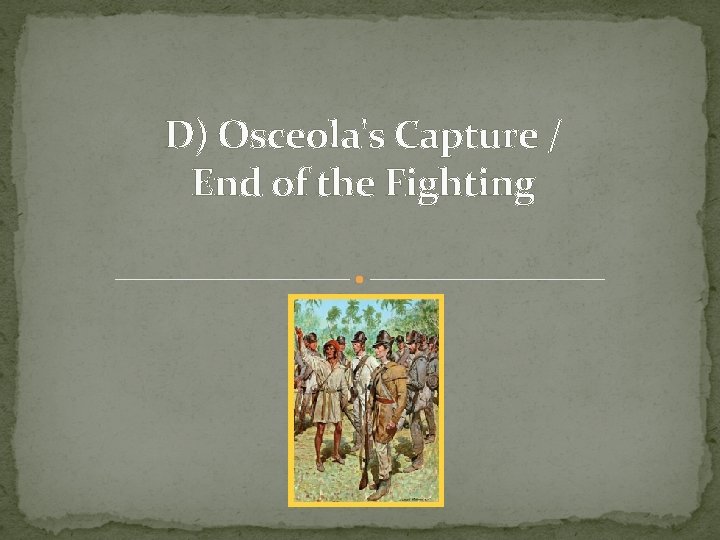
D) Osceola's Capture / End of the Fighting
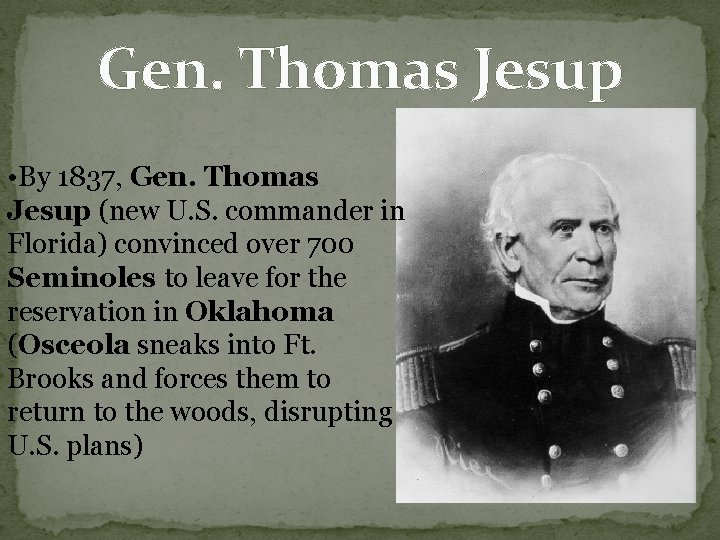
Gen. Thomas Jesup • By 1837, Gen. Thomas Jesup (new U. S. commander in Florida) convinced over 700 Seminoles to leave for the reservation in Oklahoma (Osceola sneaks into Ft. Brooks and forces them to return to the woods, disrupting U. S. plans)
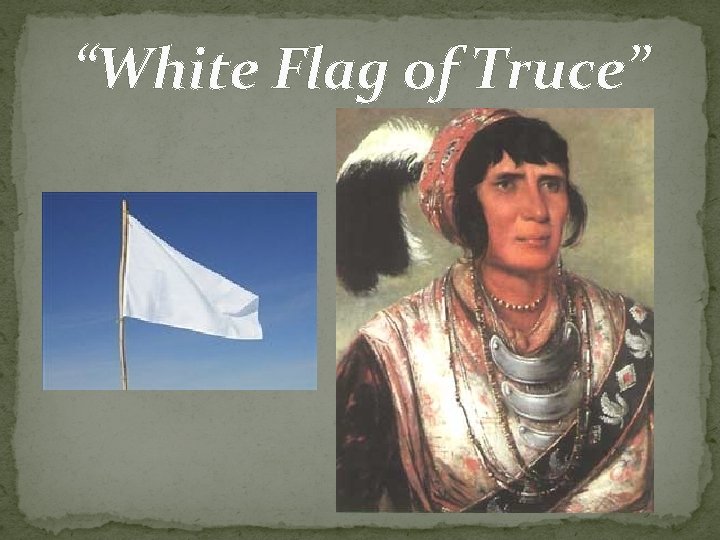
“White Flag of Truce”
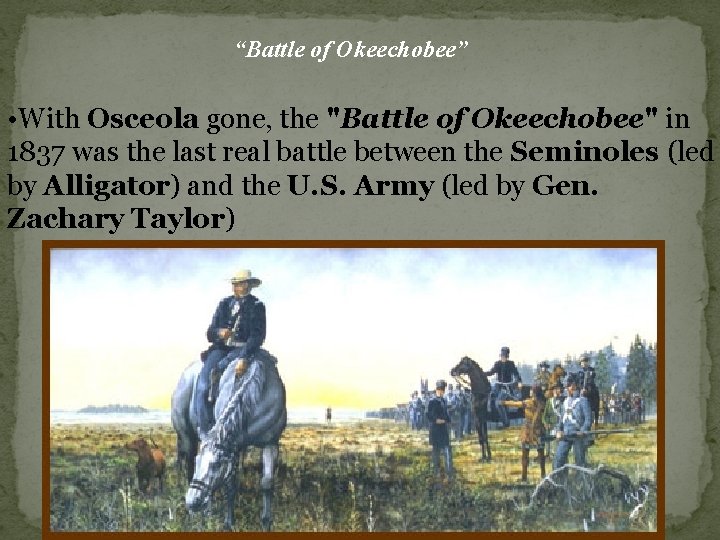
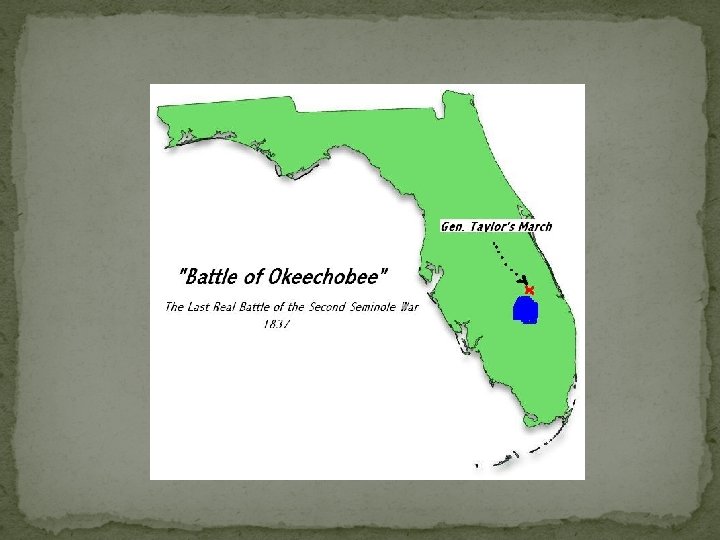
“Battle of Okeechobee” • With Osceola gone, the "Battle of Okeechobee" in 1837 was the last real battle between the Seminoles (led by Alligator) and the U. S. Army (led by Gen. Zachary Taylor)
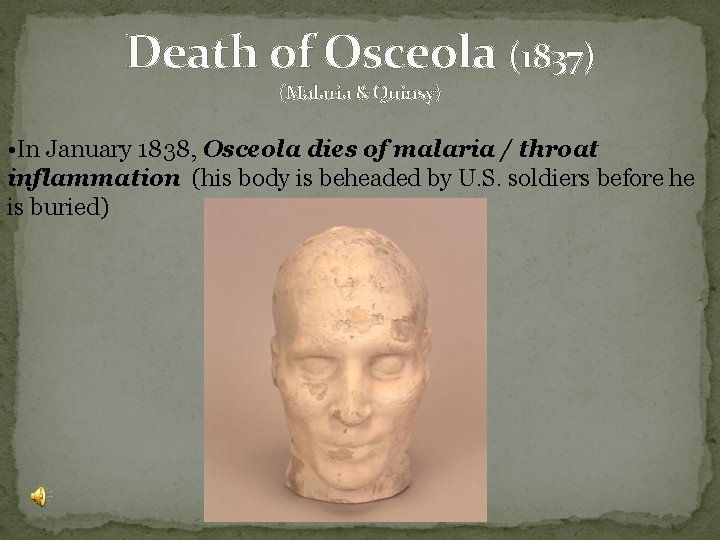
Death of Osceola (1837) (Malaria & Quinsy) • In January 1838, Osceola dies of malaria / throat inflammation (his body is beheaded by U. S. soldiers before he is buried)
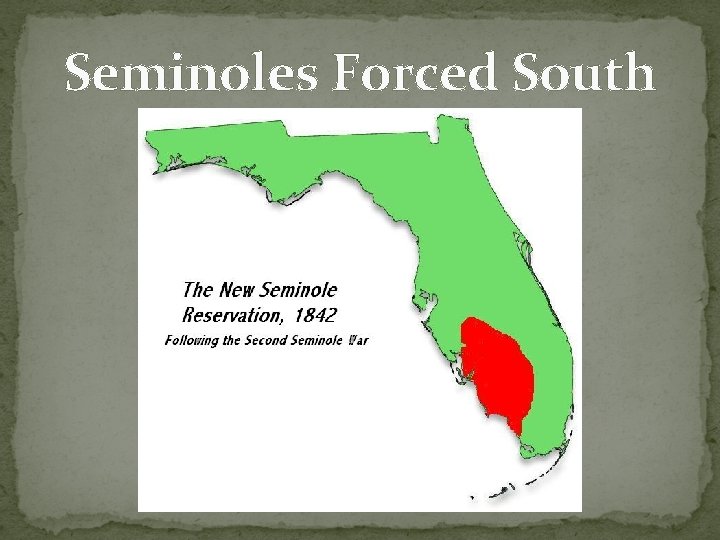
Seminoles Forced South
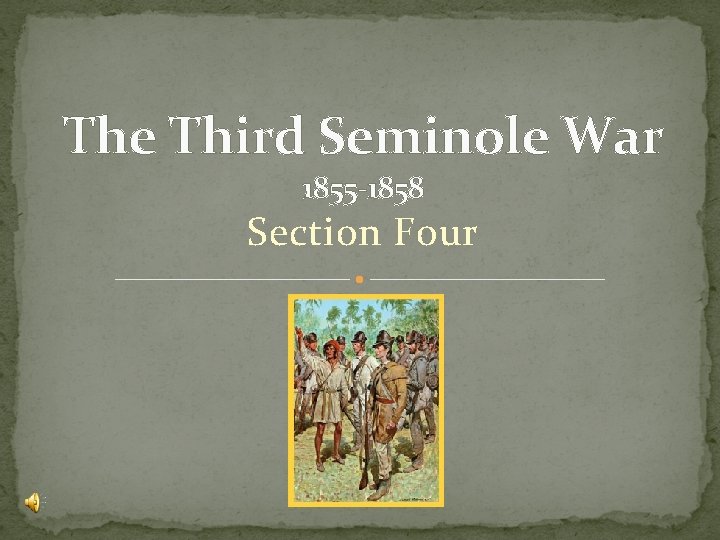
The Third Seminole War 1855 -1858 Section Four
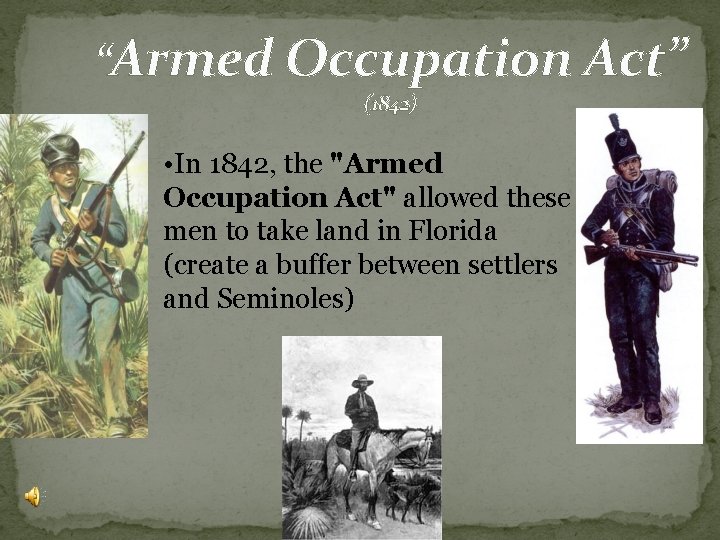
“Armed Occupation Act” (1842) • In 1842, the "Armed Occupation Act" allowed these men to take land in Florida (create a buffer between settlers and Seminoles)
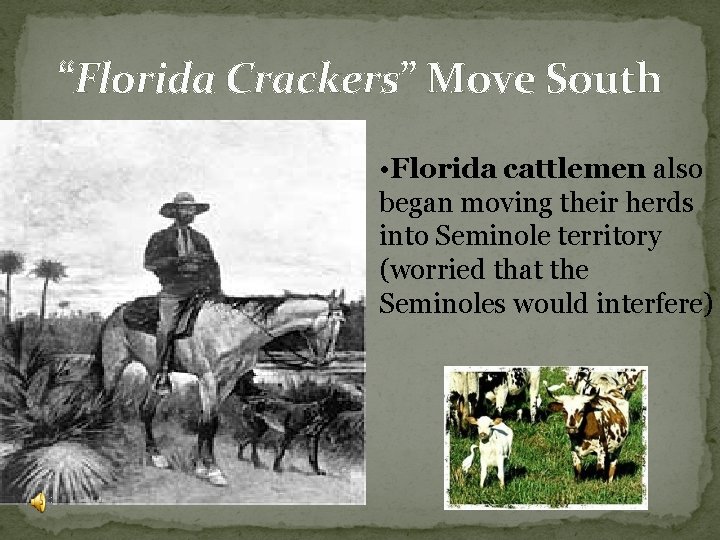
“Florida Crackers” Move South • Florida cattlemen also began moving their herds into Seminole territory (worried that the Seminoles would interfere)
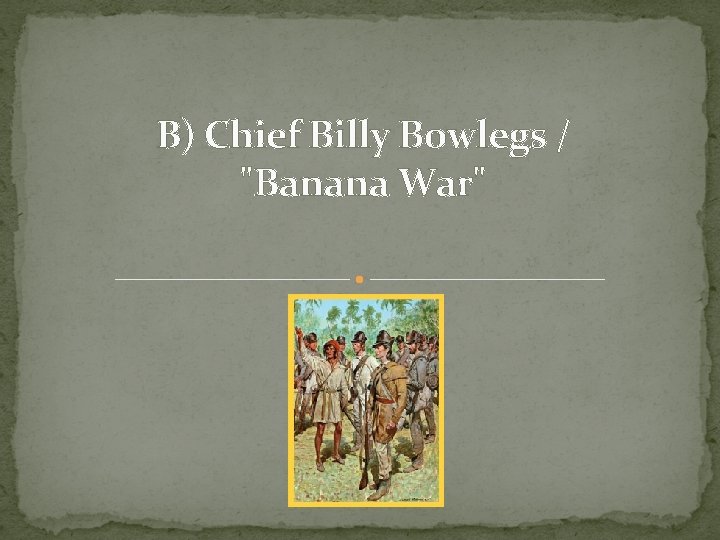
B) Chief Billy Bowlegs / "Banana War"
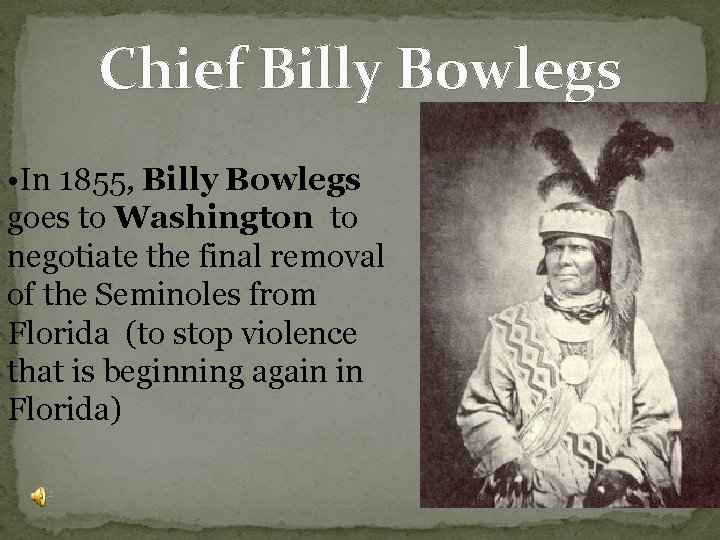
Chief Billy Bowlegs • In 1855, Billy Bowlegs goes to Washington to negotiate the final removal of the Seminoles from Florida (to stop violence that is beginning again in Florida)
Banana Groves • Since the grove was owned by Bowlegs, 35 Seminoles attack (2 soldiers killed) Gov. James Broome calls out the Florida militia as Bowlegs decides to stay and fight
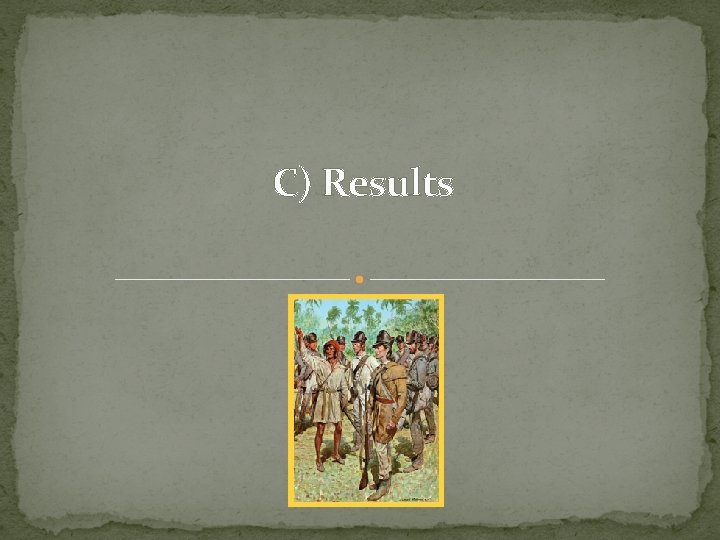
C) Results
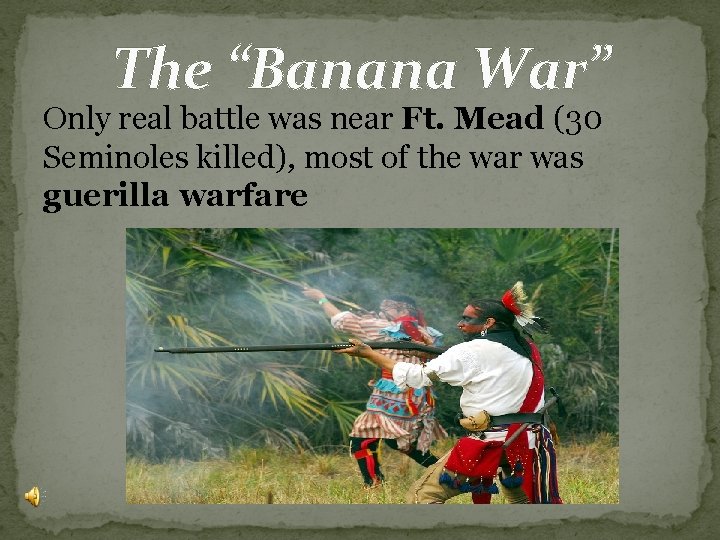
The “Banana War” Only real battle was near Ft. Mead (30 Seminoles killed), most of the war was guerilla warfare
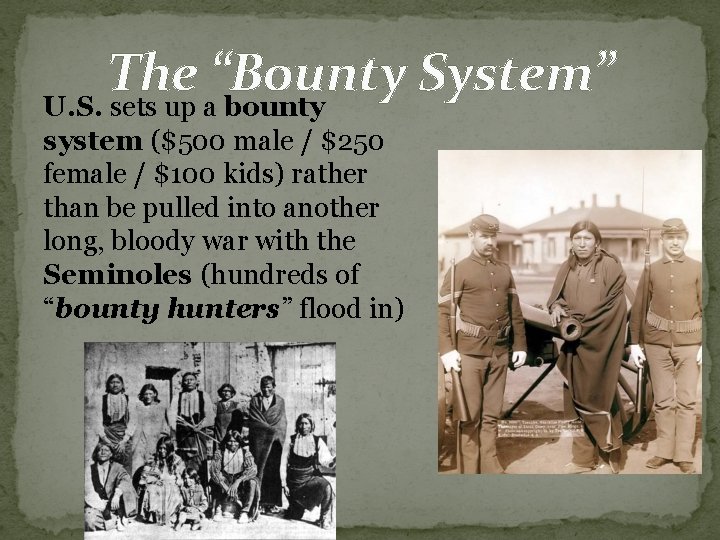
The “Bounty System” U. S. sets up a bounty system ($500 male / $250 female / $100 kids) rather than be pulled into another long, bloody war with the Seminoles (hundreds of “bounty hunters” flood in)
Final Seminole Migration
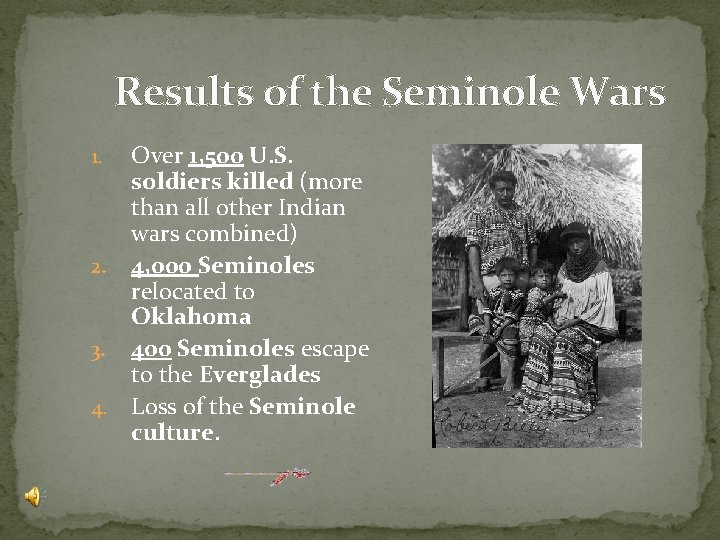
Results of the Seminole Wars 1. 2. 3. 4. Over 1, 500 U. S. soldiers killed (more than all other Indian wars combined) 4, 000 Seminoles relocated to Oklahoma 400 Seminoles escape to the Everglades Loss of the Seminole culture.
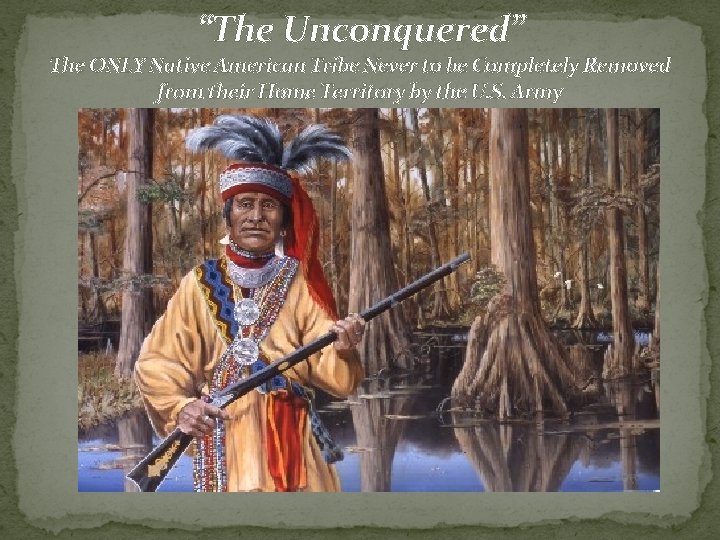
“The Unconquered” The ONLY Native American Tribe Never to be Completely Removed from their Home Territory by the U. S. Army