
The Self A symbol using individual who can
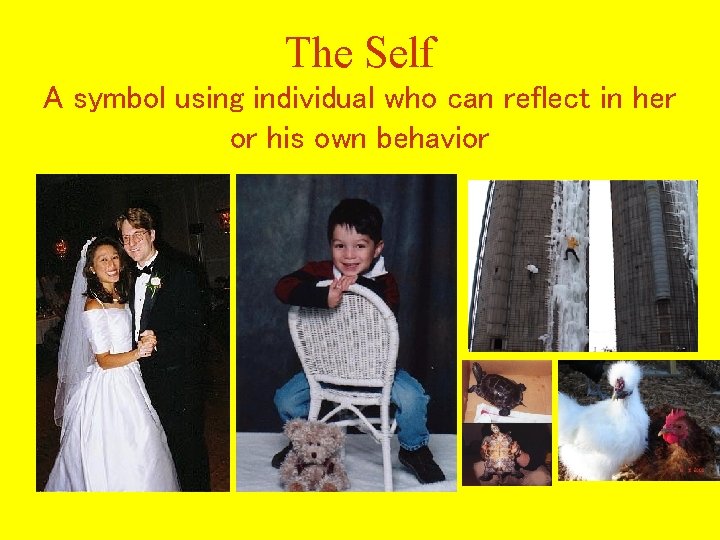
The Self A symbol using individual who can reflect in her or his own behavior
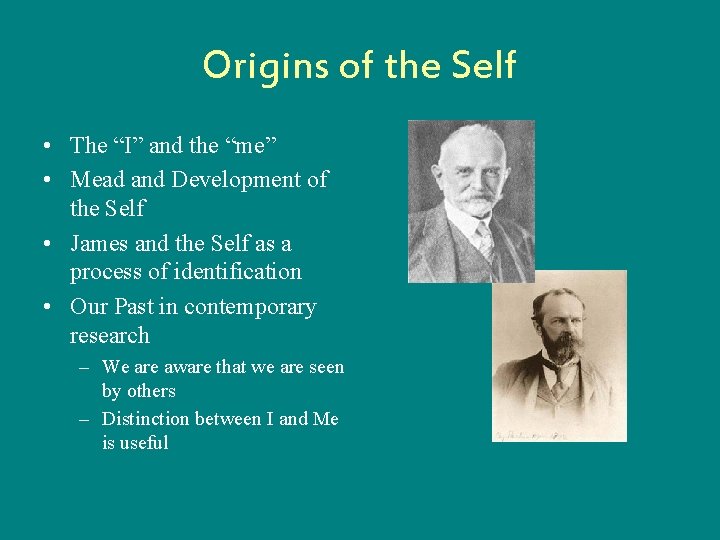
Origins of the Self • The “I” and the “me” • Mead and Development of the Self • James and the Self as a process of identification • Our Past in contemporary research – We are aware that we are seen by others – Distinction between I and Me is useful
Mead ► We are constantly interacting through symbols. ► We are constantly co-acting or reacting to the symbols others send us as well. ► Preparatory stage ► Play stage ► Game stage
James • Biggest concern was the emotional identification and the concept of “me” • How do we emotionally identify with something?
Self as a knowledge Structure n n Cultural construction of self concept Self schemas Spontaneous self concept Social identities Group performance and social identification n Ethnic identity of minority groups (Clark and Clark) n
Clark and Clark n n Unexamined ethnic identity can breed self hatred. Not being aware of who you are and interpreting the messages of others can lead to self fulfilling prophecies— internalizing messages about your group. Results: lower self esteem for you and your group.
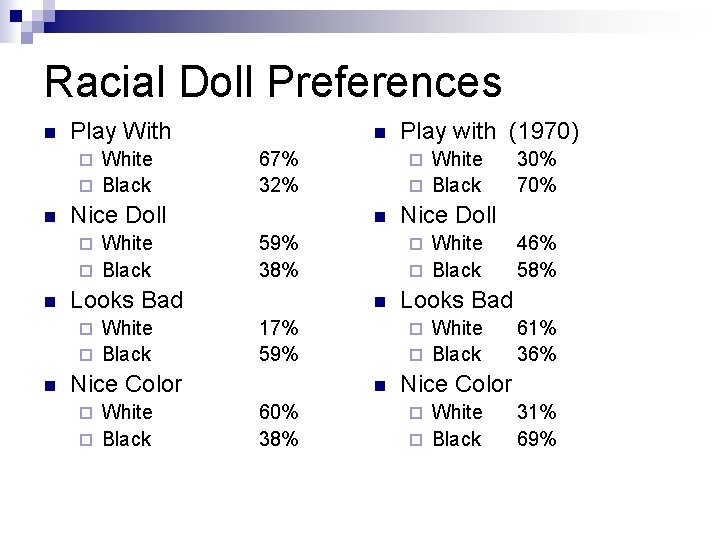
Racial Doll Preferences n Play With White ¨ Black ¨ n White ¨ Black ¨ White ¨ Black 59% 38% White ¨ Black 17% 59% 60% 38% 46% 58% Looks Bad White ¨ Black ¨ n 30% 70% Nice Doll ¨ n Nice Color Play with (1970) ¨ n Looks Bad ¨ n 67% 32% Nice Doll ¨ n n 61% 36% Nice Color White ¨ Black ¨ 31% 69%
Self as a knowledge structure (continued) Self knowledge organization and self esteem -it IS better to see things in black and white when it comes to your self-esteem. -how you organize information in your head determines how you view yourself.
How would you organize this? I readily understand psychological theories I work well with statistical computer programs I didn’t do well with in my psychology stats course I don’t do well on multiple choice exams – People with higher self-esteem usually had clear (++ vs – categories)
Self-aspirations and self discrepancies What you ought to be vs. What you really are (Self Discrepancy) ¢ What you ought to be vs. Actual Self (agitation related emotions) Actual Self vs. Ideal Self (Dejection related emotions) ¢
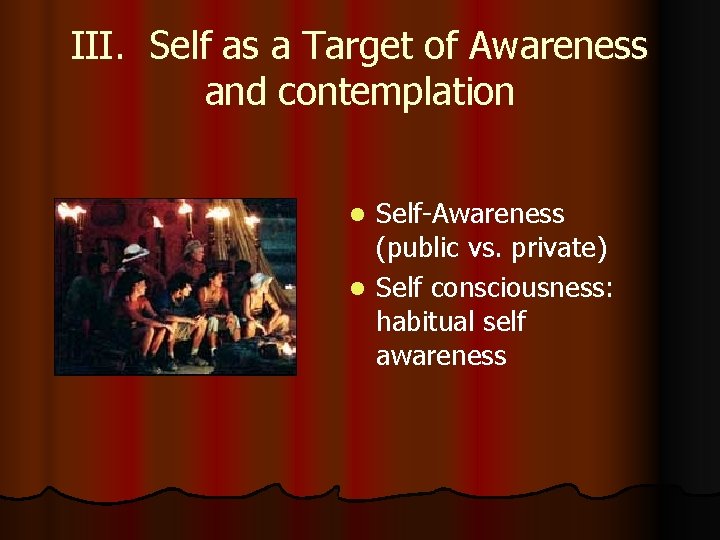
III. Self as a Target of Awareness and contemplation Self-Awareness (public vs. private) l Self consciousness: habitual self awareness l
Private vs. public Intensified feelings l Clarification of knowledge l Adherence to personal standards l Stick to social standards of behavior l Evaluation apprehension l Momentary loss of self esteem l
Motivations of the self § § § Self Enhancement or Self-verification Self-esteem and risk taking Self Evaluation maintenance in Social relationships (social comparison) § Self affirmation
Self Affirmations • "I am fun to be with. Because I'm good enough, I'm smart enough and doggone it, people like me. Well, not everybody. But that's their problem. And your • problem. Okay, I'm sorry, this is not my best show. “ • As a treat to his inner child, Stuart wears a skeleton for Halloween. "Because it's scary and because it reminds me • I'm a human being. And that's okay. . . I think it makes me look thinner. "
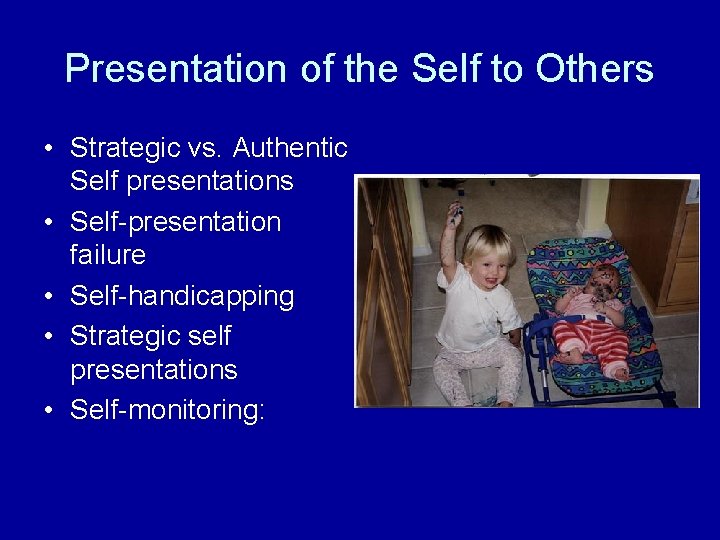
Presentation of the Self to Others • Strategic vs. Authentic Self presentations • Self-presentation failure • Self-handicapping • Strategic self presentations • Self-monitoring:
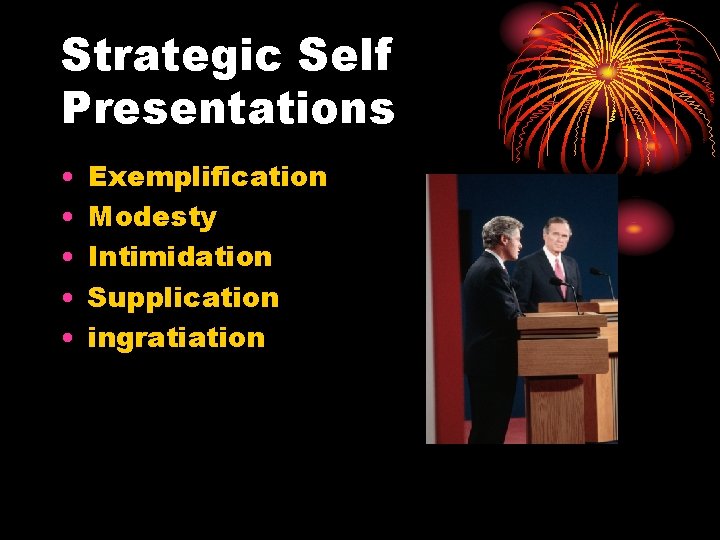
Strategic Self Presentations • • • Exemplification Modesty Intimidation Supplication ingratiation
- Slides: 16