
The Seedless Vascular Pants Ferns and Their Relatives
- Slides: 24
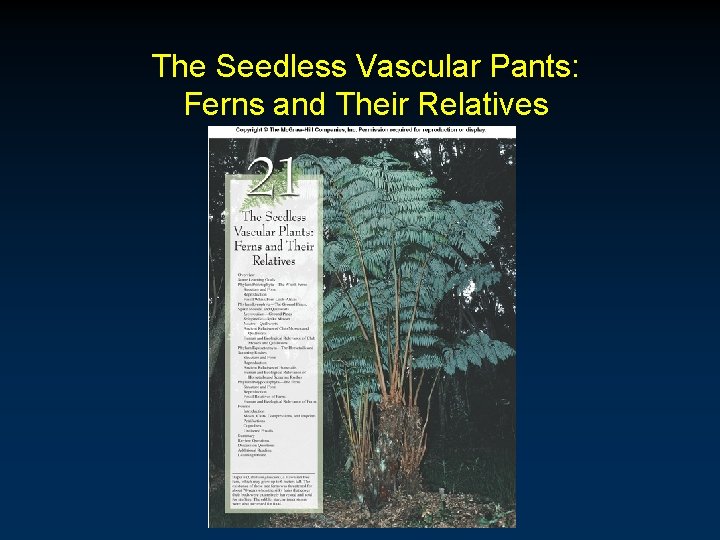
The Seedless Vascular Pants: Ferns and Their Relatives
Outline • • • Phylum Psilotophyta (Whisk Ferns) Phylum Lycophyta (Club Mosses) Phylum Equisetophyta (Horsetails) Phylum Polypodiophyta (Ferns) Fossils
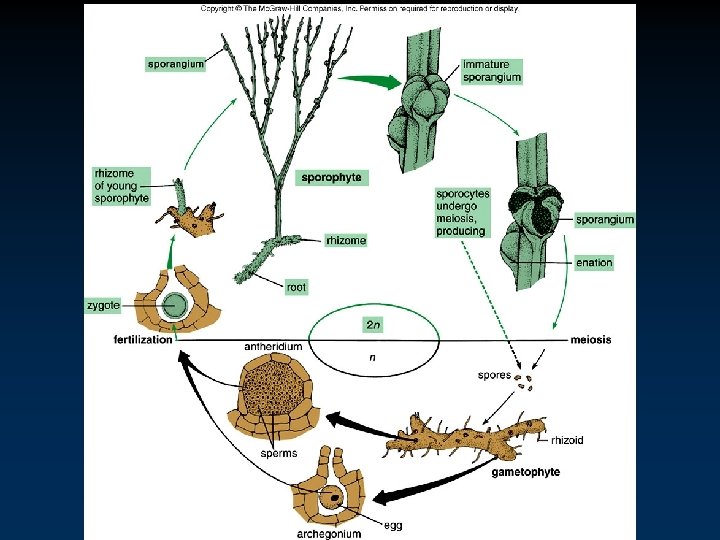
Phylum Psilotophyta • • The Whisk Ferns v Loosely resemble small, green whisk brooms. v Structure and Form - Sporophytes consist almost entirely of dichotomously forking aerial stems. Ø Have neither leaves nor roots. § Enations spirally arranged along stems. Life Cycle:
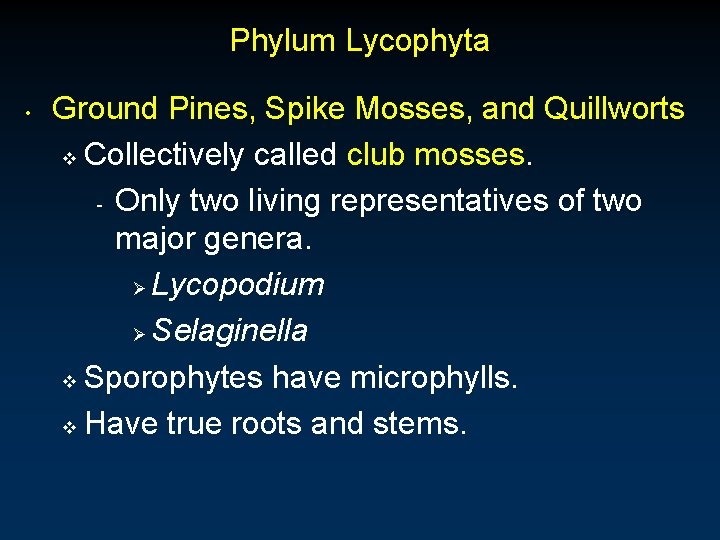
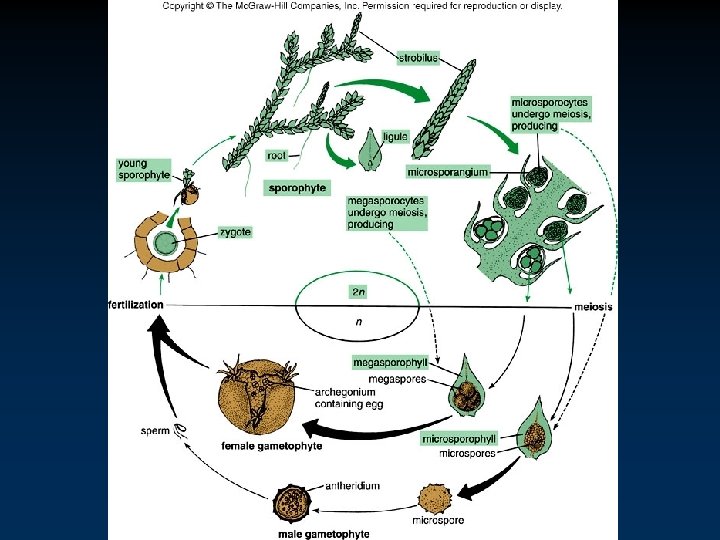
Phylum Lycophyta • Ground Pines, Spike Mosses, and Quillworts v Collectively called club mosses. - Only two living representatives of two major genera. Ø Lycopodium Ø Selaginella v Sporophytes have microphylls. v Have true roots and stems.
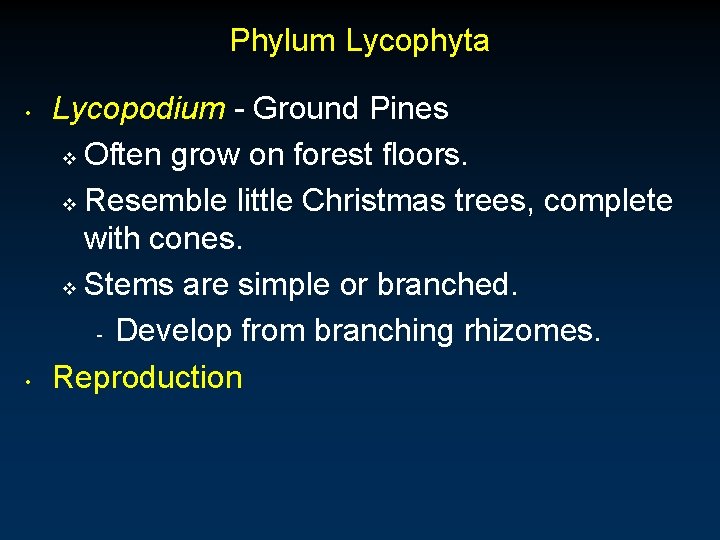
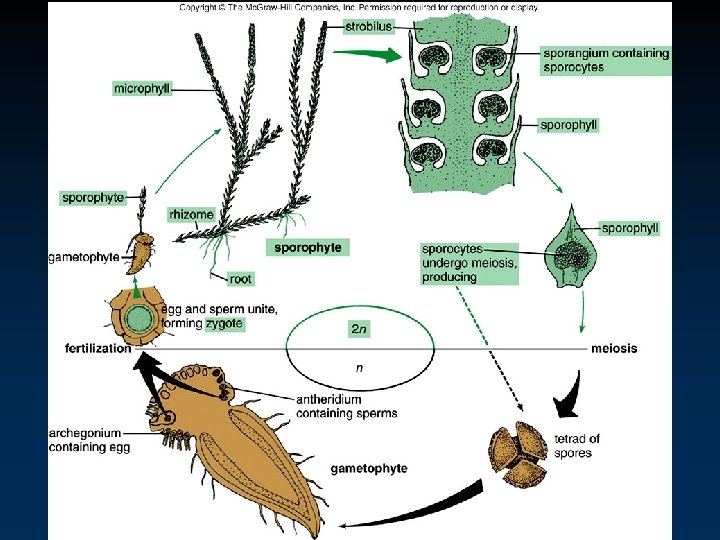
Phylum Lycophyta • • Lycopodium - Ground Pines v Often grow on forest floors. v Resemble little Christmas trees, complete with cones. v Stems are simple or branched. - Develop from branching rhizomes. Reproduction
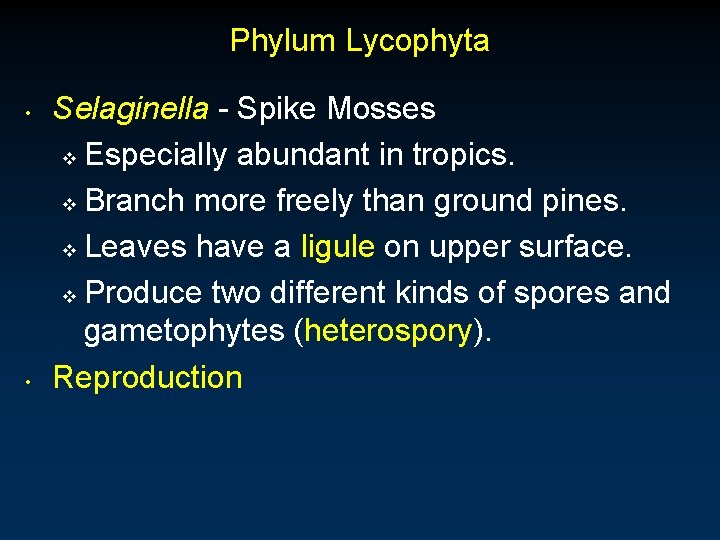
Phylum Lycophyta • • Selaginella - Spike Mosses v Especially abundant in tropics. v Branch more freely than ground pines. v Leaves have a ligule on upper surface. v Produce two different kinds of spores and gametophytes (heterospory). Reproduction
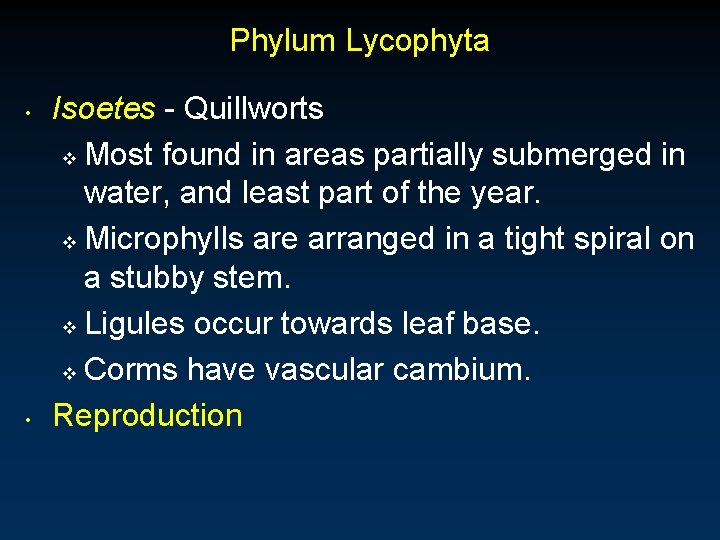
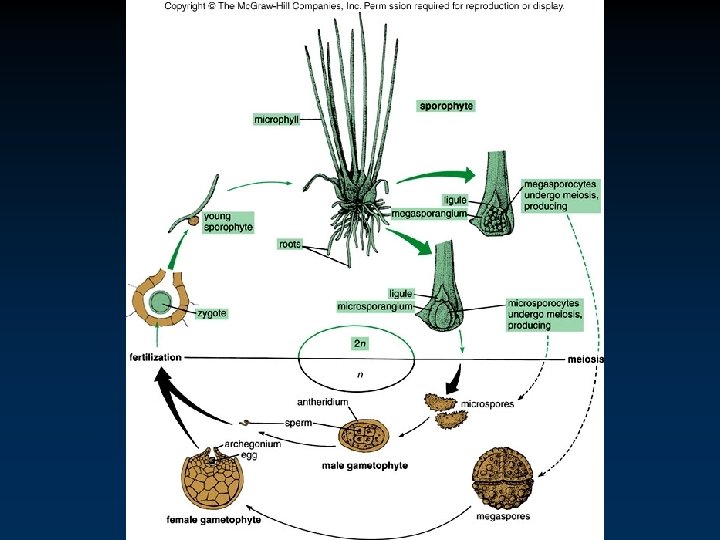
Phylum Lycophyta • • Isoetes - Quillworts v Most found in areas partially submerged in water, and least part of the year. v Microphylls are arranged in a tight spiral on a stubby stem. v Ligules occur towards leaf base. v Corms have vascular cambium. Reproduction
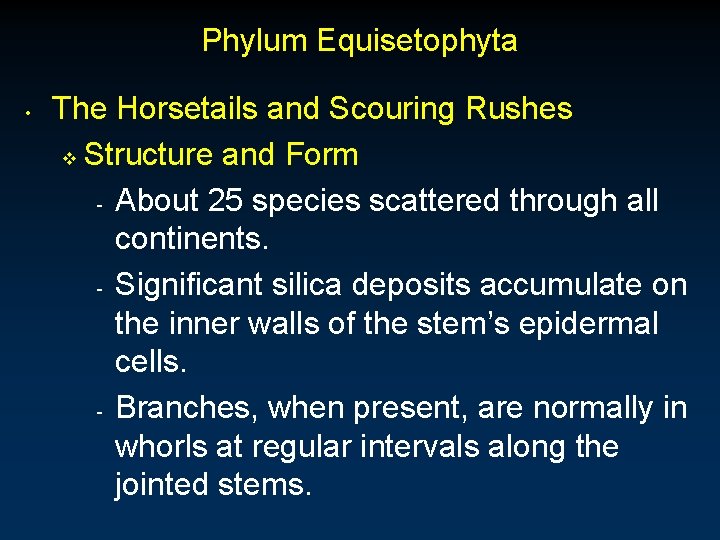
Phylum Equisetophyta • The Horsetails and Scouring Rushes v Structure and Form - About 25 species scattered through all continents. - Significant silica deposits accumulate on the inner walls of the stem’s epidermal cells. - Branches, when present, are normally in whorls at regular intervals along the jointed stems.
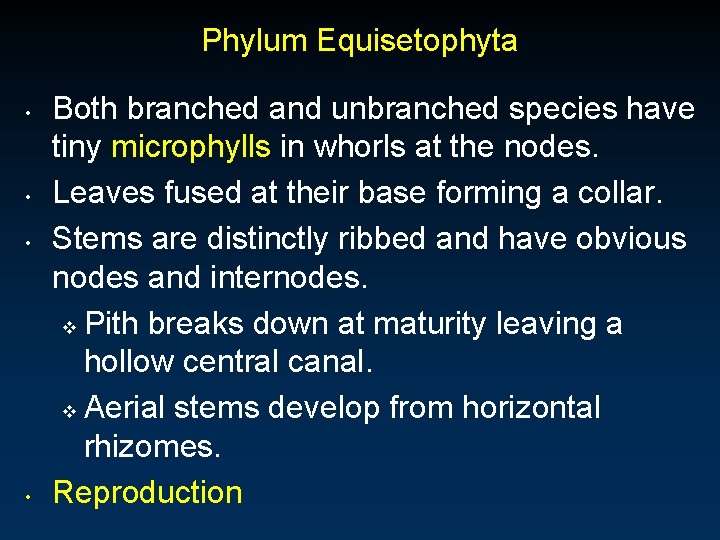
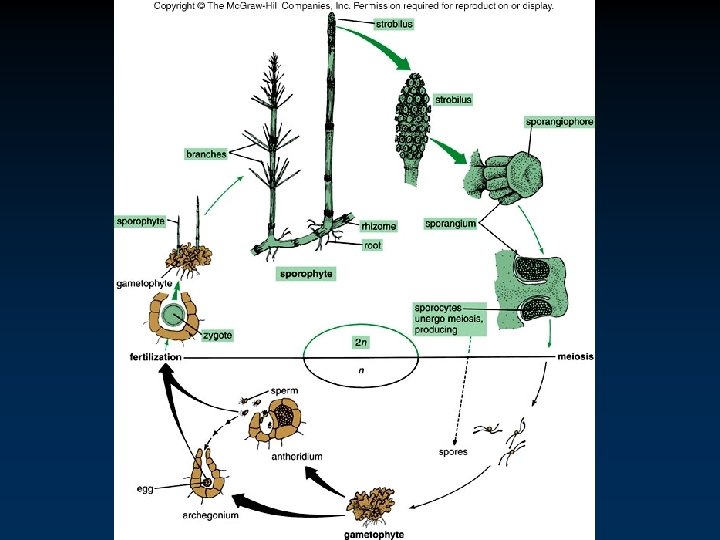
Phylum Equisetophyta • • Both branched and unbranched species have tiny microphylls in whorls at the nodes. Leaves fused at their base forming a collar. Stems are distinctly ribbed and have obvious nodes and internodes. v Pith breaks down at maturity leaving a hollow central canal. v Aerial stems develop from horizontal rhizomes. Reproduction
Phylum Equisetophyta • Human and Ecological Relevance v Many giant horsetails used for food. v Scouring rush stems used for scouring and sharpening.
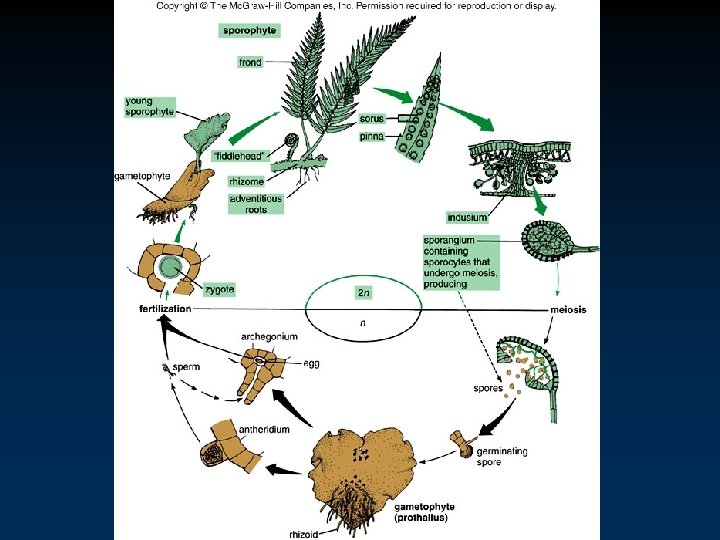
Phylum Polypodiophyta • The Ferns v Structure and Forms - Approximately 11, 000 known species of ferns vary in size from tiny floating forms less than 1 cm to giant tropical tree ferns up to 25 m tall. Ø Fern leaves are megaphylls that are commonly referred to as fronds. § Typically divided into smaller segments.
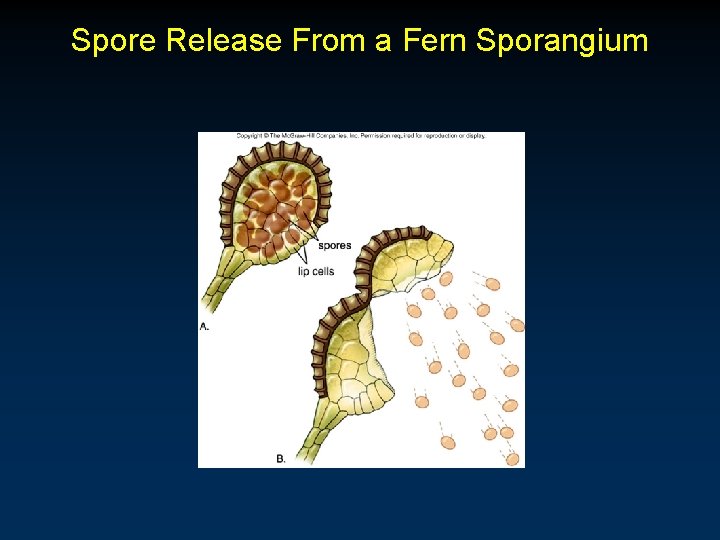
Spore Release From a Fern Sporangium
Phylum Polypodiophyta • Human and Ecological Relevance v Extremely popular house plants. - Serve as air filters. v Cooked rhizomes serve as food. v Folk Medicine v Fronds used in thatching houses.
Fossils • A fossil is generally defined as any recognizable prehistoric organic object preserved from past geological ages. v Conditions of formation almost always include quick burial in an accumulation of sediments. - Hard parts more likely preserved than soft parts.
Fossils • Molds, Casts, Compressions, and Imprints v After being buried in sediment, the organic material may be slowly washed away by water percolating through the rock pores. - If air space remains - Mold - If silica fills space - Cast v Compression takes place when objects are buried by layers of sediment and greatly compressed so that only a thin outline is left.
Fossils • Petrifications v Petrifications are uncompressed rock-like material in which the original cell structure has been preserved.
Review • • • Phylum Psilotophyta (Whisk Ferns) Phylum Lycophyta (Club Mosses) Phylum Equisetophyta (Horsetails) Phylum Polypodiophyta (Ferns) Fossils
Copyright © Mc. Graw-Hill Companies Permission Required for Reproduction or Display