
The Secretory Pathway Classic Experiments ER Translocation Membrane
The Secretory Pathway - Classic Experiments - ER Translocation - Membrane budding and fusion

Intracellular Transport Pathways

Intracellular Transport Pathways
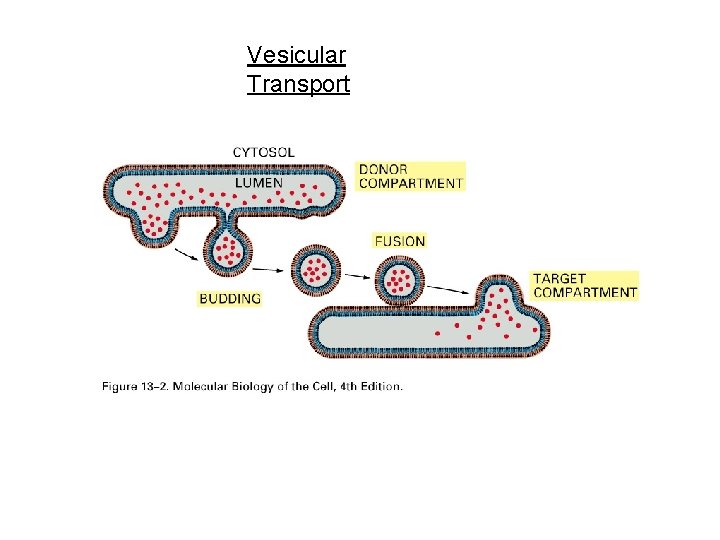
Vesicular Transport

Vesicular Transport
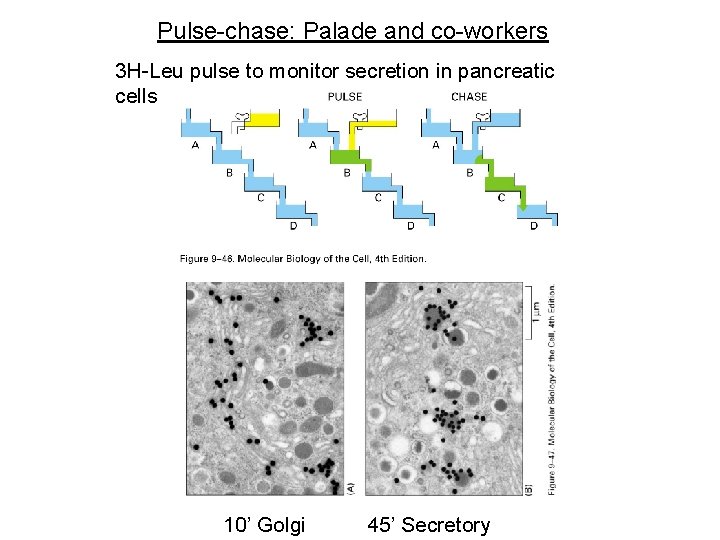
Pulse-chase: Palade and co-workers 3 H-Leu pulse to monitor secretion in pancreatic cells 10’ Golgi 45’ Secretory

Modern version: GFP allows visualization of transport 1. ts VSV G accumulates in ER 4. Plasma 2. After lowering T: ER exit sites 3.
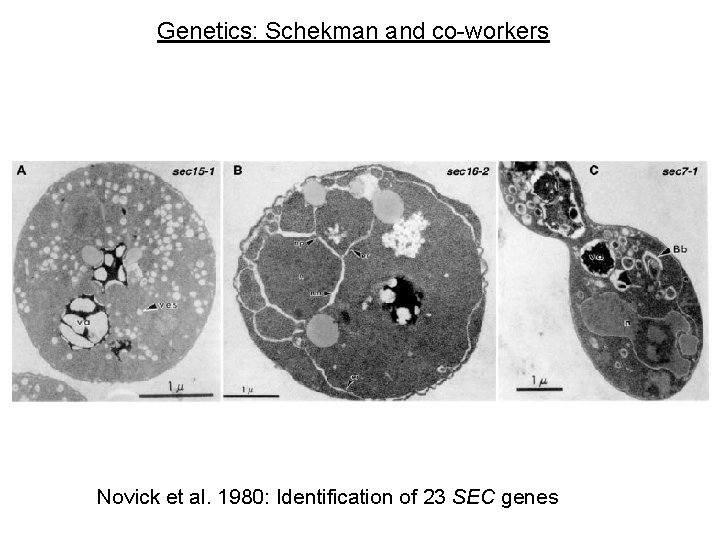
Genetics: Schekman and co-workers Novick et al. 1980: Identification of 23 SEC genes
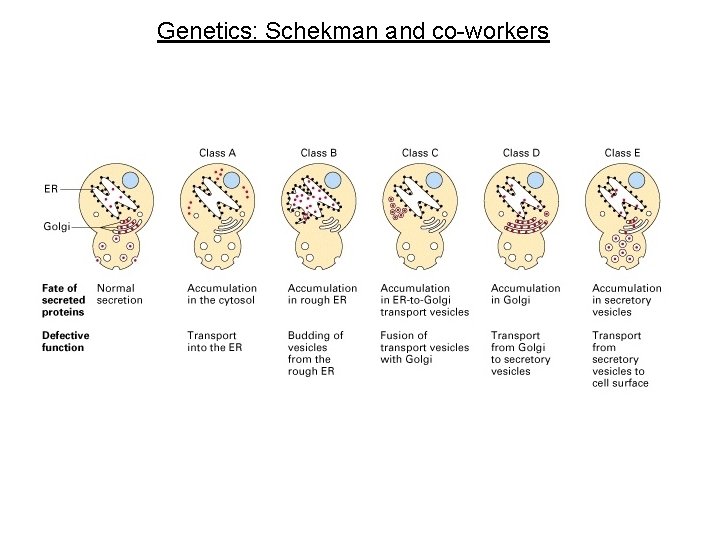
Genetics: Schekman and co-workers
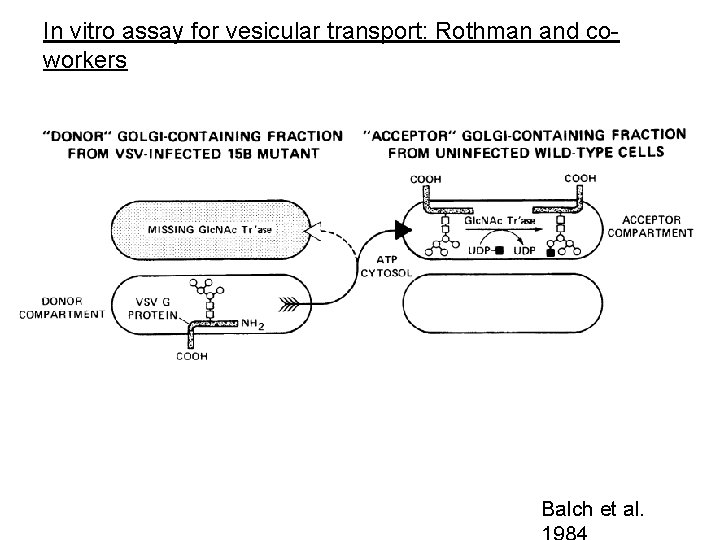
In vitro assay for vesicular transport: Rothman and coworkers Balch et al.
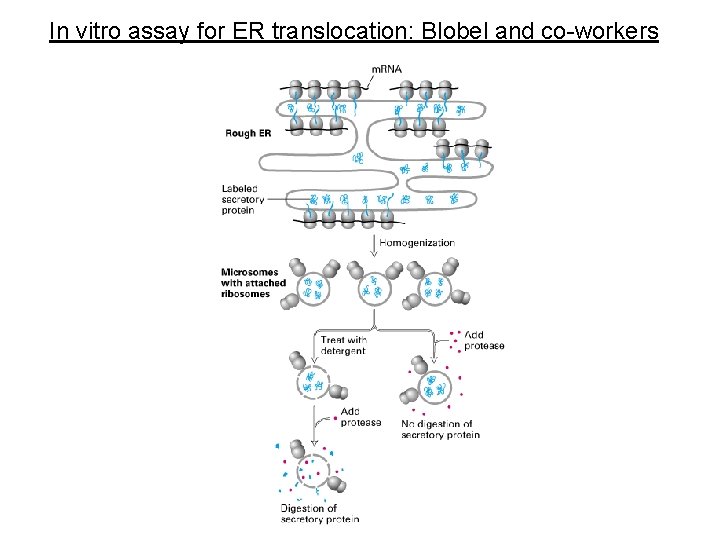
In vitro assay for ER translocation: Blobel and co-workers
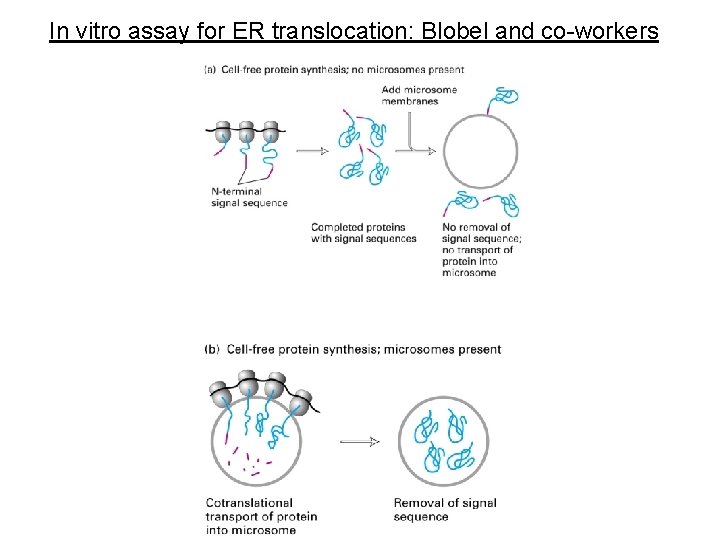
In vitro assay for ER translocation: Blobel and co-workers
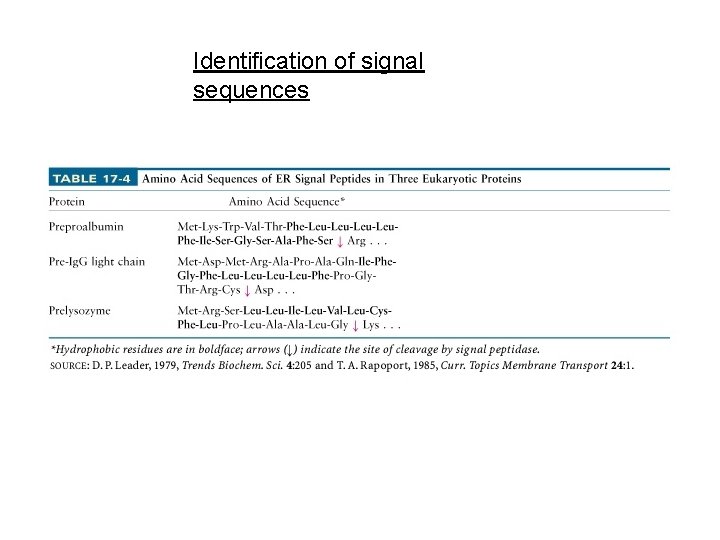
Identification of signal sequences
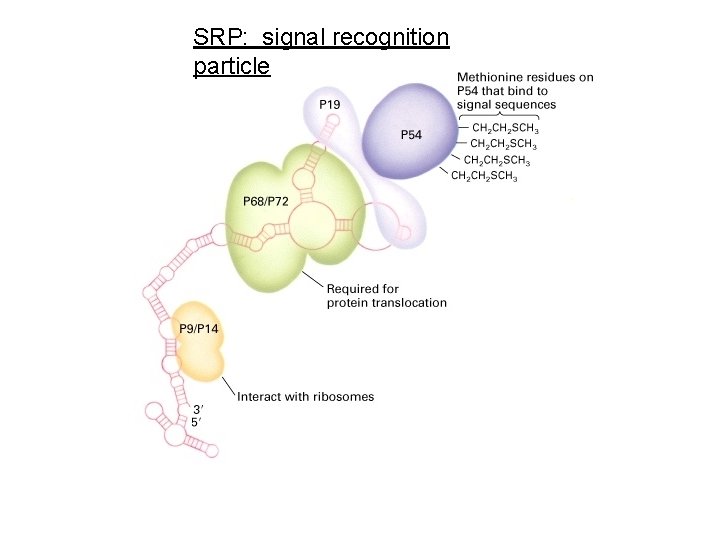
SRP: signal recognition particle
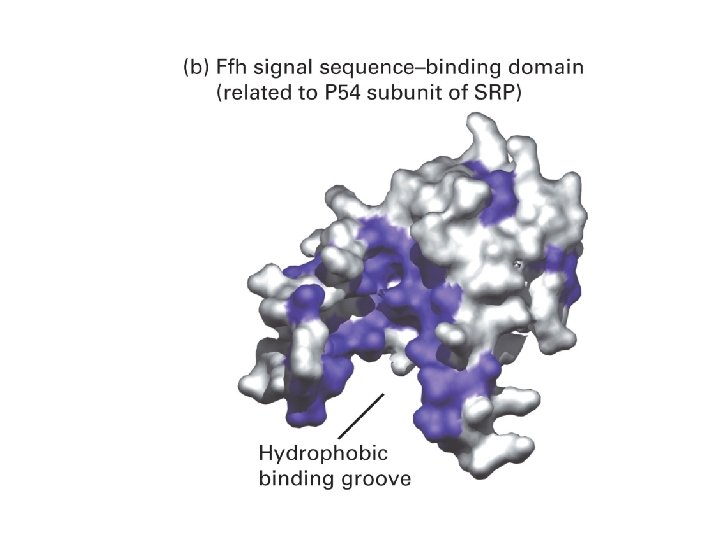

SRP cycle

SRP cycle
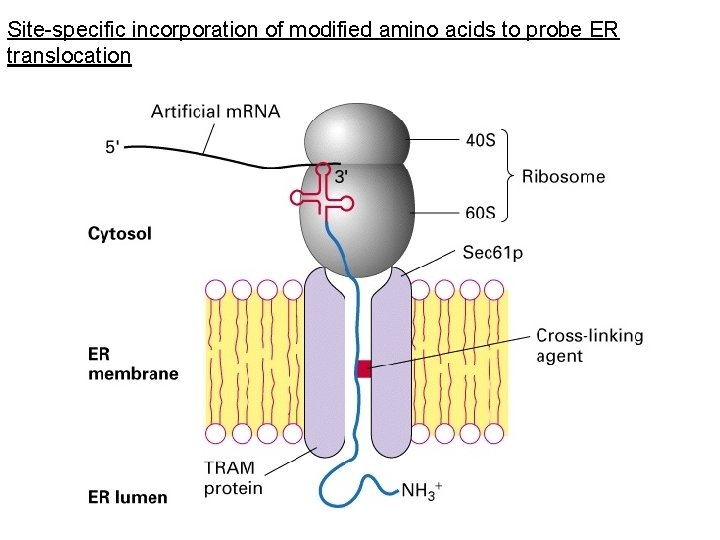
Site-specific incorporation of modified amino acids to probe ER translocation
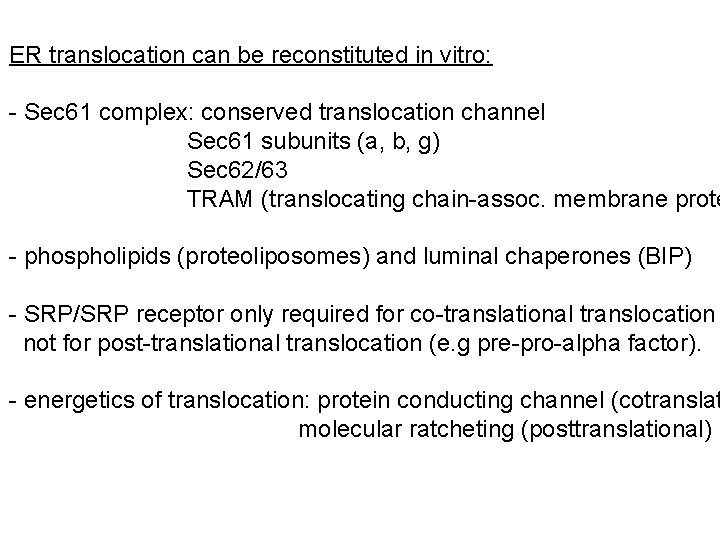
ER translocation can be reconstituted in vitro: - Sec 61 complex: conserved translocation channel Sec 61 subunits (a, b, g) Sec 62/63 TRAM (translocating chain-assoc. membrane prote - phospholipids (proteoliposomes) and luminal chaperones (BIP) - SRP/SRP receptor only required for co-translational translocation not for post-translational translocation (e. g pre-pro-alpha factor). - energetics of translocation: protein conducting channel (cotranslat molecular ratcheting (posttranslational)
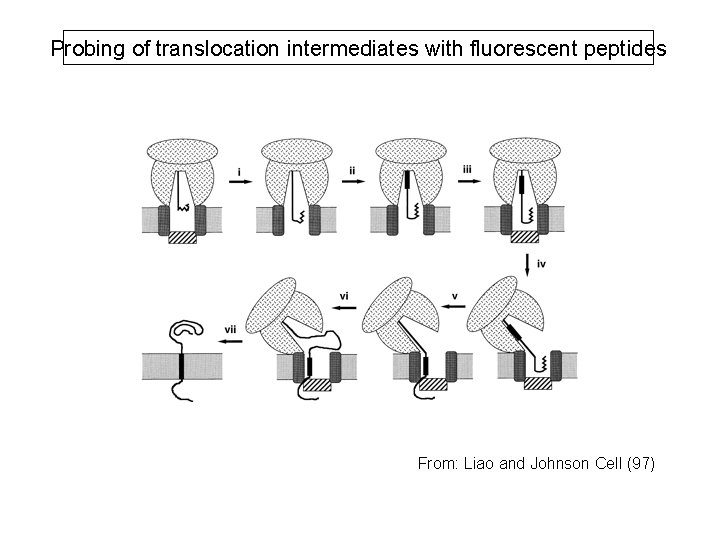
Probing of translocation intermediates with fluorescent peptides From: Liao and Johnson Cell (97)
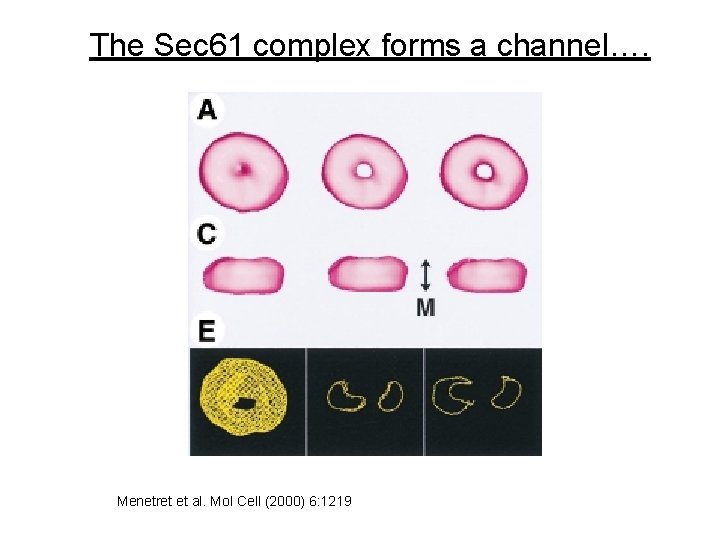
The Sec 61 complex forms a channel…. Menetret et al. Mol Cell (2000) 6: 1219

The translocon by EM tomography From: Beckmann et al. Cell (2001) Vol 107, 361 -372

The translocon by EM tomography From: Beckmann et al. Cell (2001) Vol 107, 361 -372
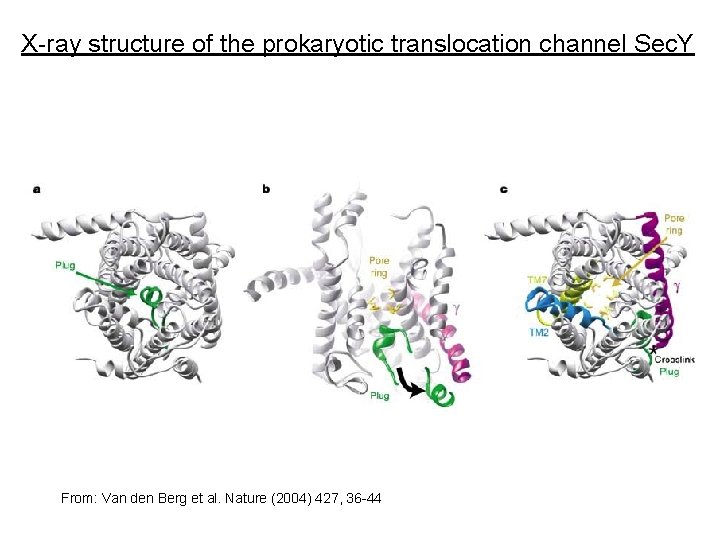
X-ray structure of the prokaryotic translocation channel Sec. Y From: Van den Berg et al. Nature (2004) 427, 36 -44
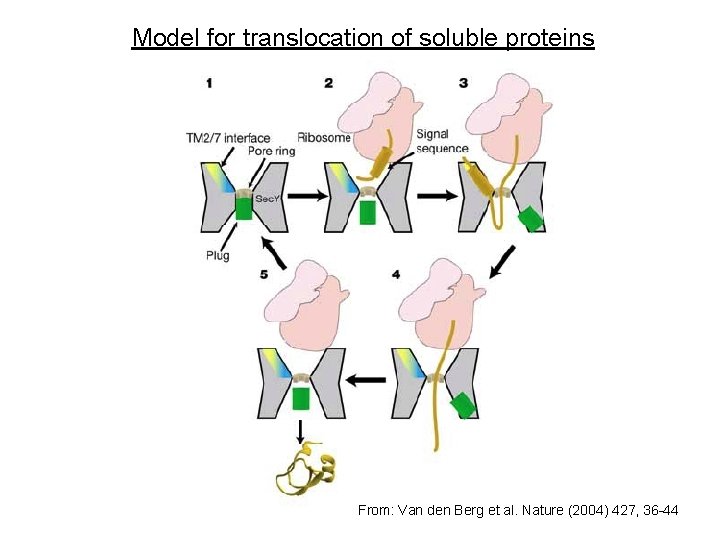
Model for translocation of soluble proteins From: Van den Berg et al. Nature (2004) 427, 36 -44
Topology of membrane-spanning proteins
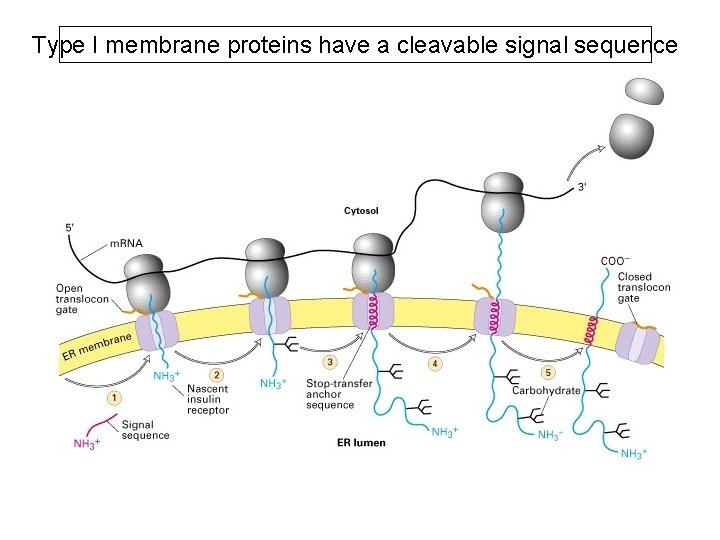
Type I membrane proteins have a cleavable signal sequence
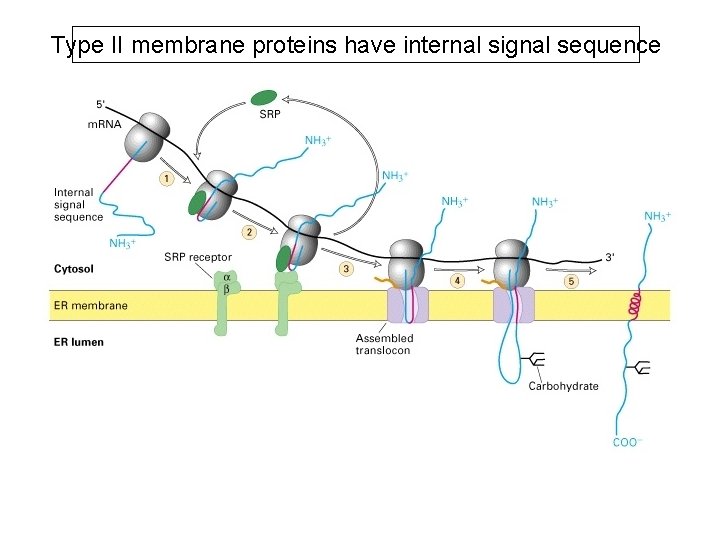
Type II membrane proteins have internal signal sequence
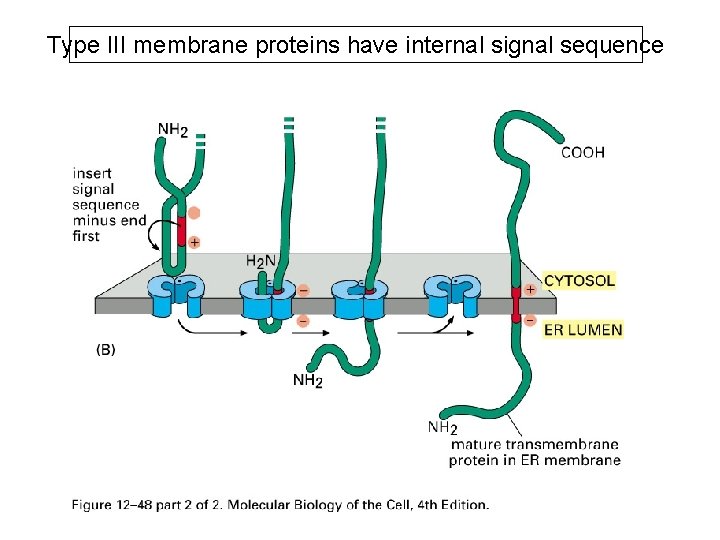
Type III membrane proteins have internal signal sequence
Type II+III membrane proteins have internal signal sequences
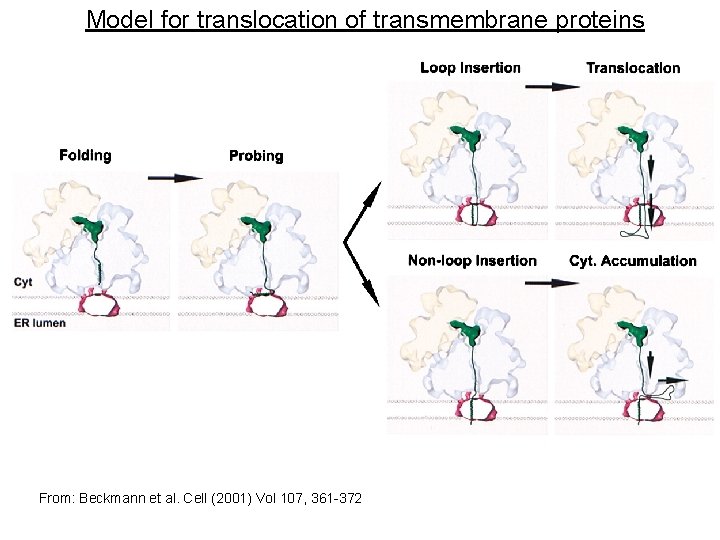
Model for translocation of transmembrane proteins From: Beckmann et al. Cell (2001) Vol 107, 361 -372
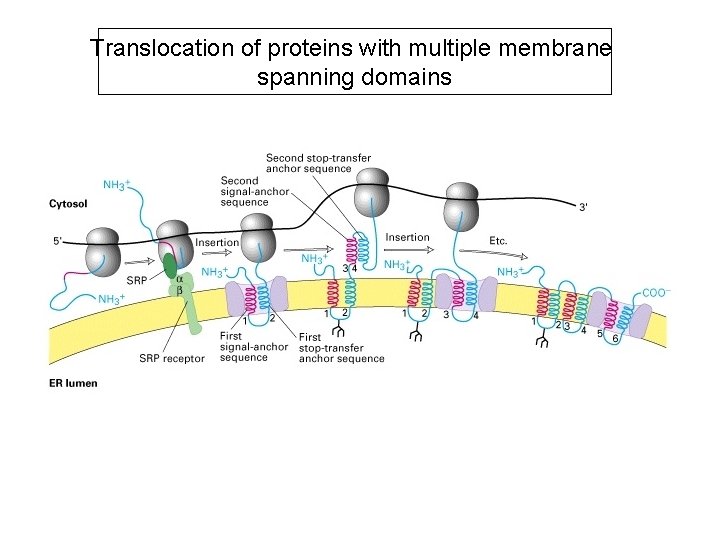
Translocation of proteins with multiple membrane spanning domains
- Slides: 32