
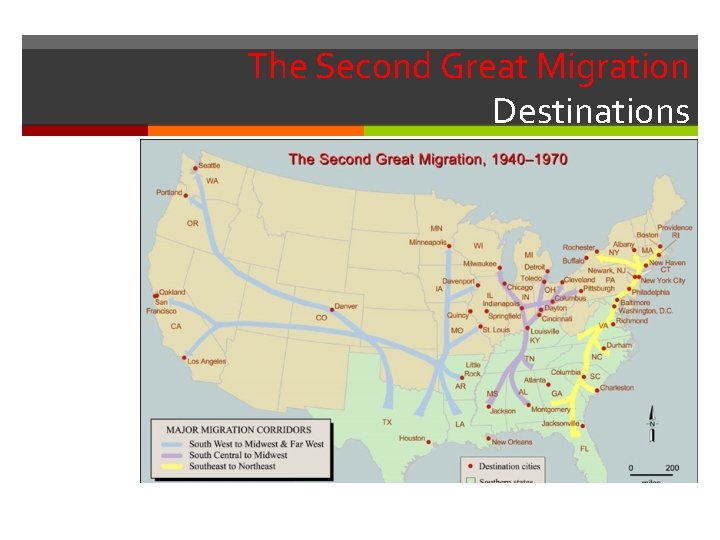
The Second Great Migration Destinations Into the North





- Slides: 18
The Second Great Migration Destinations
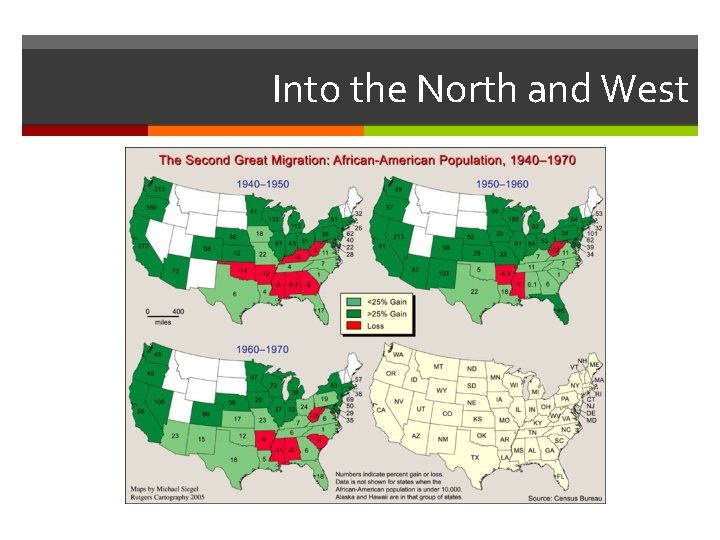
Into the North and West
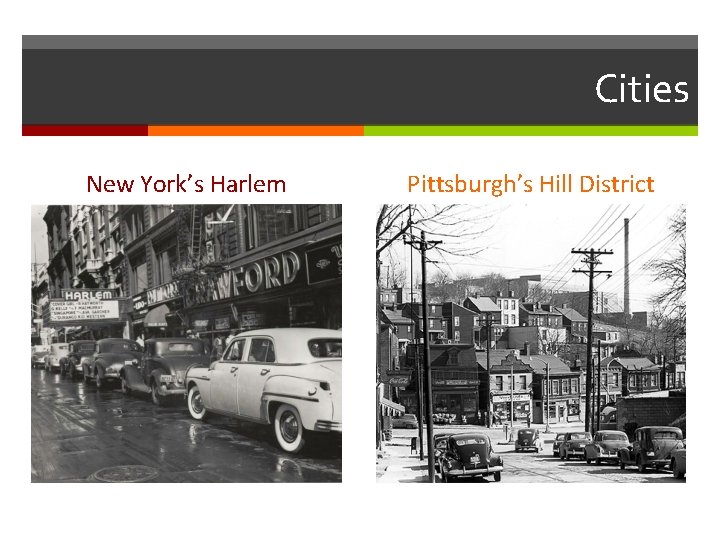
Cities New York’s Harlem Pittsburgh’s Hill District
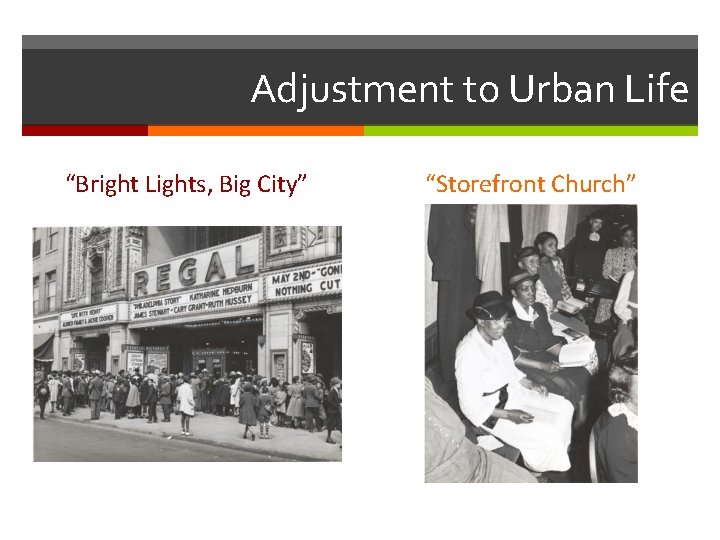
Adjustment to Urban Life “Bright Lights, Big City” “Storefront Church”
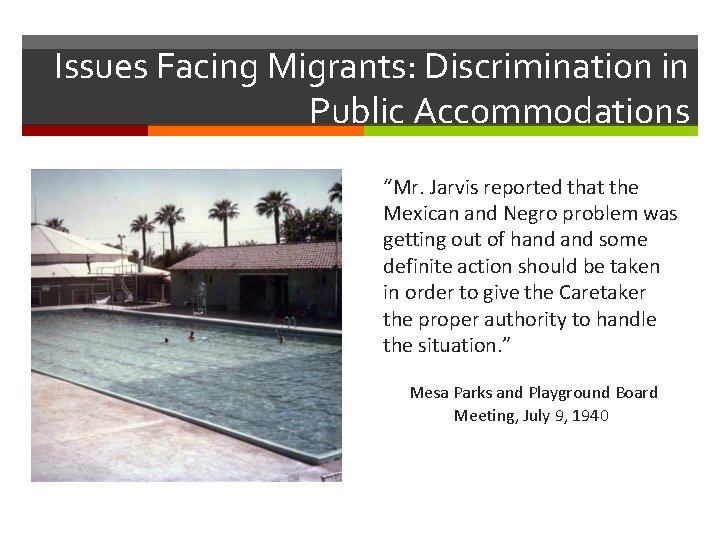
Issues Facing Migrants: Discrimination in Public Accommodations “Mr. Jarvis reported that the Mexican and Negro problem was getting out of hand some definite action should be taken in order to give the Caretaker the proper authority to handle the situation. ” Mesa Parks and Playground Board Meeting, July 9, 1940
Issues Facing Migrants: Employment Discrimination
Fair Employment
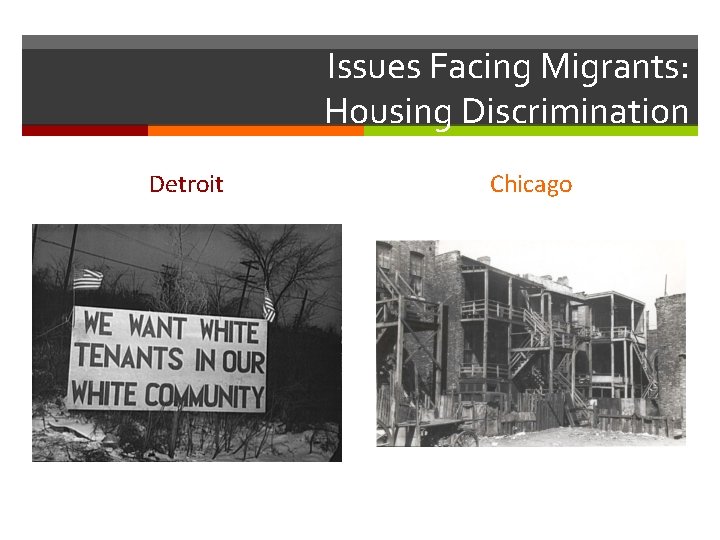
Issues Facing Migrants: Housing Discrimination Detroit Chicago
Means of Housing Discrimination Redlining Housing/Restrictive Covenants Public Housing Projects Realtors’ Code of Ethics Block Associations Terrorism “White Flight”
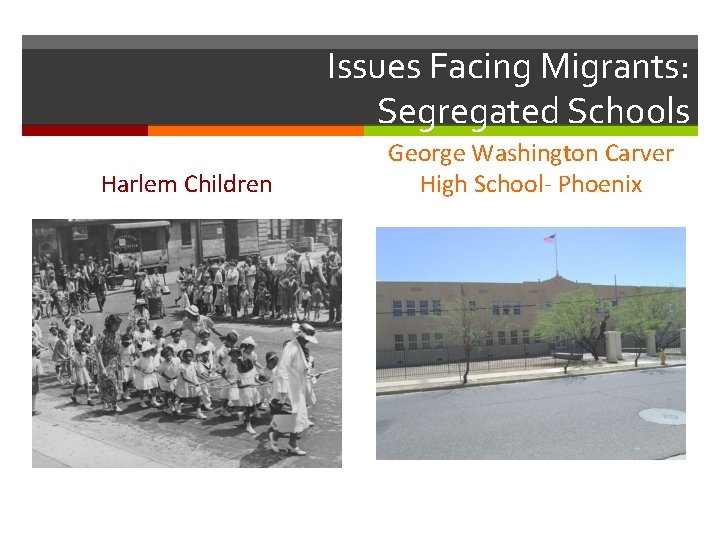
Issues Facing Migrants: Segregated Schools Harlem Children George Washington Carver High School- Phoenix
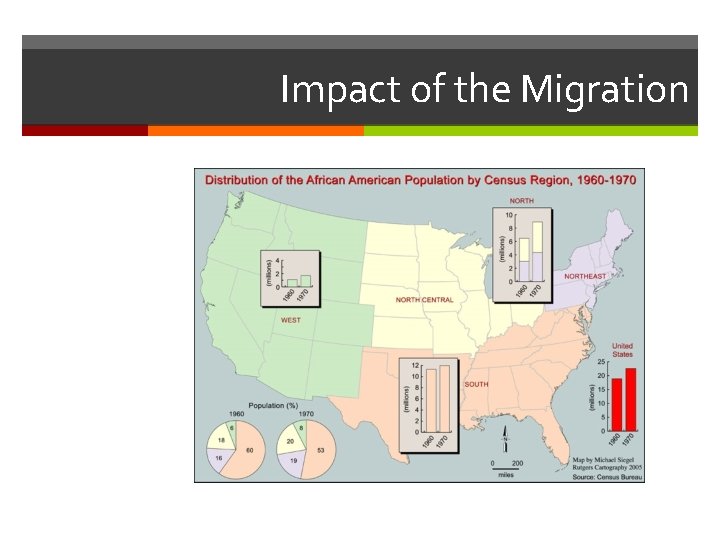
Impact of the Migration
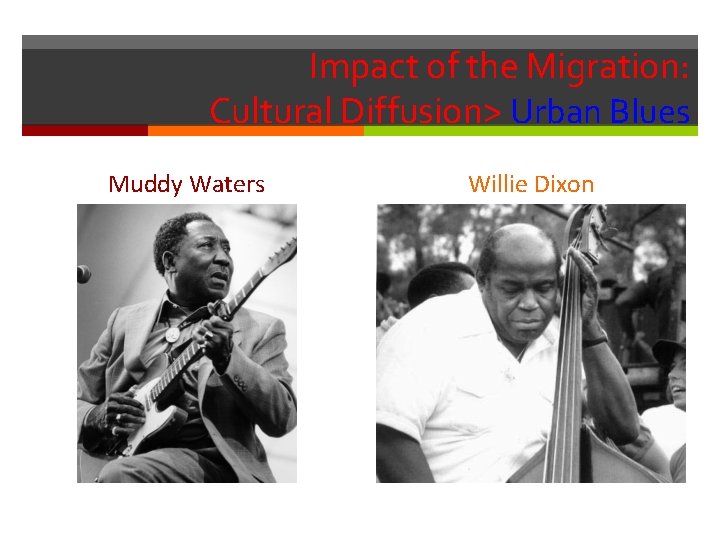
Impact of the Migration: Cultural Diffusion> Urban Blues Muddy Waters Willie Dixon
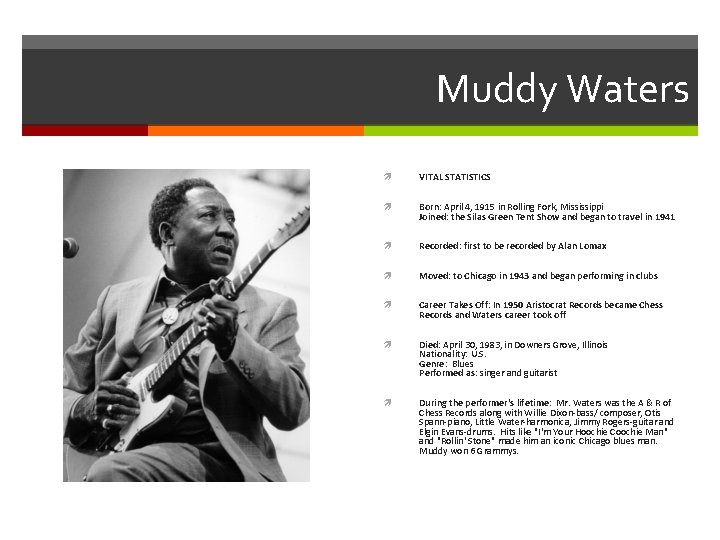
Muddy Waters VITAL STATISTICS Born: April 4, 1915 in Rolling Fork, Mississippi Joined: the Silas Green Tent Show and began to travel in 1941 Recorded: first to be recorded by Alan Lomax Moved: to Chicago in 1943 and began performing in clubs Career Takes Off: In 1950 Aristocrat Records became Chess Records and Waters career took off Died: April 30, 1983, in Downers Grove, Illinois Nationality: U. S. Genre: Blues Performed as: singer and guitarist During the performer's lifetime: Mr. Waters was the A & R of Chess Records along with Willie Dixon-bass/ composer, Otis Spann-piano, Little Water-harmonica, Jimmy Rogers-guitar and Elgin Evans-drums. Hits like "I'm Your Hoochie Coochie Man" and "Rollin' Stone" made him an iconic Chicago blues man. Muddy won 6 Grammys.
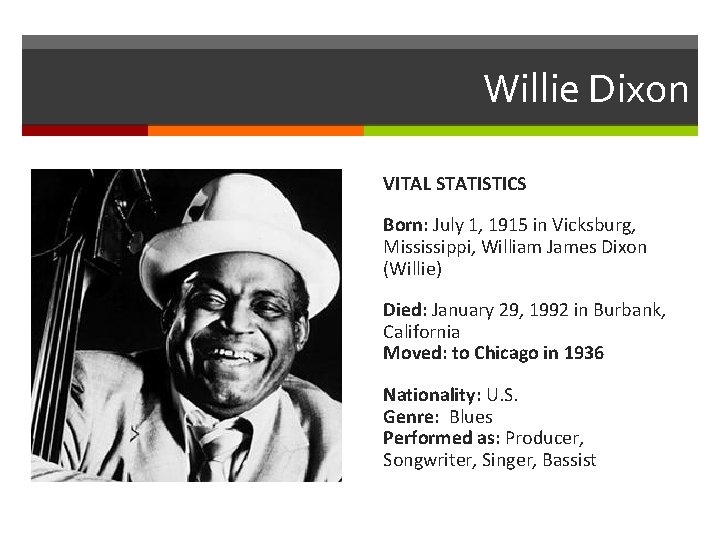
Willie Dixon VITAL STATISTICS Born: July 1, 1915 in Vicksburg, Mississippi, William James Dixon (Willie) Died: January 29, 1992 in Burbank, California Moved: to Chicago in 1936 Nationality: U. S. Genre: Blues Performed as: Producer, Songwriter, Singer, Bassist
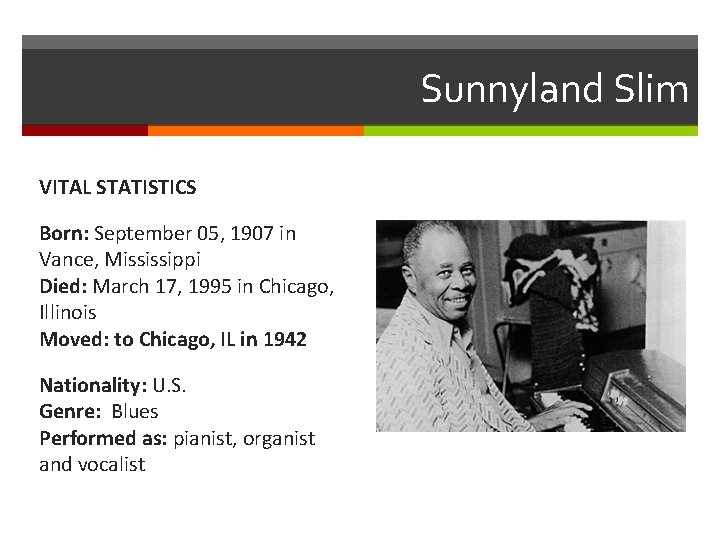
Sunnyland Slim VITAL STATISTICS Born: September 05, 1907 in Vance, Mississippi Died: March 17, 1995 in Chicago, Illinois Moved: to Chicago, IL in 1942 Nationality: U. S. Genre: Blues Performed as: pianist, organist and vocalist
Urban Blues Chess Records, 2120 S. Michigan Ave. Chicago
Impact of the Blues on Rock ‘n’ Roll “The blues are the roots and the other musics are the fruits. It’s better keeping the roots alive, because it means better fruits from now on. The blues are the roots of all American music. As long as American music survives, so will the blues. ” Willie Dixon
Photo Credits All photos credits for this Power. Point can be accessed on the Jazz From A to Z content outline from the educator workshop “Everybody’s Got the Blues. ”