
THE SCRAMBLE FOR AFRICA Essential Question What was
THE SCRAMBLE FOR AFRICA

Essential Question: What was the impact of European imperialism in Africa?

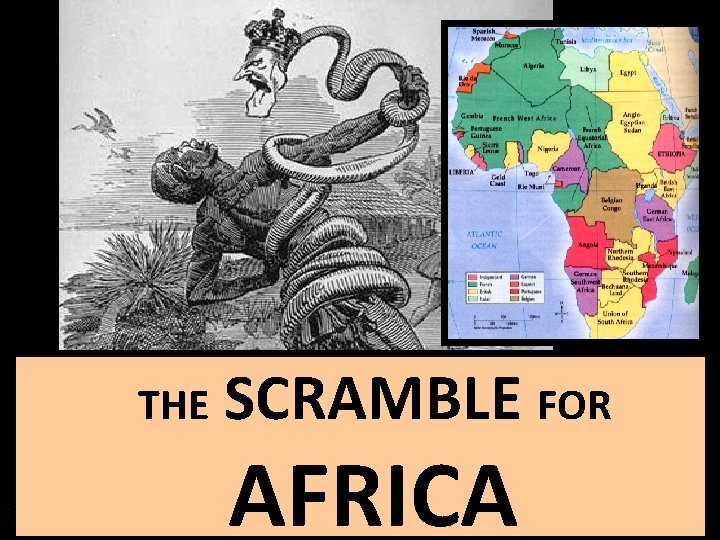
From 1880 to 1914, European nations used imperialism to dominate the continent of Africa
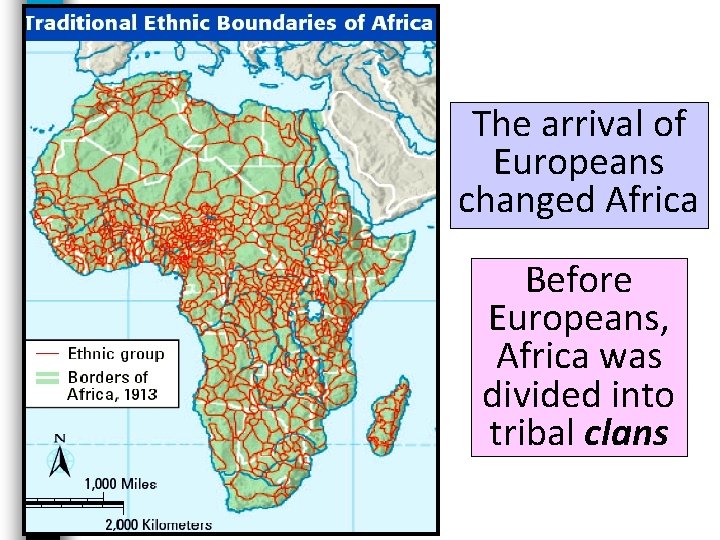
The arrival of Europeans changed Africa Before Europeans, Africa was divided into tribal clans
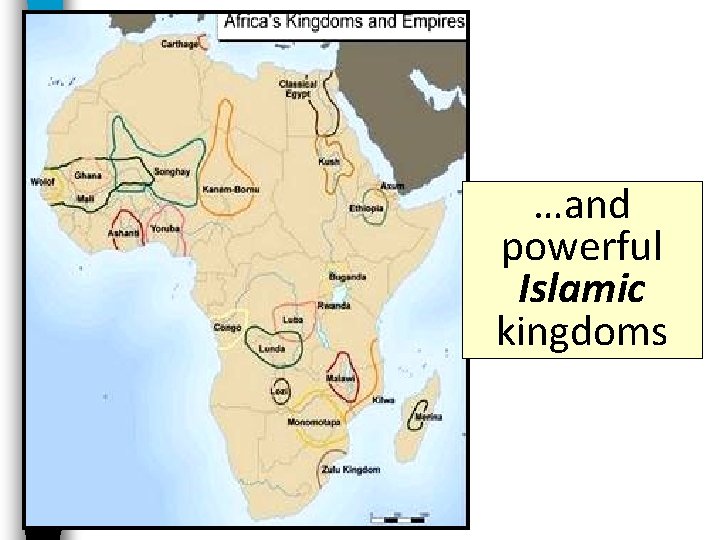
…and powerful Islamic kingdoms
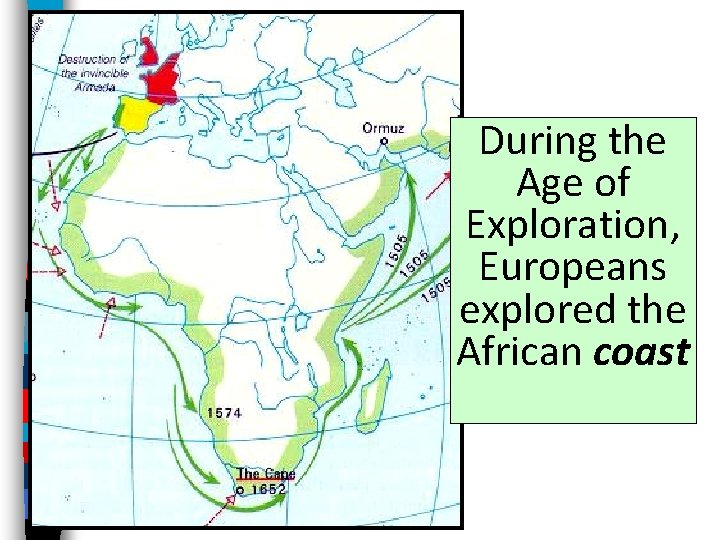
During the Age of Exploration, Europeans explored the African coast
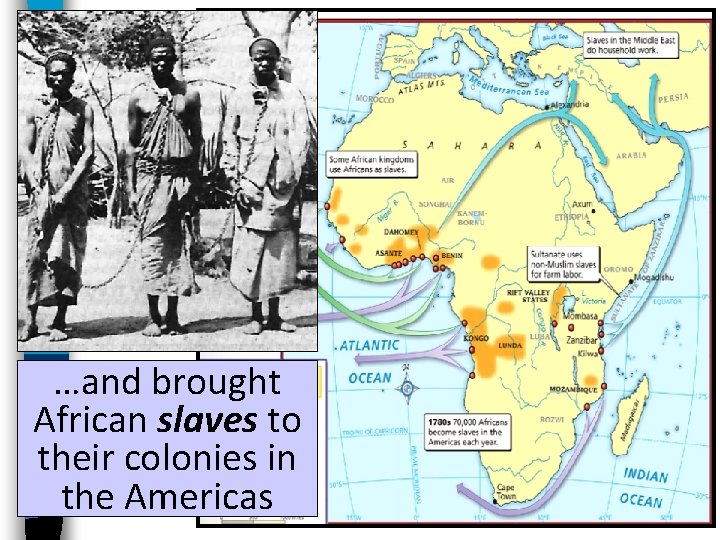
…and brought African slaves to their colonies in the Americas
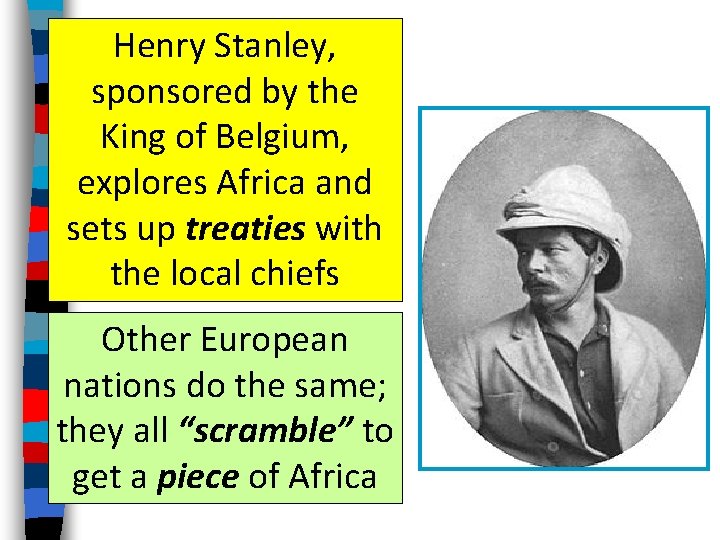
Henry Stanley, sponsored by the King of Belgium, explores Africa and sets up treaties with the local chiefs Other European nations do the same; they all “scramble” to get a piece of Africa
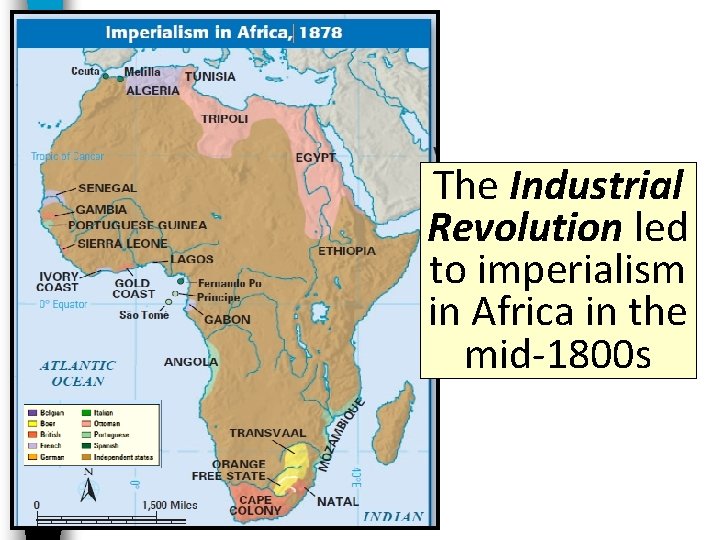
The Industrial Revolution led to imperialism in Africa in the mid-1800 s
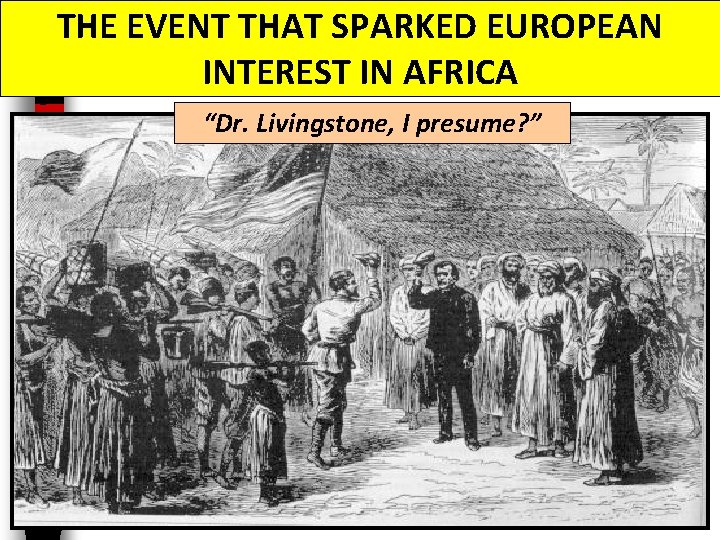
THE EVENT THAT SPARKED EUROPEAN INTEREST IN AFRICA “Dr. Livingstone, I presume? ”
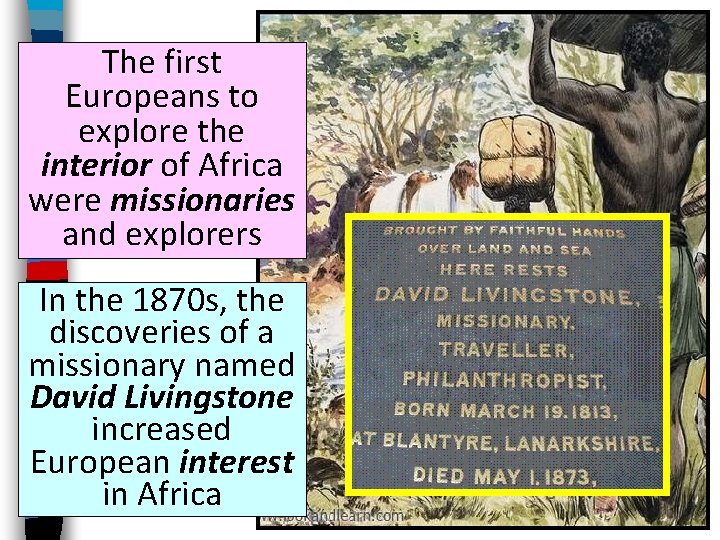
The first Europeans to explore the interior of Africa were missionaries and explorers In the 1870 s, the discoveries of a missionary named David Livingstone increased European interest in Africa
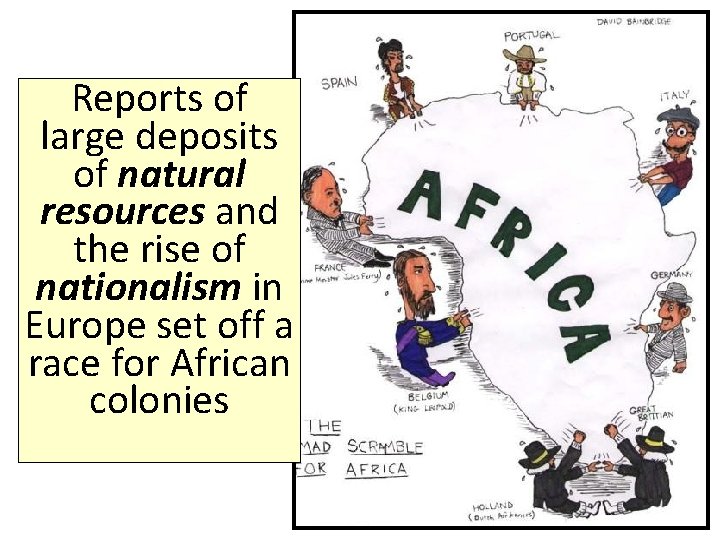
Reports of large deposits of natural resources and the rise of nationalism in Europe set off a race for African colonies
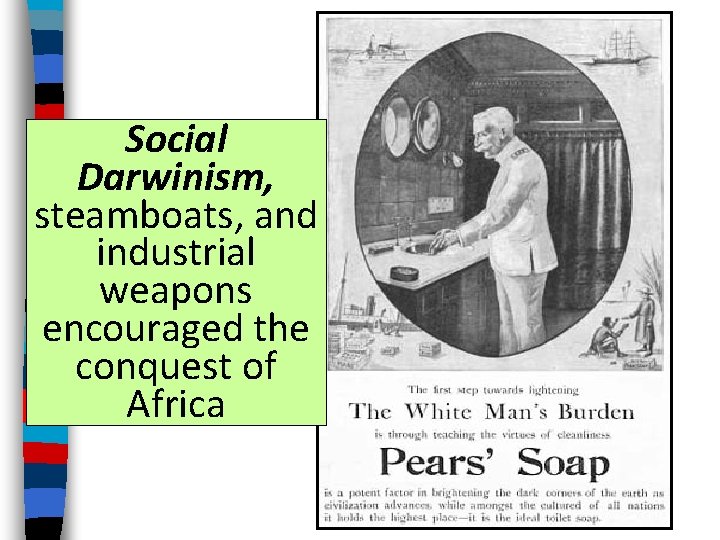
Social Darwinism, steamboats, and industrial weapons encouraged the conquest of Africa
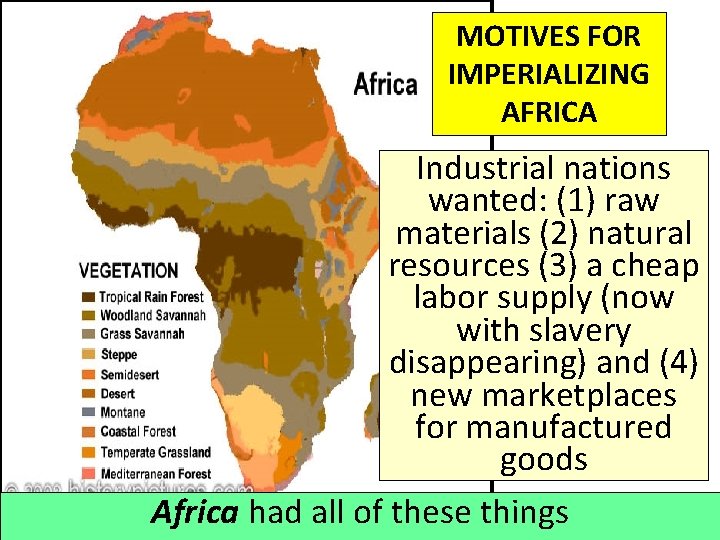
MOTIVES FOR IMPERIALIZING AFRICA Industrial nations wanted: (1) raw materials (2) natural resources (3) a cheap labor supply (now with slavery disappearing) and (4) new marketplaces for manufactured goods Africa had all of these things
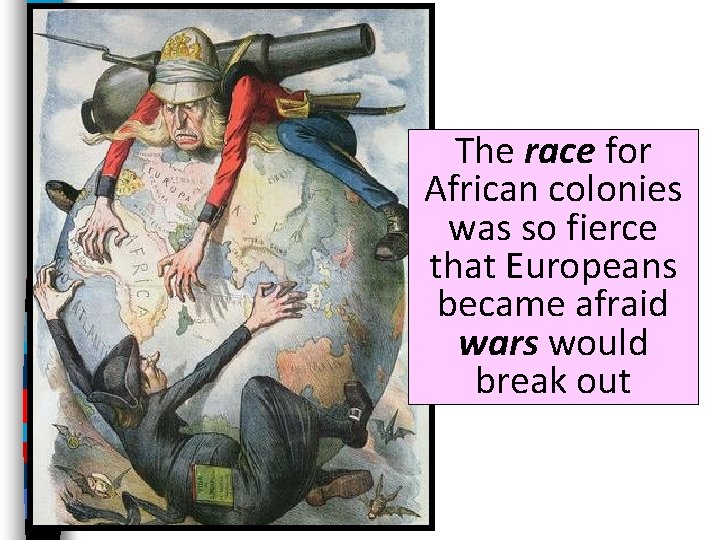
The race for African colonies was so fierce that Europeans became afraid wars would break out
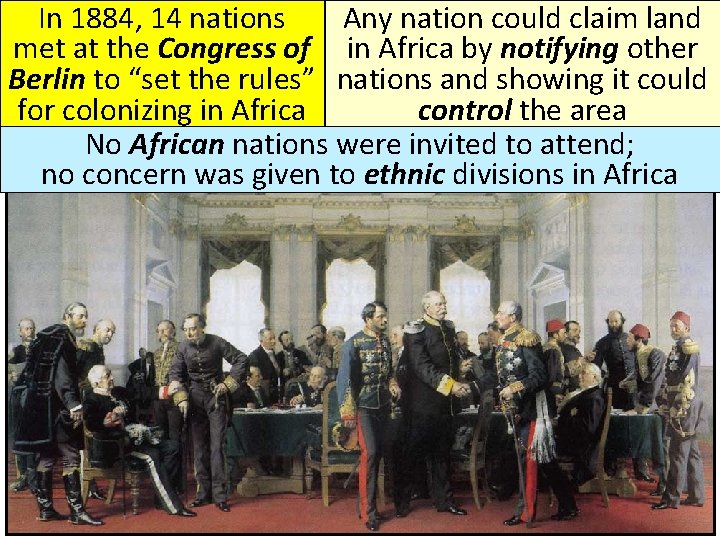
In 1884, 14 nations Any nation could claim land met at the Congress of in Africa by notifying other Berlin to “set the rules” nations and showing it could for colonizing in Africa control the area No African nations were invited to attend; no concern was given to ethnic divisions in Africa

By 1914, Europeans controlled 90% of Africa France took most of west Africa Belgium claimed the Congo in central Africa Germany had many colonies throughout Africa

These nations used African colonies to gain diamonds, tin, gold, rubber and built cash -crop plantations
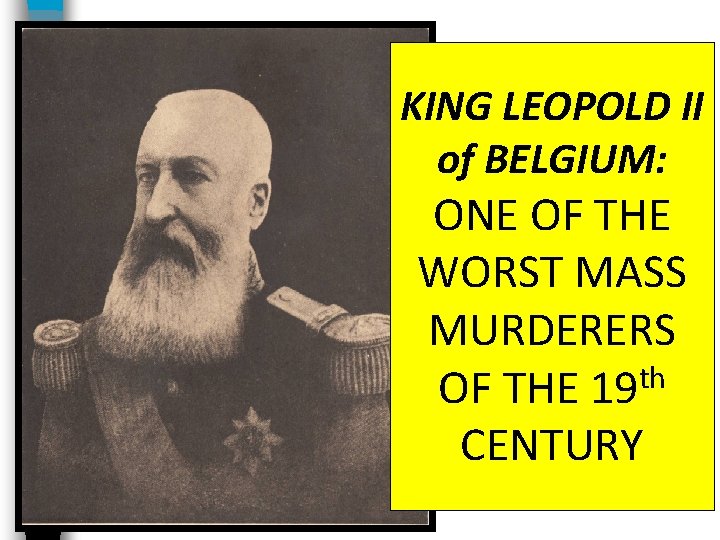
KING LEOPOLD II of BELGIUM: ONE OF THE WORST MASS MURDERERS OF THE 19 th CENTURY
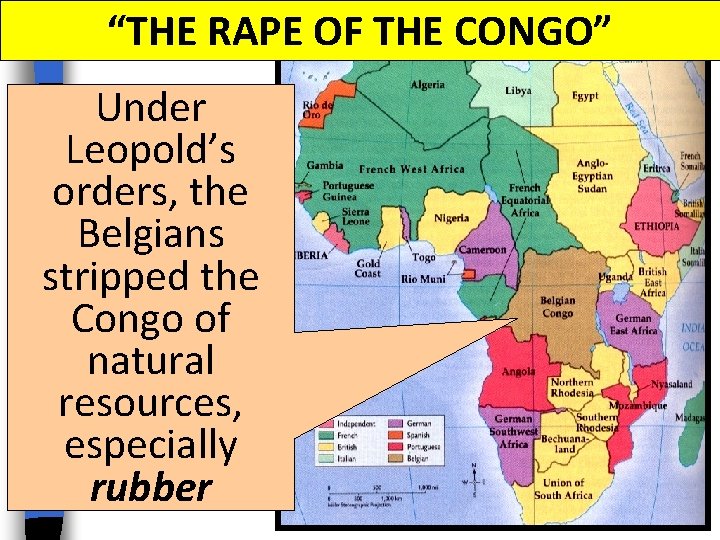
“THE RAPE OF THE CONGO” Under Leopold’s orders, the Belgians stripped the Congo of natural resources, especially rubber
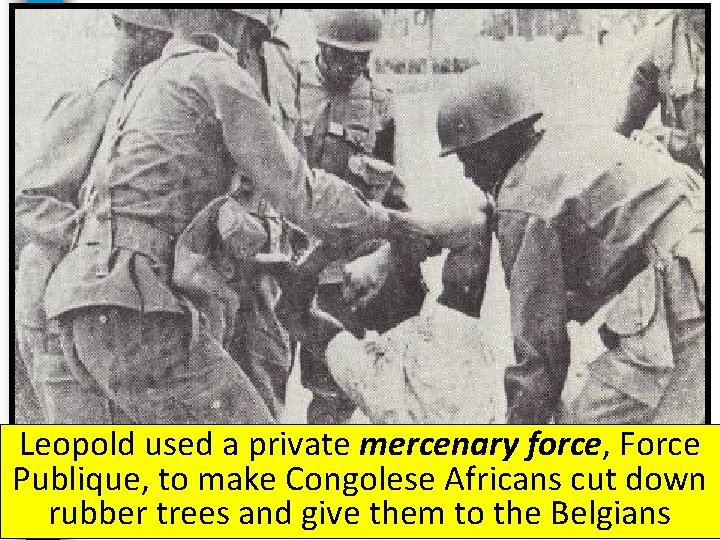
Leopold used a private mercenary force, Force Publique, to make Congolese Africans cut down rubber trees and give them to the Belgians
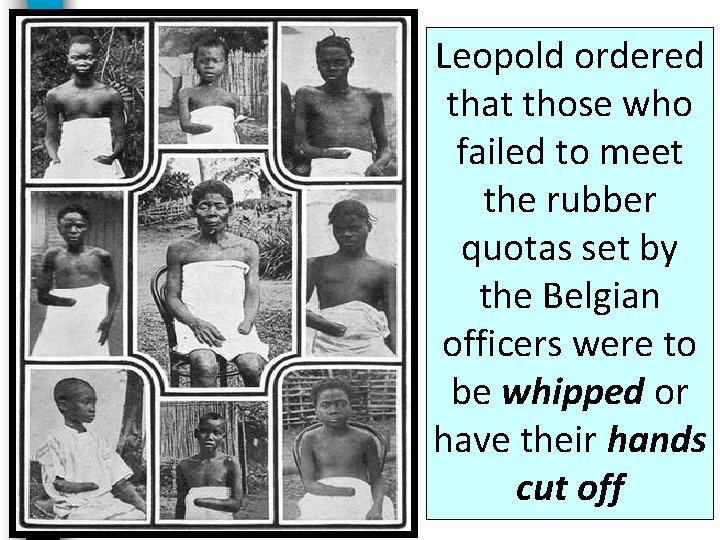
Leopold ordered that those who failed to meet the rubber quotas set by the Belgian officers were to be whipped or have their hands cut off
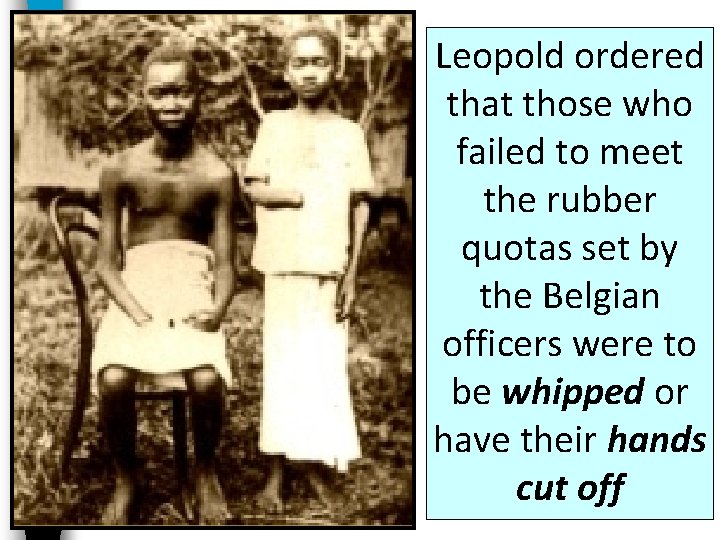
Leopold ordered that those who failed to meet the rubber quotas set by the Belgian officers were to be whipped or have their hands cut off
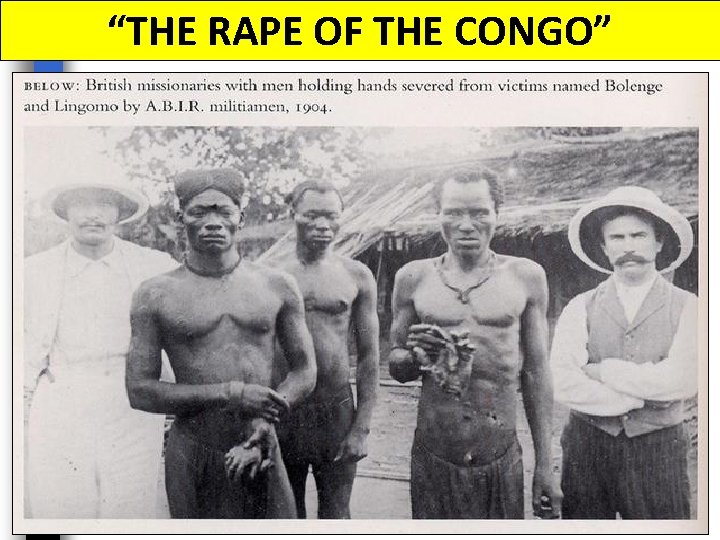
“THE RAPE OF THE CONGO”
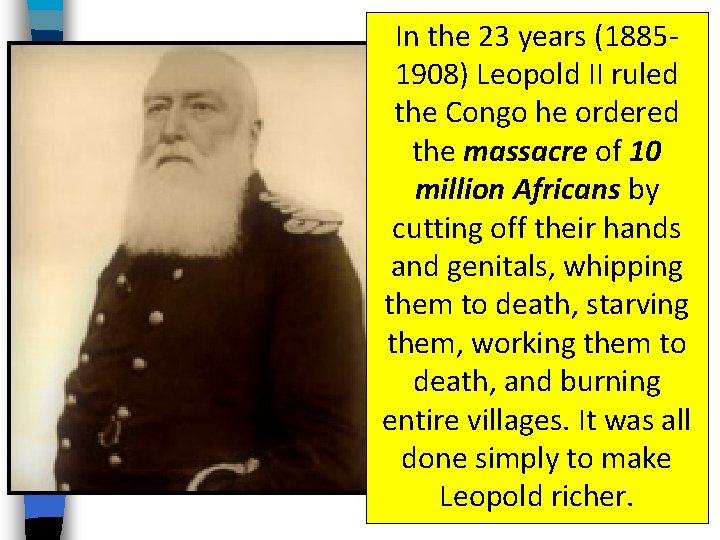
In the 23 years (18851908) Leopold II ruled the Congo he ordered the massacre of 10 million Africans by cutting off their hands and genitals, whipping them to death, starving them, working them to death, and burning entire villages. It was all done simply to make Leopold richer.
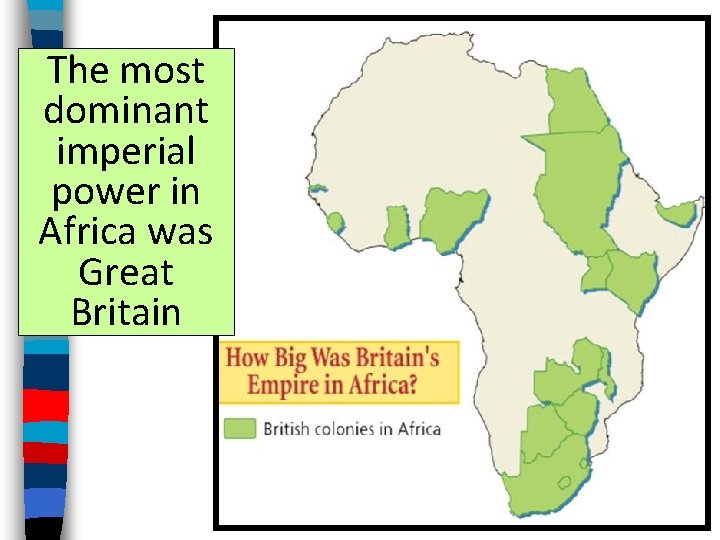
The most dominant imperial power in Africa was Great Britain
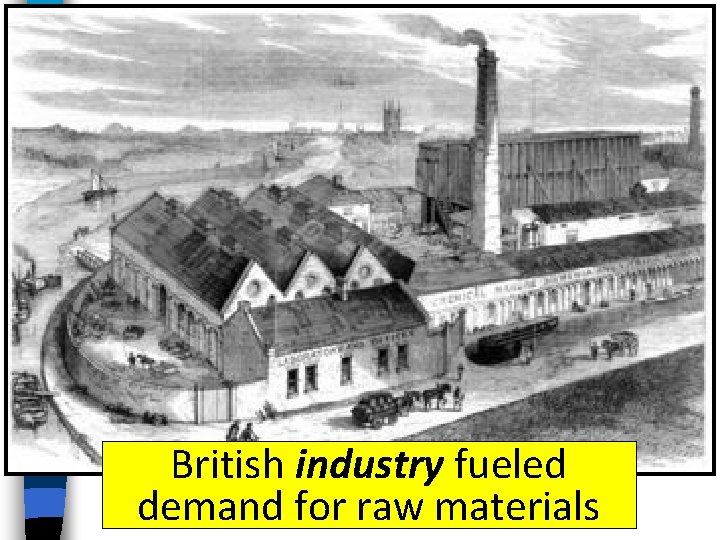
British industry fueled demand for raw materials
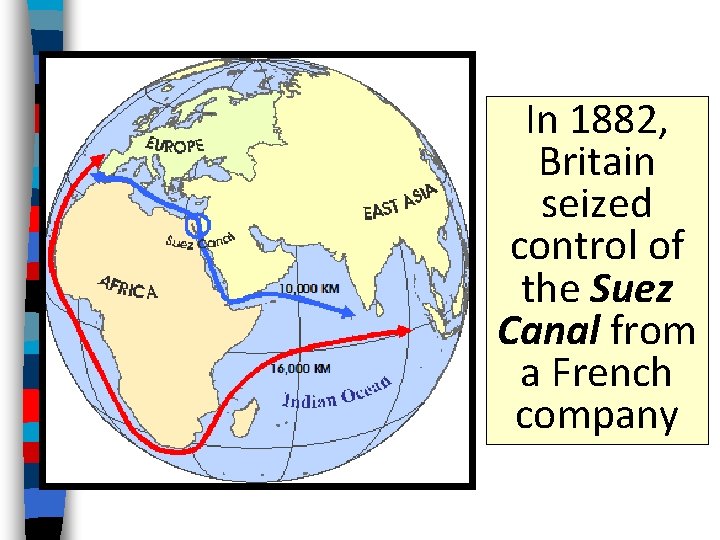
In 1882, Britain seized control of the Suez Canal from a French company
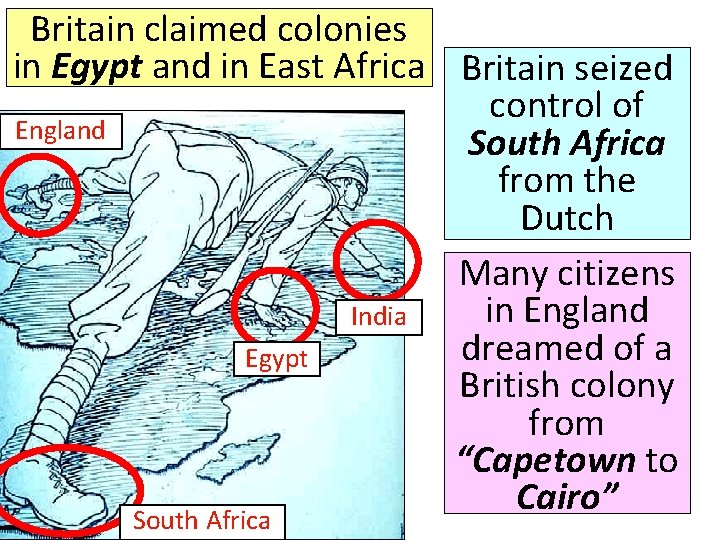
Britain claimed colonies in Egypt and in East Africa Britain seized control of England South Africa from the Dutch Many citizens in England India dreamed of a Egypt British colony from “Capetown to Cairo” South Africa

The most important empire-builder in Africa was British businessman, Cecil Rhodes His De. Beers Company created diamond mines in South Africa Rhodes gained new colonies for Britain in southern Africa Rhodes used his wealth to build railroads and telegraph lines in Africa

CECIL RHODES: THE ULTIMATE IMPERIALIST “If I could, I would claim other planets. ”
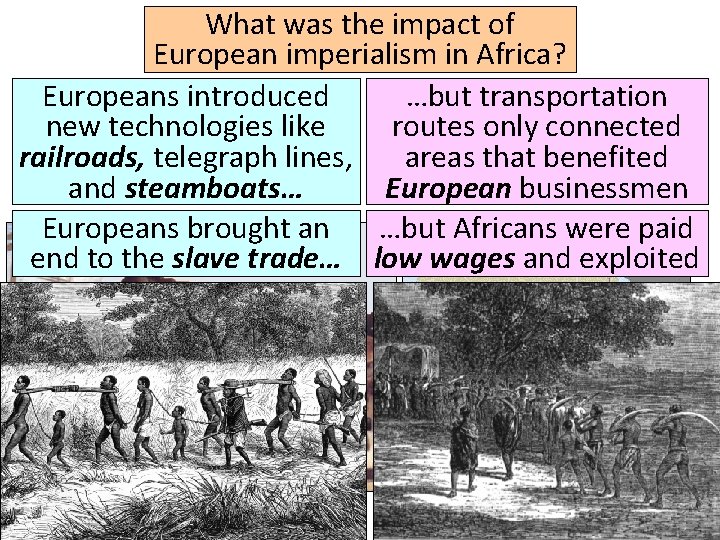
What was the impact of European imperialism in Africa? Europeans introduced …but transportation new technologies like routes only connected railroads, telegraph lines, areas that benefited and steamboats… European businessmen Europeans brought an …but Africans were paid end to the slave trade… low wages and exploited
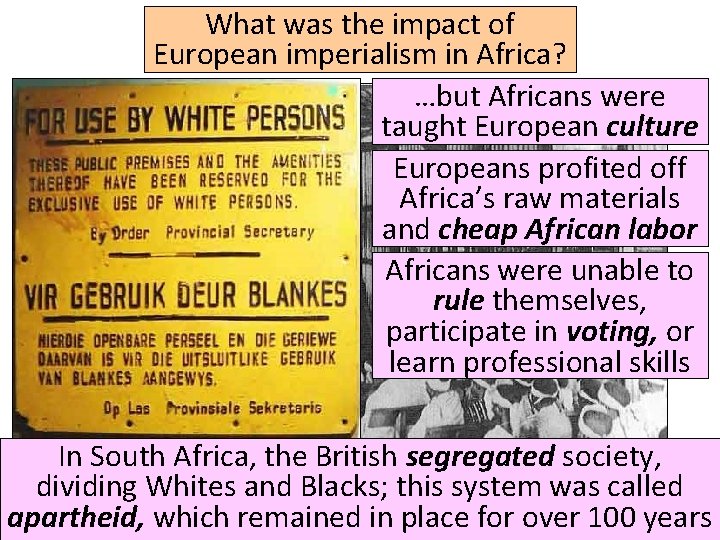
What was the impact of European imperialism in Africa? Europeans built schools, …but Africans were churches, and hospitals… taught European culture Europeans profited off Africa’s raw materials and cheap African labor Africans were unable to rule themselves, participate in voting, or learn professional skills In South Africa, the British segregated society, dividing Whites and Blacks; this system was called apartheid, which remained in place for over 100 years
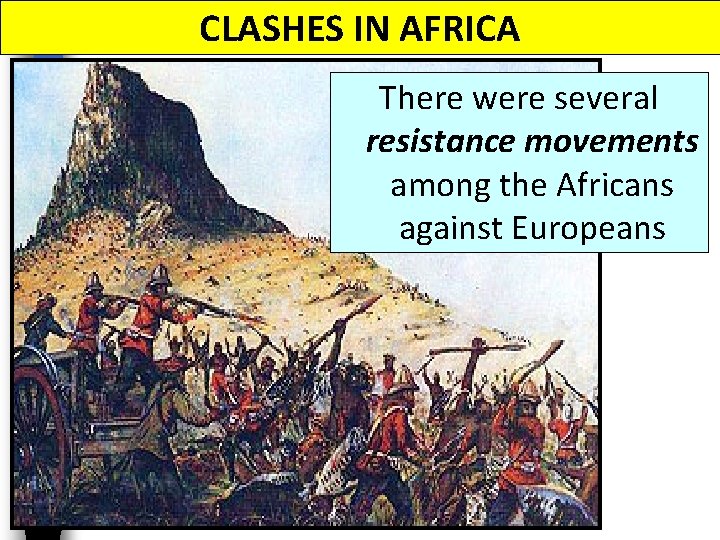
CLASHES IN AFRICA There were several resistance movements among the Africans against Europeans
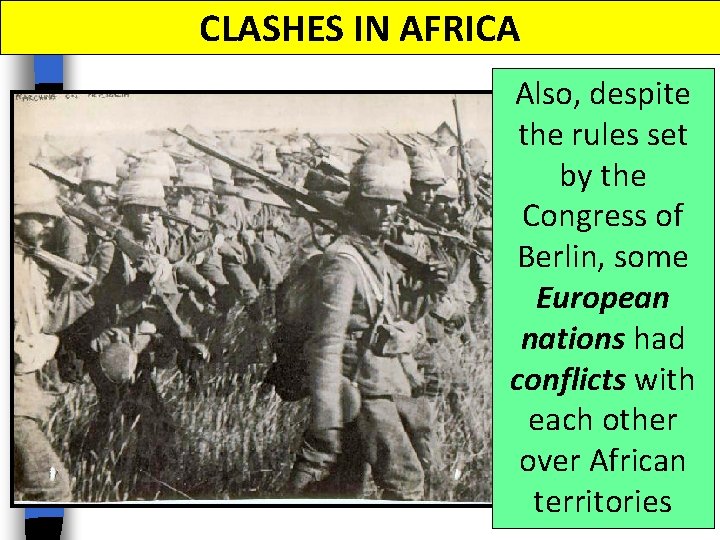
CLASHES IN AFRICA Also, despite the rules set by the Congress of Berlin, some European nations had conflicts with each other over African territories
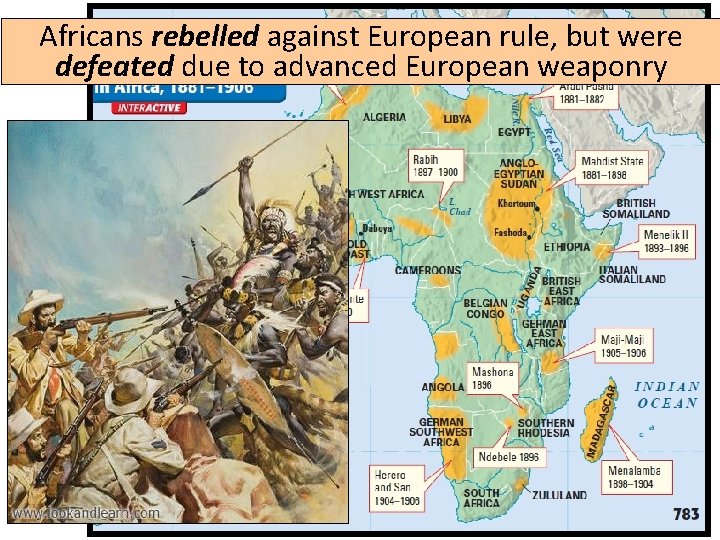
Africans rebelled against European rule, but were defeated due to advanced European weaponry
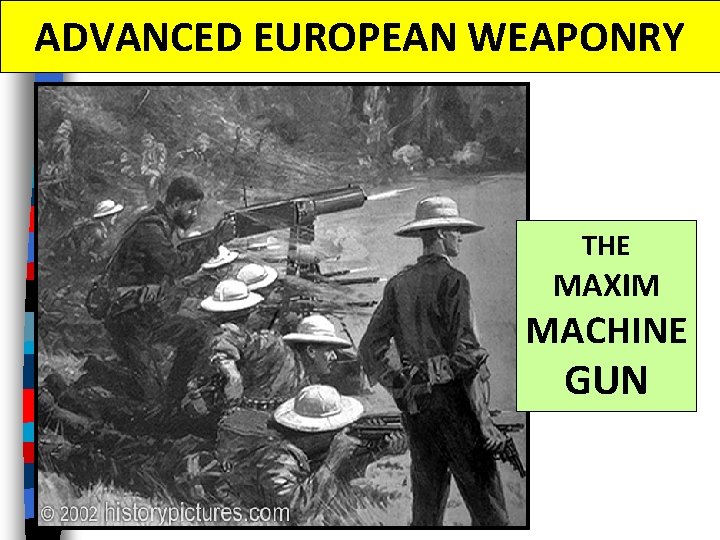
ADVANCED EUROPEAN WEAPONRY THE MAXIM MACHINE GUN
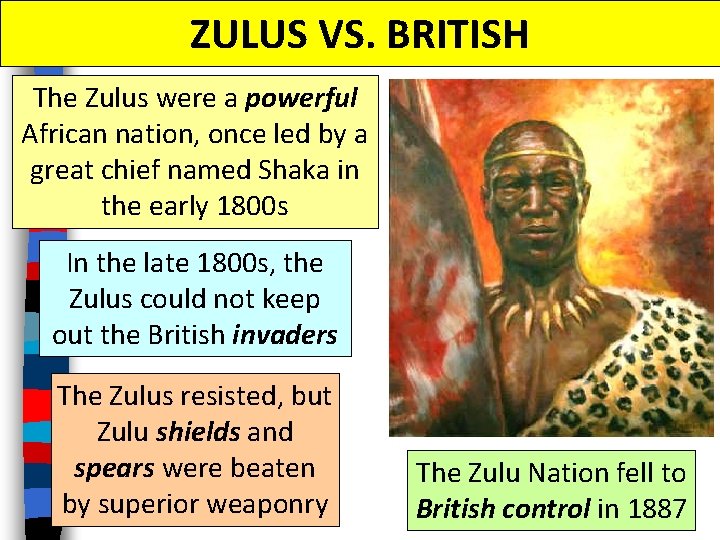
ZULUS VS. BRITISH The Zulus were a powerful African nation, once led by a great chief named Shaka in the early 1800 s In the late 1800 s, the Zulus could not keep out the British invaders The Zulus resisted, but Zulu shields and spears were beaten by superior weaponry The Zulu Nation fell to British control in 1887
OTHER EXAMPLES OF FAILED AFRICAN RESISTANCE ØNigerians resisted the British, but were beaten ØAlgeria and West Africa resisted the French for years ØEast Africans put faith in a spiritual defense against the Germans, believing their gods would turn German bullets into water ØResistance fighters armed with spears and magic water were mercilessly slaughtered by German machine guns ØThe result: 75, 000 were killed and the “Magic Water” Rebellion was crushed
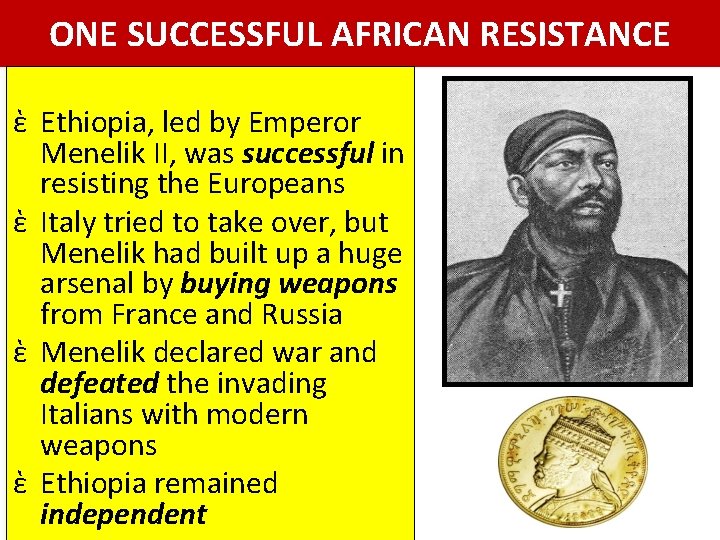
ONE SUCCESSFUL AFRICAN RESISTANCE ὲ Ethiopia, led by Emperor Menelik II, was successful in resisting the Europeans ὲ Italy tried to take over, but Menelik had built up a huge arsenal by buying weapons from France and Russia ὲ Menelik declared war and defeated the invading Italians with modern weapons ὲ Ethiopia remained independent
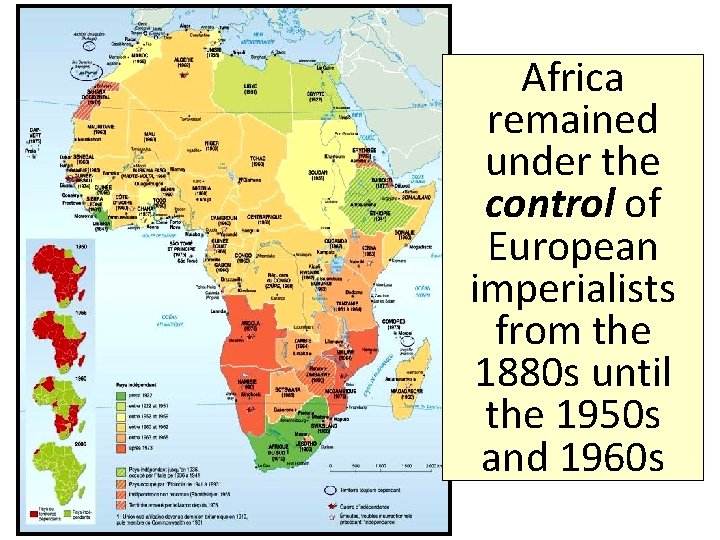
Africa remained under the control of European imperialists from the 1880 s until the 1950 s and 1960 s
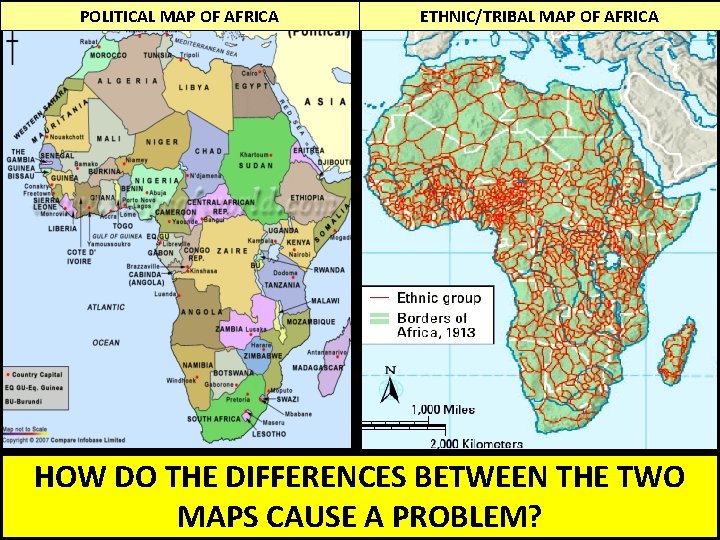
POLITICAL MAP OF AFRICA ETHNIC/TRIBAL MAP OF AFRICA HOW DO THE DIFFERENCES BETWEEN THE TWO MAPS CAUSE A PROBLEM?
IMPACT OF COLONIAL RULE IN AFRICA NEGATIVE IMPACTS ØARTIFICIAL BOUNDARIES: the colonial powers divided Africa into roughly 40 nations; the boundaries gave NO consideration for the African people ØThe boundaries split up many tribes, and also combined tribes that historically DID NOT GET ALONG with each other ØThis is still a problem today: Africa is plagued by warfare and genocide, partly brought on by these unnatural boundaries
IMPACT OF COLONIAL RULE IN AFRICA MORE NEGATIVE IMPACTS ØLoss of land independence ØMany Africans died from European diseases ØThousands died resisting the Europeans ØFamines resulted from Europeans forcing the African farmers to grow cash-crops (cocoa, tobacco, rubber) instead of food ØTraditional culture was broken down
IMPACT OF COLONIAL RULE IN AFRICA POSITIVE IMPACTS ØLocal warfare was temporarily reduced ØHumanitarian efforts improved schools, hospitals, and sanitation; this resulted in longer life spans and better literacy ØAn infrastructure was put in place: railroads, paved roads, dams, telephones, and telegraphs
THE BOTTOM LINE… For Africans, were there more POSITIVE EFFECTS or more NEGATIVE EFFECTS?
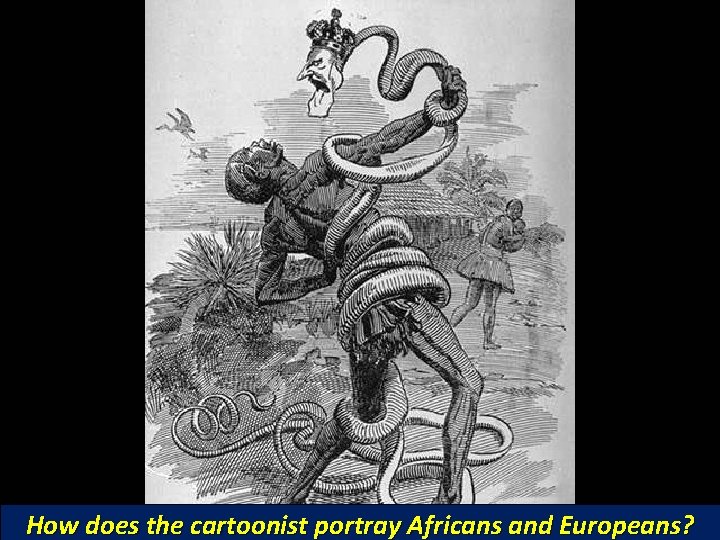
How does the cartoonist portray Africans and Europeans?
Revamped and redone by Christopher Jaskowiak Originally created by Brooks Baggett
- Slides: 48