
The Scramble for Africa 1800 1914 The Geography
The “Scramble” for Africa 1800 -1914
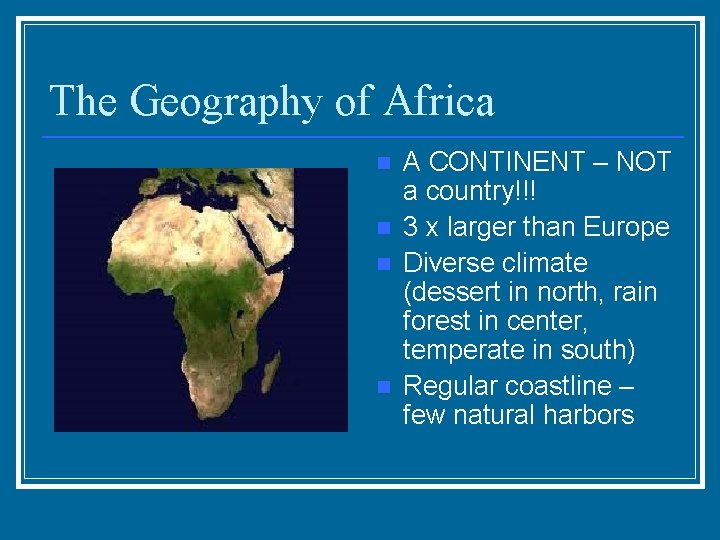
The Geography of Africa n n A CONTINENT – NOT a country!!! 3 x larger than Europe Diverse climate (dessert in north, rain forest in center, temperate in south) Regular coastline – few natural harbors
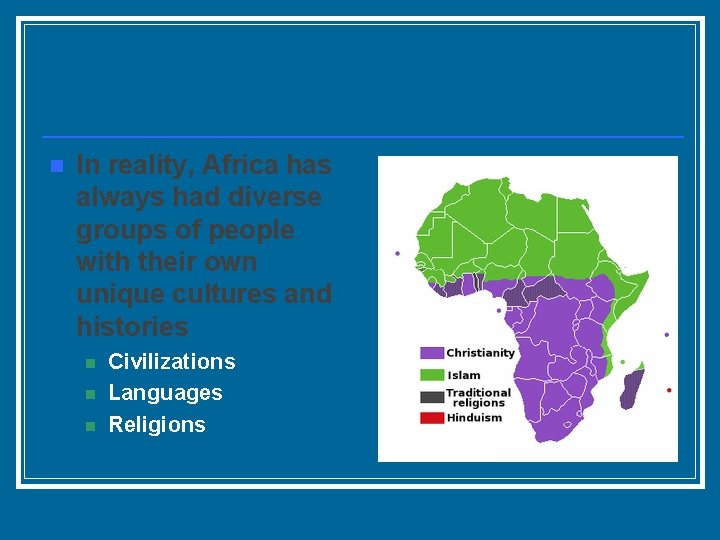
n In reality, Africa has always had diverse groups of people with their own unique cultures and histories n n n Civilizations Languages Religions
European Claims in Africa In the 1880 s, driven by economic, political and cultural motives, Europeans began to compete for additional territory in Africa. Scientific Advances Africa, huge continent, rugged terrain; travel, control difficult n 1800 s, scientific advances made travel, control in Africa easier • Discovery of drug quinine helped Europeans protect selves against malaria n • Automatic machine gun created strong military advantage • Development of telegraphs, railroads, steamships helped Europeans overcome problems of communication, travel
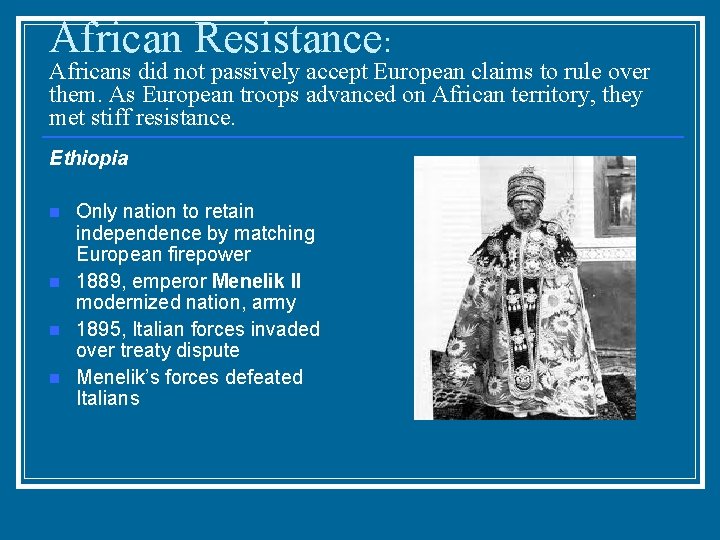
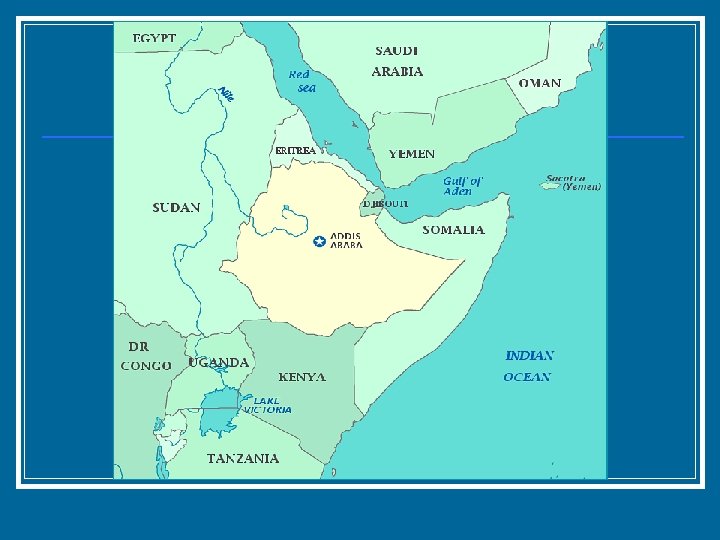
African Resistance: Africans did not passively accept European claims to rule over them. As European troops advanced on African territory, they met stiff resistance. Ethiopia n n Only nation to retain independence by matching European firepower 1889, emperor Menelik II modernized nation, army 1895, Italian forces invaded over treaty dispute Menelik’s forces defeated Italians
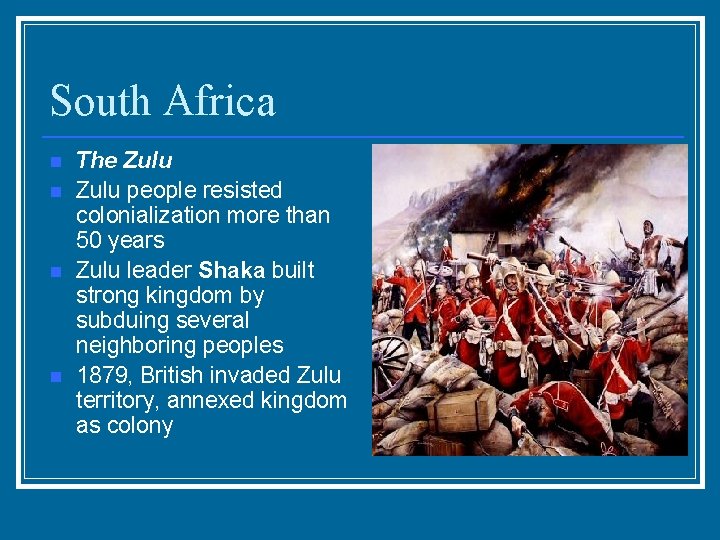
South Africa n n The Zulu people resisted colonialization more than 50 years Zulu leader Shaka built strong kingdom by subduing several neighboring peoples 1879, British invaded Zulu territory, annexed kingdom as colony
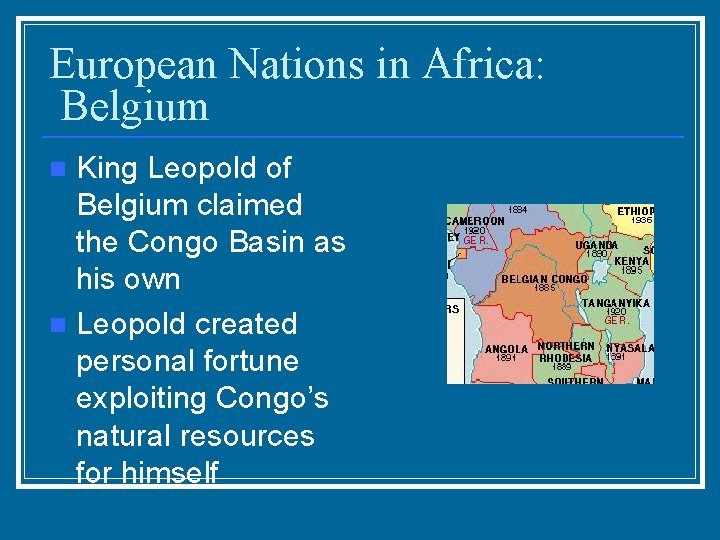
European Nations in Africa: Belgium King Leopold of Belgium claimed the Congo Basin as his own n Leopold created personal fortune exploiting Congo’s natural resources for himself n
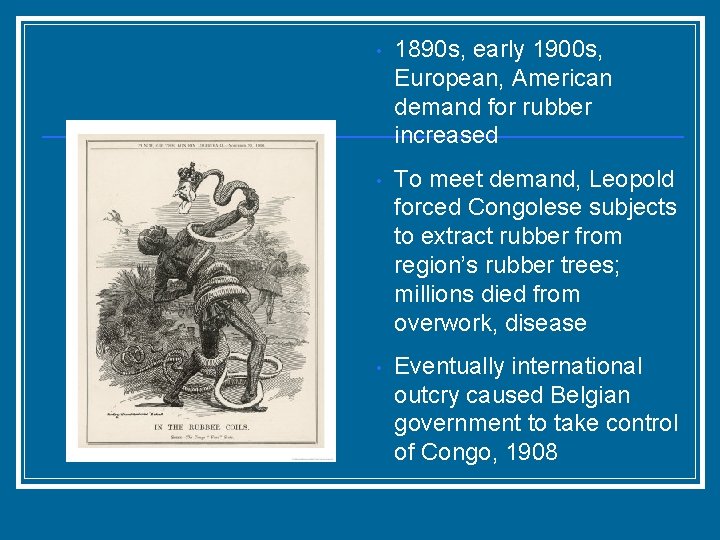
• 1890 s, early 1900 s, European, American demand for rubber increased • To meet demand, Leopold forced Congolese subjects to extract rubber from region’s rubber trees; millions died from overwork, disease • Eventually international outcry caused Belgian government to take control of Congo, 1908
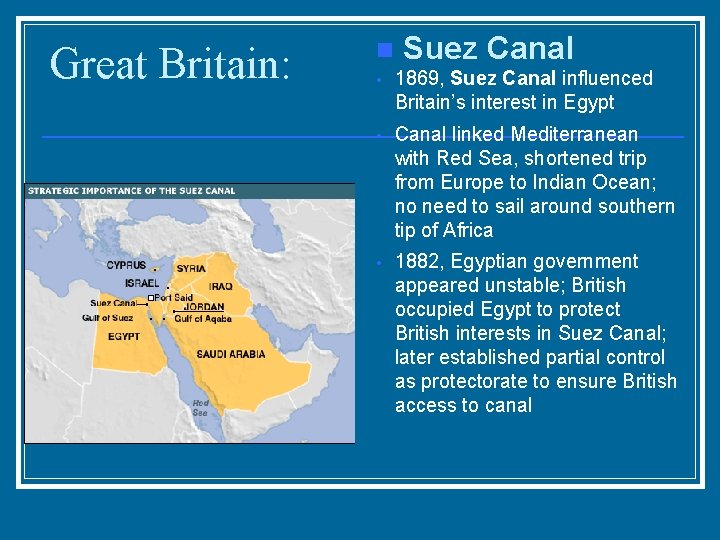
Great Britain: n Suez Canal • 1869, Suez Canal influenced Britain’s interest in Egypt • Canal linked Mediterranean with Red Sea, shortened trip from Europe to Indian Ocean; no need to sail around southern tip of Africa • 1882, Egyptian government appeared unstable; British occupied Egypt to protect British interests in Suez Canal; later established partial control as protectorate to ensure British access to canal
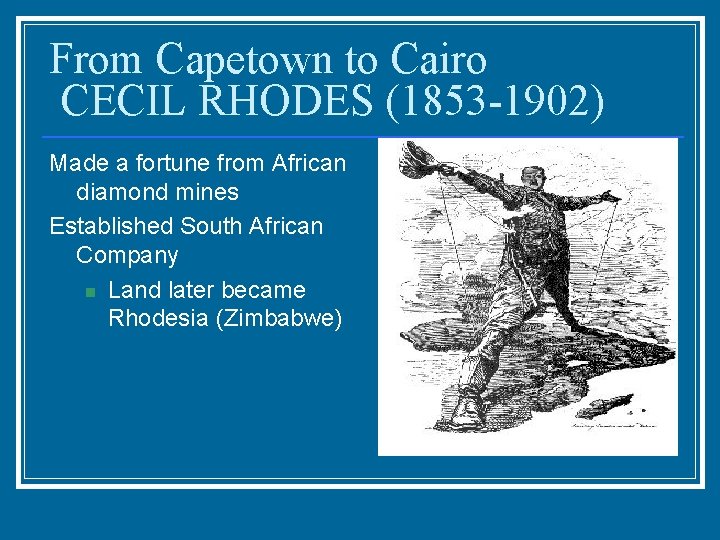
From Capetown to Cairo CECIL RHODES (1853 -1902) Made a fortune from African diamond mines Established South African Company n Land later became Rhodesia (Zimbabwe)
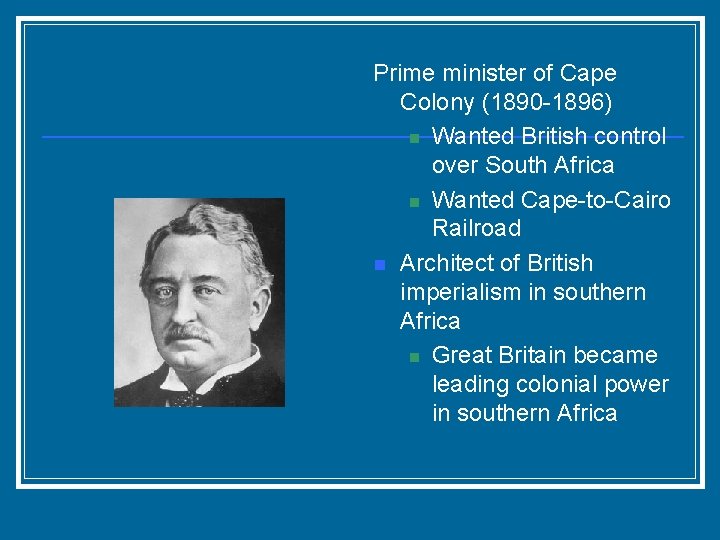
Prime minister of Cape Colony (1890 -1896) n Wanted British control over South Africa n Wanted Cape-to-Cairo Railroad n Architect of British imperialism in southern Africa n Great Britain became leading colonial power in southern Africa
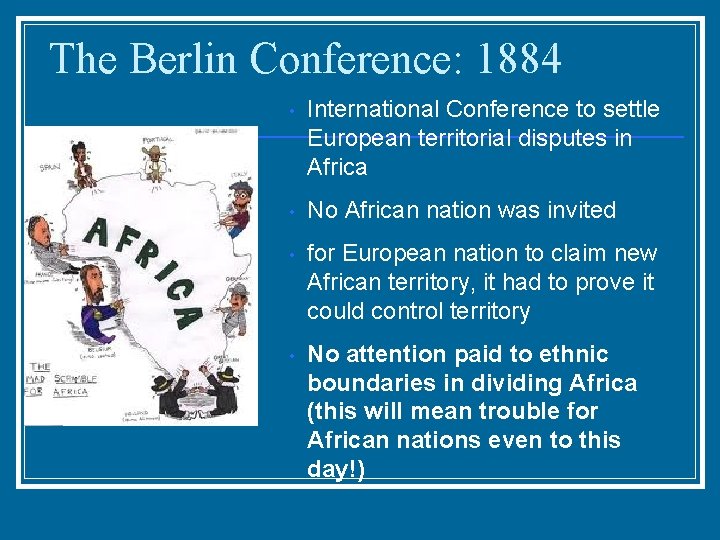
The Berlin Conference: 1884 • International Conference to settle European territorial disputes in Africa • No African nation was invited • for European nation to claim new African territory, it had to prove it could control territory • No attention paid to ethnic boundaries in dividing Africa (this will mean trouble for African nations even to this day!)
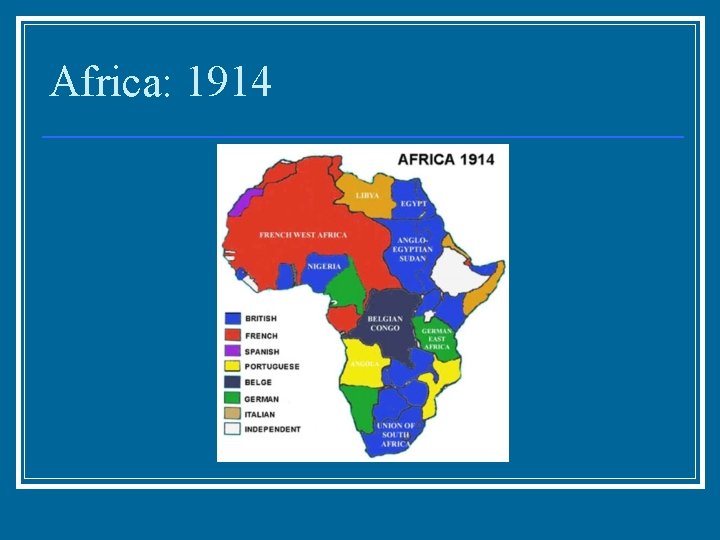
Africa: 1914
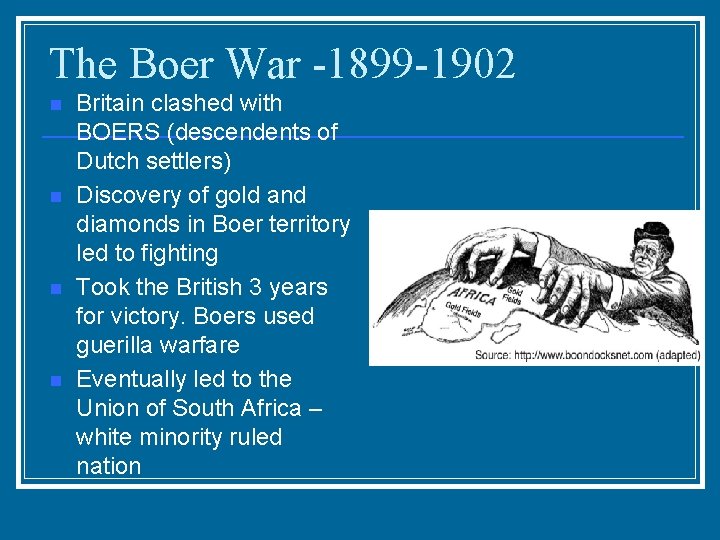
The Boer War -1899 -1902 n n Britain clashed with BOERS (descendents of Dutch settlers) Discovery of gold and diamonds in Boer territory led to fighting Took the British 3 years for victory. Boers used guerilla warfare Eventually led to the Union of South Africa – white minority ruled nation
- Slides: 15