
The scope of linguistics Language as a game
- Slides: 33
The scope of linguistics
Language as a game • On this conception of the philosophical enterprise, the vagueness of ordinary usage is not a problem to be eliminated but rather the source of linguistic riches. It is misleading even to attempt to fix the meaning of particular expressions by linking them referentially to things in the world. The meaning of a word or phrase or proposition is nothing other than the set of (informal) rules governing the use of the expression in actual life.
• Like the rules of a game, Wittgenstein argued, these rules for the use of ordinary language are neither right nor wrong, neither true nor false: they are merely useful for the particular applications in which we apply them. The members of any community—cost accountants, college students, or rap musicians, for example— develop ways of speaking that serve their needs as a group, and these constitute the language-game (Moore's notes refer to the "system" of language) they employ. Human beings at large constitute a greater community within which similar, though more widely-shared, language-games get played.
Linguistics? • Although there is little to be said in general about language as a whole, therefore, it may often be fruitful to consider in detail the ways in which particular portions of the language are used. • Even the fundamental truths of arithmetic, Wittgenstein now supposed, are nothing more than relatively stable ways of playing a particular language-game. This account rejects both logicist and intuitionist views of mathematics in favor of a normative conception of its use. 2 + 3 = 5 is nothing other than a way we have collectively decided to speak and write, a handy, shared languagegame. The point once more is merely to clarify the way we use ordinary language about numbers.
19 th century A major component of the 19 th century’s understanding of an explanation was a precise account of the historical origin of whatever it is we are studying: a people, a word, a language, a nation. The search for the history of European languages, especially insofar as this bears on what the peoples of Europe are.
• Etymologies • Law of (exceptionless) sound change: sounds change in mechanical ways over time. • The discovery of Indo-European
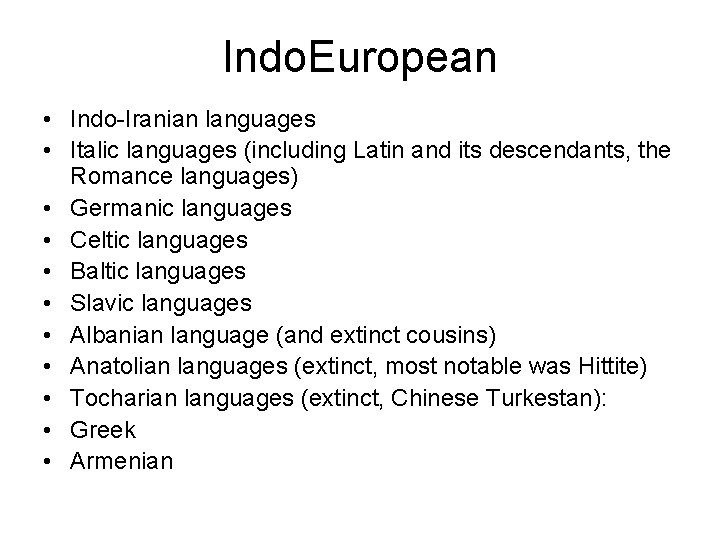
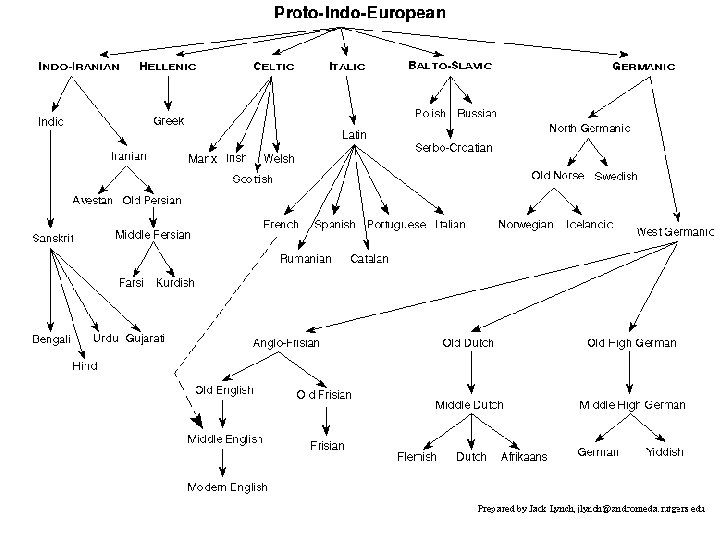
Indo. European • Indo-Iranian languages • Italic languages (including Latin and its descendants, the Romance languages) • Germanic languages • Celtic languages • Baltic languages • Slavic languages • Albanian language (and extinct cousins) • Anatolian languages (extinct, most notable was Hittite) • Tocharian languages (extinct, Chinese Turkestan): • Greek • Armenian
20 th century • (Extending from the 19 th century: ) the discovery of the vastness of the non. Western world: in this case, of the thousands of non-European languages. What can they tell us about Language? • Especially in the United States: the desire to understand the (largely unwritten) languages of non-European peoples (Native American, in the North American tradition). Rise of field of anthropology.
Linguistics departments… • arose (later) either from Classics departments (Chicago) or Anthropology departments.
Fields of linguistics • Historical linguistics (one sense of explanation). • “Theoretical linguistics”: algorithmic explanation; influence of Noam Chomsky. Syntax: algorithmic, functional/cognitive Phonology: American and European structuralism; Generative phonology (1965 -1975? )…
Phonology • Structuralism 1920 -1965 • Generative phonology 1965 -1975 Representation-based phonology (autosegmental, metrical phonology) 19751990 • Lexical phonology (1980 s) • Optimality theory (1990 s)
Structuralism 1920 -1965 • • Ferdinand de Saussure Nicolas Trubetzkoy Roman Jakobson Edward Sapir Leonard Bloomfield Zellig Harris Charles Hockett Kenneth Pike
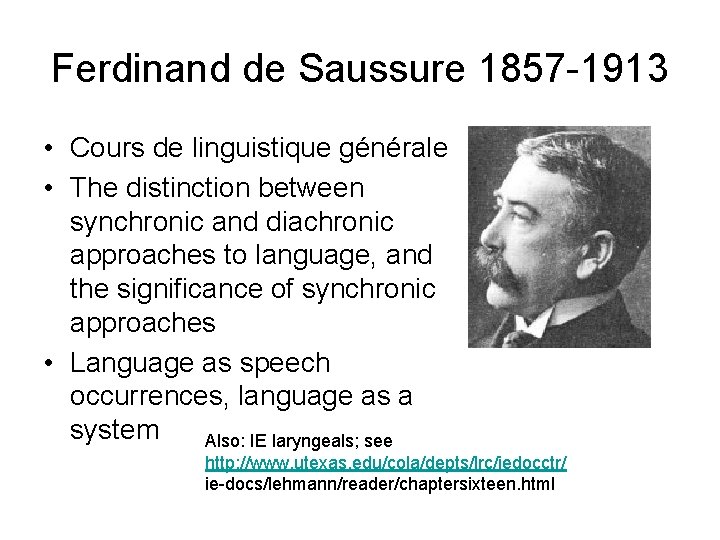
Ferdinand de Saussure 1857 -1913 • Cours de linguistique générale • The distinction between synchronic and diachronic approaches to language, and the significance of synchronic approaches • Language as speech occurrences, language as a system Also: IE laryngeals; see http: //www. utexas. edu/cola/depts/lrc/iedocctr/ ie-docs/lehmann/reader/chaptersixteen. html
Count Nicolas Troubetzkoy • The development of structures of phonemes in inventories, and of phonological features (along with Roman Jakobson)
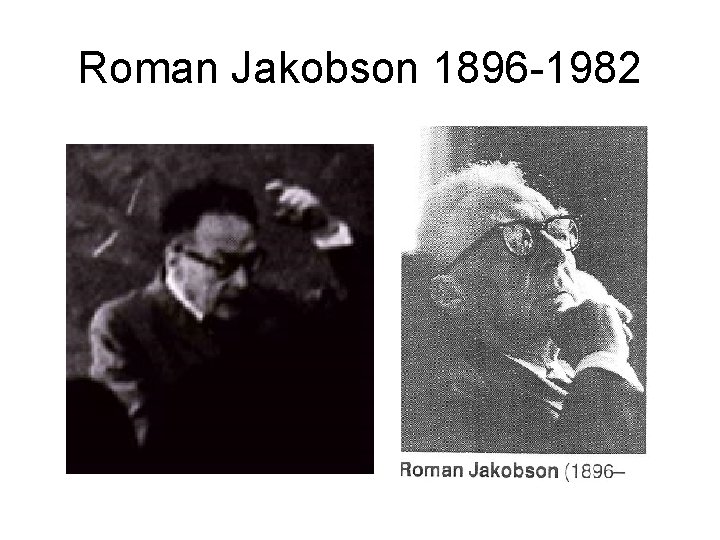
Roman Jakobson 1896 -1982
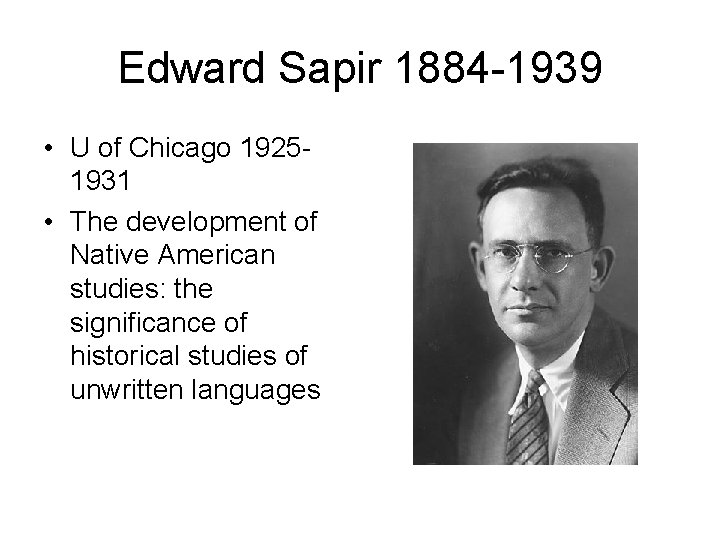
Edward Sapir 1884 -1939 • U of Chicago 19251931 • The development of Native American studies: the significance of historical studies of unwritten languages
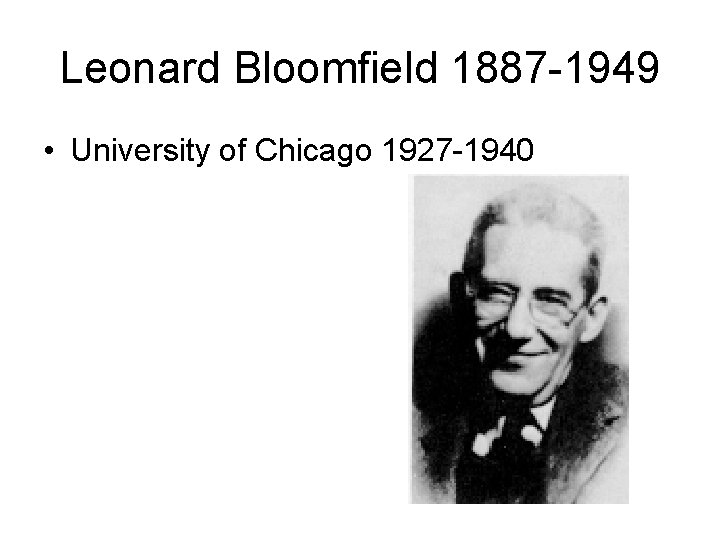
Leonard Bloomfield 1887 -1949 • University of Chicago 1927 -1940
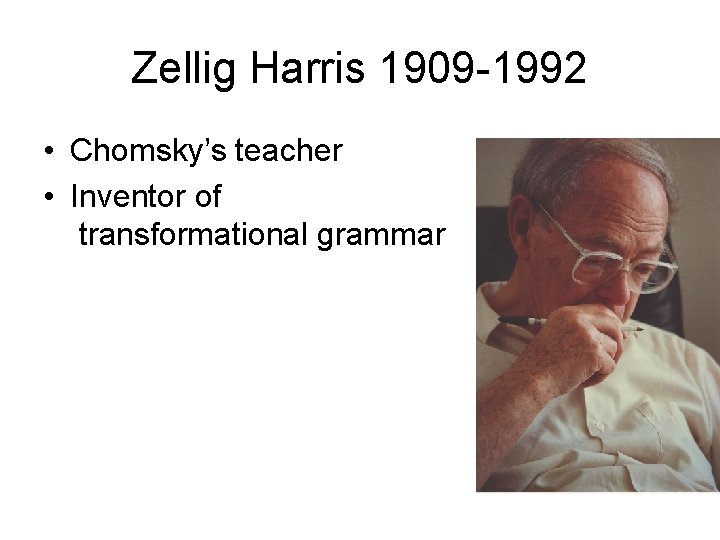
Zellig Harris 1909 -1992 • Chomsky’s teacher • Inventor of transformational grammar
Charles Hockett 1916 -2000
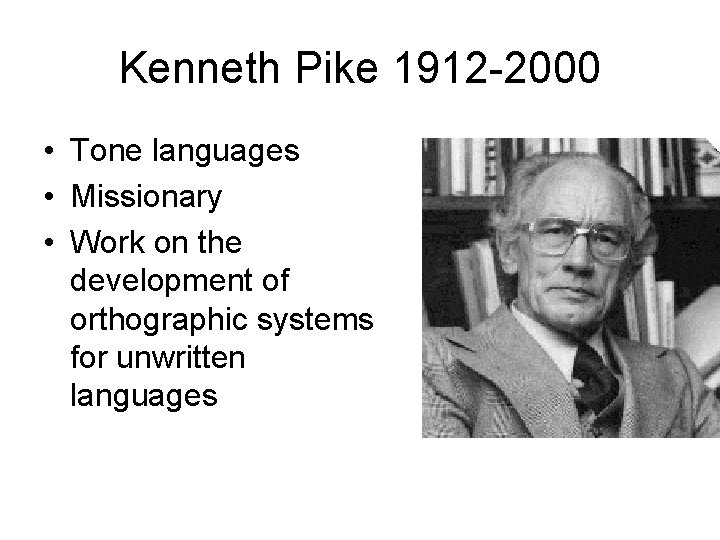
Kenneth Pike 1912 -2000 • Tone languages • Missionary • Work on the development of orthographic systems for unwritten languages
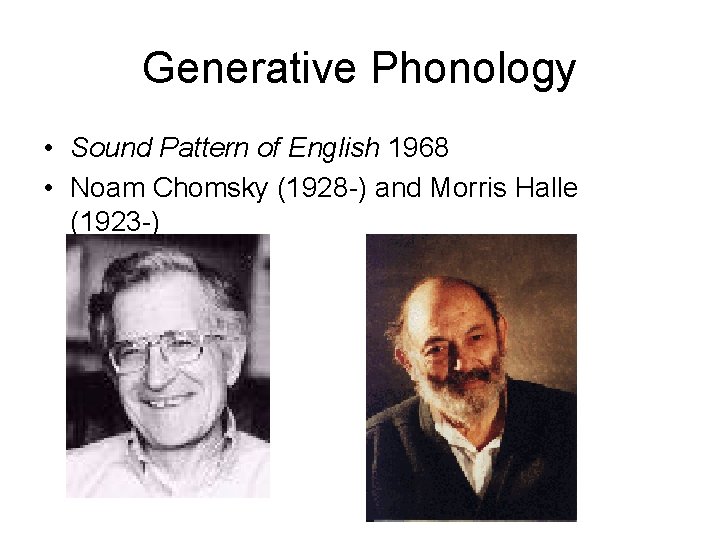
Generative Phonology • Sound Pattern of English 1968 • Noam Chomsky (1928 -) and Morris Halle (1923 -)
Phonology after generative phonology • Metrical phonology: Mark Liberman, Alan Prince, Bruce Hayes • Autosegmental Phonology: John Goldsmith, G. N. Clements • Lexical Phonology: Paul Kiparsky • Optimality Theory: Paul Smolensky, Alan Prince, John Mc. Carthy
Syntax • Generative syntax: 1957 -1967 Aspects of the Theory of Syntax (Chomsky, 1965) Generative semantics: the explanatory foundation of syntax is logical form. Lakoff, Ross, Mc. Cawley, Postal. Relational grammar Generalized Phrase Structure Grammar
Generative grammar • Chomsky: Syntactic Structures 1957 • Aspects of the Theory of Syntax 1965 • Generative semantics / interpretive semantics dispute: late 1960 s pit Chomsky (Jackendoff…) against Lakoff, Mc. Cawley, Ross, and Postal. The issue? As I see it, partly social and partly based on the major question…
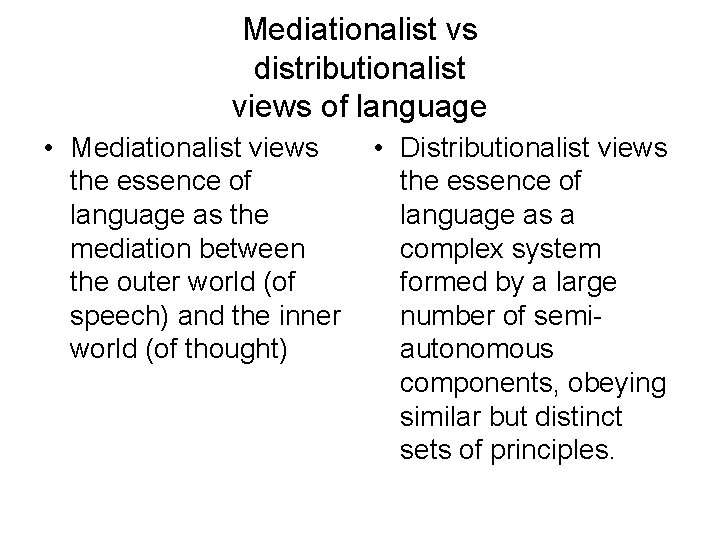
Mediationalist vs distributionalist views of language • Mediationalist views the essence of language as the mediation between the outer world (of speech) and the inner world (of thought) • Distributionalist views the essence of language as a complex system formed by a large number of semiautonomous components, obeying similar but distinct sets of principles.
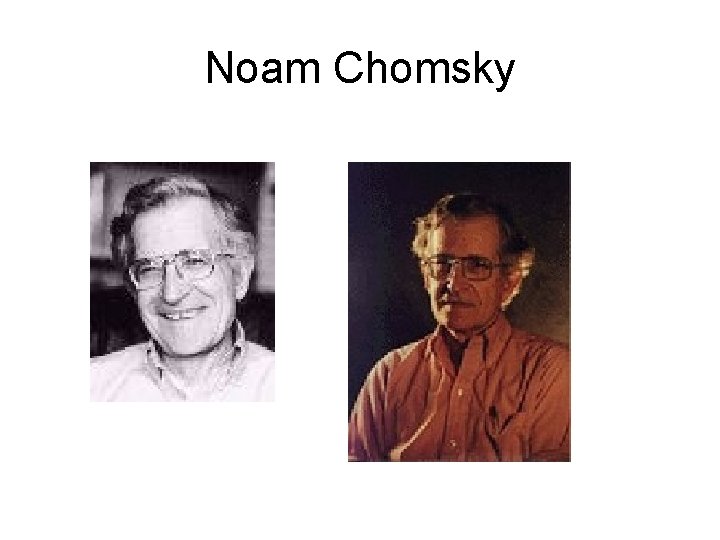
Noam Chomsky
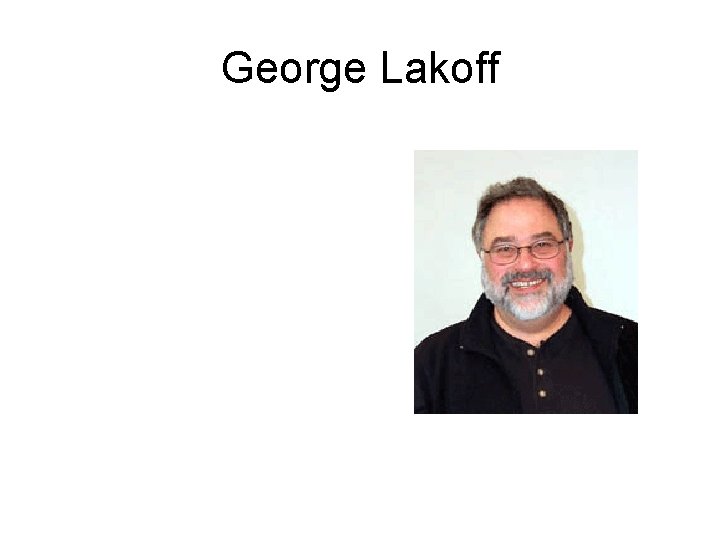
George Lakoff
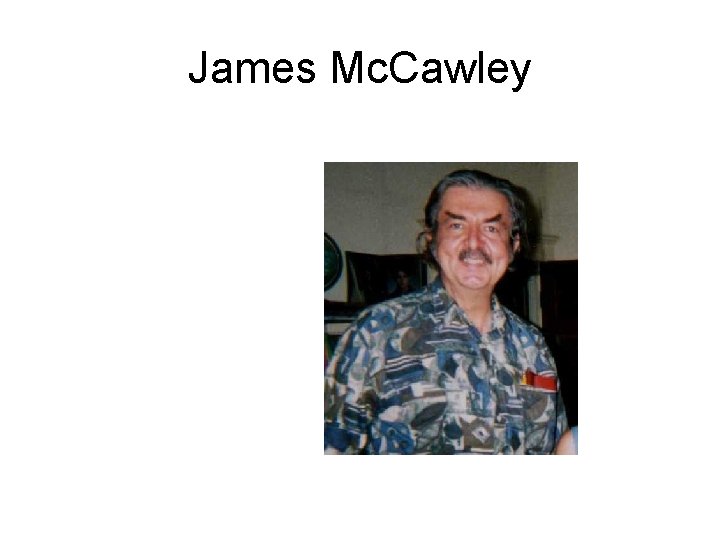
James Mc. Cawley
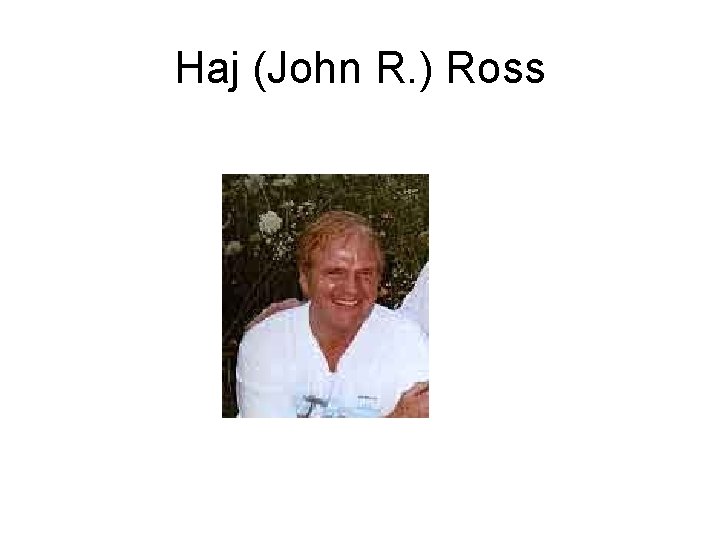
Haj (John R. ) Ross
Cognitive grammar • Lakoff – metaphor as a cognitive basis of language • Ron Langacker
Theoretical and descriptive linguistics • Ongoing tension between theoreticians and descriptive linguists.
Computational linguistics • The impact of very large corpora – the nature of data