
The Scientific Revolution The Scientific Revolution And new
- Slides: 28
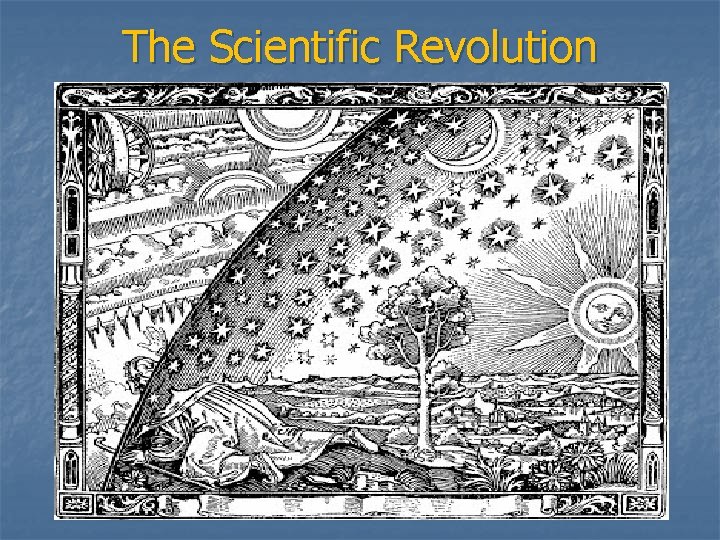
The Scientific Revolution
The Scientific Revolution And new philosophy calls all in doubt, The element of fire is quite put out, The sun is lost, and th’ earth, and no man’s wit, Can well direct him where to look for it, ’Tis all in pieces, all coherence gone. -John Donne, (1612) “Anatomy of the World”
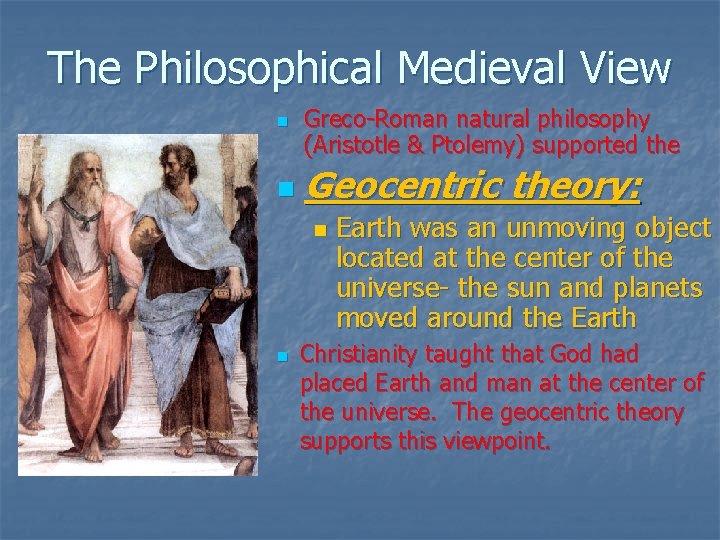
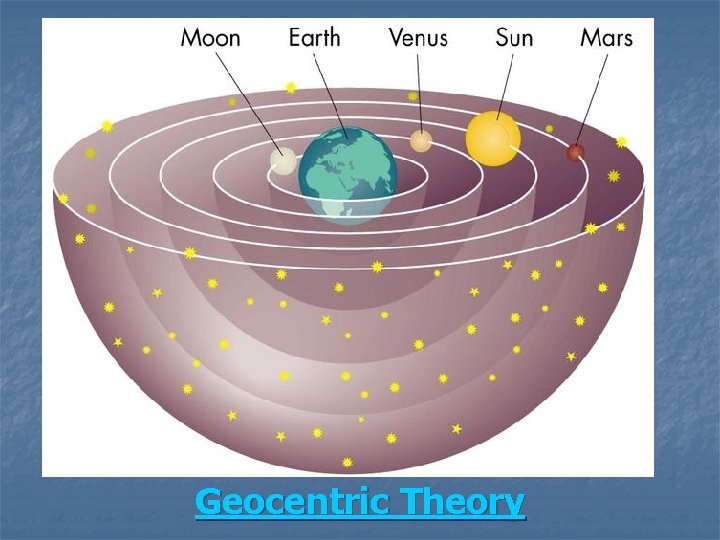
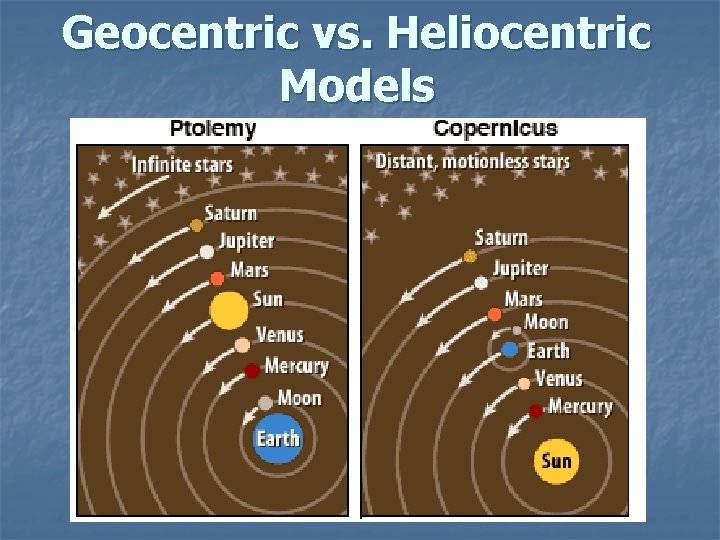
The Philosophical Medieval View n n Greco-Roman natural philosophy (Aristotle & Ptolemy) supported the Geocentric theory: n n Earth was an unmoving object located at the center of the universe- the sun and planets moved around the Earth Christianity taught that God had placed Earth and man at the center of the universe. The geocentric theory supports this viewpoint.
Geocentric Theory
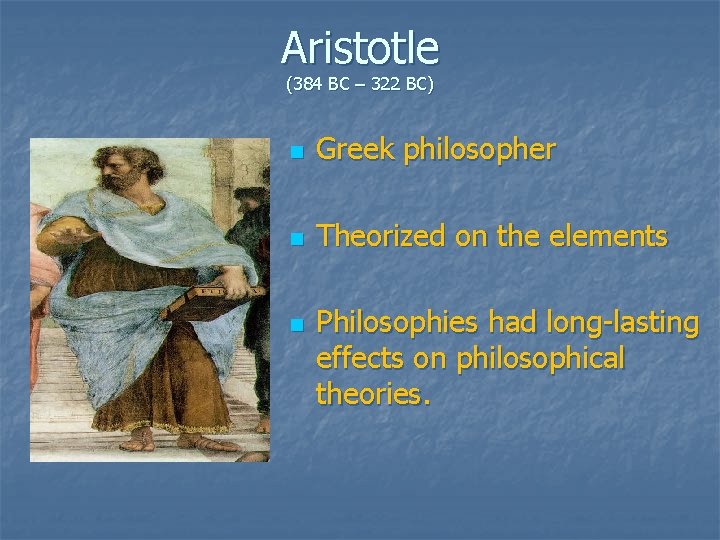
Aristotle (384 BC – 322 BC) n Greek philosopher n Theorized on the elements n Philosophies had long-lasting effects on philosophical theories.
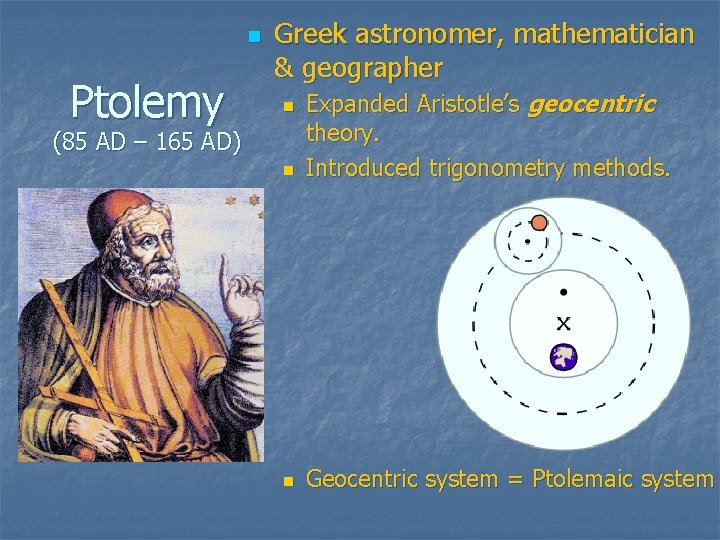
n Ptolemy Greek astronomer, mathematician & geographer n Expanded Aristotle’s geocentric theory. Introduced trigonometry methods. n Geocentric system = Ptolemaic system n (85 AD – 165 AD)
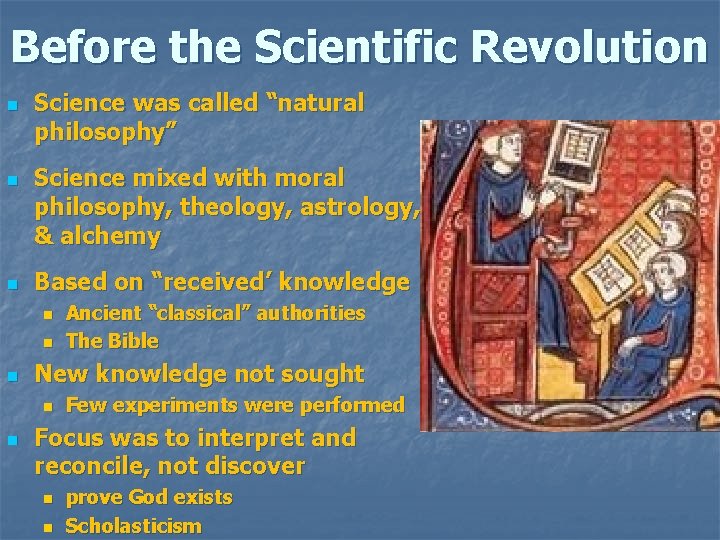
Before the Scientific Revolution n Science was called “natural philosophy” Science mixed with moral philosophy, theology, astrology, & alchemy Based on “received’ knowledge n n n New knowledge not sought n n Ancient “classical” authorities The Bible Few experiments were performed Focus was to interpret and reconcile, not discover n n prove God exists Scholasticism
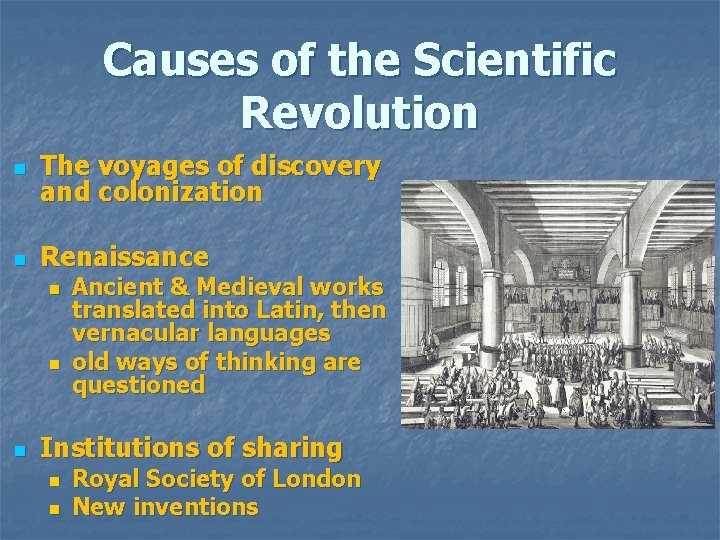
Causes of the Scientific Revolution n The voyages of discovery and colonization n Renaissance n n n Ancient & Medieval works translated into Latin, then vernacular languages old ways of thinking are questioned Institutions of sharing n n Royal Society of London New inventions
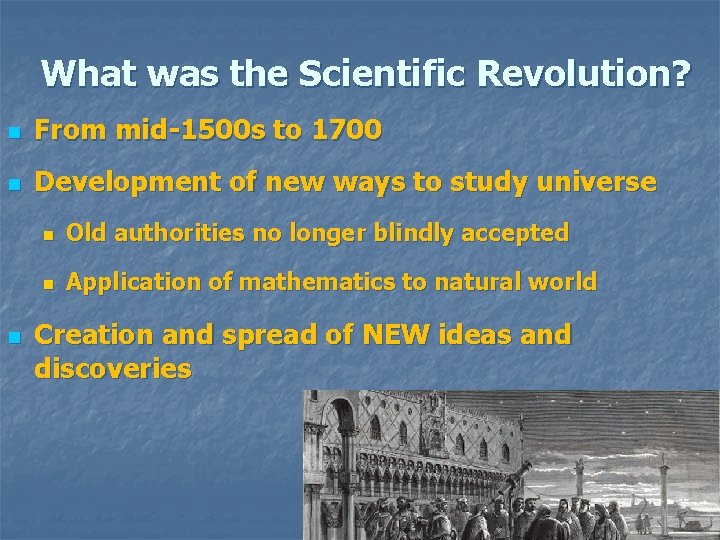
What was the Scientific Revolution? n From mid-1500 s to 1700 n Development of new ways to study universe n n Old authorities no longer blindly accepted n Application of mathematics to natural world Creation and spread of NEW ideas and discoveries
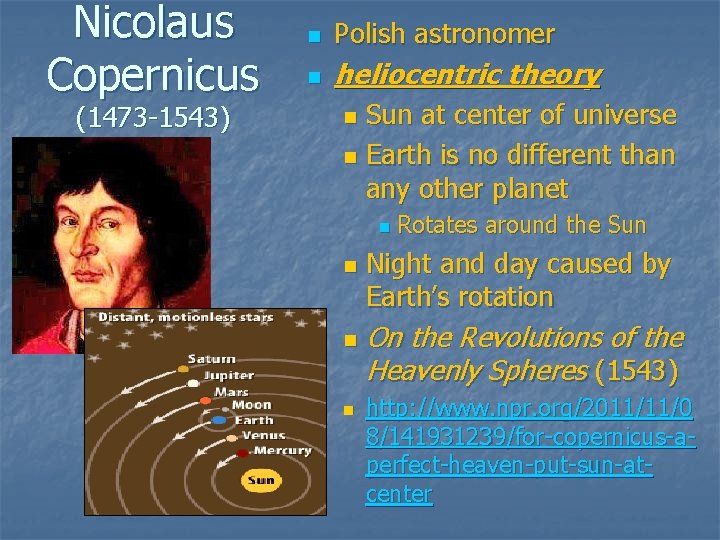
Nicolaus Copernicus (1473 -1543) n Polish astronomer n heliocentric theory Sun at center of universe n Earth is no different than any other planet n n n Rotates around the Sun Night and day caused by Earth’s rotation On the Revolutions of the Heavenly Spheres (1543) http: //www. npr. org/2011/11/0 8/141931239/for-copernicus-aperfect-heaven-put-sun-atcenter
Geocentric vs. Heliocentric Models
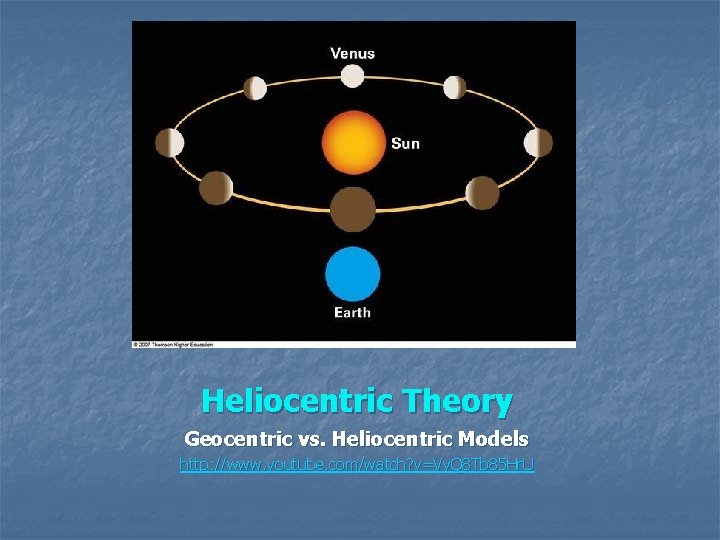
Heliocentric Theory Geocentric vs. Heliocentric Models http: //www. youtube. com/watch? v=Vy. Q 8 Tb 85 Hr. U
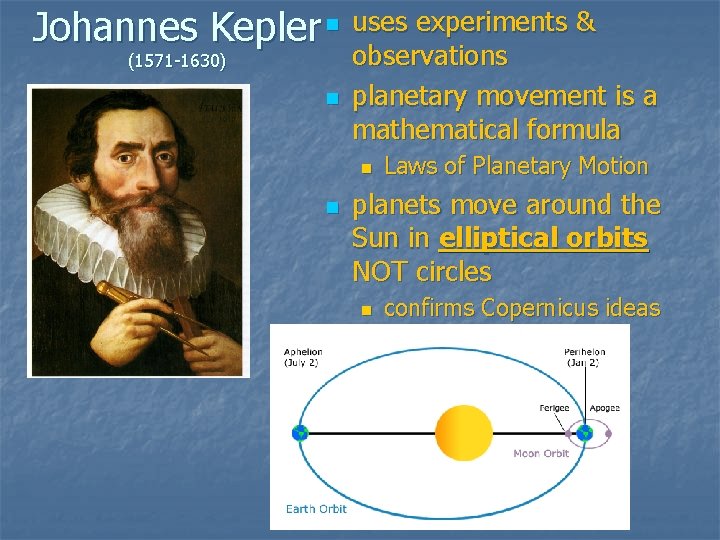
Johannes Kepler n (1571 -1630) n uses experiments & observations planetary movement is a mathematical formula n n Laws of Planetary Motion planets move around the Sun in elliptical orbits NOT circles n confirms Copernicus ideas
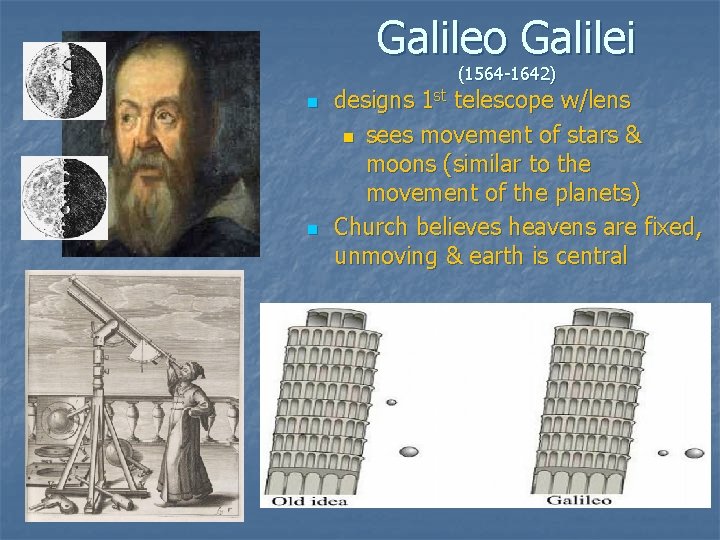
Galileo Galilei (1564 -1642) n n designs 1 st telescope w/lens n sees movement of stars & moons (similar to the movement of the planets) Church believes heavens are fixed, unmoving & earth is central
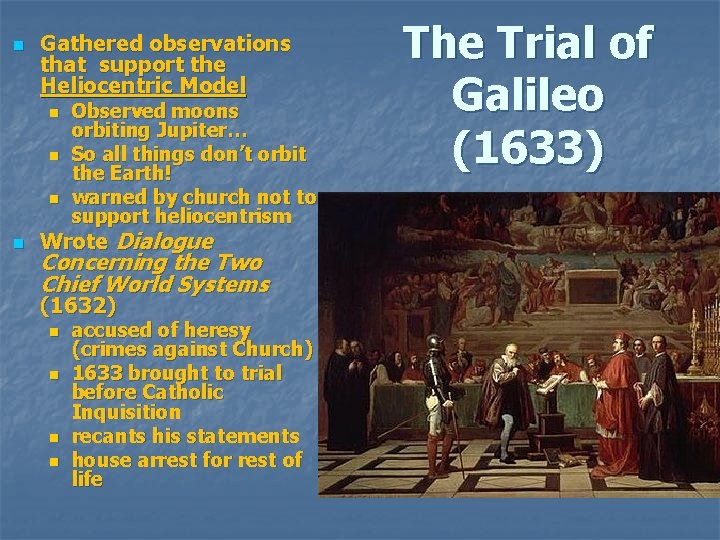
n Gathered observations that support the Heliocentric Model n n Observed moons orbiting Jupiter… So all things don’t orbit the Earth! warned by church not to support heliocentrism Wrote Dialogue Concerning the Two Chief World Systems (1632) n n accused of heresy (crimes against Church) 1633 brought to trial before Catholic Inquisition recants his statements house arrest for rest of life The Trial of Galileo (1633)
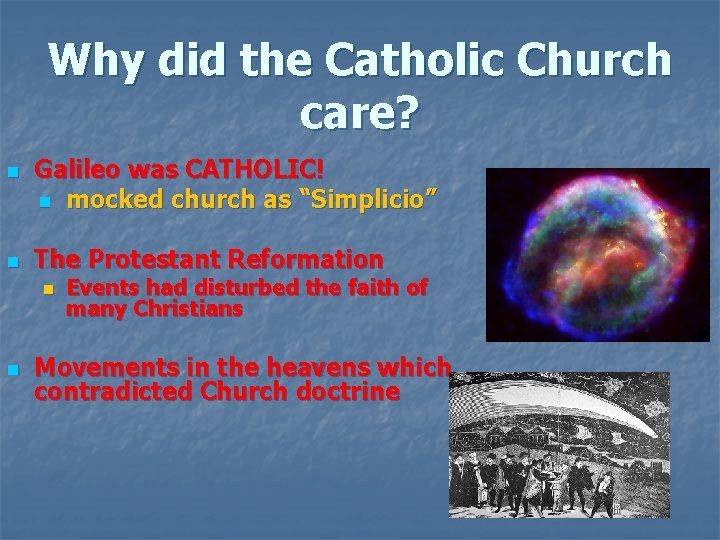
Why did the Catholic Church care? n n Galileo was CATHOLIC! n mocked church as “Simplicio” The Protestant Reformation n n Events had disturbed the faith of many Christians Movements in the heavens which contradicted Church doctrine
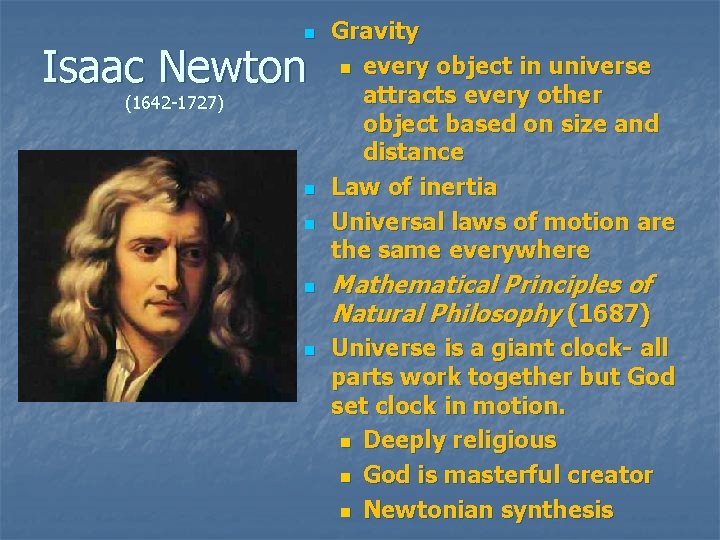
n Isaac Newton (1642 -1727) n n Gravity n every object in universe attracts every other object based on size and distance Law of inertia Universal laws of motion are the same everywhere Mathematical Principles of Natural Philosophy (1687) Universe is a giant clock- all parts work together but God set clock in motion. n Deeply religious n God is masterful creator n Newtonian synthesis
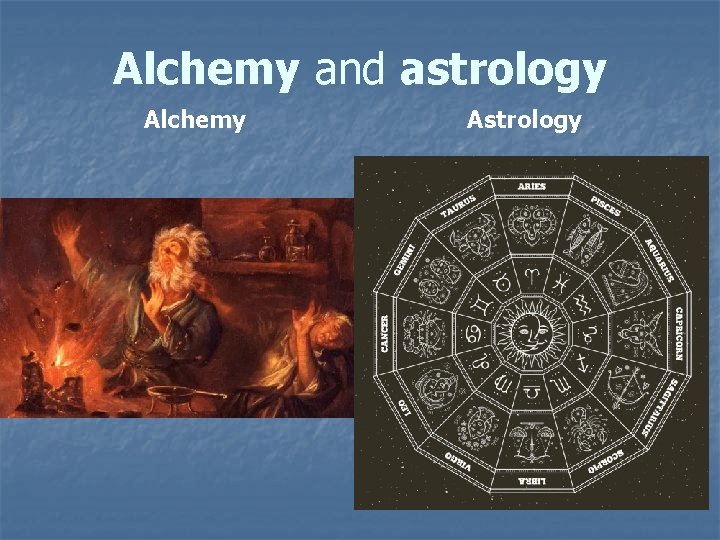
Alchemy and astrology n Alchemy n n n Changing base metals into gold n Forerunner to modern chemistry continued to appeal to elites and some natural philosophers, in part because they shared with the new science the notion of a predictable and knowable universe. n Sir Isaac Newton n Wrote more on alchemy than physics n Goal was to find the philosopher’s stone Astrology n n At the same time, many people continued to believe that the cosmos was governed by spiritual forces. And the cosmos controlled human behavior
Alchemy and astrology Alchemy Astrology
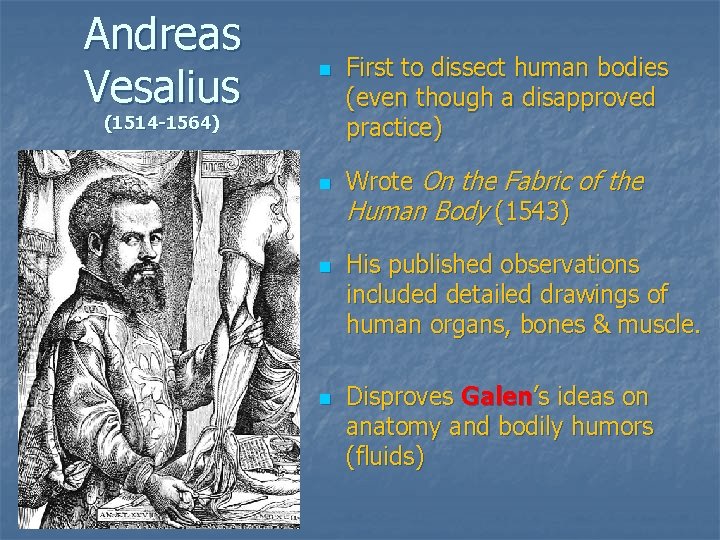
Andreas Vesalius n (1514 -1564) n n n First to dissect human bodies (even though a disapproved practice) Wrote On the Fabric of the Human Body (1543) His published observations included detailed drawings of human organs, bones & muscle. Disproves Galen’s ideas on anatomy and bodily humors (fluids)
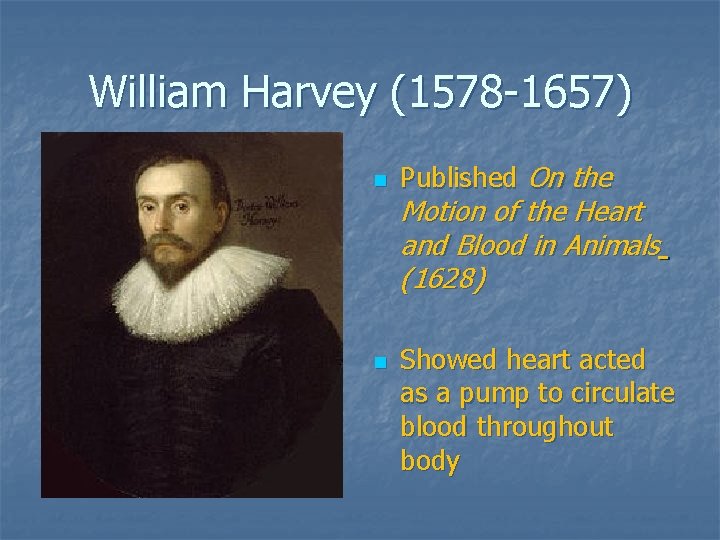
William Harvey (1578 -1657) n n Published On the Motion of the Heart and Blood in Animals (1628) Showed heart acted as a pump to circulate blood throughout body
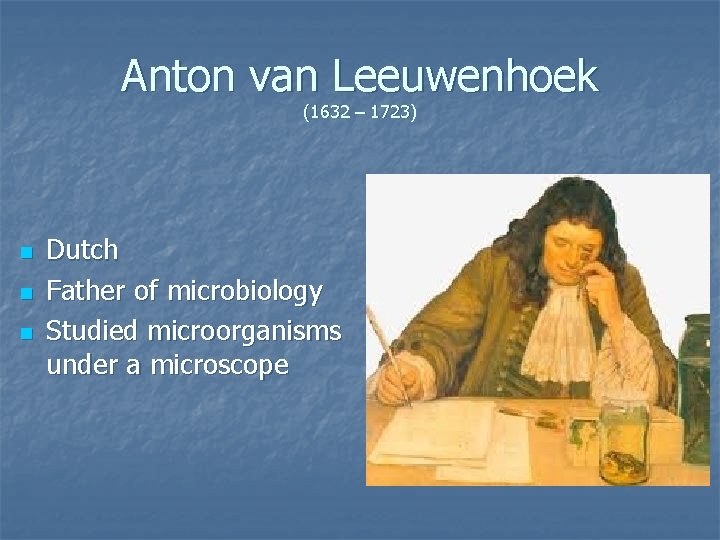
Anton van Leeuwenhoek (1632 – 1723) n n n Dutch Father of microbiology Studied microorganisms under a microscope
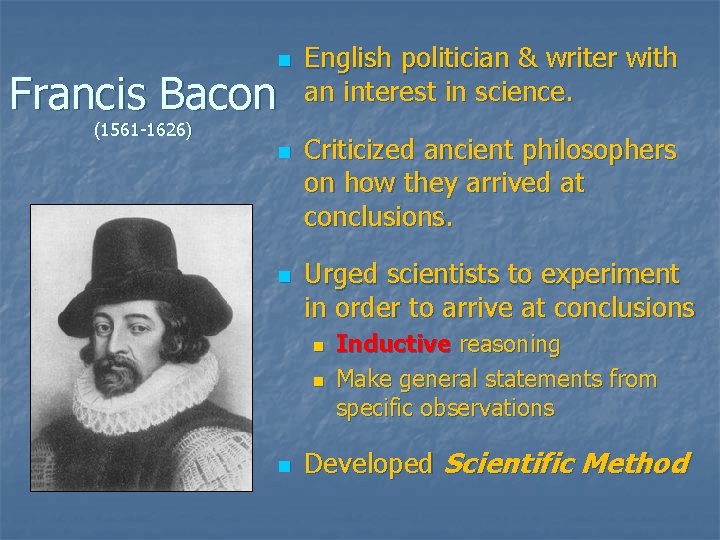
n Francis Bacon (1561 -1626) n n English politician & writer with an interest in science. Criticized ancient philosophers on how they arrived at conclusions. Urged scientists to experiment in order to arrive at conclusions n n n Inductive reasoning Make general statements from specific observations Developed Scientific Method
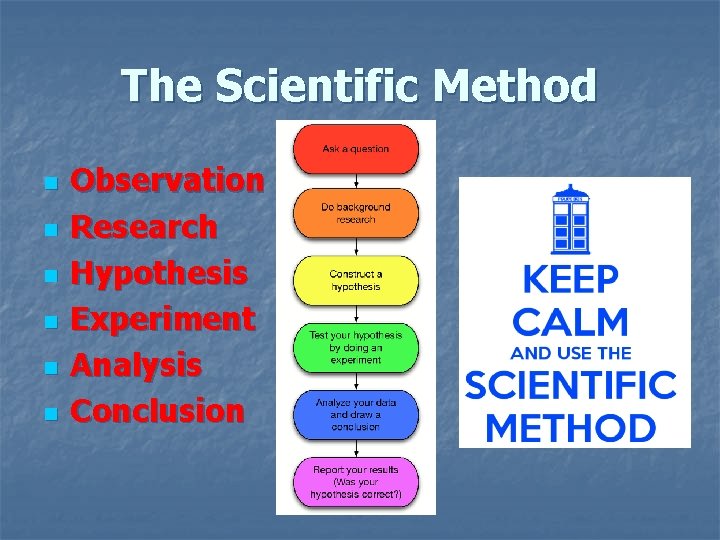
The Scientific Method n n n Observation Research Hypothesis Experiment Analysis Conclusion
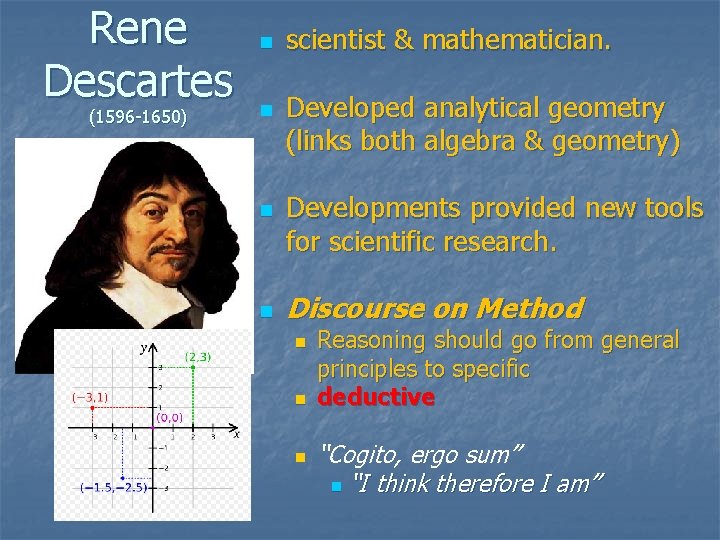
Rene Descartes (1596 -1650) n n scientist & mathematician. Developed analytical geometry (links both algebra & geometry) Developments provided new tools for scientific research. Discourse on Method n n n Reasoning should go from general principles to specific deductive “Cogito, ergo sum” n “I think therefore I am”
Hobbes and Locke n Scientific Revolution applied outside of the physical sciences n n Apply reason and logic to social sciences Enlightenment thinking before “The Enlightenment”
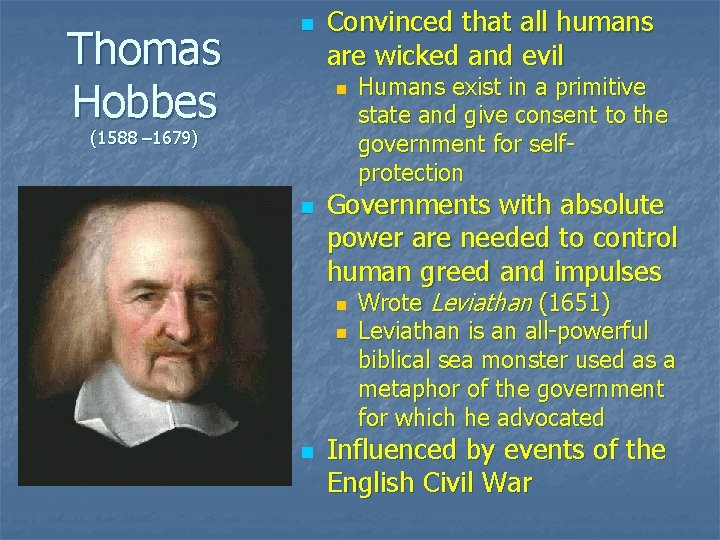
Thomas Hobbes n Convinced that all humans are wicked and evil n (1588 – 1679) n Governments with absolute power are needed to control human greed and impulses n n n Humans exist in a primitive state and give consent to the government for selfprotection Wrote Leviathan (1651) Leviathan is an all-powerful biblical sea monster used as a metaphor of the government for which he advocated Influenced by events of the English Civil War
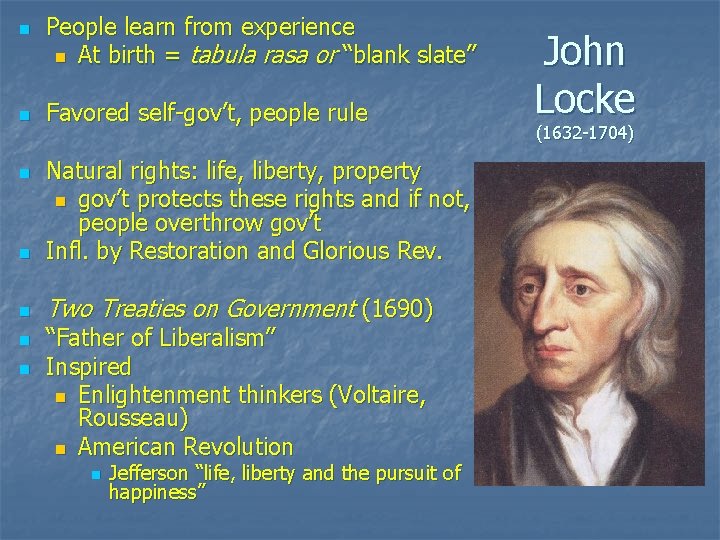
n n People learn from experience n At birth = tabula rasa or “blank slate” Favored self-gov’t, people rule n Natural rights: life, liberty, property n gov’t protects these rights and if not, people overthrow gov’t Infl. by Restoration and Glorious Rev. n Two Treaties on Government (1690) n n n “Father of Liberalism” Inspired n Enlightenment thinkers (Voltaire, Rousseau) n American Revolution n Jefferson “life, liberty and the pursuit of happiness” John Locke (1632 -1704)