
The Scientific Revolution A Paradigm Shift Outline I

- Slides: 24
The Scientific Revolution A Paradigm Shift
Outline I. III. IV. V. Pre-Revolution thought Causes of the Revolution Principles of the Revolution Main Scientists Impact of the Revolution
What is the Scientific Revolution? • It is the beginning of a great intellectual transformation that leads to the modern world • Concurrent with other major events – Copernicus is making discoveries at the time of the religious wars are breaking out in Europe – By the end of the revolution, Europe is about to embark on the Enlightenment, a cultural movement that largely rejected religion
I. Before the Scientific Revolution • Scientists seek to understand HOW things happen – intent was to use science to “prove” God’s existence – earliest scientists were usually priests/monks – earliest scientists were astronomers • easy access • spiritually significant
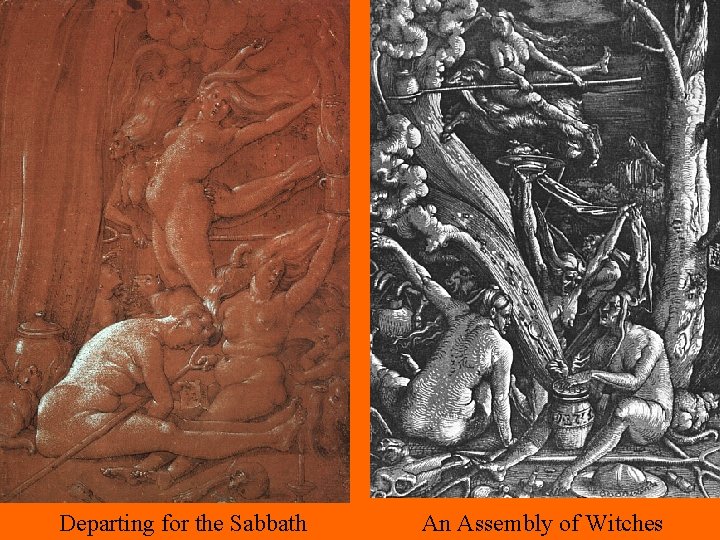
Witchcraft • In the Middle Ages, convicted witches do heavy penance since they were misguided • View changes over time – By the Renaissance people began to believe that witches actually flew and ate babies – Witches must have a pact with the devil of their own free will
Departing for the Sabbath An Assembly of Witches
Witchcraft • Major witch hunts occurred during the century from 1560 to 1660 (slowly dies out after that) – Crosses the Atlantic to Salem, Massachusetts in 1692 • Witch hunts arise in areas experiencing religious conflict – Occurs in Protestant and Catholic areas
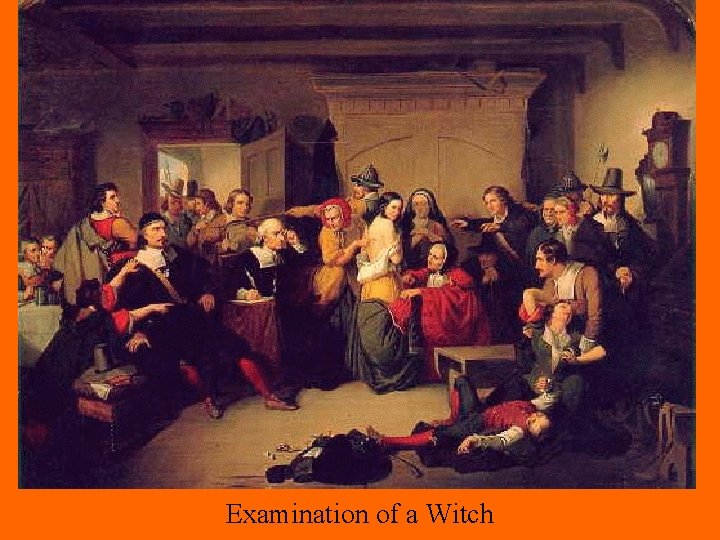
Witchcraft • Between 1450 -1660 – approximately 110, 000 went to trial – approximately 60, 000 were executed – this is only for Church or government officiated trials many instances are recorded of communities acting on their own • Women comprise 75% of those executed
Examination of a Witch
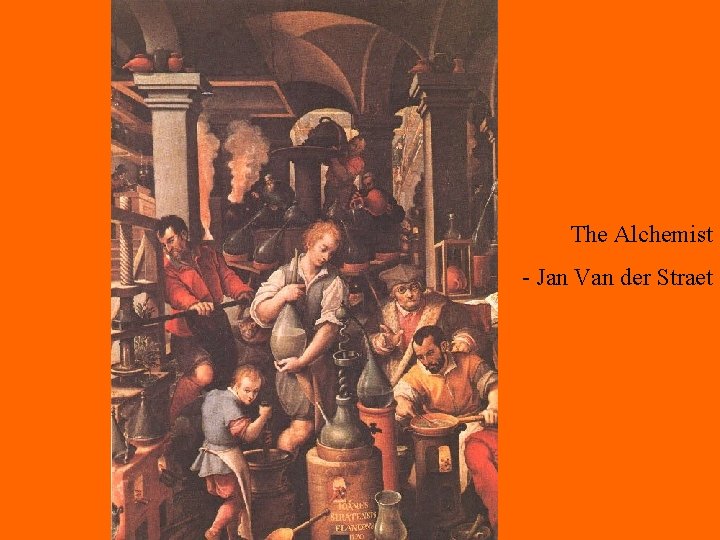
Magical Thought • Belief in magic was widespread • While most educated people professed not to believe, many still held charms, like Queen Elizabeth’s magic ring to ward off the plague • Magic was viewed as being either good (tied to the church) or bad – alternative was natural magic • astrology • alchemy
The Alchemist - Jan Van der Straet
II. Causes of the Scientific Revolution • Trade and Expansion of Trade – navigational problems generated research • Medieval Universities – study of Plato, Aristotle, Ptolemy and Democritus were essential • The Renaissance – value of mathematics – Humanism
III. Principles of the Revolution • Logic over faith: religion no longer the only possible explanation for events • Observe, experiment & publish • Verifiable: Use of mathematics to prove a point • Money: Patronage • Questioning: discrepancy between observation and expectations springboards into a search for truth
IV. Main Scientists • Scientific Method: Bacon, Descartes • Astronomers: Copernicus, Kepler, Galileo • Synthesis: Newton
Methodology in Science • Some thinkers were concerned with the Scientific Method • Francis Bacon and Rene Descartes were significant; both decided that all previous beliefs (outside religion) had to be ignored.
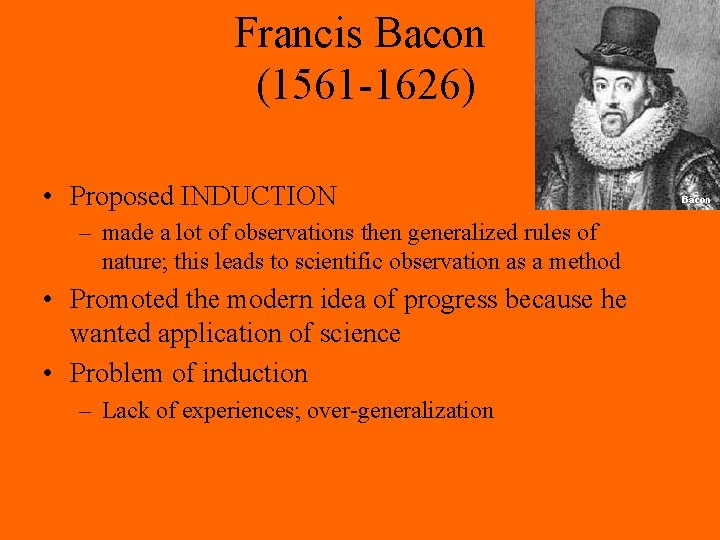
Francis Bacon (1561 -1626) • Proposed INDUCTION – made a lot of observations then generalized rules of nature; this leads to scientific observation as a method • Promoted the modern idea of progress because he wanted application of science • Problem of induction – Lack of experiences; over-generalization
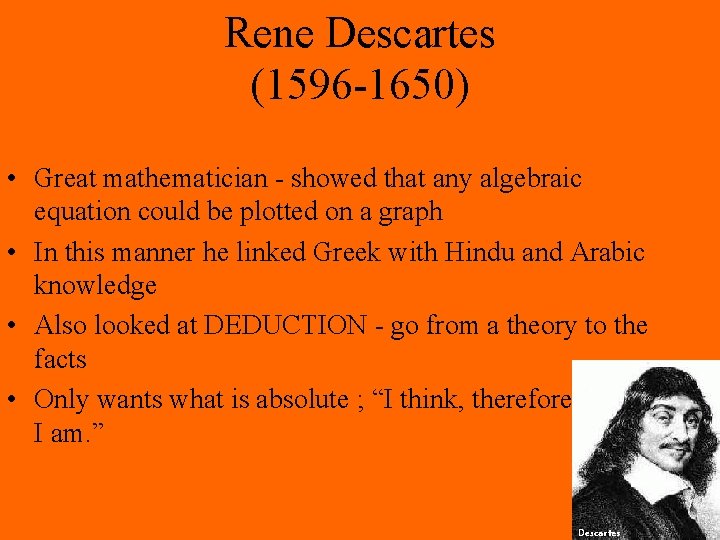
Rene Descartes (1596 -1650) • Great mathematician - showed that any algebraic equation could be plotted on a graph • In this manner he linked Greek with Hindu and Arabic knowledge • Also looked at DEDUCTION - go from a theory to the facts • Only wants what is absolute ; “I think, therefore I am. ”
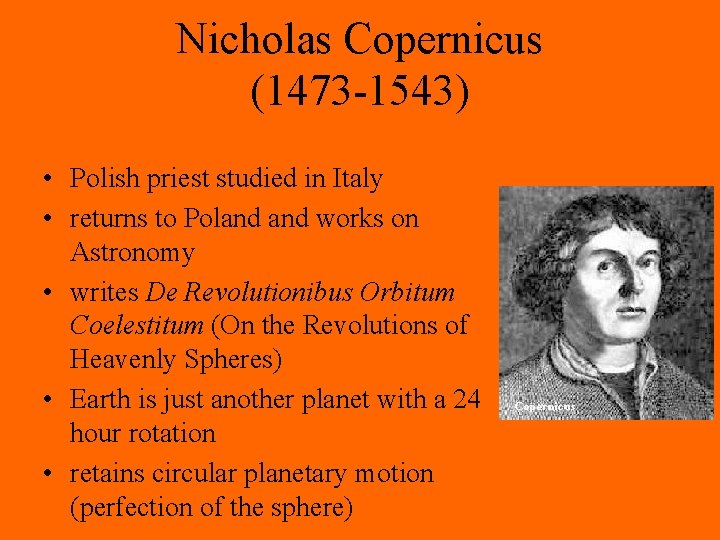
Nicholas Copernicus (1473 -1543) • Polish priest studied in Italy • returns to Poland works on Astronomy • writes De Revolutionibus Orbitum Coelestitum (On the Revolutions of Heavenly Spheres) • Earth is just another planet with a 24 hour rotation • retains circular planetary motion (perfection of the sphere)
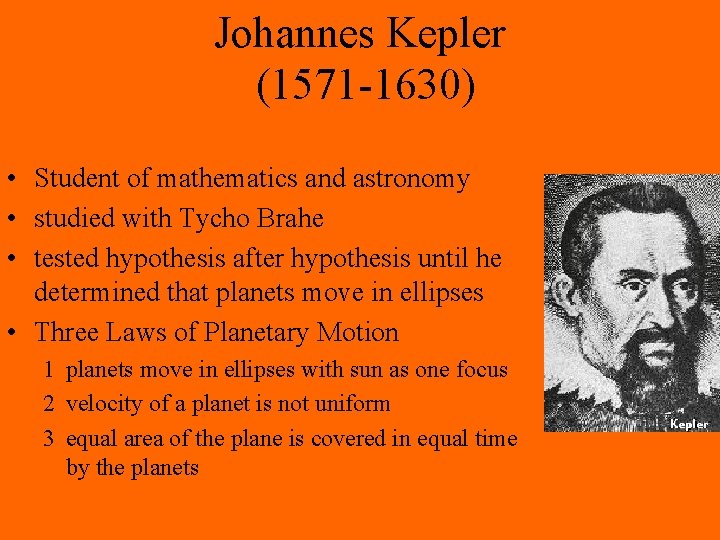
Johannes Kepler (1571 -1630) • Student of mathematics and astronomy • studied with Tycho Brahe • tested hypothesis after hypothesis until he determined that planets move in ellipses • Three Laws of Planetary Motion 1 planets move in ellipses with sun as one focus 2 velocity of a planet is not uniform 3 equal area of the plane is covered in equal time by the planets
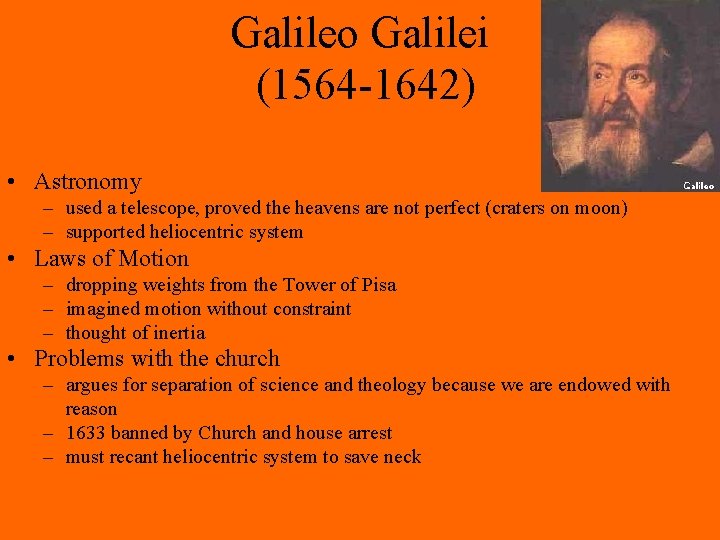
Galileo Galilei (1564 -1642) • Astronomy – used a telescope, proved the heavens are not perfect (craters on moon) – supported heliocentric system • Laws of Motion – dropping weights from the Tower of Pisa – imagined motion without constraint – thought of inertia • Problems with the church – argues for separation of science and theology because we are endowed with reason – 1633 banned by Church and house arrest – must recant heliocentric system to save neck
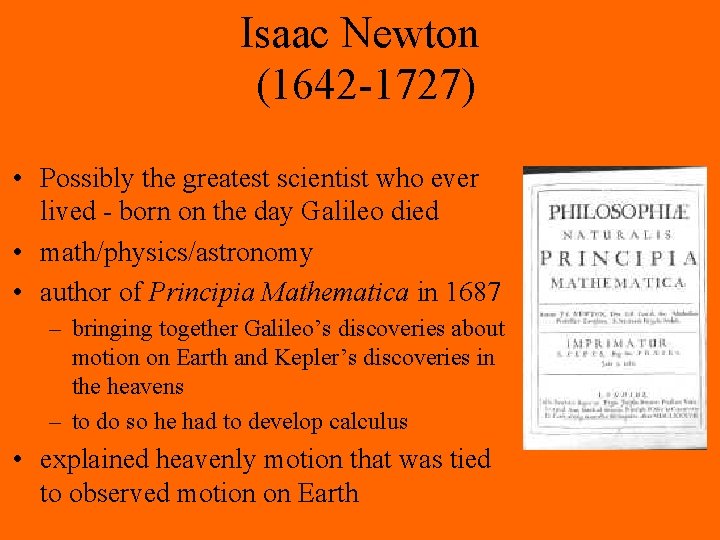
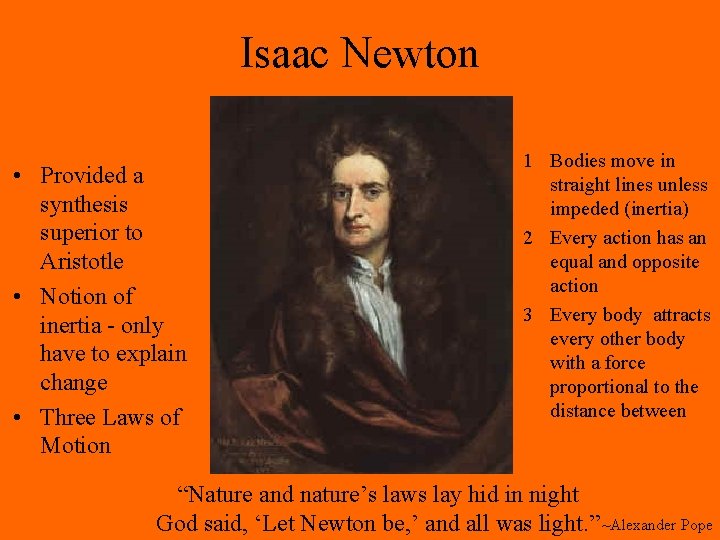
Isaac Newton (1642 -1727) • Possibly the greatest scientist who ever lived - born on the day Galileo died • math/physics/astronomy • author of Principia Mathematica in 1687 – bringing together Galileo’s discoveries about motion on Earth and Kepler’s discoveries in the heavens – to do so he had to develop calculus • explained heavenly motion that was tied to observed motion on Earth
Isaac Newton • Provided a synthesis superior to Aristotle • Notion of inertia - only have to explain change • Three Laws of Motion 1 Bodies move in straight lines unless impeded (inertia) 2 Every action has an equal and opposite action 3 Every body attracts every other body with a force proportional to the distance between “Nature and nature’s laws lay hid in night God said, ‘Let Newton be, ’ and all was light. ” ~Alexander Pope
V. Effects of the Scientific Revolution • Social impact – rich get richer – not much immediate direct change for peasants – widens intellectual gap • Technology: navigation, map-making, and artillery • Science has innumerable social effects over time: new guns, bigger armies, more taxes, social discontent – guns lead to European colonialism (more accurate cannon fire) • New way of observing the world
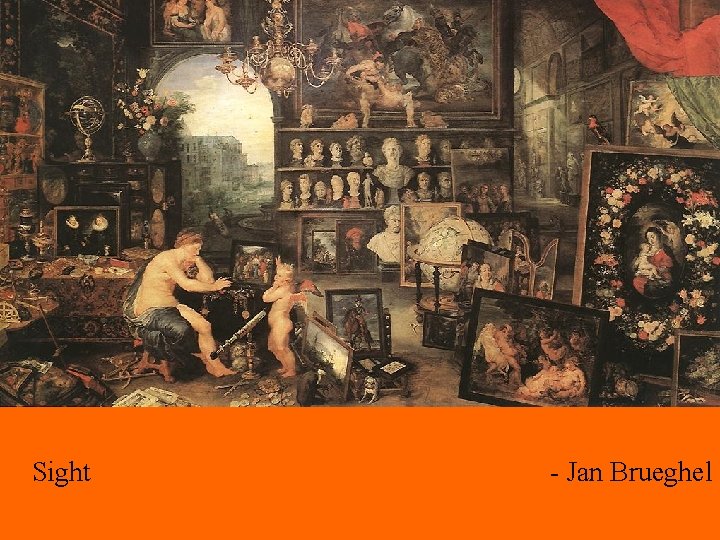
Sight - Jan Brueghel