
The Scientific Method What is Science Science is
- Slides: 14
The Scientific Method
What is Science? • Science is best defined as a careful, disciplined, logical search for knowledge about any and all aspects of the universe, obtained by examination of the best available evidence and always subject to correction and improvement upon discovery of better evidence. What's left is magic. And it doesn't work. -- James Randi
Aristotle – Don’t Write • Once stated that men and women have different numbers of teeth. • Didn’t bother to check. • Should have observed and investigated. -
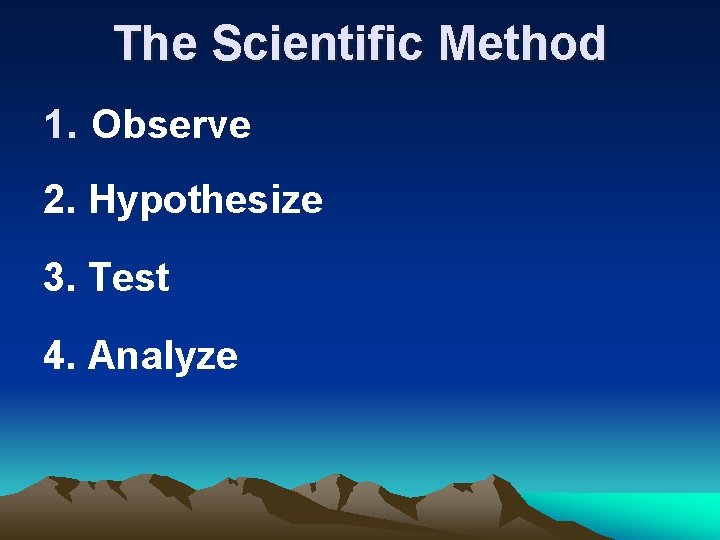
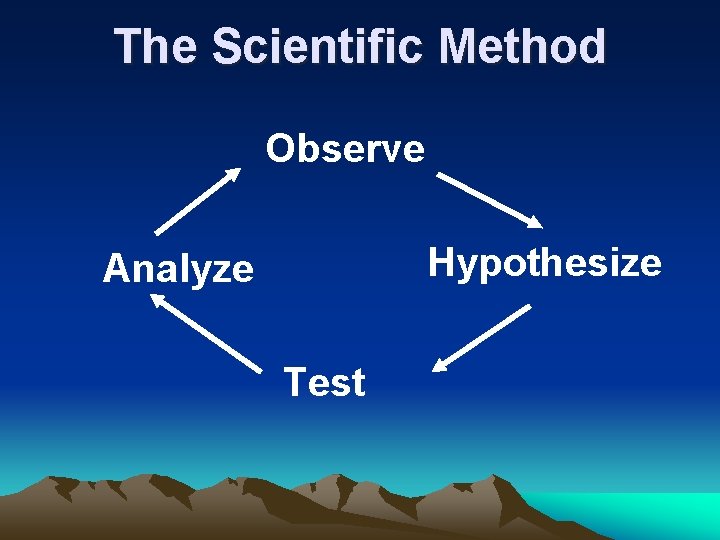
The Scientific Method 1. Observe 2. Hypothesize 3. Test 4. Analyze
The Scientific Method Observe Hypothesize Analyze Test
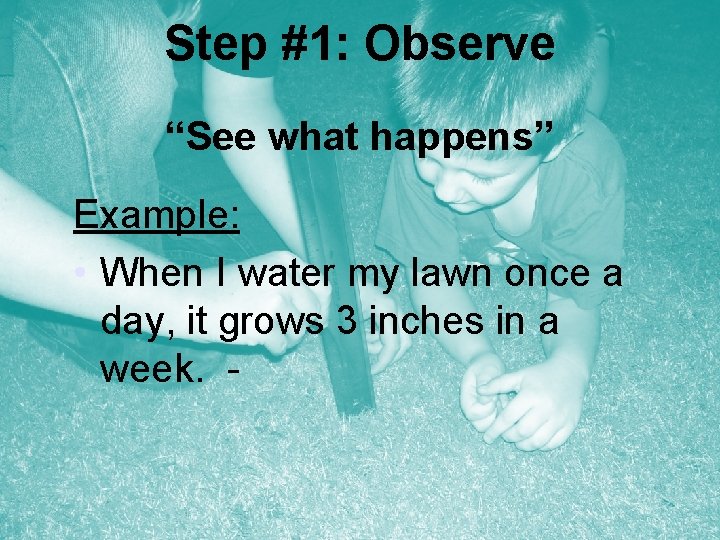
Step #1: Observe “See what happens” Example: • When I water my lawn once a day, it grows 3 inches in a week. -
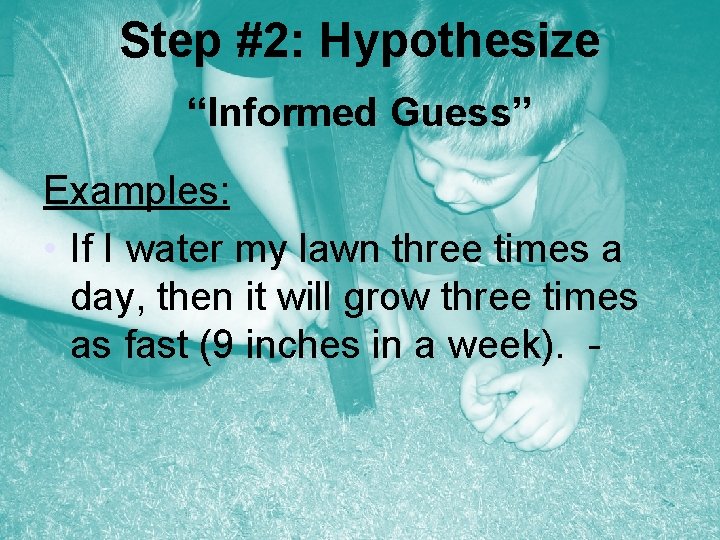
Step #2: Hypothesize “Informed Guess” Examples: • If I water my lawn three times a day, then it will grow three times as fast (9 inches in a week). -
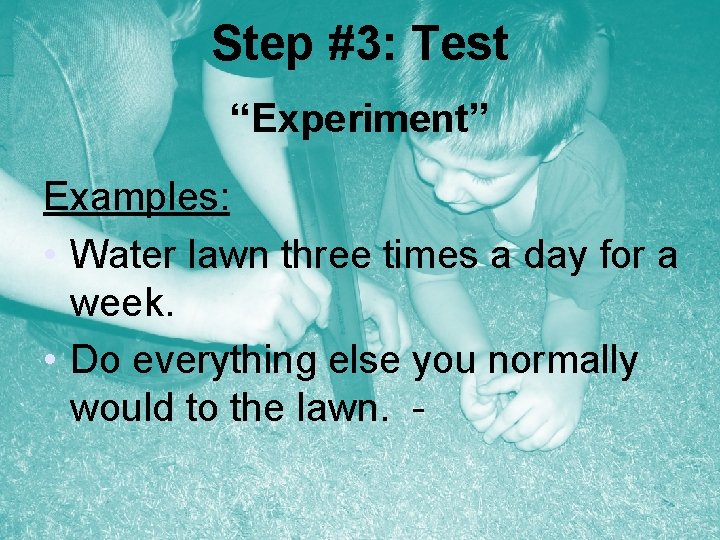
Step #3: Test “Experiment” Examples: • Water lawn three times a day for a week. • Do everything else you normally would to the lawn. -
Step #4: Analyze “Repeat, if necessary” • Hypothesis is supported if the grass grows 9 inches. • Repeat for best results. • Hypothesis is not supported if grass grows more or less: • Change hypothesis. • Check methods. -
Why Use Scientific Method? • Observation: Every year in the spring, the Nile River flooded areas of Egypt along the river, leaving behind nutrient-rich mud that enabled the people to grow that year’s crop of food. However, along with the muddy soil, large numbers of frogs appeared that weren’t around in drier times. • Conclusion: It was perfectly obvious to people back then that muddy soil gave rise to the frogs. -
Control (Group) • The unchanged variable in an experiment. • Comparison is made to the control to see if there is a difference. • For our example: the observed 3 inches of growth. -
Variables Independent Variable: • The only changed factor in an experiment. • In our example: amount of watering. -
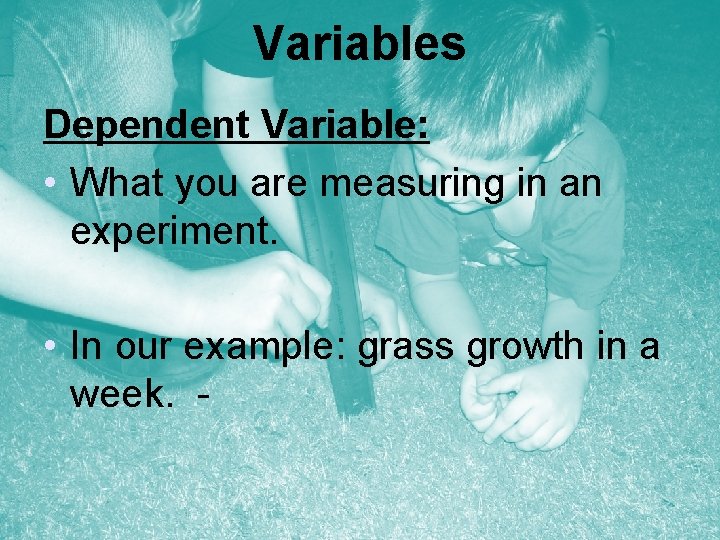
Variables Dependent Variable: • What you are measuring in an experiment. • In our example: grass growth in a week. -