
The Scientific Method What are the parts of
- Slides: 19
The Scientific Method
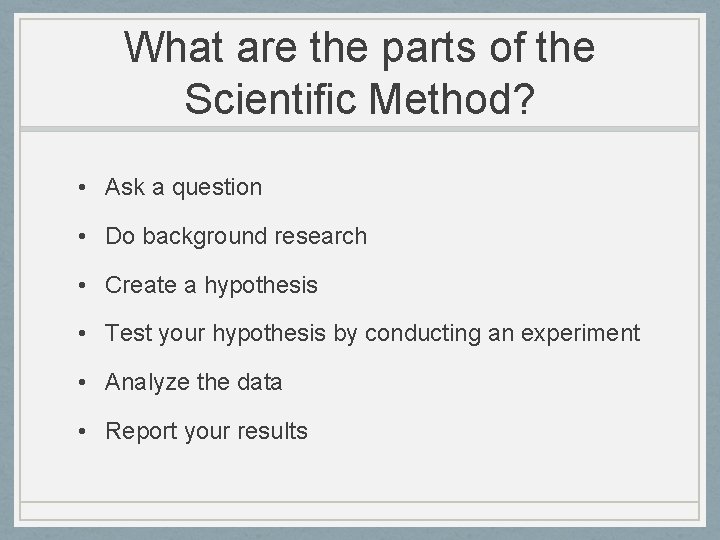
What are the parts of the Scientific Method? • Ask a question • Do background research • Create a hypothesis • Test your hypothesis by conducting an experiment • Analyze the data • Report your results
Step 1: Ask a Question • The scientific method starts when you ask a question about something that you observe. • How, what, when, where, why, which, etc. • Its also a question that you can measure • Preferably with a number • The question will be answered in an experiment • Experiment- An organized procedure to study something under controlled conditions
Experiment • Must be able to repeat • They provide insight to a cause-and-effect when a factor is altered • Different types of experiments • Control • Natural • Field
Step 2: Background Research • Research what techniques and equipment that would work best • Learn from mistakes and blunders made by other scientist during past experiments • When going somewhere new do your drive around until you stumble on it? Or do you look at a map first?
Step 2 Continued • You will need at least 3 sources • A list of these sources should be created so that you can construct a bibliography • Your background research should be compiled and organized into a research paper
Research Paper • Your research paper should include • The history of similar experiments • Definitions of all keywords and concepts included in your experiment • Answers to all your research questions • Mathematical formulas, if any, that you will need to describe the results of your experiment
Research Paper • All pictures or facts that is in your research paper, they should be followed with a citation telling the reader where you found it • A citation is the authors last name followed by the date of the publication • The citation is a reference back to your bibliography
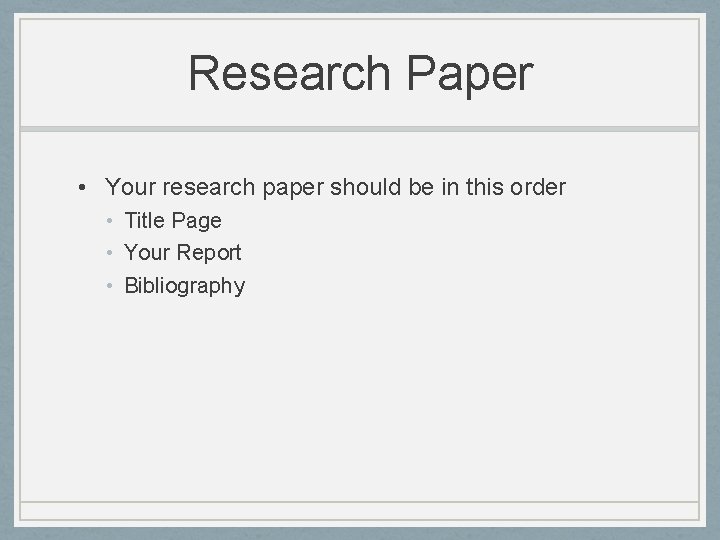
Research Paper • Your research paper should be in this order • Title Page • Your Report • Bibliography
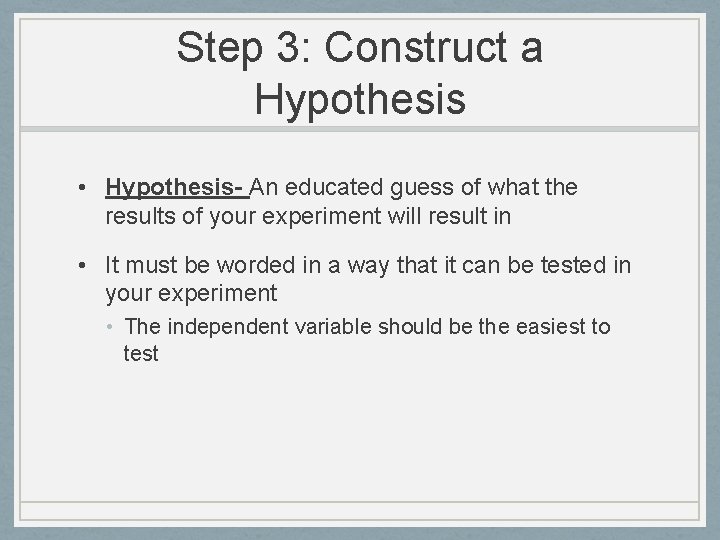
Step 3: Construct a Hypothesis • Hypothesis- An educated guess of what the results of your experiment will result in • It must be worded in a way that it can be tested in your experiment • The independent variable should be the easiest to test
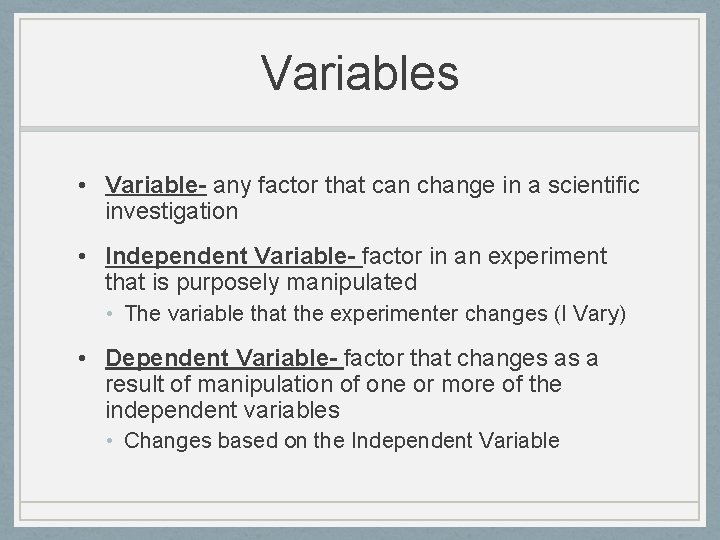
Variables • Variable- any factor that can change in a scientific investigation • Independent Variable- factor in an experiment that is purposely manipulated • The variable that the experimenter changes (I Vary) • Dependent Variable- factor that changes as a result of manipulation of one or more of the independent variables • Changes based on the Independent Variable
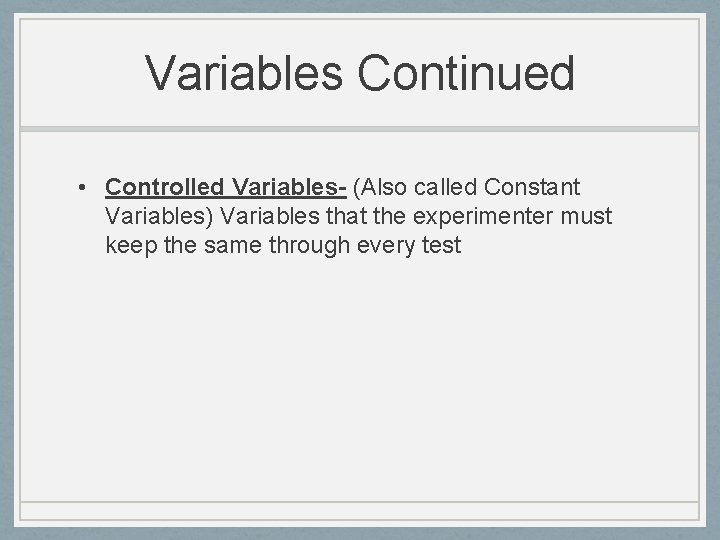
Variables Continued • Controlled Variables- (Also called Constant Variables) Variables that the experimenter must keep the same through every test
Step 4: Test Your Hypothesis • This is when you now conduct your experiment to test your hypothesis • Write down the experimental procedure step by step in detail • A good procedure is so detailed that it would allow someone else duplicate it exactly • You will also need to duplicate the procedure at least 3 times to make your experiment valid
Conducting an Experiment • You will need a notebook to record all your observations during the experiments • Have a data table ready to record all data as it happens • Record all procedures exactly and if changes are made record those • Procedure changes are common • Be consistent, careful, and accurate when you take measurements • Numerical measurements are preferred
Step 5: Analyze Data • Once your experiment is complete, collect all measurements and analyze them to see if your data supports your hypothesis • When reviewing your data make sure you ask these questions: • Is it complete, or did I forget something? • Do you need to collect more data? • Did you make any mistakes?
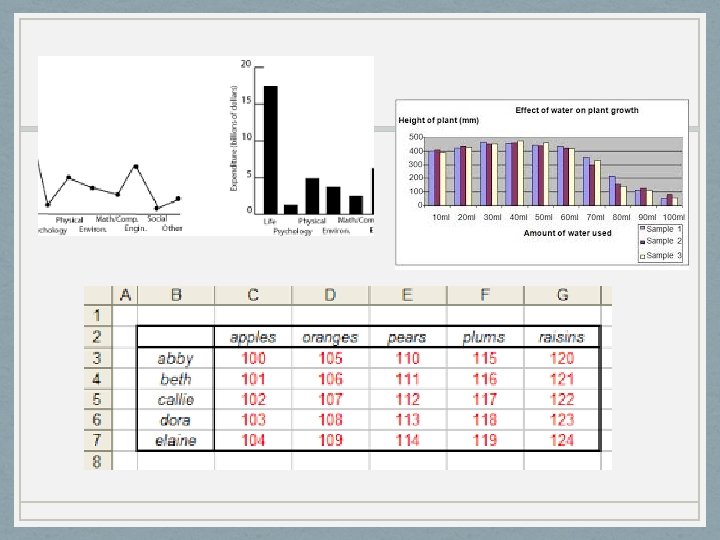
Step 5: Analyze Data • Your conclusions summarize how your results support or contradict your original hypothesis • If the hypothesis is not supported then you must come up with a new hypothesis and retest it based on the data you collected • Data and measurements should be posted on data tables and graphs
Step 6: Results • To finish your experiment you will need to conduct a final report • Final report can be a detailed journal, science fair board, or science poster
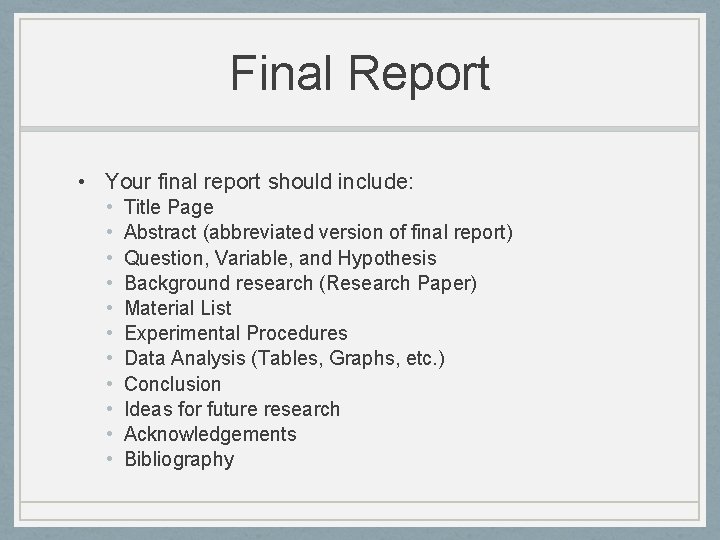
Final Report • Your final report should include: • • • Title Page Abstract (abbreviated version of final report) Question, Variable, and Hypothesis Background research (Research Paper) Material List Experimental Procedures Data Analysis (Tables, Graphs, etc. ) Conclusion Ideas for future research Acknowledgements Bibliography