
THE SCIENTIFIC METHOD Thinking Like a Scientist Seeks
- Slides: 21
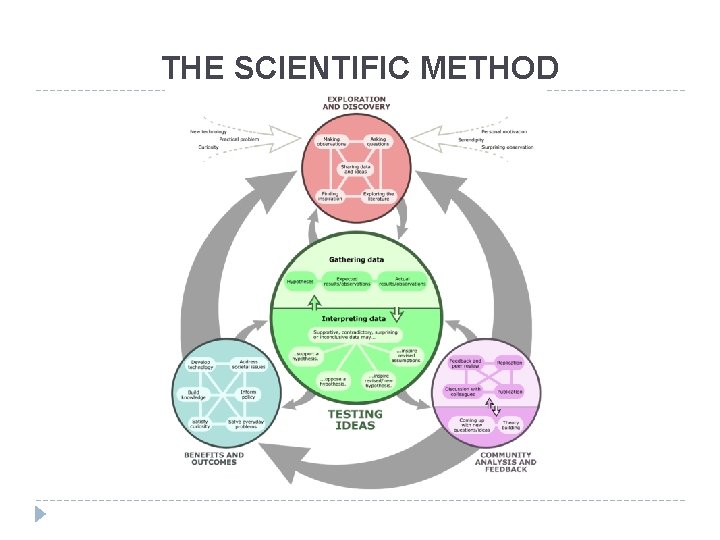
THE SCIENTIFIC METHOD
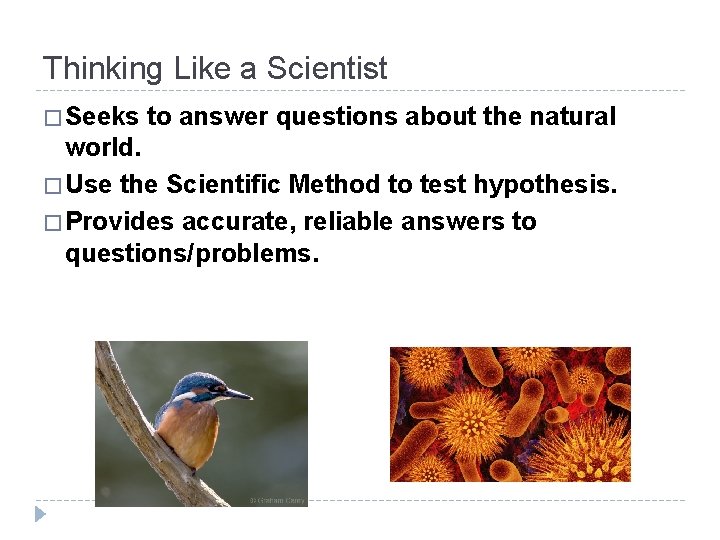
Thinking Like a Scientist � Seeks to answer questions about the natural world. � Use the Scientific Method to test hypothesis. � Provides accurate, reliable answers to questions/problems.
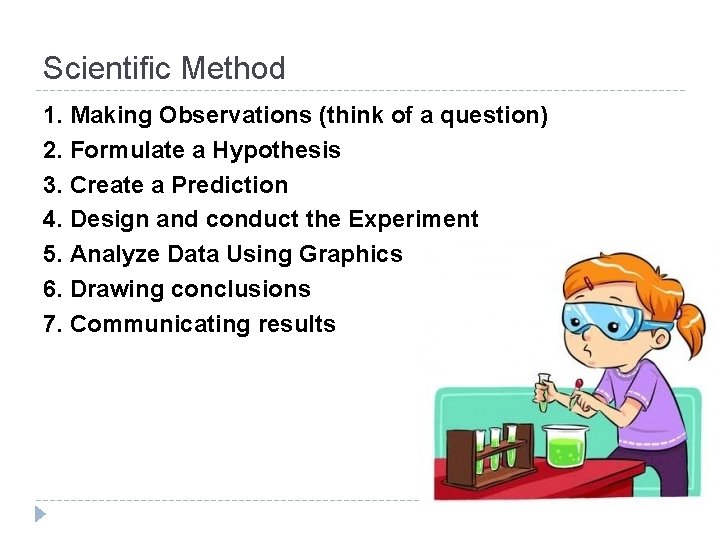
Scientific Method 1. Making Observations (think of a question) 2. Formulate a Hypothesis 3. Create a Prediction 4. Design and conduct the Experiment 5. Analyze Data Using Graphics 6. Drawing conclusions 7. Communicating results
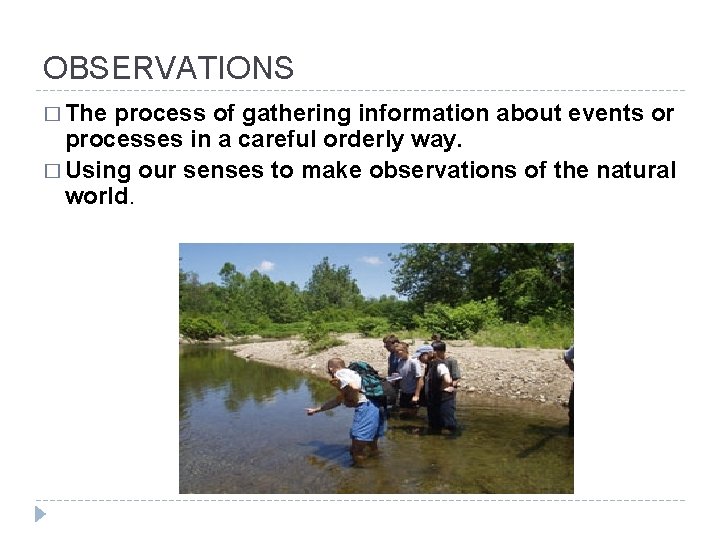
OBSERVATIONS � The process of gathering information about events or processes in a careful orderly way. � Using our senses to make observations of the natural world.
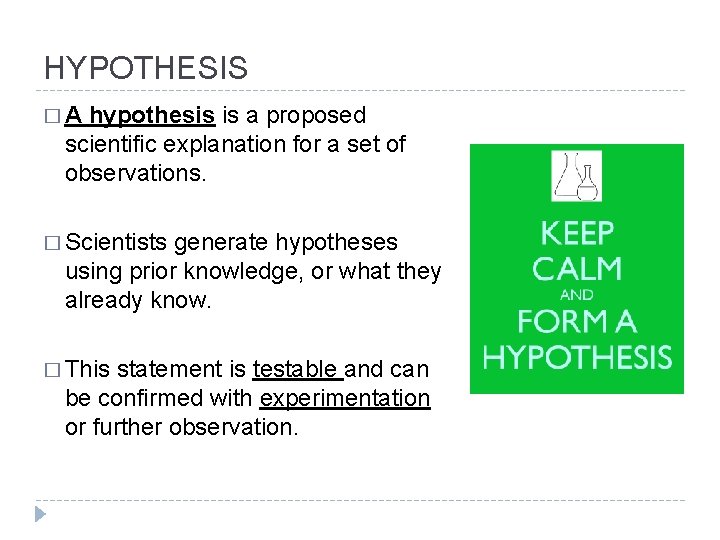
HYPOTHESIS �A hypothesis is a proposed scientific explanation for a set of observations. � Scientists generate hypotheses using prior knowledge, or what they already know. � This statement is testable and can be confirmed with experimentation or further observation.
PREDICATION �A forecast as to what should happen during an experiment if your hypothesis is supported. � Written in an “If _____, then _____” statement. � Example � Hypothesis: � Prediction: Studying improves test scores. If I study, then I will improve my test scores.
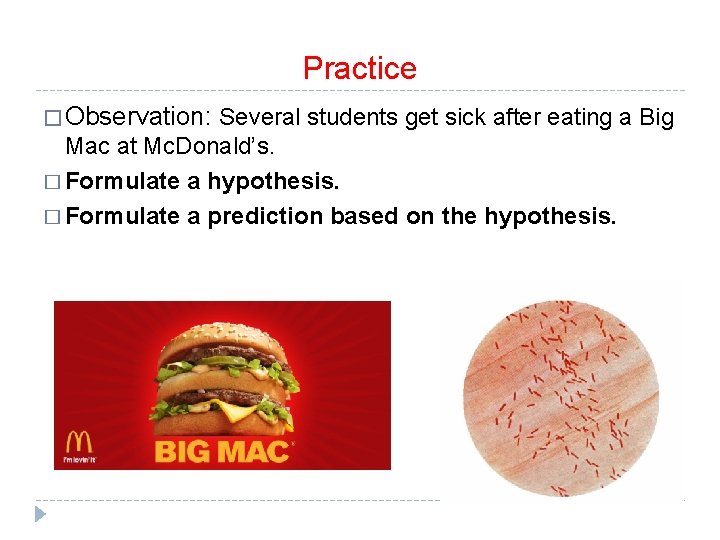
Practice � Observation: Several students get sick after eating a Big Mac at Mc. Donald’s. � Formulate a hypothesis. � Formulate a prediction based on the hypothesis.
EXPERIMENT �Designing an activity/experiment to test a hypothesis under controlled conditions. �A good experiment can be replicated by other scientists and the same results can be obtained.
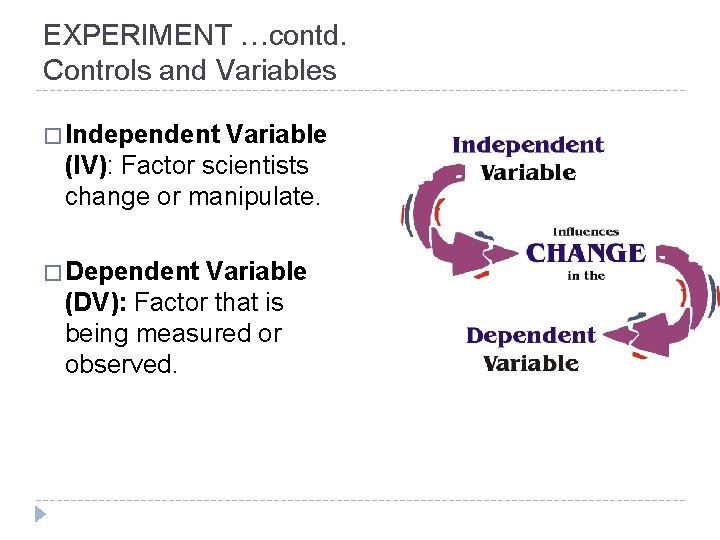
EXPERIMENT …contd. Controls and Variables � Independent Variable (IV): Factor scientists change or manipulate. � Dependent Variable (DV): Factor that is being measured or observed.
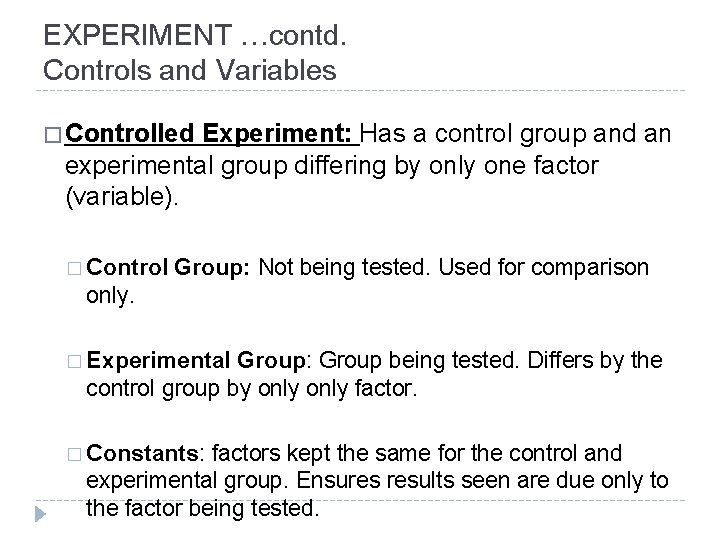
EXPERIMENT …contd. Controls and Variables � Controlled Experiment: Has a control group and an experimental group differing by only one factor (variable). � Control Group: Not being tested. Used for comparison only. � Experimental Group: Group being tested. Differs by the control group by only factor. � Constants: factors kept the same for the control and experimental group. Ensures results seen are due only to the factor being tested.
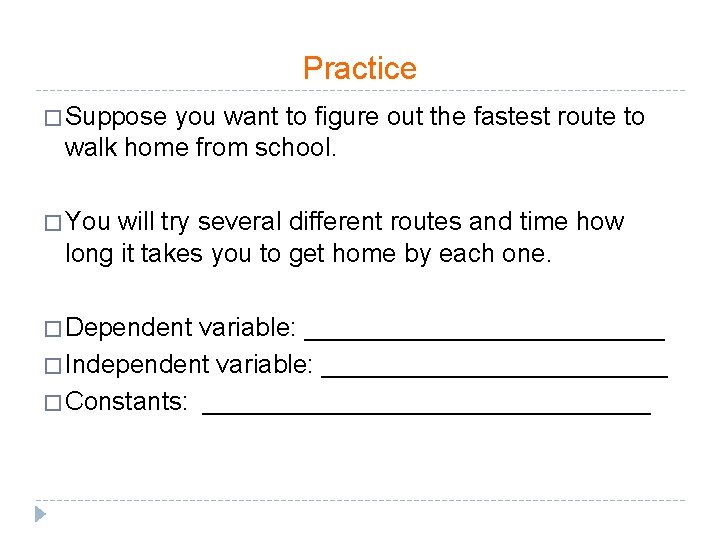
Practice � Suppose you want to figure out the fastest route to walk home from school. � You will try several different routes and time how long it takes you to get home by each one. � Dependent variable: _____________ � Independent variable: ____________ � Constants: ________________
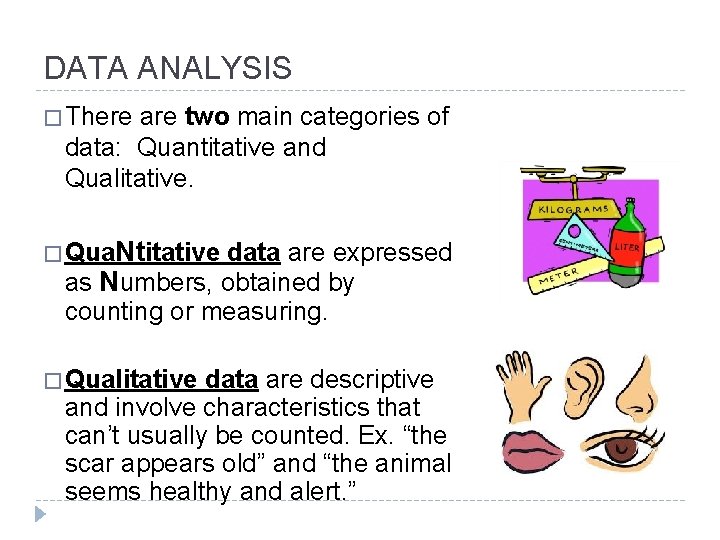
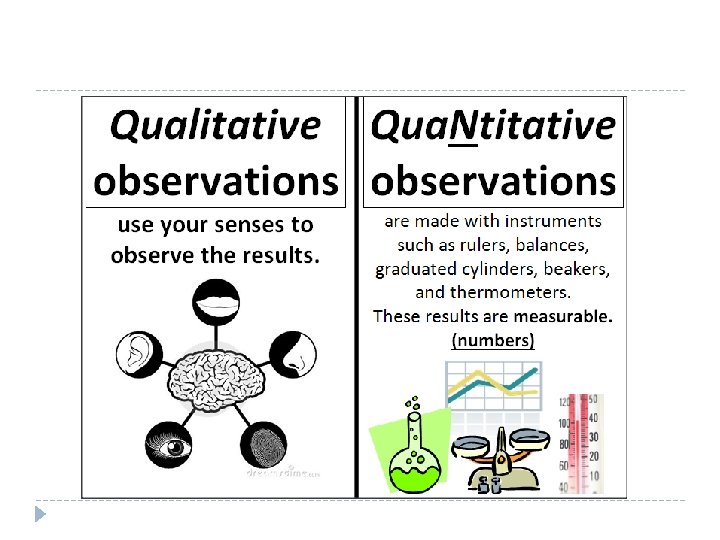
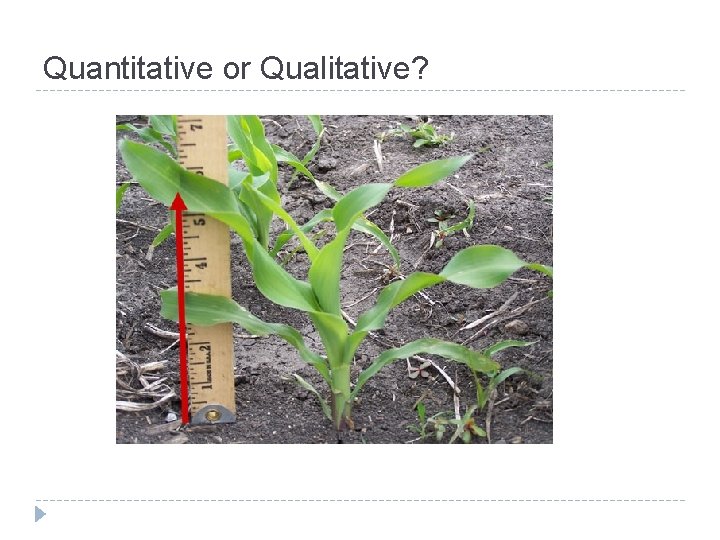
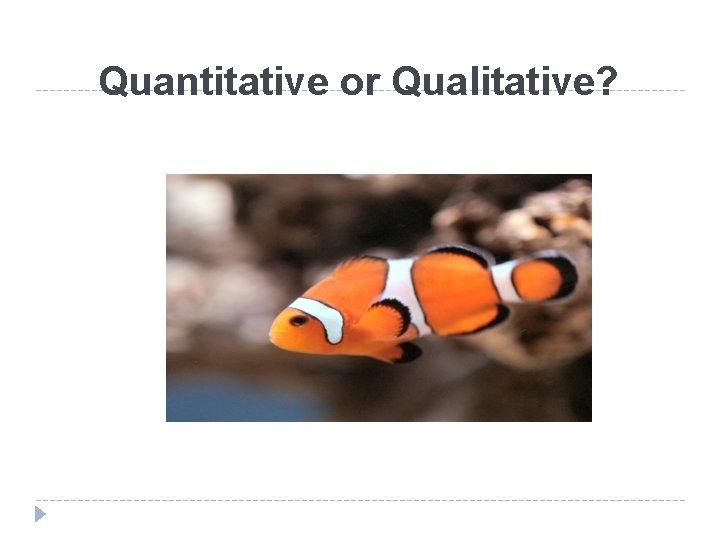
DATA ANALYSIS � There are two main categories of data: Quantitative and Qualitative. � Qua. Ntitative data are expressed as Numbers, obtained by counting or measuring. � Qualitative data are descriptive and involve characteristics that can’t usually be counted. Ex. “the scar appears old” and “the animal seems healthy and alert. ”
Quantitative or Qualitative?
Quantitative or Qualitative?
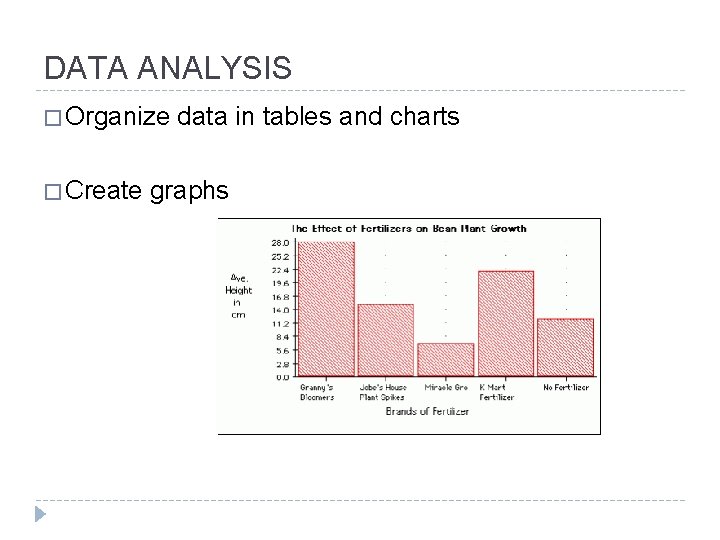
DATA ANALYSIS � Organize � Create data in tables and charts graphs
CONCLUSION �Explain data and results �Support or reject your hypothesis �Summarize experiment and form new questions
COMMUNICATE � Publishing the results. � A scientific article must tell the reader what the question to be answered is, why the question is important, background information, a description of the experiment, the data that were collected, and the scientist’s evaluation of what the data mean.
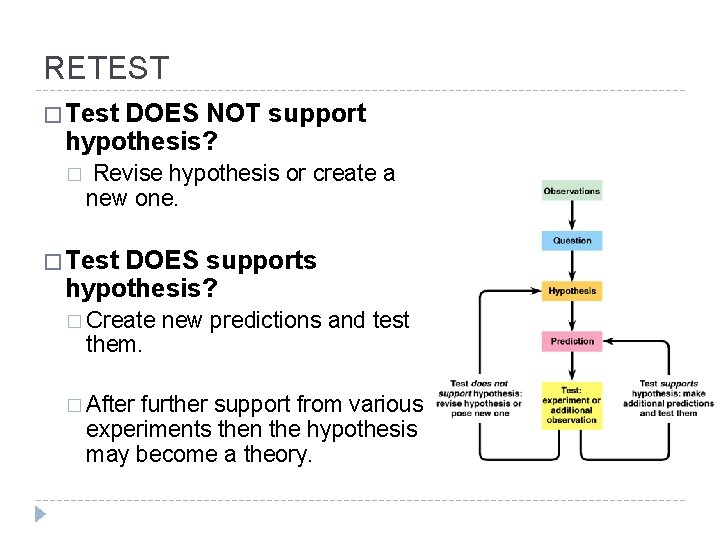
RETEST � Test DOES NOT support hypothesis? � Revise hypothesis or create a new one. � Test DOES supports hypothesis? � Create them. � After new predictions and test further support from various experiments then the hypothesis may become a theory.
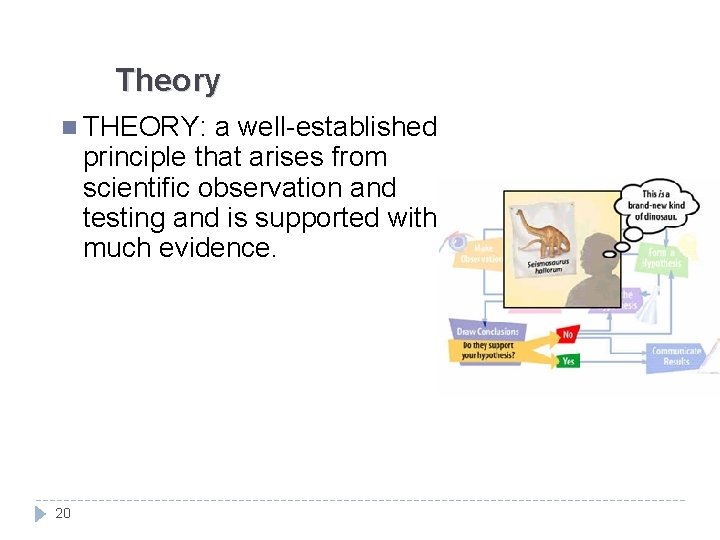
Theory n THEORY: a well-established principle that arises from scientific observation and testing and is supported with much evidence. 20
Law n A Statement of fact that concisely explains an action or group of actions e. g. Law of Gravity n Accepted to be true n Universal n May be expressed as a math equation e. g. E=mc 2