
The Scientific Method Systematic study Method of verification


- Slides: 11
The Scientific Method • Systematic study • Method of verification • Common among all scientists
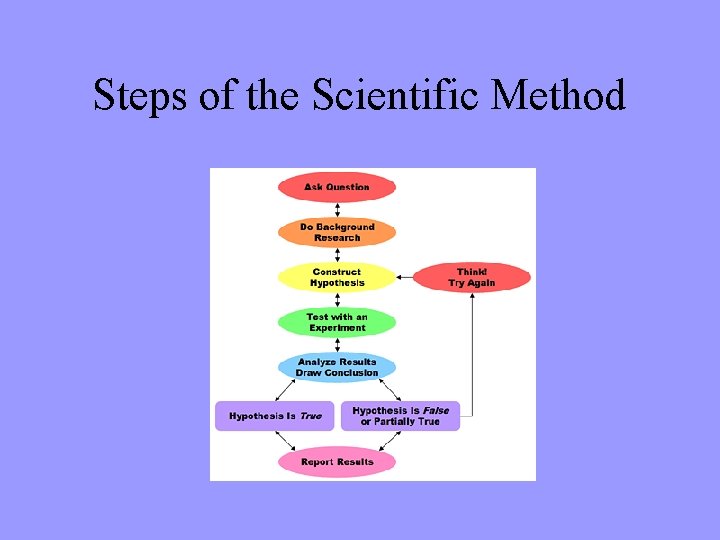
Steps of the Scientific Method
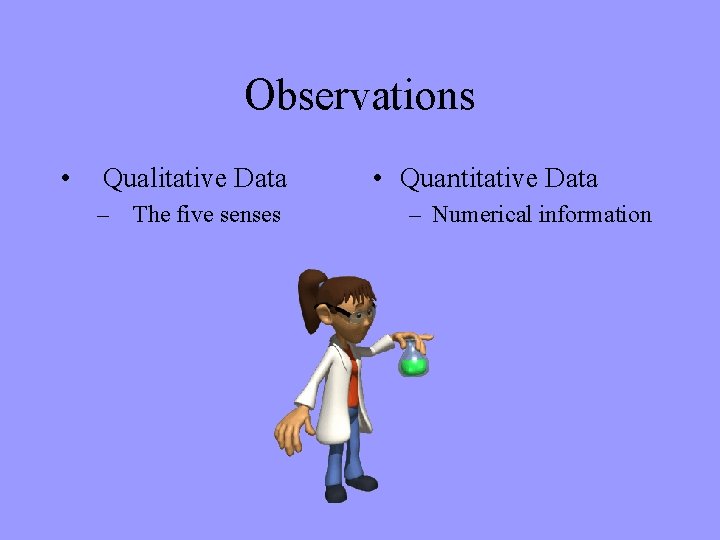
Observations • Qualitative Data – The five senses • Quantitative Data – Numerical information
Qualitative or Quantitative? • The substance is yellow • The unknown has a boiling point of 123 degrees Celsius • Sulfur has a pungent odor • Sodium Nitrate has a density of 2. 26 g/cm 3
Hypothesis • Testable statement or predication • Based on observations • Tentative explanation of events
Experiments • Set of controlled observations that test the hypothesis • Must be carefully planned and conducted • Test one variable at a time
Variable • Quantity or condition that can have more than one value • Examples?
Two Variables • Independent Variable – The one you plan to change – Should be the only thing affecting the dependent variable • Dependent Variable – The one you did not change – Changes in response to independent variable
Control • Valuable to experiment • Standard for comparison • Helps you better understand the behavior of independent and dependent variables
Conclusion • 1 st: Analyze the data gathered during the experiment. • 2 nd: Apply analysis to your hypothesis • 3 rd: Make a judgment based on the information
• Hypothesis: Never proven, only supported by an experiment • Theory: Must be supported by many, many experiments • Scientific Law: a relationship in nature that has been proven by many scientists many times without exceptions