
The Scientific Method Experimental Design AP Biology What
The Scientific Method & Experimental Design AP Biology
What is Inquiry? § Begins with observations you make about the natural world, followed by a question. u What is causing that? § Use a variety of methods to answer the questions you raise u Lab & field investigations, models, simulations, data sets § Scientific method of investigation is cyclic, not linear… AP Biology
The Scientific Method: 1. Make Observation 2. Statement of problem, ask a question 3. Hypothesis: propose a tentative answer 4. Design & conduct an experiment (Use quantifiable data math is extremely important) 5. Use statistical tests to evaluate the significance of your results (Χ 2 test, null hypothesis) 6. Acceptance or rejection of hypothesis. AP Biology

AP Biology
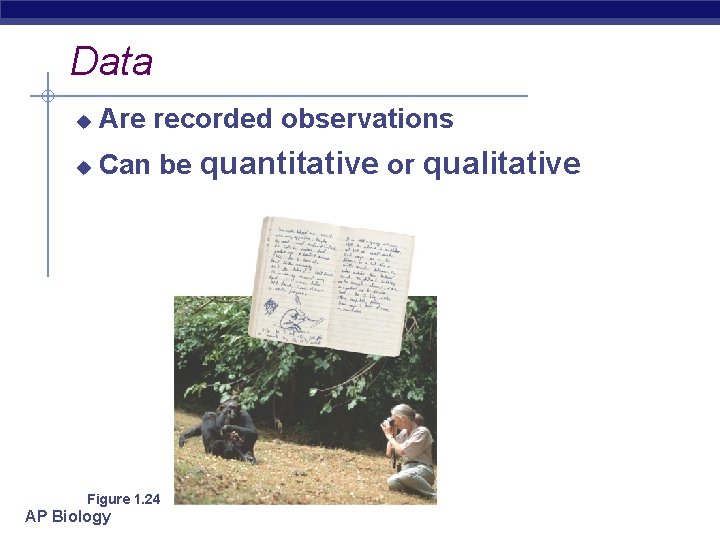
Data u Are recorded observations u Can be quantitative or qualitative Figure 1. 24 AP Biology
The Role of Hypotheses in Inquiry § In science, a hypothesis Is a tentative answer to a well-framed question u Makes predictions that can be tested u AP Biology
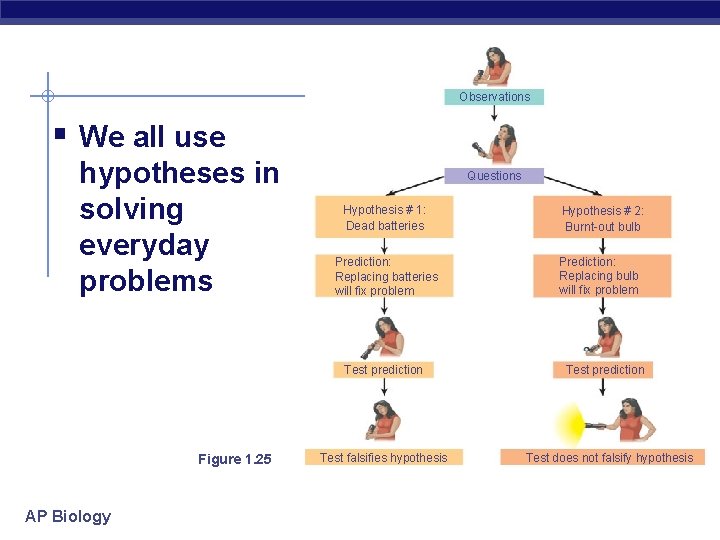
Observations § We all use hypotheses in solving everyday problems Questions Hypothesis # 1: Dead batteries Prediction: Replacing batteries will fix problem Test prediction Figure 1. 25 AP Biology Test falsifies hypothesis Hypothesis # 2: Burnt-out bulb Prediction: Replacing bulb will fix problem Test prediction Test does not falsify hypothesis
A Closer Look at Hypotheses in Scientific Inquiry § A scientific hypothesis must have two important qualities It must be testable u It must have the potential of being rejected u "No amount of experimentation can ever prove me right, one single experiment can prove me wrong. " --- Albert Einstein. AP Biology
Designing Controlled Experiments § In controlled experiments we start with two (or more) groups that are as similar as possible and we devise a method to manipulate only ONE variable. § Independent Variable =the variable that § is manipulated Dependent Variable = the response that is measured AP Biology
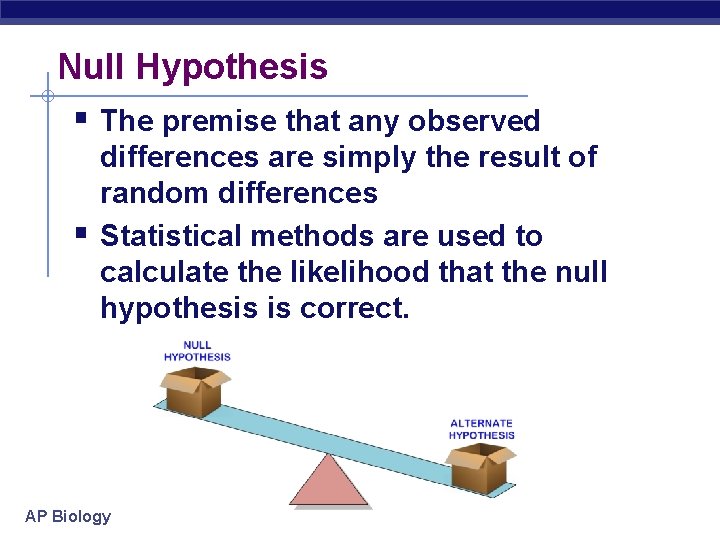
Null Hypothesis § The premise that any observed § differences are simply the result of random differences Statistical methods are used to calculate the likelihood that the null hypothesis is correct. AP Biology
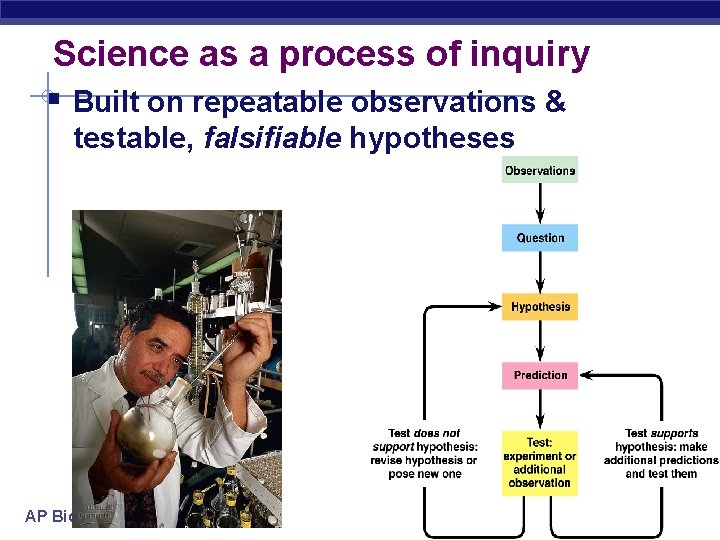
Science as a process of inquiry § Built on repeatable observations & testable, falsifiable hypotheses AP Biology
Falsifiable § EXAMPLES: Falsifiable – Increasing the amount of water given to a plant will increase its growth u NOT Falsifiable – u § Giving a plant more water will make it happier. AP Biology
Data Tables & Graphing Review AP Biology
Working with DATA § When you work with data during an experiment, you need to: Make accurate and precise measurements. u Account for error in measured values u Develop techniques and consistency for collecting data u Understand the units and properties of the data. u Produce visual representations (tables, graphs) u AP Biology
What type of graph is best/most commonly used in scientific research? §LINE GRAPH!!!! AP Biology
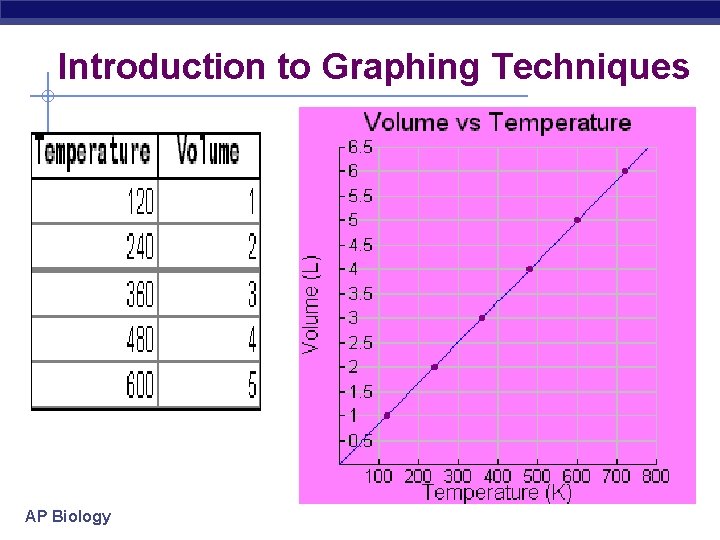
Introduction to Graphing Techniques AP Biology
Introduction to Graphing Techniques § The independent variable is carefully controlled and § § varied by a specific amount during an experiment. It is plotted on the x-axis. The dependent variable must be measured every time the independent variable is changed during the experiment. It is plotted on the y-axis. Choose your scale carefully (must be consistent intervals). Make your graph as large as possible by spreading out the data on each axis. AP Biology
Intro to Graphing Techniques cont. § Label each axis with the name of the variable and the § § units of measure. Using a ruler, darken the lines representing the axis. Title your graph. The title should be short and clearly state the purpose of the graph. The title could include the independent and dependent variables. General the titles are written as the y variable vs. the x variable. If you have more than one graph, number each graph in the upper right-hand corner. (AP Biology likes to have multiple data points on one graph) AP Biology
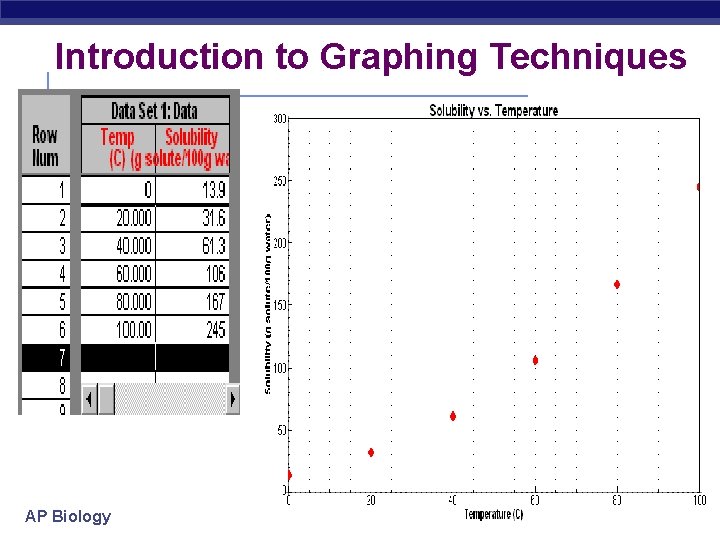
Introduction to Graphing Techniques AP Biology
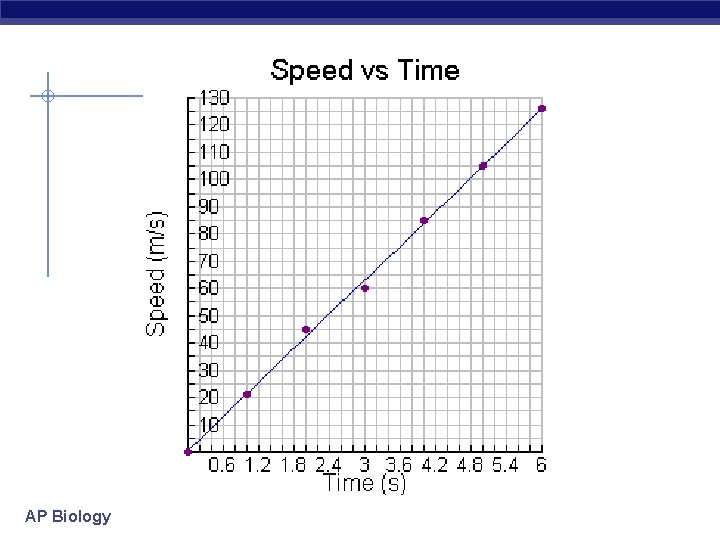
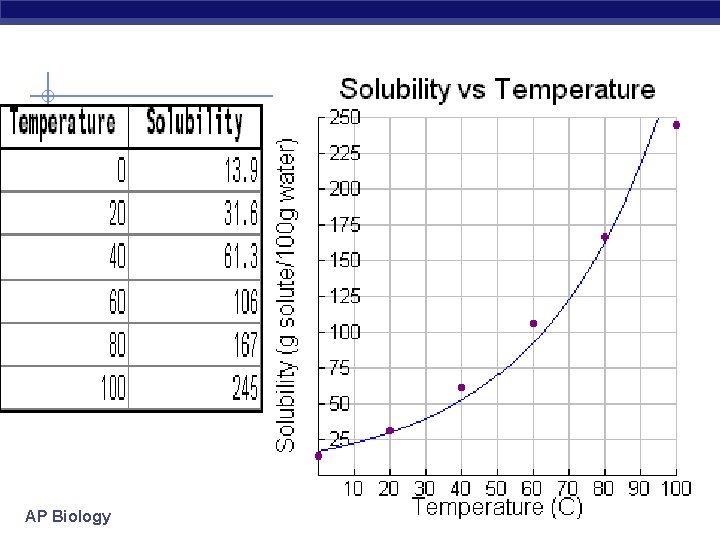
Introduction to Graphing Techniques § Observe the pattern the data forms on the graph. § Most times it will be best to use a smooth continuous line called a “best fit” line. AP Biology
AP Biology
AP Biology
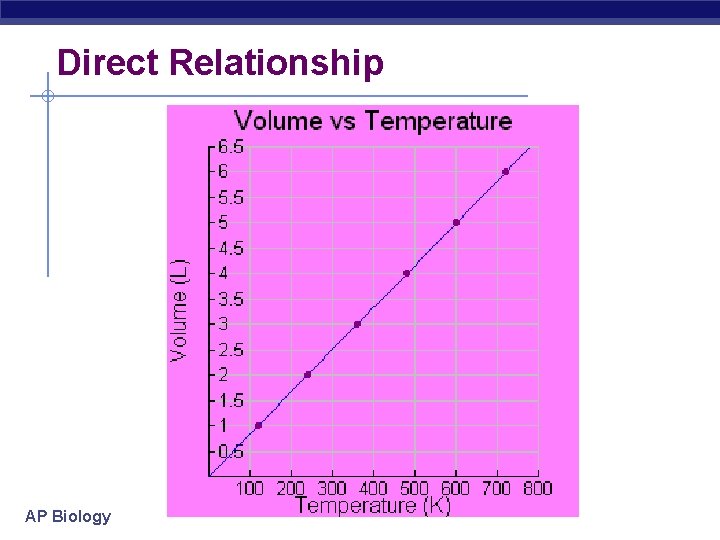
Direct Relationship AP Biology
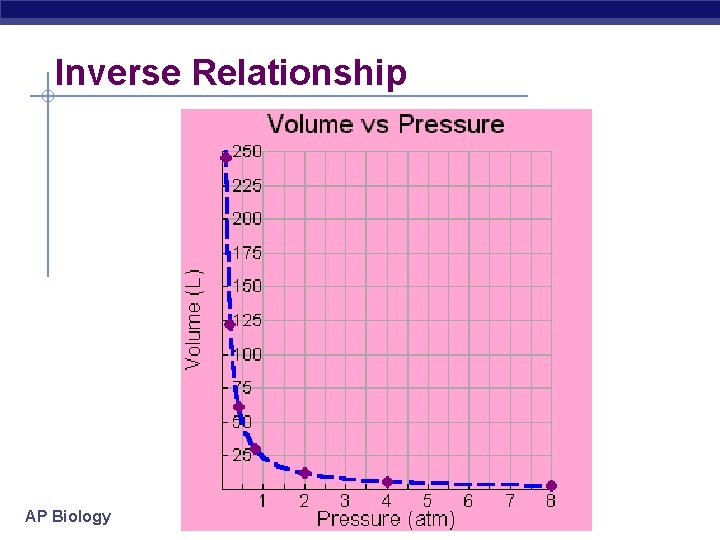
Inverse Relationship AP Biology
- Slides: 24