
The Scientific Method Anthropology 1 Lecture 1 Why

- Slides: 11
The Scientific Method Anthropology 1 Lecture 1
Why does the Scientific Method Exist? • It allows scientists a means to independently evaluate an idea. • It distinguishes scientific ideas from nonscientific ideas. Non-scientific ideas: religious propositions and beliefs, models coming from the humanities (e. g. structuralism, Marxism).
Elements of the Scientific Method • Observations. • Facts – verifiable truths. • Hypotheses – idea in the form of an explanation: it establishes a connection between facts testable • Theories – hypotheses that have been supported through testing – falsifiable. It is also desirable that theories be powerful and elegant. • Laws. • Testing. • Test implications.
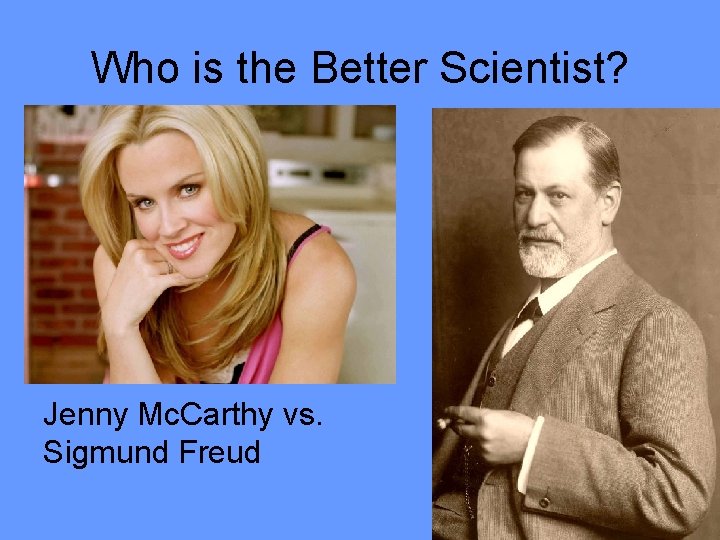
Who is the Better Scientist? Jenny Mc. Carthy vs. Sigmund Freud
The Winner!
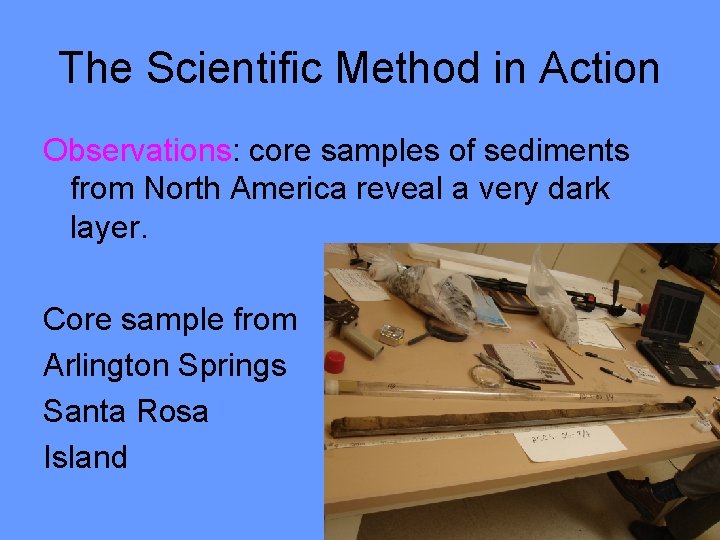
The Scientific Method in Action Observations: core samples of sediments from North America reveal a very dark layer. Core sample from Arlington Springs Santa Rosa Island
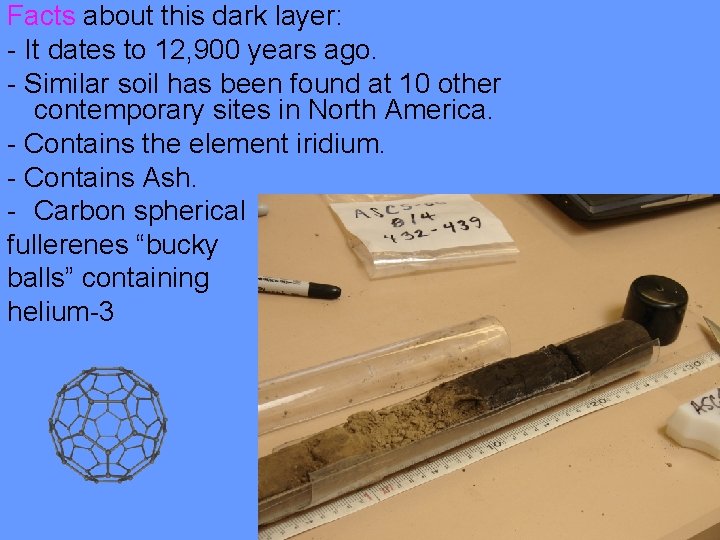
Facts about this dark layer: - It dates to 12, 900 years ago. - Similar soil has been found at 10 other contemporary sites in North America. - Contains the element iridium. - Contains Ash. - Carbon spherical fullerenes “bucky balls” containing helium-3
• Hypothesis: A comet exploded over North America 12, 900 years ago, during a glaciation. It incinerated forests over the face of the continent and caused a glacier at the center of the impact zone to melt. • Testing: Since an experiment is precluded, scientists generate test implications: If a event of this order had occurred it….
Younger Dryas Event Hypothesis Test Implications • Would have left a crater? • Would have caused mass extinctions, including local extinctions of humans. • Would have created nanodiamonds.
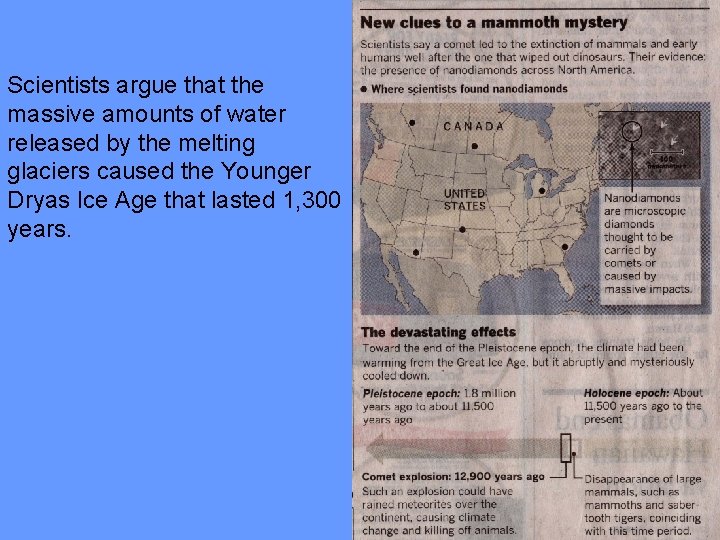
Scientists argue that the massive amounts of water released by the melting glaciers caused the Younger Dryas Ice Age that lasted 1, 300 years.
• Does the discovery of nanodiamonds in the black sediment elevate this hypothesis to the level of a theory?