
The Scientific Method A Mr K Presentation any
- Slides: 28
The Scientific Method A Mr. K Presentation -any unauthorized reproduction is strictly prohibited
Science starts with a … • Research question – What the scientists wants to know
There are two general types of research: • Experimental • Descriptive
Descriptive research is… • Based mainly on observations
Examples include • Making models • Dissections • Observing animals in the wild
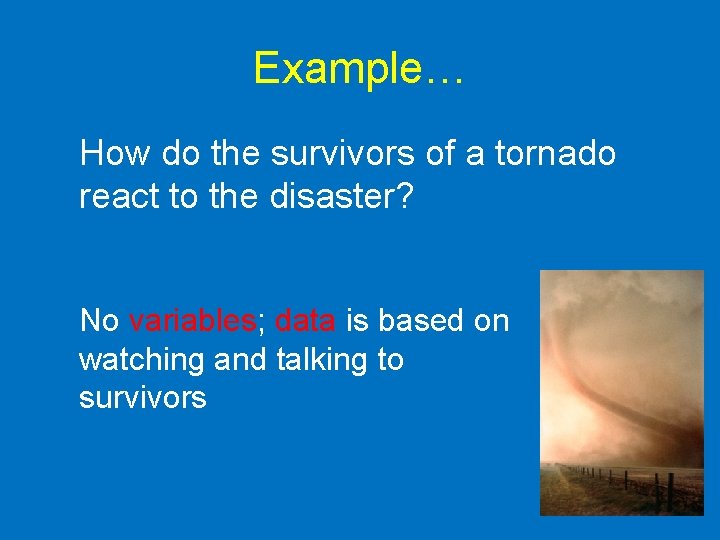
Example… How do the survivors of a tornado react to the disaster? No variables; data is based on watching and talking to survivors
Experimental research is… • The manipulation and control of variables
Speaking of variables….
What are three types of variables? • Independent variables • Dependent variables • Controlled variables – Also called constants
1. Independent variables are… • • What is being tested What is being changed The difference between the groups The ‘cause’ of a change
2. Dependent variables are… • • What is observed What is measured The data The ‘effect’ caused by the independent variable
3. Controlled variables are… • Things that could change, but don’t • Kept constant by the scientist • Allow for a fair test
So an experimental question has to indicate the variables • How the independent variable will AFFECT the dependent variable • What the EFFECT of the independent variable will be on the dependent variable
For example… • How does the temperature of ocean water affect the speed of a hurricane? – Independent variable • T of ocean water – Dependent variable • Speed of a hurricane
Predictions • Educated guesses about what will happen during an investigation – Based on prior knowledge (observations, background research, etc)
For example… People in disasters will react by trying to help others as much as possible. This is a PREDICTION because it’s a guess about what you think will happen.
Hypothesis (plural – hypotheses) • Special kind of prediction • What makes it so special? ? ? – It’s a guess about the VARIABLES & their relationship, in particular, • How will the independent variable affect the dependent variable? ? ? ? ?
How to write a hypothesis • Use an If, Then statement • IF the independent variable changes, THEN the dependent variable changes – This type of sentence shows what the IV will do to the DV
For example… • IF the T of ocean water increases, THEN the speed of a hurricane will increase. • This shows the expected relationship between the independent variable (the T of ocean water) and the dependent variable (the speed of a hurricane) – If the T of ocean water changes, it will cause the speed of a hurricane to change too.
Planning the investigation – Experimental Design • You absolutely, positively have to know what the variables are! – What you are changing • How you are changing – What you are measuring • How you are measuring – Repeated trials – Data tables
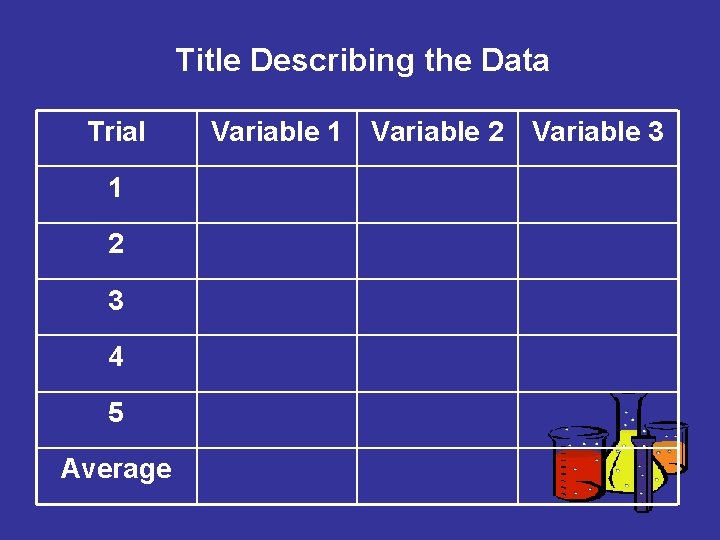
Data tables? • Numerical (quantitative) data organized in rows and columns • The specific independent variables are listed • The number of trials are listed • Blanks are left for the data (dependent variable) to be filled in
Title Describing the Data Trial 1 2 3 4 5 Average Variable 1 Variable 2 Variable 3
Analyzing the data • Reduce the data – Do something to make the amount of data smaller • Central tendencies – – – Mean (average) Median Mode Range frequency
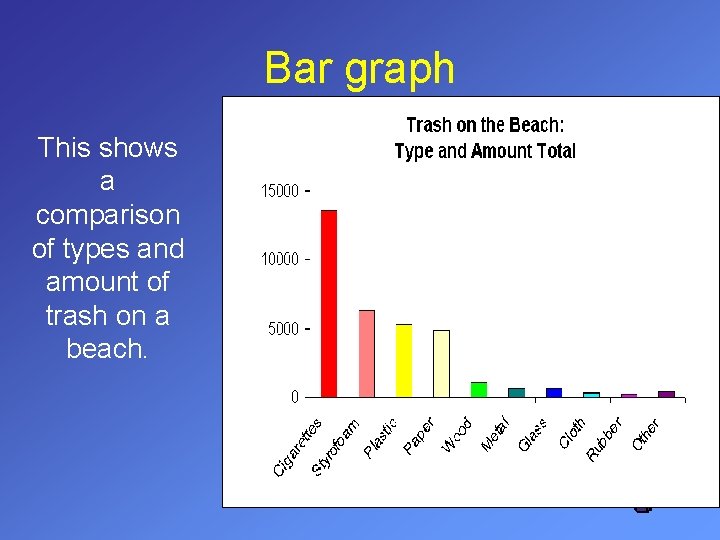
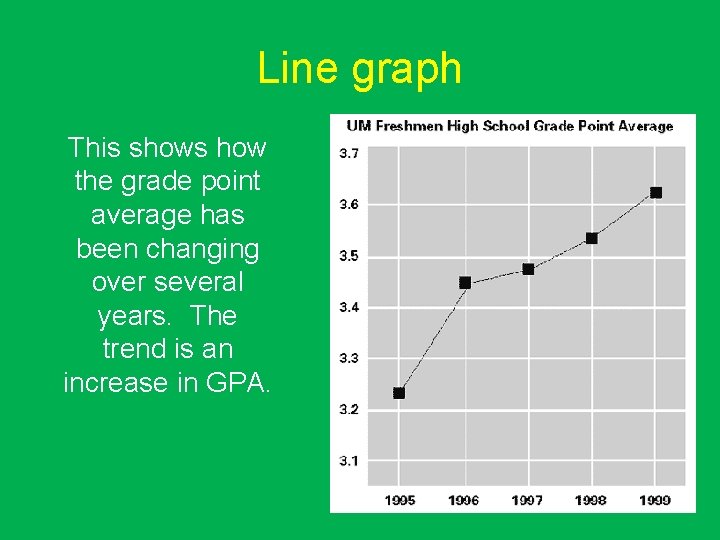
Analyzing the data • Graph the data – Lets us see trends, patterns, relationships, comparisons – Bar graphs • Let us compare data – Line graphs • Lets us see trends or changes
Bar graph This shows a comparison of types and amount of trash on a beach.
Line graph This shows how the grade point average has been changing over several years. The trend is an increase in GPA.
Conclusions • How we sum up the investigation – Does the data support the hypothesis? • If it does – we accept the hypothesis • If it does not – we reject the hypothesis – All back up what you say with data • Evidence
Communicate what you know • Finding out something new doesn’t do anyone any good unless the new knowledge is shared – Journals & magazines – Presentations