
THE SCIENCE OF WELDING An integrated lesson Topics




- Slides: 27
THE SCIENCE OF WELDING An integrated lesson
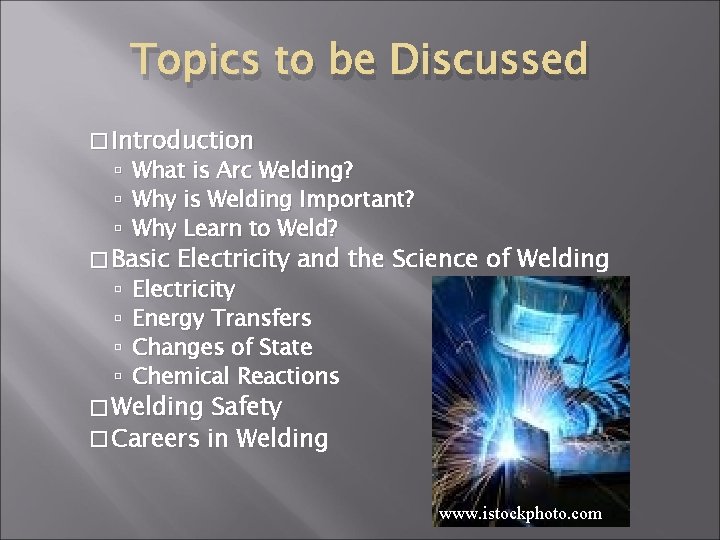
Topics to be Discussed � Introduction What is Arc Welding? Why is Welding Important? Why Learn to Weld? Electricity Energy Transfers Changes of State Chemical Reactions � Basic Electricity and the Science of Welding � Welding Safety � Careers in Welding www. istockphoto. com
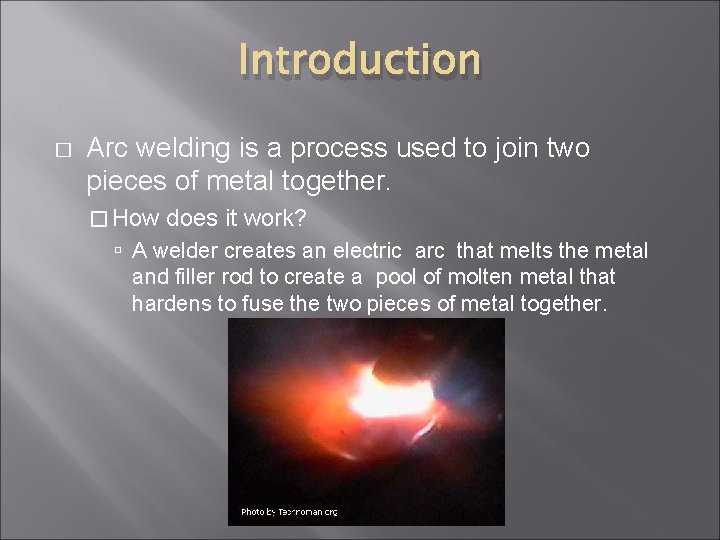
Introduction � Arc welding is a process used to join two pieces of metal together. � How does it work? A welder creates an electric arc that melts the metal and filler rod to create a pool of molten metal that hardens to fuse the two pieces of metal together.
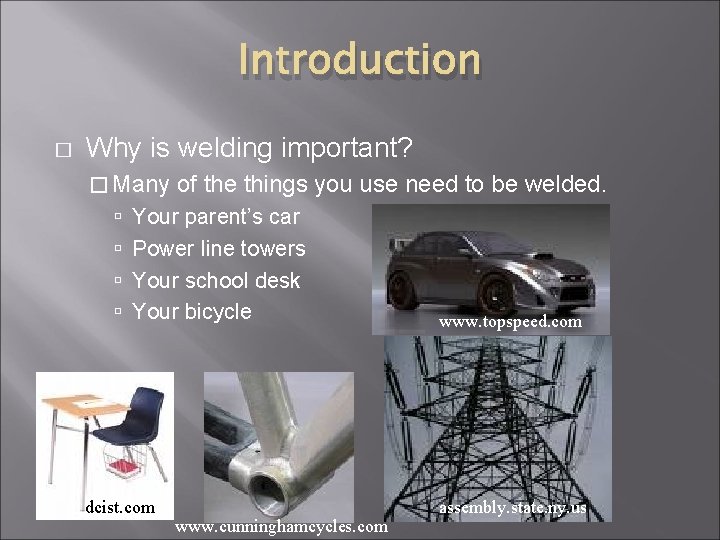
Introduction � Why is welding important? � Many of the things you use need to be welded. Your parent’s car Power line towers Your school desk Your bicycle dcist. com www. cunninghamcycles. com www. topspeed. com assembly. state. ny. us
Introduction � Why Learn to Weld? � Welding can help build a successful career to earn money to buy the things you want. � Skilled Welders are in high demand. � Welding is challenging and high tech. www. universalwelding. com www. weldingschools. com www. globalizedsourcing. com
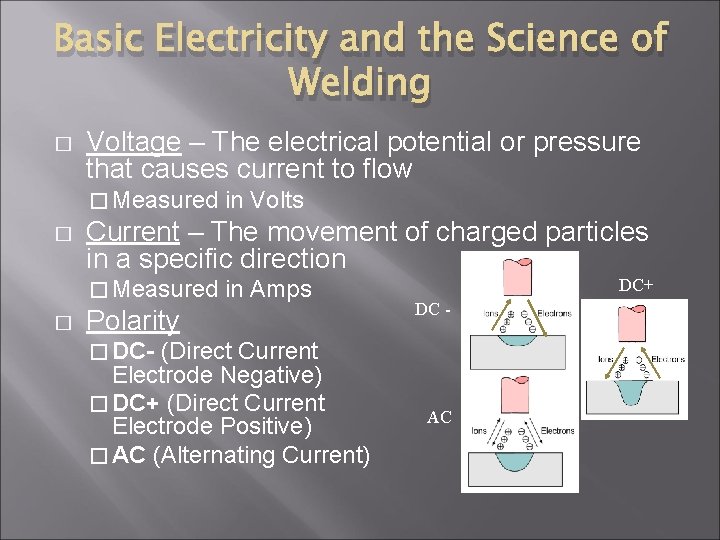
Basic Electricity and the Science of Welding � Voltage – The electrical potential or pressure that causes current to flow � Measured � Current – The movement of charged particles in a specific direction � Measured � in Volts in Amps Polarity (Direct Current Electrode Negative) � DC+ (Direct Current Electrode Positive) � AC (Alternating Current) DC+ DC - � DC- AC
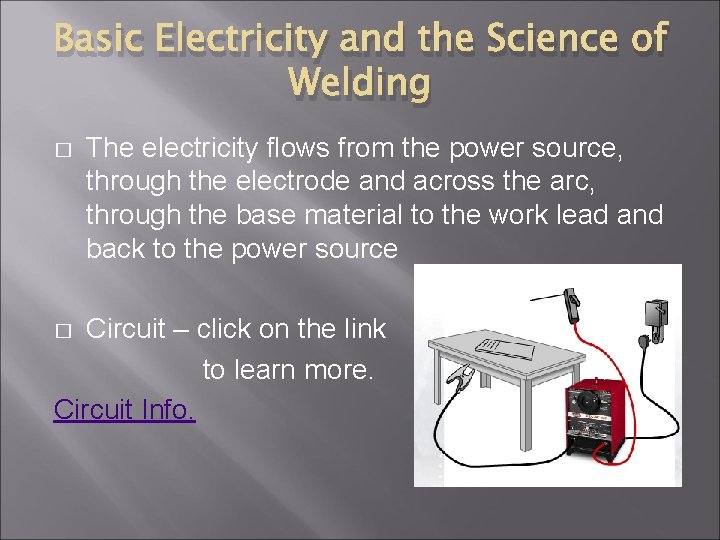
Basic Electricity and the Science of Welding � The electricity flows from the power source, through the electrode and across the arc, through the base material to the work lead and back to the power source Circuit – click on the link to learn more. Circuit Info. �
Basic Electricity and the Science of Welding � Use the following links to learn how electricity works in a circuit � Conductors, Insulators, and electron flow � Current and Voltage in a Circuit � Resistance � Ohms Law
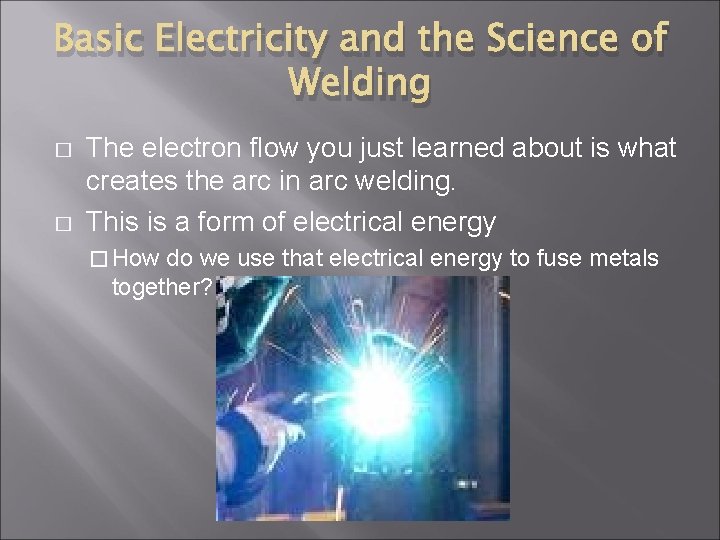
Basic Electricity and the Science of Welding � � The electron flow you just learned about is what creates the arc in arc welding. This is a form of electrical energy � How do we use that electrical energy to fuse metals together?
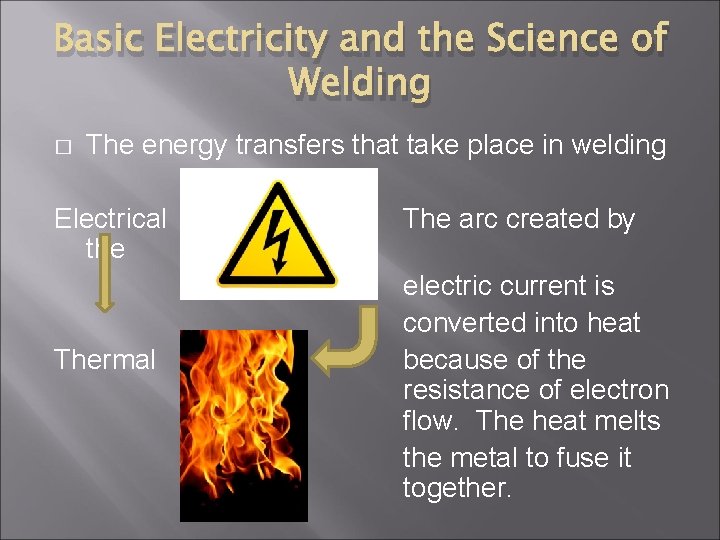
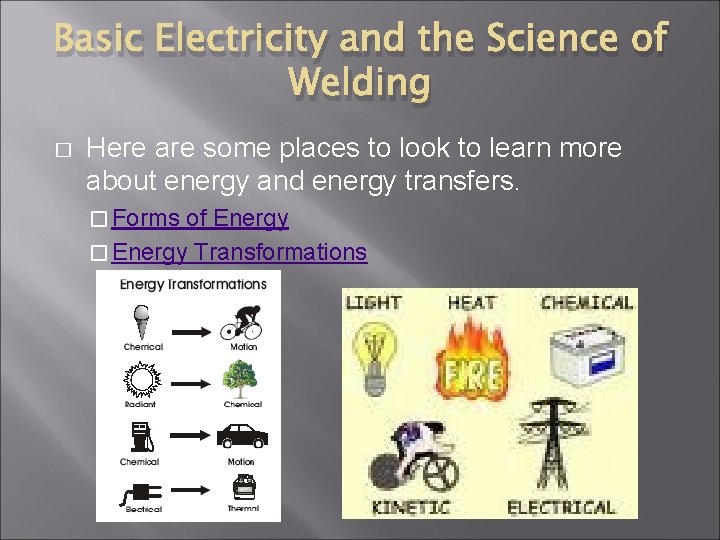
Basic Electricity and the Science of Welding � The energy transfers that take place in welding Electrical the Thermal The arc created by electric current is converted into heat because of the resistance of electron flow. The heat melts the metal to fuse it together.
Basic Electricity and the Science of Welding � Here are some places to look to learn more about energy and energy transfers. � Forms of Energy � Energy Transformations
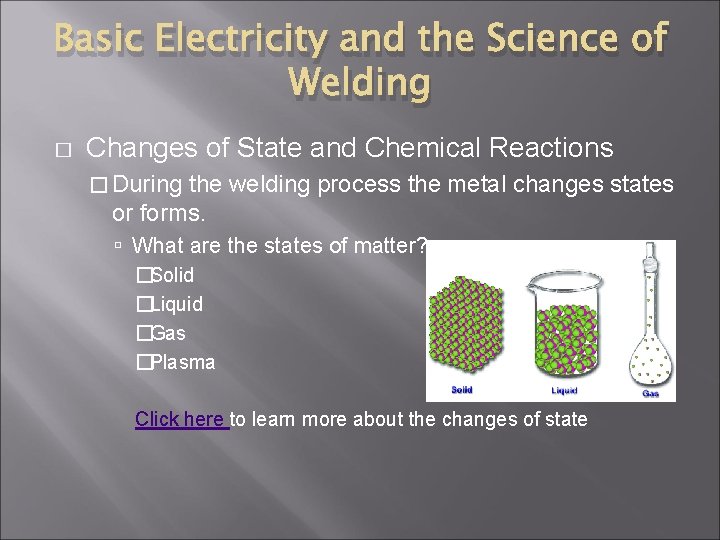
Basic Electricity and the Science of Welding � Changes of State and Chemical Reactions � During the welding process the metal changes states or forms. What are the states of matter? �Solid �Liquid �Gas �Plasma Click here to learn more about the changes of state
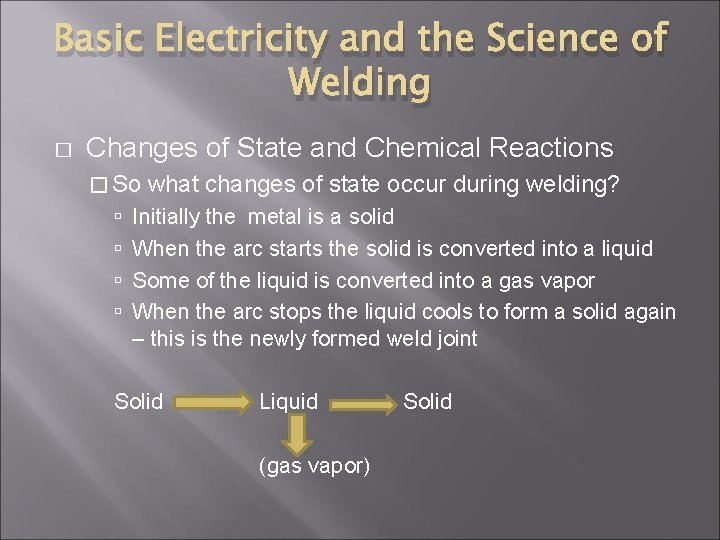
Basic Electricity and the Science of Welding � Changes of State and Chemical Reactions � So what changes of state occur during welding? Initially the metal is a solid When the arc starts the solid is converted into a liquid Some of the liquid is converted into a gas vapor When the arc stops the liquid cools to form a solid again – this is the newly formed weld joint Solid Liquid (gas vapor) Solid
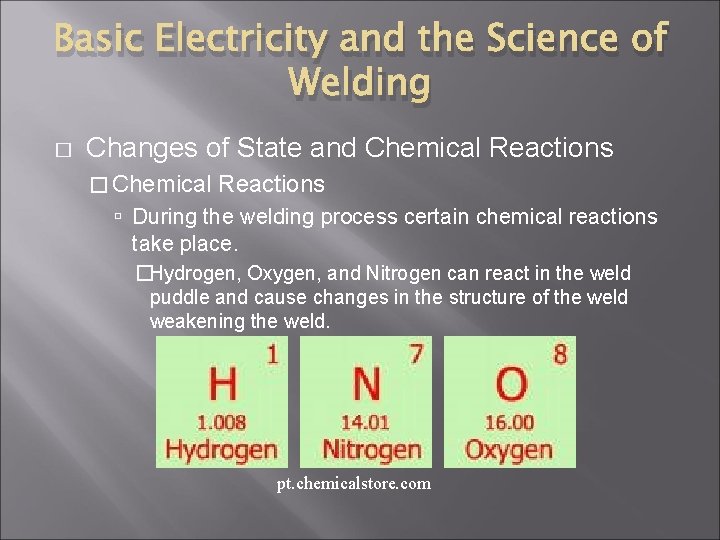
Basic Electricity and the Science of Welding � Changes of State and Chemical Reactions � Chemical Reactions During the welding process certain chemical reactions take place. �Hydrogen, Oxygen, and Nitrogen can react in the weld puddle and cause changes in the structure of the weld weakening the weld. pt. chemicalstore. com
Welding Safety � � � Because of the chemical reactions, energy transfers, and electricity involved in welding proper safety must be addressed Welding can be safe when sufficient measures are taken to protect yourself and others from potential hazards Students should read and understand the following before welding: � � � Warning Labels Material Safety Data Sheets (MSDS) Students should also be familiar with the following information � � ‘Safety in Welding, Cutting, and Allied Processes’ (ANSI Z 49. 1) Lincoln Electric’s ‘Arc Welding Safety’ (E 205) http: //www. lincolnelectric. com/knowledge/training/weldcurriculum. asp
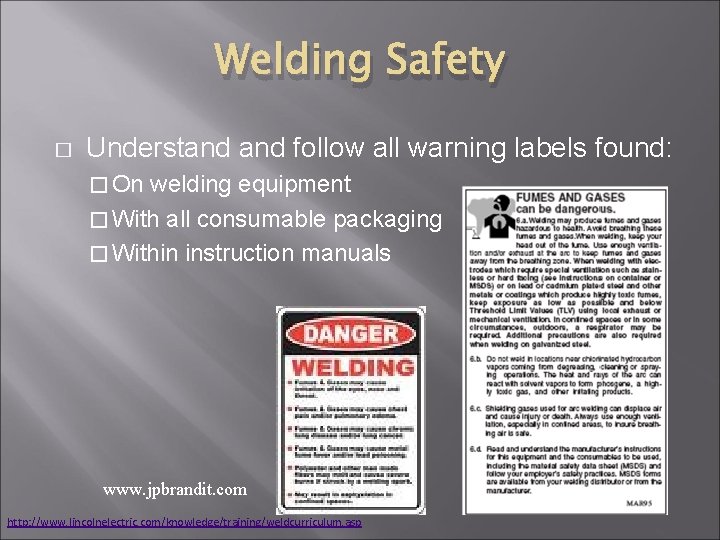
Welding Safety � Understand follow all warning labels found: � On welding equipment � With all consumable packaging � Within instruction manuals www. jpbrandit. com http: //www. lincolnelectric. com/knowledge/training/weldcurriculum. asp
Welding Safety Material Safety Data Sheets (MSDS) are: Required by law and OSHA Created by the manufacturer of a product per OSHA guidelines Designed to inform users Shipped with every box of consumable product Available free online at: www. lincolnelectric. com/products/m sds/ http: //www. lincolnelectric. com/knowledge/training/weldcurriculum. asp
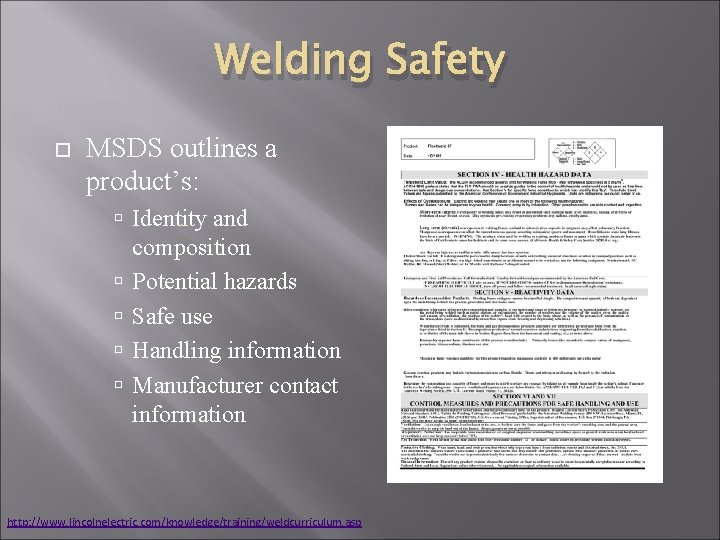
Welding Safety MSDS outlines a product’s: Identity and composition Potential hazards Safe use Handling information Manufacturer contact information http: //www. lincolnelectric. com/knowledge/training/weldcurriculum. asp
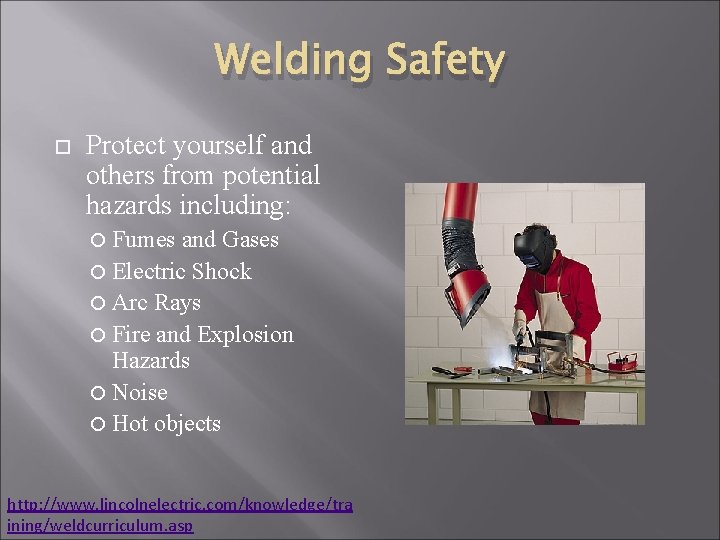
Welding Safety Protect yourself and others from potential hazards including: Fumes and Gases Electric Shock Arc Rays Fire and Explosion Hazards Noise Hot objects http: //www. lincolnelectric. com/knowledge/tra ining/weldcurriculum. asp
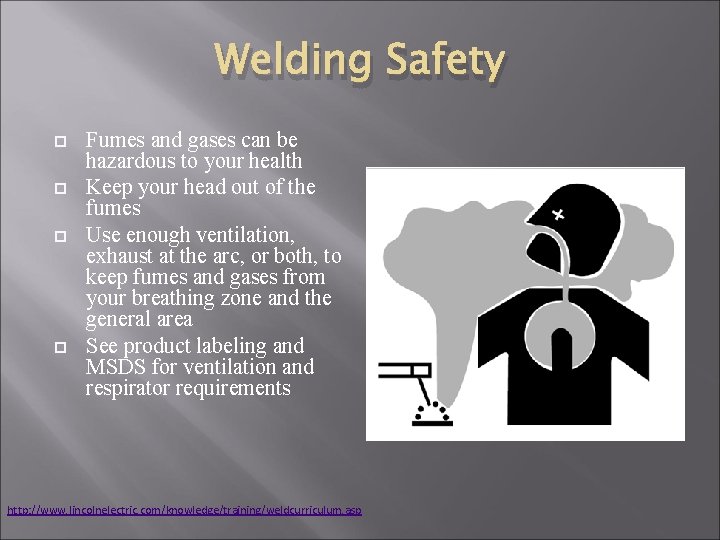
Welding Safety Fumes and gases can be hazardous to your health Keep your head out of the fumes Use enough ventilation, exhaust at the arc, or both, to keep fumes and gases from your breathing zone and the general area See product labeling and MSDS for ventilation and respirator requirements http: //www. lincolnelectric. com/knowledge/training/weldcurriculum. asp
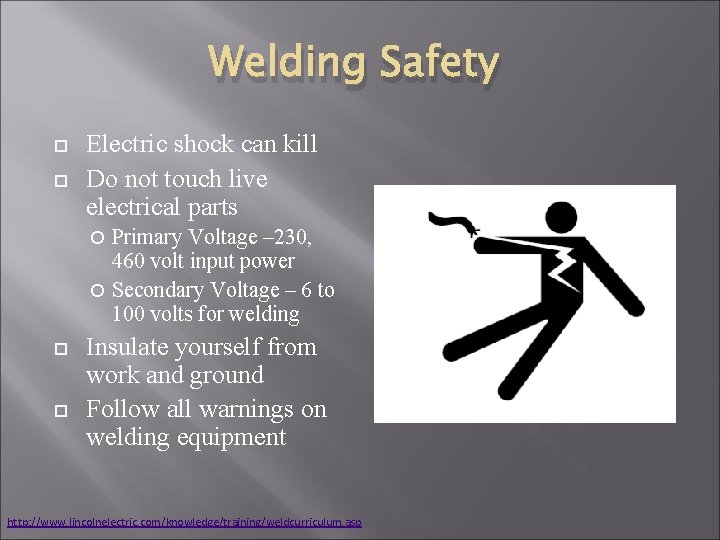
Welding Safety Electric shock can kill Do not touch live electrical parts Primary Voltage – 230, 460 volt input power Secondary Voltage – 6 to 100 volts for welding Insulate yourself from work and ground Follow all warnings on welding equipment http: //www. lincolnelectric. com/knowledge/training/weldcurriculum. asp
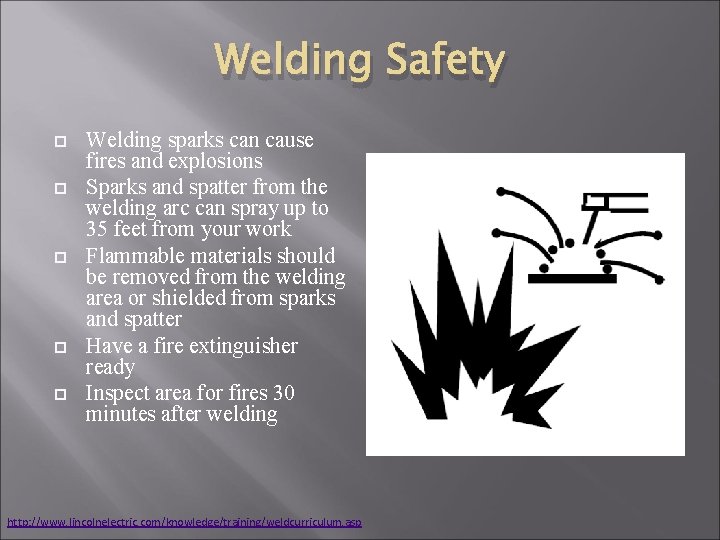
Welding Safety Welding sparks can cause fires and explosions Sparks and spatter from the welding arc can spray up to 35 feet from your work Flammable materials should be removed from the welding area or shielded from sparks and spatter Have a fire extinguisher ready Inspect area for fires 30 minutes after welding http: //www. lincolnelectric. com/knowledge/training/weldcurriculum. asp
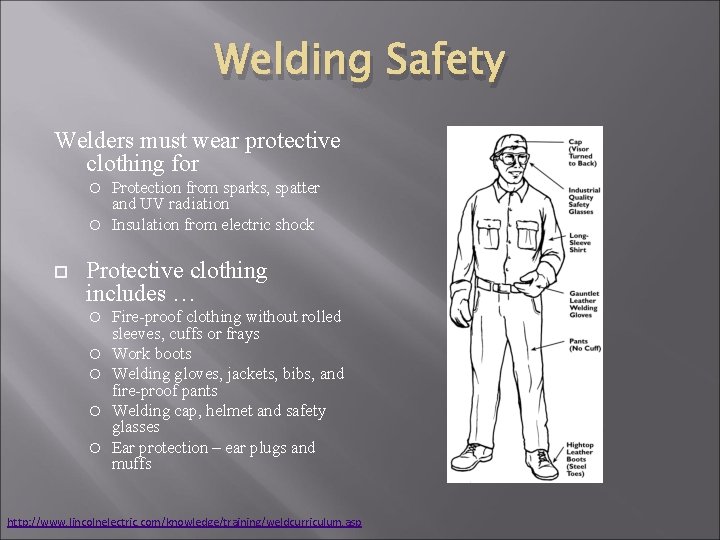
Welding Safety Welders must wear protective clothing for Protection from sparks, spatter and UV radiation Insulation from electric shock Protective clothing includes … Fire-proof clothing without rolled sleeves, cuffs or frays Work boots Welding gloves, jackets, bibs, and fire-proof pants Welding cap, helmet and safety glasses Ear protection – ear plugs and muffs http: //www. lincolnelectric. com/knowledge/training/weldcurriculum. asp
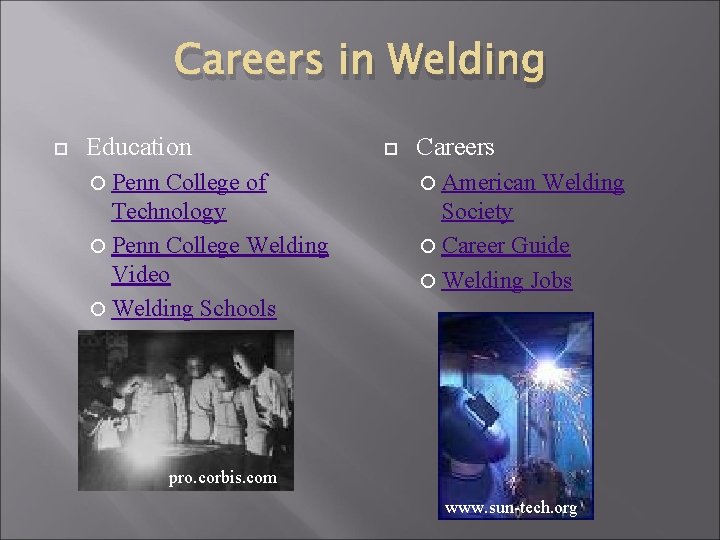
Careers in Welding Education Penn College of Technology Penn College Welding Video Welding Schools Careers American Welding Society Career Guide Welding Jobs pro. corbis. com www. sun-tech. org
Careers in Welding � Here are some possible areas you can start a career in welding � Racing � Engineering � Farm � Auto Technician � Sculpting � Maintenance � Iron worker � Robotics � Production welder � Fabricator � And many more…
What to learn more? � � � Do you want to learn more about welding and how to weld? If so, go to the link below for more information on how to weld. This is to be used if your school has access http: //www. lincolnelectric. com/knowledge/traini ng/weldcubrriculum. asp
Resources � � � http: //www. lincolnelectric. com/knowledge/traini ng/weldcurriculum. asp http: //www. weldinginfocenter. org/sci_tech/index. html http: //www. pct. edu/degreesthatwork/welding. ht m http: //www. allaboutcircuits. com/vol_1/index. htm l All photographs are cited next to photograph