
The Science of SM Brad Sagarin James Ambler
The Science of SM Brad Sagarin, James Ambler, Ellen Lee, & Kathryn Klement Northern Illinois University
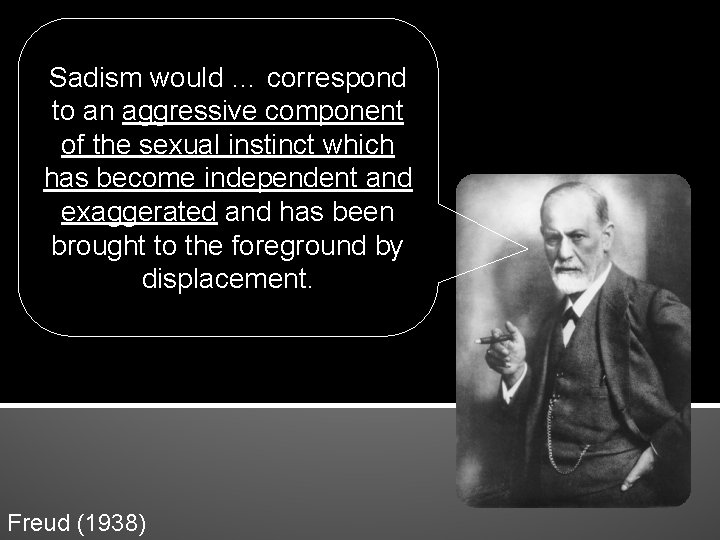
Sadism would … correspond to an aggressive component of the sexual instinct which has become independent and exaggerated and has been brought to the foreground by displacement. Freud (1938)
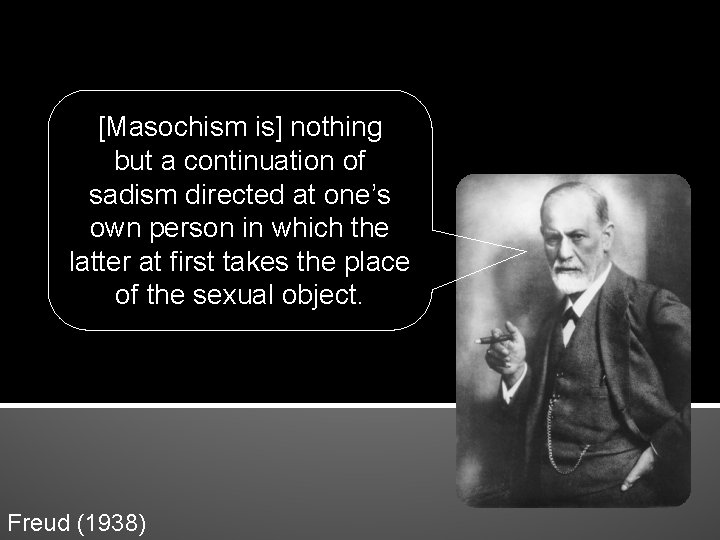
[Masochism is] nothing but a continuation of sadism directed at one’s own person in which the latter at first takes the place of the sexual object. Freud (1938)
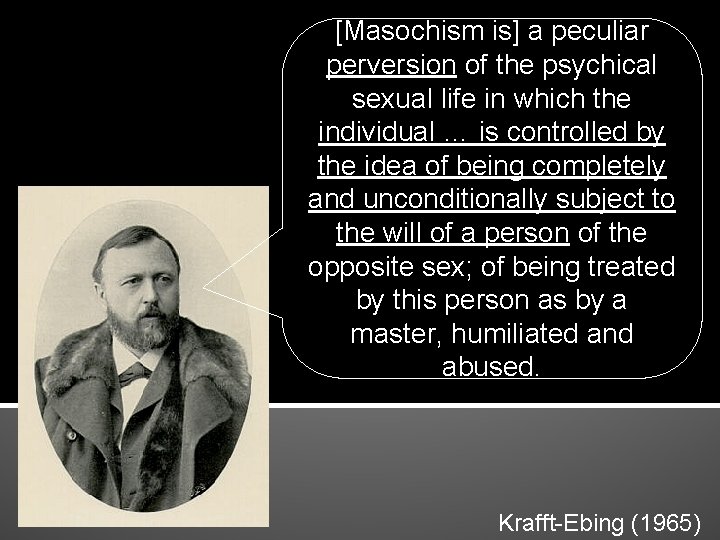
[Masochism is] a peculiar perversion of the psychical sexual life in which the individual … is controlled by the idea of being completely and unconditionally subject to the will of a person of the opposite sex; of being treated by this person as by a master, humiliated and abused. Krafft-Ebing (1965)
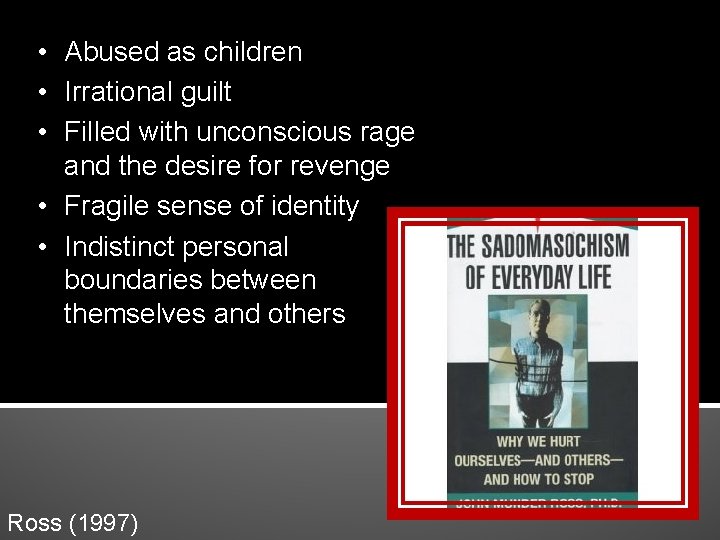
• Abused as children • Irrational guilt • Filled with unconscious rage and the desire for revenge • Fragile sense of identity • Indistinct personal boundaries between themselves and others Ross (1997)
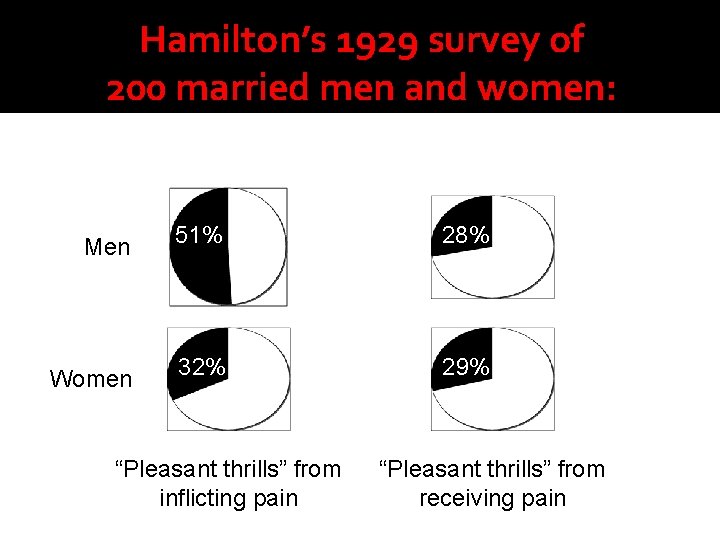
Hamilton’s 1929 survey of 200 married men and women: Men 51% 28% Women 32% 29% “Pleasant thrills” from inflicting pain “Pleasant thrills” from receiving pain
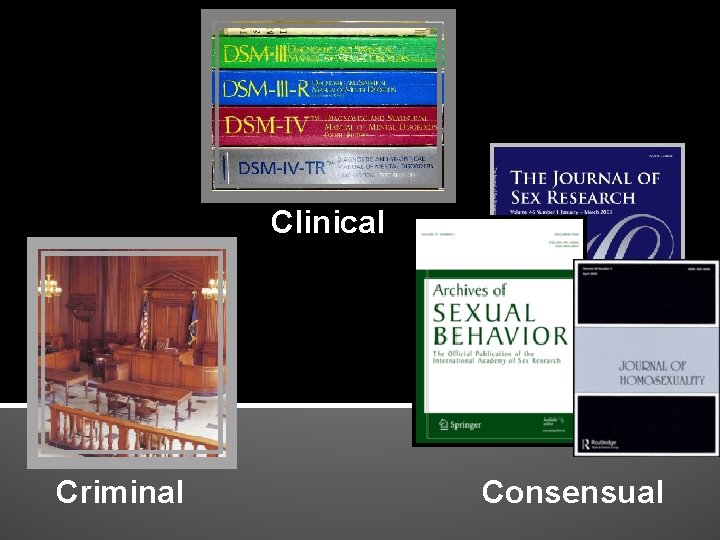
Clinical Criminal Consensual
Demographics Higher education and income Higher divorce rate No higher incidence of childhood abuse Socially well adjusted
Demographics con’t. . . Many realize SM tendencies at an early age: Gay men before straight men (all before 16 yrs) Men before women
Relationship dynamics Partner selection, power dynamics, and sexual bargaining in self-defined BDSM couples (Cutler, 2003) Great diversity in relationships Compatibility ≠ identical kinks Sexual gift-giving
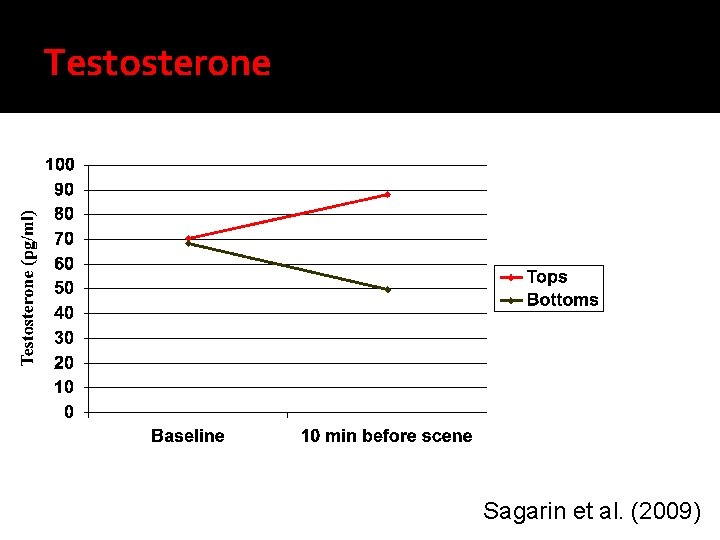
Testosterone Sagarin et al. (2009)
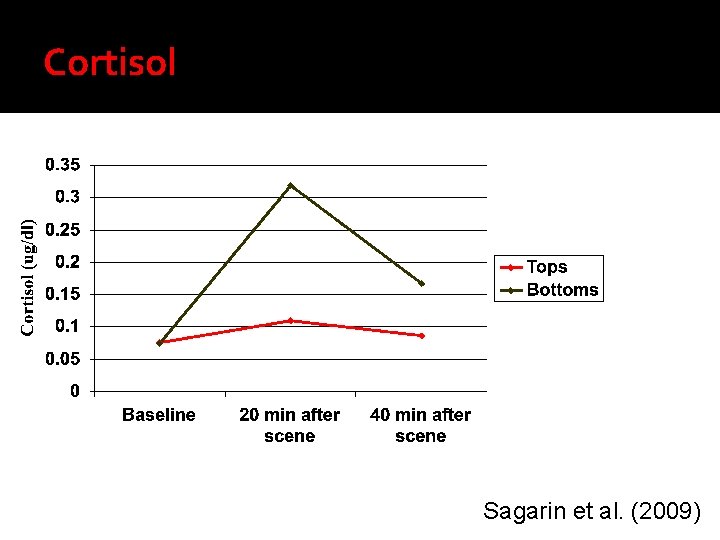
Cortisol Sagarin et al. (2009)
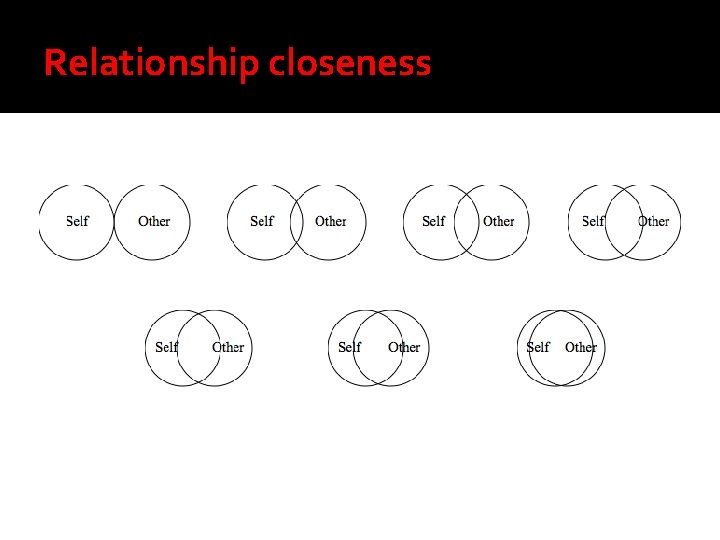
Relationship closeness
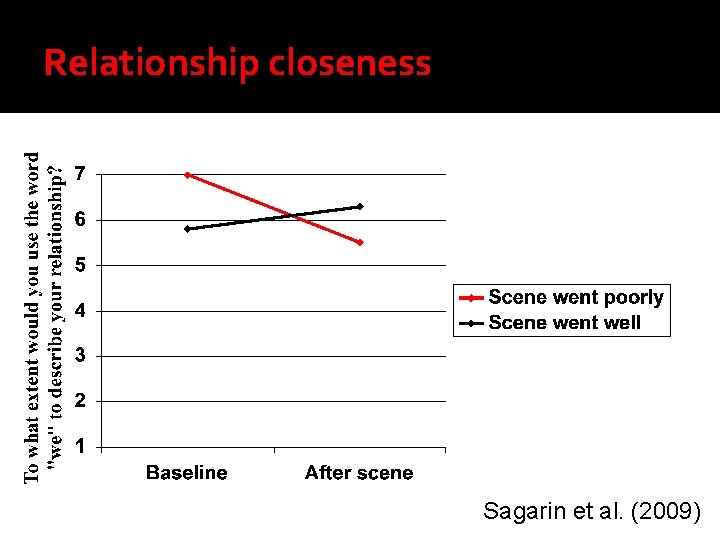
Relationship closeness Sagarin et al. (2009)
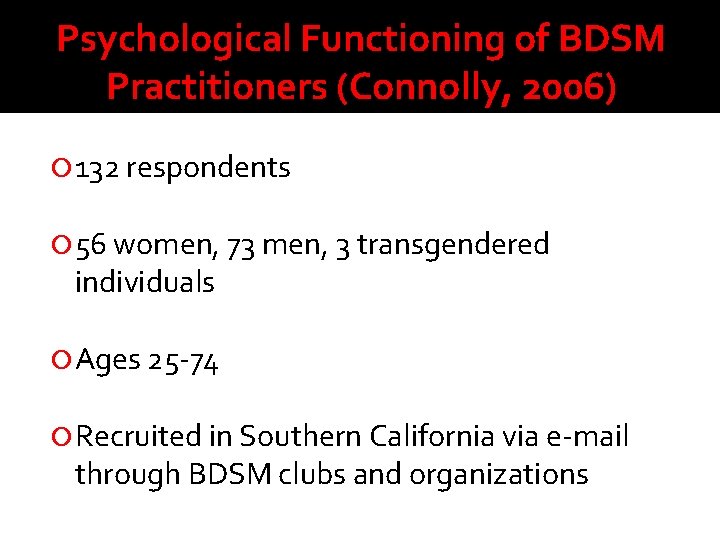
Psychological Functioning of BDSM Practitioners (Connolly, 2006) 132 respondents 56 women, 73 men, 3 transgendered individuals Ages 25 -74 Recruited in Southern California via e-mail through BDSM clubs and organizations
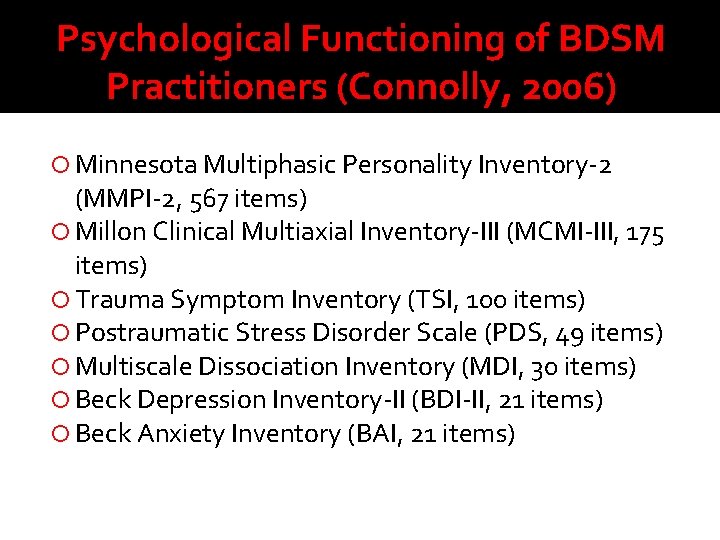
Psychological Functioning of BDSM Practitioners (Connolly, 2006) Minnesota Multiphasic Personality Inventory-2 (MMPI-2, 567 items) Millon Clinical Multiaxial Inventory-III (MCMI-III, 175 items) Trauma Symptom Inventory (TSI, 100 items) Postraumatic Stress Disorder Scale (PDS, 49 items) Multiscale Dissociation Inventory (MDI, 30 items) Beck Depression Inventory-II (BDI-II, 21 items) Beck Anxiety Inventory (BAI, 21 items)
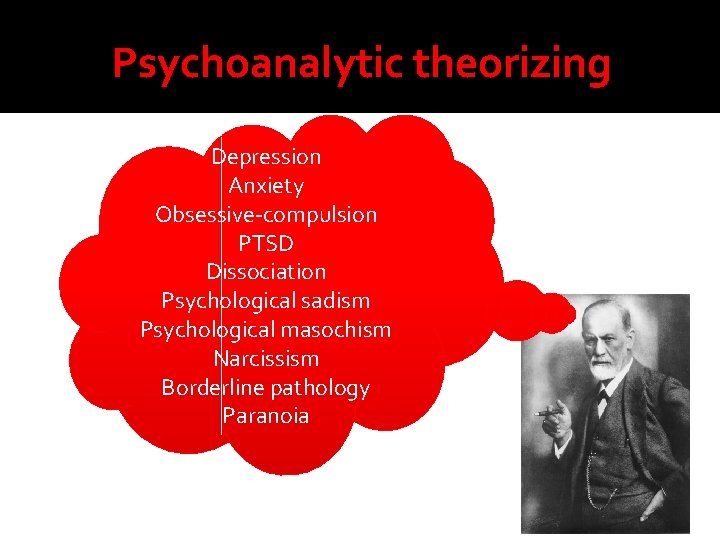
Psychoanalytic theorizing Depression Anxiety Obsessive-compulsion PTSD Dissociation Psychological sadism Psychological masochism Narcissism Borderline pathology Paranoia
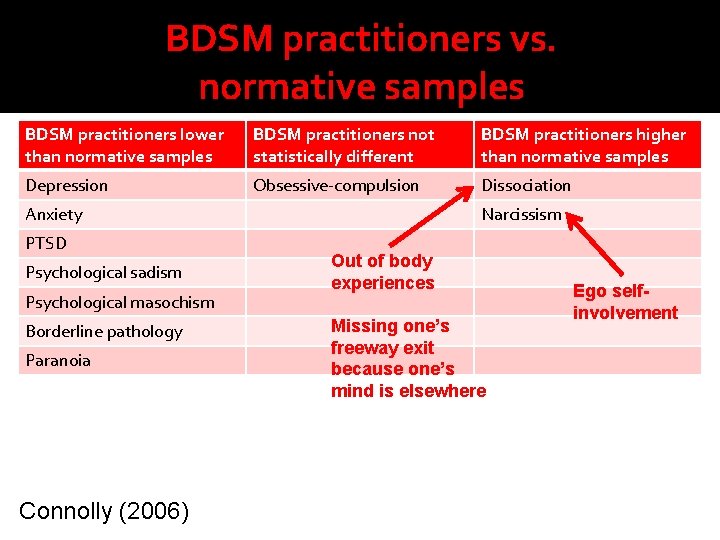
BDSM practitioners vs. normative samples BDSM practitioners lower than normative samples BDSM practitioners not statistically different BDSM practitioners higher than normative samples Depression Obsessive-compulsion Dissociation Anxiety PTSD Psychological sadism Psychological masochism Borderline pathology Paranoia Connolly (2006) Narcissism Out of body experiences Missing one’s freeway exit because one’s mind is elsewhere Ego selfinvolvement
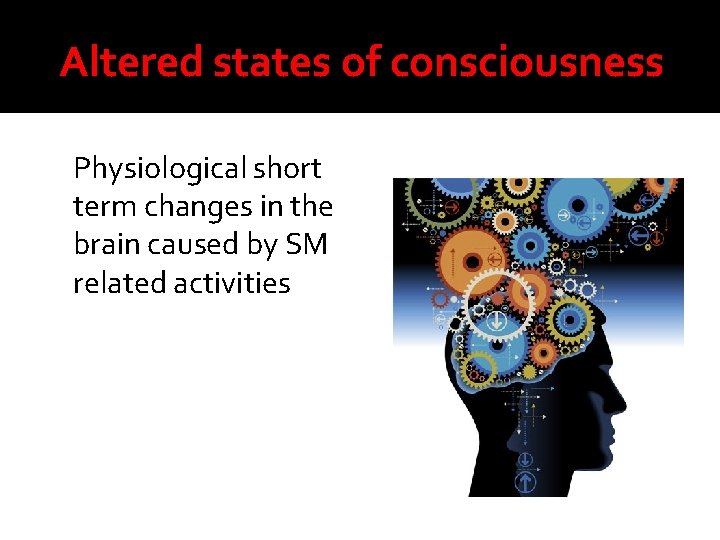
Altered states of consciousness Physiological short term changes in the brain caused by SM related activities
Flow The ego falls away. Time flies. Every action, movement, and thought follows inevitably from the previous one. Csikszentimihályi (1991)
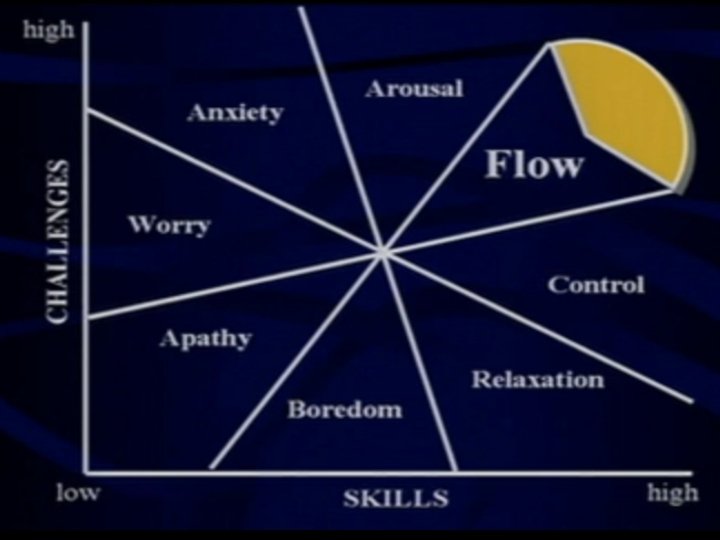
Conditions under which flow happens 1. Engagement in activity chosen for its own sake 2. Perceived challenges are high while skill level is also high 3. Clear goals that are regarded important 4. Immediate feedback indicating success at task 5. Highly focused attention
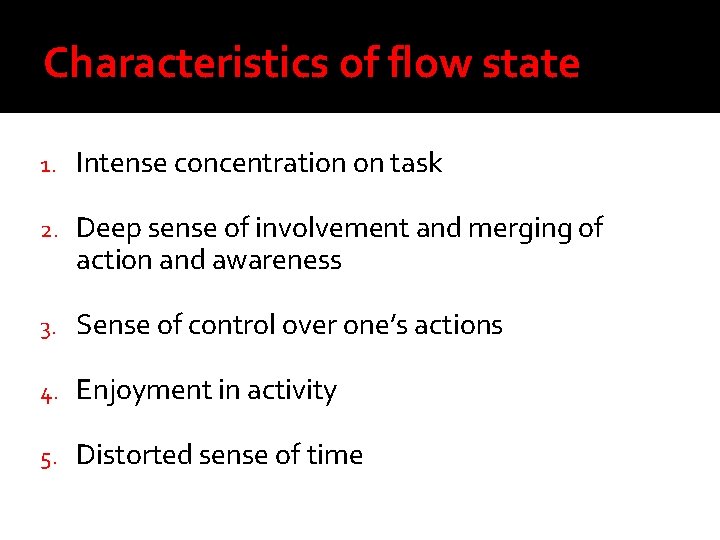
Characteristics of flow state 1. Intense concentration on task 2. Deep sense of involvement and merging of action and awareness 3. Sense of control over one’s actions 4. Enjoyment in activity 5. Distorted sense of time
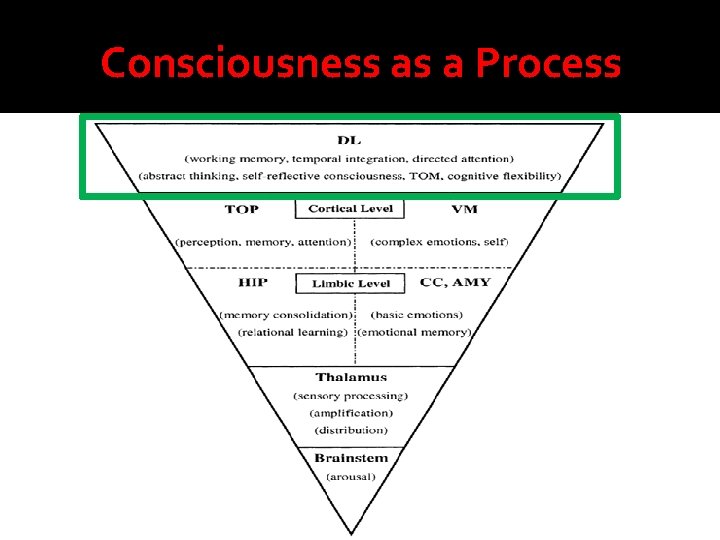
Consciousness as a Process
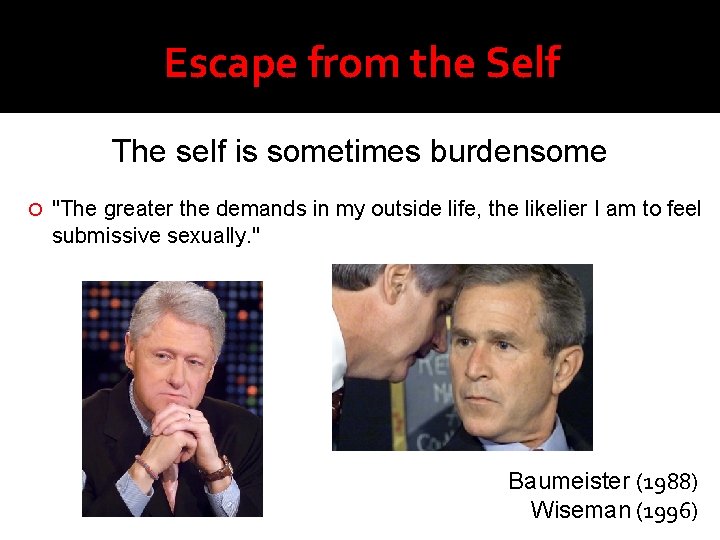
Escape from the Self The self is sometimes burdensome "The greater the demands in my outside life, the likelier I am to feel submissive sexually. " Baumeister (1988) Wiseman (1996)
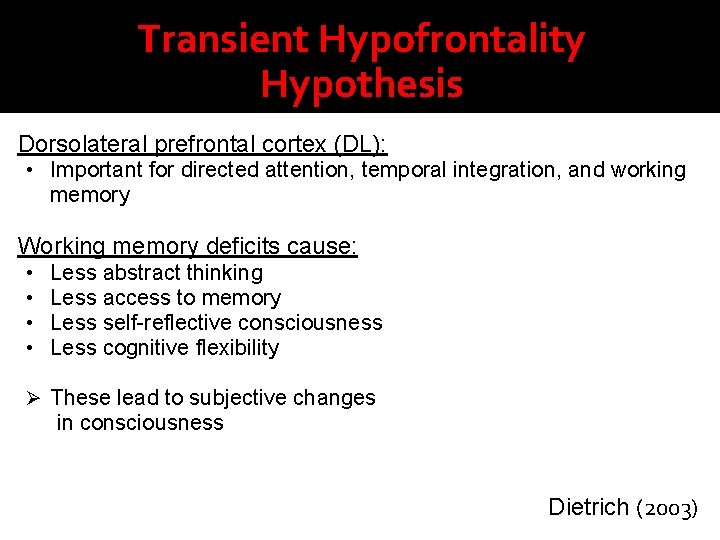
Transient Hypofrontality Hypothesis Dorsolateral prefrontal cortex (DL): • Important for directed attention, temporal integration, and working memory Working memory deficits cause: • • Less abstract thinking Less access to memory Less self-reflective consciousness Less cognitive flexibility Ø These lead to subjective changes in consciousness Dietrich (2003)
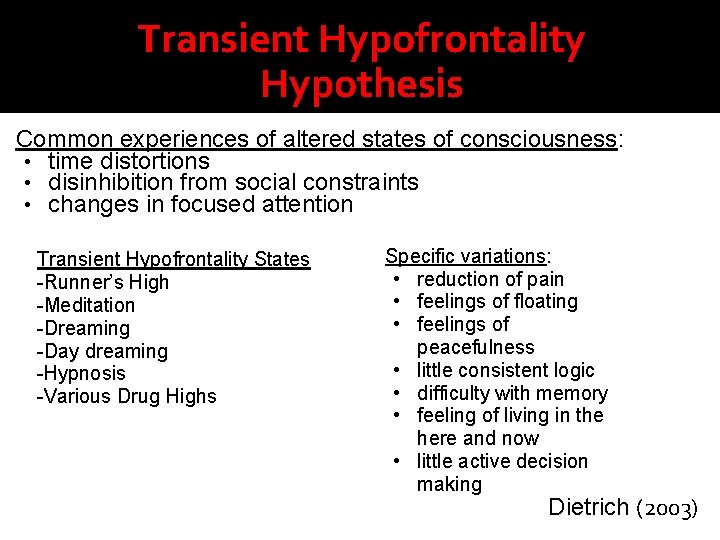
Transient Hypofrontality Hypothesis Common experiences of altered states of consciousness: • time distortions • disinhibition from social constraints • changes in focused attention Transient Hypofrontality States -Runner’s High -Meditation -Dreaming -Day dreaming -Hypnosis -Various Drug Highs Specific variations: • reduction of pain • feelings of floating • feelings of peacefulness • little consistent logic • difficulty with memory • feeling of living in the here and now • little active decision making Dietrich (2003)
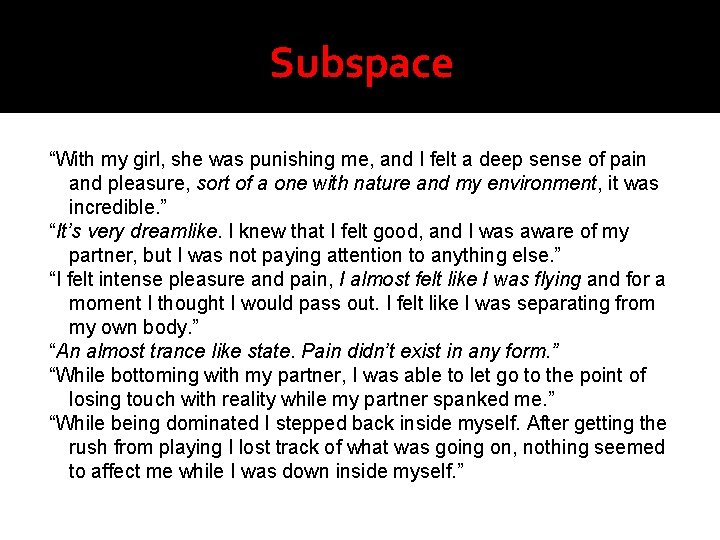
Subspace “With my girl, she was punishing me, and I felt a deep sense of pain and pleasure, sort of a one with nature and my environment, it was incredible. ” “It’s very dreamlike. I knew that I felt good, and I was aware of my partner, but I was not paying attention to anything else. ” “I felt intense pleasure and pain, I almost felt like I was flying and for a moment I thought I would pass out. I felt like I was separating from my own body. ” “An almost trance like state. Pain didn’t exist in any form. ” “While bottoming with my partner, I was able to let go to the point of losing touch with reality while my partner spanked me. ” “While being dominated I stepped back inside myself. After getting the rush from playing I lost track of what was going on, nothing seemed to affect me while I was down inside myself. ”

The Stroop Test

Read the word

Green

Red

Blue

Yellow

Name the color

XXXXX

XXXXX

XXXXX

XXXXX

Read the word

Yellow

Green

Blue

Red

Name the color

Green

Red

Yellow

Blue
Correlation does not imply causation!
An experiment to test the causal effects of topping and bottoming Recruited switches willing to be randomly assigned to the top or bottom role Friday, March 29 th, 2013 at the Arizona Power Exchange (APEX) With generous support from:
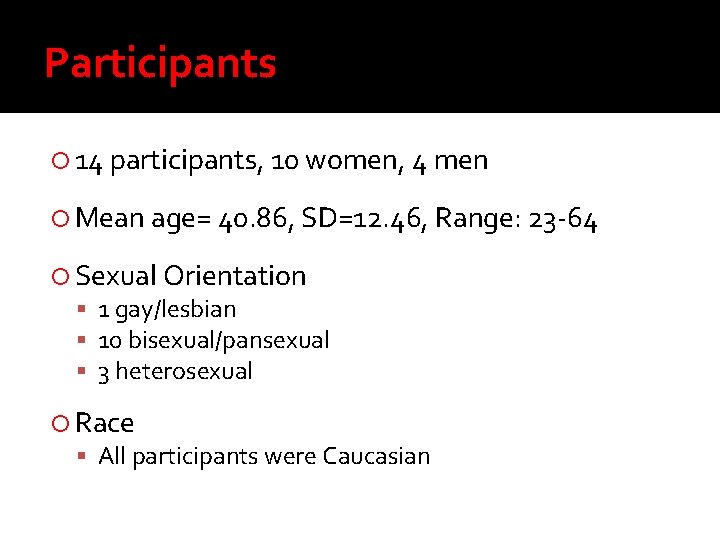
Participants 14 participants, 10 women, 4 men Mean age= 40. 86, SD=12. 46, Range: 23 -64 Sexual Orientation 1 gay/lesbian 10 bisexual/pansexual 3 heterosexual Race All participants were Caucasian
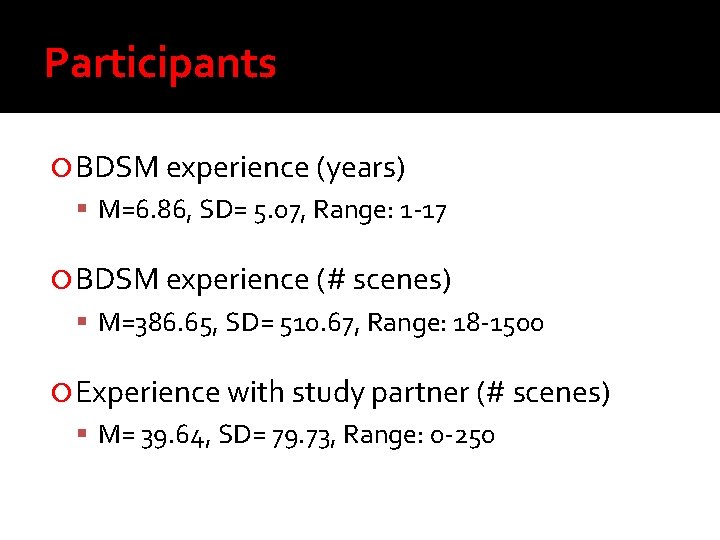
Participants BDSM experience (years) M=6. 86, SD= 5. 07, Range: 1 -17 BDSM experience (# scenes) M=386. 65, SD= 510. 67, Range: 18 -1500 Experience with study partner (# scenes) M= 39. 64, SD= 79. 73, Range: 0 -250
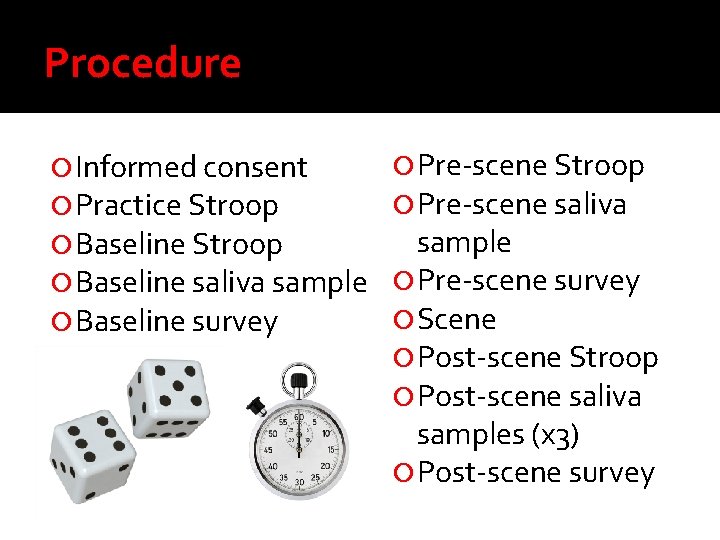
Procedure Informed consent Practice Stroop Baseline saliva sample Baseline survey Pre-scene Stroop Pre-scene saliva sample Pre-scene survey Scene Post-scene Stroop Post-scene saliva samples (x 3) Post-scene survey
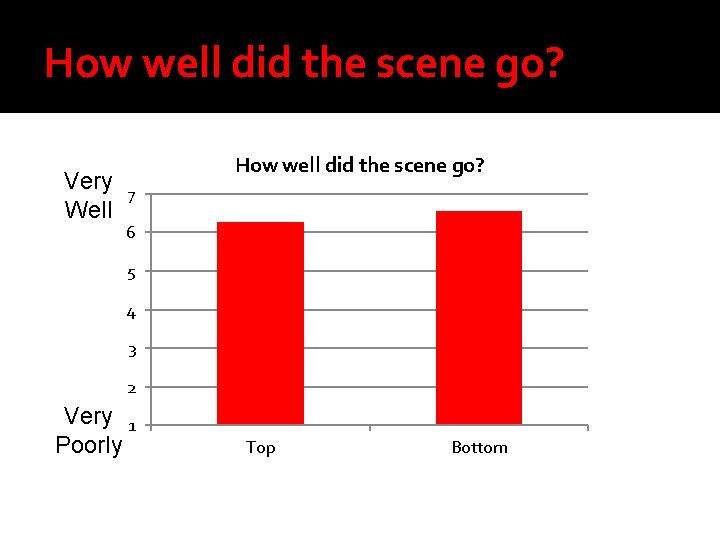
How well did the scene go? Very Well How well did the scene go? 7 6 5 4 3 2 Very 1 Poorly Top Bottom
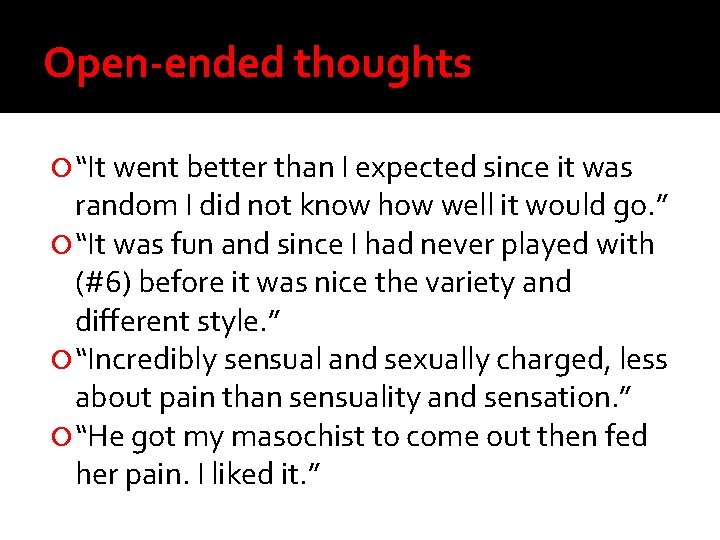
Open-ended thoughts “It went better than I expected since it was random I did not know how well it would go. ” “It was fun and since I had never played with (#6) before it was nice the variety and different style. ” “Incredibly sensual and sexually charged, less about pain than sensuality and sensation. ” “He got my masochist to come out then fed her pain. I liked it. ”
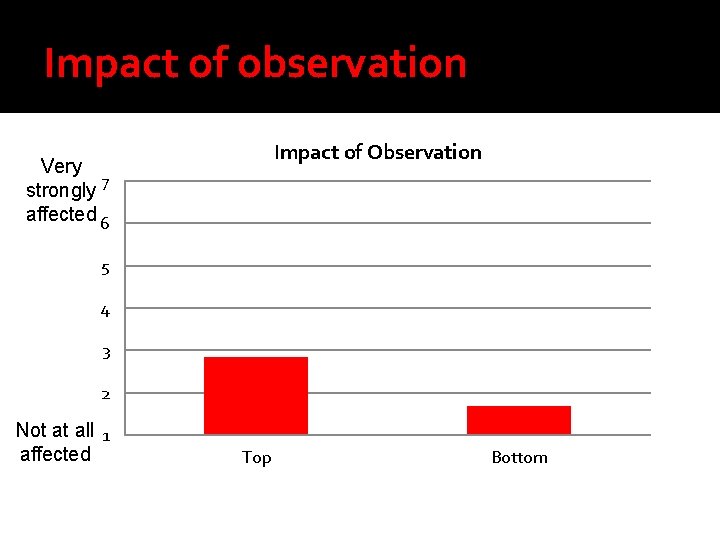
Impact of observation Impact of Observation Very 7 strongly affected 6 5 4 3 2 Not at all 1 affected Top Bottom
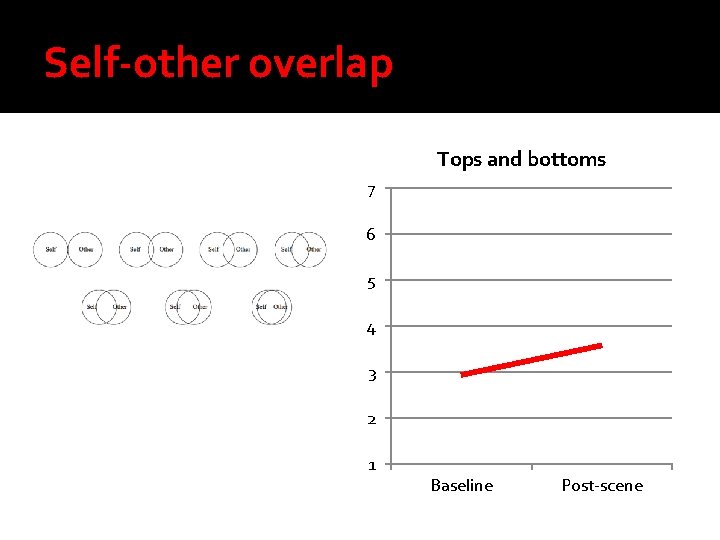
Self-other overlap Tops and bottoms 7 6 5 4 3 2 1 Baseline Post-scene
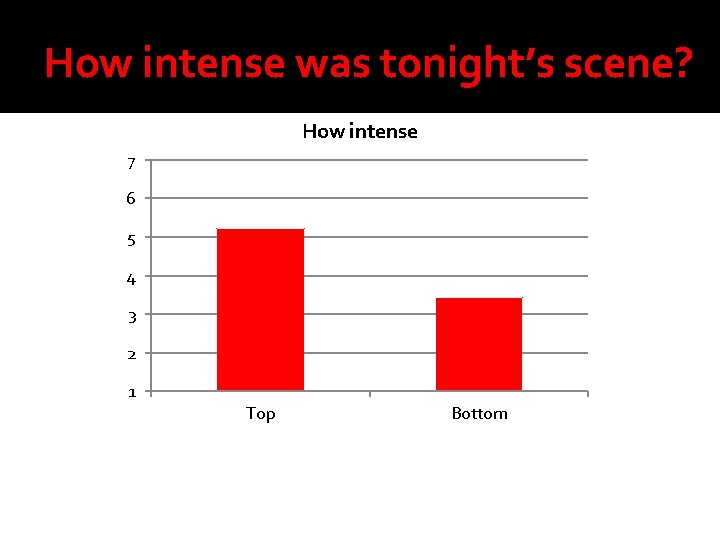
How intense was tonight’s scene? How intense 7 6 5 4 3 2 1 Top Bottom
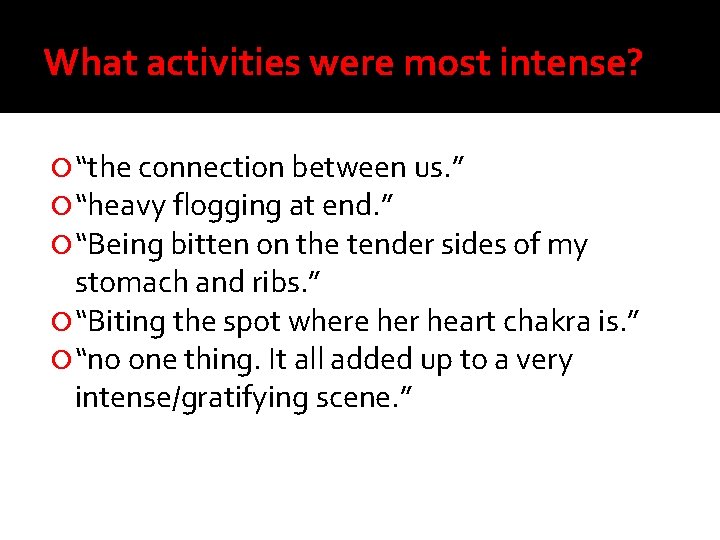
What activities were most intense? “the connection between us. ” “heavy flogging at end. ” “Being bitten on the tender sides of my stomach and ribs. ” “Biting the spot where her heart chakra is. ” “no one thing. It all added up to a very intense/gratifying scene. ”
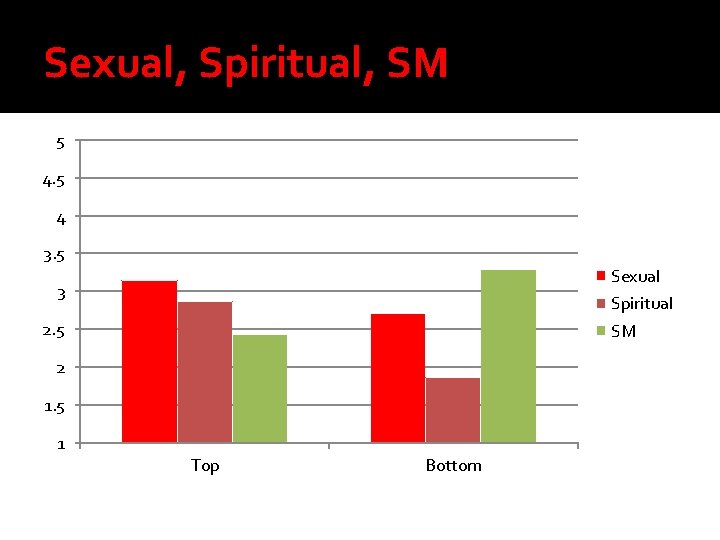
Sexual, Spiritual, SM 5 4 3. 5 Sexual 3 Spiritual 2. 5 SM 2 1. 5 1 Top Bottom
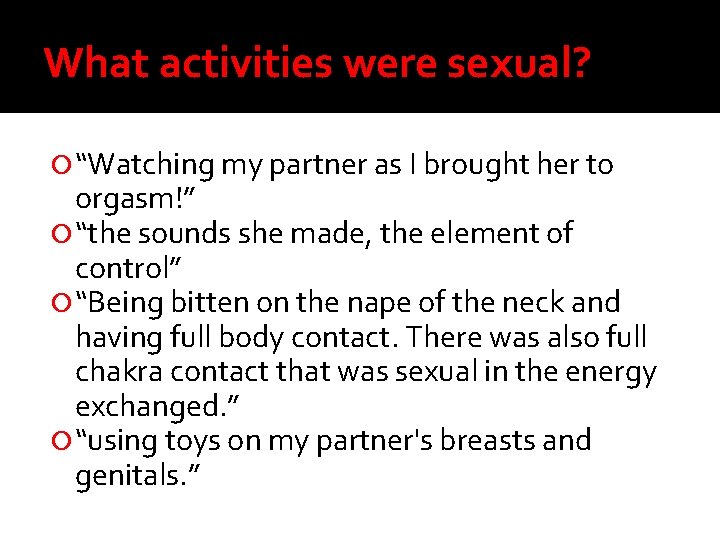
What activities were sexual? “Watching my partner as I brought her to orgasm!” “the sounds she made, the element of control” “Being bitten on the nape of the neck and having full body contact. There was also full chakra contact that was sexual in the energy exchanged. ” “using toys on my partner's breasts and genitals. ”
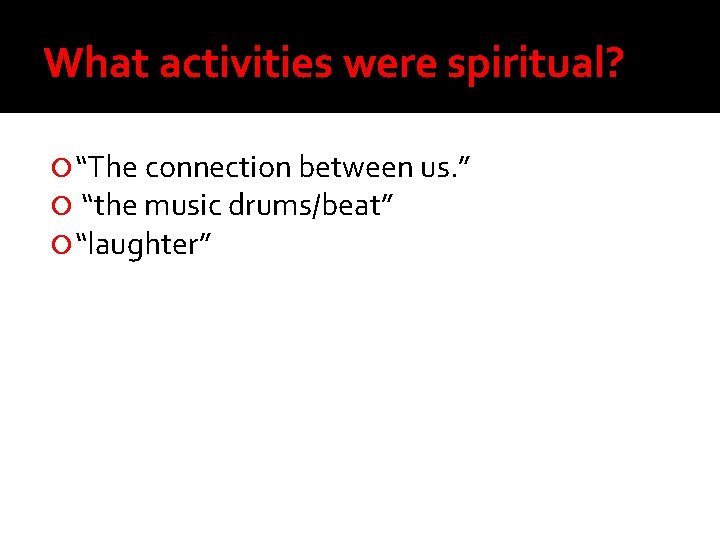
What activities were spiritual? “The connection between us. ” “the music drums/beat” “laughter”
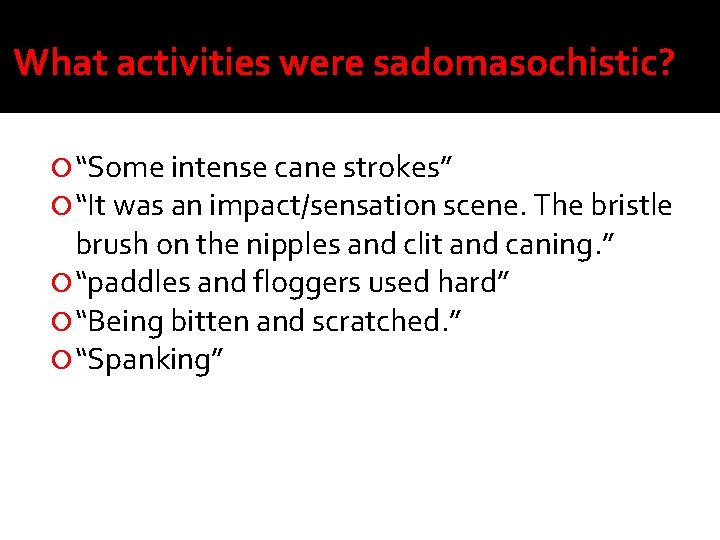
What activities were sadomasochistic? “Some intense cane strokes” “It was an impact/sensation scene. The bristle brush on the nipples and clit and caning. ” “paddles and floggers used hard” “Being bitten and scratched. ” “Spanking”
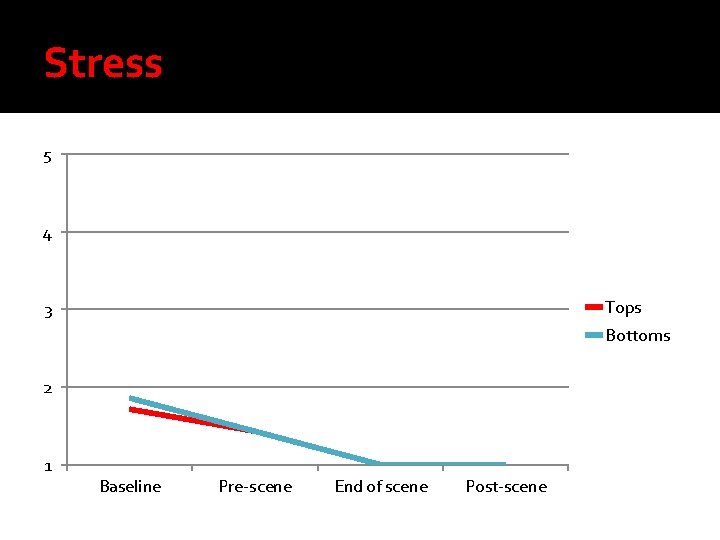
Stress 5 4 Tops 3 Bottoms 2 1 Baseline Pre-scene End of scene Post-scene
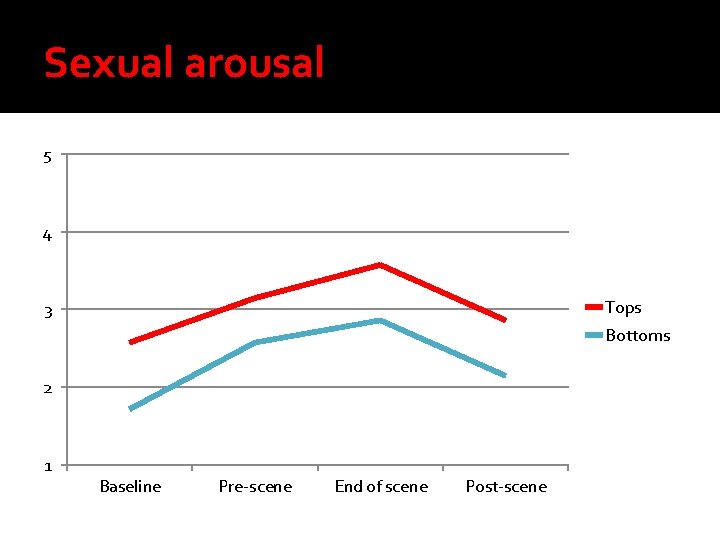
Sexual arousal 5 4 Tops 3 Bottoms 2 1 Baseline Pre-scene End of scene Post-scene
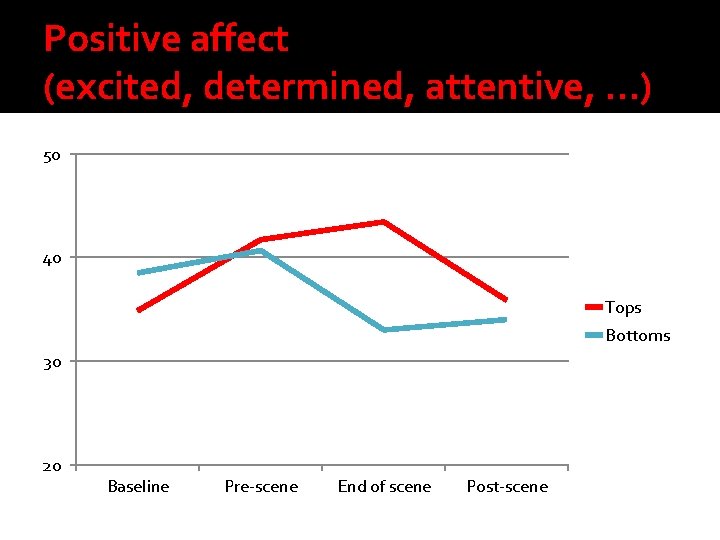
Positive affect (excited, determined, attentive, …) 50 40 Tops Bottoms 30 20 Baseline Pre-scene End of scene Post-scene
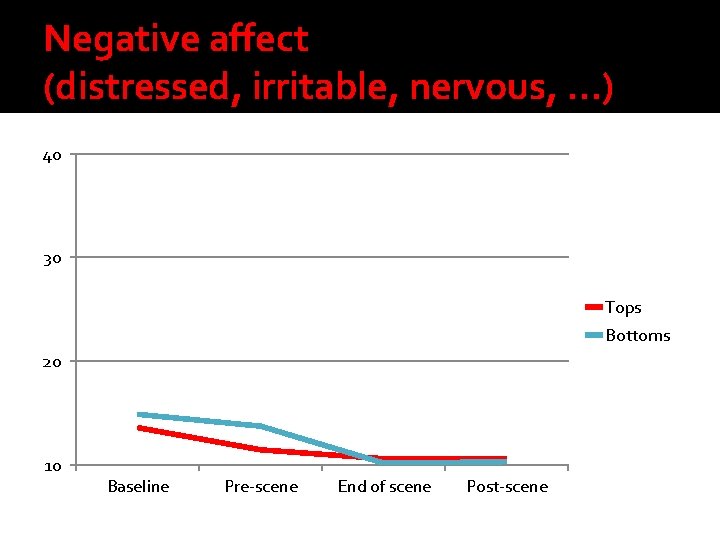
Negative affect (distressed, irritable, nervous, …) 40 30 Tops Bottoms 20 10 Baseline Pre-scene End of scene Post-scene
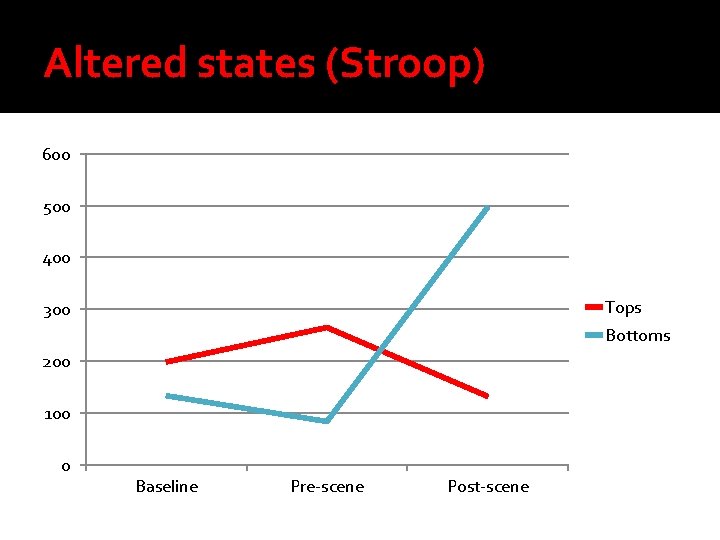
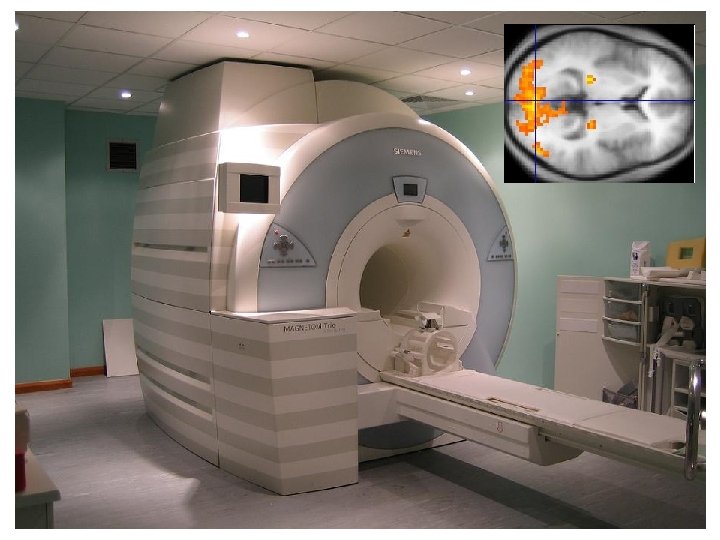
Altered states (Stroop) 600 500 400 Tops 300 Bottoms 200 100 0 Baseline Pre-scene Post-scene
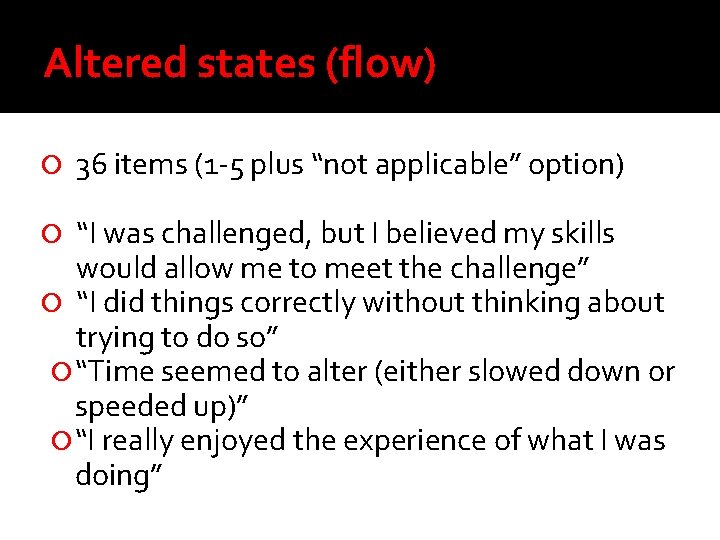
Altered states (flow) 36 items (1 -5 plus “not applicable” option) “I was challenged, but I believed my skills would allow me to meet the challenge” “I did things correctly without thinking about trying to do so” “Time seemed to alter (either slowed down or speeded up)” “I really enjoyed the experience of what I was doing”
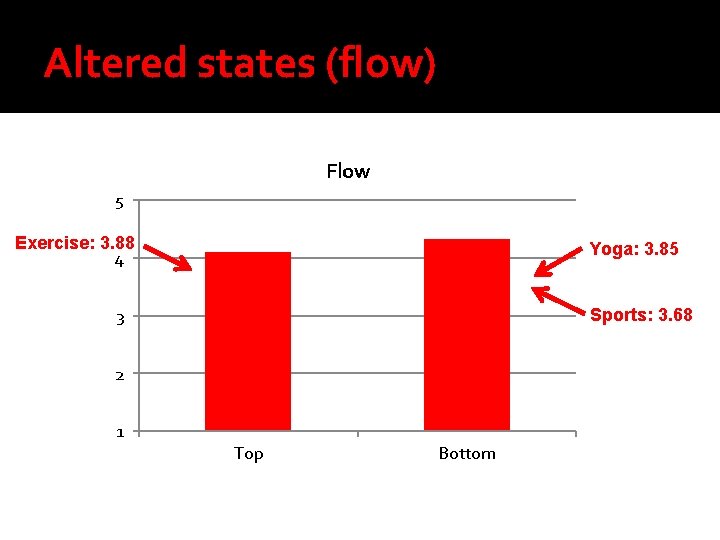
Altered states (flow) Flow 5 Exercise: 3. 88 4 Yoga: 3. 85 3 Sports: 3. 68 2 1 Top Bottom
Conclusions Incredible community support for research Participants volunteered for more intrusion! SM activities Increase intimacy Decrease stress and negative affect Increase then decrease sexual arousal and positive affect Facilitate flow
Topping and bottoming caused Different perceptions of scenes Tops: Sexual > Spiritual > SM Bottoms: SM > Sexual > Spiritual Different perceptions of scene intensity Tops saw scenes as more intense than did bottoms Altered states Objective evidence of altered states of consciousness in bottoms
Future directions
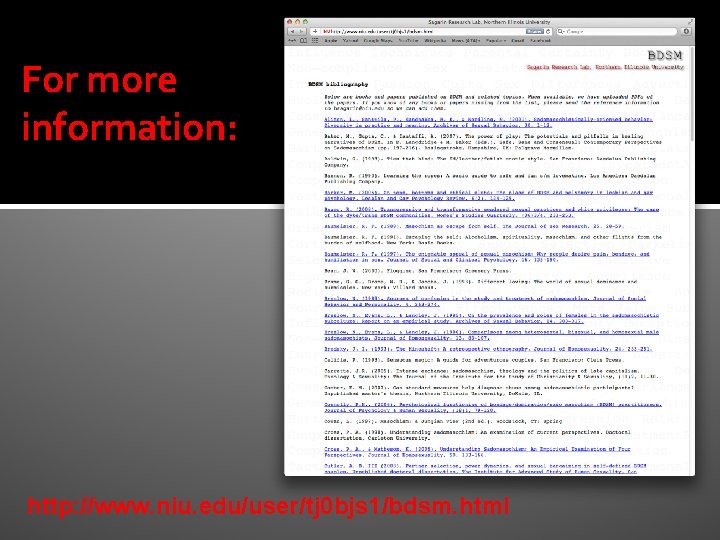
For more information: http: //www. niu. edu/user/tj 0 bjs 1/bdsm. html
Thank you http: //www. niu. edu/user/tj 0 bjs 1/bdsm. html Brad Sagarin <bsagarin@niu. edu>
- Slides: 79