
The Science of Physics n Physics is a

- Slides: 25
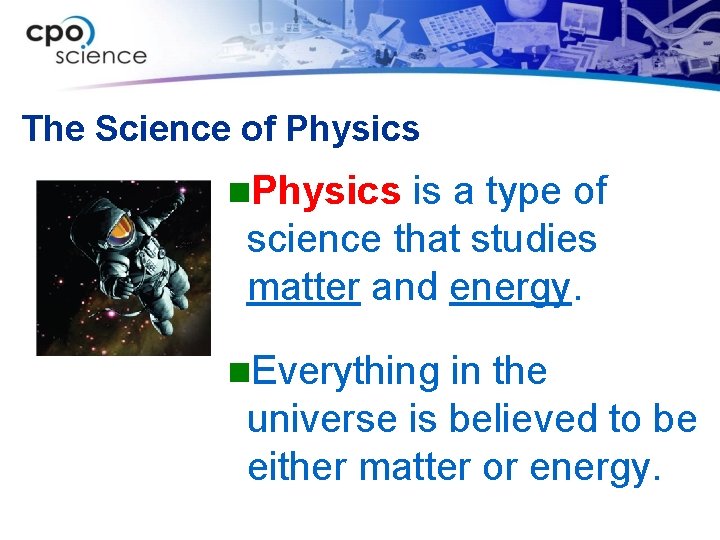
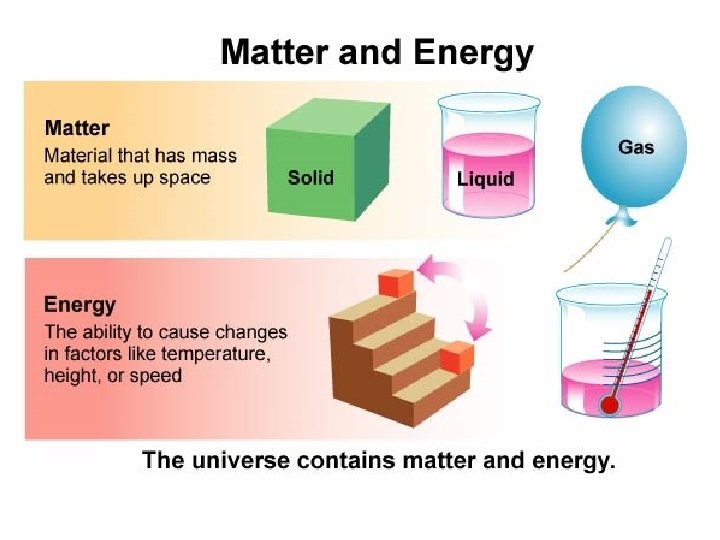
The Science of Physics n. Physics is a type of science that studies matter and energy. n. Everything in the universe is believed to be either matter or energy.
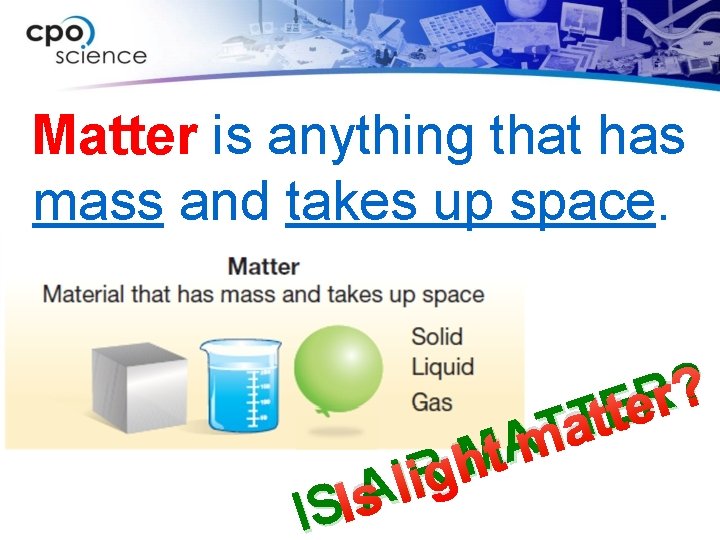
Matter is anything that has mass and takes up space. ? r R e E t t T a T m A t M h g R i I l A s I S I
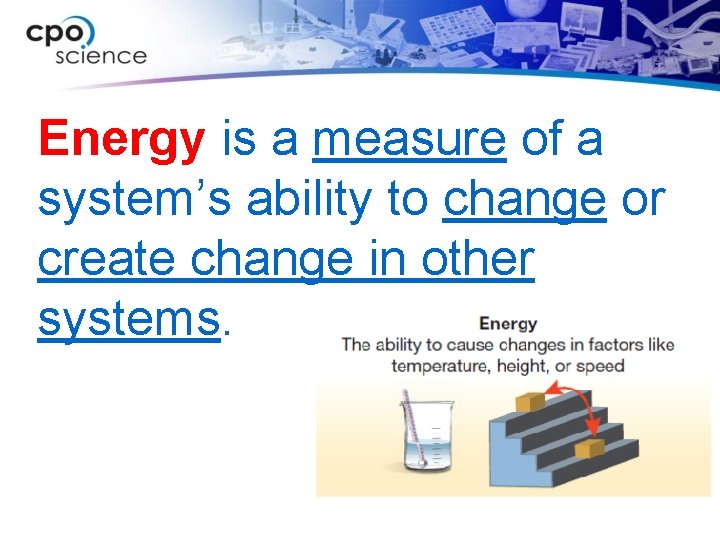
Energy is a measure of a system’s ability to change or create change in other systems.
n. A natural law is a rule that describes an action or set of actions in the universe. n“For every action, there is an equal and opposite reaction” is an example of a natural law. n. Some haven’t been discovered yet!
n. A variable is a factor that affects the behavior of a system. n. To figure out how a system works, you have to look for relationships between the important variables of a system.
n. A system is a set of objects, effects, or variables that are related. n. To figure out how a system works, you have to look for relationships between the important variables of a system.
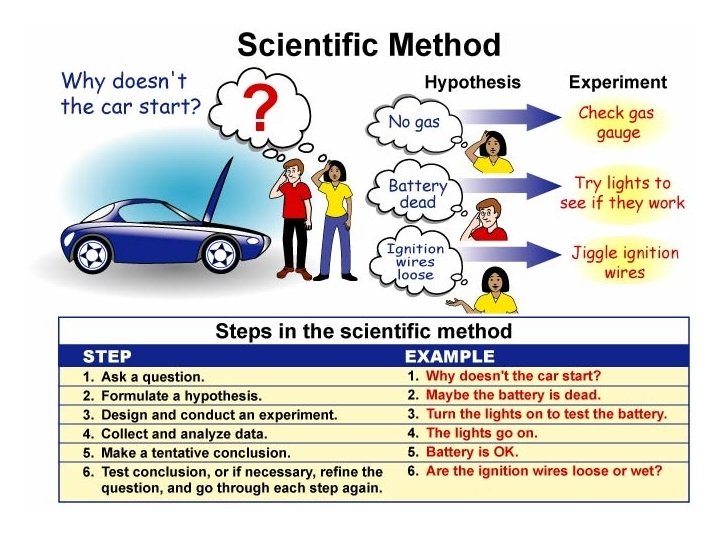
Scientific Method
n Scientists use the “scientific method” as a dependable way to learn and gather information. n Some key parts of the scientific method include…
1. the hypothesis – an “educated guess” based on observations – a testable statement that tries to explain a set of scientific observations. 2. the experiment - a situation set up to test whether a hypothesis is true or not.
n. Any hypothesis that is considered to be correct based on observations and experiments becomes a theory. n. We keep collecting new and different evidence through experiments. n What is another word for evidence? D_ _ _ n. Even one single piece of evidence that does not agree with a theory will force scientists to return to the first step.
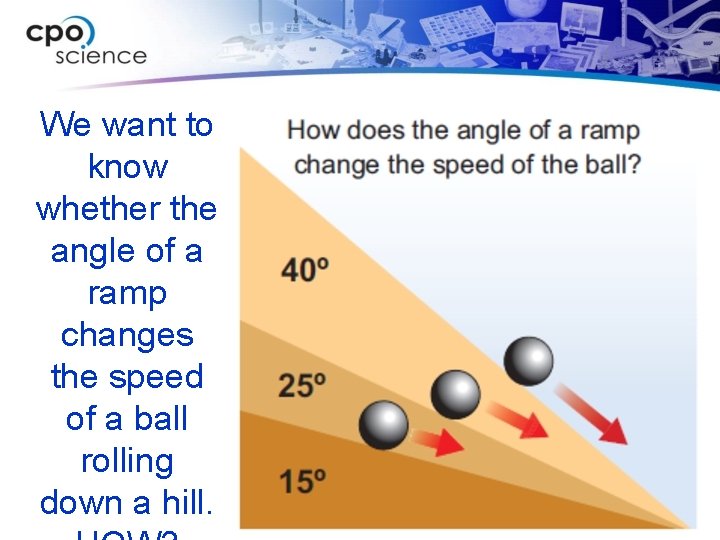
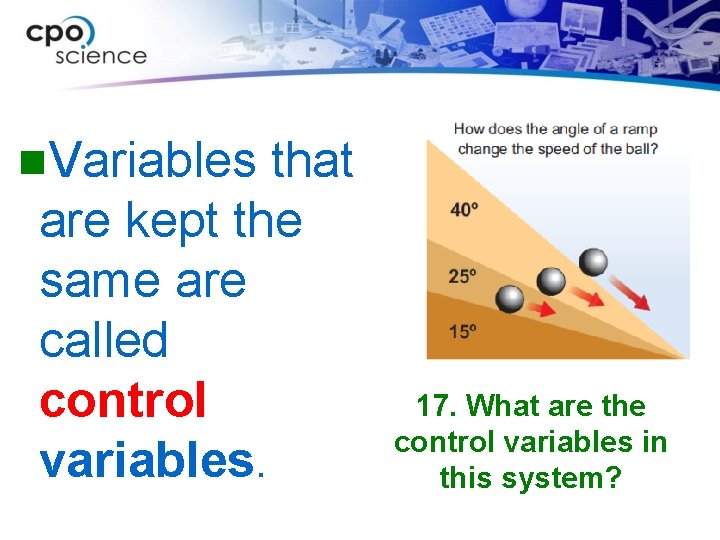
We want to know whether the angle of a ramp changes the speed of a ball rolling down a hill.
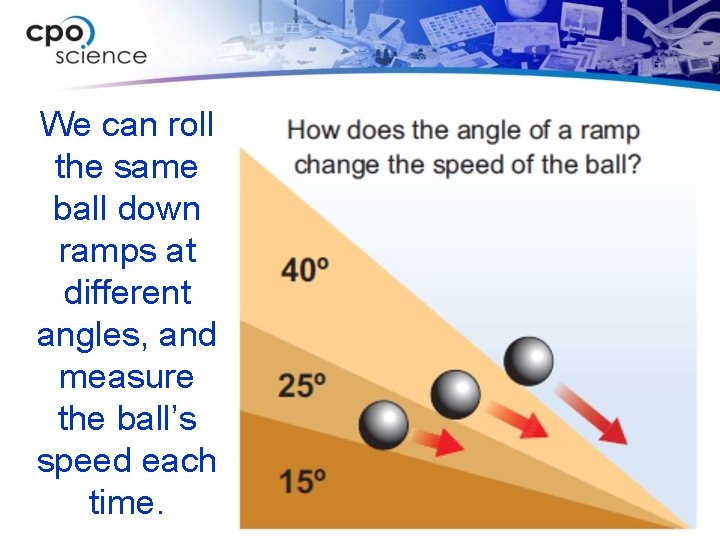
We can roll the same ball down ramps at different angles, and measure the ball’s speed each time.
Investigation systems The variable that the scientist changes is called the independent variable. n n. In this experiment, the angle of the ramp is the independent variable. The scientist changes it.
n The variable that the scientist measures as an outcome is called the dependent variable. n. In this experiment, the speed of the ball is the dependent variable. n. Speed depends on the angle of the ramp – that’s why we say speed is dependent.
Investigation systems In an experiment, you can change only one variable at a time. n n. You keep all of the other variables the same.
n. Variables that are kept the same are called control variables. 17. What are the control variables in this system?
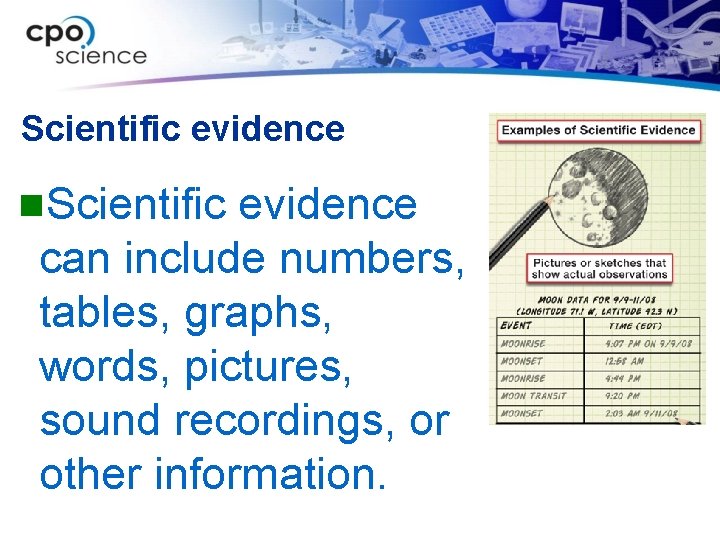
Scientific evidence n. Scientific evidence can include numbers, tables, graphs, words, pictures, sound recordings, or other information.
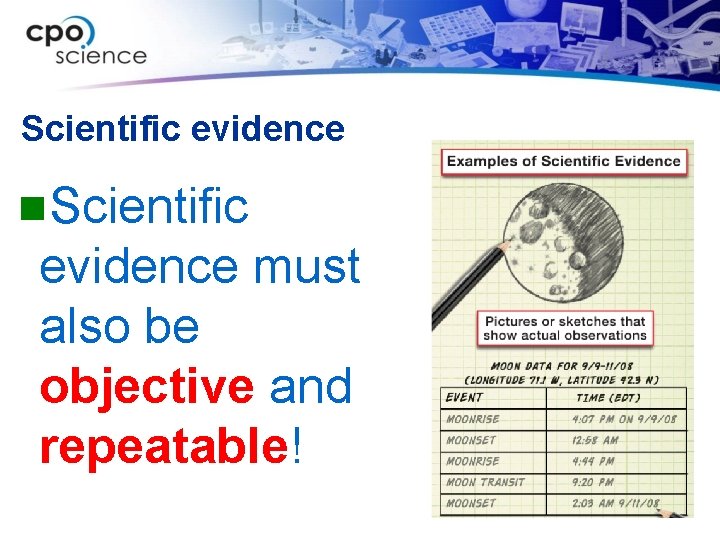
Scientific evidence n. Scientific evidence must also be objective and repeatable!
Scientific theories n. It is very important to be able to distinguish between pseudoscience and science. npseudo “fake” means “false” or
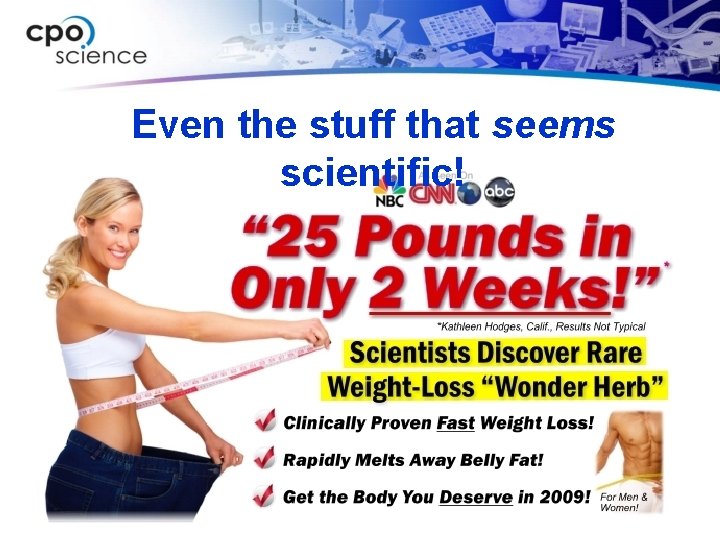
You can’t believe all of the “science” you find on the Internet…
Even the stuff that seems scientific!