
The Science of Evil On Empathy and the

- Slides: 17
The Science of Evil On Empathy and the Origins of Cruelty Simon Baron-Cohen Professor, Developmental Psychopathology Departments of Experimental Psychology and Psychiatry University of Cambridge
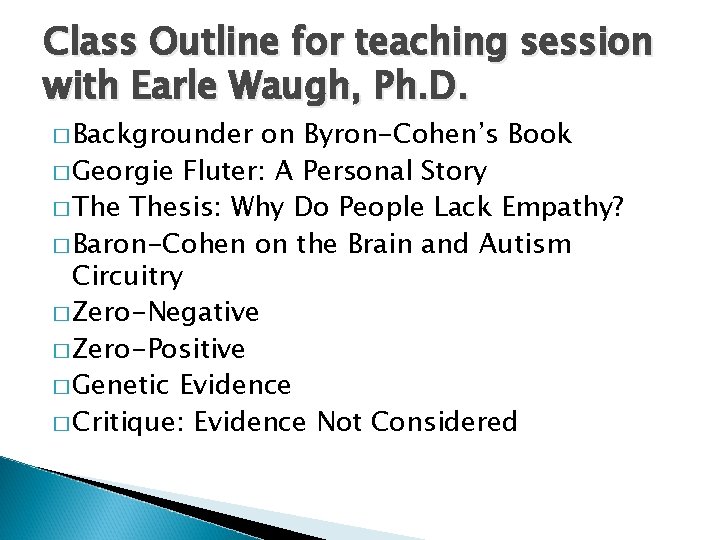
Class Outline for teaching session with Earle Waugh, Ph. D. � Backgrounder on Byron-Cohen’s Book � Georgie Fluter: A Personal Story � Thesis: Why Do People Lack Empathy? � Baron-Cohen on the Brain and Autism Circuitry � Zero-Negative � Zero-Positive � Genetic Evidence � Critique: Evidence Not Considered
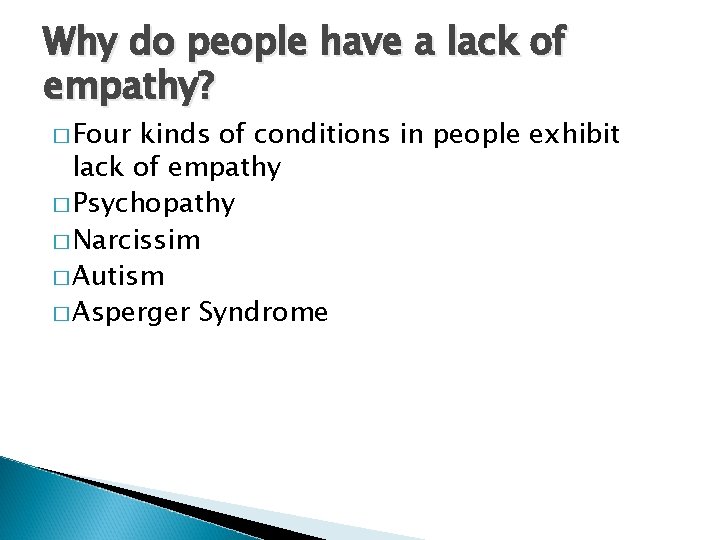
Why do people have a lack of empathy? � Four kinds of conditions in people exhibit lack of empathy � Psychopathy � Narcissim � Autism � Asperger Syndrome
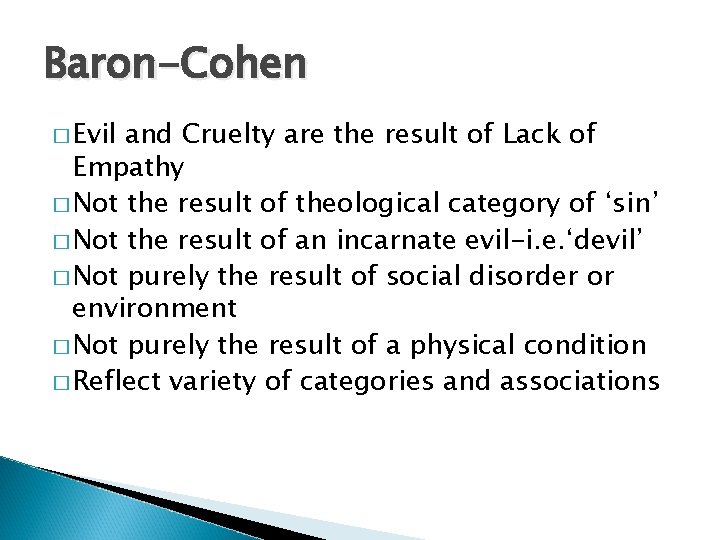
Baron-Cohen � Evil and Cruelty are the result of Lack of Empathy � Not the result of theological category of ‘sin’ � Not the result of an incarnate evil-i. e. ‘devil’ � Not purely the result of social disorder or environment � Not purely the result of a physical condition � Reflect variety of categories and associations
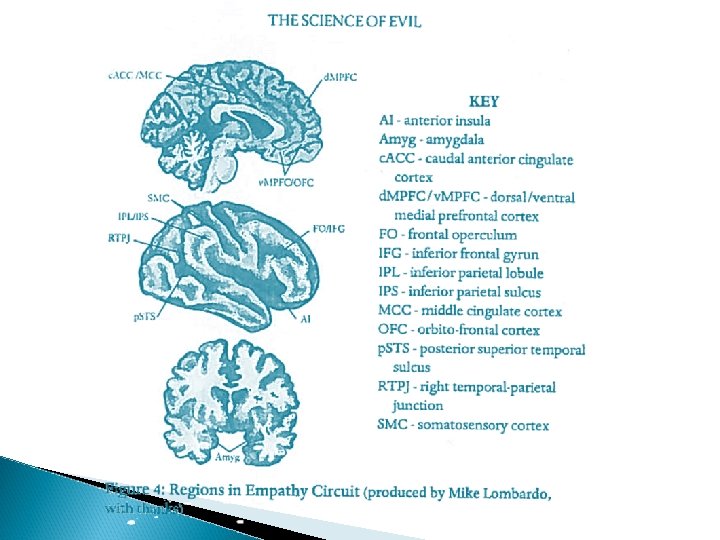
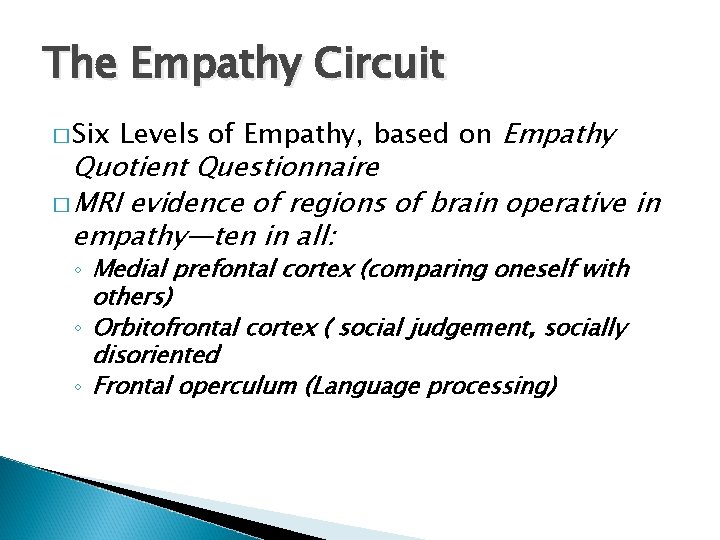
The Empathy Circuit � Six Levels of Empathy, based on Empathy Quotient Questionnaire � MRI evidence of regions of brain operative in empathy—ten in all: ◦ Medial prefontal cortex (comparing oneself with others) ◦ Orbitofrontal cortex ( social judgement, socially disoriented ◦ Frontal operculum (Language processing)
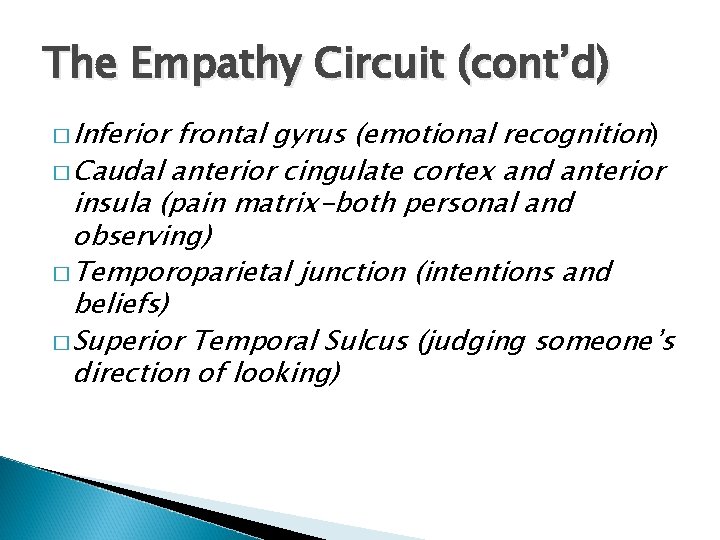
The Empathy Circuit (cont’d) � Inferior frontal gyrus (emotional recognition) � Caudal anterior cingulate cortex and anterior insula (pain matrix-both personal and observing) � Temporoparietal junction (intentions and beliefs) � Superior Temporal Sulcus (judging someone’s direction of looking)
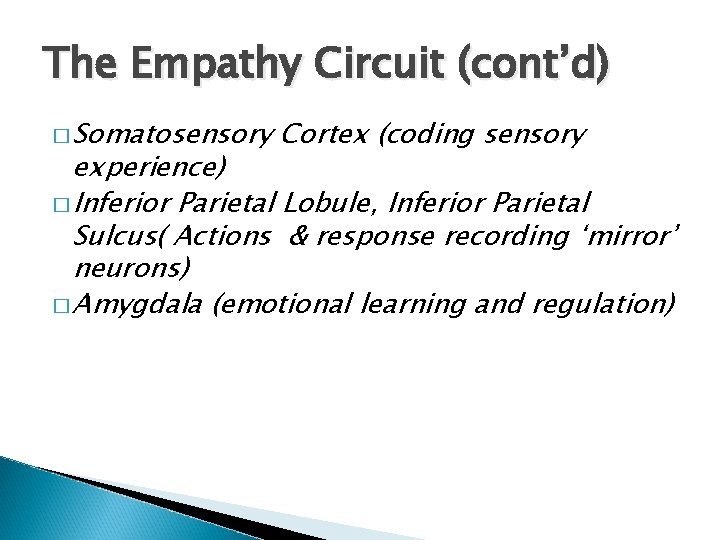
The Empathy Circuit (cont’d) � Somatosensory Cortex (coding sensory experience) � Inferior Parietal Lobule, Inferior Parietal Sulcus( Actions & response recording ‘mirror’ neurons) � Amygdala (emotional learning and regulation)
Zero-Negative (Nothing Positive to Recommend) Personality Disorder Borderline: Type BExtreme saying destructive things to others (Marilyn Monroe) Psychopath: Type P- Total detachment from other’s feelings. . . cold, calculating, completely selfish Narcissistic: Type N- Total entitlement of self, ‘using’ others, discarding those ‘useless’
Zero-Positive � Asperger Syndrome (Avoidance of the social, loneliness, patterning obsession) � Autism (Underactivity in Empathy, without words for emotions, systemitizers to the extreme, innovators)
Genetic Evidence � Aggressiveness Gene: MAOA-H ‘Warrior Gene’ � Emotional Recognition: 1. Serotonin transporter (SLC 6 A 4) 2. Arginine Vasopressin Receptor (AVPR 1 A) Autism-linked, fear and anger) � Empathy Gene (Several Genes involved)
CRITIQUE: BROADER RANGE OF Evidence? � Can you develop empathy? � If you have none are you necessarily bad? � Can a state be empathetic (i. e. Ban the death penalty)? � Can one be super-empathetic to the point of being dangerous?
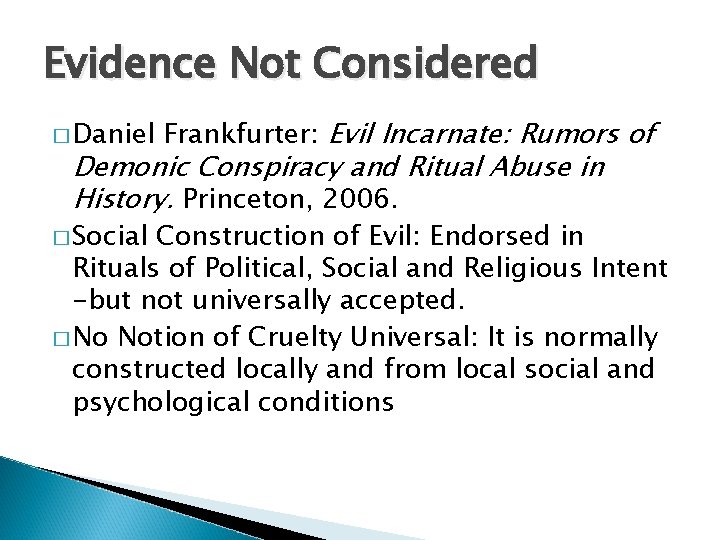
Evidence Not Considered � Daniel Frankfurter: Evil Incarnate: Rumors of Demonic Conspiracy and Ritual Abuse in History. Princeton, 2006. � Social Construction of Evil: Endorsed in Rituals of Political, Social and Religious Intent -but not universally accepted. � No Notion of Cruelty Universal: It is normally constructed locally and from local social and psychological conditions
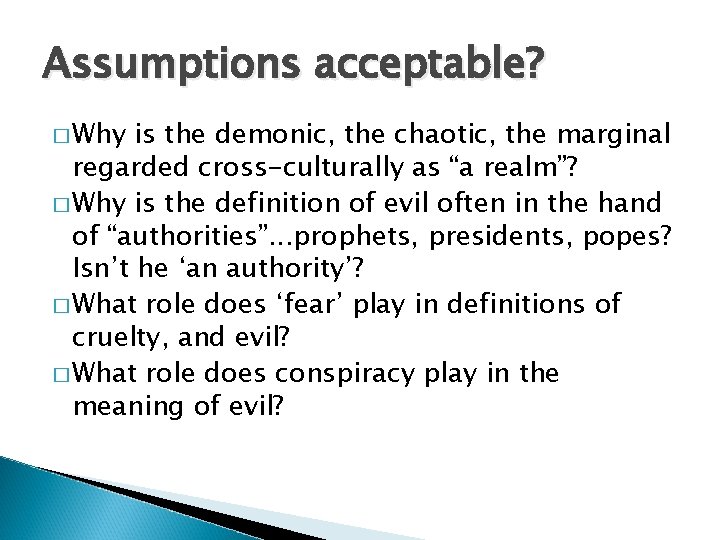
Assumptions acceptable? � Why is the demonic, the chaotic, the marginal regarded cross-culturally as “a realm”? � Why is the definition of evil often in the hand of “authorities”. . . prophets, presidents, popes? Isn’t he ‘an authority’? � What role does ‘fear’ play in definitions of cruelty, and evil? � What role does conspiracy play in the meaning of evil?
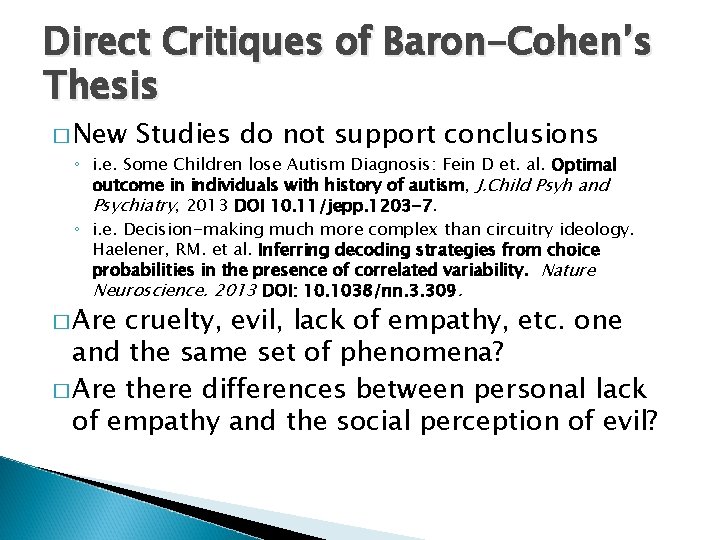
Direct Critiques of Baron-Cohen’s Thesis � New Studies do not support conclusions ◦ i. e. Some Children lose Autism Diagnosis: Fein D et. al. Optimal outcome in individuals with history of autism, J. Child Psyh and Psychiatry, 2013 DOI 10. 11/jepp. 1203 -7. ◦ i. e. Decision-making much more complex than circuitry ideology. Haelener, RM. et al. Inferring decoding strategies from choice probabilities in the presence of correlated variability. Nature Neuroscience. 2013 DOI: 10. 1038/nn. 3. 309. � Are cruelty, evil, lack of empathy, etc. one and the same set of phenomena? � Are there differences between personal lack of empathy and the social perception of evil?
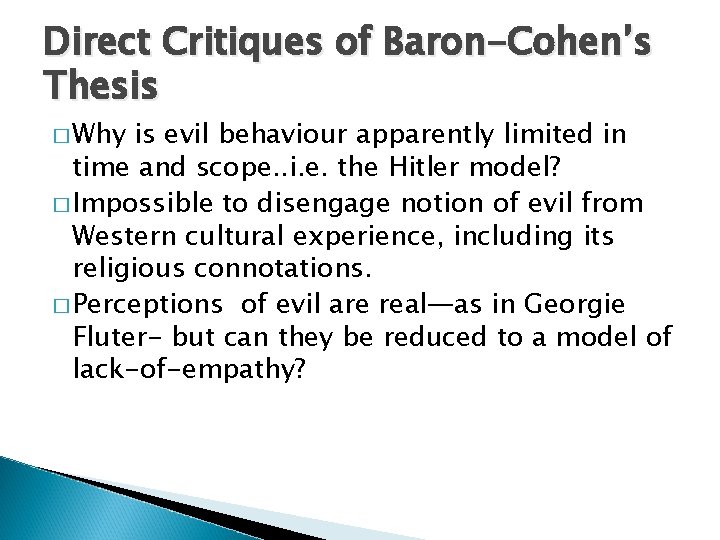
Direct Critiques of Baron-Cohen’s Thesis � Why is evil behaviour apparently limited in time and scope. . i. e. the Hitler model? � Impossible to disengage notion of evil from Western cultural experience, including its religious connotations. � Perceptions of evil are real—as in Georgie Fluter- but can they be reduced to a model of lack-of-empathy?
CONTACT INFORMATION Earle Waugh, Ph. D. Director, Centre for the Cross-Cultural Study of Health and Healing Department of Family Medicine University of Alberta earle. waugh@ualberta. ca 780 -492 -6424