
The Science of Death and Decay Time of




- Slides: 40
The Science of Death and Decay
Time of Death Can estimate time of death from • body temperature (algor mortis) estimate: [98. 6 o. F – rectal temp]/1. 5 • insect action (forensic entomology) • stomach contents (stage of digestion) • last known activity (last sighting, newspaper/mail) • normal postmortem changes
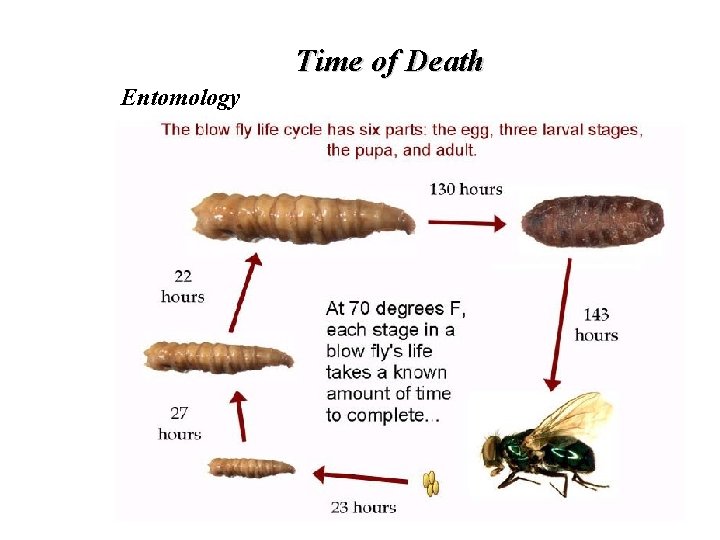
Time of Death Entomology
Time of Death Can estimate time of death from • body temperature (algor mortis) estimate: [98. 6 o. F – rectal temp]/1. 5 • insect action (forensic entomology) • stomach contents (stage of digestion) • last known activity (last sighting, newspaper/mail) • normal postmortem changes
Changes After Death • Decomposition • Why do we need to know: – Not to misinterpret these changes – Help to determine time (place) of death
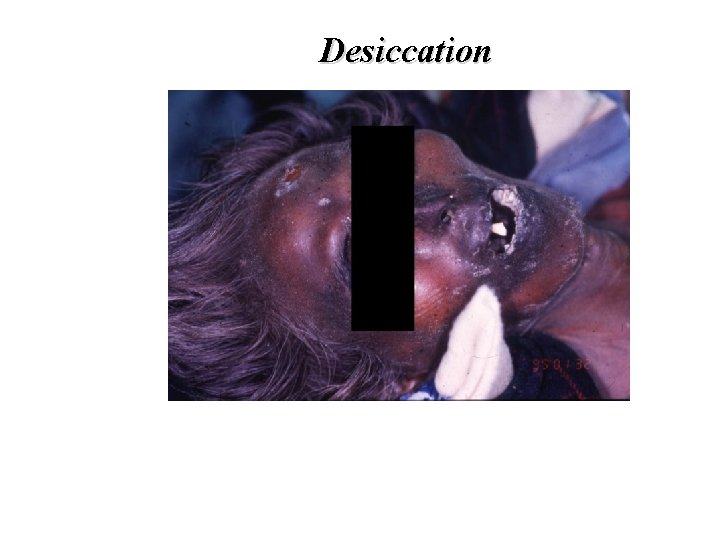
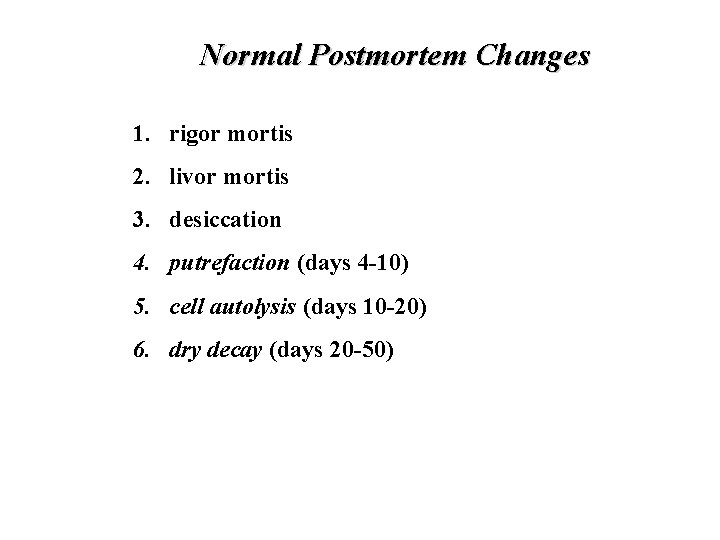
Normal Postmortem Changes 1. rigor mortis 2. livor mortis 3. desiccation 4. putrefaction 5. cell autolysis (also called butyric fermentation) 6. dry decay
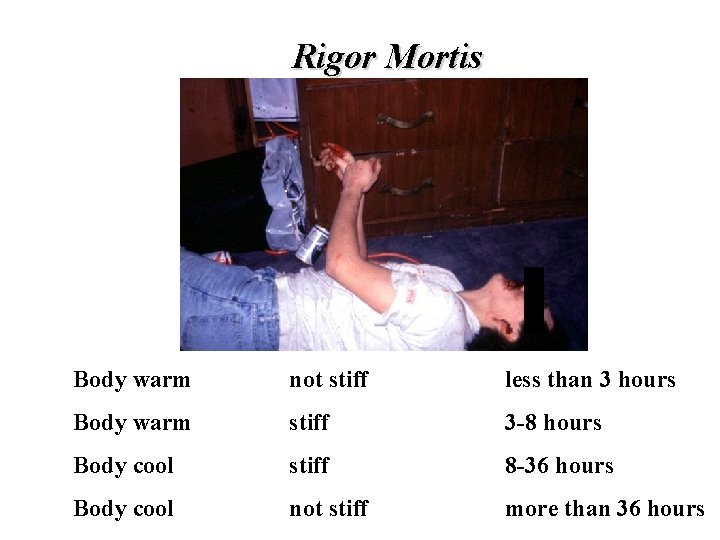
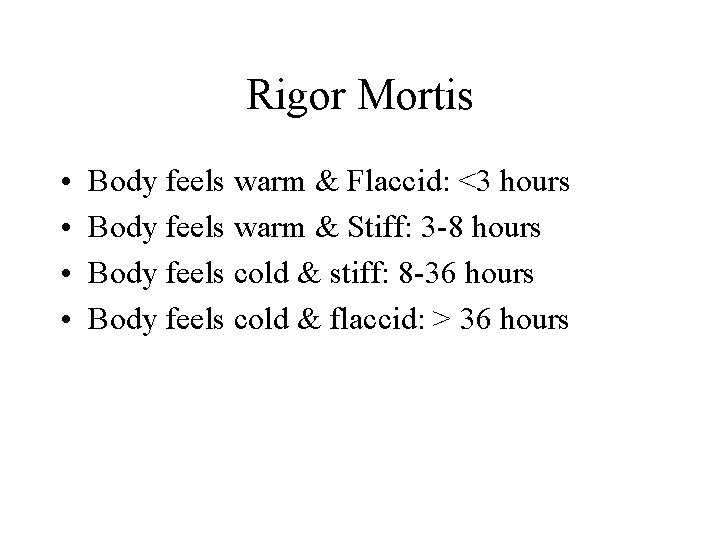
Rigor Mortis Body warm not stiff less than 3 hours Body warm stiff 3 -8 hours Body cool stiff 8 -36 hours Body cool not stiff more than 36 hours
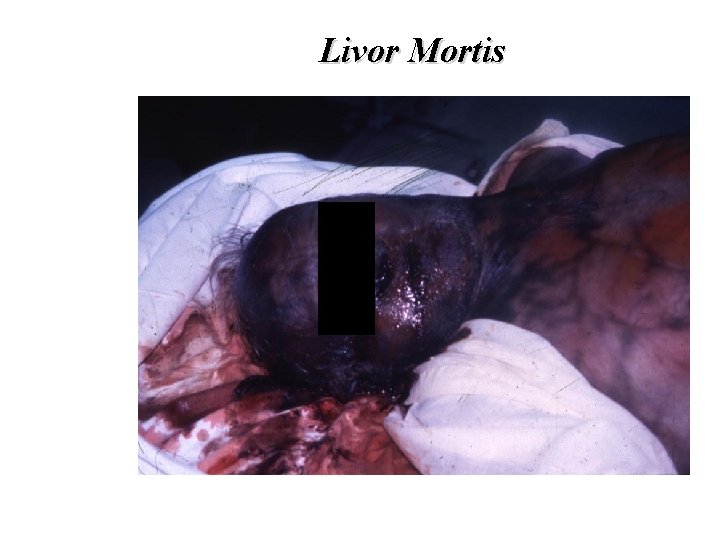
Livor Mortis
Desiccation
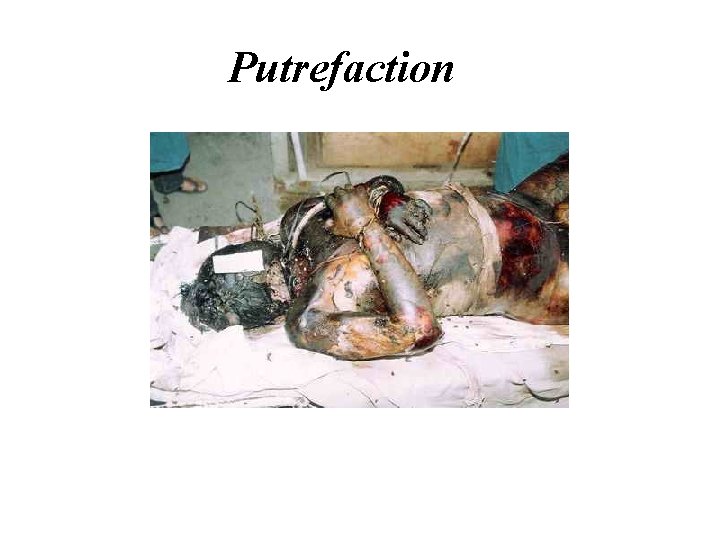
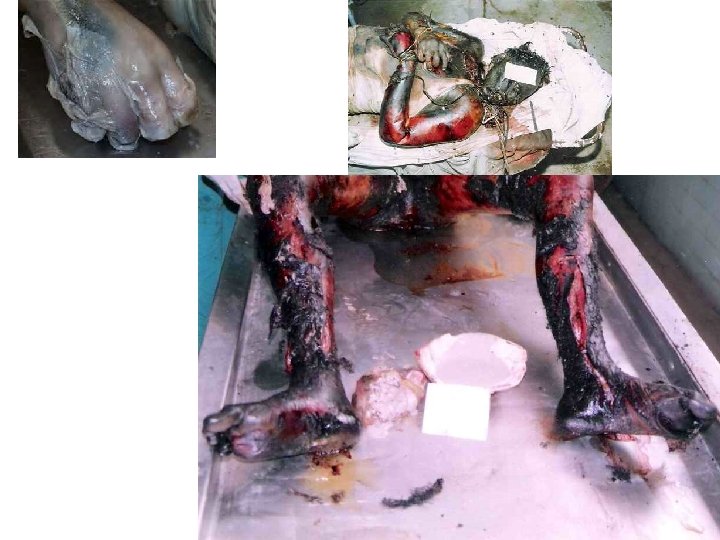
Putrefaction
Normal Postmortem Changes 1. rigor mortis 2. livor mortis 3. desiccation 4. putrefaction (days 4 -10) 5. cell autolysis (days 10 -20) 6. dry decay (days 20 -50)
Early Changes • • No breathing, no circulation Fall in blood pressure Metabolism gradually stops Loss of neoronal activity – No reflexes, no corneal reflex, fixed dilated pupils, eye looses the tension
Early Changes • Primary Flaccidity: complete loss of tone • Muscle may be still reactive for hours (focal twitching) • Pale skin and conjunctiva • Face may remain blue/red • ? ? Hair continues to grow • Loss of sphincter action: pass urine, semen, regurgitation of food
Rigor Mortis • Lack of oxygen – no energy – no ATP – glycolysis – lactic acid – acidic cytoplasm – actin and myocin bind • “Stiff Muscle” • Factors affects Rigor Mortis: – – Level of glycogen Level of lactic acid Body built Temperature, weather
Rigor Mortis • What is Rigor mortis like if death occurs after – exercise, – electric shock, – in infant, – in elderly – In summer – In winter
Rigor Mortis • Starts in small muscle around eyes and mouth, jaw, fingers, • Then spreads from head to legs • Estimated time of death: – – – In face: 1 -4 hours Limbs: 4 -6 hours Increase in strength for the next 6 -12 hours Decomposition starts Secondary flaccidity from 24 -50 hours
Rigor Mortis • • Body feels warm & Flaccid: <3 hours Body feels warm & Stiff: 3 -8 hours Body feels cold & stiff: 8 -36 hours Body feels cold & flaccid: > 36 hours
Cadaveric Rigidity • Forensic rarity • Stiffness of muscle occurring immediately at time of death – Finding items in hands – ? emotional/physical stress at death
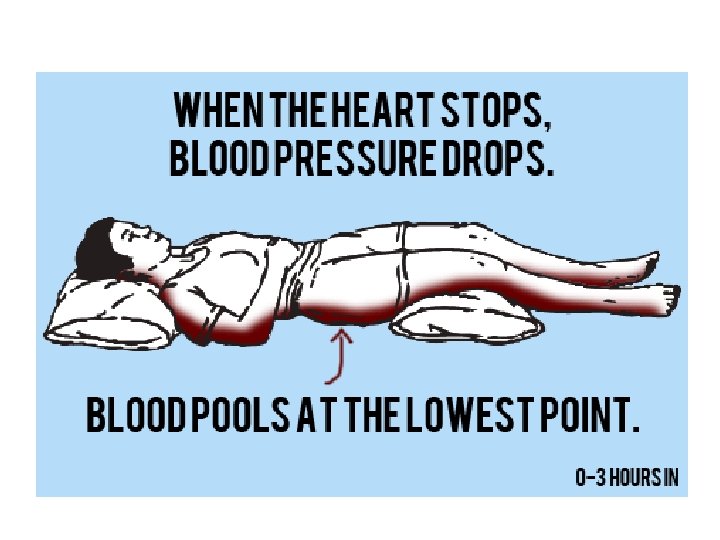
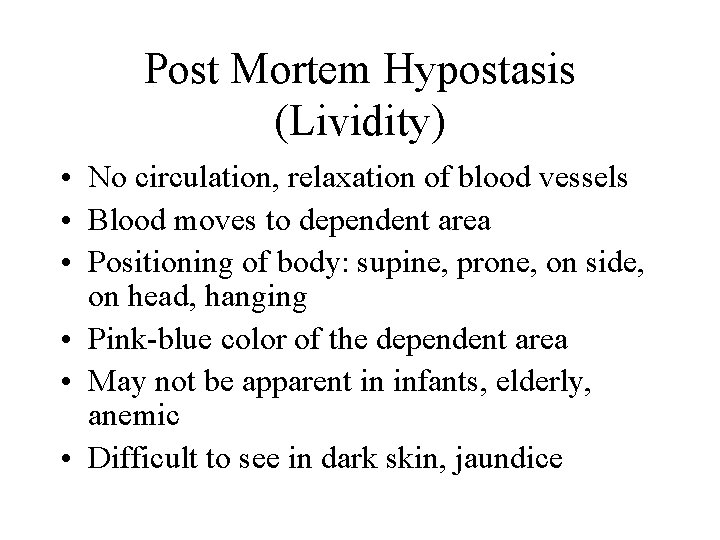
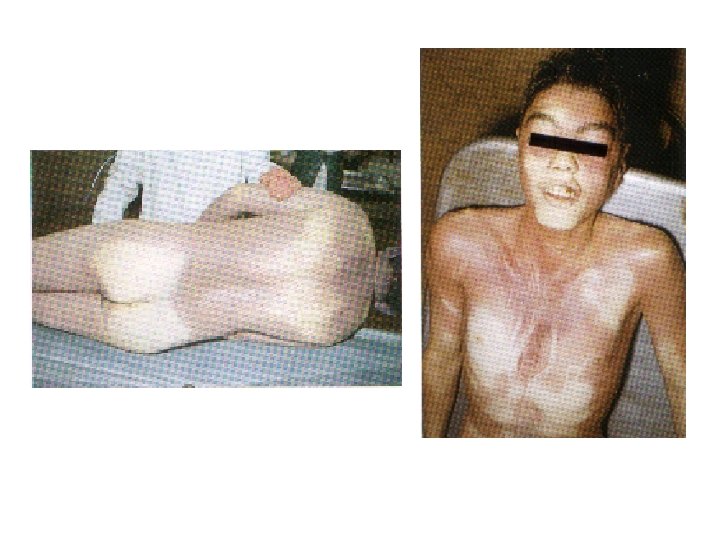
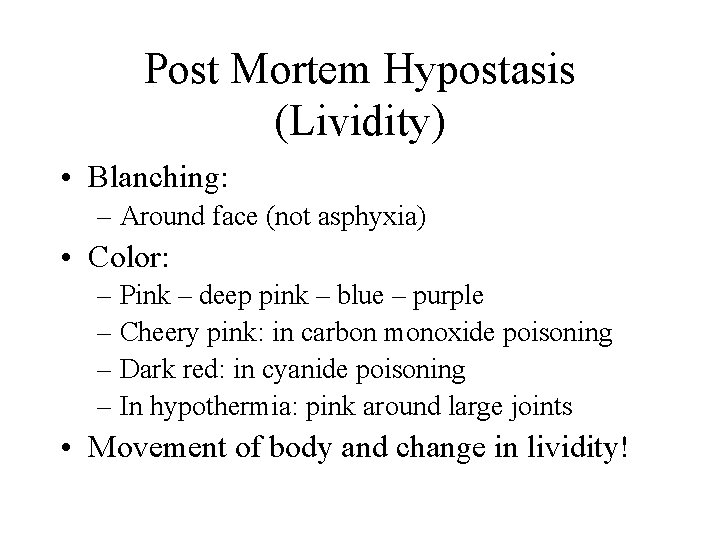
Post Mortem Hypostasis (Lividity) • No circulation, relaxation of blood vessels • Blood moves to dependent area • Positioning of body: supine, prone, on side, on head, hanging • Pink-blue color of the dependent area • May not be apparent in infants, elderly, anemic • Difficult to see in dark skin, jaundice
Post Mortem Hypostasis (Lividity) • Blanching: – Around face (not asphyxia) • Color: – Pink – deep pink – blue – purple – Cheery pink: in carbon monoxide poisoning – Dark red: in cyanide poisoning – In hypothermia: pink around large joints • Movement of body and change in lividity!
Cooling of the body after Death • Physical property • Assumptions: – Temperature was 37 at the time of death – Thermally static environment
Cooling of the body after Death • Variables: – – – – Mass of body Surface area Body temperature at death Site of reading Posture Clothing Environment temperature Winds, humidity, rain
Estimation of the time of Death • Body temperature – Rectal, ears, nose, liver – Henssge’s Nomogram • Body temperature • Ambient temperature • Body weight • Other methods – Gastric contents – Entomologist – Anthropologist
Decomposition • Air • Dry, wet • Water
Putrefaction • The most common route of decomposition • Liquifaction of the soft tissue over time • The warmer the temperature, the earlier the process
Putrefaction • Visible 3 -4 days • Green discoloration in the right iliac fossa • Marbling of skin: linear branching ptterns of brown discoloration of skin • Blistering, skin sloughs off • Gas formation, swelling of body: face, abdomen, breast, genitalia
Putrefaction • Increase internal pressure, protrusion of tongue, eyes, • Bloody fluids • Within a week: body cavity will burst • Tissue liquify
Mummification • Dry condition, eg. Dessert • Drying and leathery body • Part or whole body
Adipocere • Wet condition, water • Chemical change of body fat to waxy compound material • Pale, greasy semi fluid material, unpleasant smell • Firm waxy compound material: takes weeks to months to form
Skeletalization • More quickly to occur on the surface than in burried body • Soft tissue will be absent by 2 years • Tendon, ligaments, hair nails may remain • By 5 years bone disarticulate
Identification • Living: coma, amnesia, infancy, mental defect • Decomposed body • Following injury • Mass disasters
General Morphologic Features • • • Appearance Height, weight Hair color, length Beard, moustache Skin pigmentation Ethnic background • • • Eye color Clothing, jewellery Tatoo, surgical scars Injuries, deformities Age: – Estimation – Ossification center
Fingerprint • Chance of identical finger print is: 1 in 64 million • Identical twins •
Teeth • Identification of person • Age • Bite marks
Identification of origin of tissue • Why: – Blood, semen, saliva. . – Come from suspect for victem – Match of human remains – Resolve paternity/maternity
Identification of origin of tissue • DNA profiling: – Matching – Paternity, maternity – Sampling: • Nucleated cells: wbc, hair root bulb cells, sperms, buccal smear. .
Identification of origin of tissue • Human Remains – Are they human – Is it one or more bodies – Sex: skull, pelvis – Age • Up to 20 -25 years, age can be estimated within couple of years • >25 years more difficult to estimate