
The Science of Arson Investigation http kdrestoration comwpadminimagesFIre
- Slides: 14
The Science of Arson Investigation http: //kdrestoration. com/wp-admin/images/FIre. jpg
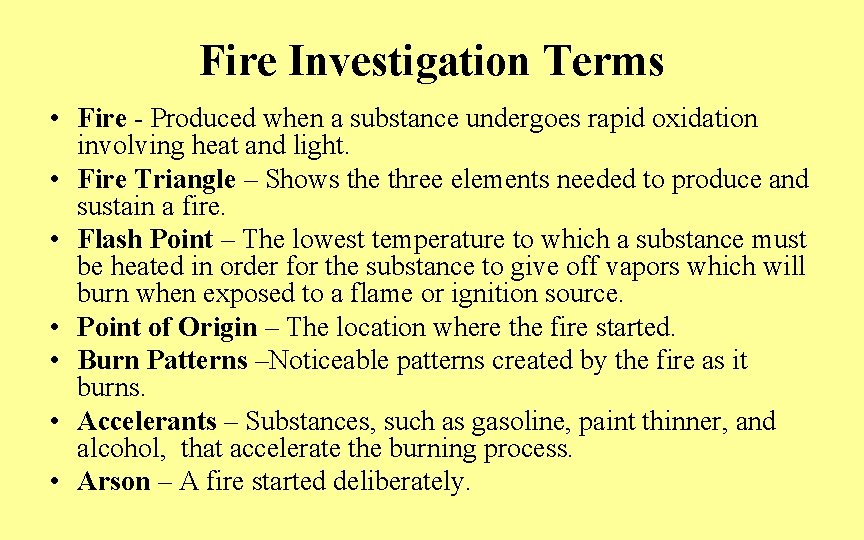
Fire Investigation Terms • Fire - Produced when a substance undergoes rapid oxidation involving heat and light. • Fire Triangle – Shows the three elements needed to produce and sustain a fire. • Flash Point – The lowest temperature to which a substance must be heated in order for the substance to give off vapors which will burn when exposed to a flame or ignition source. • Point of Origin – The location where the fire started. • Burn Patterns –Noticeable patterns created by the fire as it burns. • Accelerants – Substances, such as gasoline, paint thinner, and alcohol, that accelerate the burning process. • Arson – A fire started deliberately.
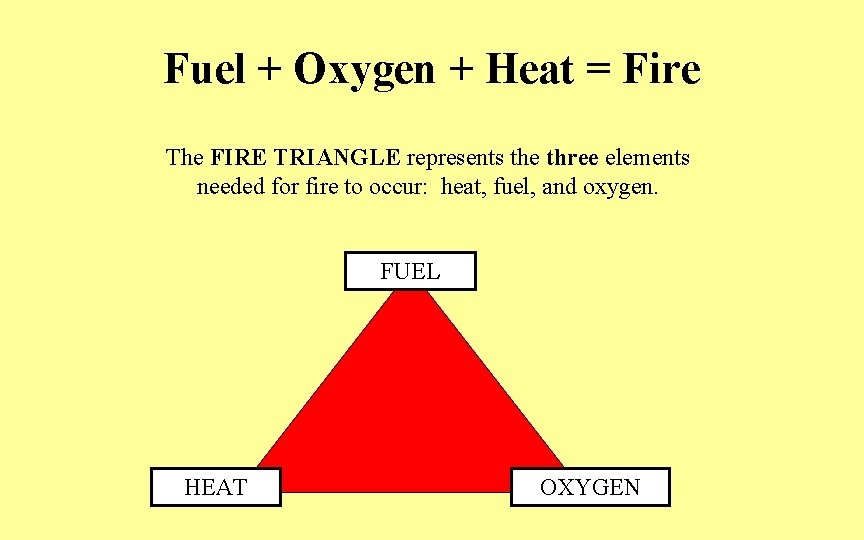
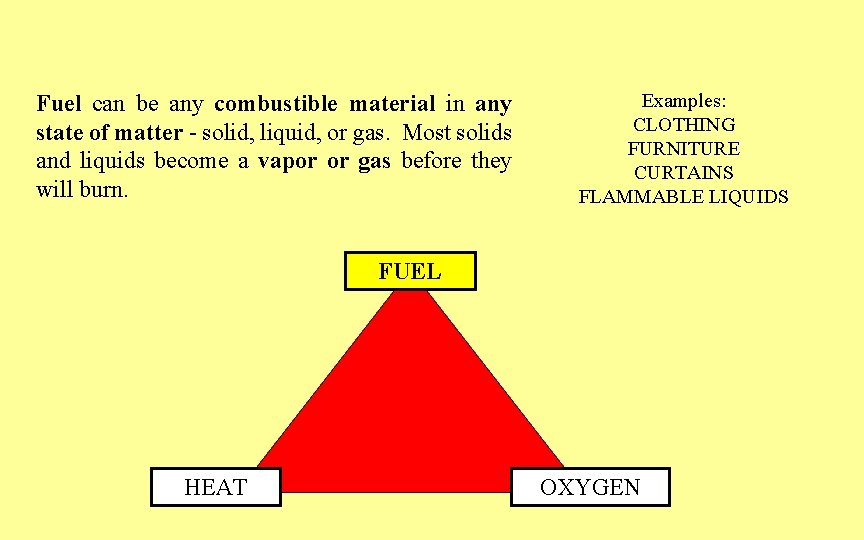
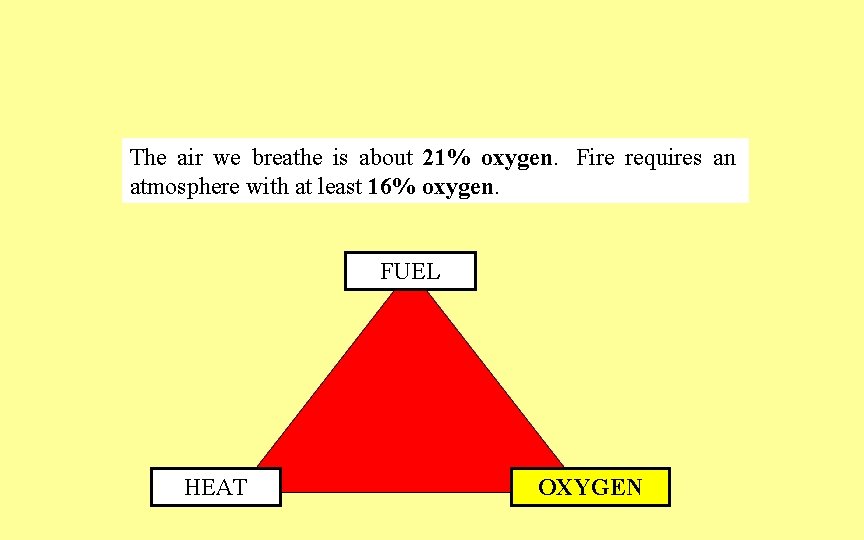
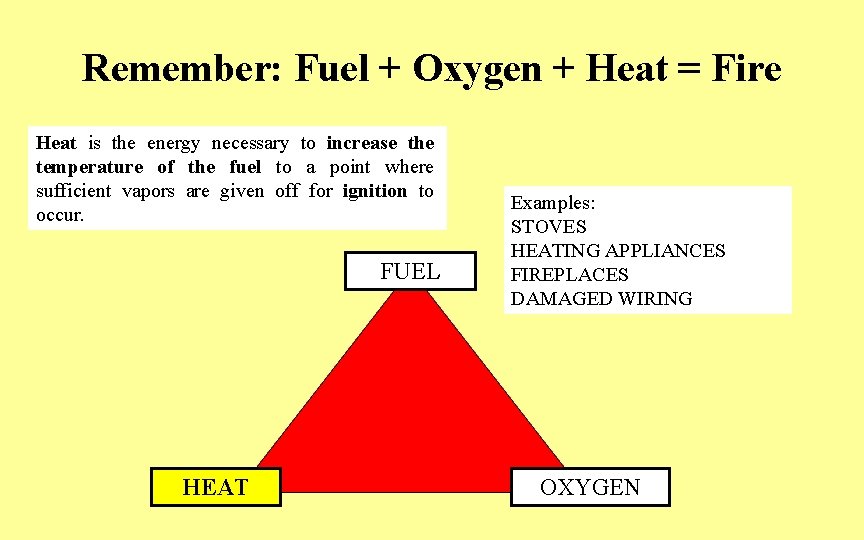
Fuel + Oxygen + Heat = Fire The FIRE TRIANGLE represents the three elements needed for fire to occur: heat, fuel, and oxygen. FUEL HEAT OXYGEN
Fuel can be any combustible material in any state of matter - solid, liquid, or gas. Most solids and liquids become a vapor or gas before they will burn. Examples: CLOTHING FURNITURE CURTAINS FLAMMABLE LIQUIDS FUEL HEAT OXYGEN
The air we breathe is about 21% oxygen. Fire requires an atmosphere with at least 16% oxygen. FUEL HEAT OXYGEN
Remember: Fuel + Oxygen + Heat = Fire Heat is the energy necessary to increase the temperature of the fuel to a point where sufficient vapors are given off for ignition to occur. FUEL HEAT Examples: STOVES HEATING APPLIANCES FIREPLACES DAMAGED WIRING OXYGEN
Fire Clues • Point of Origin – Burn patterns and other damage can help determine the point of origin, or the location where the fire started. • Char Patterns – Created by very hot fires that burn very quickly and move fast along its path, so that there can be sharp lines between what is burned and what isn't. – A char pattern on a door would help an investigator determine which side of the door the fire was on. – A char pattern on the floor would help investigators determine the use of an accelerant and its path. • V-Patterns - Fire burns up, in a V-shaped pattern, so a fire that starts at an outlet against a wall leaves a char pattern that points to the origin. – A very narrow V-shape might indicate a fire that was hotter than normal, such as one helped along by an accelerant. – A wide V-shape might indicate a fire that was slow burning. – A U-shape could indicate that there was a "pool of origin" rather than a point of origin, such as might be caused by, say, a puddle of gasoline.
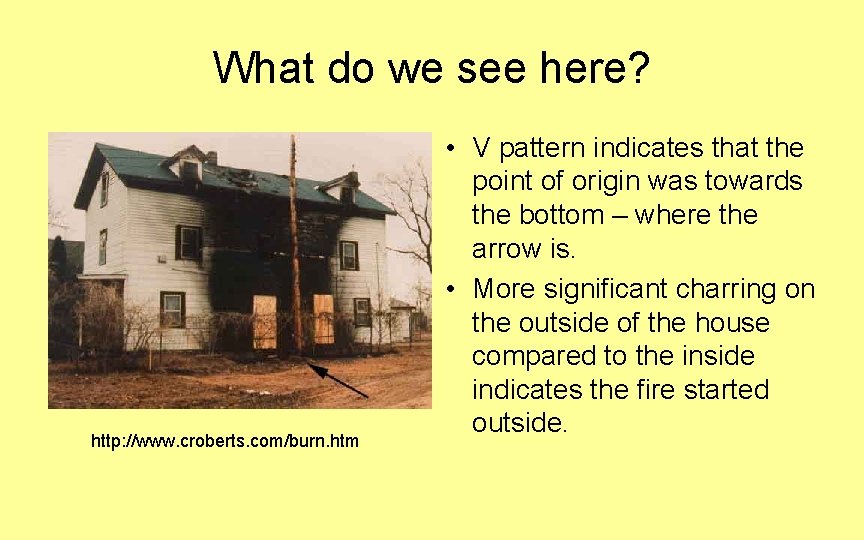
What do we see here? http: //www. croberts. com/burn. htm • V pattern indicates that the point of origin was towards the bottom – where the arrow is. • More significant charring on the outside of the house compared to the inside indicates the fire started outside.
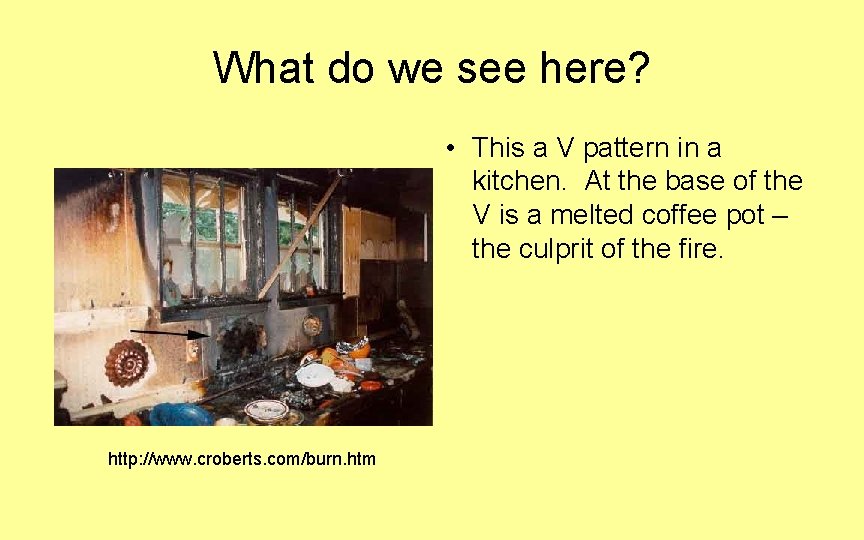
What do we see here? • This a V pattern in a kitchen. At the base of the V is a melted coffee pot – the culprit of the fire. http: //www. croberts. com/burn. htm
• Heat Shadows - Occur when heavy furniture shields part of a wall; can help determine the origin point. • Glass - Glass fragments, windows, and light bulbs can provide clues to a fire. – Light bulbs tend to melt toward the heat source, so the "direction of melt" can indicate the direction of the fire. – The shattered or cracked glass of the windows can provide indications as to how a fire burned. – A dark soot layer on the glass could indicate a slow, smoldering fire. – Clear glass with an abnormal pattern of cracking could imply a very hot fire, possibly due to an accelerant. • Chimney Effect - Since fire burns upwards, there can be a "chimney effect" where the fire ignites at a point, the superheated gases rise upward and form a fireball, which continues straight up to burn a hole in the ceiling. If the roof is not entirely burnt, and the fire investigator finds such a hole, the origin of the fire could be directly underneath. • Color of smoke – Determine what type material was burning • Color of flames – Indicates at what temperature the fire was burning.
Fire Investigation Basics • Work from the least damaged areas to the most heavily damaged areas. • Document with notes, photographs, and videos. • Collect evidence (accelerant samples, fire items, and other crime scene evidence. ) • Interview witnesses • Determine the point of origin. • Determine the heat source(s). • Hypothesize the reasons for the fire. http: //www. stickershoppe. com/mm 5/graphics/00000003/827 -
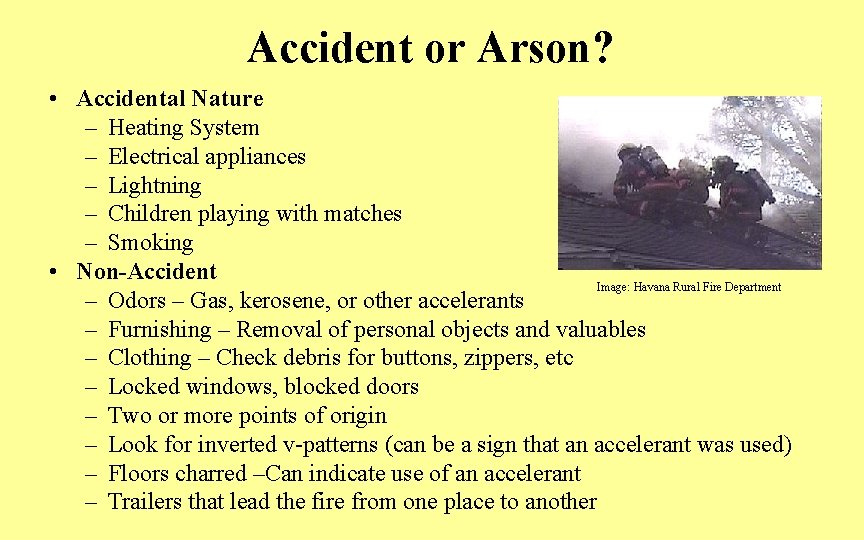
Accident or Arson? • Accidental Nature – Heating System – Electrical appliances – Lightning – Children playing with matches – Smoking • Non-Accident Image: Havana Rural Fire Department – Odors – Gas, kerosene, or other accelerants – Furnishing – Removal of personal objects and valuables – Clothing – Check debris for buttons, zippers, etc – Locked windows, blocked doors – Two or more points of origin – Look for inverted v-patterns (can be a sign that an accelerant was used) – Floors charred –Can indicate use of an accelerant – Trailers that lead the fire from one place to another
What are Common Motives for Arson? • Crime concealment: To conceal another crime such as murder, burglary, or vehicle. • Revenge or spite: To get back at someone for a perceived injustice. • Monetary Gain: Arson-for-Profit fires are set to burn a building, vehicle, or some other object in order to gain profit from the fire. The profit may come in several forms; from insurance coverage on the property, or from putting a competitor out of business. • Malicious Vandalism: Fire set to someone’s property, just to destroy it. Malicious vandalism fires account for the largest percentage of arson fires. These fires are frequently set by juveniles. • Mentally Disturbed: Some persons have been found to have an irresistible impulse to set fires. Source: http: //www. state. il. us/osfm/Arson. Is. AFelony. Crime. htm