
The Schrdinger Equation WeiLi Chen 12072015 Wave Equation






- Slides: 50
The Schrödinger Equation Wei-Li Chen 12/07/2015
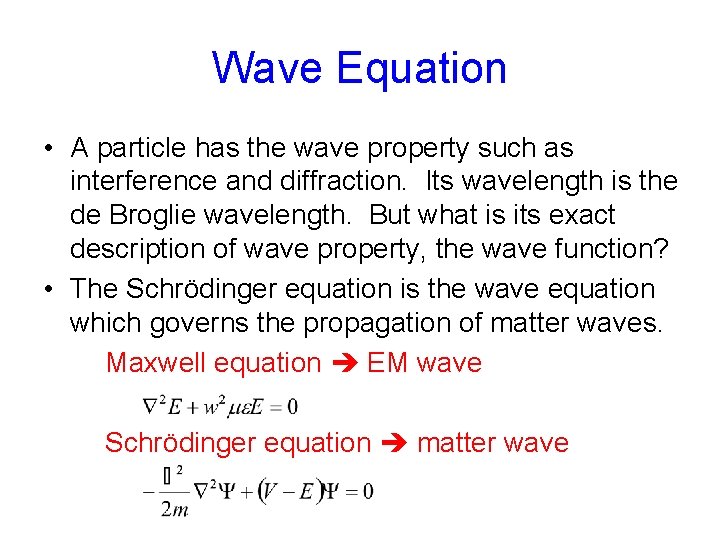
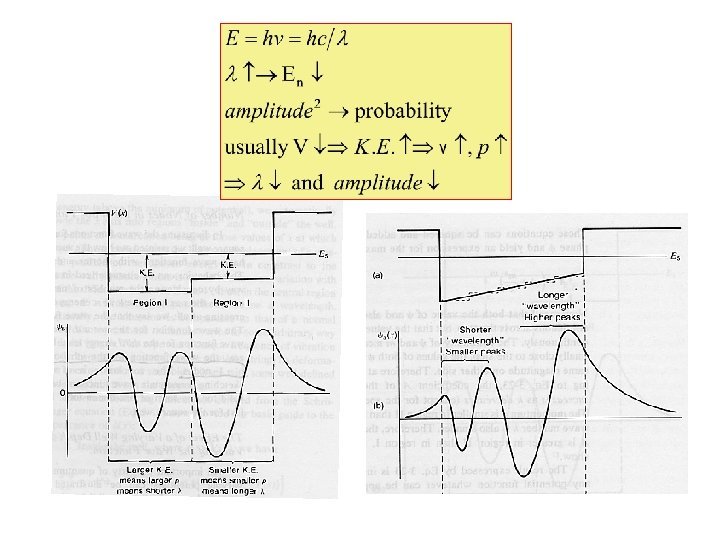
Wave Equation • A particle has the wave property such as interference and diffraction. Its wavelength is the de Broglie wavelength. But what is its exact description of wave property, the wave function? • The Schrödinger equation is the wave equation which governs the propagation of matter waves. Maxwell equation EM wave Schrödinger equation matter wave
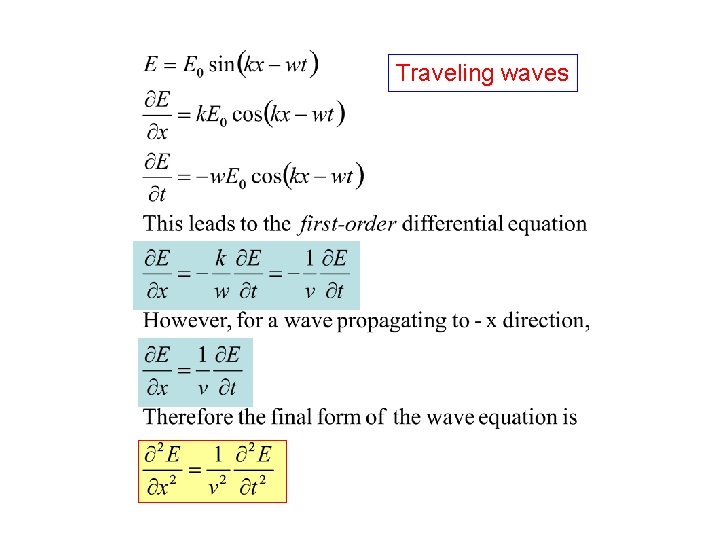
Traveling waves
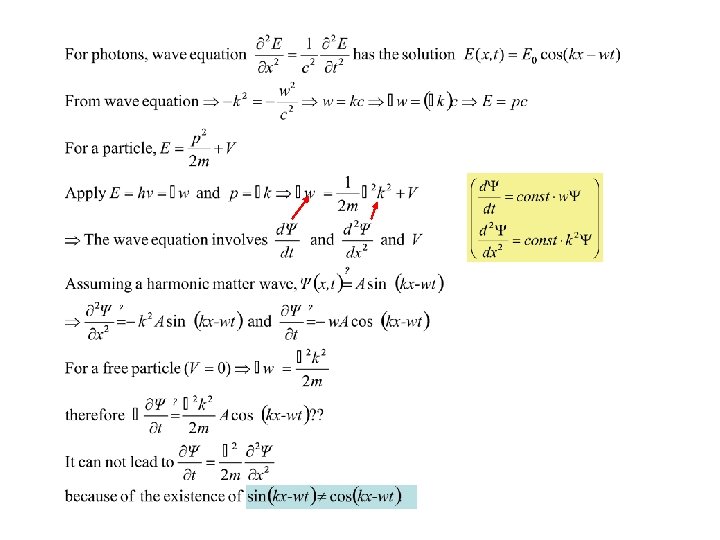
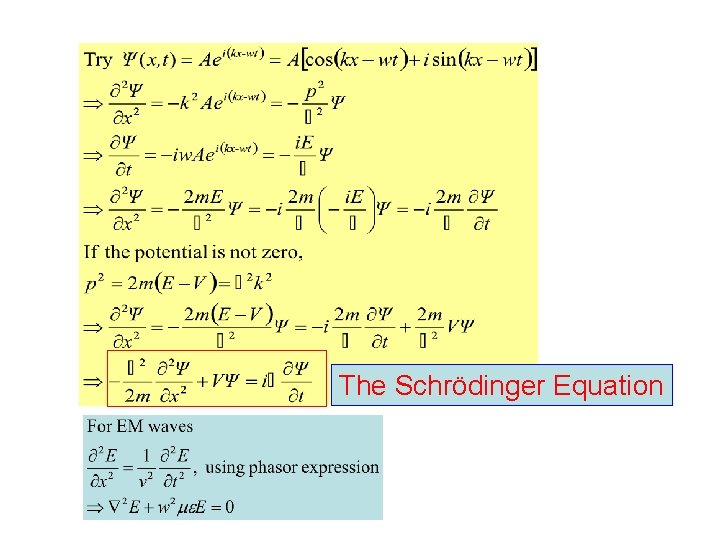
The Schrödinger Equation
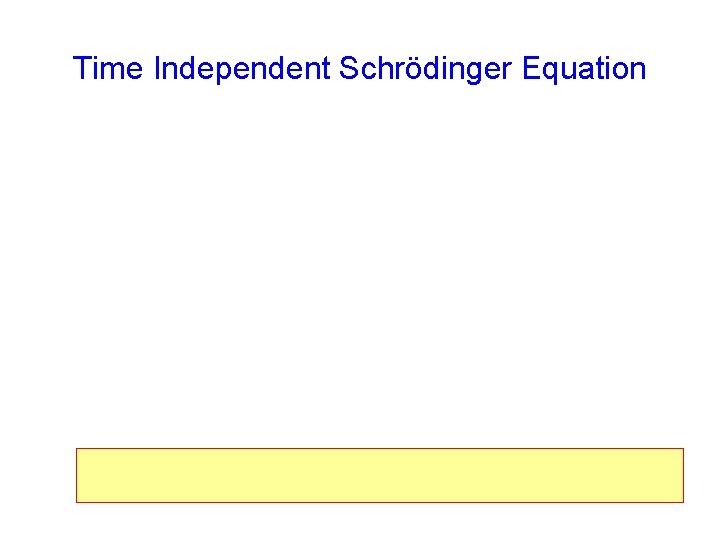
Time Independent Schrödinger Equation
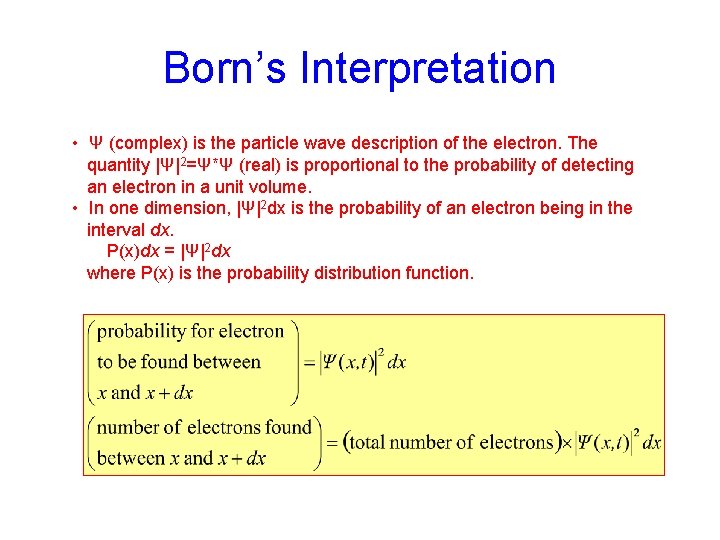
Born’s Interpretation • Ψ (complex) is the particle wave description of the electron. The quantity |Ψ|2=Ψ*Ψ (real) is proportional to the probability of detecting an electron in a unit volume. • In one dimension, |Ψ|2 dx is the probability of an electron being in the interval dx. P(x)dx = |Ψ|2 dx where P(x) is the probability distribution function.
Expectation Values and Operators
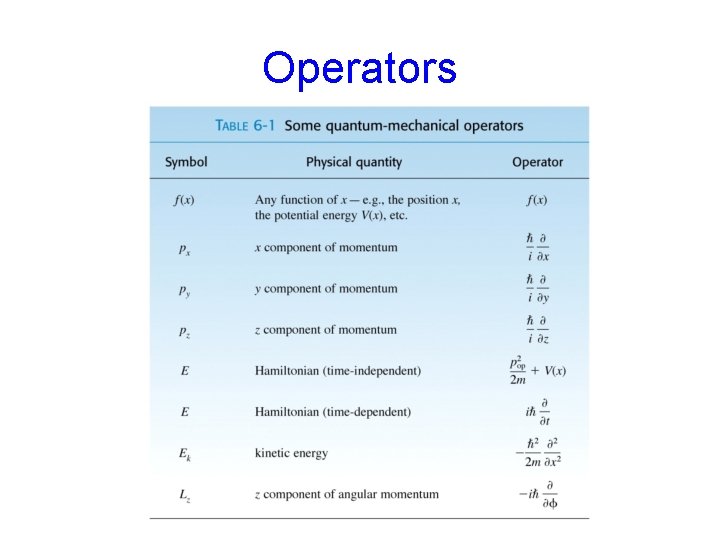
Operators
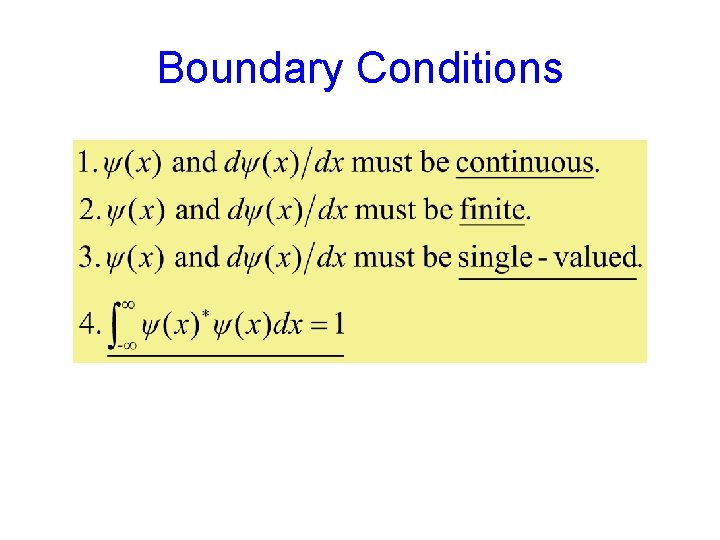
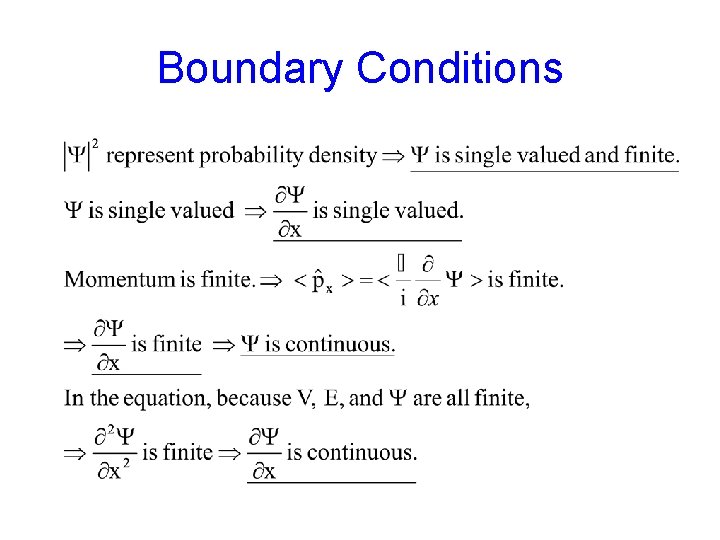
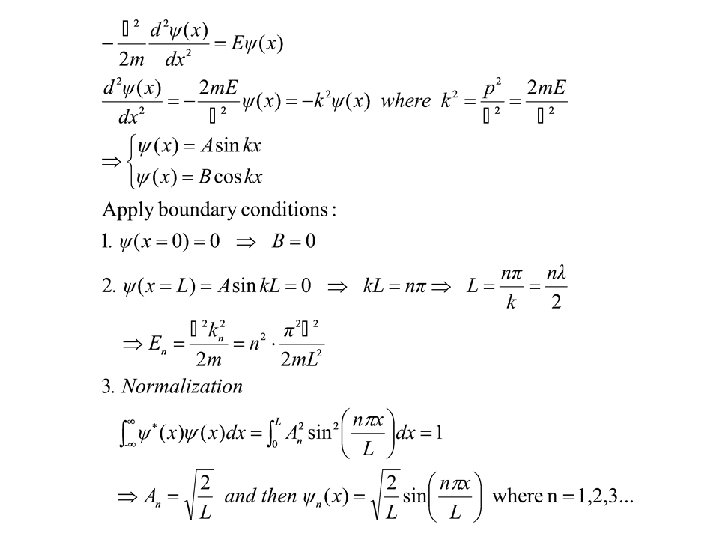
Solving Schrödinger Equation • The fundamental problem of quantum mechanics is to solve the Schrödinger equation for the wave function. The measurable quantities such as position, momentum, energy…etc can be calculated using appropriate operators. • The Schrödinger equation is a linear differential equation. The superposition of solutions is still the solution to it. • The required boundary conditions comes from Born’s interpretation of wave function and associated physical explanation.
Boundary Conditions
Boundary Conditions
Linear Differential Equation • The Schrödinger Equation is a linear differential equation. Its solutions are called eigenfunctions. The linear combination of eigenfunctions are also solutions to it. • Two waves are superimposed by adding them up. Don’t add up |Ψ|2. (double slit interference experiment)
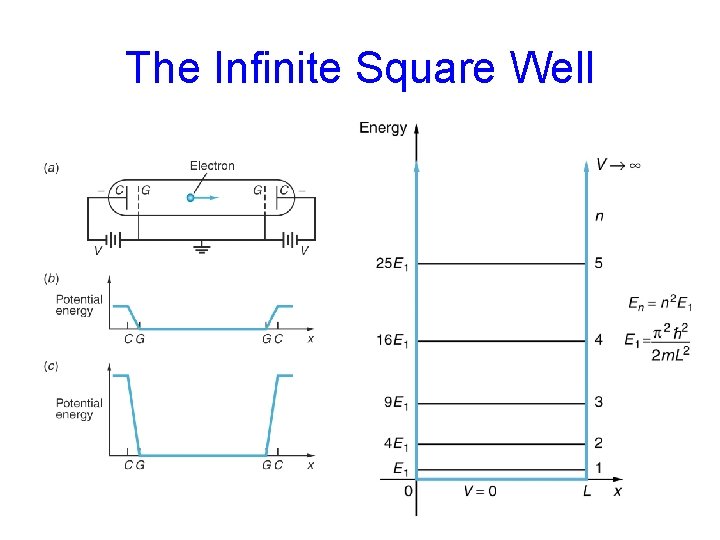
The Infinite Square Well
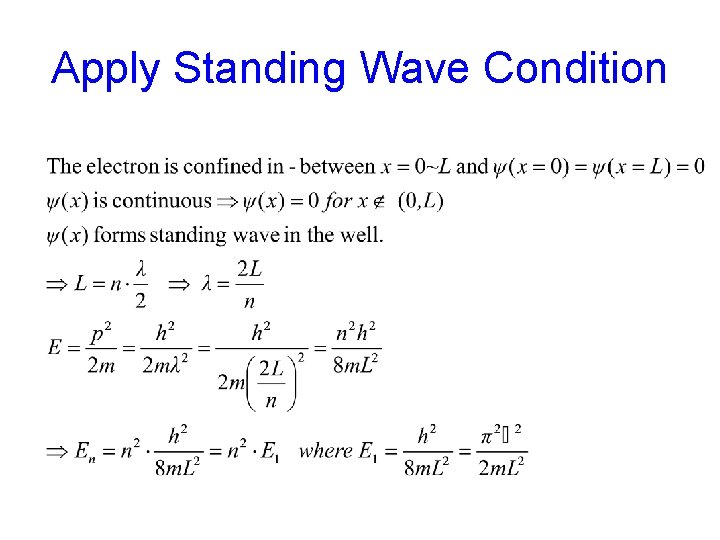
Apply Standing Wave Condition
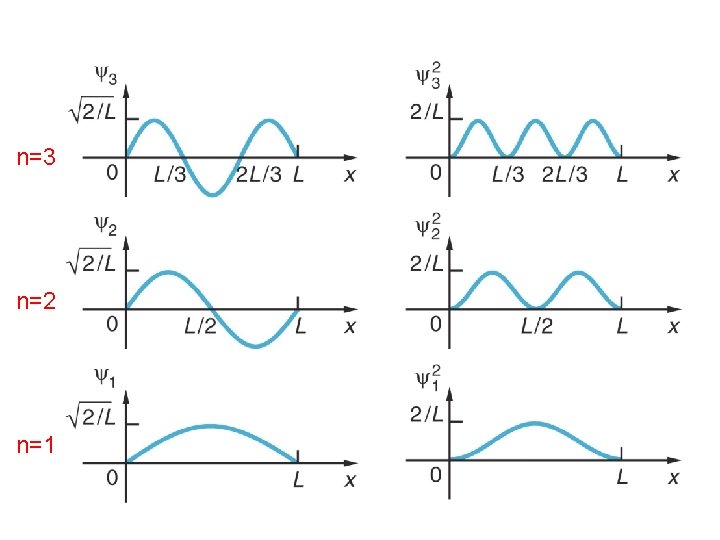
n=3 n=2 n=1
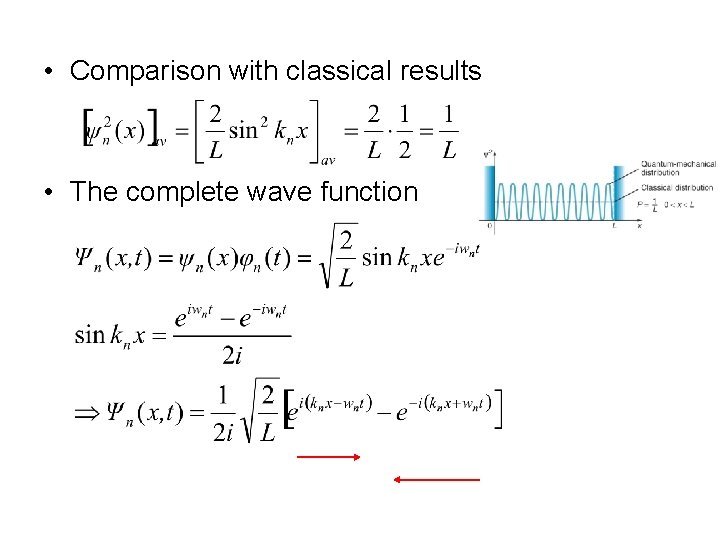
• Comparison with classical results • The complete wave function
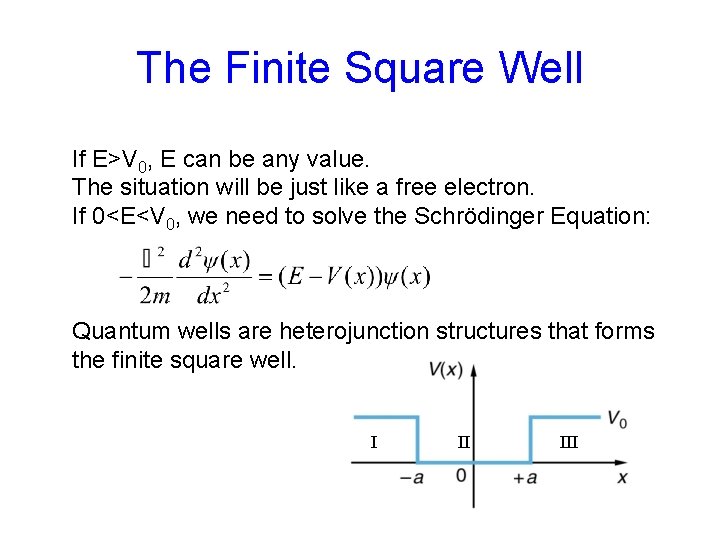
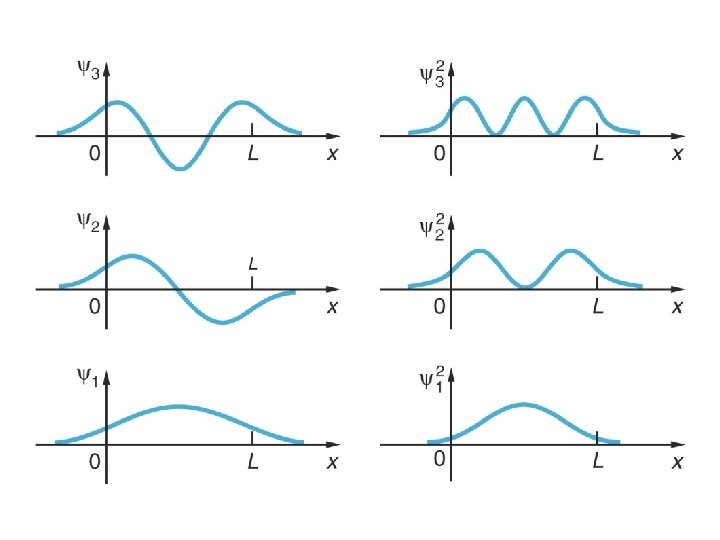
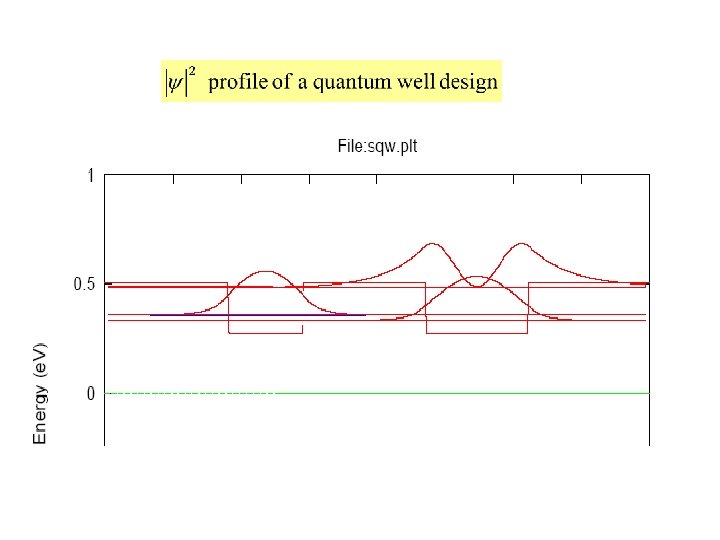
The Finite Square Well If E>V 0, E can be any value. The situation will be just like a free electron. If 0<E<V 0, we need to solve the Schrödinger Equation: Quantum wells are heterojunction structures that forms the finite square well. I II III
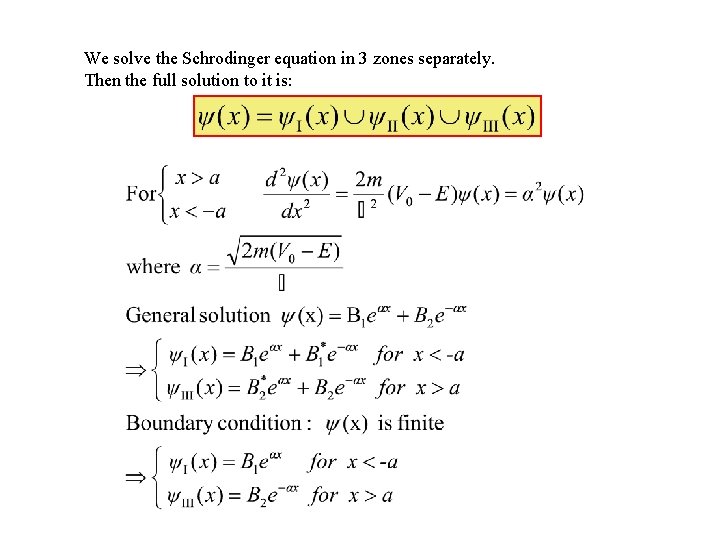
We solve the Schrodinger equation in 3 zones separately. Then the full solution to it is:
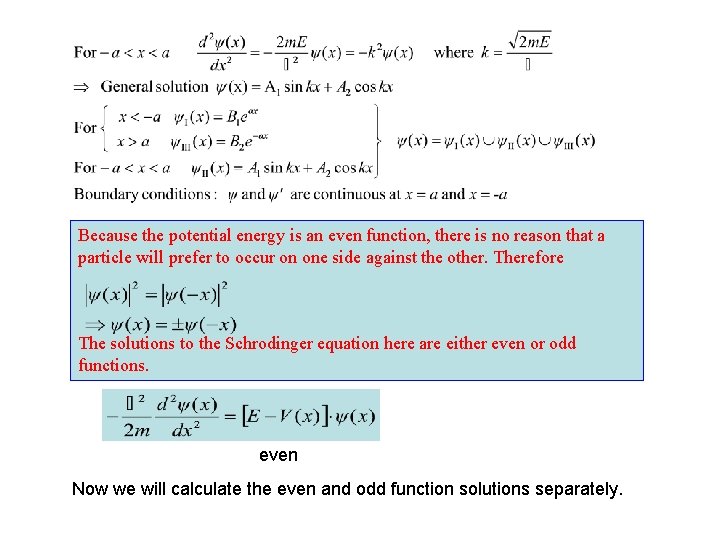
Because the potential energy is an even function, there is no reason that a particle will prefer to occur on one side against the other. Therefore The solutions to the Schrodinger equation here are either even or odd functions. even Now we will calculate the even and odd function solutions separately.
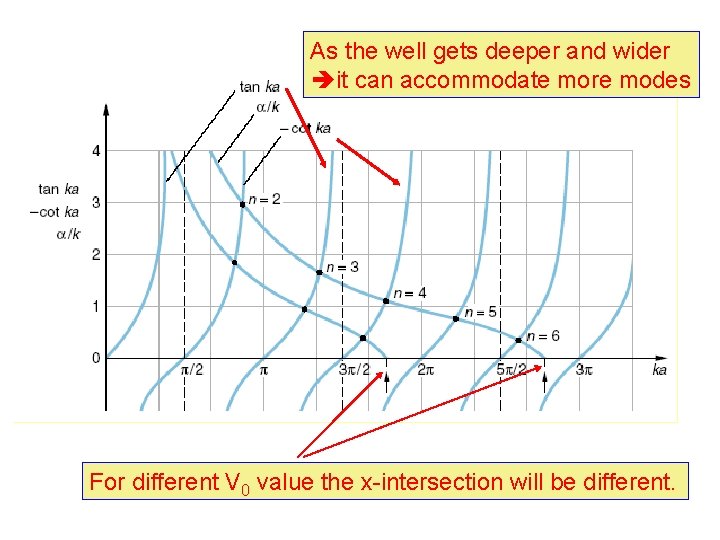
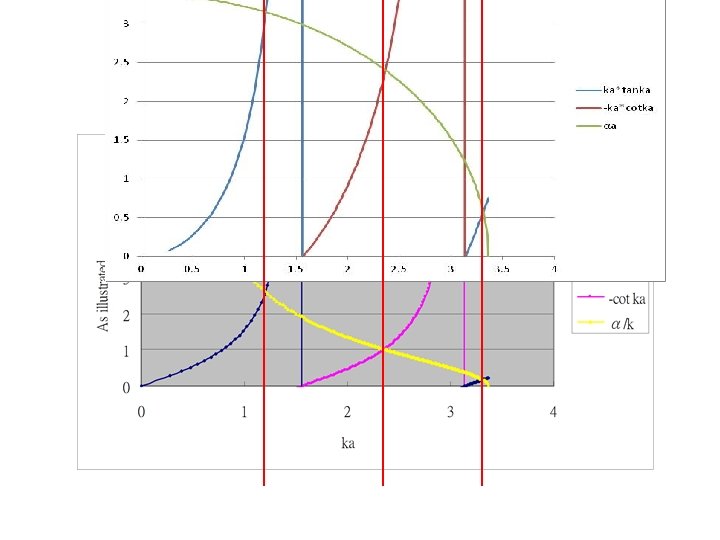
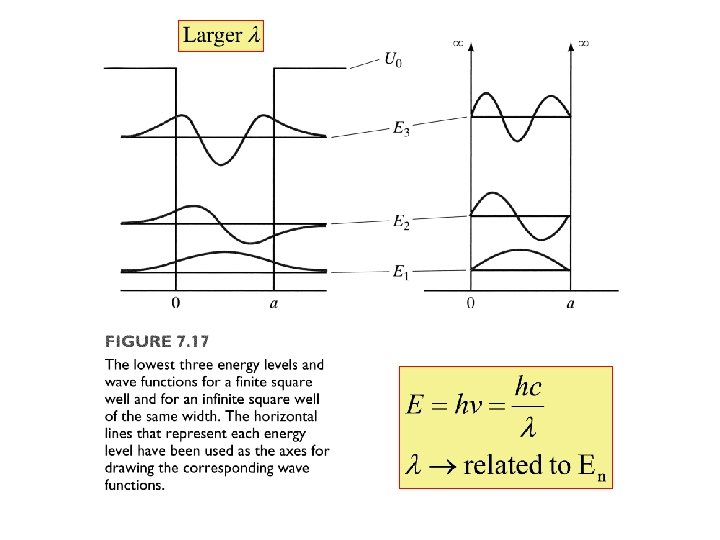
As the well gets deeper and wider it can accommodate more modes For different V 0 value the x-intersection will be different.
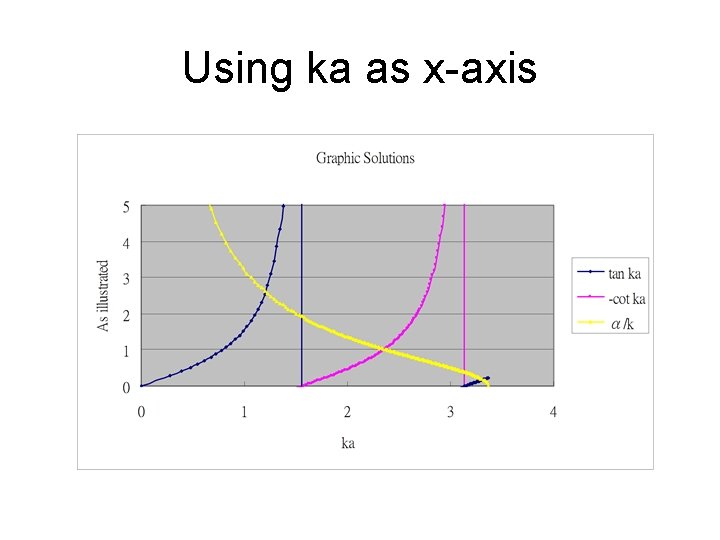
Using ka as x-axis
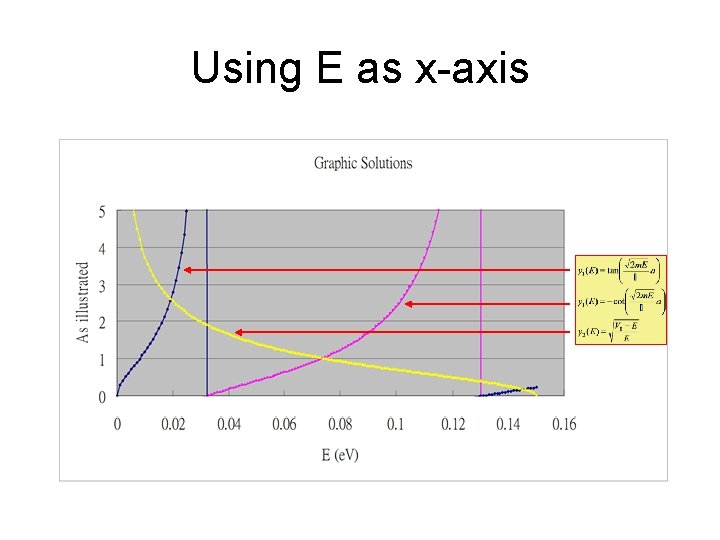
Using E as x-axis
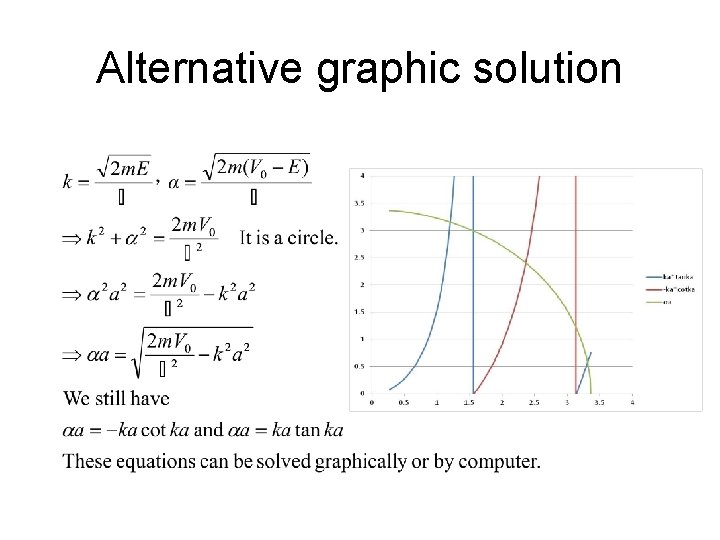
Alternative graphic solution
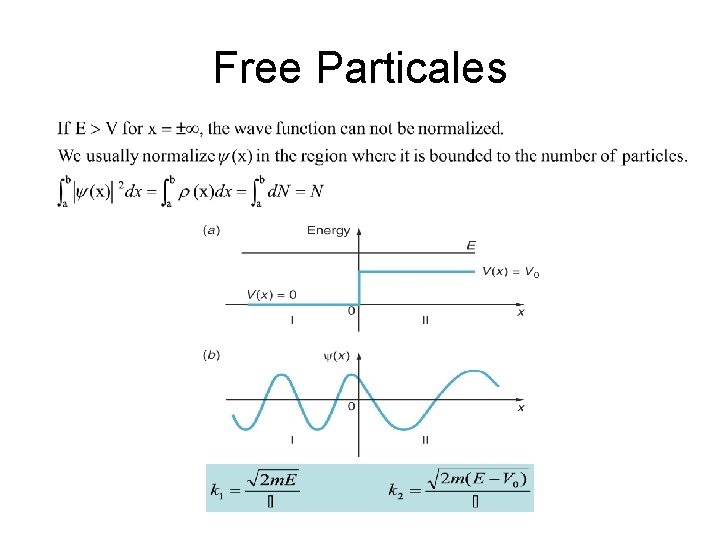
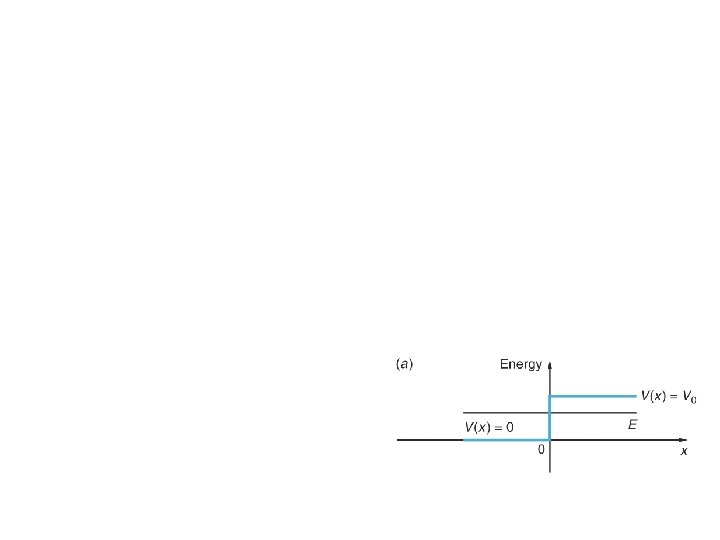
Free Particales
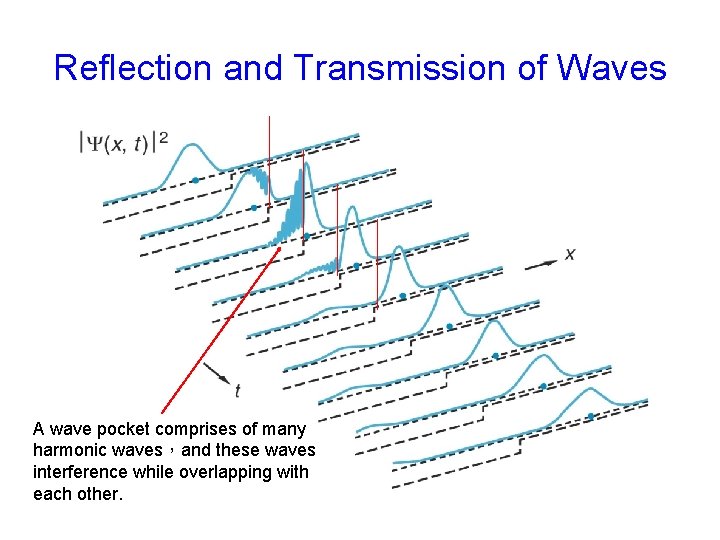
Reflection and Transmission of Waves A wave pocket comprises of many harmonic waves,and these waves interference while overlapping with each other.
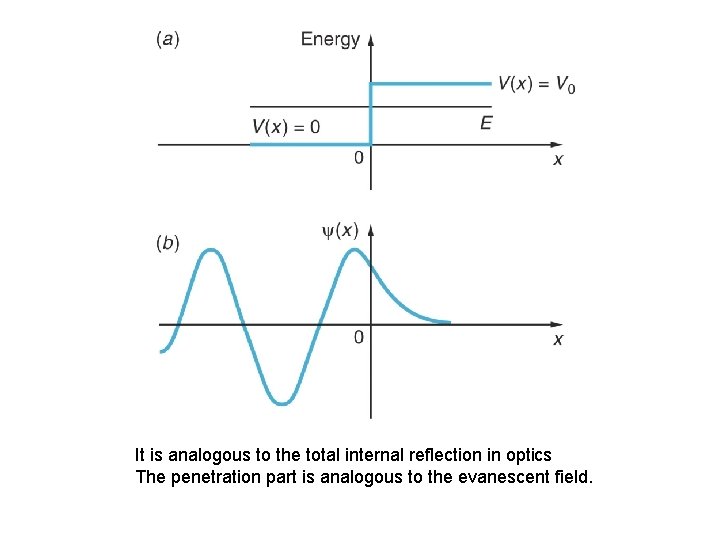
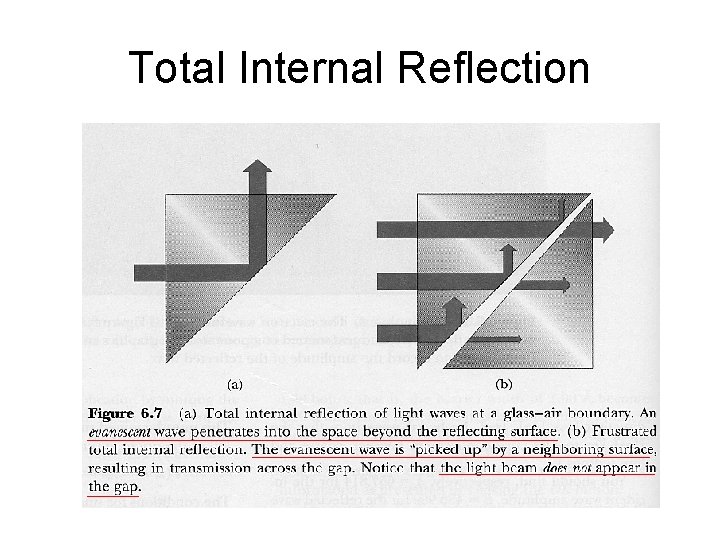
It is analogous to the total internal reflection in optics The penetration part is analogous to the evanescent field.
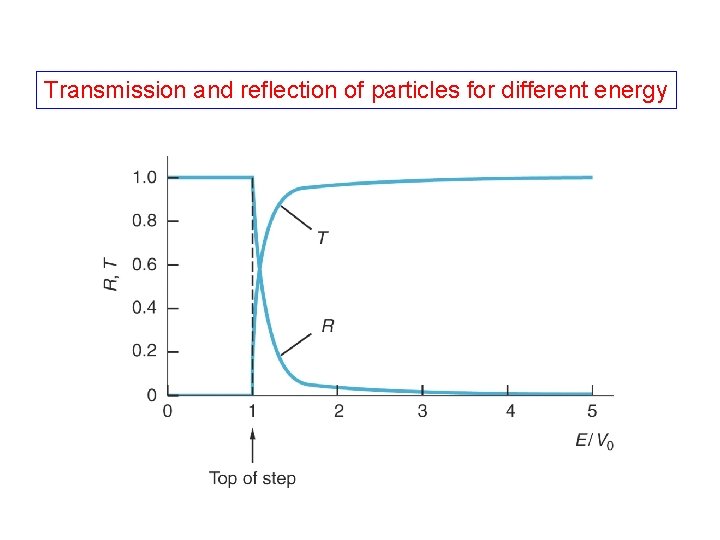
Transmission and reflection of particles for different energy
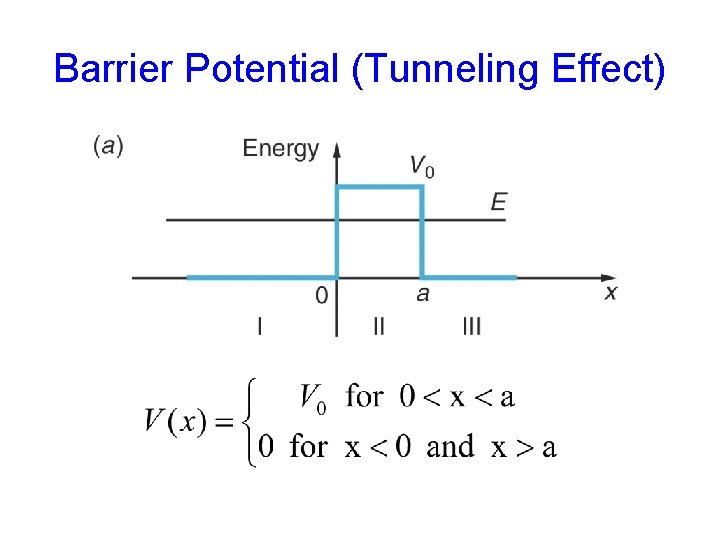
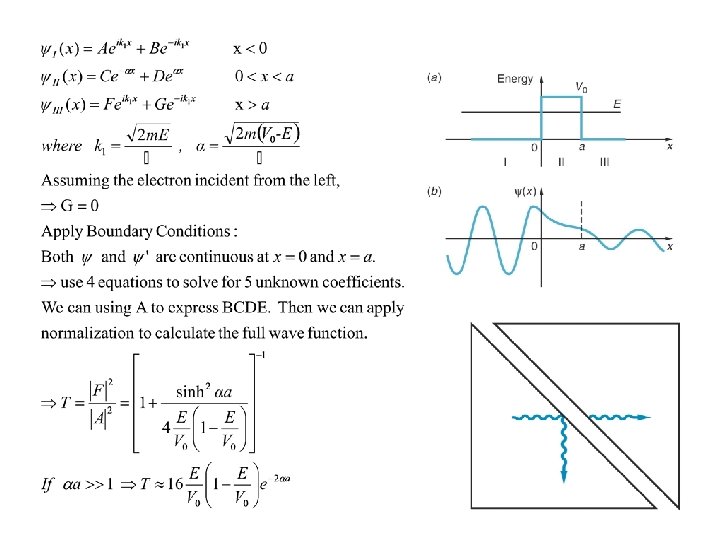
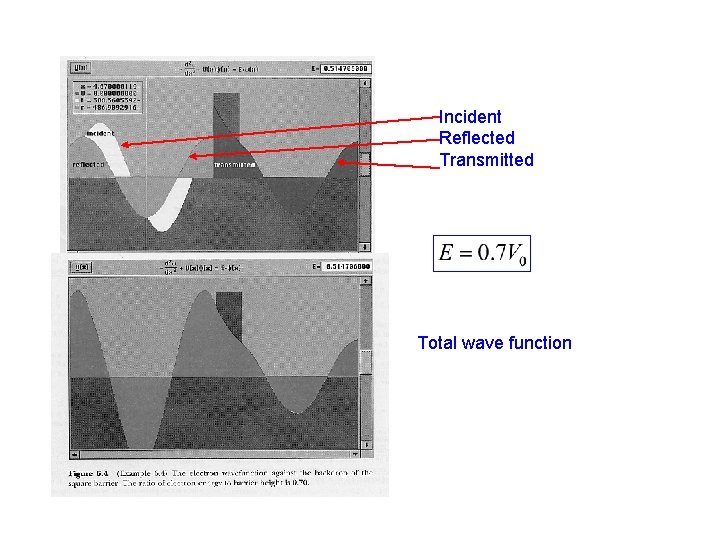
Barrier Potential (Tunneling Effect)
Incident Reflected Transmitted Total wave function
Total Internal Reflection
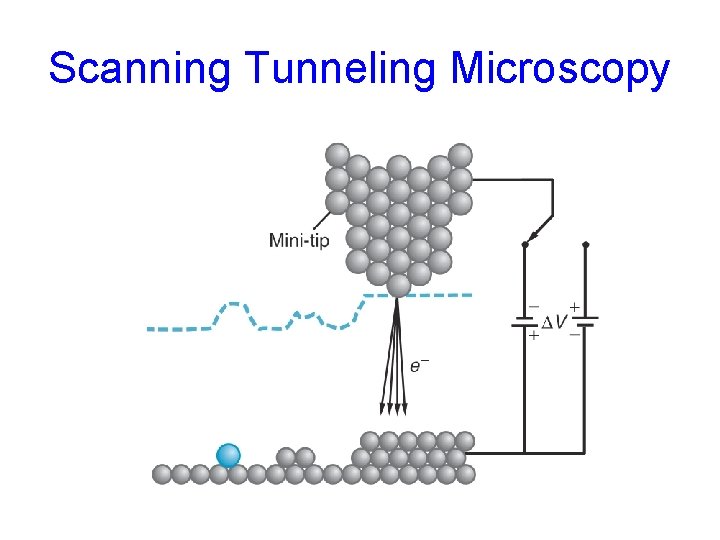
Scanning Tunneling Microscopy
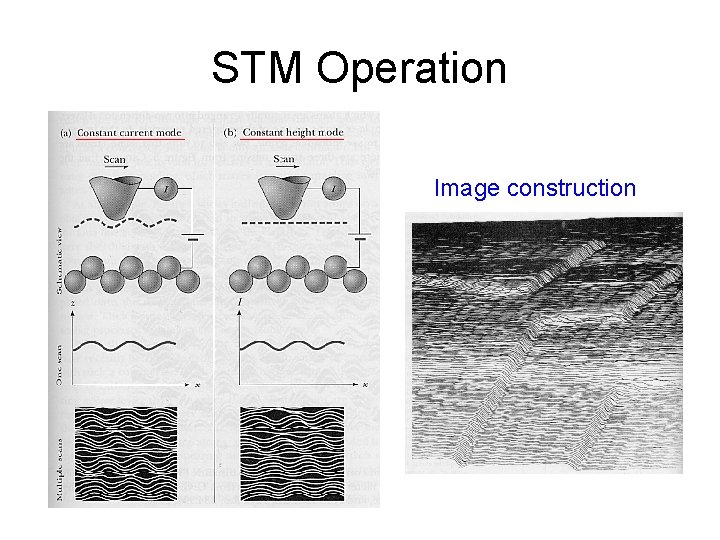
STM Operation Image construction
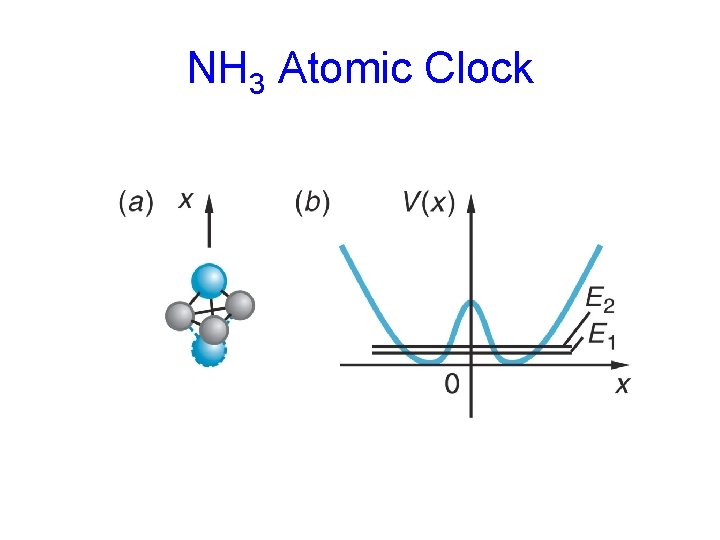
NH 3 Atomic Clock
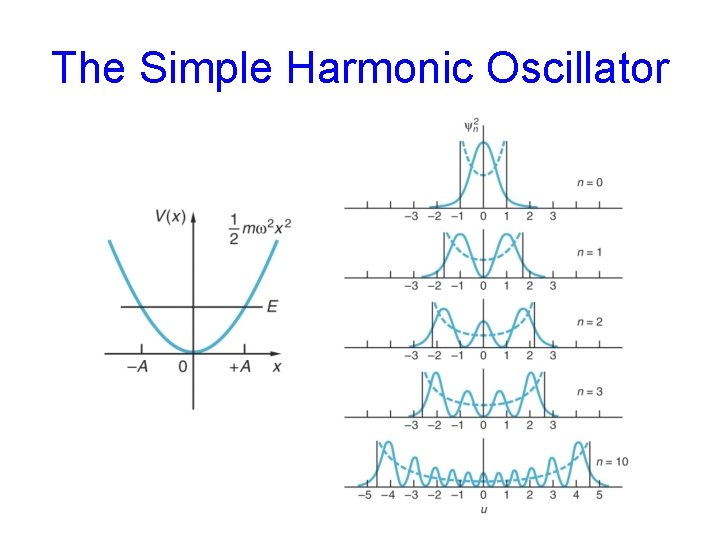
The Simple Harmonic Oscillator
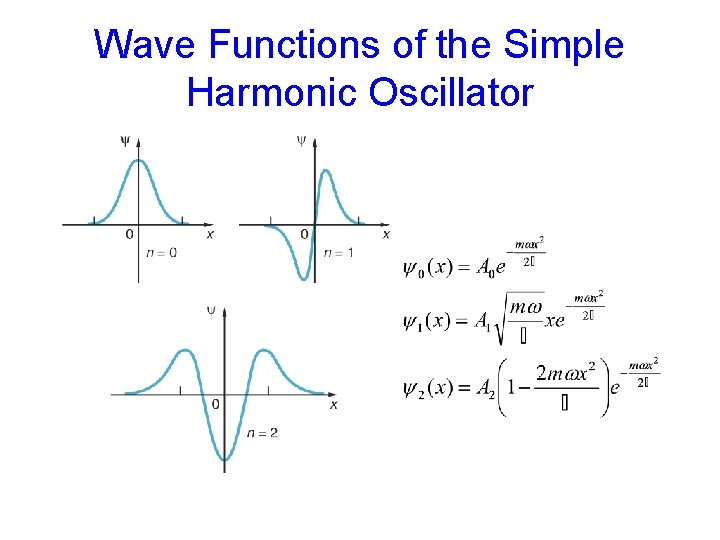
Wave Functions of the Simple Harmonic Oscillator
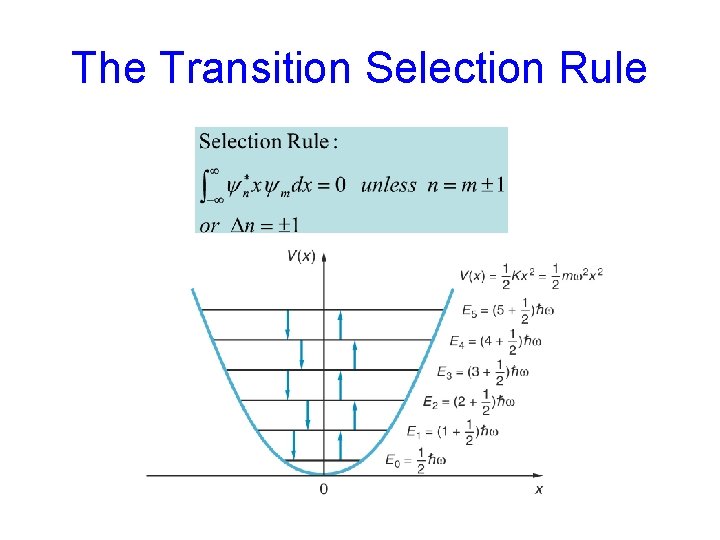
The Transition Selection Rule