
The school system in Germany The school system


- Slides: 26
The school system in Germany
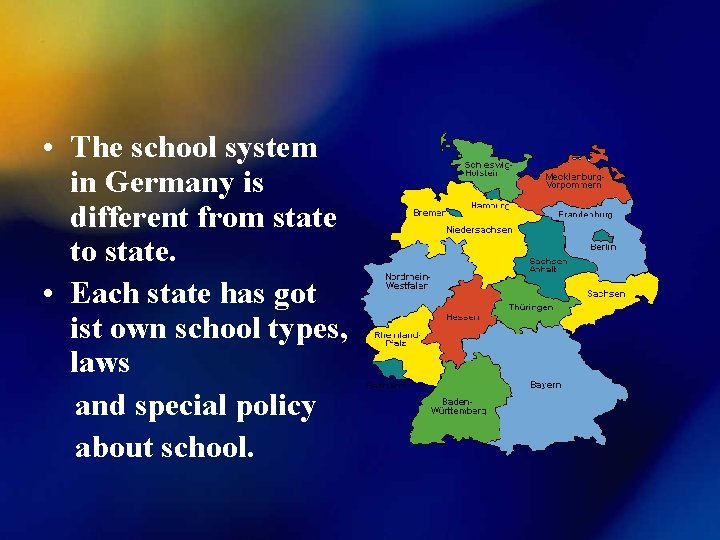
• The school system in Germany is different from state to state. • Each state has got ist own school types, laws and special policy about school.
Although education is a function of the federal states, and there are differences from state to state, some generalizations are possible.
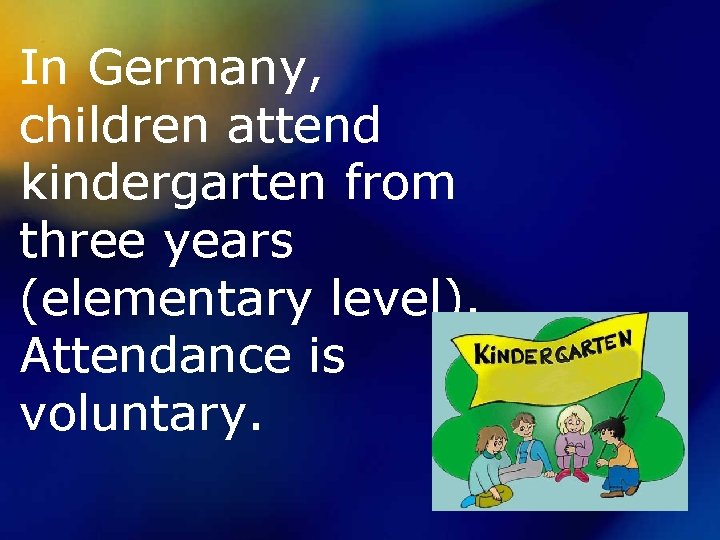
In Germany, children attend kindergarten from three years (elementary level). Attendance is voluntary.
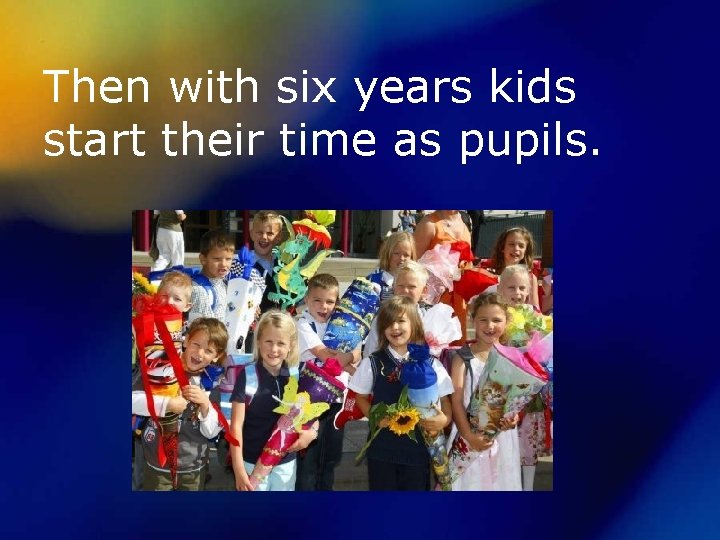
Then with six years kids start their time as pupils.
To avoid too much pressure at the beginning of the school career, in the first two school years there is no rating certificate, but an opinion issued the student and the transfer represents the next grade level, the rule will dar.
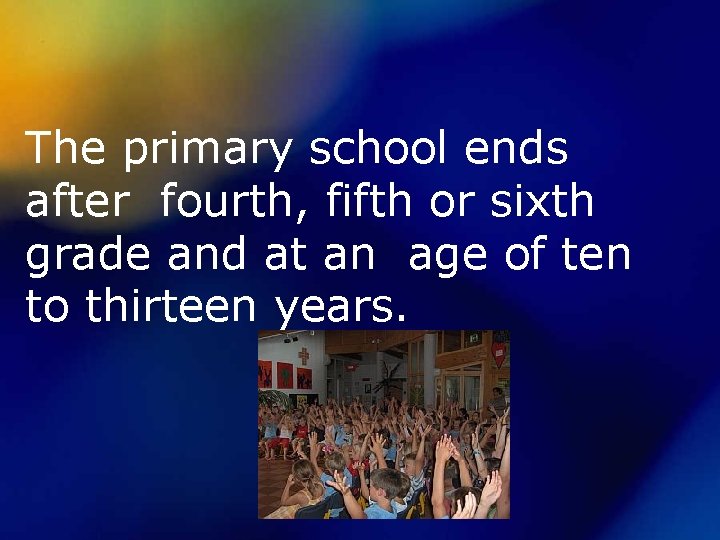
The primary school ends after fourth, fifth or sixth grade and at an age of ten to thirteen years.
Secondary The fifth (and sixth) class is generally referred as the orientation level, allowing students the choice to switch to a high school or junior high school.
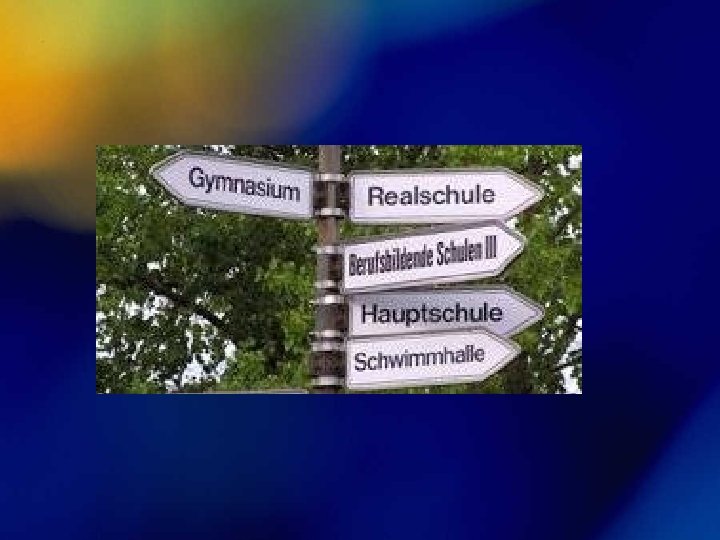
Here begins the secondary level I of the German education system, which includes all types of schools (primary and secondary school, grammar school, comprehensive school) till the tenth grade.
The Hauptschule (grades 5 -9 in most German states) teaches the same subjects as the Realschule and Gymnasium, but at a slower pace and with some vocational-oriented courses. It leads to part-time enrollment in a vocational school combined with apprenticeship training until the age of 18.
The Realschule (grades 5 -10 in most states) leads to part-time vocational schools and higher vocational schools. It is now possible for students with high academic achievement at the Realschule to switch to a Gymnasium on graduation
The Gymnasium leads to a diploma called the Abitur and prepares students for university study or for a dual academic and vocational credential. The most common education tracks offered by the standard Gymnasium are classical language, modern language, and mathematics-natural science. In recent years many States have changed the curriculum so students can get the "Abi" at the end of the 12 th grade. Other States are making the transition but may still require a 13 th grade for the next couple of years.
The Gesamtschule, or comprehensive school, is a more recent development and is only found in some of the states. It takes the place of both the Hauptschule and Realschule and arose out of the egalitarian movements in the 1960 s. It enrolls students of all ability levels in the 5 th through the 10 th grades. Students who satisfactorily complete the Gesamtschule through the 9 th grade receive the Hauptschule certificate, while those who satisfactorily complete schooling through the 10 th grade receive the Realschule certificate
Grundschule teachers recommend their students to a particular school based on such things as academic achievement, self confidence and ability to work independently. However, in most states, parents have the final say as to which school their child attends following the fourth grade
Normally school ends after the tenth grade with a check at the main subjects of mathematics, German , English and various electives, with the completion of "O-level. "
About 30 % of the pupils start an apprenticeship after this time or make a volunteer year in a hospital, . . . or go to the army after school. . .
With a good grade point average, it is possible, to continue school by going tio a technical or business school. You can also visit a language school.
It depends on your marks which subjects you can study at university.
When a student leaves a year before leaving school to school, he has acquired the "technical college entrance qualification".
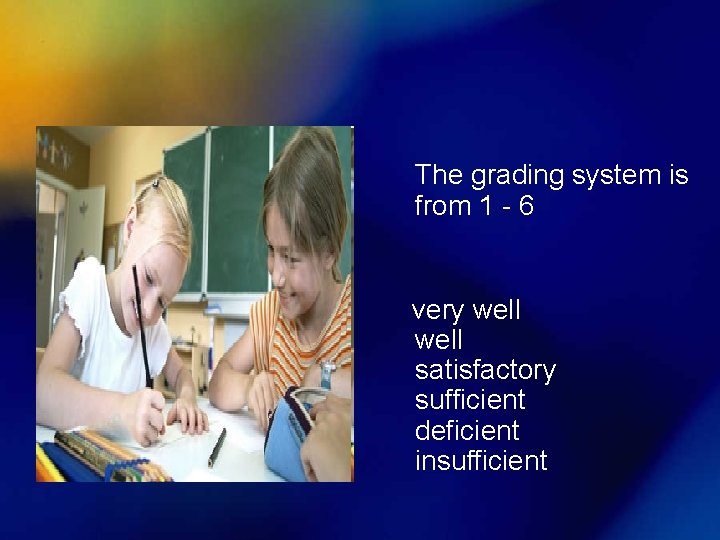
The grading system is from 1 - 6 very well satisfactory sufficient deficient insufficient
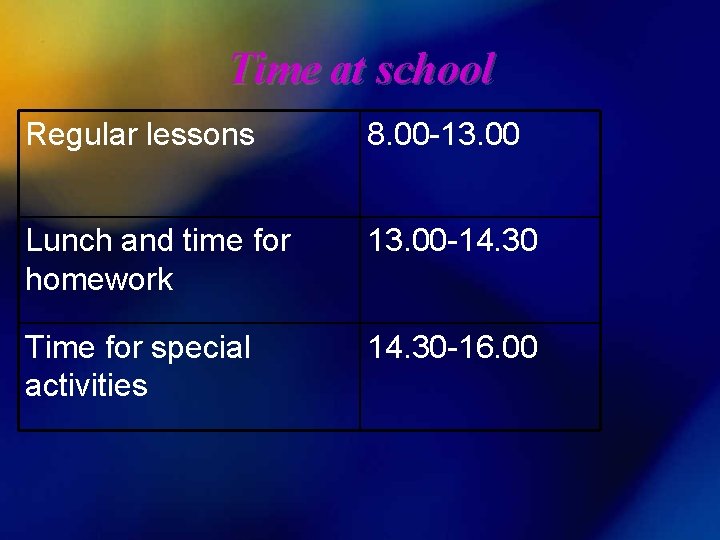
Time at school Regular lessons 8. 00 -13. 00 Lunch and time for homework 13. 00 -14. 30 Time for special activities 14. 30 -16. 00
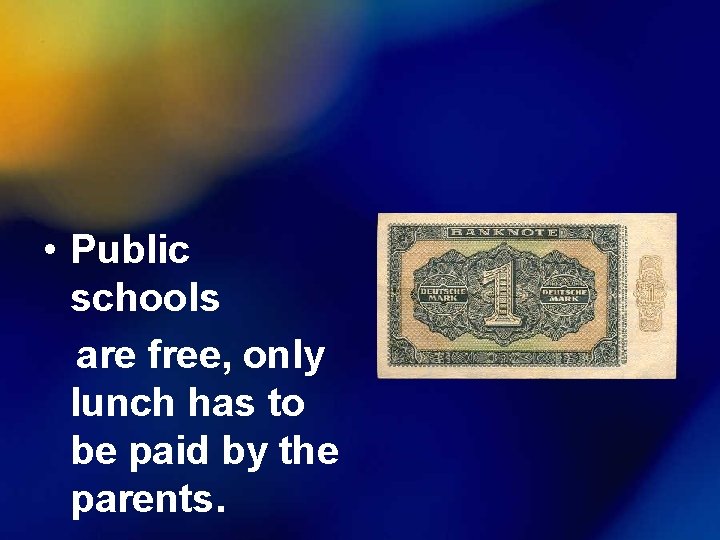
• Public schools are free, only lunch has to be paid by the parents.
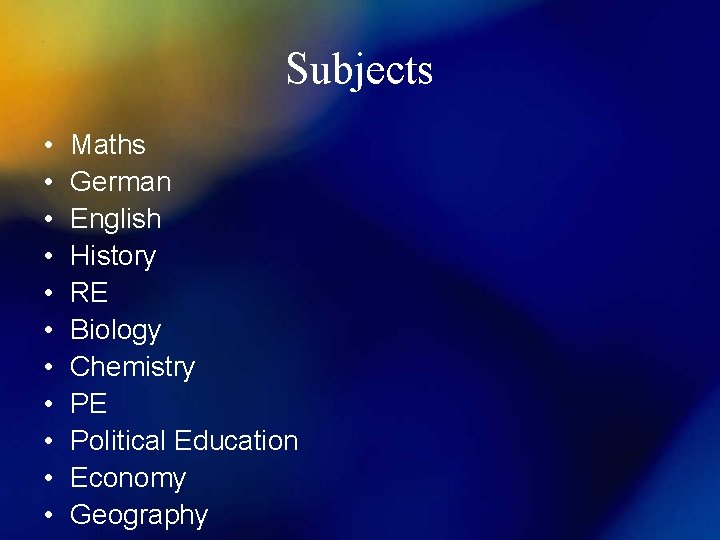
Subjects • • • Maths German English History RE Biology Chemistry PE Political Education Economy Geography
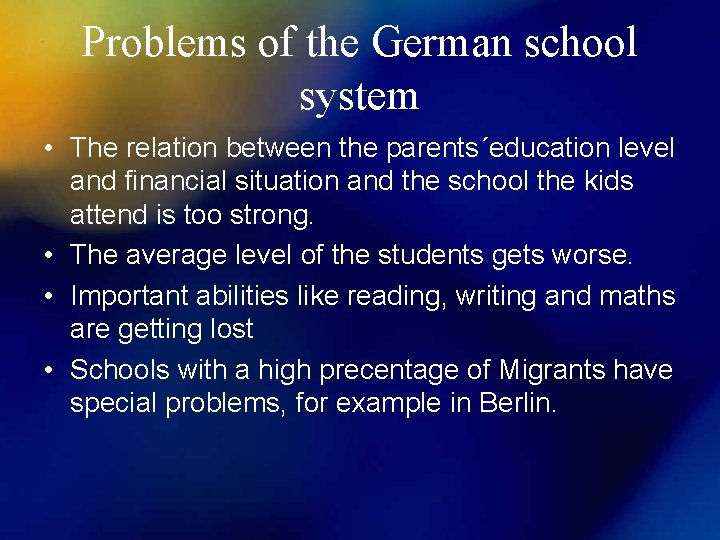
Problems of the German school system • The relation between the parents´education level and financial situation and the school the kids attend is too strong. • The average level of the students gets worse. • Important abilities like reading, writing and maths are getting lost • Schools with a high precentage of Migrants have special problems, for example in Berlin.