
The scale scope and impact of the sharing

- Slides: 17
The scale, scope and impact of the sharing economy in tourism and hospitality Prof. Marianna Sigala
Impact of sharing economy on economic transactions
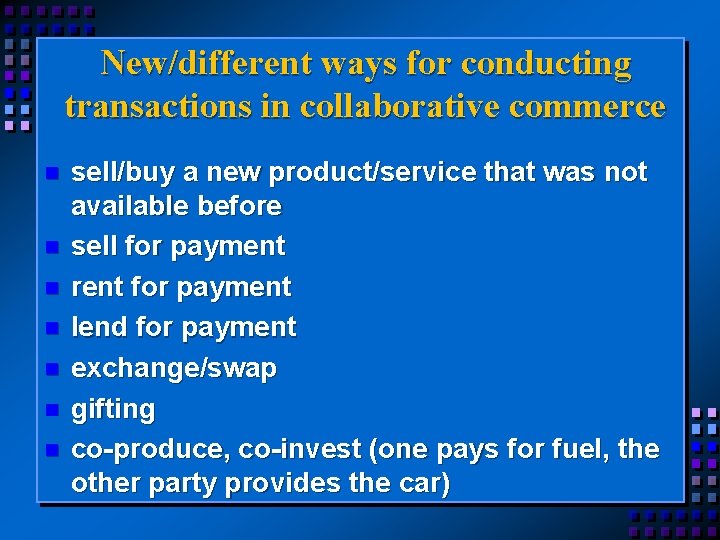
New/different ways for conducting transactions in collaborative commerce sell/buy a new product/service that was not available before sell for payment rent for payment lend for payment exchange/swap gifting co-produce, co-invest (one pays for fuel, the other party provides the car)
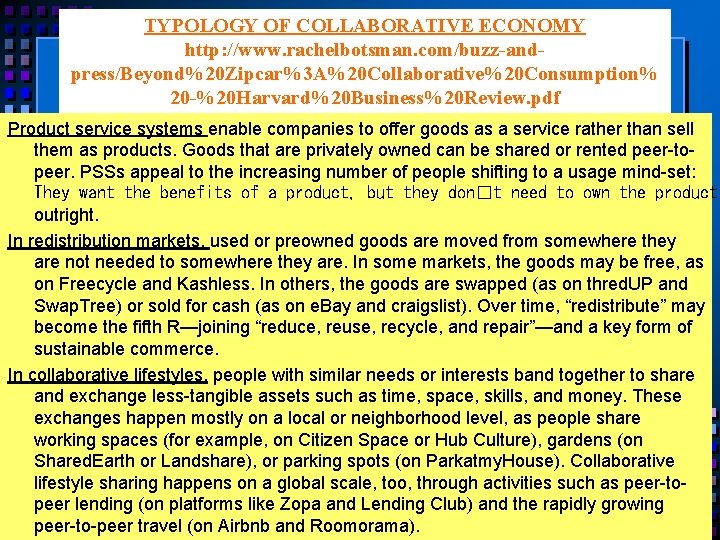
TYPOLOGY OF COLLABORATIVE ECONOMY http: //www. rachelbotsman. com/buzz-andpress/Beyond%20 Zipcar%3 A%20 Collaborative%20 Consumption% 20 -%20 Harvard%20 Business%20 Review. pdf Product service systems enable companies to offer goods as a service rather than sell them as products. Goods that are privately owned can be shared or rented peer-topeer. PSSs appeal to the increasing number of people shifting to a usage mind-set: They want the benefits of a product, but they don�t need to own the product outright. In redistribution markets, used or preowned goods are moved from somewhere they are not needed to somewhere they are. In some markets, the goods may be free, as on Freecycle and Kashless. In others, the goods are swapped (as on thred. UP and Swap. Tree) or sold for cash (as on e. Bay and craigslist). Over time, “redistribute” may become the fifth R—joining “reduce, reuse, recycle, and repair”—and a key form of sustainable commerce. In collaborative lifestyles, people with similar needs or interests band together to share and exchange less-tangible assets such as time, space, skills, and money. These exchanges happen mostly on a local or neighborhood level, as people share working spaces (for example, on Citizen Space or Hub Culture), gardens (on Shared. Earth or Landshare), or parking spots (on Parkatmy. House). Collaborative lifestyle sharing happens on a global scale, too, through activities such as peer-topeer lending (on platforms like Zopa and Lending Club) and the rapidly growing peer-to-peer travel (on Airbnb and Roomorama).
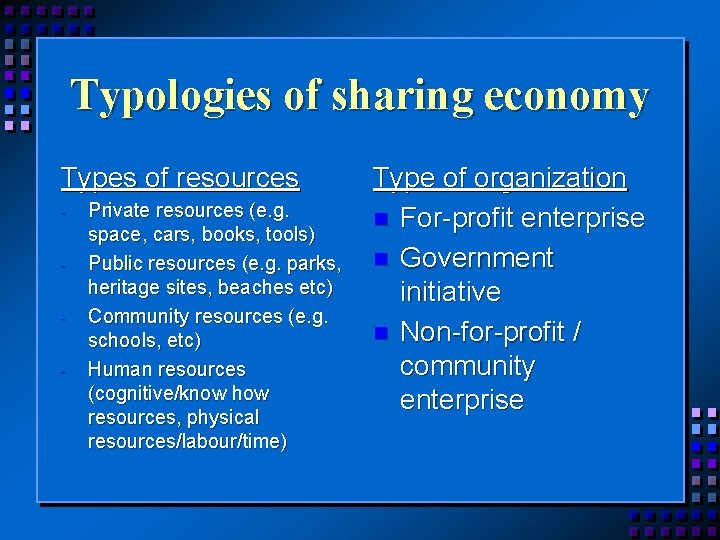
Typologies of sharing economy Types of resources - Private resources (e. g. space, cars, books, tools) Public resources (e. g. parks, heritage sites, beaches etc) Community resources (e. g. schools, etc) Human resources (cognitive/know how resources, physical resources/labour/time) Type of organization For-profit enterprise Government initiative Non-for-profit / community enterprise
THE BOOMING OF THE SHARING ECONOMY
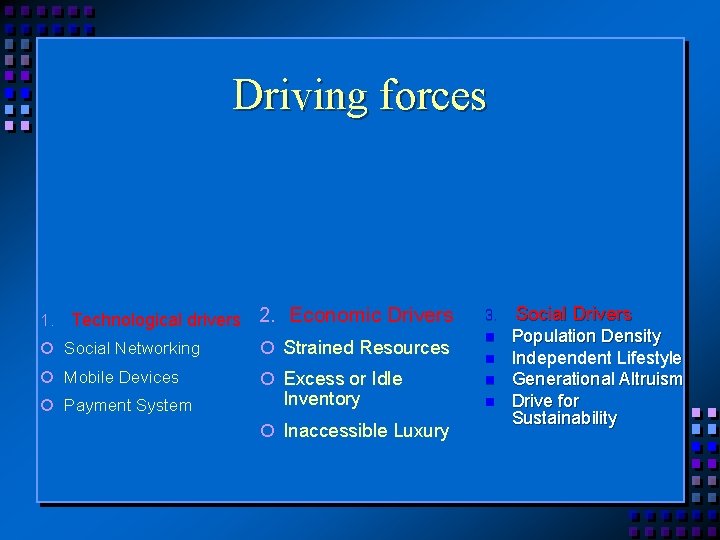
Driving forces 1. Technological drivers 2. Economic Drivers Social Networking Strained Resources Mobile Devices Excess or Idle Payment System Inventory Inaccessible Luxury 3. Social Drivers Population Density Independent Lifestyle Generational Altruism Drive for Sustainability
Societal drivers sustainability concerns desire for networking community belonging altruism
Economic drivers feel as a good consumer (e. g. find & use economic options) Sell-share excess / idle inventory generate extra income obtain financial independence good option/affordance to travel (even more frequently) save money to be spent elsewhere
What about the scope of the sharing economy ?
Give examples of various websites of sharing economy in various sectors E. g. transportation, hospitality, restaurants, travel guides, etc See the papers uploaded online to get examples There are many local examples in china – use them as well
What disruption and responses does the sharing economy provoke?
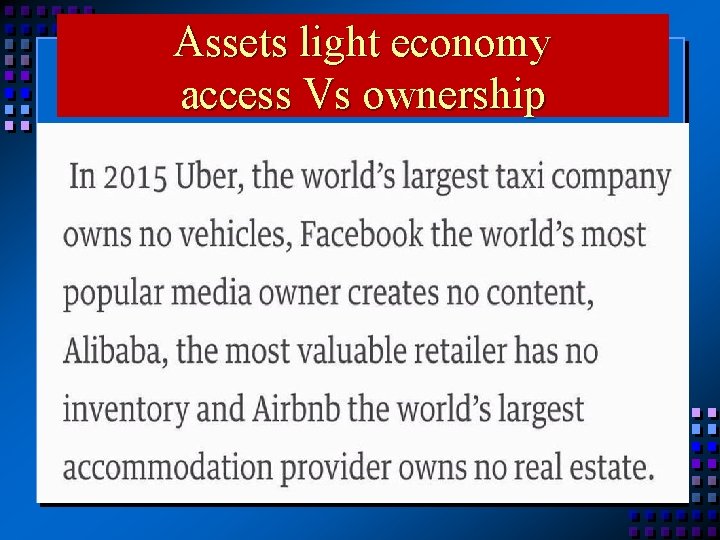
Assets light economy access Vs ownership
The transformational experience I am what I share Vs I am what I own
Do we know the TOTAL (economic) impact of the sharing economy ?
Examples of entrepreneurship in the sharing economy Give examples of entrepreneurship supported by the Airbnb SHARING ECOSYSTEM Read the paper and the chapter in the folder on the course website
THANK YOU ! Prof Μarianna Sigala (marianna. sigala@unisa. edu. au)