
The scale of the solar systemcontinued Where are
- Slides: 20
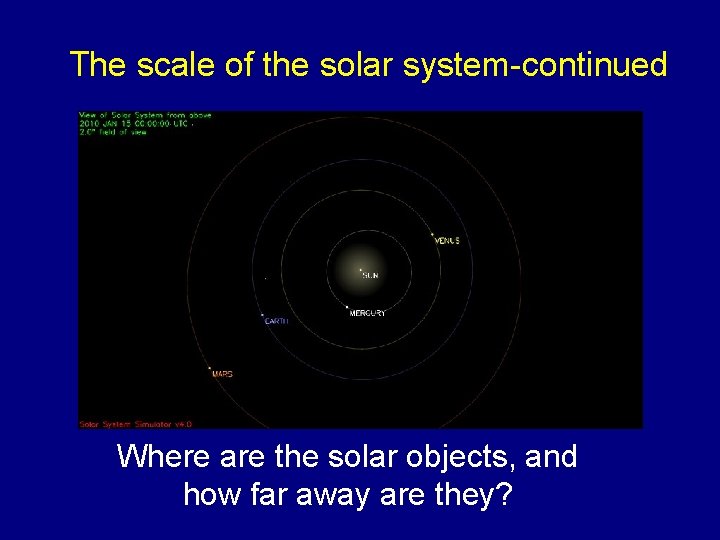
The scale of the solar system-continued Where are the solar objects, and how far away are they?
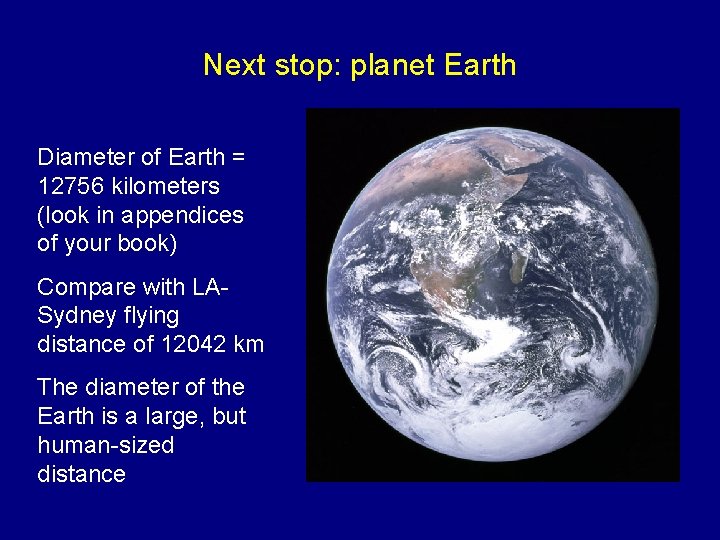
Next stop: planet Earth Diameter of Earth = 12756 kilometers (look in appendices of your book) Compare with LASydney flying distance of 12042 km The diameter of the Earth is a large, but human-sized distance
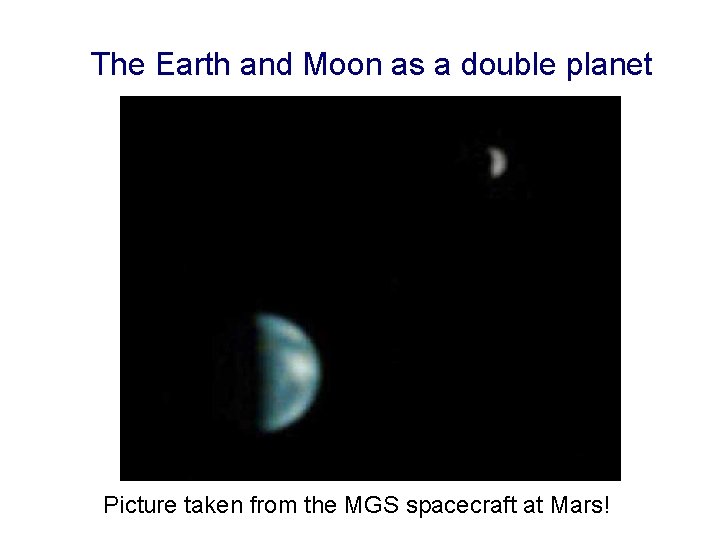
The Earth and Moon as a double planet Picture taken from the MGS spacecraft at Mars!
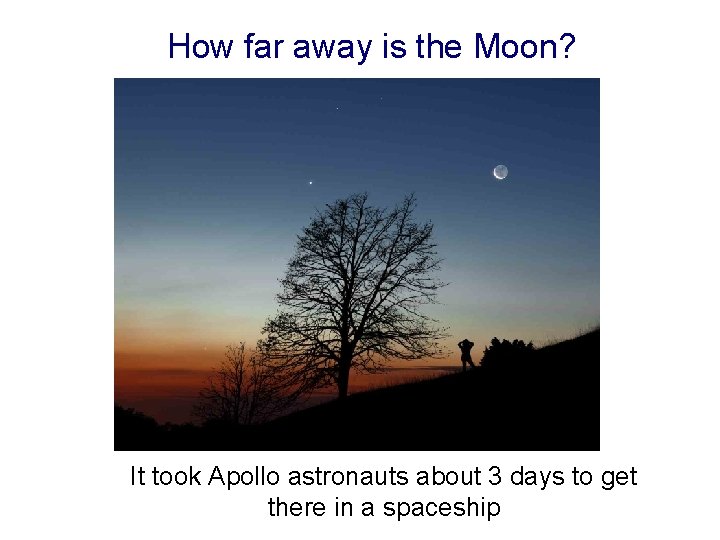
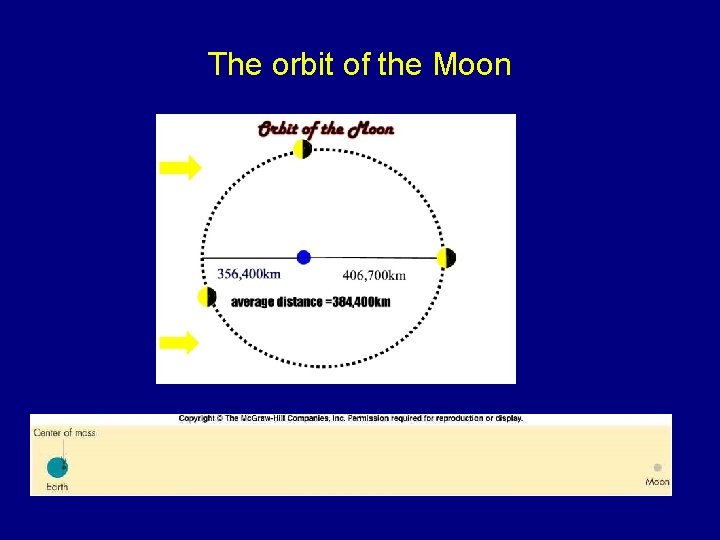
How far away is the Moon? It took Apollo astronauts about 3 days to get there in a spaceship
The orbit of the Moon
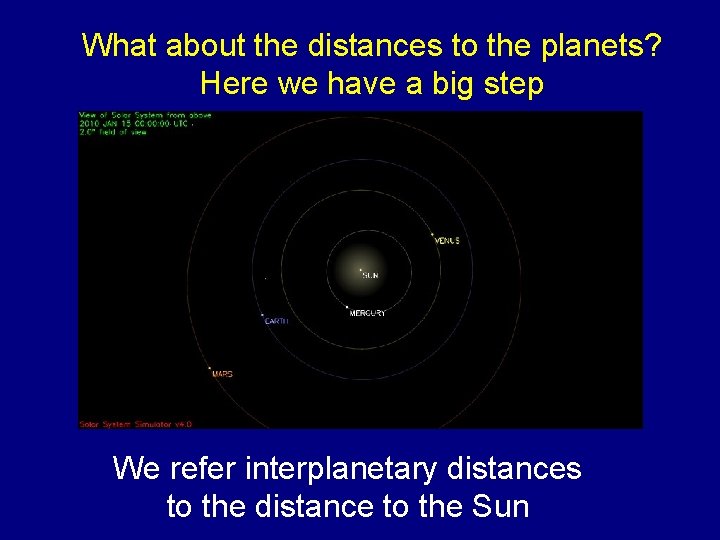
What about the distances to the planets? Here we have a big step We refer interplanetary distances to the distance to the Sun
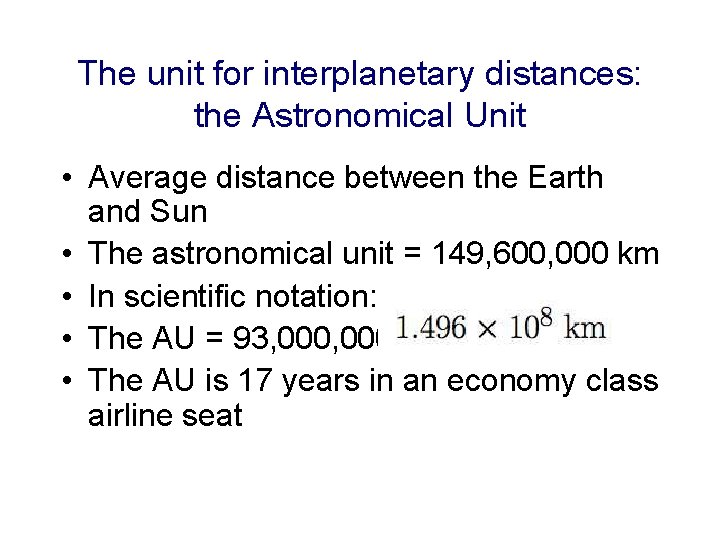
The unit for interplanetary distances: the Astronomical Unit • Average distance between the Earth and Sun • The astronomical unit = 149, 600, 000 km • In scientific notation: • The AU = 93, 000 miles • The AU is 17 years in an economy class airline seat
Average distances of “terrestrial planets” from the Sun • • • Mercury 0. 387 au Venus 0. 723 au Earth 1. 000 au Mars 1. 523 au Separation between Mars and Earth at opposition on Jan. 29: 0. 665 au
Where are the other planets you learned about in school? Where do they fall on our “map”?
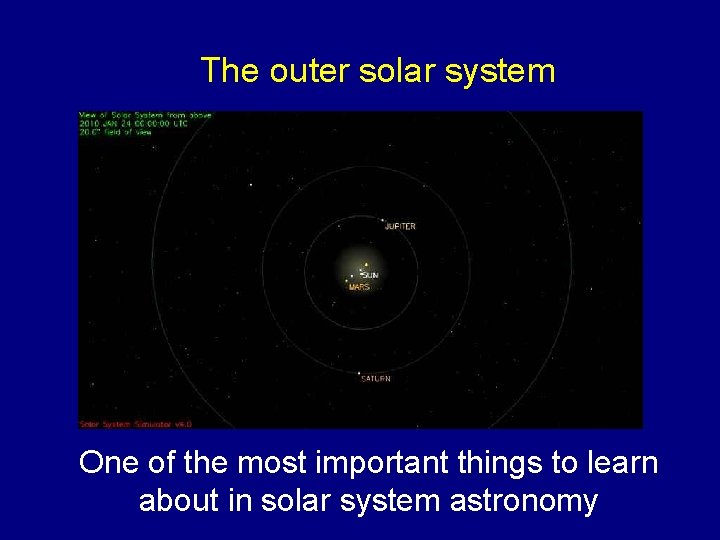
The outer solar system One of the most important things to learn about in solar system astronomy
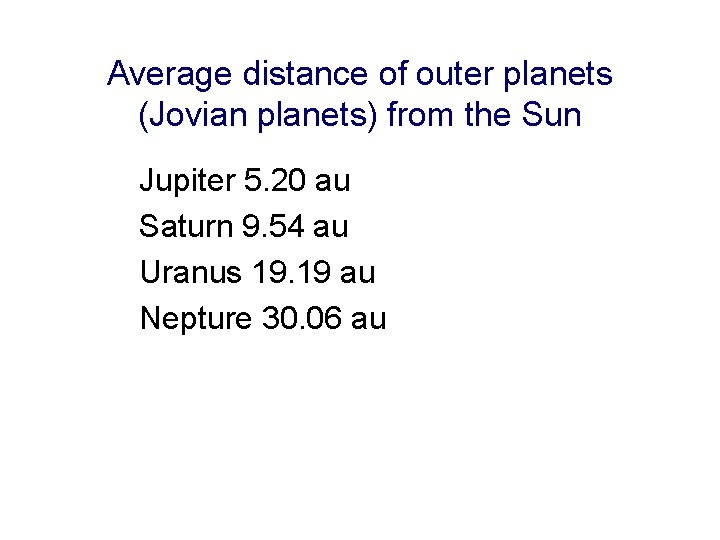
Average distance of outer planets (Jovian planets) from the Sun Jupiter 5. 20 au Saturn 9. 54 au Uranus 19. 19 au Nepture 30. 06 au
A final point important point. Along with distances from the Sun, the planets have orbital period. What is the orbital period of the Earth?
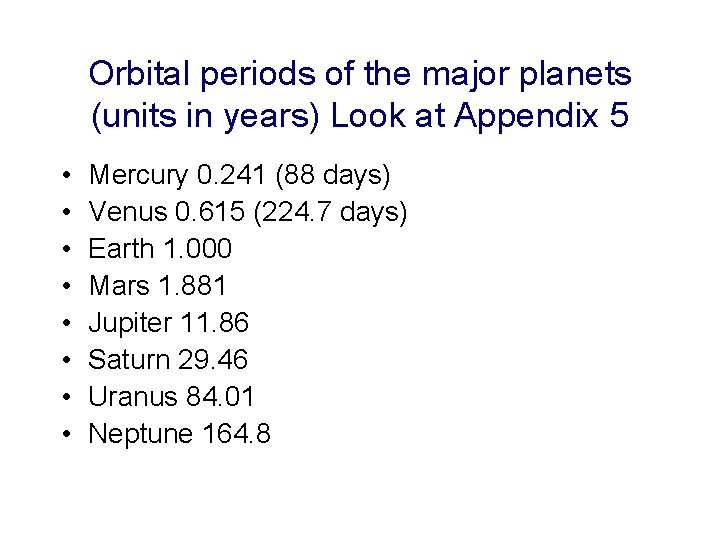
Orbital periods of the major planets (units in years) Look at Appendix 5 • • Mercury 0. 241 (88 days) Venus 0. 615 (224. 7 days) Earth 1. 000 Mars 1. 881 Jupiter 11. 86 Saturn 29. 46 Uranus 84. 01 Neptune 164. 8
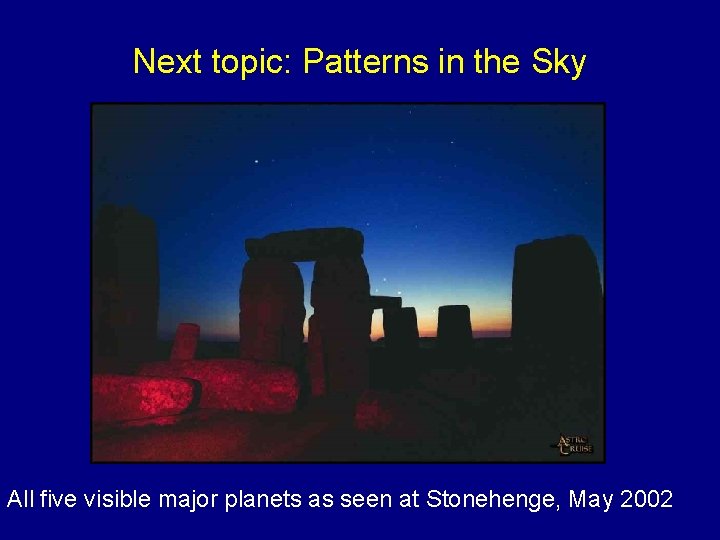
Next topic: Patterns in the Sky All five visible major planets as seen at Stonehenge, May 2002
What do we mean by “Patterns in the Sky” • Grouping of celestial objects (Sun, Moon, planets, groups of stars) that we see in the sky • How do we describe those in terms of numbers (“the Greek obsession with geometry”) • What are the cyclical recurrences of these phenomena? • How do we explain these in terms of a modern understanding of the solar system? • See Chapter 2 of book (later 3 and 4)
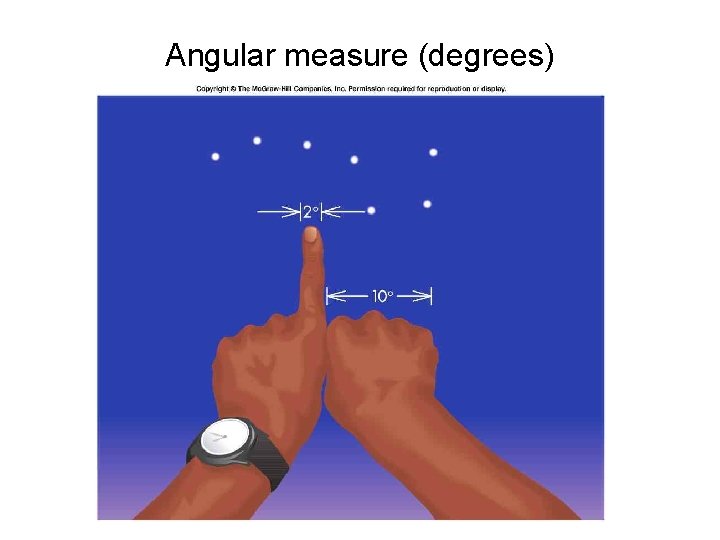
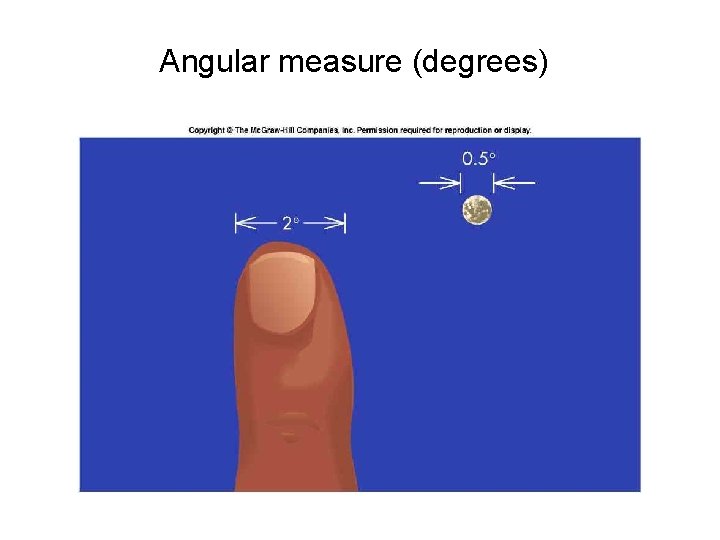
Angular measure (degrees)
Angular measure (degrees)
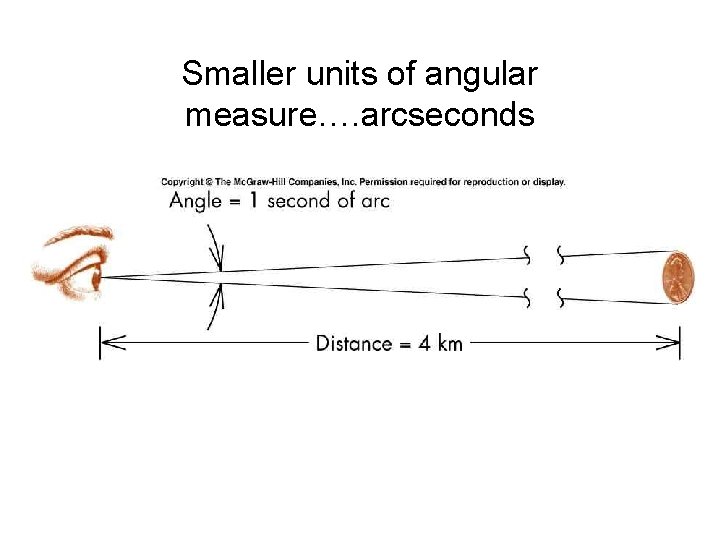
Smaller units of angular measure…. arcseconds
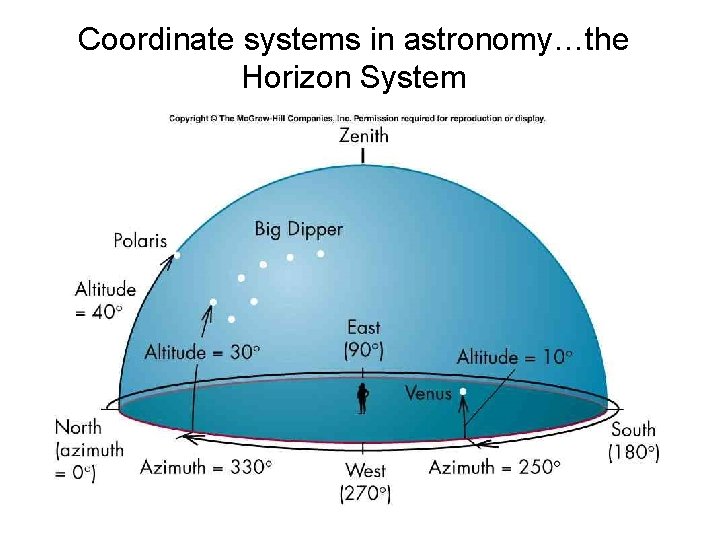
Coordinate systems in astronomy…the Horizon System
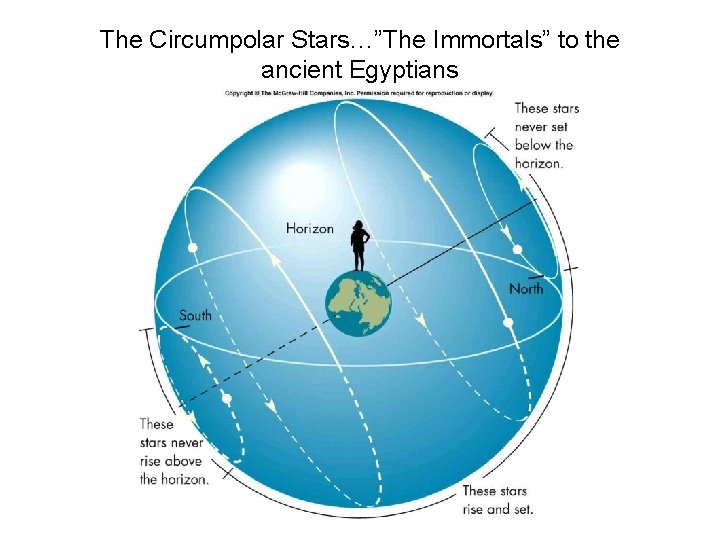
The Circumpolar Stars…”The Immortals” to the ancient Egyptians