
The scale of space and time Scale how
- Slides: 25
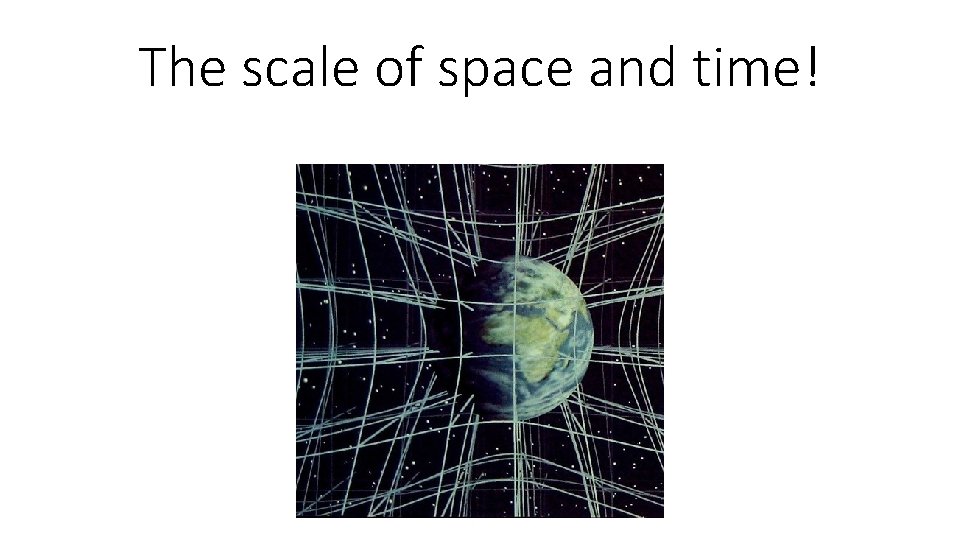
The scale of space and time!
Scale = how the size of one object compares to another
Bill Nye: Solar System Scale Video https: //www. youtube. com/watch? v=97 Ob 0 x. R 0 Ut 8
Objective: Make sense of units of space and time used in Astronomy. Create a scale model of the planets in the solar system.
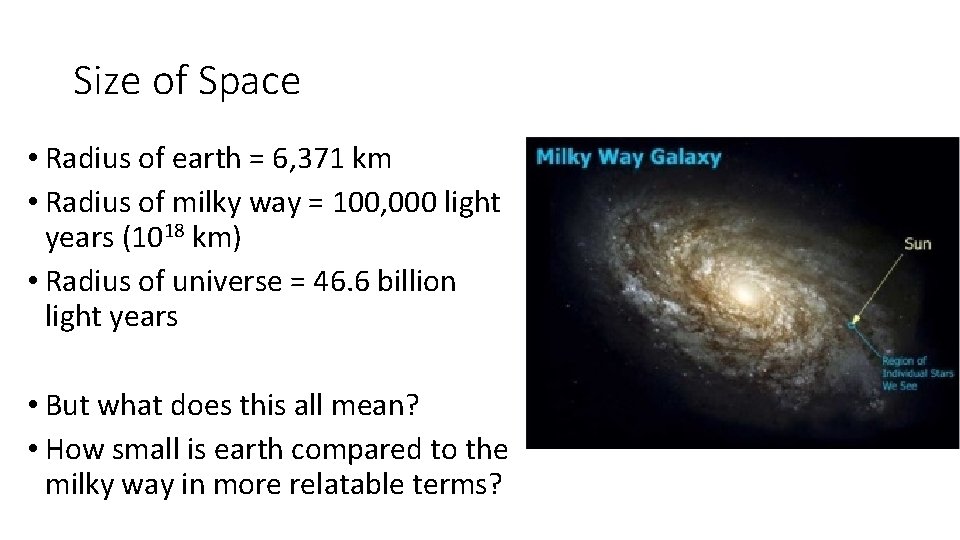
Size of Space • Radius of earth = 6, 371 km • Radius of milky way = 100, 000 light years (1018 km) • Radius of universe = 46. 6 billion light years • But what does this all mean? • How small is earth compared to the milky way in more relatable terms?
Time • Big bang occurred 13. 7 billion years ago • The sun formed 5 billion years ago • Life on earth 3. 5 billion years ago • Humans appeared on earth. 5 million years ago • Earth’s oceans will evaporate in 1 billion years • How can we make sense of these times?
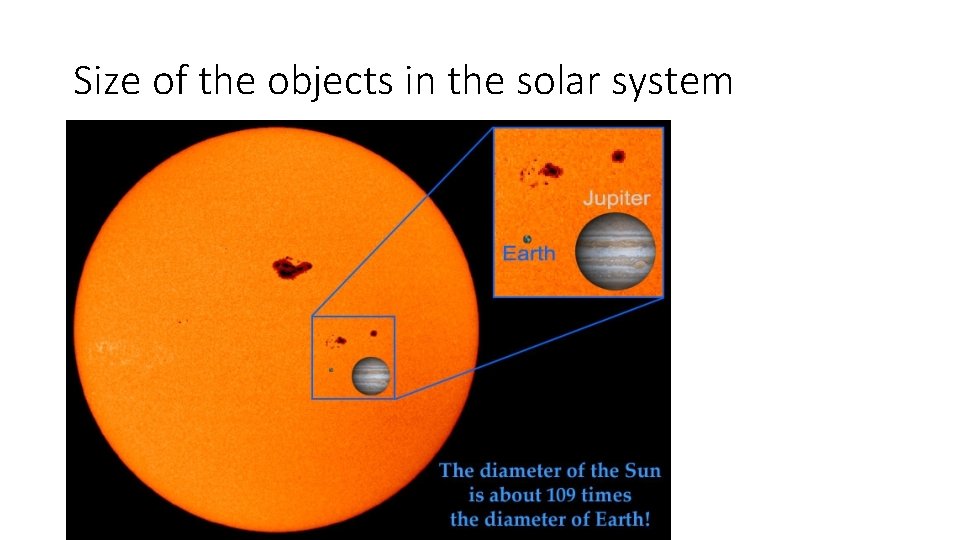
Size of the objects in the solar system
Size of our solar system • 99% of the matter in the solar system is in the sun • . 9% of the matter in the solar system is in Jupiter • . 1% of the matter in the solar system is in everything else!
If the earth were the size of a marble? • If the earth were the size of a marble, how big would the sun be? With a partner: make a guess of an object that would be approximately the size of the sun if the earth were a marble
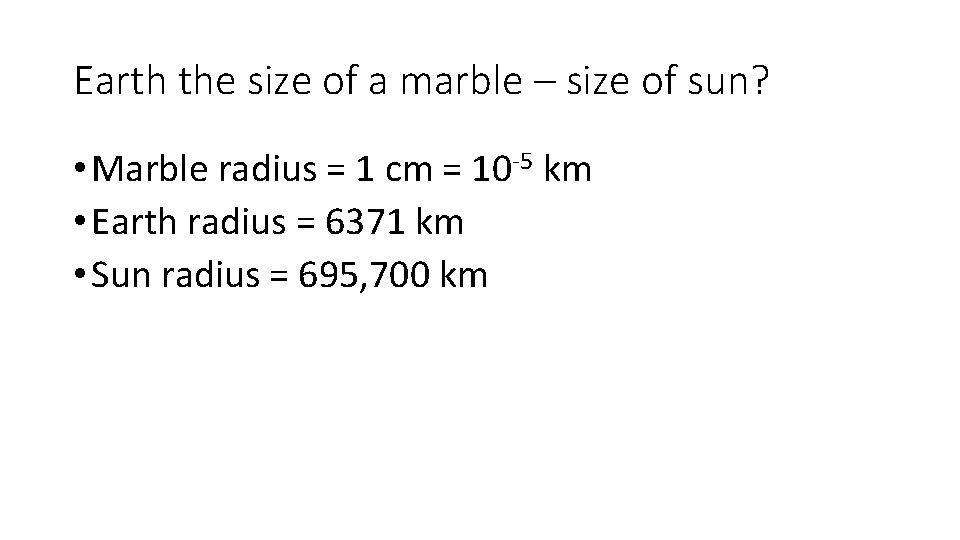
Earth the size of a marble – size of sun? • Marble radius = 1 cm = 10 -5 km • Earth radius = 6371 km • Sun radius = 695, 700 km
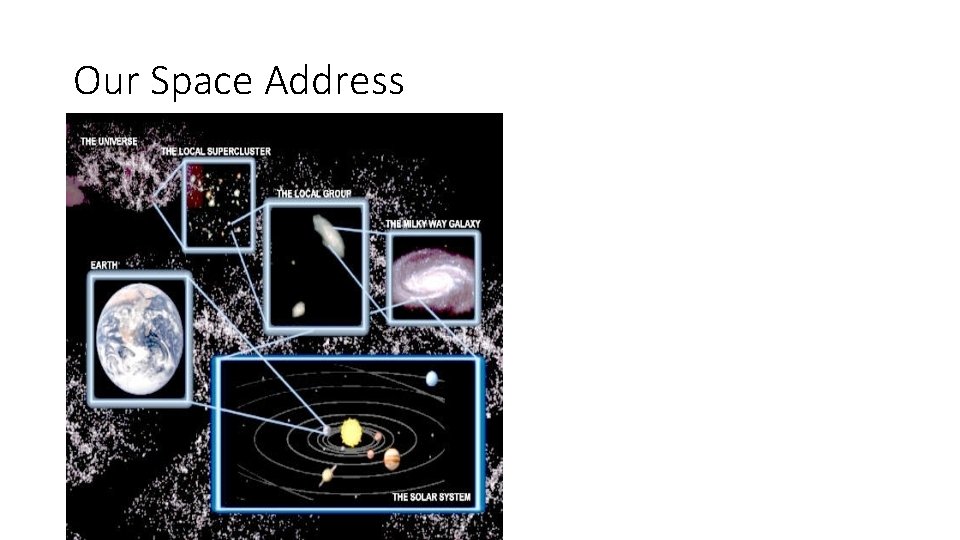
Our Space Address
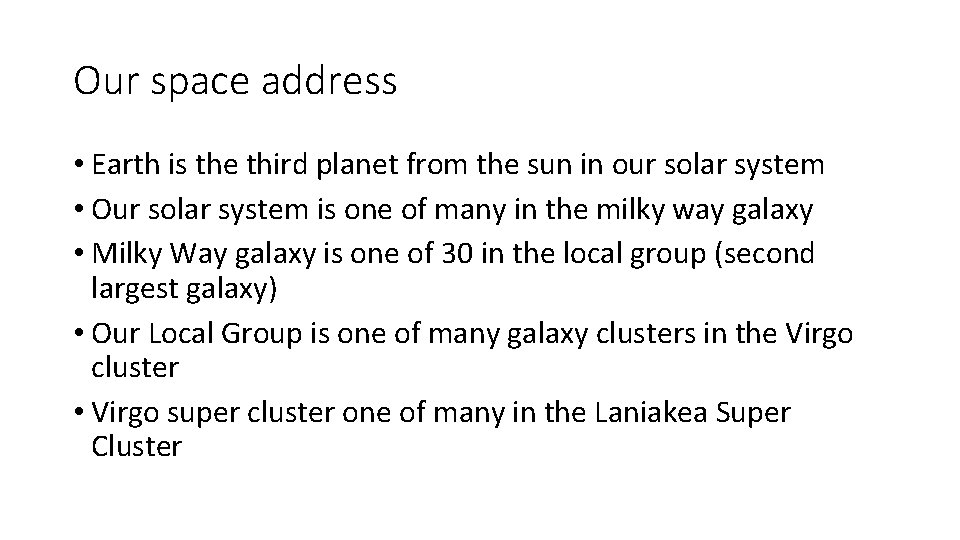
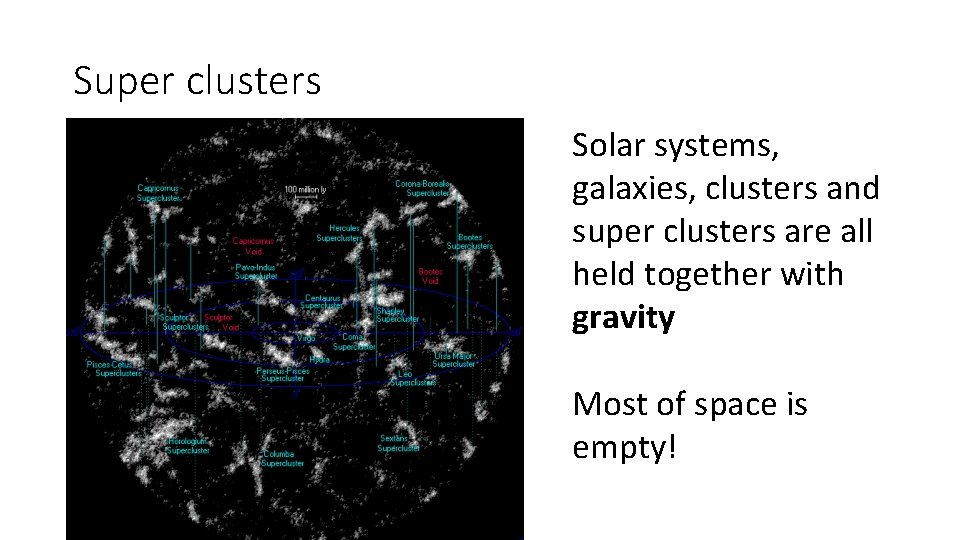
Our space address • Earth is the third planet from the sun in our solar system • Our solar system is one of many in the milky way galaxy • Milky Way galaxy is one of 30 in the local group (second largest galaxy) • Our Local Group is one of many galaxy clusters in the Virgo cluster • Virgo super cluster one of many in the Laniakea Super Cluster
Super clusters Solar systems, galaxies, clusters and super clusters are all held together with gravity Most of space is empty!
How far apart are the planets in the solar system? • Last class we looked at the size of the planets • Now let’s look at their distance apart • Average distance of earth to sun is 149. 6 million km • This distance is called the Astronomical unit
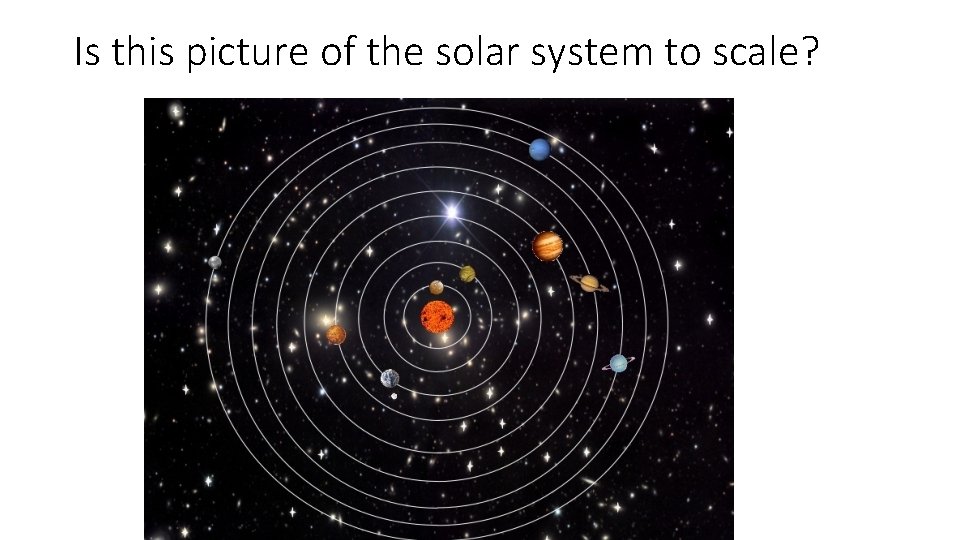
Is this picture of the solar system to scale?
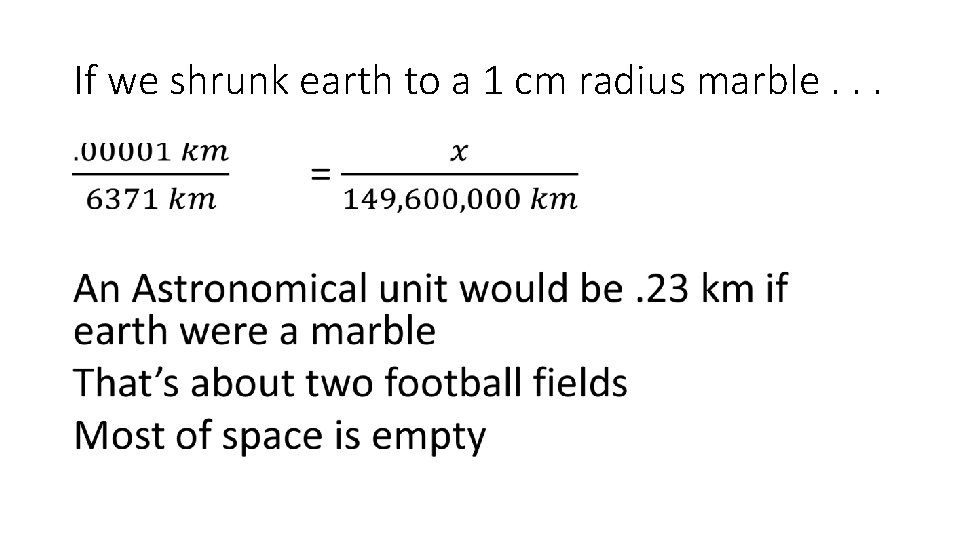
If we shrunk earth to a 1 cm radius marble. . . •
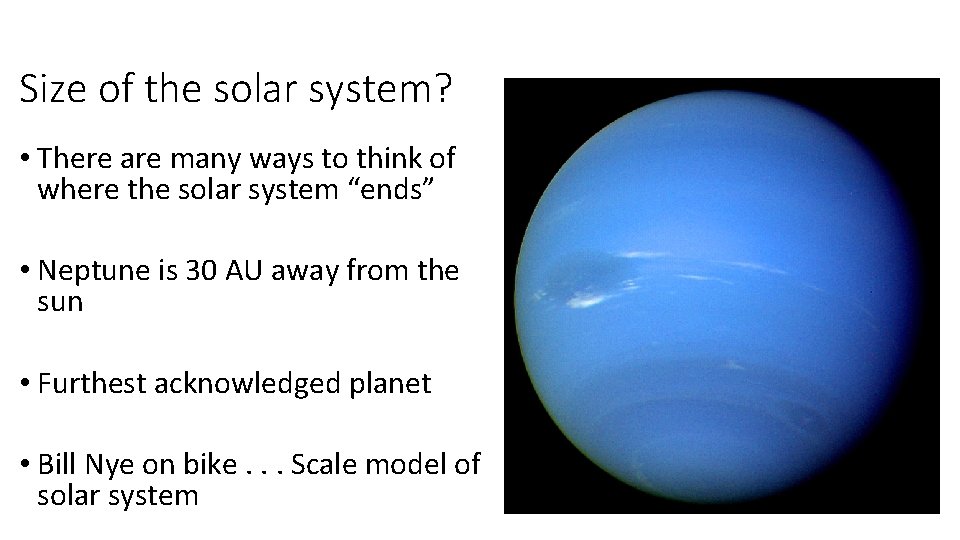
Size of the solar system? • There are many ways to think of where the solar system “ends” • Neptune is 30 AU away from the sun • Furthest acknowledged planet • Bill Nye on bike. . . Scale model of solar system
Do Now: How far away? • How far away is North Haven from Boston? • How would you describe the distance to a friend? • Did you use a unit of time as your measurement? For example, 2 hours • Assume the trip is mostly on the highway, no traffic, and that the car travels 60 miles per hour • Distance to Boston is 129 miles • Then the trip takes about two car hours
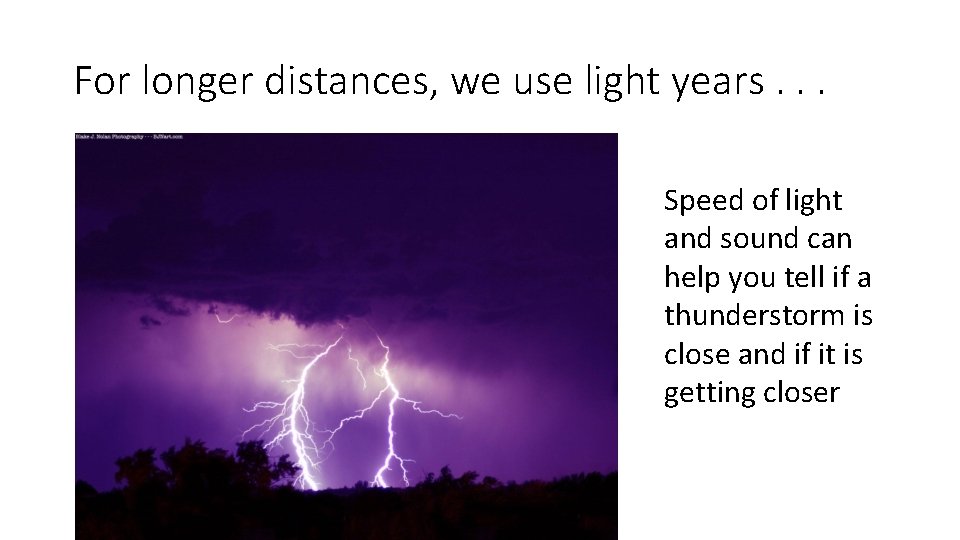
For longer distances, we use light years. . . Speed of light and sound can help you tell if a thunderstorm is close and if it is getting closer
Everything in space is moving! • Say you are jogging at a speed of 1 meter per second • You are travelling at 1 meter per second relative to the earth • But the earth is also moving relative to the sun • Which is also moving • So how fast are you really travelling? • Light travels at a constant speed
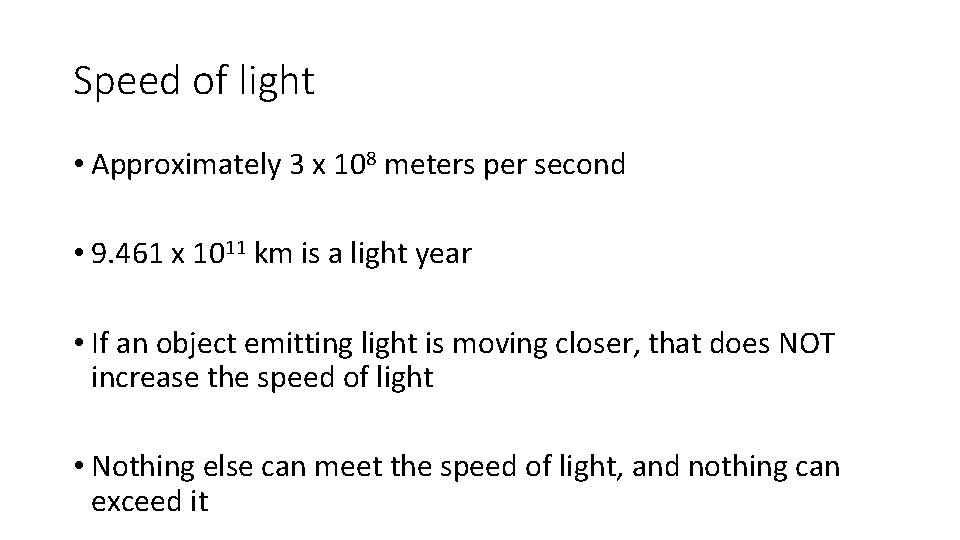
Speed of light • Approximately 3 x 10⁸ meters per second • 9. 461 x 1011 km is a light year • If an object emitting light is moving closer, that does NOT increase the speed of light • Nothing else can meet the speed of light, and nothing can exceed it
Now what? • We will watch the rest of the Cosmos video we started last class, which outlines several ways that society/the world could end • At your table, decide which is the most likely way the world could end • At your table, you need to identify a priority for our species to continue its survival on earth. Example: researching a way to destroy asteroids • Convince the class of the importance of the priority you identified
Astronomy Do Now 10 minutes to finish preparing your argument for the debate on relative age of human species
Brown Dwarfs – Outline pg. 420, then answer • What is the definition of a brown dwarf? • How do astronomers draw the line between a planet and a star? • What are some examples of measurements used in this page of the book?
Read and outline Demotion of Pluto page 472 • Why was Pluto demoted to “Dwarf Planet” status? • On your drawings, how small is Pluto compared to the other planets? • Do you think that Pluto should be considered a planet, a dwarf planet, or something else? Explain why or why not. • What about the other Kuiper Belt Objects?