
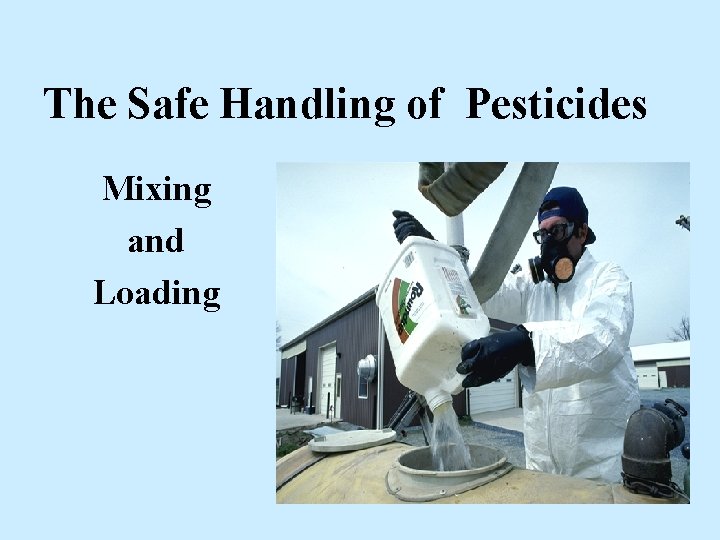
The Safe Handling of Pesticides Mixing and Loading

- Slides: 29
The Safe Handling of Pesticides Mixing and Loading
What are Pesticides • • Insecticides Herbicides Fungicides Rodenticides
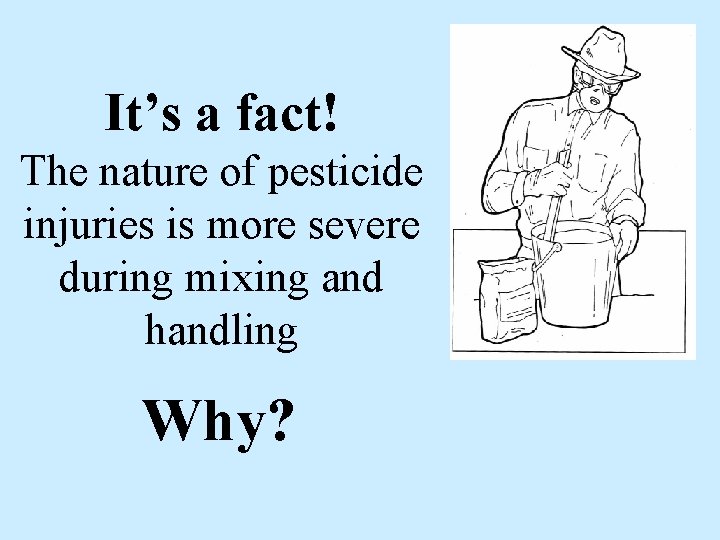
It’s a fact! The nature of pesticide injuries is more severe during mixing and handling Why?
• Pesticide is concentrated (its not yet diluted) • Activities around the sprayer (Climbing, lifting, pouring) • Applicators often work alone! • Applicators tend to be less safe when not spraying…. safety is an attitude!
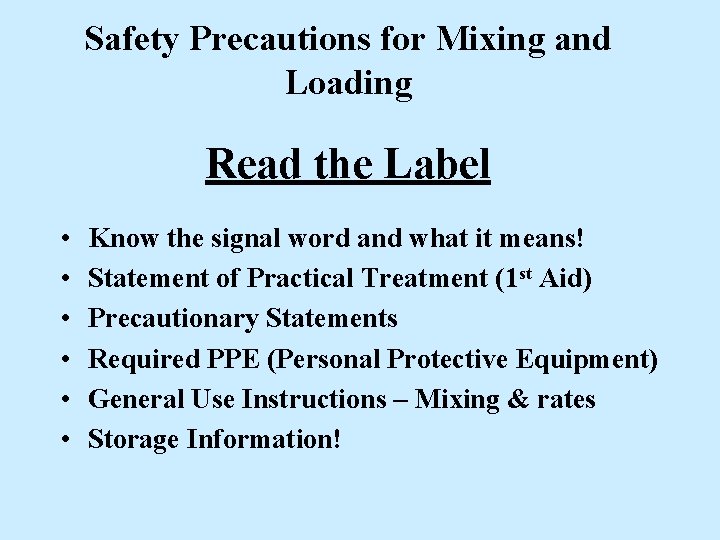
Safety Precautions for Mixing and Loading Read the Label • • • Know the signal word and what it means! Statement of Practical Treatment (1 st Aid) Precautionary Statements Required PPE (Personal Protective Equipment) General Use Instructions – Mixing & rates Storage Information!
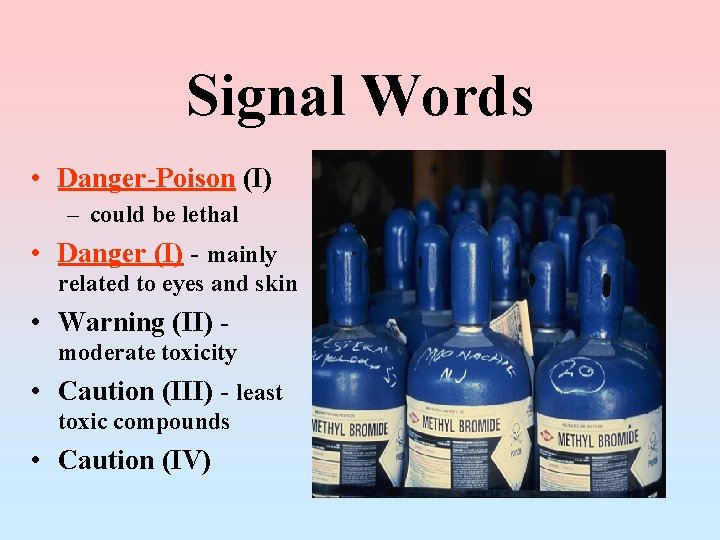
Signal Words • Danger-Poison (I) – could be lethal • Danger (I) - mainly related to eyes and skin • Warning (II) moderate toxicity • Caution (III) - least toxic compounds • Caution (IV)
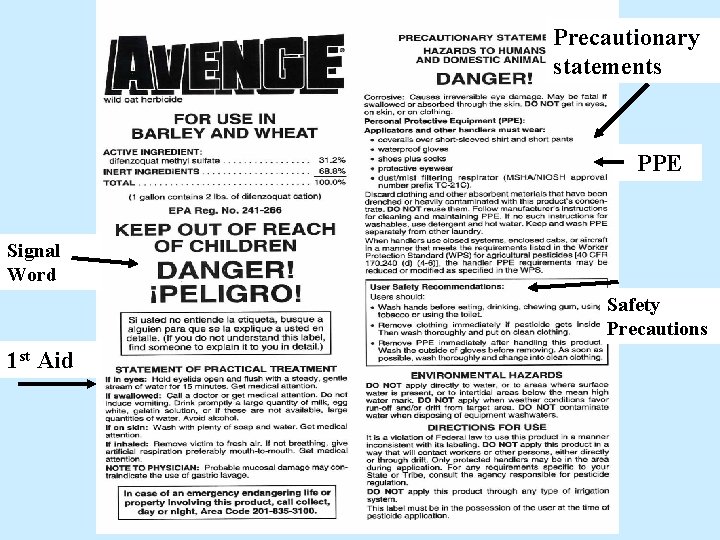
Precautionary statements PPE Signal Word Safety Precautions 1 st Aid
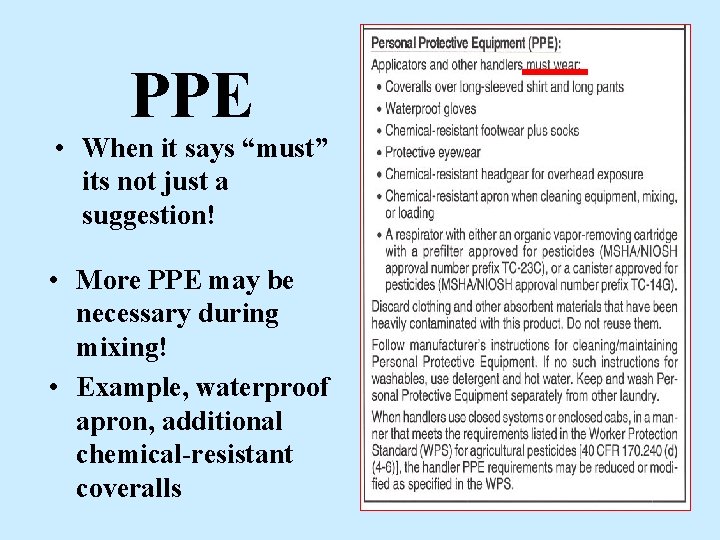
PPE • When it says “must” its not just a suggestion! • More PPE may be necessary during mixing! • Example, waterproof apron, additional chemical-resistant coveralls
The bottom line! Cover Yourself!
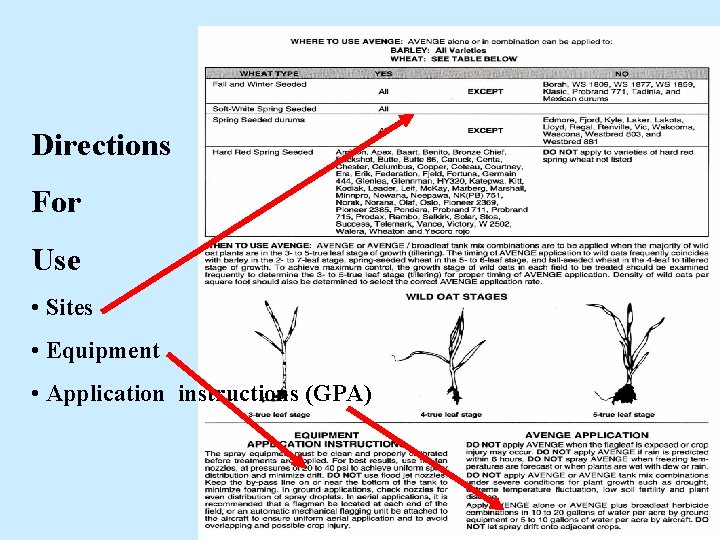
Directions For Use • Sites • Equipment • Application instructions (GPA)
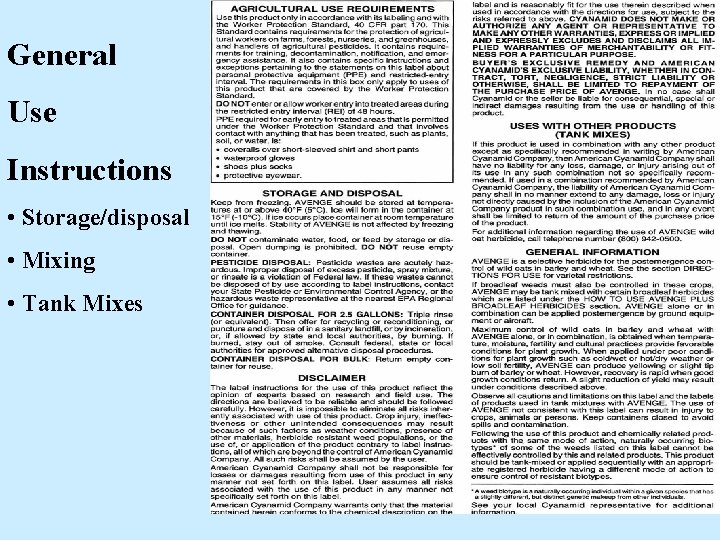
General Use Instructions • Storage/disposal • Mixing • Tank Mixes
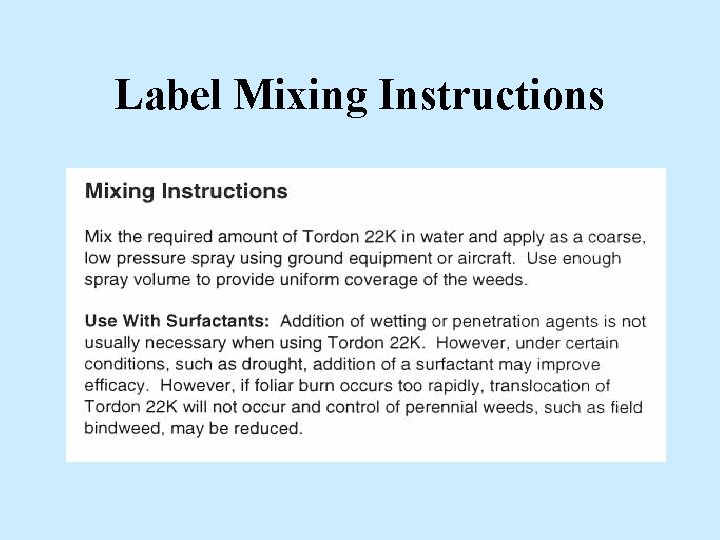
Label Mixing Instructions
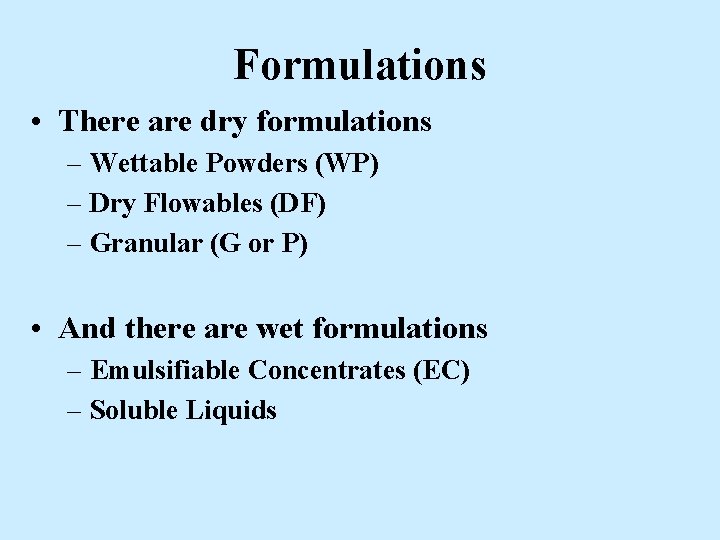
Formulations • There are dry formulations – Wettable Powders (WP) – Dry Flowables (DF) – Granular (G or P) • And there are wet formulations – Emulsifiable Concentrates (EC) – Soluble Liquids
Formulations • Dry Formulations – inhalation hazard – Wear a respirator when mixing or handling – Wear a respirator anytime there is a chance that fine particles can be inhaled • Wet Formulations – skin absorption hazard – EC’s absorb more. Use extra PPE when mixing! – Once dry formulations are mixed with water (WPs), the active ingredient can then be absorbed
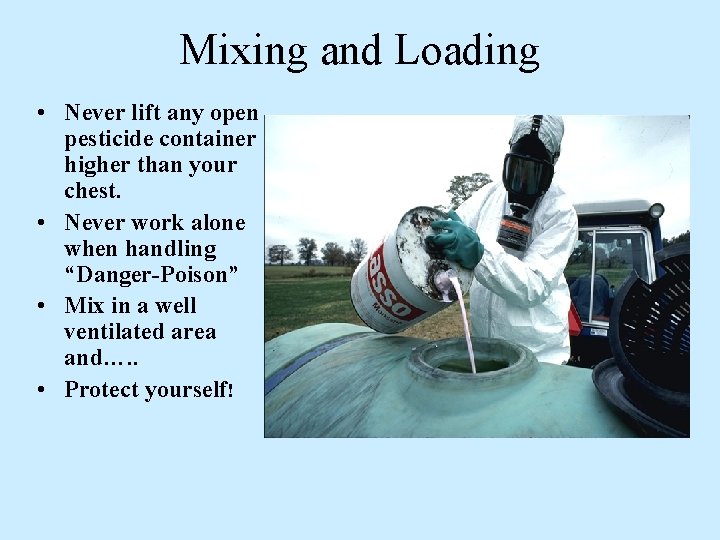
Mixing and Loading • Never lift any open pesticide container higher than your chest. • Never work alone when handling “Danger-Poison” • Mix in a well ventilated area and…. . • Protect yourself!
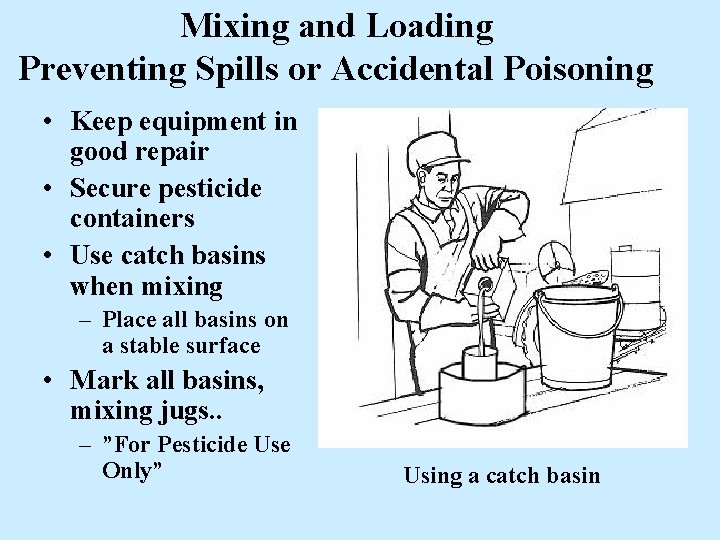
Mixing and Loading Preventing Spills or Accidental Poisoning • Keep equipment in good repair • Secure pesticide containers • Use catch basins when mixing – Place all basins on a stable surface • Mark all basins, mixing jugs. . – ”For Pesticide Use Only” Using a catch basin
Don’t Poison Yourself or Others • Store pesticides in original containers • Don’t smoke, drink or eat when mixing – Move out of the are and wash your hands and face • Never wear leather or cotton gloves when mixing • Don’t use your mouth to siphon pesticides
Mixing Two or More Pesticide Together Unless the label says otherwise, mix pesticides as follows:
1. Add water (or your desired diluent) to spray tank • Fill it only half full and start the sprayer engine or engage PTO • Check hoses, gauges, valves and ensure adequate agitation • Then…….
2. Add different formulations in the following order • • • Wettable Powders (WP) Dry Flowables (DF) Flowables (F) Liquids Allow time for each product to mix and disperse before you add the next product • Then……
3. Fill the tank to ¾ full and… • Add any Emulsifiable (EC) concentrates at this time. • Then…. .
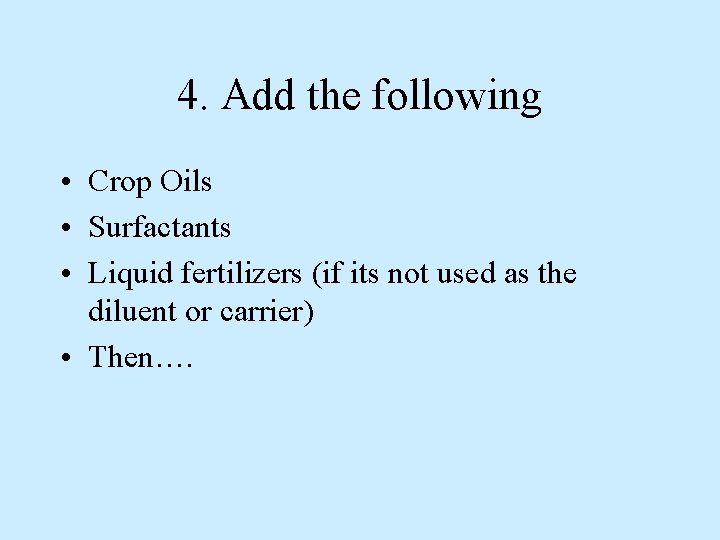
4. Add the following • Crop Oils • Surfactants • Liquid fertilizers (if its not used as the diluent or carrier) • Then….
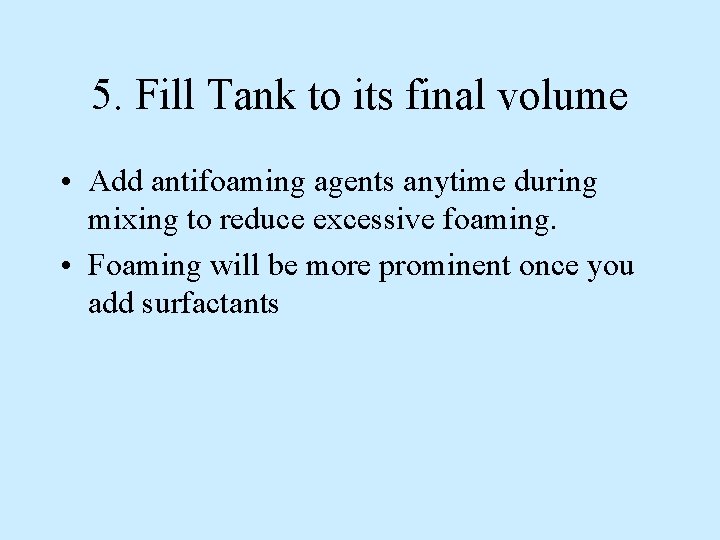
5. Fill Tank to its final volume • Add antifoaming agents anytime during mixing to reduce excessive foaming. • Foaming will be more prominent once you add surfactants
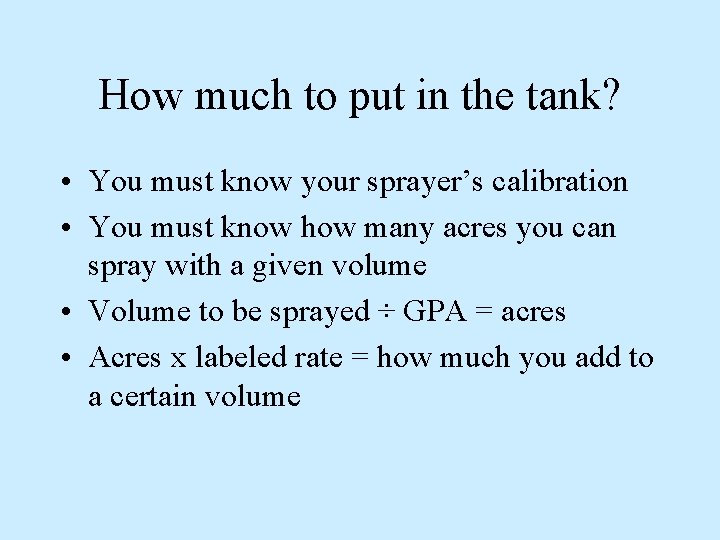
How much to put in the tank? • You must know your sprayer’s calibration • You must know how many acres you can spray with a given volume • Volume to be sprayed ÷ GPA = acres • Acres x labeled rate = how much you add to a certain volume
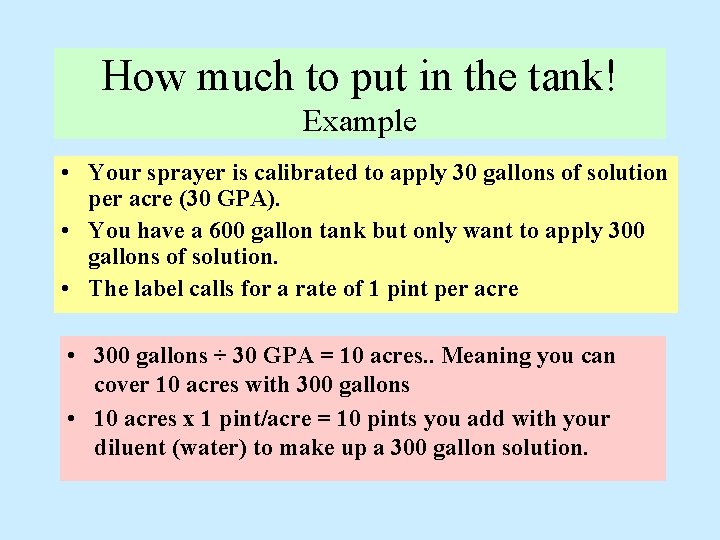
How much to put in the tank! Example • Your sprayer is calibrated to apply 30 gallons of solution per acre (30 GPA). • You have a 600 gallon tank but only want to apply 300 gallons of solution. • The label calls for a rate of 1 pint per acre • 300 gallons ÷ 30 GPA = 10 acres. . Meaning you can cover 10 acres with 300 gallons • 10 acres x 1 pint/acre = 10 pints you add with your diluent (water) to make up a 300 gallon solution.
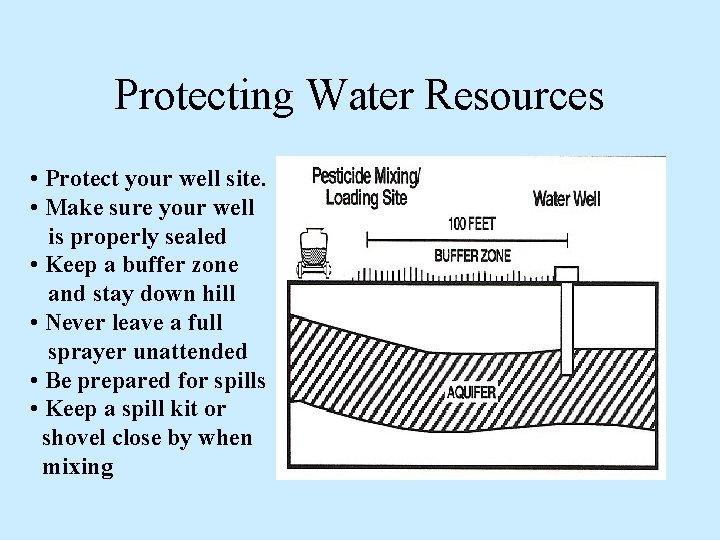
Protecting Water Resources • Protect your well site. • Make sure your well is properly sealed • Keep a buffer zone and stay down hill • Never leave a full sprayer unattended • Be prepared for spills • Keep a spill kit or shovel close by when mixing
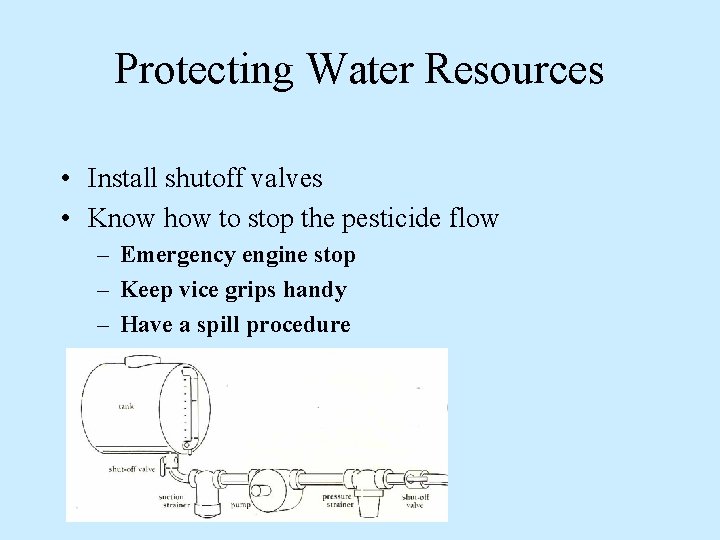
Protecting Water Resources • Install shutoff valves • Know how to stop the pesticide flow – Emergency engine stop – Keep vice grips handy – Have a spill procedure
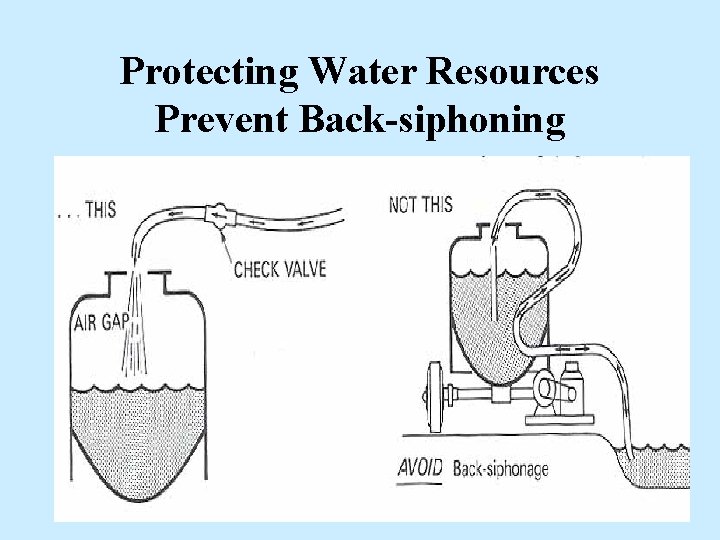
Protecting Water Resources Prevent Back-siphoning
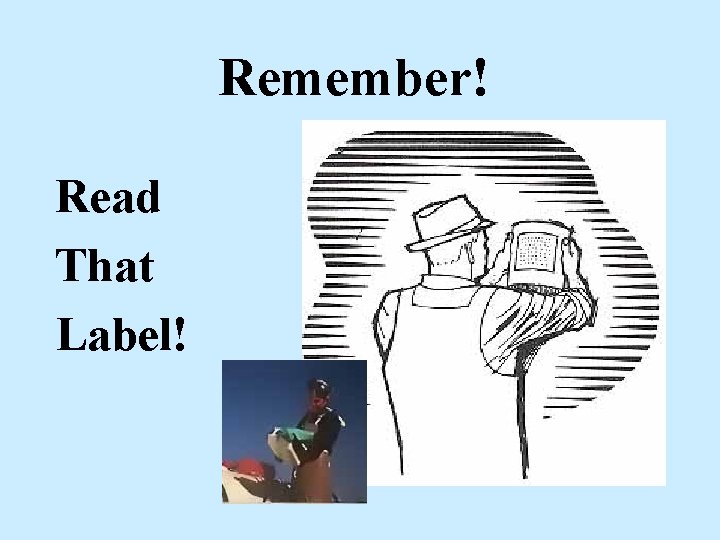
Remember! Read That Label!