
The Russian Civil War 1918 1921 Causes of
- Slides: 17
The Russian Civil War 1918 -1921
Causes of the War § Bolsheviks had seized control of Russia in a coup § § d’état: localised fighting and clashes ensued Skirmish between the Bolsheviks and Don Cossacks in January 1918: Bolshevik victory By May, the Socialist Revolutionaries fled to Samara to establish the Komuch which laid claim to be the legitimate government of Russia Generals Alekseev and Kornilov had escaped to Southern Russia and were collecting volunteers The Czech Legion was persuaded to fight the Bolsheviks by the Komuch
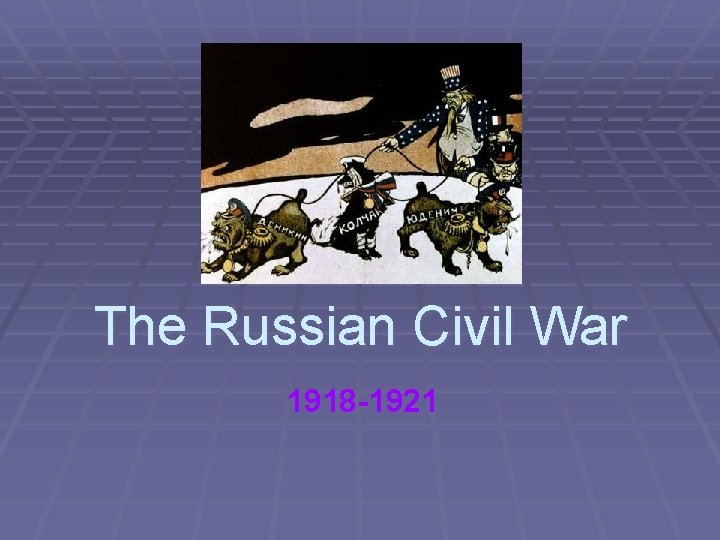
Two sides? § Reds: the Bolsheviks/Red Army § Whites: Imperialists and right wing generals such as Kornilov and Denikin, Socialist Revolutionaries, nationalists, separatists, mercenaries and anyone opposed to Brest. Litovsk § Greens: peasant armies fighting to protect their land § Conscription was used by the Whites and Reds and desertion was also common on both sides
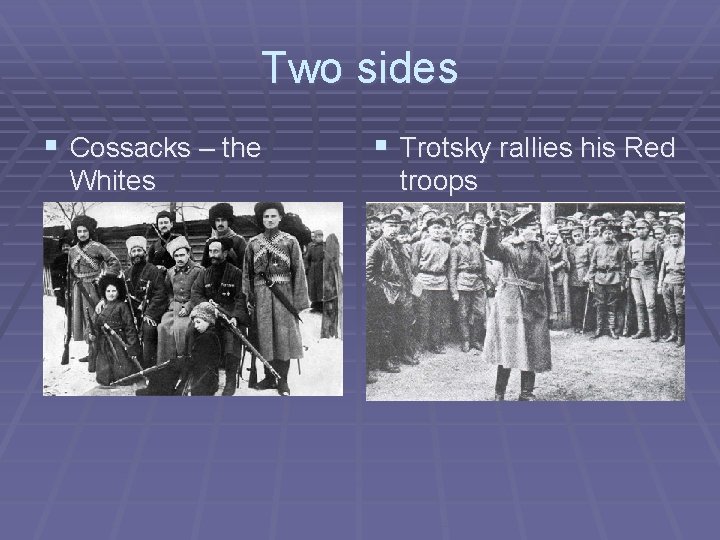
Two sides § Cossacks – the Whites § Trotsky rallies his Red troops
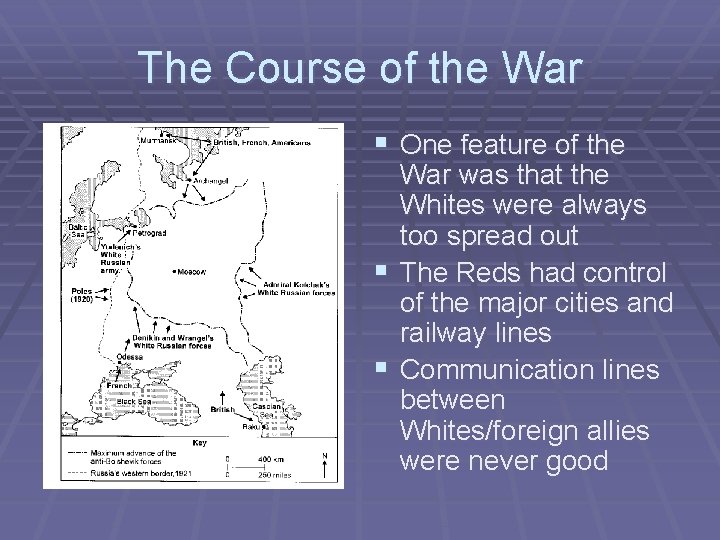
The Course of the War § One feature of the War was that the Whites were always too spread out § The Reds had control of the major cities and railway lines § Communication lines between Whites/foreign allies were never good
Foreign Involvement § The Whites received some limited outside help – § § § some more calculated than others British troops were already stationed in Archangel to protect arms from Germans French looked to recoup the loans and investment put into Russia before the October Revolution Japanese exploited the War to gain land Czech Legion tried to get to the Western Front and eventually fought as mercenaries with the SR Poles fought the Bolsheviks between 1919 -21 and gained large areas of White Russia and the Ukraine
How successful were the Whites? § Yudenich (West) reached the outskirts of Petrograd in October 1919 but was turned back by larger Bolshevik forces § Denikin (South) and the Don Cossacks reached within 320 km of Moscow the same month – beaten back by Trotsky § Kolchak (East) took Kazan and Samara by June 1919 but internal disagreements led to the demise of this wing
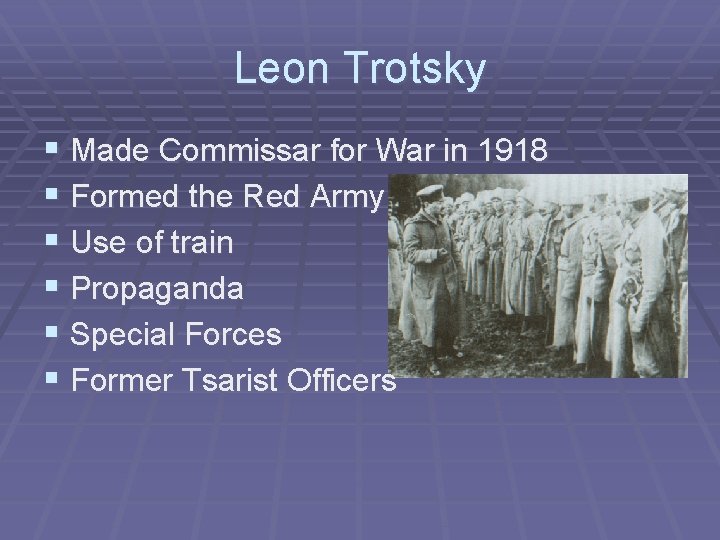
Leon Trotsky § Made Commissar for War in 1918 § Formed the Red Army § Use of train § Propaganda § Special Forces § Former Tsarist Officers
Why did the Reds win? 1) White Weaknesses § Whites were disjointed both geographically and § § § ideologically Support given to the Whites from abroad was extremely limited Reliance on mercenaries Lack of leadership Viewed in a bad light by peasants Indiscipline and corruption among officers Some battalions had were outnumbered
Why did the Red win? 2) Red Strengths § Bolsheviks held major cities, factories and § § § railway lines Communication lines stayed open Use of conscription in heavily populated areas Strict discipline Strong, united ideology Excellent leadership Good use of propaganda: helped gain peasant support and separatist support
War Communism: Why? § While Trotsky took control of the War Lenin § § organised ‘domestic’ policy from Moscow; there were many problems: Lack of grain/bread in the cities (wheat rich areas of the Ukraine were now outside Bolshevik control) Workers’ committees proved incapable of running industry Hyper-inflation De-population of the cities
War Communism: What? § Grain requisitioning § Banning of private trade § Nationalisation of industry – but often the previous owners were brought in to manage the factories § Labour discipline § Rationing § Passports to prevent workers leaving the towns
The Red Terror: Why? § The Bolsheviks were coming under increasing criticism – § § protests and graffiti It is difficult to rule when there is a civil war Opposition groups were increasingly using terrorism: e. g. SR assassinated the German ambassador in July 1918, Dzerzhinsky was kidnapped and two Bolshevik Party leaders were murdered Lenin was shot and badly wounded on 30 August 1918 by Fanya Kaplan Lenin never concealed the fact that in order to rule effectively as a one party state he would have to use brutality
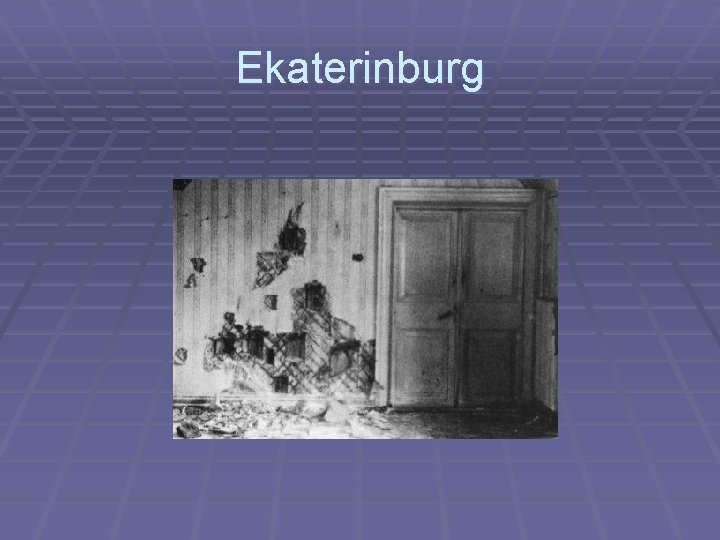
What was the Red Terror? § The Cheka, under the leadership of Felix § § § Dzerzhinsky, administered most of the Red Terror From June 1918 onwards, leftist Socialist Revolutionaries were arrested in large numbers Mensheviks and SRs were excluded from the Soviets and many Kadets were imprisoned The Romanovs were executed on 17 July 1918 in Ekaterinburg As many as 300, 000 people may have been killed – most of them Middle class Kulaks were targeted in the countryside Priests, prostitutes and even children were killed or imprisoned which highlights the arbitrary nature of the Terror
Ekaterinburg
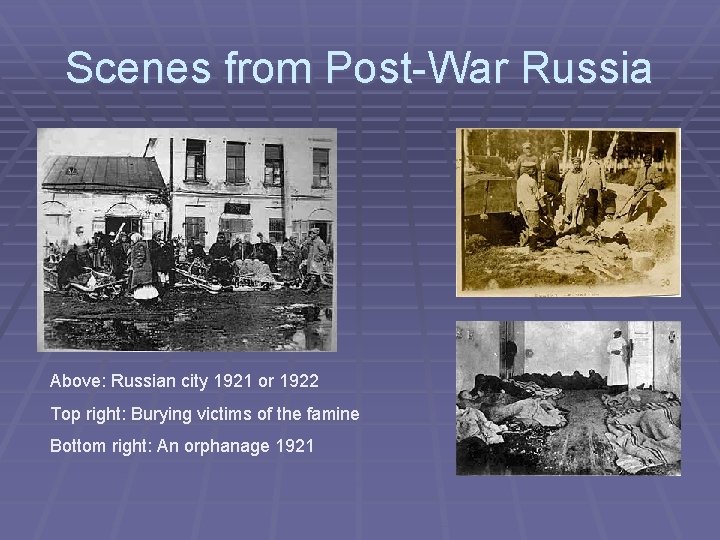
The Real Cost of the War § Approximately 3 million talented and academic members § § § of Russian society fled to exile and countless others were murdered. Famine may have killed as many as 5 million people by 1921 Hyper-inflation meant that the rouble became worthless Wooden houses were demolished for fuel and overcrowding was rife in the cities Unsanitary conditions led to outbreaks of disease There were at least 1, 212, 824 casualties among soldiers but the data is incomplete Atrocities were carried out on the civilian population by both sides
Scenes from Post-War Russia Above: Russian city 1921 or 1922 Top right: Burying victims of the famine Bottom right: An orphanage 1921