
The Rule of 4 s A TheoryDriven Approach
- Slides: 16
The Rule of 4 s: A Theory-Driven Approach to Implementing Simulation into Surgical Training Sonal Arora Ph. D MBBS MRCS BSc(hons) Academic Clinical Lecturer/General Surgeon Sp. R
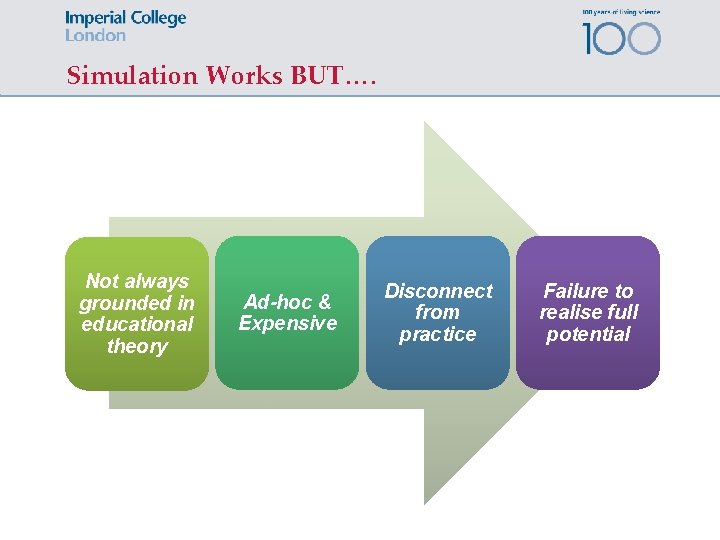
Simulation Works BUT…. Not always grounded in educational theory Ad-hoc & Expensive Disconnect from practice Failure to realise full potential
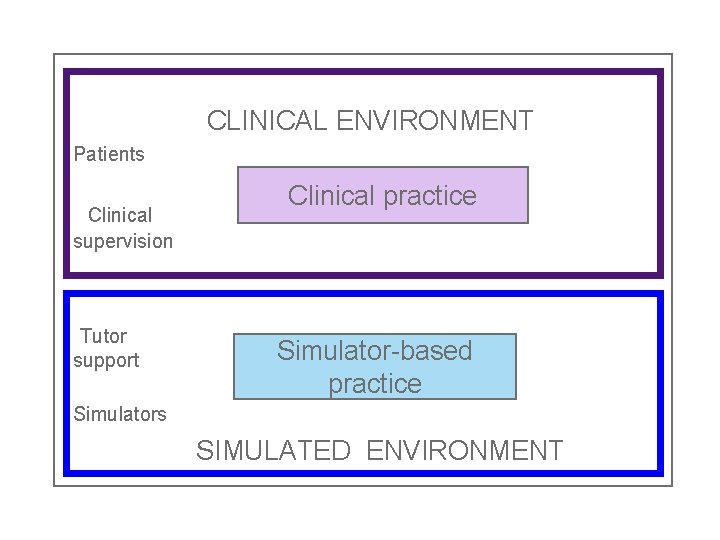
CLINICAL ENVIRONMENT Patients Clinical supervision Tutor support Clinical practice Simulator-based practice Simulators SIMULATED ENVIRONMENT
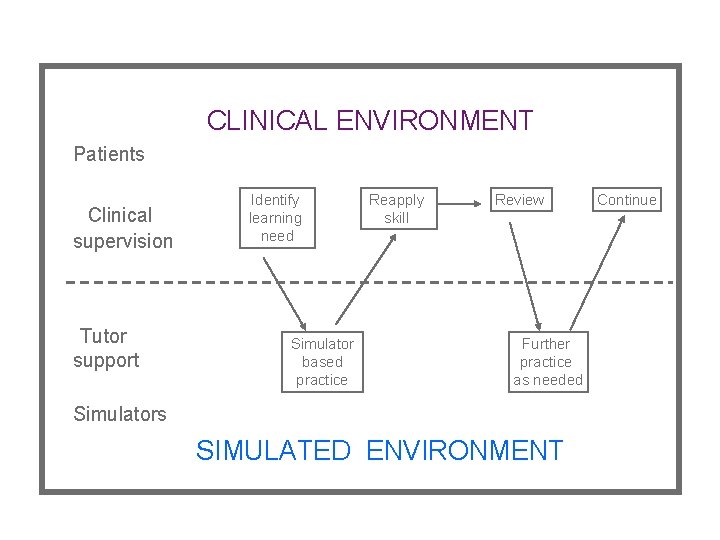
CLINICAL ENVIRONMENT Patients Clinical supervision Tutor support Identify learning need Simulator based practice Reapply skill Review Further practice as needed Simulators SIMULATED ENVIRONMENT Continue
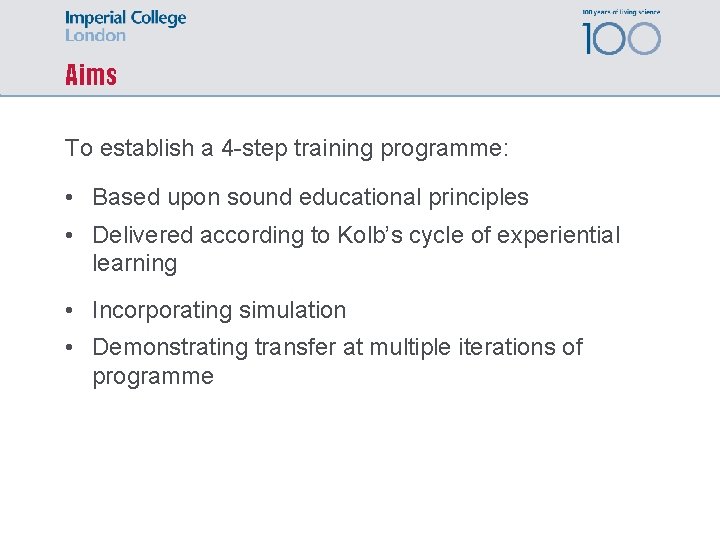
Aims To establish a 4 -step training programme: • Based upon sound educational principles • Delivered according to Kolb’s cycle of experiential learning • Incorporating simulation • Demonstrating transfer at multiple iterations of programme
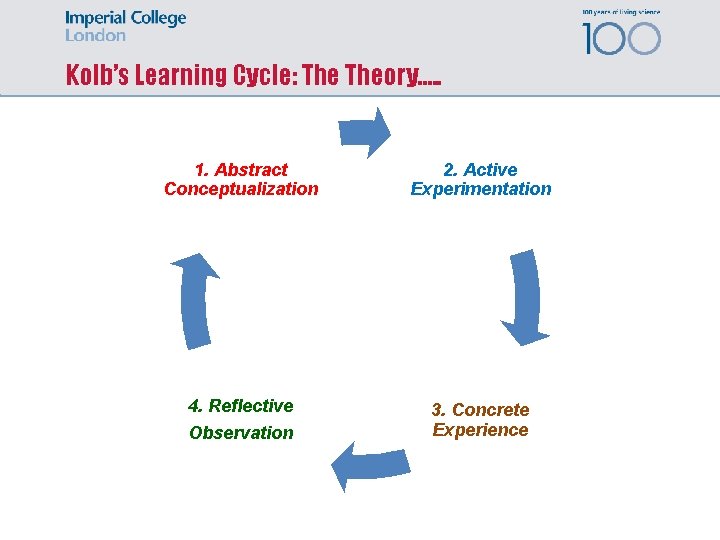
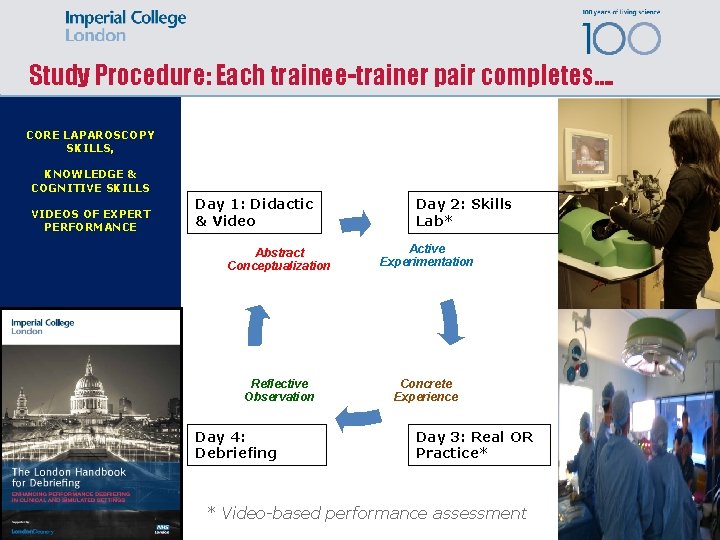
Kolb’s Learning Cycle: Theory…. . 1. Abstract Conceptualization 2. Active Experimentation 4. Reflective Observation 3. Concrete Experience
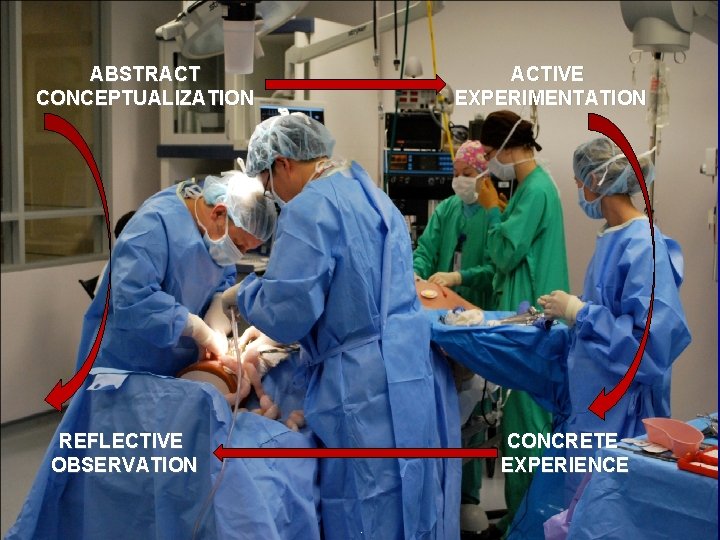
ACTIVE EXPERIMENTATION ABSTRACT CONCEPTUALIZATION REFLECTIVE OBSERVATION CONCRETE EXPERIENCE.
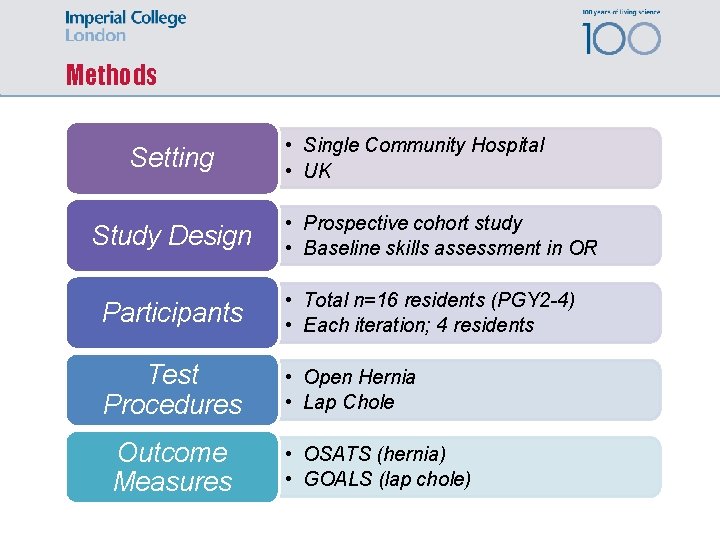
Methods Setting Study Design • Single Community Hospital • UK • Prospective cohort study • Baseline skills assessment in OR Participants • Total n=16 residents (PGY 2 -4) • Each iteration; 4 residents Test Procedures • Open Hernia • Lap Chole Outcome Measures • OSATS (hernia) • GOALS (lap chole)
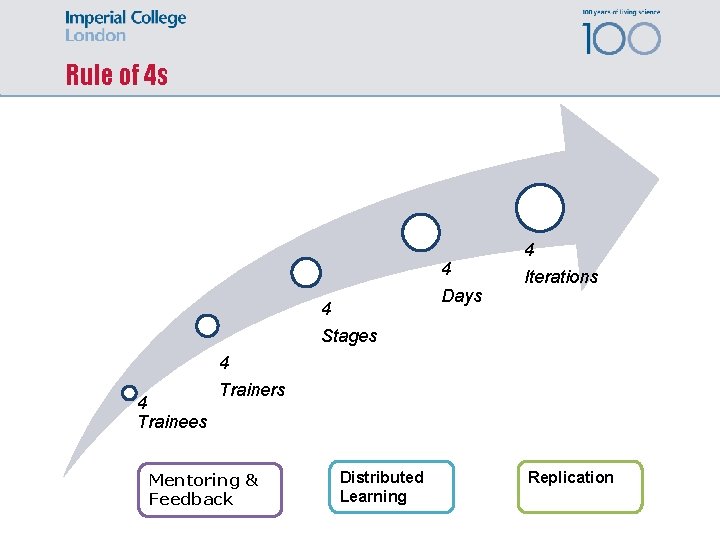
Rule of 4 s 4 Stages 4 Trainees 4 Days 4 Iterations 4 Trainers Mentoring & Feedback Distributed Learning Replication
Study Procedure: Each trainee-trainer pair completes…. CORE LAPAROSCOPY SKILLS, KNOWLEDGE & COGNITIVE SKILLS VIDEOS OF EXPERT PERFORMANCE Day 1: Didactic & Video Day 2: Skills Lab* Abstract Conceptualization Active Experimentation Reflective Observation Concrete Experience Day 4: Debriefing Day 3: Real OR Practice* * Video-based performance assessment
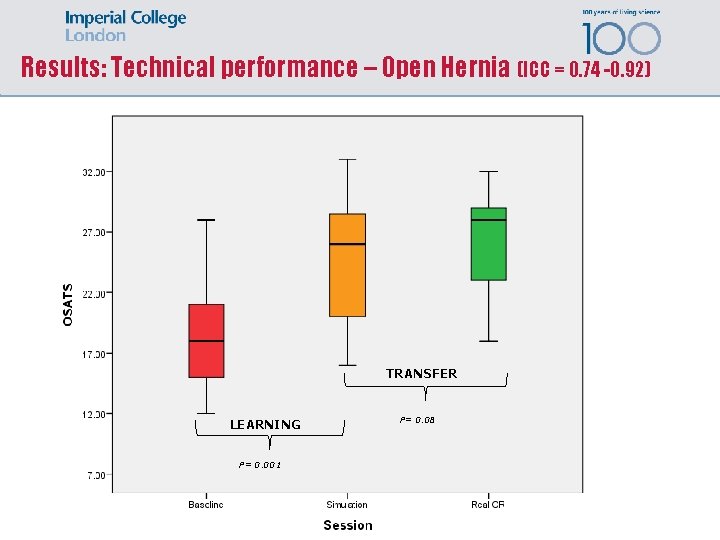
Results: Technical performance – Open Hernia (ICC = 0. 74 -0. 92) TRANSFER LEARNING P= 0. 001 P= 0. 08
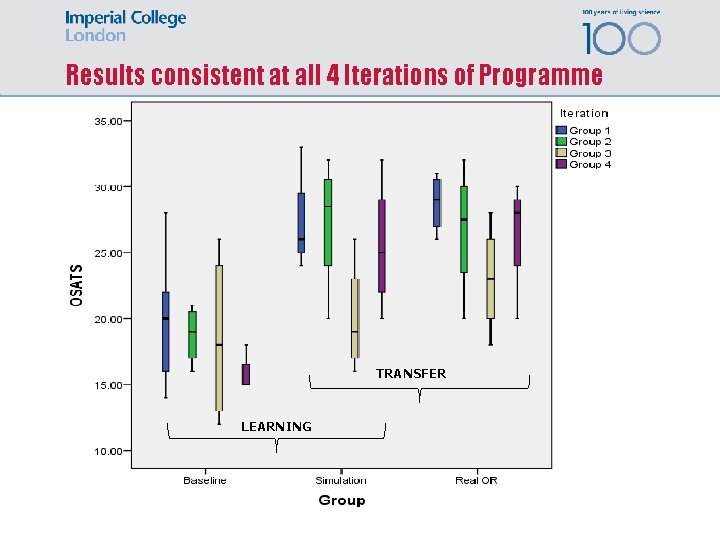
Results consistent at all 4 Iterations of Programme TRANSFER LEARNING
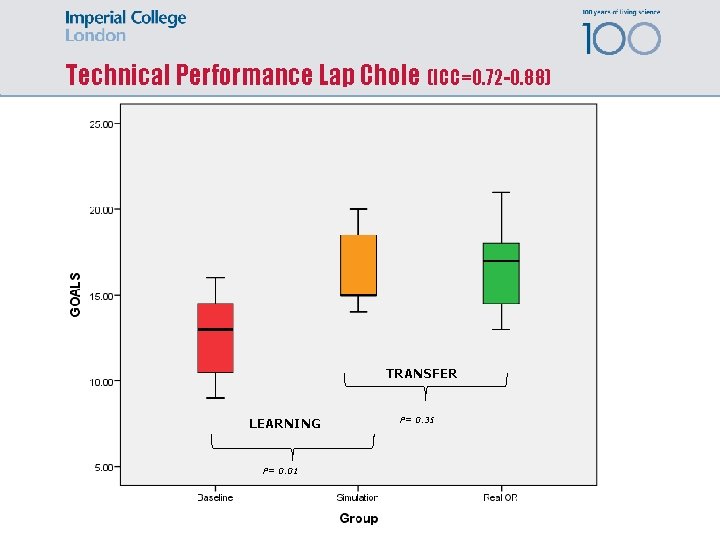
Technical Performance Lap Chole (ICC=0. 72 -0. 88) TRANSFER LEARNING P= 0. 01 P= 0. 35
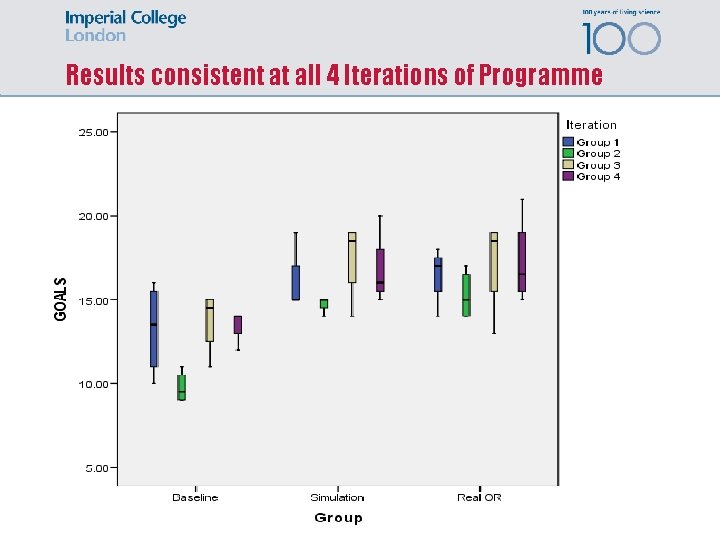
Results consistent at all 4 Iterations of Programme
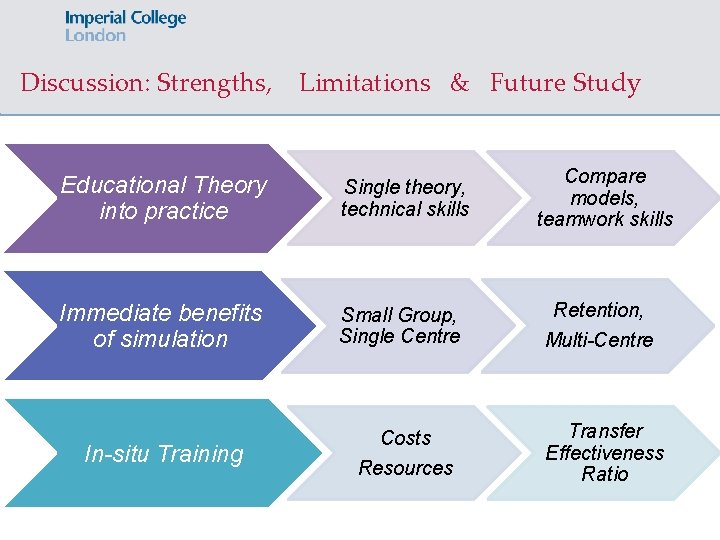
Discussion: Strengths, Limitations & Future Study Educational Theory into practice Single theory, technical skills Compare models, teamwork skills Immediate benefits of simulation Small Group, Single Centre Retention, Multi-Centre In-situ Training Costs Resources Transfer Effectiveness Ratio
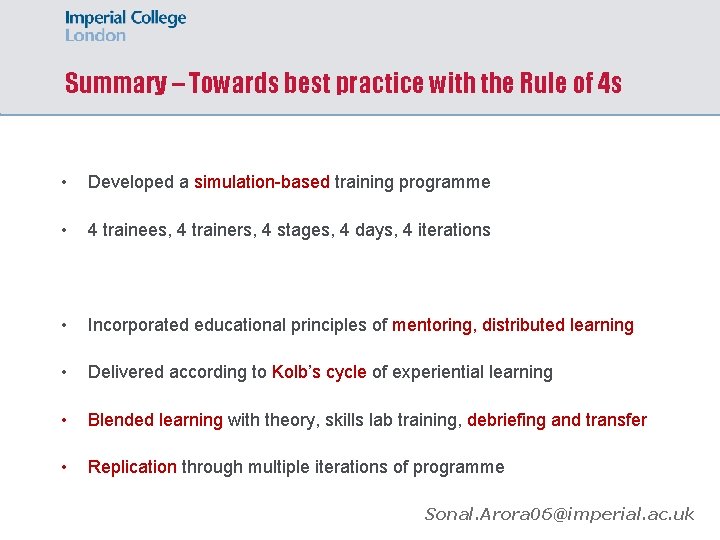
Summary – Towards best practice with the Rule of 4 s • Developed a simulation-based training programme • 4 trainees, 4 trainers, 4 stages, 4 days, 4 iterations • Incorporated educational principles of mentoring, distributed learning • Delivered according to Kolb’s cycle of experiential learning • Blended learning with theory, skills lab training, debriefing and transfer • Replication through multiple iterations of programme Sonal. Arora 06@imperial. ac. uk