
The Royal Marsden Sigmoid and Colon cancer staging

- Slides: 60
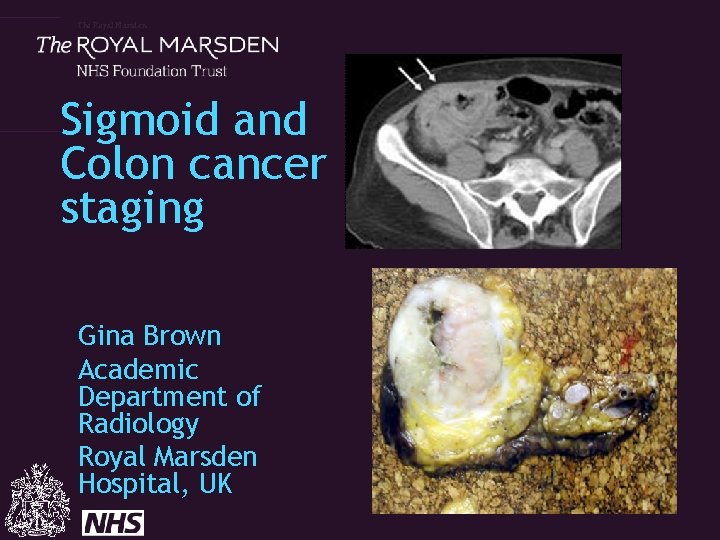
The Royal Marsden Sigmoid and Colon cancer staging Gina Brown Academic Department of Radiology Royal Marsden Hospital, UK
The Royal Marsden Staging of colon cancers – Dukes Histological system for rectal cancers extrapolated for colon cancers – 5 year survival: – 81% if confined to bowel wall – 64% if invasion through the wall – 27% if local lymph nodes involved – AJCC TNM staging system – T stage, N stage, M stage – 7 th Edition [Edge and Compton, 2010]
The Royal Marsden Other prognostic factors – Extramural Vascular Invasion (EMVI) – Reduced 5 year survival – Depth of extramural spread – Hermanek divided T 3 tumours into 4 groups – Involvement of Non Peritonealised Resection Margin – Very high risk local recurrence – Histological grade – Well differentiated, 76% 5 year survival – Poorly differentiated, 31% 5 year survival
The Royal Marsden How often are prognostic factors reported preoperatively in colon cancer? - EMVI - depth of extramural spread in mm
The Royal Marsden Currently: no role for imaging for local staging of colon cancers?
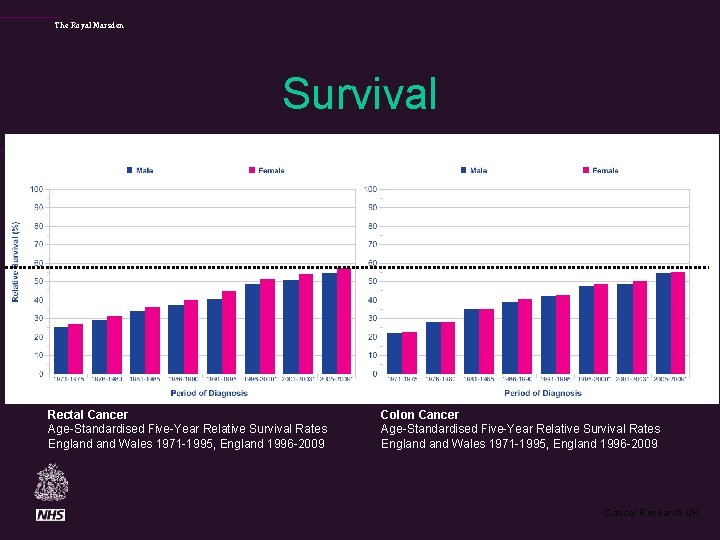
The Royal Marsden Survival Rectal Cancer Age-Standardised Five-Year Relative Survival Rates England Wales 1971 -1995, England 1996 -2009 Colon Cancer Age-Standardised Five-Year Relative Survival Rates England Wales 1971 -1995, England 1996 -2009 Cancer Research UK
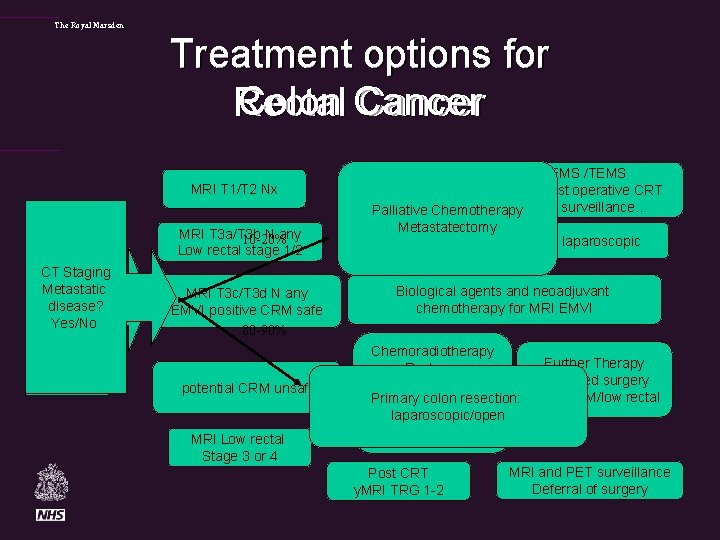
The Royal Marsden Treatment options for Colon Cancer Rectal Cancer MRI T 1/T 2 Nx MRI T 3 a/T 3 b N any 10 -20% Low rectal stage 1/2 MRI CT based Staging Selection Metastatic of disease? patients For. Yes/No range treatments MRI T 3 c/T 3 d N any EMVI positive CRM safe 80 -90% potential CRM unsafe MRI Low rectal Stage 3 or 4 EMS /TEMS Local excision pre/post operative CRT Palliative Chemotherapy MRI surveillance… Metastatectomy Primary TME Surgery: open v laparoscopic Biological agents and neoadjuvant chemotherapy for MRI EMVI Chemoradiotherapy Further Therapy Restage: /Extended surgery Timing of Primary colon resection: for mr. CRM/low rectal surgery laparoscopic/open after CRT 6 vs 12? Post CRT y. MRI TRG 1 -2 MRI and PET surveillance Deferral of surgery
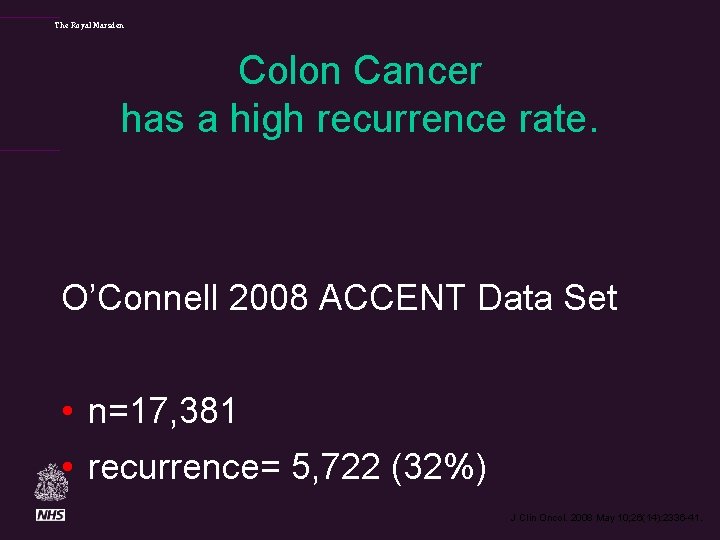
The Royal Marsden Colon Cancer has a high recurrence rate. O’Connell 2008 ACCENT Data Set • n=17, 381 • recurrence= 5, 722 (32%) J Clin Oncol. 2008 May 10; 26(14): 2336 -41.
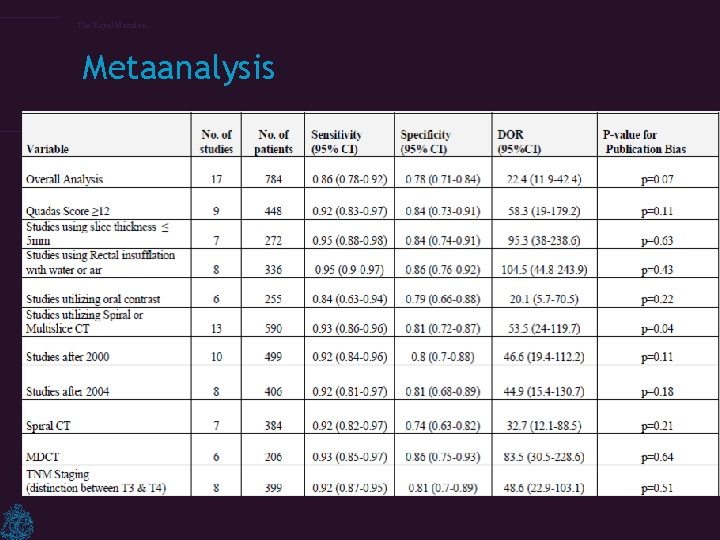
The Royal Marsden Metaanalysis
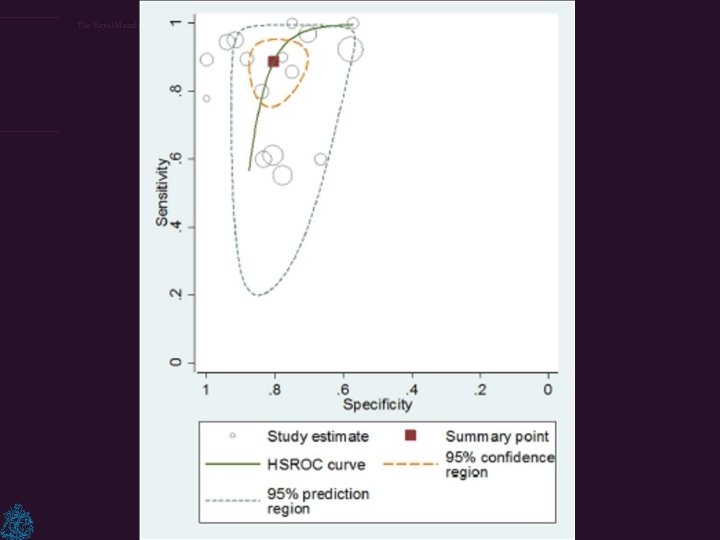
The Royal Marsden
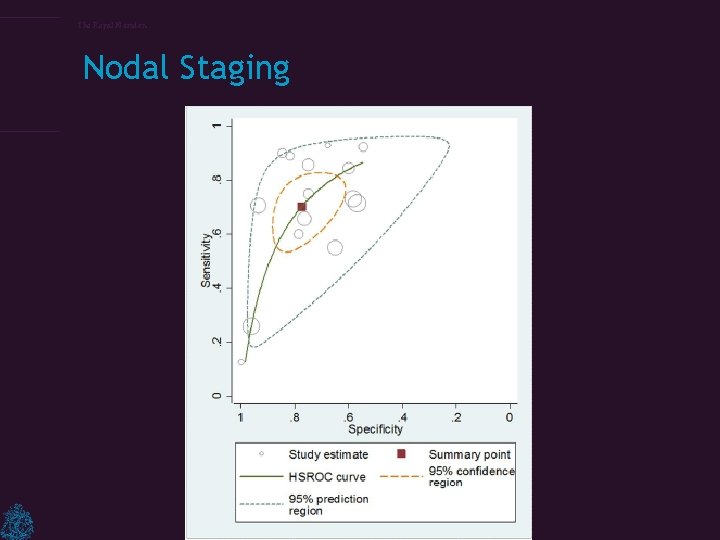
The Royal Marsden Nodal Staging
The Royal Marsden – Meta-analysis conducted on studies assessing accuracy of CT in staging colorectal cancer to detect tumour invasion beyond MP : – Sensitivity is as high as 86%. – Specificity of 78% – The ability of CT to predict the nodal status is however poor. – However none of the studies ever looked at the ability of CT to predict prognosis. Dighe S, Purkayastha S, Swift I, Tekkis PP, Darzi A, A'Hern R, Brown G: Diagnostic precision of CT in local staging of colon cancers: A Meta analysis. Clin Radiol. 2010 Sep; 65(9): 708 -19.
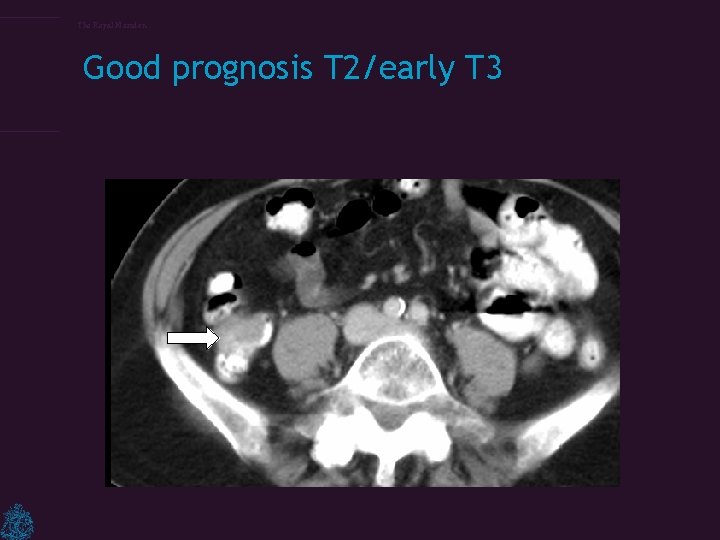
The Royal Marsden Good prognosis T 2/early T 3
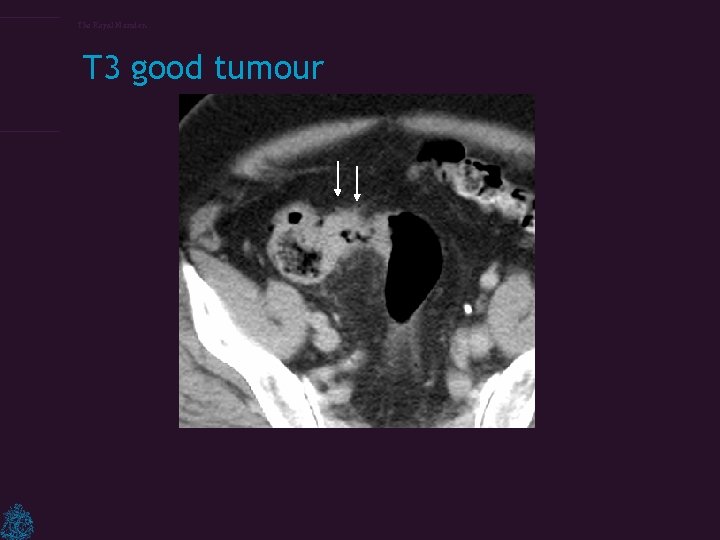
The Royal Marsden T 3 good tumour
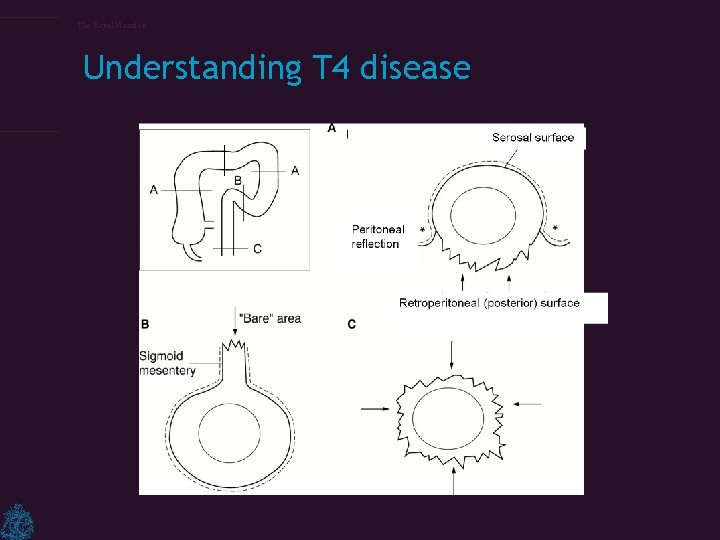
The Royal Marsden Understanding T 4 disease
The Royal Marsden
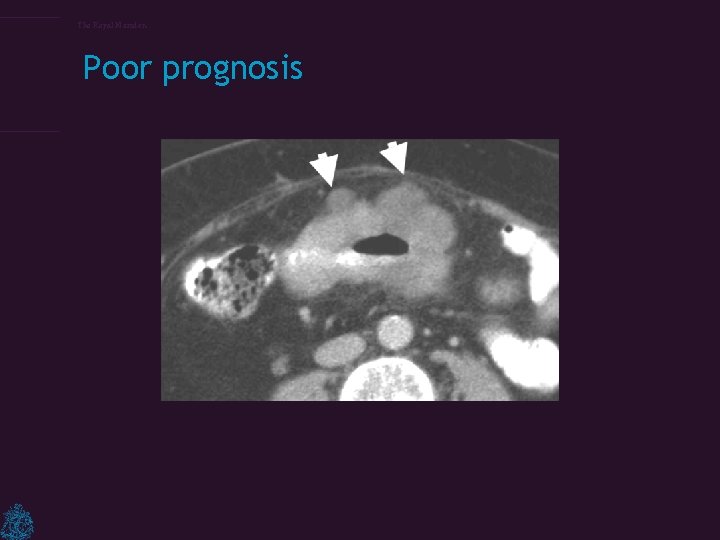
The Royal Marsden Poor prognosis
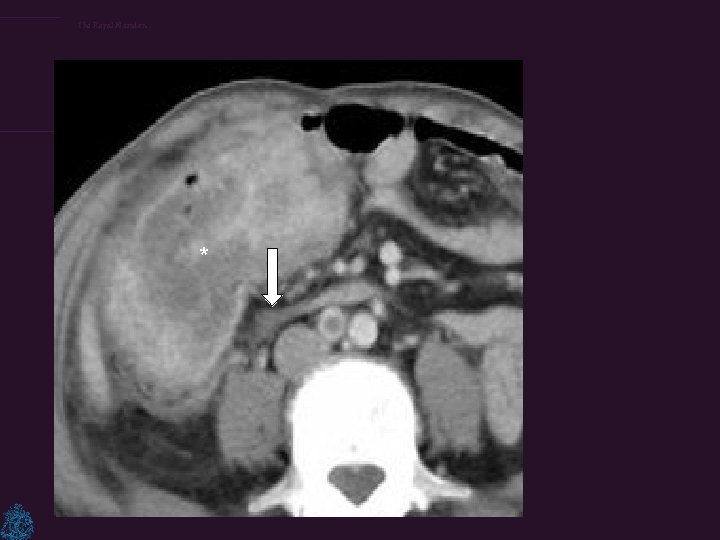
The Royal Marsden *
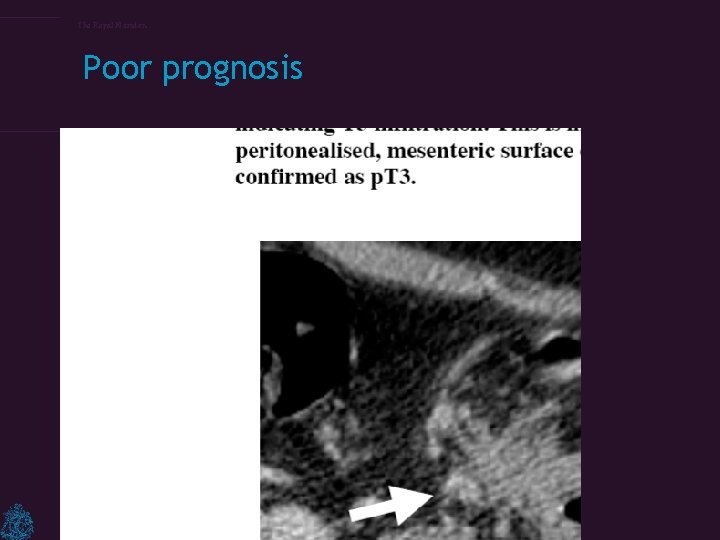
The Royal Marsden Poor prognosis
The Royal Marsden CT staging of colons – To examine whether the radiological features of the primary colonic tumour seen on the pre-operative CT scan could be used to predict clinical outcome. – To compare pre-operative CT-based prognostication with post-operative histology Smith N, Bees, N. Predicting Prognosis in Colon Cancer: Validation of a New Preoperative CT Staging Classification and Implications for Clinical Trials. Colorectal Disease 2006; 8
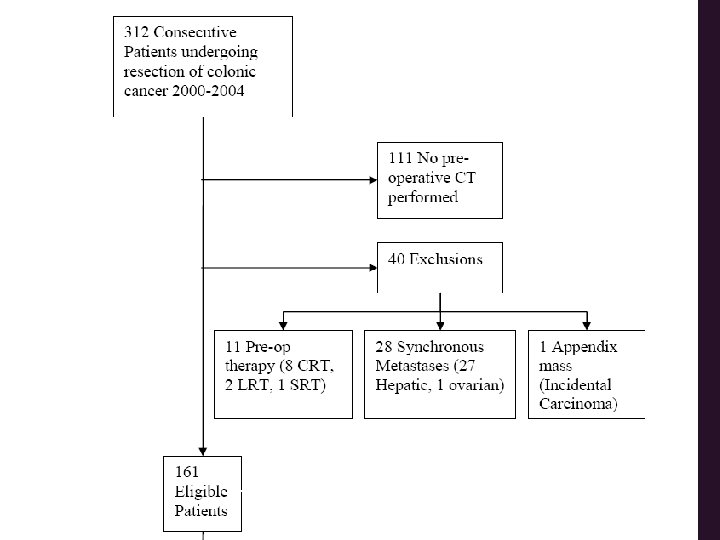
The Royal Marsden 126 scans analysed
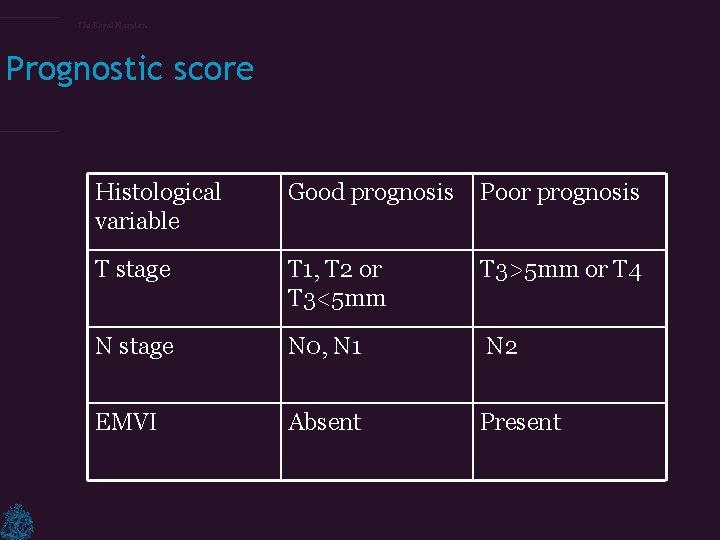
The Royal Marsden Prognostic score Histological variable Good prognosis Poor prognosis T stage T 1, T 2 or T 3<5 mm T 3>5 mm or T 4 N stage N 0, N 1 N 2 EMVI Absent Present
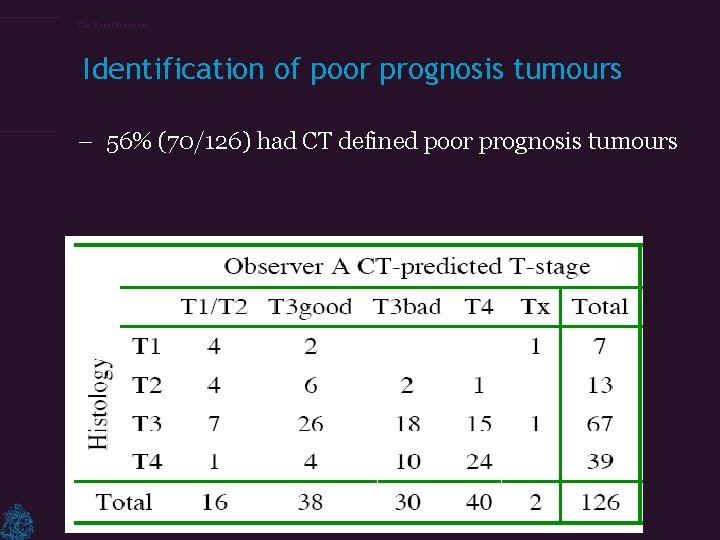
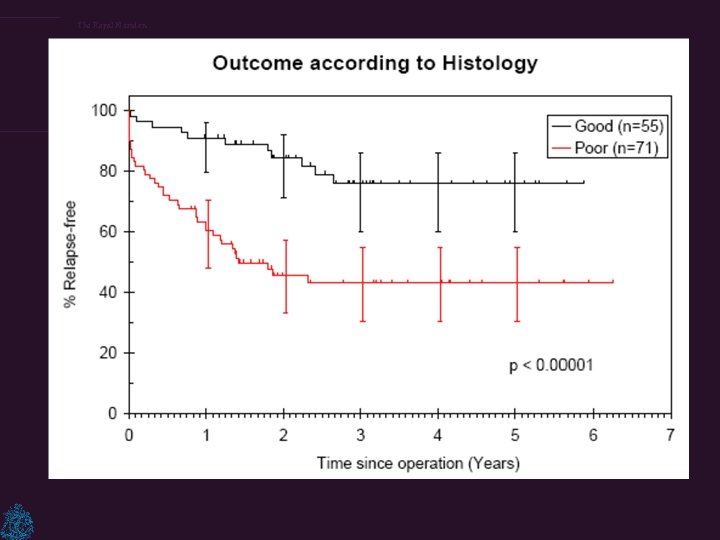
The Royal Marsden Identification of poor prognosis tumours – 56% (70/126) had CT defined poor prognosis tumours
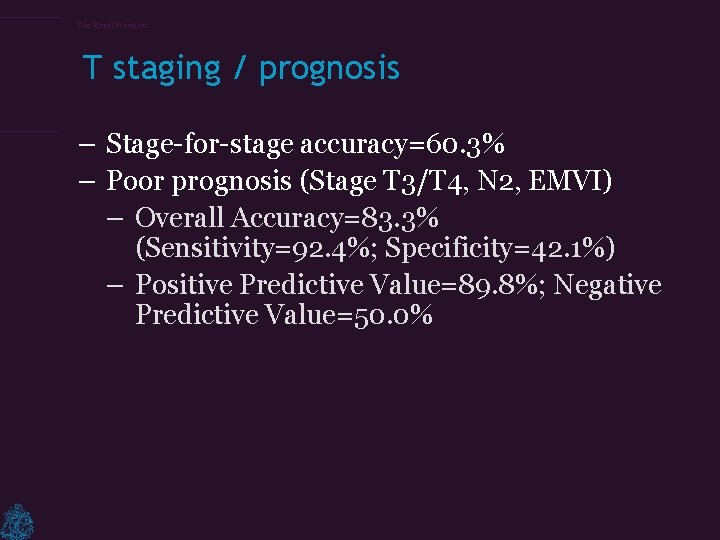
The Royal Marsden T staging / prognosis – Stage-for-stage accuracy=60. 3% – Poor prognosis (Stage T 3/T 4, N 2, EMVI) – Overall Accuracy=83. 3% (Sensitivity=92. 4%; Specificity=42. 1%) – Positive Predictive Value=89. 8%; Negative Predictive Value=50. 0%
The Royal Marsden
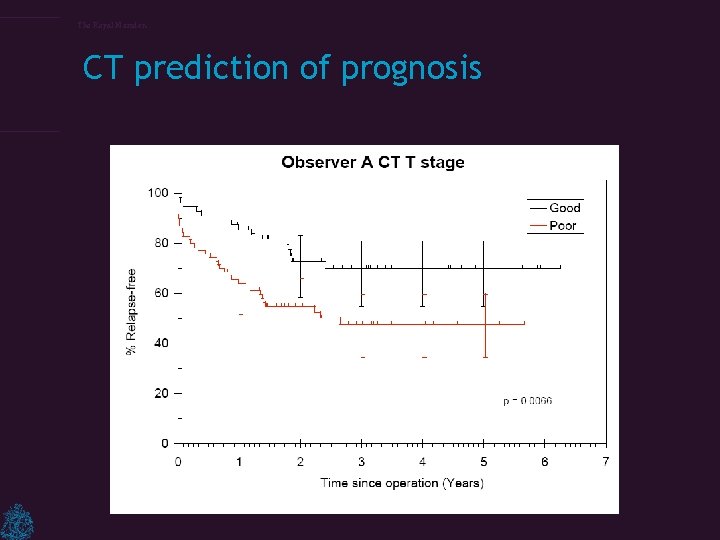
The Royal Marsden CT prediction of prognosis
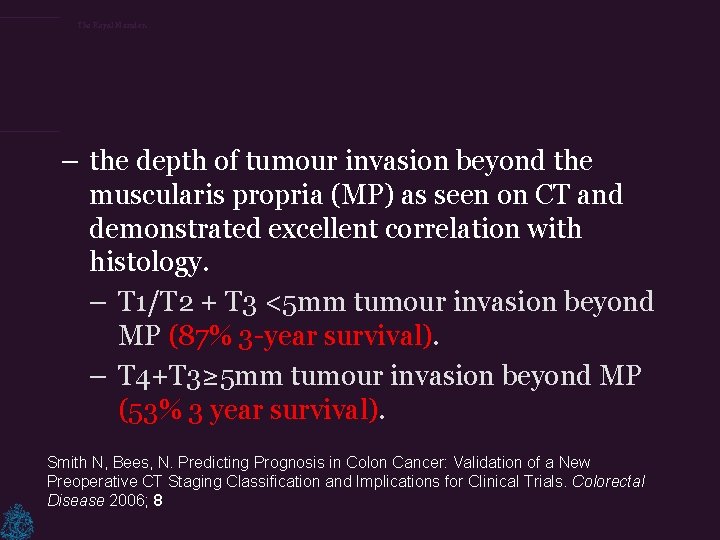
The Royal Marsden – the depth of tumour invasion beyond the muscularis propria (MP) as seen on CT and demonstrated excellent correlation with histology. – T 1/T 2 + T 3 <5 mm tumour invasion beyond MP (87% 3 -year survival). – T 4+T 3≥ 5 mm tumour invasion beyond MP (53% 3 year survival). Smith N, Bees, N. Predicting Prognosis in Colon Cancer: Validation of a New Preoperative CT Staging Classification and Implications for Clinical Trials. Colorectal Disease 2006; 8
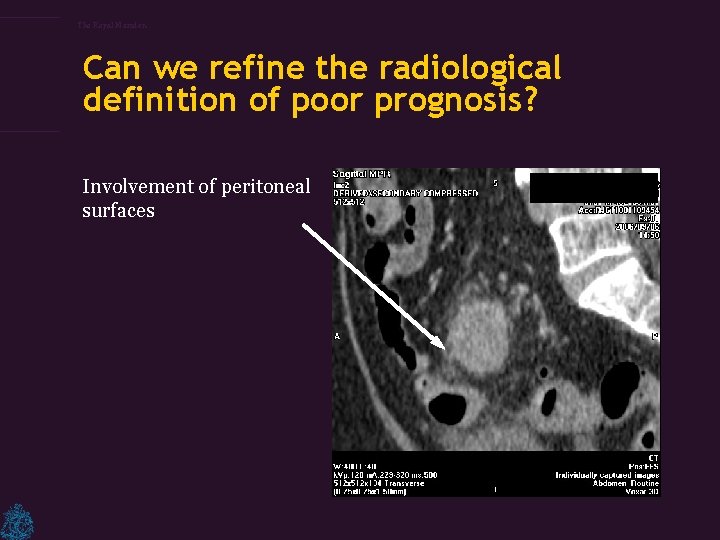
The Royal Marsden Can we refine the radiological definition of poor prognosis? Involvement of peritoneal surfaces
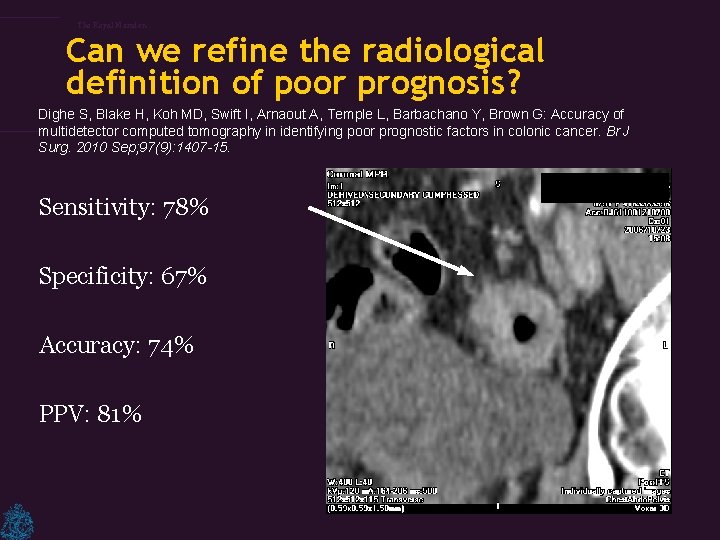
The Royal Marsden Can we refine the radiological definition of poor prognosis? Dighe S, Blake H, Koh MD, Swift I, Arnaout A, Temple L, Barbachano Y, Brown G: Accuracy of multidetector computed tomography in identifying poor prognostic factors in colonic cancer. Br J Surg. 2010 Sep; 97(9): 1407 -15. Sensitivity: 78% Specificity: 67% Accuracy: 74% PPV: 81%
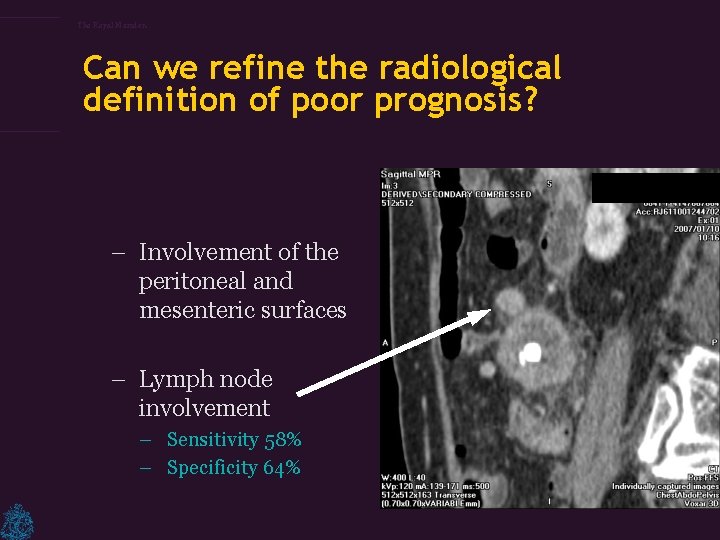
The Royal Marsden Can we refine the radiological definition of poor prognosis? – Involvement of the peritoneal and mesenteric surfaces – Lymph node involvement – Sensitivity 58% – Specificity 64%
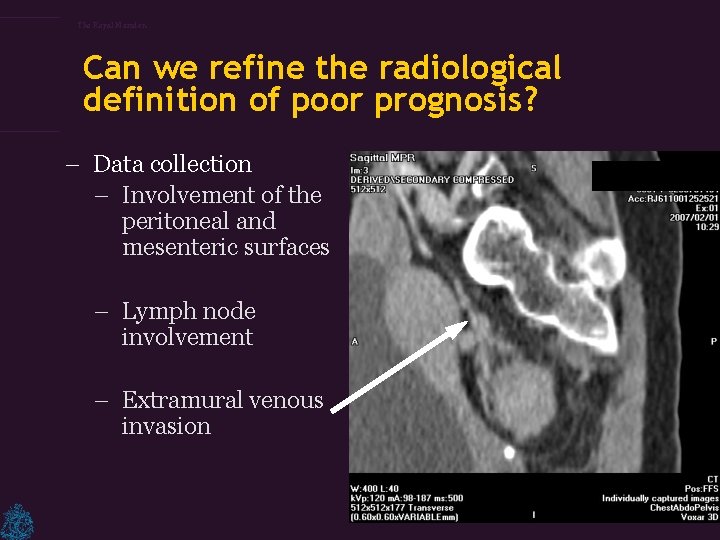
The Royal Marsden Can we refine the radiological definition of poor prognosis? – Data collection – Involvement of the peritoneal and mesenteric surfaces – Lymph node involvement – Extramural venous invasion
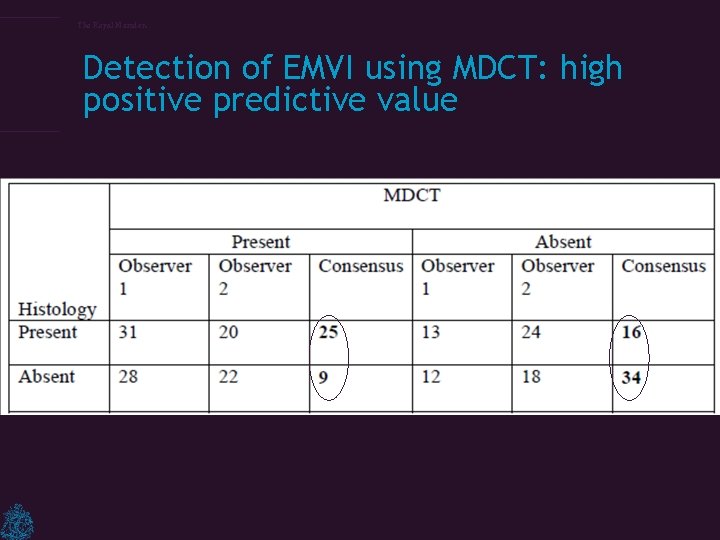
The Royal Marsden Detection of EMVI using MDCT: high positive predictive value
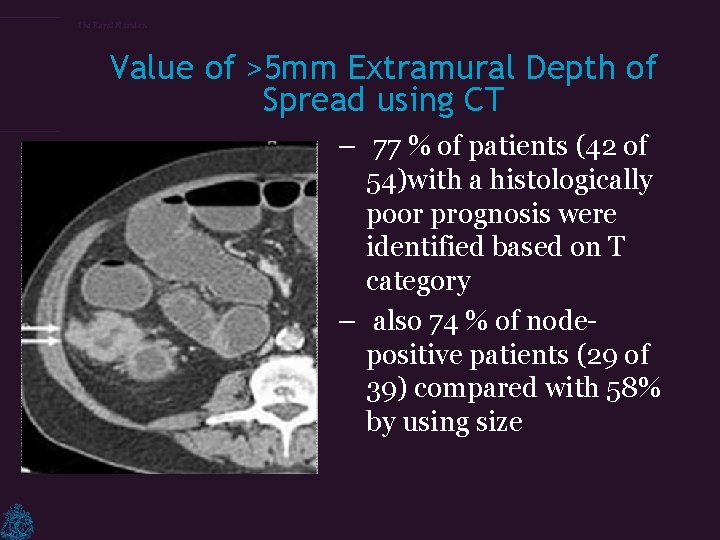
The Royal Marsden Value of >5 mm Extramural Depth of Spread using CT – 77 % of patients (42 of 54)with a histologically poor prognosis were identified based on T category – also 74 % of nodepositive patients (29 of 39) compared with 58% by using size
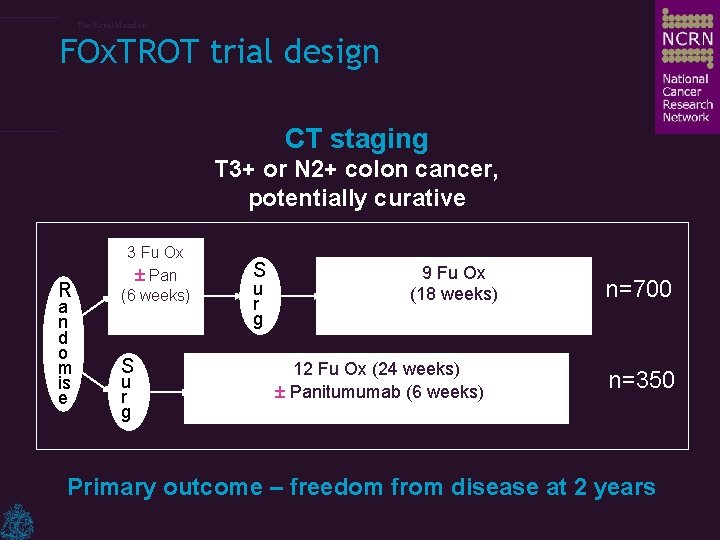
The Royal Marsden FOx. TROT trial design CT staging T 3+ or N 2+ colon cancer, potentially curative R a n d o m is e 3 Fu Ox ± Pan (6 weeks) S u r g 9 Fu Ox (18 weeks) 12 Fu Ox (24 weeks) ± Panitumumab (6 weeks) n=700 n=350 Primary outcome – freedom from disease at 2 years
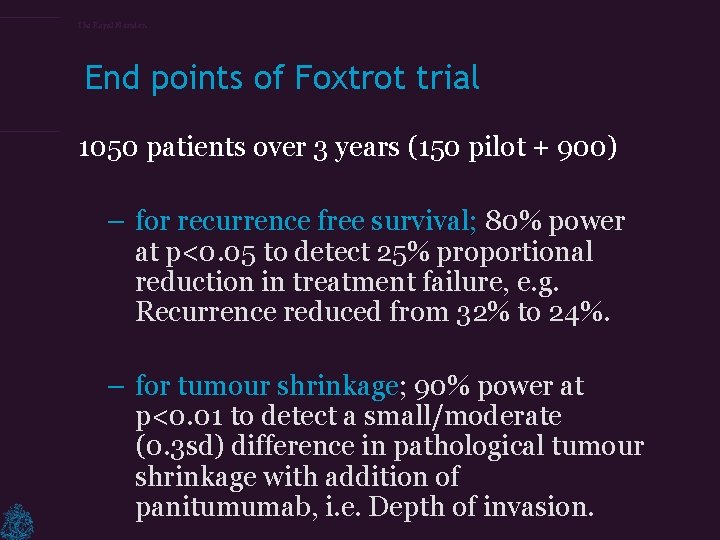
The Royal Marsden End points of Foxtrot trial 1050 patients over 3 years (150 pilot + 900) – for recurrence free survival; 80% power at p<0. 05 to detect 25% proportional reduction in treatment failure, e. g. Recurrence reduced from 32% to 24%. – for tumour shrinkage; 90% power at p<0. 01 to detect a small/moderate (0. 3 sd) difference in pathological tumour shrinkage with addition of panitumumab, i. e. Depth of invasion.
The Royal Marsden Imaging– what’s new in this trial? – New staging system – Knowledge and visualisation of peritoneal anatomy – Identification of poor prognostic features in vivo – Quality assurance: workshops, detailed imaging data collection
The Royal Marsden – This trial is thus reliant on the ability of the radiologists to identify a cohort of high risk patients suitable for randomisation to receive neoadjuvant therapy.
The Royal Marsden Summary colon cancer staging – Tumour morphology: annular, semi-annular, mucinous, ulcerating – Site : caecum, ascending, hep flexure, transverse, splenic flexure, descending, sigmoid – Border of infiltration: mesenteric vs peritonealised – Diameter and thickness – T substage (good or poor): T 3<5 mm or >5 mm – Nodal and venous spread: ileocolic, middle colic, left colic, sigmoidal veins – Adjacent organ infiltration/perforation/obstruction – Synchronous metastatic disease
The Royal Marsden Was CT successful in identifying high risk? Control arm pathology – 49/50 – p. T 3/4 (98%) – 2643/50 – AJCC p. TNM stage II/III high risk (86%) – /50 –p. Node positive (52%) – 10/50 – 20% p. CRM positive – 24/48 – (50%) p. EMVI positive
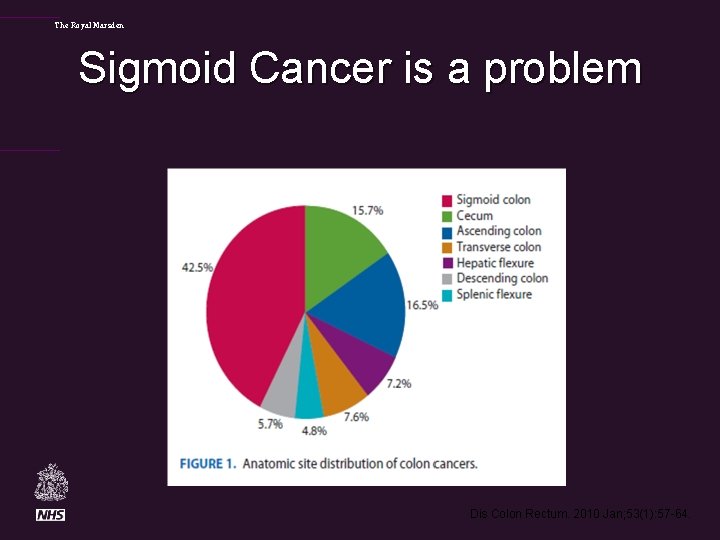
The Royal Marsden Sigmoid Cancer is a problem Dis Colon Rectum. 2010 Jan; 53(1): 57 -64.
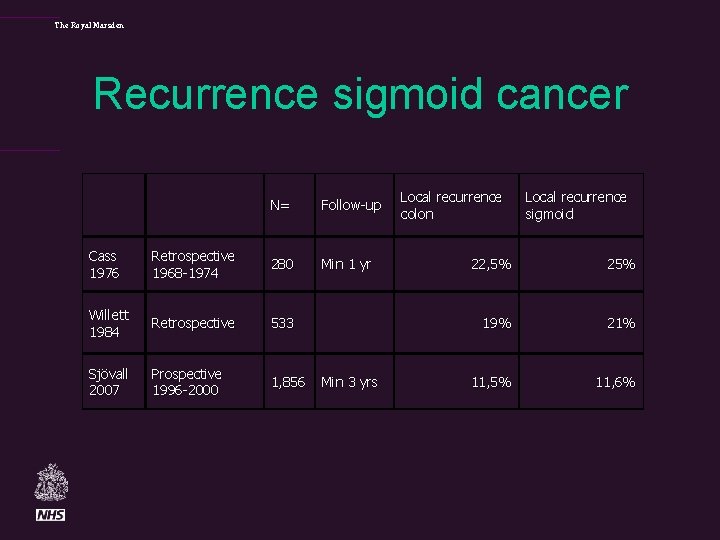
The Royal Marsden Recurrence sigmoid cancer N= Follow-up Min 1 yr Cass 1976 Retrospective 1968 -1974 280 Willett 1984 Retrospective 533 Sjövall 2007 Prospective 1996 -2000 1, 856 Min 3 yrs Local recurrence colon Local recurrence sigmoid 22, 5% 25% 19% 21% 11, 5% 11, 6%
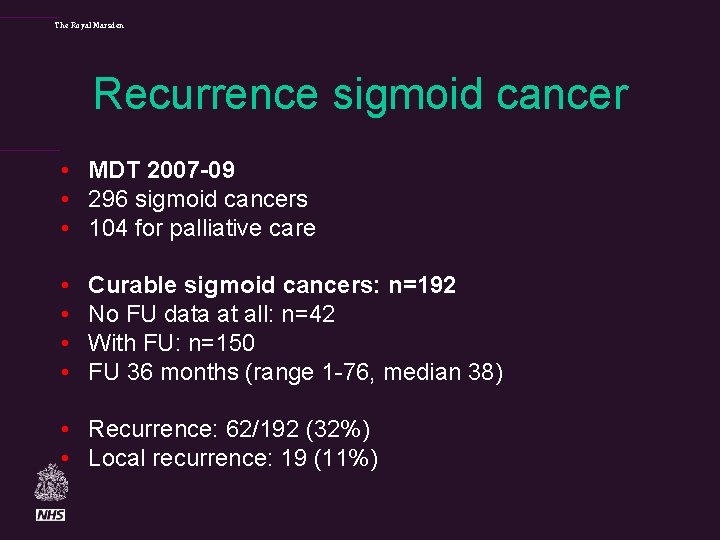
The Royal Marsden Recurrence sigmoid cancer • MDT 2007 -09 • 296 sigmoid cancers • 104 for palliative care • • Curable sigmoid cancers: n=192 No FU data at all: n=42 With FU: n=150 FU 36 months (range 1 -76, median 38) • Recurrence: 62/192 (32%) • Local recurrence: 19 (11%)
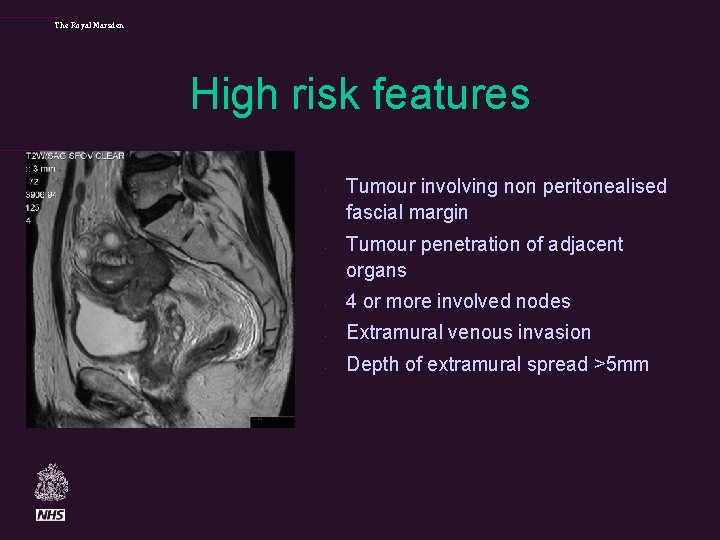
The Royal Marsden High risk features • • Tumour involving non peritonealised fascial margin Tumour penetration of adjacent organs • 4 or more involved nodes • Extramural venous invasion • Depth of extramural spread >5 mm
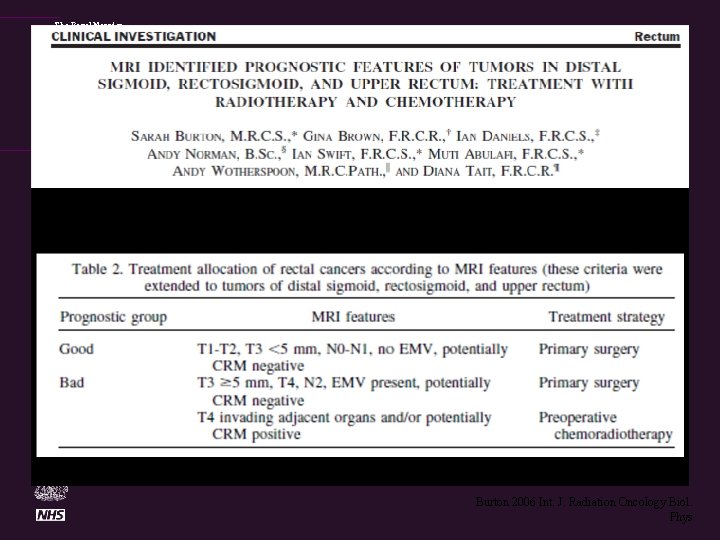
The Royal Marsden Burton 2006 Int. J. Radiation Oncology Biol. Phys
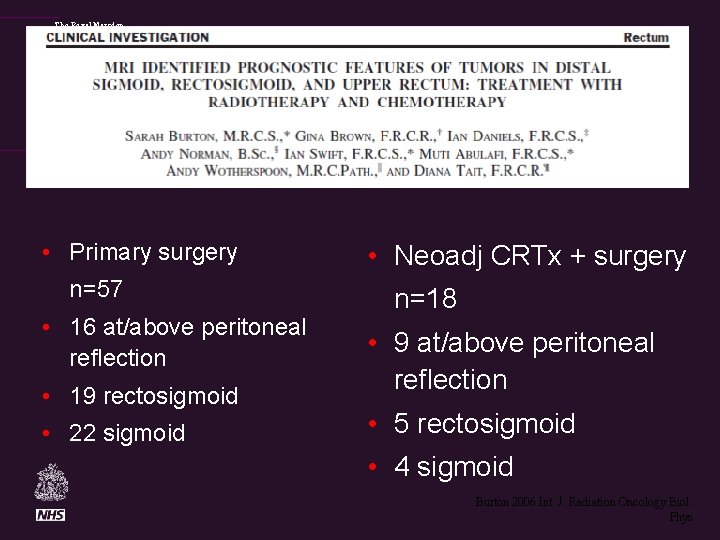
The Royal Marsden • Primary surgery n=57 • 16 at/above peritoneal reflection • 19 rectosigmoid • 22 sigmoid • Neoadj CRTx + surgery n=18 • 9 at/above peritoneal reflection • 5 rectosigmoid • 4 sigmoid Burton 2006 Int. J. Radiation Oncology Biol. Phys
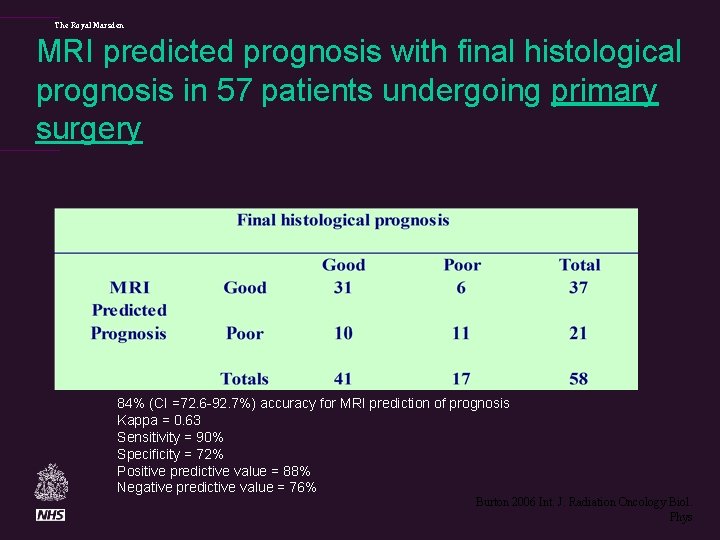
The Royal Marsden MRI predicted prognosis with final histological prognosis in 57 patients undergoing primary surgery 84% (CI =72. 6 -92. 7%) accuracy for MRI prediction of prognosis Kappa = 0. 63 Sensitivity = 90% Specificity = 72% Positive predictive value = 88% Negative predictive value = 76% Burton 2006 Int. J. Radiation Oncology Biol. Phys
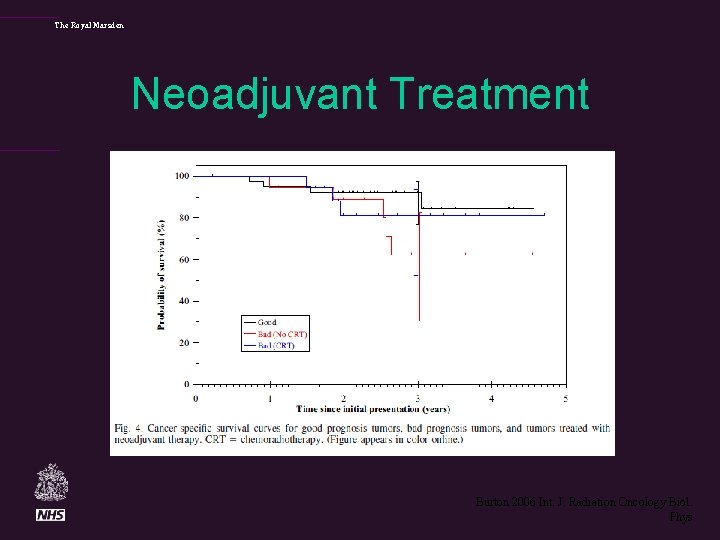
The Royal Marsden Neoadjuvant Treatment Burton 2006 Int. J. Radiation Oncology Biol. Phys
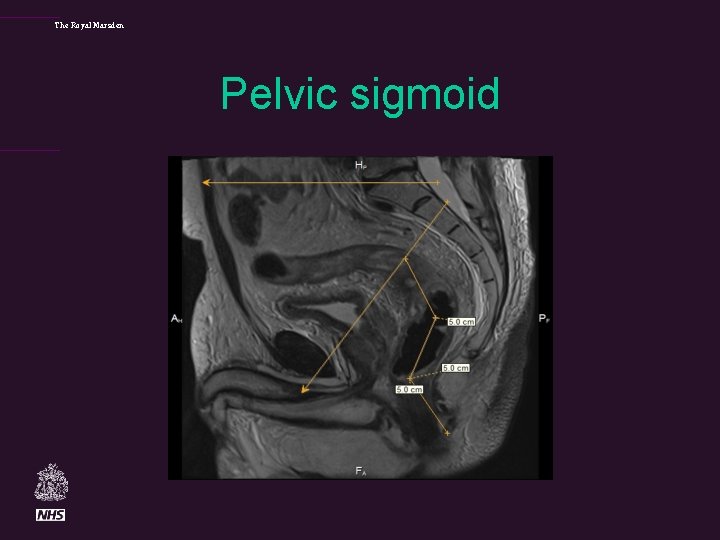
The Royal Marsden Pelvic sigmoid
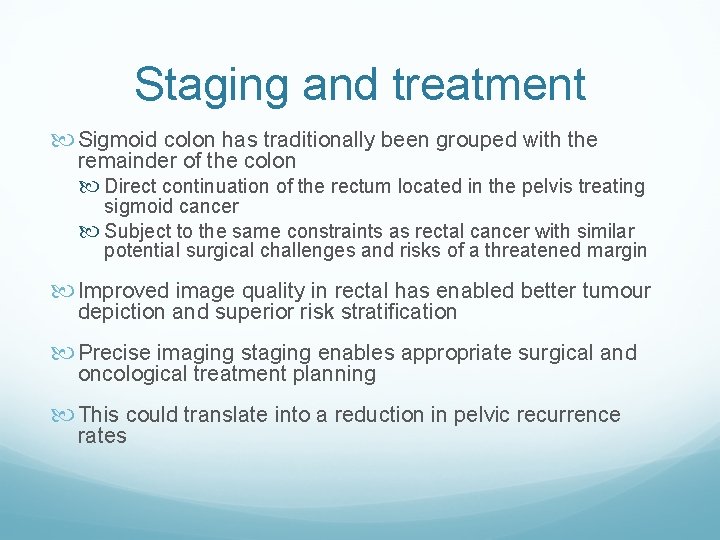
Staging and treatment Sigmoid colon has traditionally been grouped with the remainder of the colon Direct continuation of the rectum located in the pelvis treating sigmoid cancer Subject to the same constraints as rectal cancer with similar potential surgical challenges and risks of a threatened margin Improved image quality in rectal has enabled better tumour depiction and superior risk stratification Precise imaging staging enables appropriate surgical and oncological treatment planning This could translate into a reduction in pelvic recurrence rates
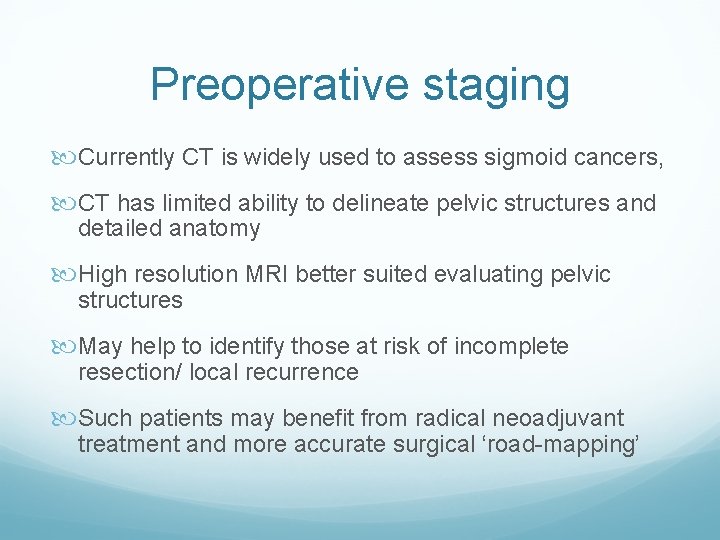
Preoperative staging Currently CT is widely used to assess sigmoid cancers, CT has limited ability to delineate pelvic structures and detailed anatomy High resolution MRI better suited evaluating pelvic structures May help to identify those at risk of incomplete resection/ local recurrence Such patients may benefit from radical neoadjuvant treatment and more accurate surgical ‘road-mapping’
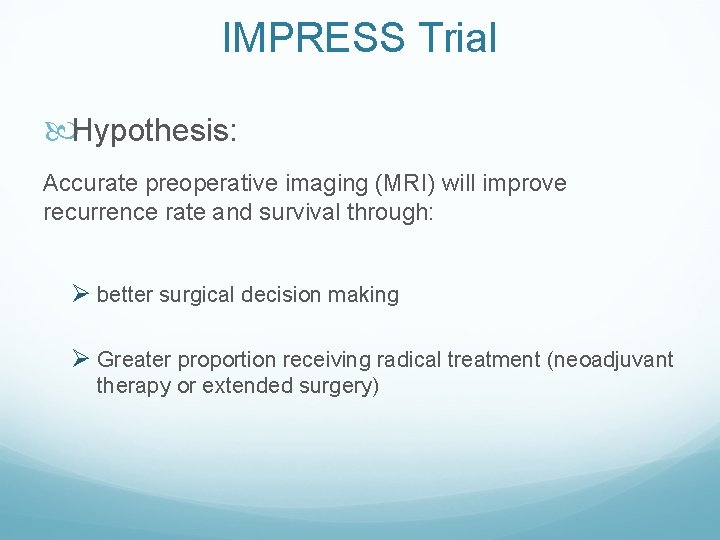
IMPRESS Trial Hypothesis: Accurate preoperative imaging (MRI) will improve recurrence rate and survival through: Ø better surgical decision making Ø Greater proportion receiving radical treatment (neoadjuvant therapy or extended surgery)
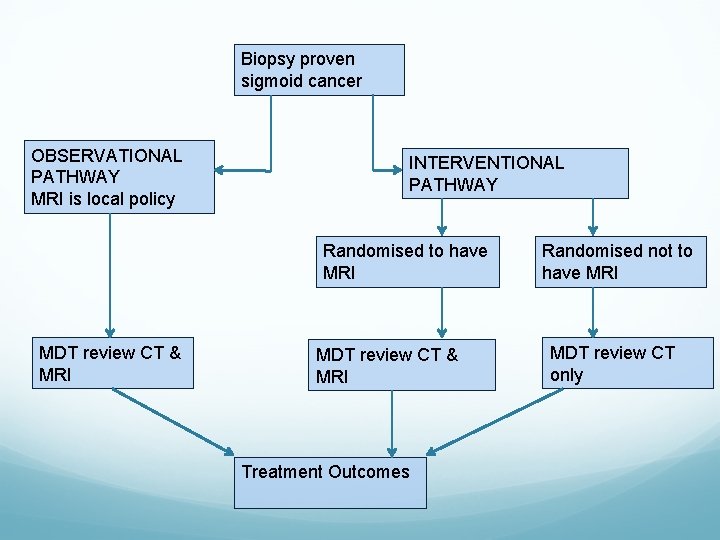
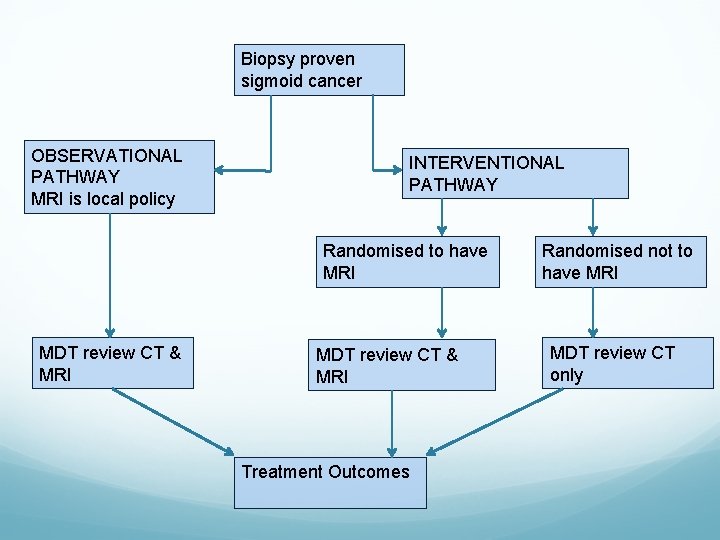
Biopsy proven sigmoid cancer OBSERVATIONAL PATHWAY MRI is local policy INTERVENTIONAL PATHWAY Randomised to have MRI MDT review CT & MRI Treatment Outcomes Randomised not to have MRI MDT review CT only
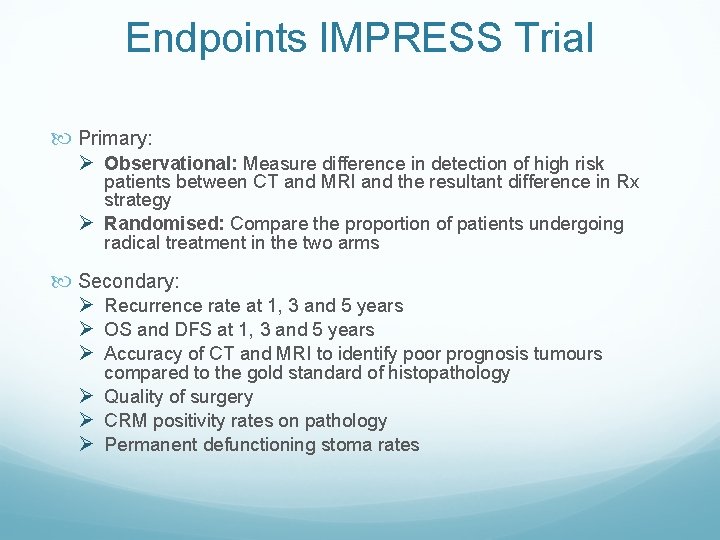
Endpoints IMPRESS Trial Primary: Ø Observational: Measure difference in detection of high risk patients between CT and MRI and the resultant difference in Rx strategy Ø Randomised: Compare the proportion of patients undergoing radical treatment in the two arms Secondary: Ø Recurrence rate at 1, 3 and 5 years Ø OS and DFS at 1, 3 and 5 years Ø Accuracy of CT and MRI to identify poor prognosis tumours compared to the gold standard of histopathology Ø Quality of surgery Ø CRM positivity rates on pathology Ø Permanent defunctioning stoma rates
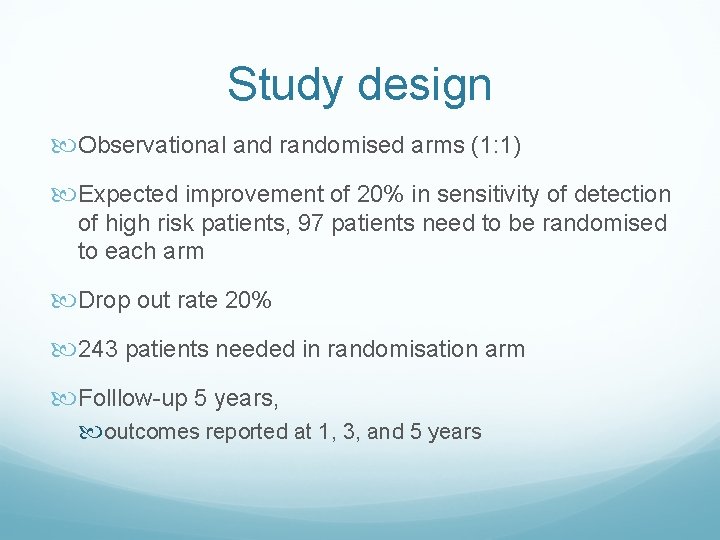
Study design Observational and randomised arms (1: 1) Expected improvement of 20% in sensitivity of detection of high risk patients, 97 patients need to be randomised to each arm Drop out rate 20% 243 patients needed in randomisation arm Folllow-up 5 years, outcomes reported at 1, 3, and 5 years
Biopsy proven sigmoid cancer OBSERVATIONAL PATHWAY MRI is local policy INTERVENTIONAL PATHWAY Randomised to have MRI MDT review CT & MRI Treatment Outcomes Randomised not to have MRI MDT review CT only
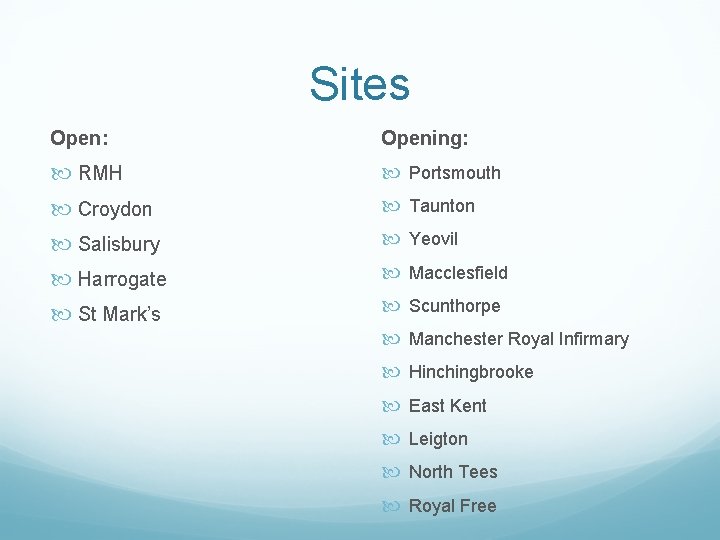
Sites Open: Opening: RMH Portsmouth Croydon Taunton Salisbury Yeovil Harrogate Macclesfield St Mark’s Scunthorpe Manchester Royal Infirmary Hinchingbrooke East Kent Leigton North Tees Royal Free
IMPRESS Trial IMProving Radical treatment through MRI Evaluation of pelvic Sigmoid cancer. S Contact Gina Brown (Principal Investigator) Gina. Brown@rmh. nhs. uk Lisa Scerri (Clinical Trial Coordinator) lisa. scerri@rmh. nhs. uk 0208 915 6067
The Royal Marsden Sigmoid cancer • Sigmoid cancer has a high recurrence rate • Sigmoid cancer has a worse outcome than rectal cancer • MRI is able to identify poor prognostic tumours preoperatively • Preoperative staging enhances optimal treatment strategy including neoadjuvant treatment • Sigmoid cancer with poor prognostic features should be discussed for neoadjuvant treatment (IMPRESS Trial)
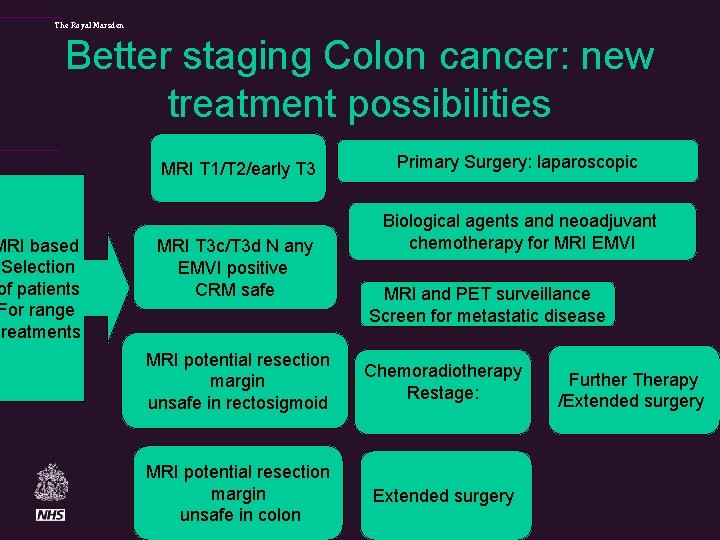
The Royal Marsden Better staging Colon cancer: new treatment possibilities MRI based Selection of patients For range treatments MRI T 1/T 2/early T 3 MRI T 3 c/T 3 d N any EMVI positive CRM safe Primary Surgery: laparoscopic Biological agents and neoadjuvant chemotherapy for MRI EMVI MRI and PET surveillance Screen for metastatic disease MRI potential resection margin unsafe in rectosigmoid Chemoradiotherapy Restage: MRI potential resection margin unsafe in colon Extended surgery Further Therapy /Extended surgery
The Royal Marsden Acknowledgements • Shwetal Dighe, Sarah Burton and Neil Smith, Chris Hunter, Ian Swift and Muti Abulafi and the Royal Marsden Hospital Colorectal Multidisciplinary Network • Fox. Trot trial co-investigators: D Morton, P Quirke, M Seymour, R Gray, L Magill.