
The Royal Marsden Extramural venous invasion in rectal


- Slides: 47
The Royal Marsden Extramural venous invasion in rectal cancer Dr Gina Brown Royal Marsden Hospital UK gina. brown@rmh. nhs. uk
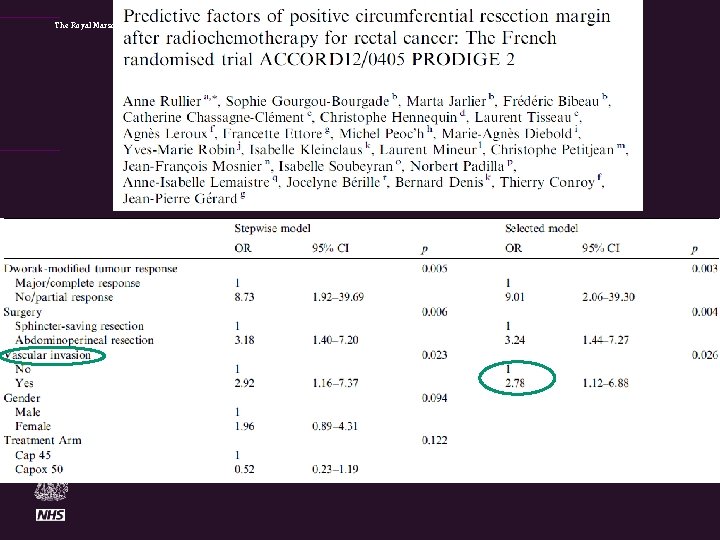
The Royal Marsden Vascular Invasion historic data • Brown and Warren Surg Obstet Gynaecol 1938 • 170 rectal cancer post mortem examinations majority palliative colostomy/ no surgery/ immediate postoperative death. • histological evidence of tumour invasion of veins in 61% of 165 rectal adenocarcinomas • 67 of the 100 patients with vascular invasion were found to have visceral metastases, mostly liver. • Only one case of metastasis in the absence of any vascular invasion was found
The Royal Marsden
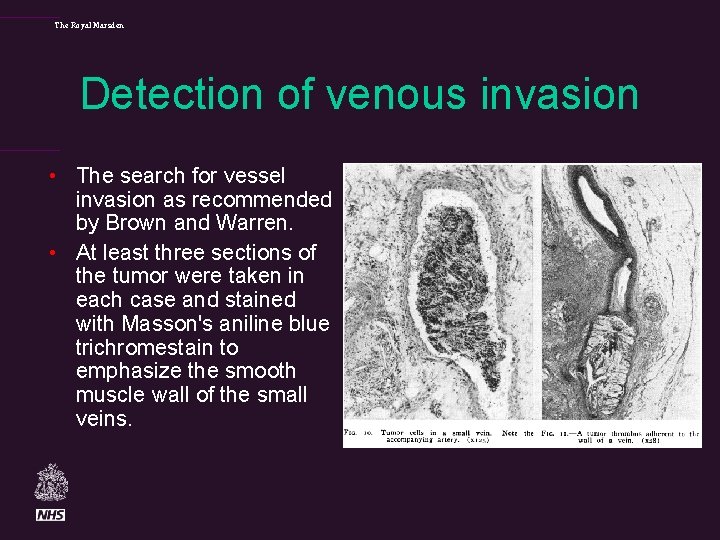
The Royal Marsden Detection of venous invasion • The search for vessel invasion as recommended by Brown and Warren. • At least three sections of the tumor were taken in each case and stained with Masson's aniline blue trichromestain to emphasize the smooth muscle wall of the small veins.
The Royal Marsden Venous invasion important “as far as the prediction of visceral metastases in rectal carcinoma from the local growth and nodes is concerned, the presence of intravascular tumour means as much from the prognostic standpoint as neoplastic nodes, and their absence means much more” Brown and Warren 1938
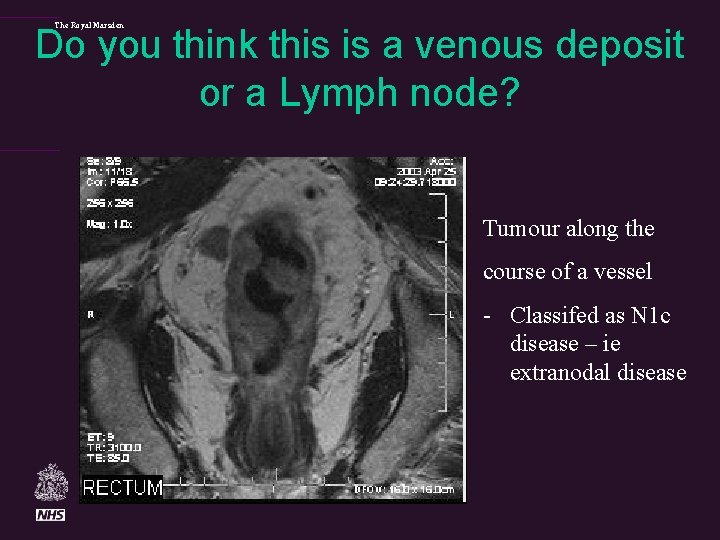
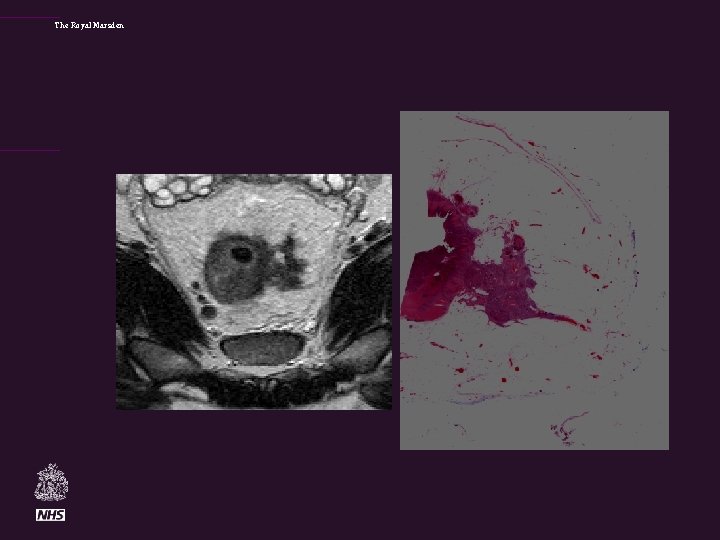
The Royal Marsden Do you think this is a venous deposit or a Lymph node? Tumour along the course of a vessel - Classifed as N 1 c disease – ie extranodal disease
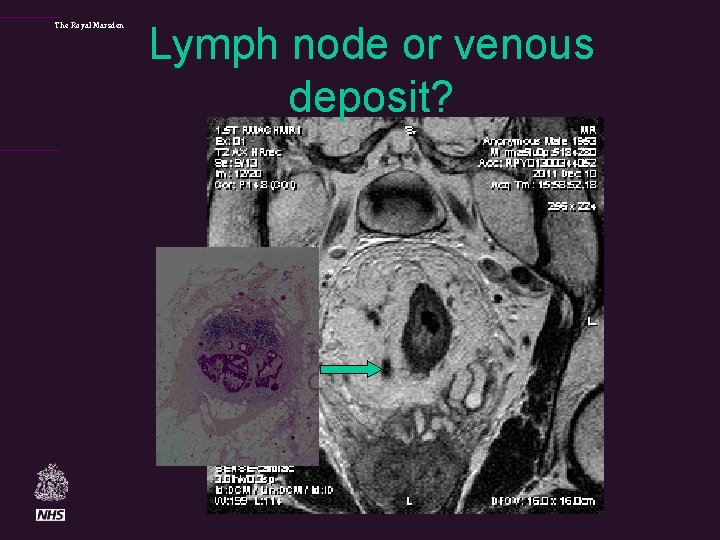
The Royal Marsden Lymph node or venous deposit?
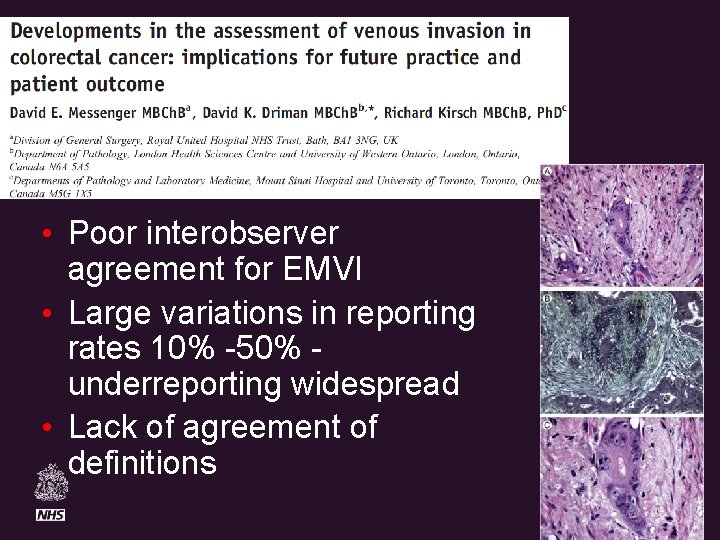
The Royal Marsden • Poor interobserver agreement for EMVI • Large variations in reporting rates 10% -50% underreporting widespread • Lack of agreement of definitions
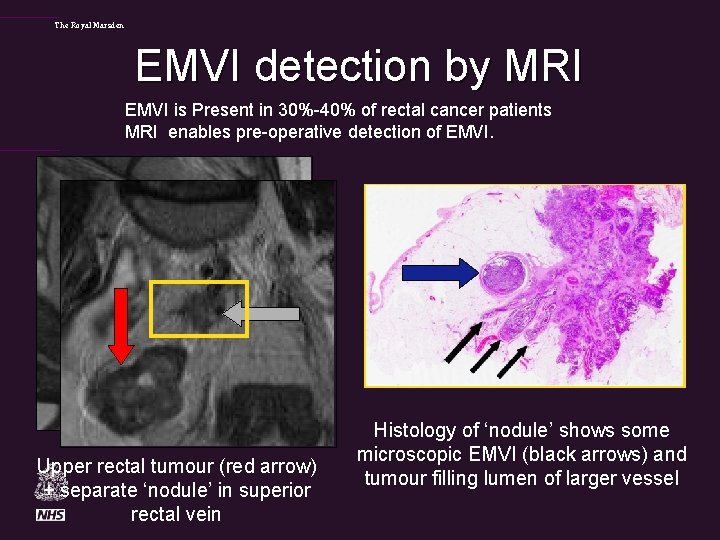
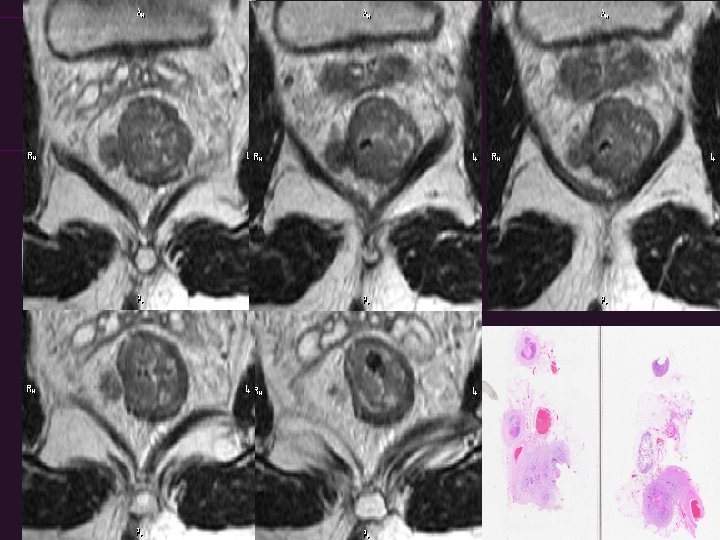
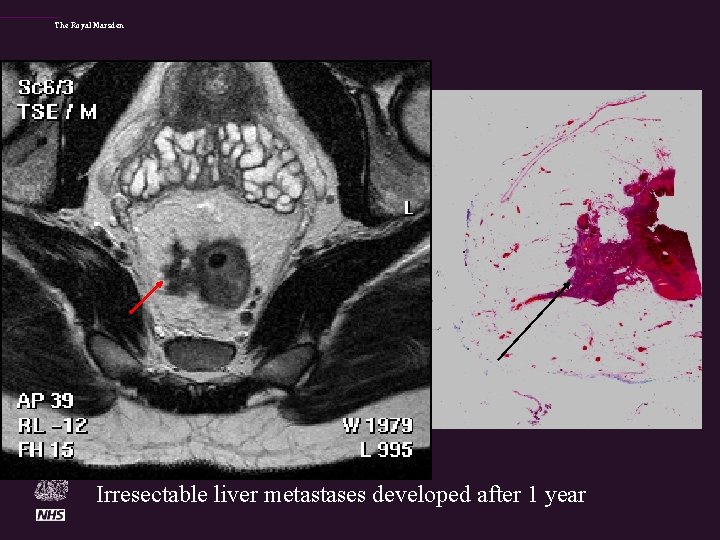
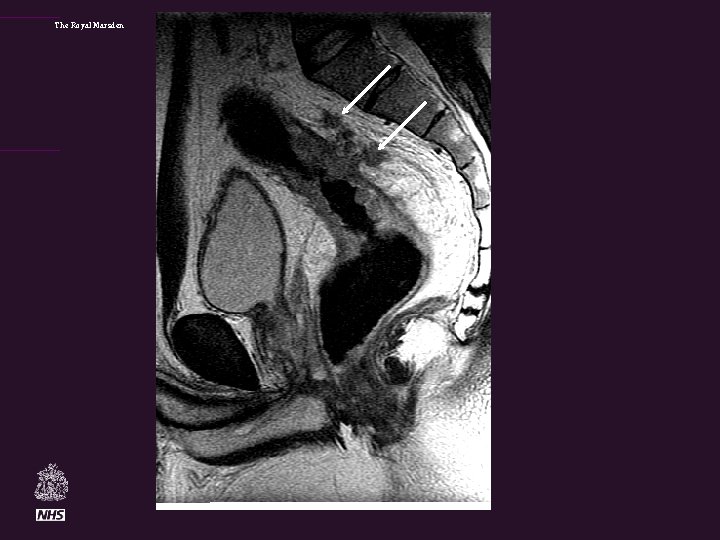
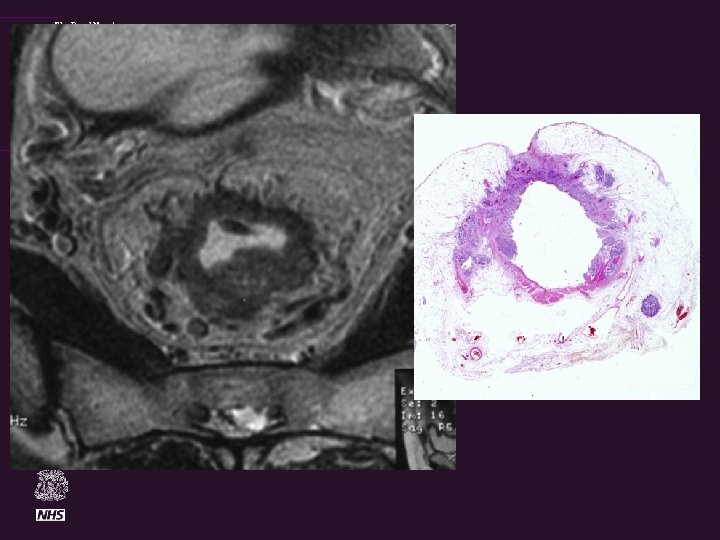
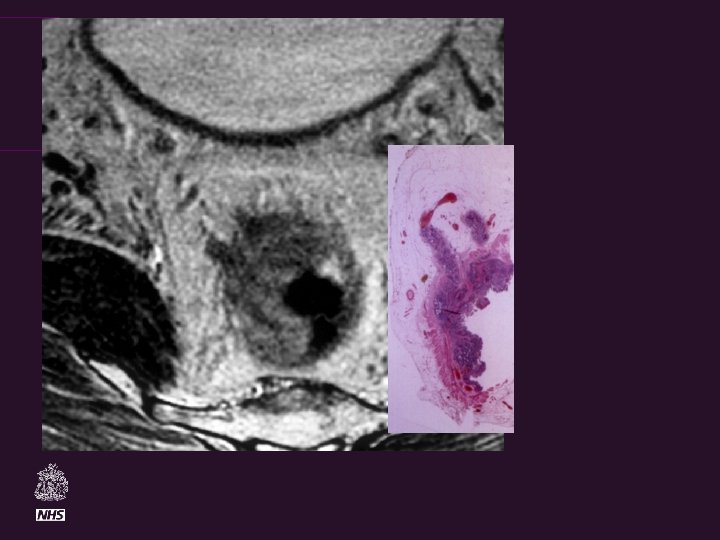
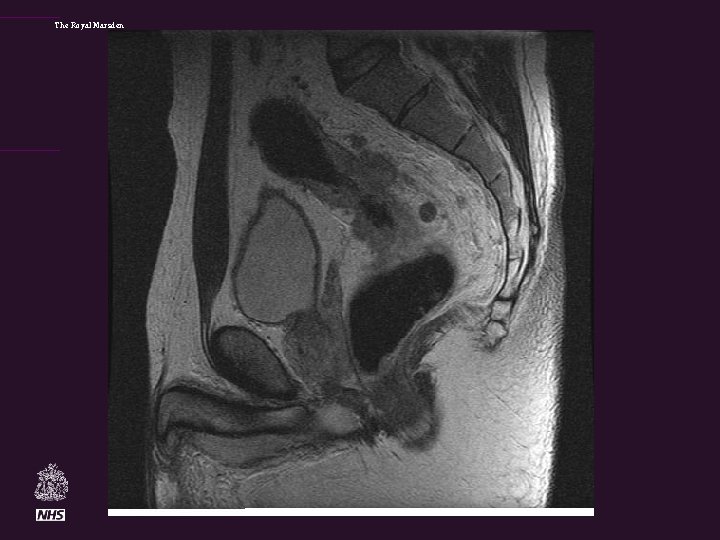
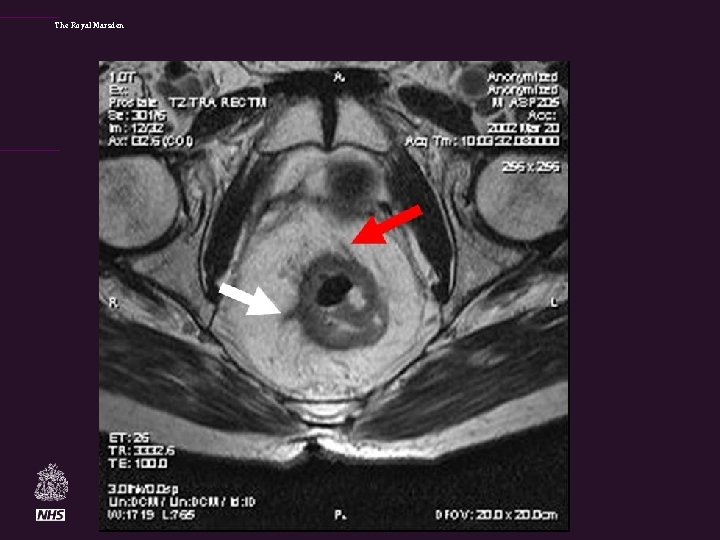
The Royal Marsden EMVI detection by MRI EMVI is Present in 30%-40% of rectal cancer patients MRI enables pre-operative detection of EMVI. Upper rectal tumour (red arrow) + separate ‘nodule’ in superior rectal vein Histology of ‘nodule’ shows some microscopic EMVI (black arrows) and tumour filling lumen of larger vessel
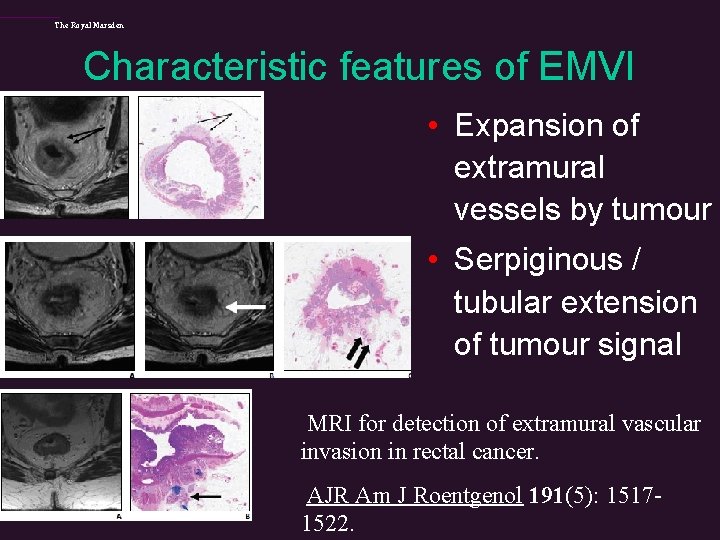
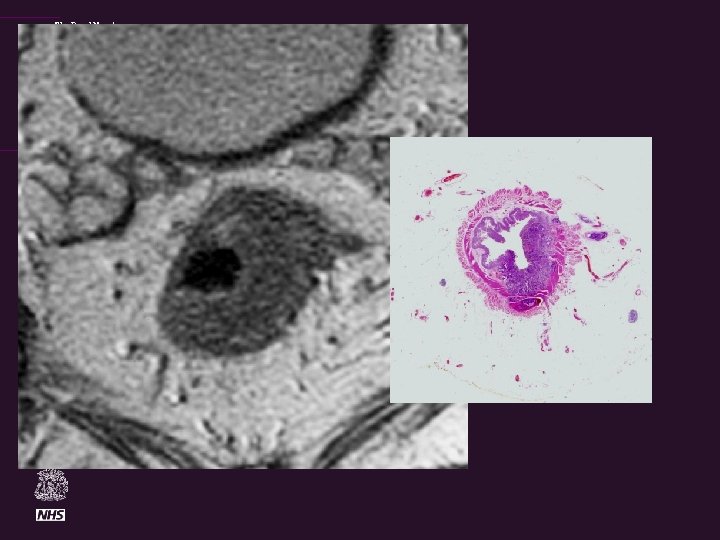
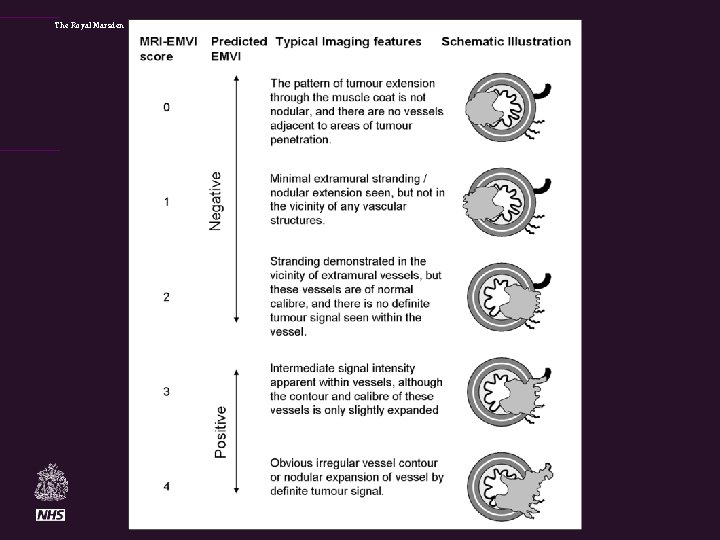
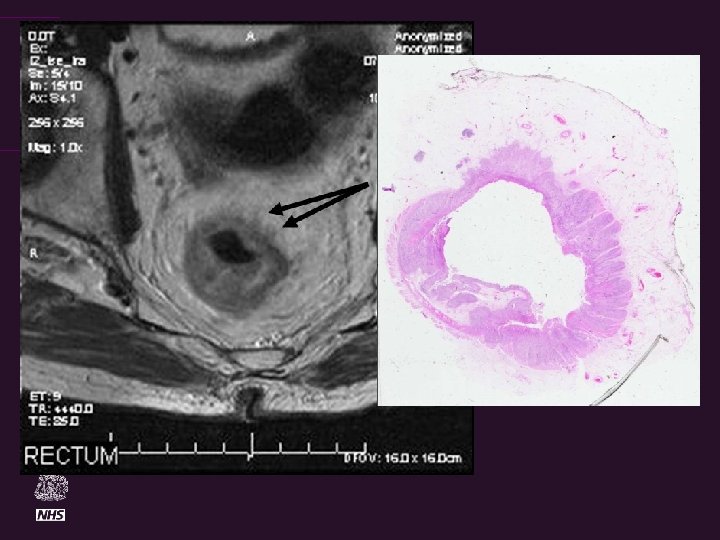
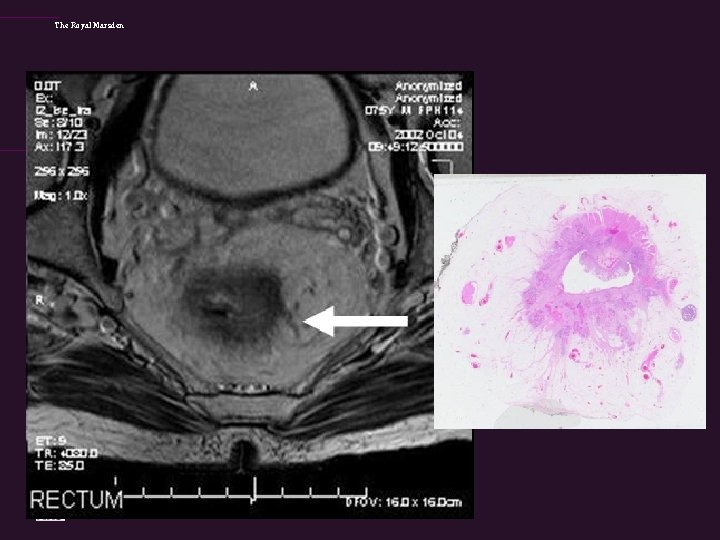
The Royal Marsden Characteristic features of EMVI • Expansion of extramural vessels by tumour • Serpiginous / tubular extension of tumour signal MRI for detection of extramural vascular invasion in rectal cancer. AJR Am J Roentgenol 191(5): 15171522.
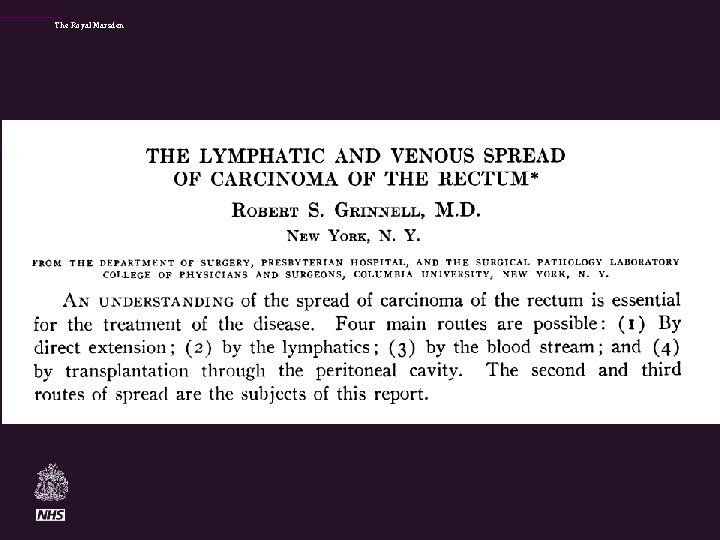
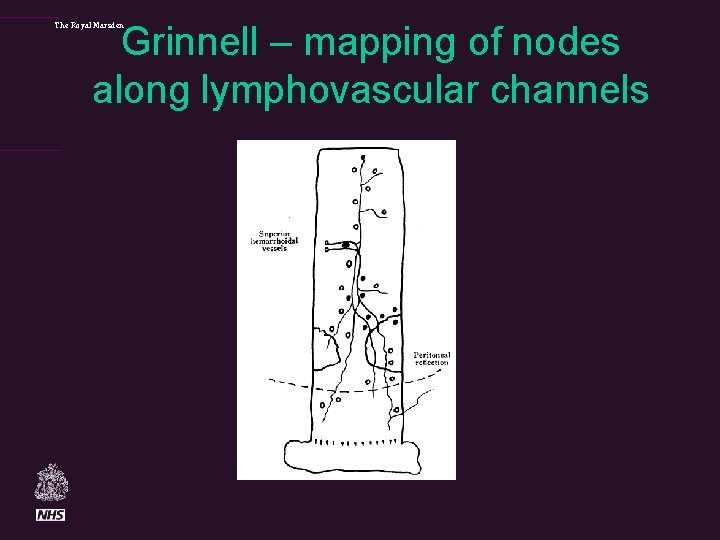
Grinnell – mapping of nodes along lymphovascular channels The Royal Marsden
The Royal Marsden
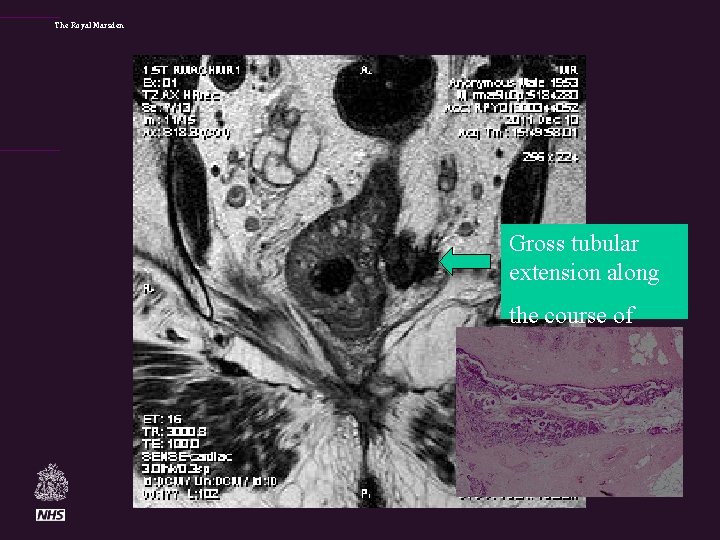
The Royal Marsden Gross tubular extension along the course of lateral rectal vein
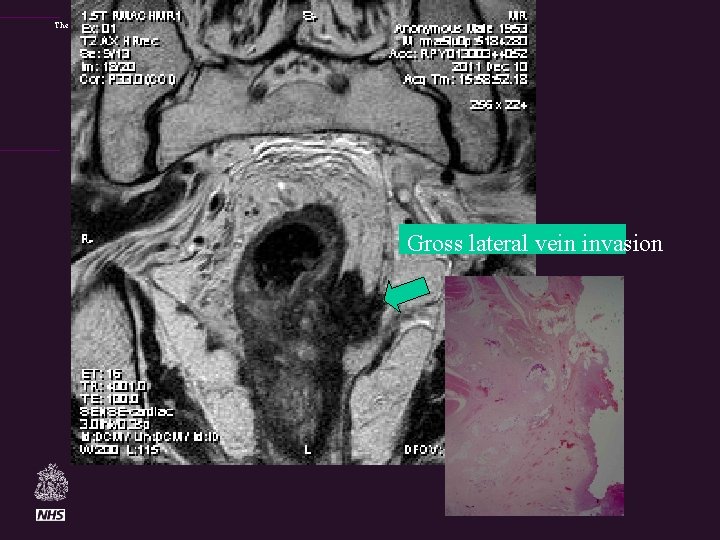
The Royal Marsden Gross lateral vein invasion
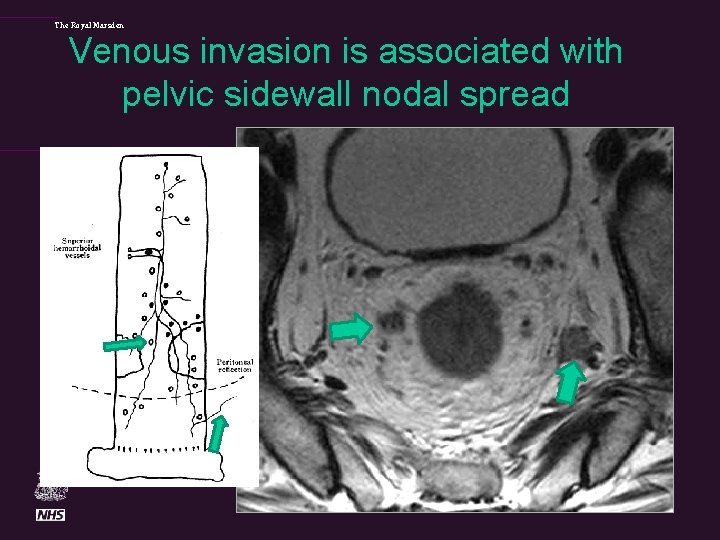
The Royal Marsden Venous invasion is associated with pelvic sidewall nodal spread
The Royal Marsden
The Royal Marsden
The Royal Marsden
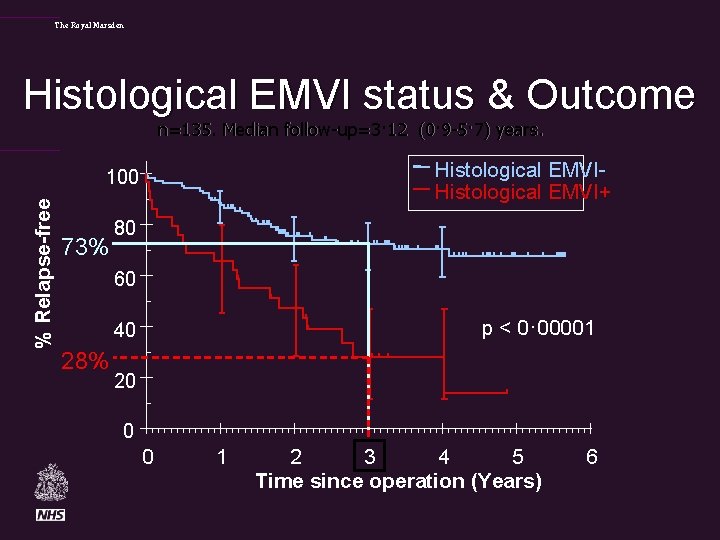
The Royal Marsden Histological EMVI status & Outcome n=135. Median follow-up=3· 12 (0· 9 -5· 7) years. Histological EMVI+ % Relapse-free 100 73% 80 60 p < 0· 00001 40 28% 20 0 0 1 2 3 4 5 Time since operation (Years) 6
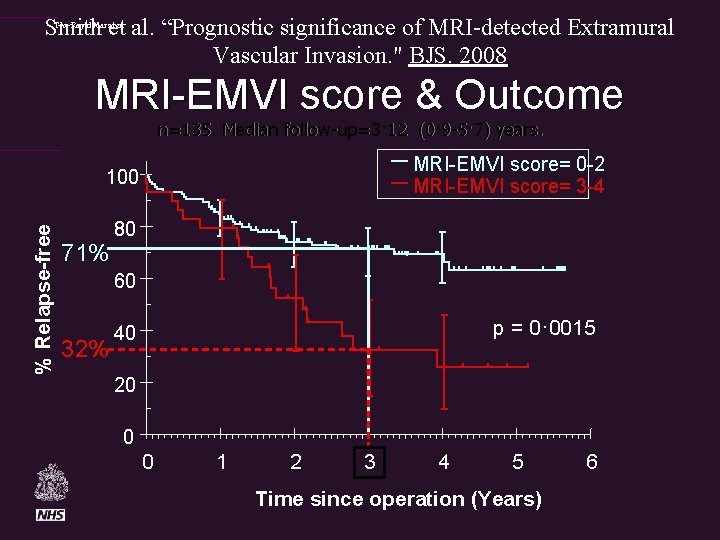
Smith et al. “Prognostic significance of MRI-detected Extramural Vascular Invasion. " BJS. 2008 The Royal Marsden MRI-EMVI score & Outcome n=135. Median follow-up=3· 12 (0· 9 -5· 7) years. MRI-EMVI score= 0 -2 MRI-EMVI score= 3 -4 % Relapse-free 100 71% 80 60 32% p = 0· 0015 40 20 0 0 1 2 3 4 5 Time since operation (Years) 6
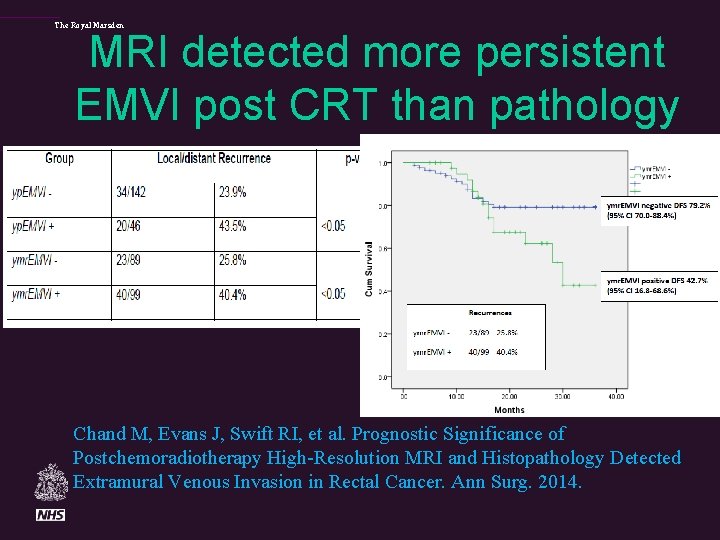
The Royal Marsden MRI detected more persistent EMVI post CRT than pathology Chand M, Evans J, Swift RI, et al. Prognostic Significance of Postchemoradiotherapy High-Resolution MRI and Histopathology Detected Extramural Venous Invasion in Rectal Cancer. Ann Surg. 2014.
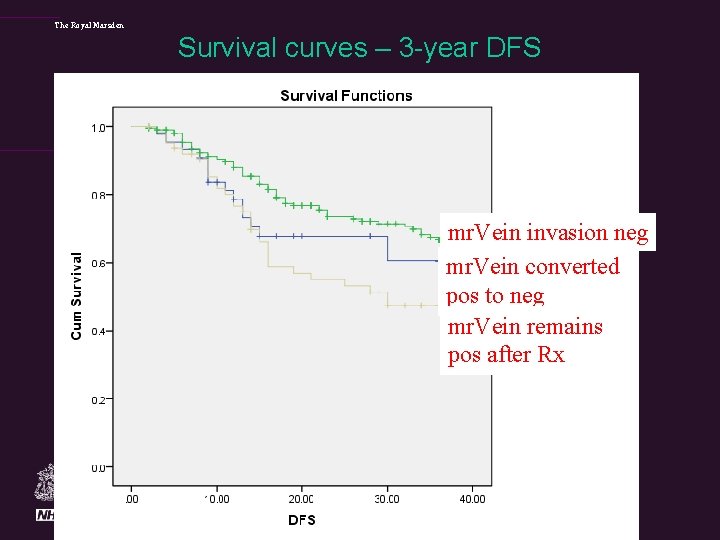
The Royal Marsden Survival curves – 3 -year DFS mr. Vein invasion neg mr. Vein converted pos to neg mr. Vein remains pos after Rx
The Royal Marsden Which came first the spread into the vessels or spread into the lymph nodes?
The Royal Marsden Irresectable liver metastases developed after 1 year
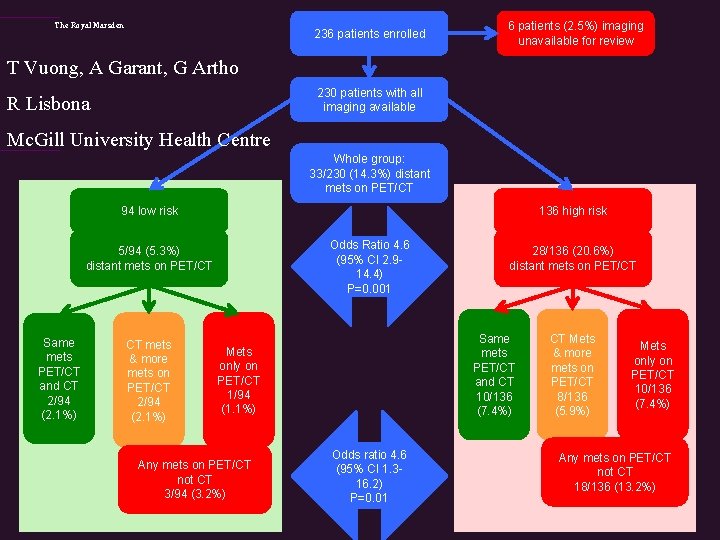
The Royal Marsden 236 patients enrolled 6 patients (2. 5%) imaging unavailable for review T Vuong, A Garant, G Artho 230 patients with all imaging available R Lisbona Mc. Gill University Health Centre Whole group: 33/230 (14. 3%) distant mets on PET/CT 94 low risk 136 high risk Odds Ratio 4. 6 (95% CI 2. 914. 4) P=0. 001 5/94 (5. 3%) distant mets on PET/CT Same mets PET/CT and CT 2/94 (2. 1%) CT mets & more mets on PET/CT 2/94 (2. 1%) Same mets PET/CT and CT 10/136 (7. 4%) Mets only on PET/CT 1/94 (1. 1%) Any mets on PET/CT not CT 3/94 (3. 2%) 28/136 (20. 6%) distant mets on PET/CT Odds ratio 4. 6 (95% CI 1. 316. 2) P=0. 01 CT Mets & more mets on PET/CT 8/136 (5. 9%) Mets only on PET/CT 10/136 (7. 4%) Any mets on PET/CT not CT 18/136 (13. 2%)
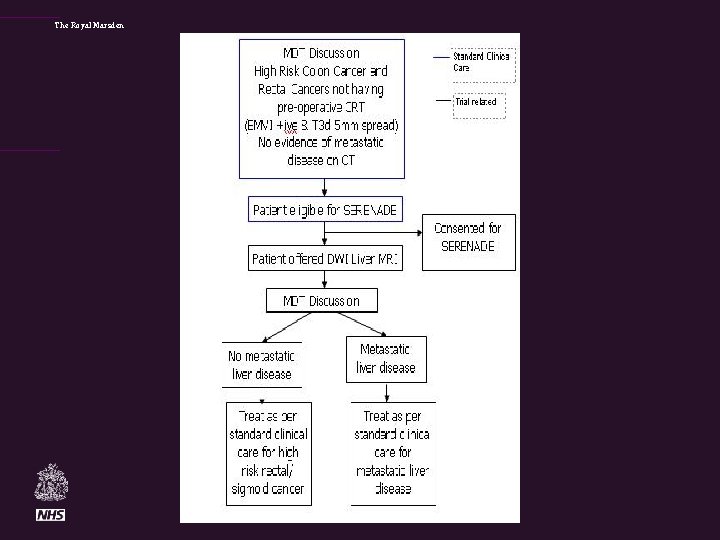
The Royal Marsden Serenade trial • Phase II study : in patients with high metastatic risk colorectal cancer (vein invasion visible on MRI, T 3>5 mm) • primary objective : find early liver spread diagnosed by Liver diffusion weighted MRI when CT scan is negative for metastatic disease.
The Royal Marsden
The Royal Marsden Endpoint phase II The primary endpoint will be to show a >5% increase in the detection of unsuspected spread to liver detected in patients at high risk by DW-MRI when standard CT is negative or not able to confirm the presence of metastatic disease.
The Royal Marsden What do we hope to achieve with the Serenade trial? • Improve survival by treating patients with very early spread to liver earlier and when spread is more susceptible to chemotherapy/surgery
The Royal Marsden MARVEL • NCRN Study • Examining clinical behaviour in EMVI+ positive tumours following CRT • Radiological and molecular change • Multi-centre • Tissue banking of rectal cancers • Microarray analysis of tumour profile • Predict behaviour
The Royal Marsden Hypothesis • mr. EMVI positive rectal cancer has worse relapse rates than EMVI negative rectal cancer following CRT CLINICAL endpoint • Where mr. EMVI positive rectal cancer changes to mr. EMVI negative following CRT, it is associated with an improvement in time to relapse. IMAGING PREDICTIVE BIOMARKER • mr. EMVI positive rectal cancer is associated with worse response rates following CRT. IMAGING PREDICTIVE BIOMARKER • EMVI positive rectal cancer exhibits a distinct molecular/genetic profile compared to EMVI negative rectal cancer. MECHANISM AND THERAPEUTIC PATHWAYS
The Royal Marsden
The Royal Marsden
The Royal Marsden
The Royal Marsden
The Royal Marsden
The Royal Marsden
The Royal Marsden
The Royal Marsden
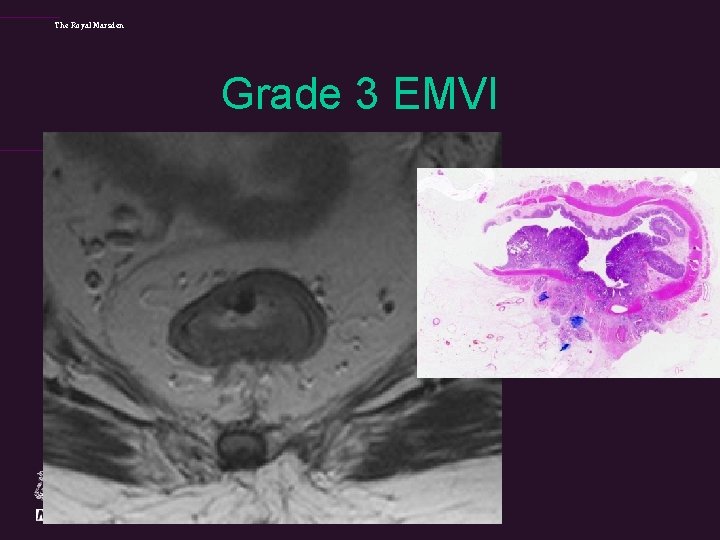
The Royal Marsden Grade 3 EMVI
The Royal Marsden
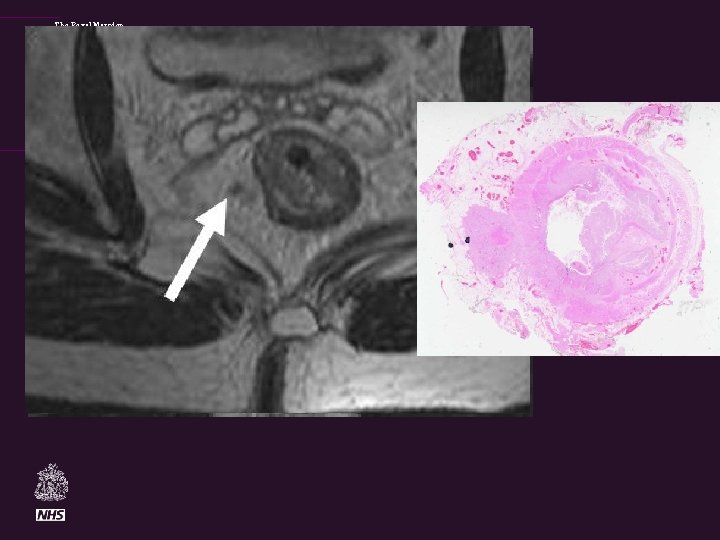
The Royal Marsden Grade 3 EMVI
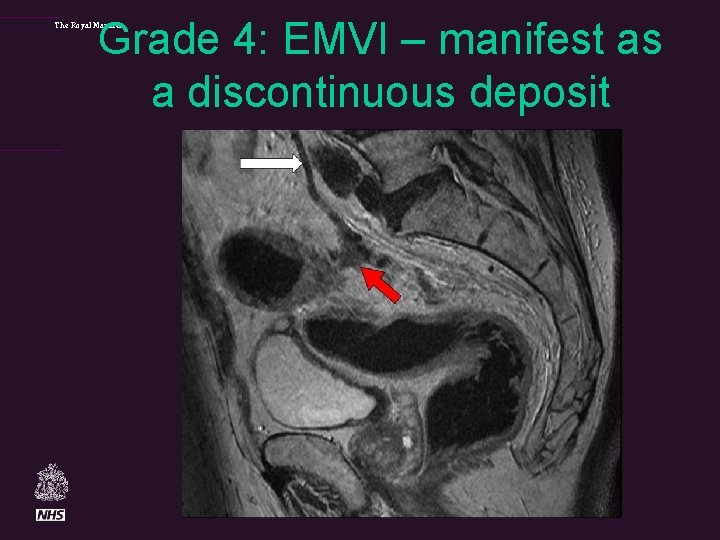
Grade 4: EMVI – manifest as a discontinuous deposit The Royal Marsden
The Royal Marsden
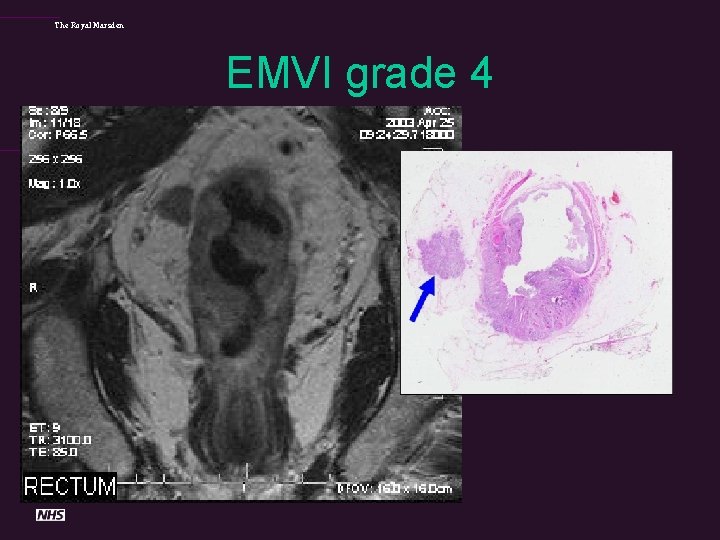
The Royal Marsden EMVI grade 4
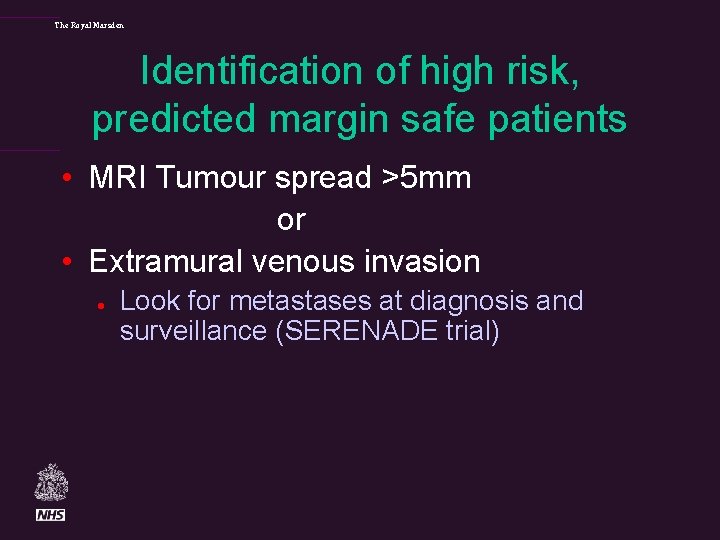
The Royal Marsden Identification of high risk, predicted margin safe patients • MRI Tumour spread >5 mm or • Extramural venous invasion l Look for metastases at diagnosis and surveillance (SERENADE trial)
The Royal Marsden The future of MR EMVI • A poor prognostic group 30 -40% of patients with significantly worse DFS than EMVI negative Node positive patients • EMVI strongly associated with nodal spread and is underreported by pathologists – deeper sections and elastin stains for MRI histopathology discordance • Current and future trials will be able to assess impact of neoadjuvant chemotherapy in improving DFS for imaging identified high risk • Training and support for radiologists to seek and document EMVI – close assessment and surveillance metastatic disease: the MARVEL trial