
The Romantic Period 1815 1848 What Is Romanticism
- Slides: 54
The Romantic Period 1815 -1848
What Is Romanticism? l l Period of political, economic and social upheaval after Napoleon’s reign in France Caused by international stability Growing middle class provided an audience for the arts Characterized by strong portrayal of emotions through the arts
What Is Romanticism? l l l Belief was that imagination and creation should determine artistic creation Denounced The Enlightenment, as it impeded creativity Rediscovery of human freedom and creativity, which had been impeded by the habits and rules of civilization
What Is Romanticism? l l Broke with tradition, creating new cultural forms and techniques Intent of the arts was for the audience to feel and experience their work
Causes Of The Romantic Period l l l People had time to appreciate the arts Wealthy patrons were no longer needed to support artists Failure of The Enlightenment gave way to a new type of thinking
Romantic Art l l Independent artists wanted to break away from the restrictions of the Classic style These feelings grew into The Romantic Movement Artists were fascinated with Ancient Greece and Rome, The Middle Ages, The Orient, and Africa Was less prominent than Romantic music and Literature
ROMANTIC PAINTING
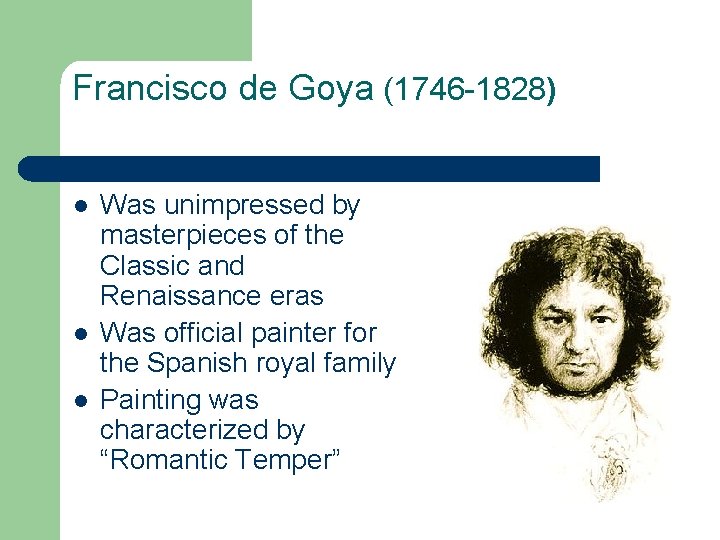
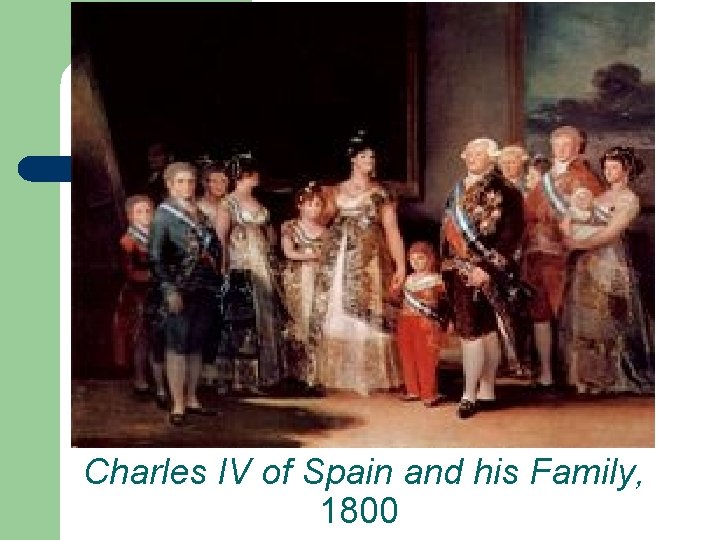
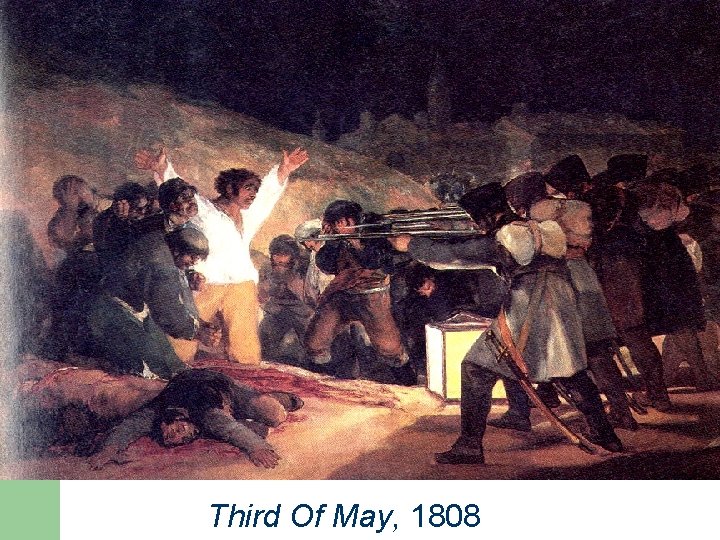
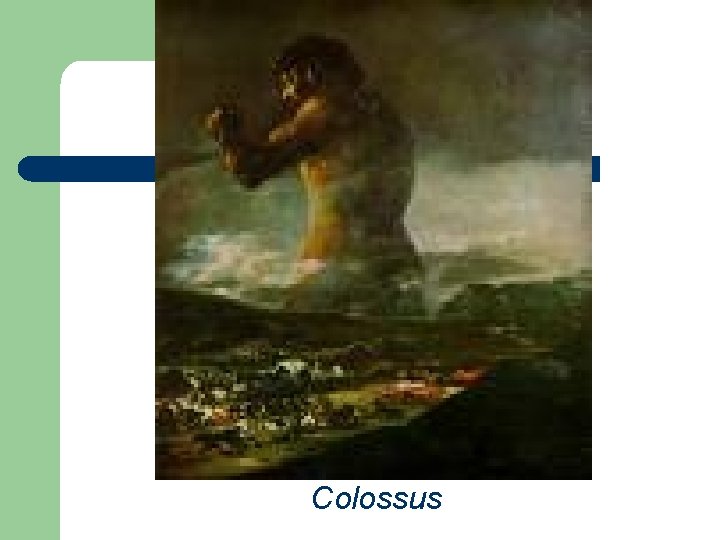
Francisco de Goya (1746 -1828) l l l Was unimpressed by masterpieces of the Classic and Renaissance eras Was official painter for the Spanish royal family Painting was characterized by “Romantic Temper”
Charles IV of Spain and his Family, 1800
Third Of May, 1808
Colossus
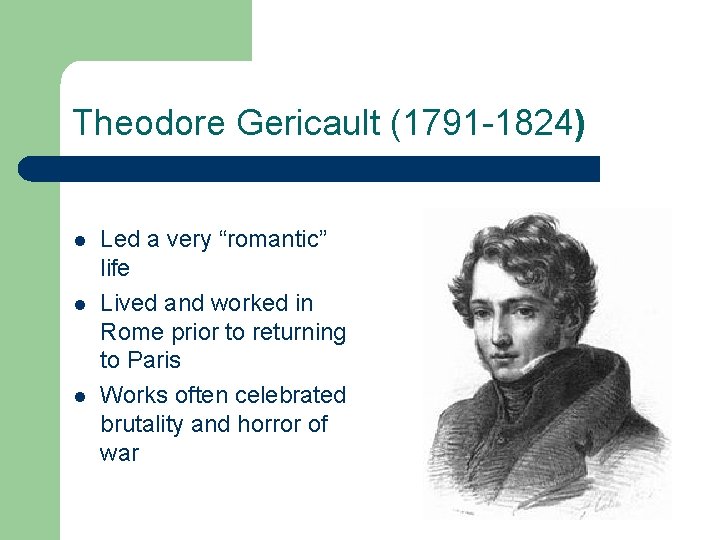
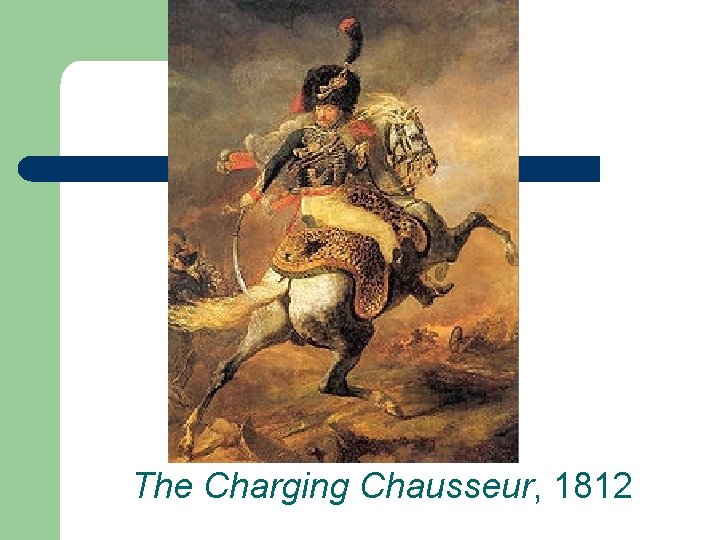
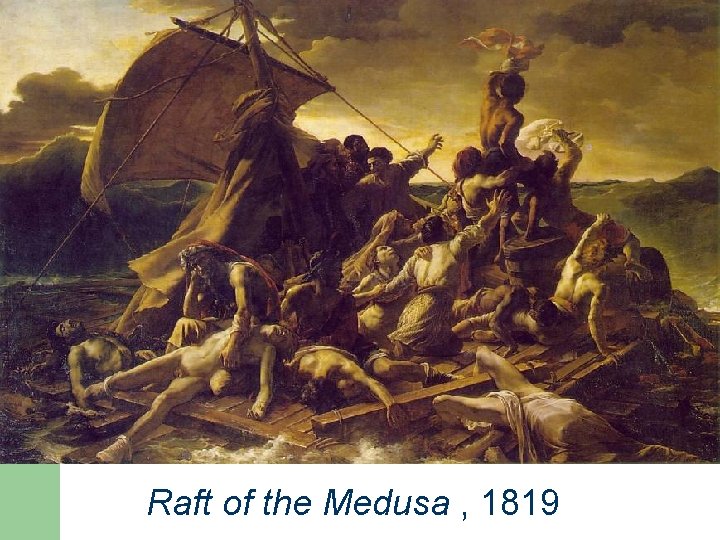
Theodore Gericault (1791 -1824) l l l Led a very “romantic” life Lived and worked in Rome prior to returning to Paris Works often celebrated brutality and horror of war
The Charging Chausseur, 1812
Raft of the Medusa , 1819
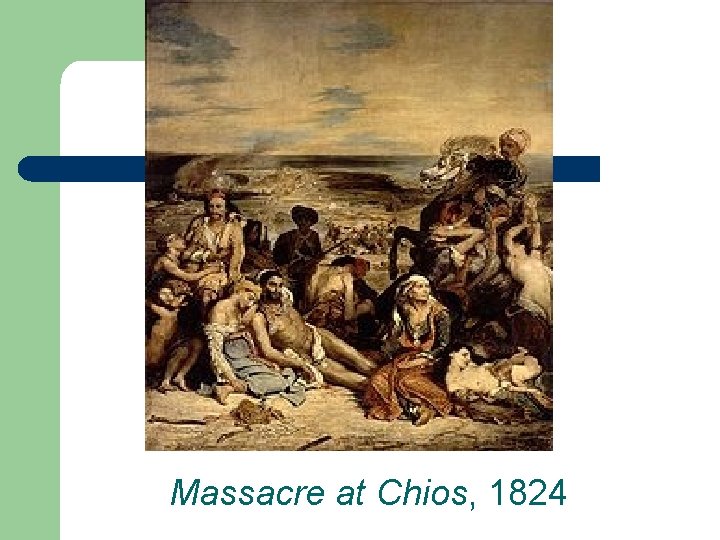
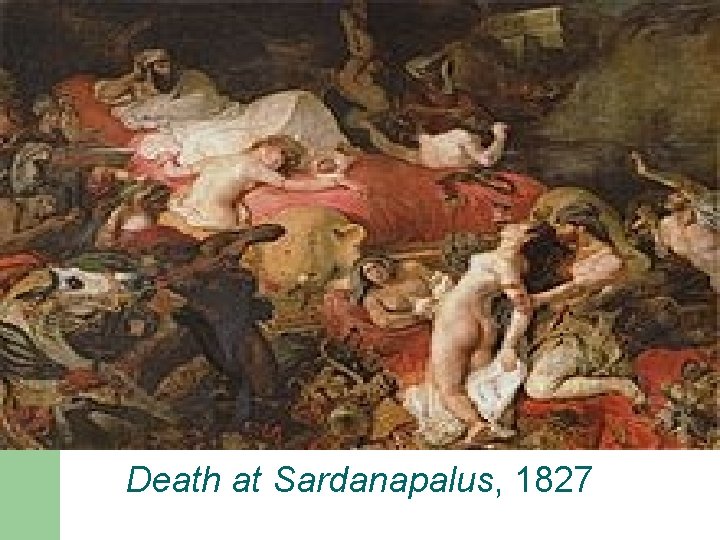
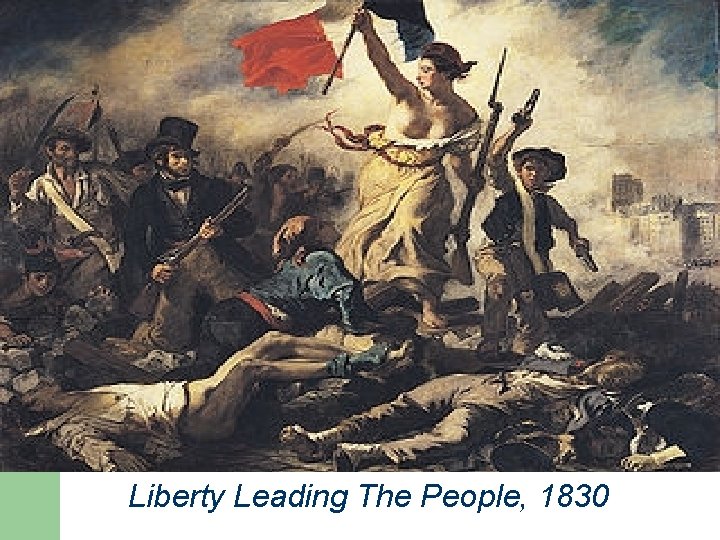
Eugene Delacroix (1798 -1863) l l Led the Romantic movement in France after Gericault’s death Similar in his lifestyle to Gericault Traveled to Greece during their revolution Story was secondary to the intensity of the moment
Massacre at Chios, 1824
Death at Sardanapalus, 1827
Liberty Leading The People, 1830
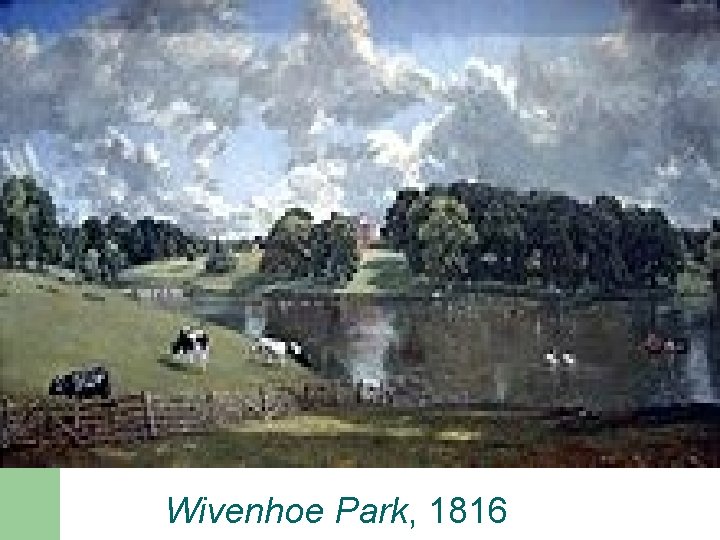
John Constable (1776 -1837) l l l Conveyed feelings through landscapes Among first to paint outdoors Believed that love could be expressed through nature
Wivenhoe Park, 1816
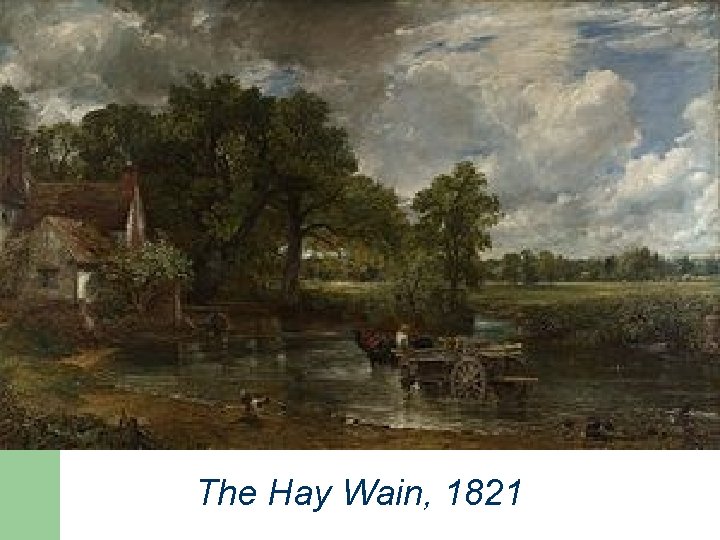
The Hay Wain, 1821
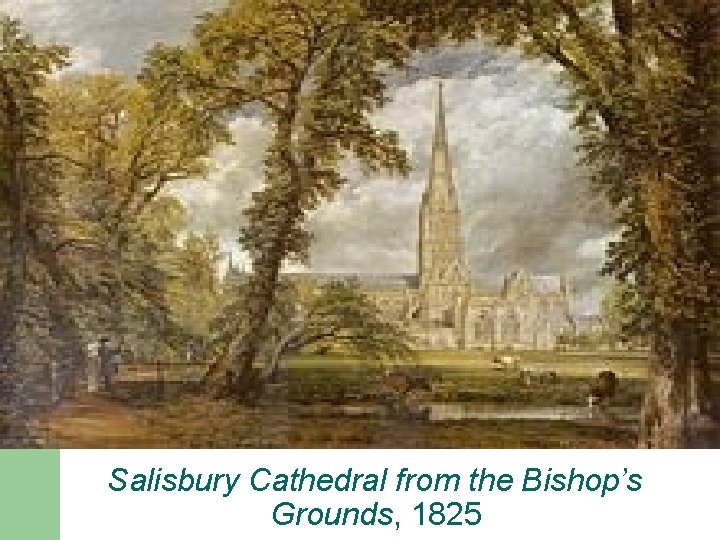
Salisbury Cathedral from the Bishop’s Grounds, 1825
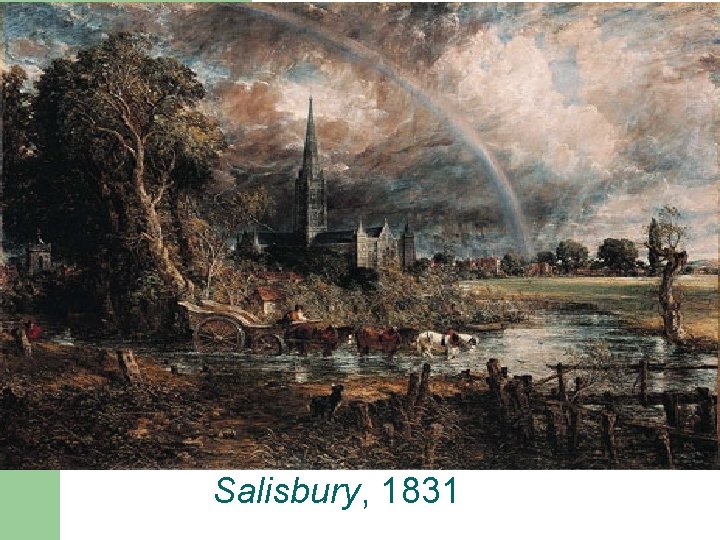
Salisbury, 1831
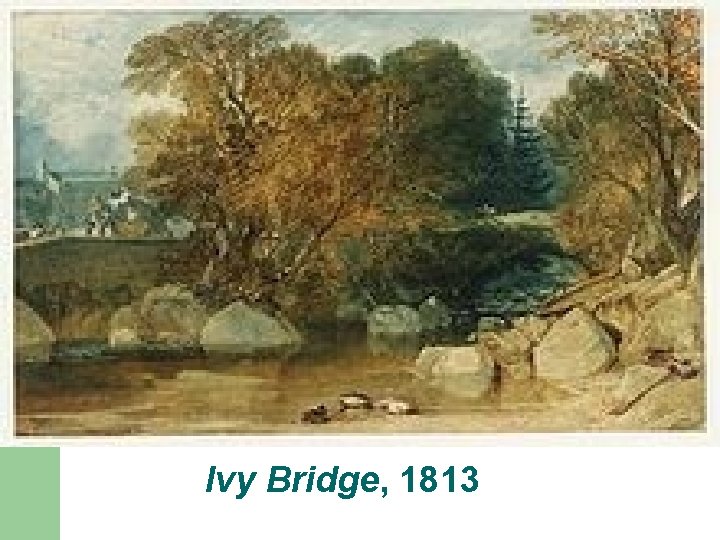
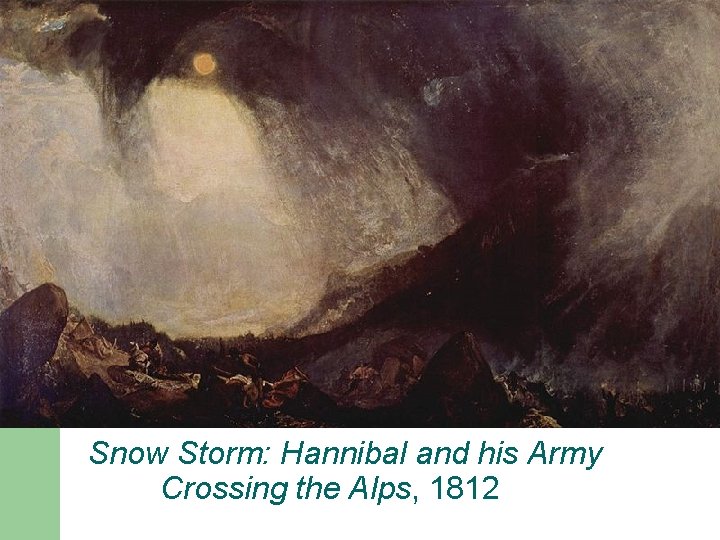
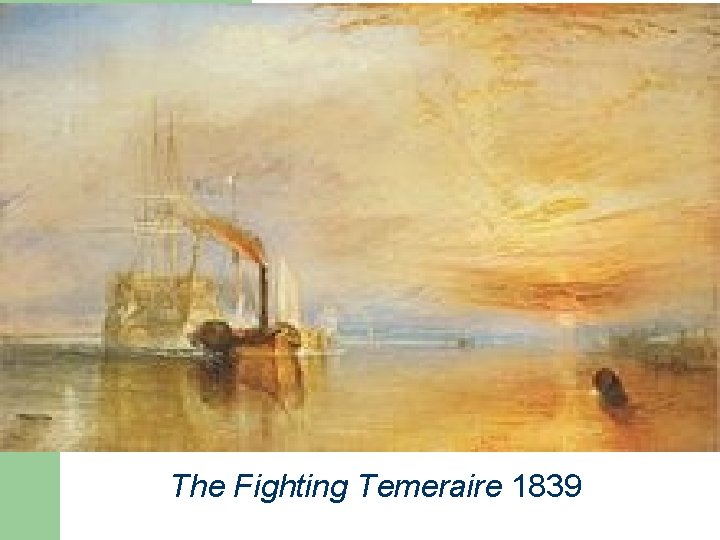
JMW Turner, (1775 -1851) l l l Fascinated by the power of nature Work was more abstract Worked in watercolours
Ivy Bridge, 1813
Snow Storm: Hannibal and his Army Crossing the Alps, 1812
The Fighting Temeraire 1839
. Burial at Sea, 1841
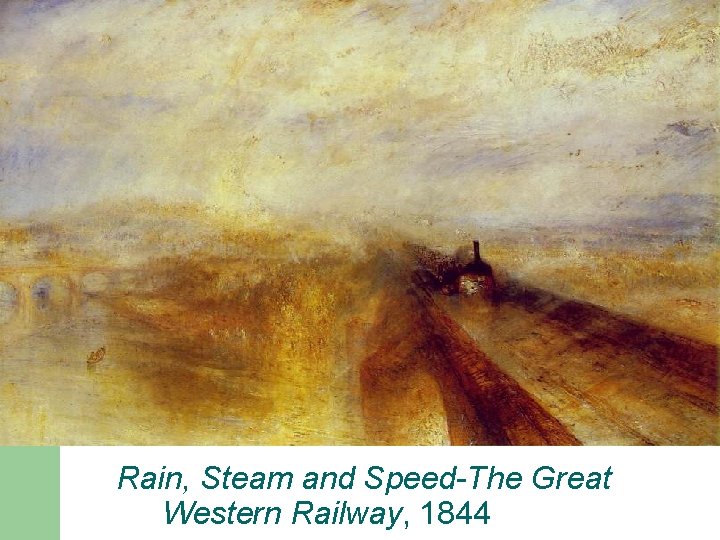
Rain, Steam and Speed-The Great Western Railway, 1844
ROMANTIC ARCHITECTURE
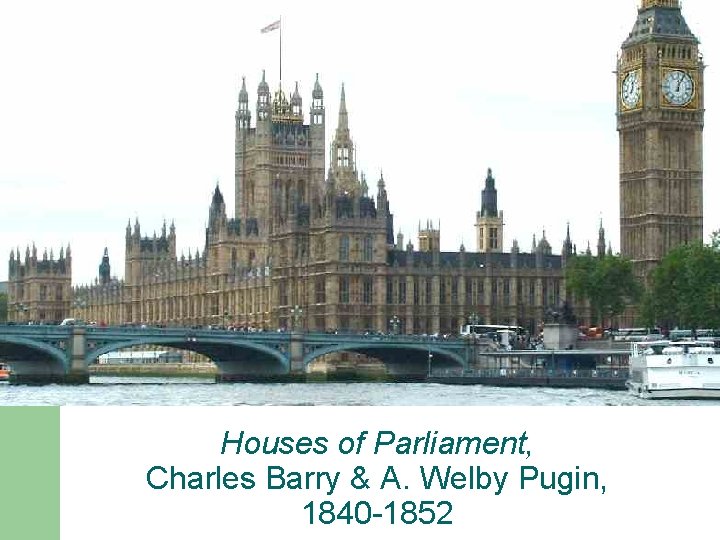
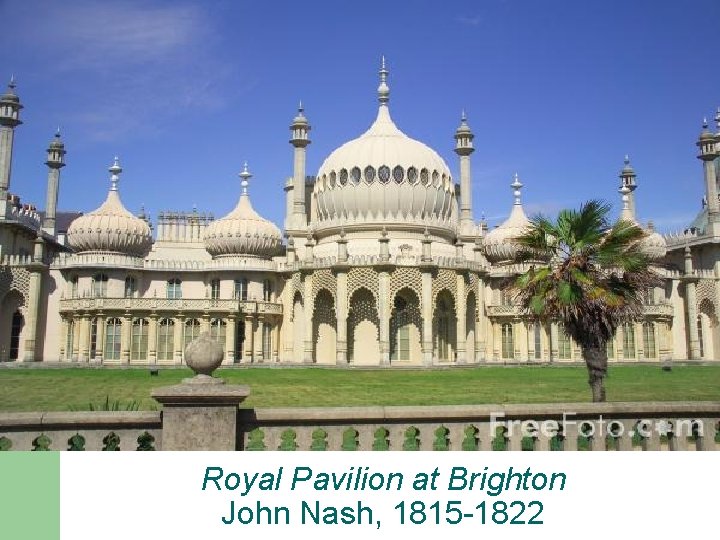
ROMANTIC ARCHITECTURE l l England was the leader Renewed interest in Middle ages Gothic Rivival Architects adapted & mastered both styles (Classical & Gothic) Classical in proportion but decoration was Medieval
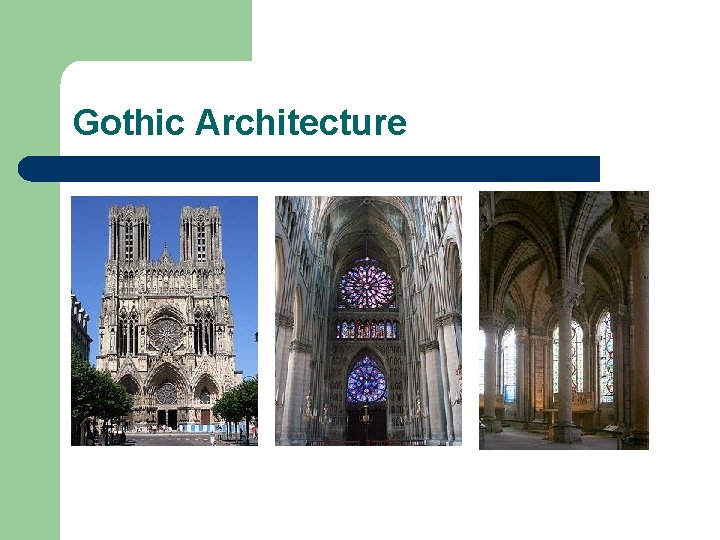
Gothic Architecture
Houses of Parliament, Charles Barry & A. Welby Pugin, 1840 -1852
Royal Pavilion at Brighton John Nash, 1815 -1822
Basilica of St. Clotilde, 1846 -1857
ROMANTIC MUSIC
Romantic Music l l l Considered to be the most romantic of the three major arts Evolved from former classical style Large focus on the piano Nature of the audience had largely changed Along with literature helped to kick-start the entire movement
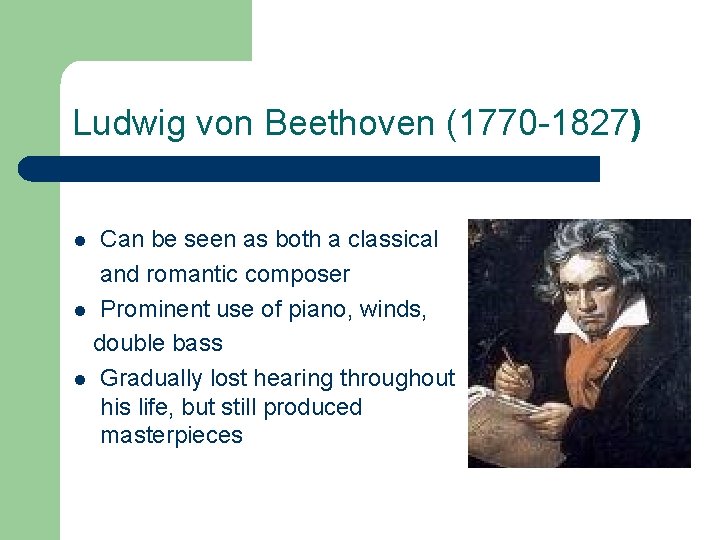
Ludwig von Beethoven (1770 -1827) Can be seen as both a classical and romantic composer l Prominent use of piano, winds, double bass l Gradually lost hearing throughout his life, but still produced masterpieces l
l l l Was one of the first composers to work freelance Was initially attracted to the Enlightenment , but later caught on with the growing trend of Romanticism He was also suspected of being a Freemason http: //www. youtube. com/watch? v=Wod-Mud. LNPA
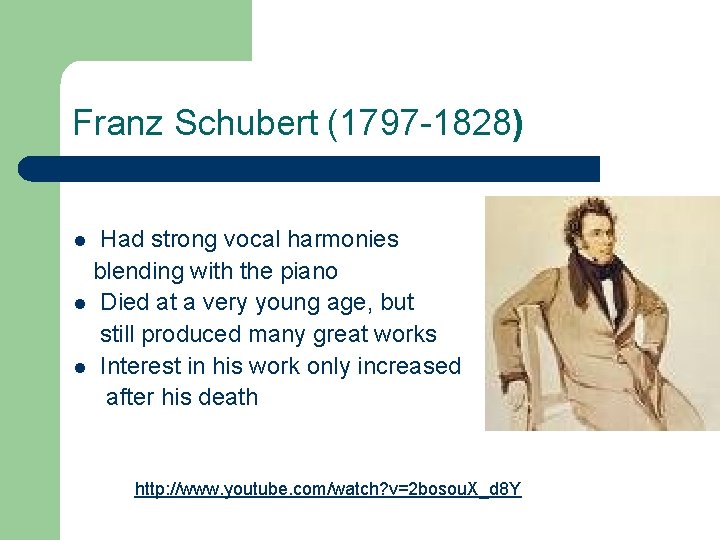
Franz Schubert (1797 -1828) Had strong vocal harmonies blending with the piano l Died at a very young age, but still produced many great works l Interest in his work only increased after his death l http: //www. youtube. com/watch? v=2 bosou. X_d 8 Y
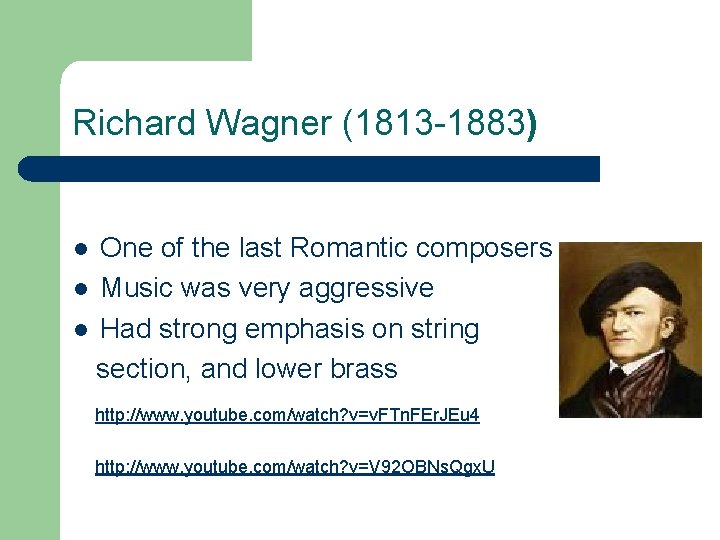
Richard Wagner (1813 -1883) One of the last Romantic composers l Music was very aggressive l Had strong emphasis on string section, and lower brass l http: //www. youtube. com/watch? v=v. FTn. FEr. JEu 4 http: //www. youtube. com/watch? v=V 92 OBNs. Qgx. U
ROMANTIC LITERATURE
Romantic Literature l l Authors were upset with the focus on writing during The Enlightenment Again works were based on provoking emotion and compassion with characters Started Romanticism in the early 19 th Century, with the publication of many different poems First Romantic work considered to be William Woodsworth and Samuel Coleridge’s Lyrical Ballads
Romantic Literature l l l Was also a backlash against The Industrial Revolution There was an increasing demand for spontaneity and lyricism Some prominent themes were: Libertarianism, Nature, The Exotic, and the Supernatural
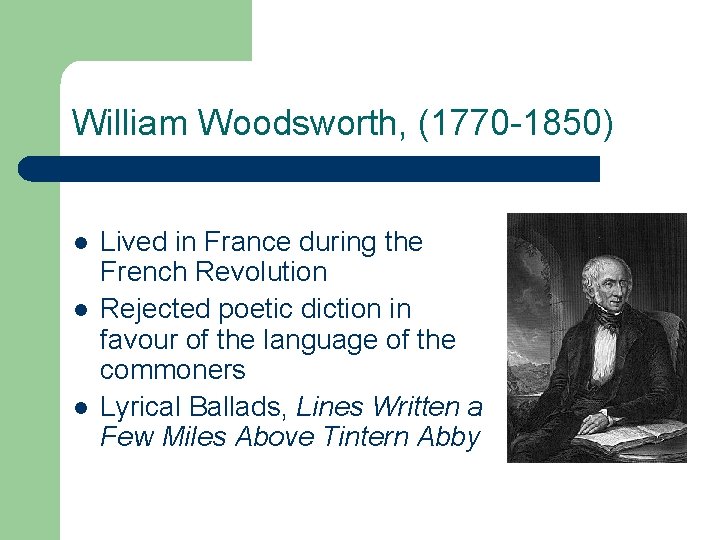
William Woodsworth, (1770 -1850) l l l Lived in France during the French Revolution Rejected poetic diction in favour of the language of the commoners Lyrical Ballads, Lines Written a Few Miles Above Tintern Abby
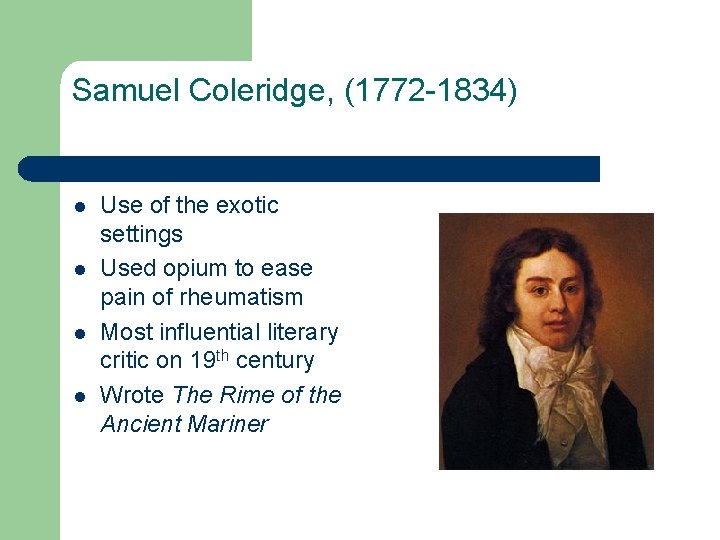
Samuel Coleridge, (1772 -1834) l l Use of the exotic settings Used opium to ease pain of rheumatism Most influential literary critic on 19 th century Wrote The Rime of the Ancient Mariner
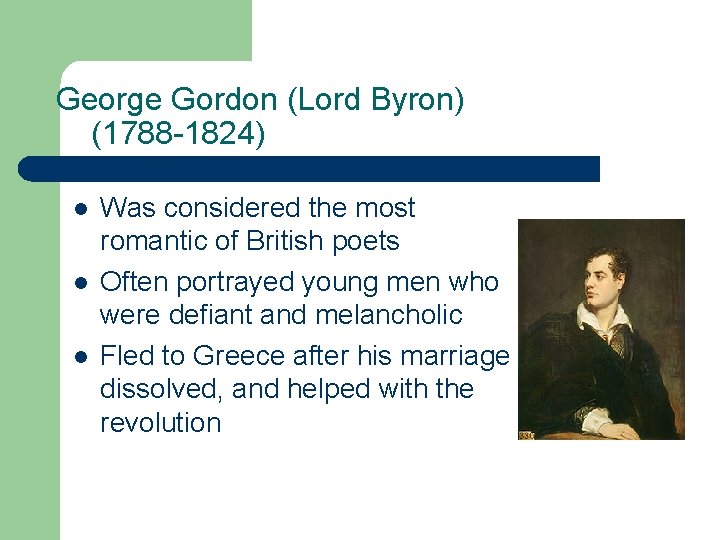
George Gordon (Lord Byron) (1788 -1824) l l l Was considered the most romantic of British poets Often portrayed young men who were defiant and melancholic Fled to Greece after his marriage dissolved, and helped with the revolution
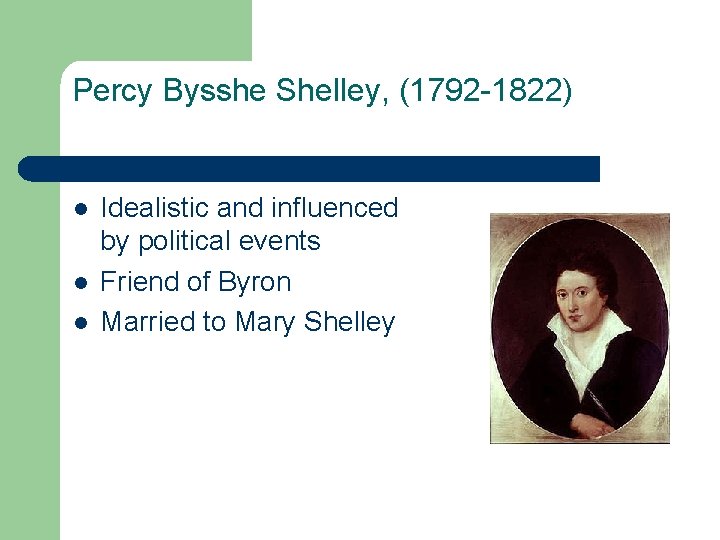
Percy Bysshe Shelley, (1792 -1822) l l l Idealistic and influenced by political events Friend of Byron Married to Mary Shelley
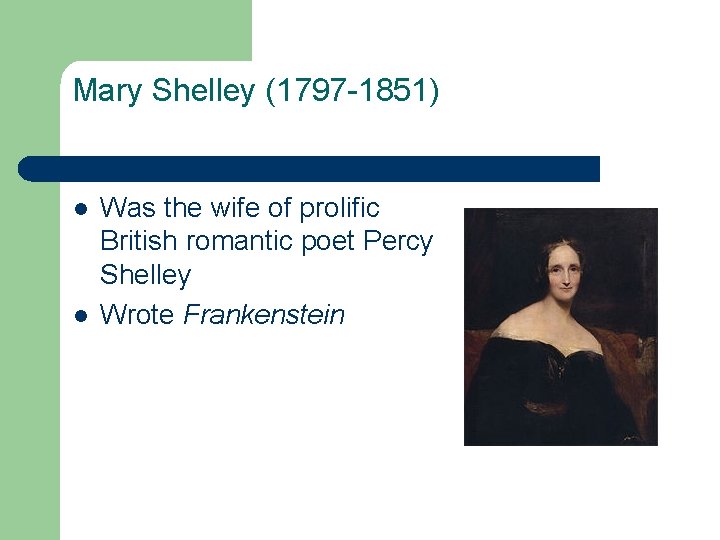
Mary Shelley (1797 -1851) l l Was the wife of prolific British romantic poet Percy Shelley Wrote Frankenstein
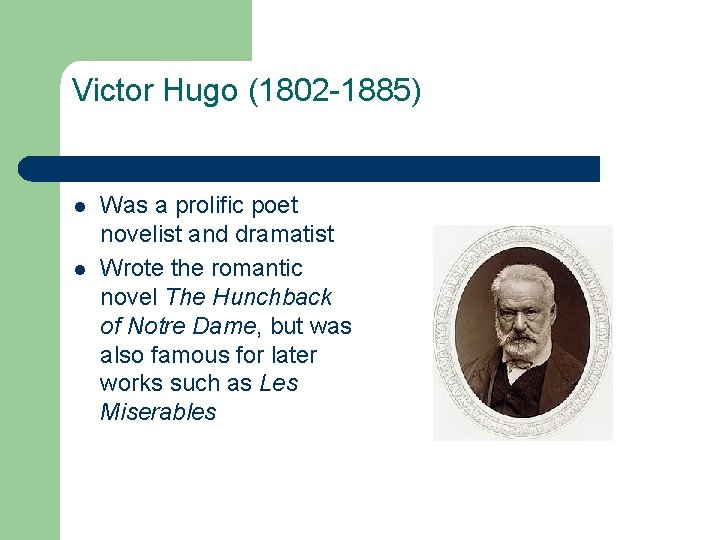
Victor Hugo (1802 -1885) l l Was a prolific poet novelist and dramatist Wrote the romantic novel The Hunchback of Notre Dame, but was also famous for later works such as Les Miserables
l l Was renowned for communicating his views through his writing, such as championing free thought and his atheism When he passed he was buried in Le Pantheon, a famous French cemetery along with other famous Frenchmen such as: Voltaire, Rousseau, Marat, and Braille
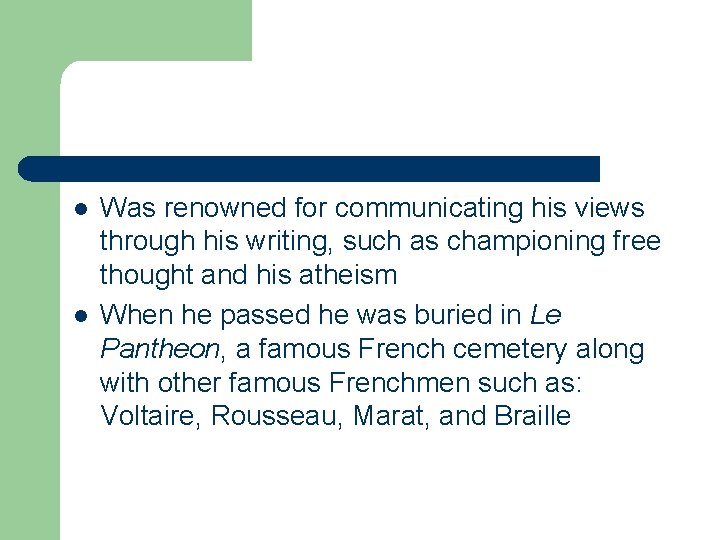
Edgar Allen Poe (1809 -1849) l l l Was a Gothic revivalist, similar to Mary Shelley Wrote many poems, with his most famous being The Raven Also helped with the creation of the science fiction genre
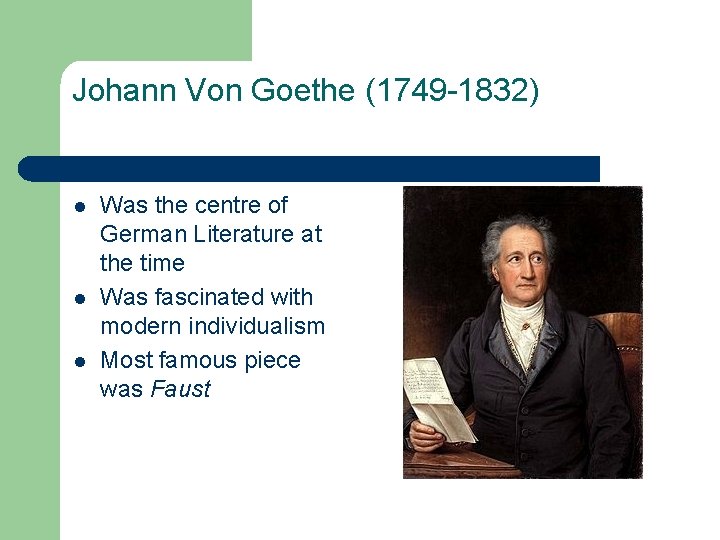
Johann Von Goethe (1749 -1832) l l l Was the centre of German Literature at the time Was fascinated with modern individualism Most famous piece was Faust
Romanticism’s Importance Today l l l Paved the way for more individual and free thinking Many artists of this period would influence prominent artists of coming periods Helped to expand the middle class