
THE ROMAN THEATRE By Erica Trombley Kaleigh James
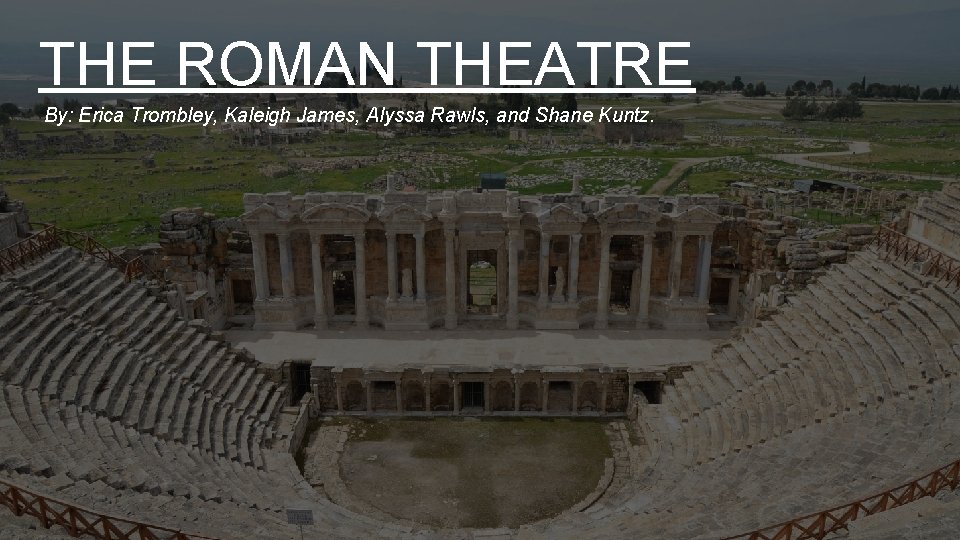
THE ROMAN THEATRE By: Erica Trombley, Kaleigh James, Alyssa Rawls, and Shane Kuntz.
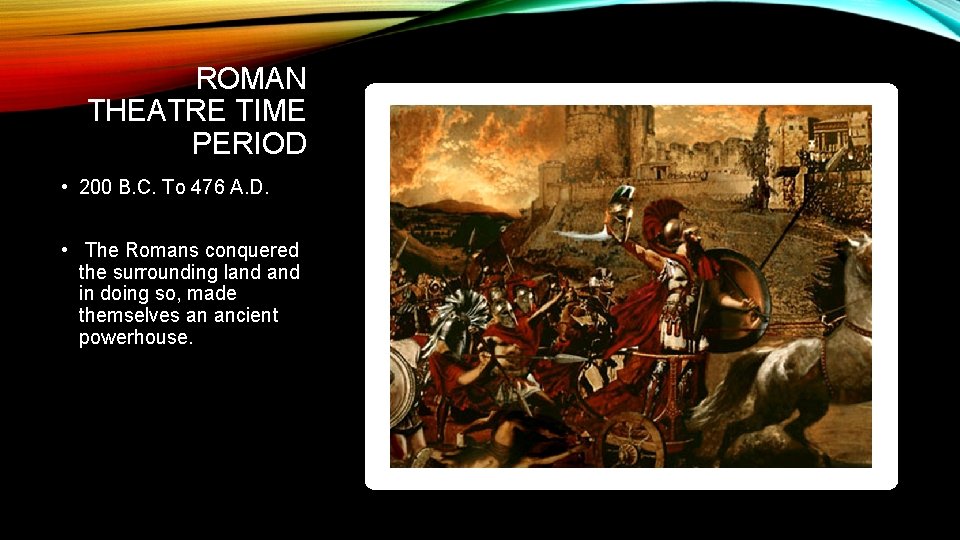
ROMAN THEATRE TIME PERIOD • 200 B. C. To 476 A. D. • The Romans conquered the surrounding land in doing so, made themselves an ancient powerhouse.
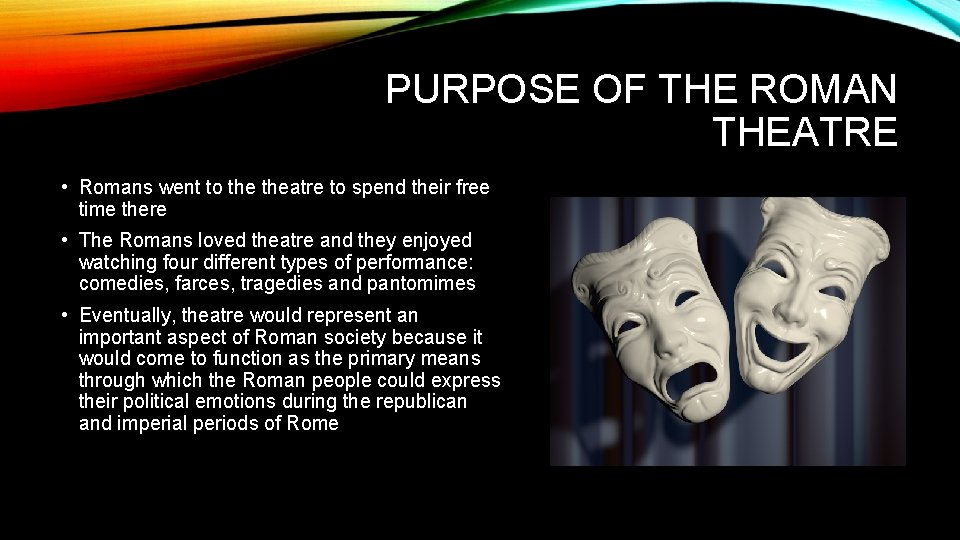
PURPOSE OF THE ROMAN THEATRE • Romans went to theatre to spend their free time there • The Romans loved theatre and they enjoyed watching four different types of performance: comedies, farces, tragedies and pantomimes • Eventually, theatre would represent an important aspect of Roman society because it would come to function as the primary means through which the Roman people could express their political emotions during the republican and imperial periods of Rome
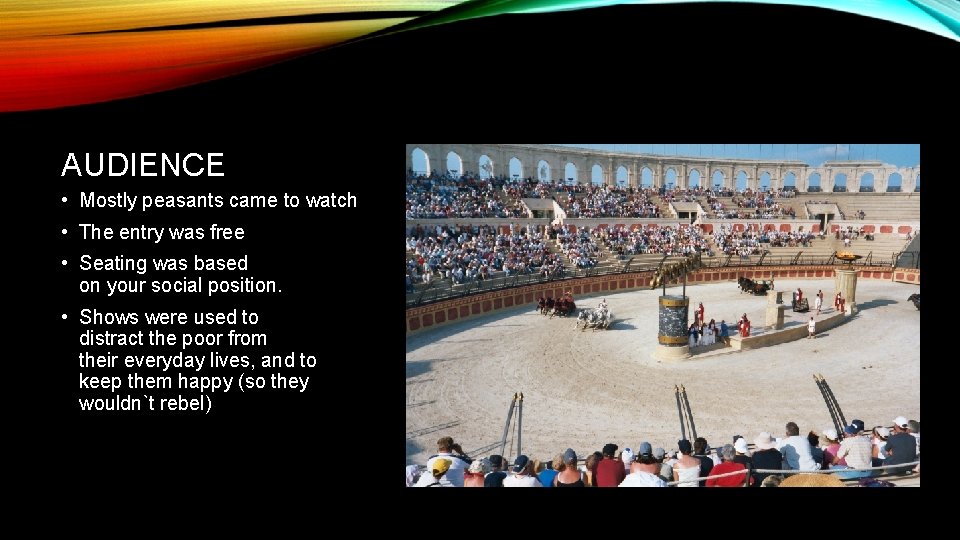
AUDIENCE • Mostly peasants came to watch • The entry was free • Seating was based on your social position. • Shows were used to distract the poor from their everyday lives, and to keep them happy (so they wouldn`t rebel)
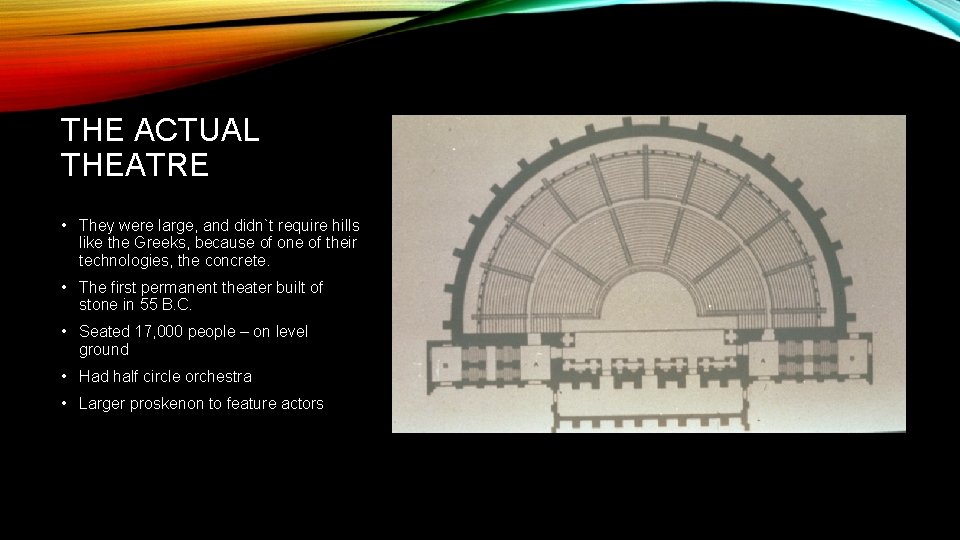
THE ACTUAL THEATRE • They were large, and didn`t require hills like the Greeks, because of one of their technologies, the concrete. • The first permanent theater built of stone in 55 B. C. • Seated 17, 000 people – on level ground • Had half circle orchestra • Larger proskenon to feature actors
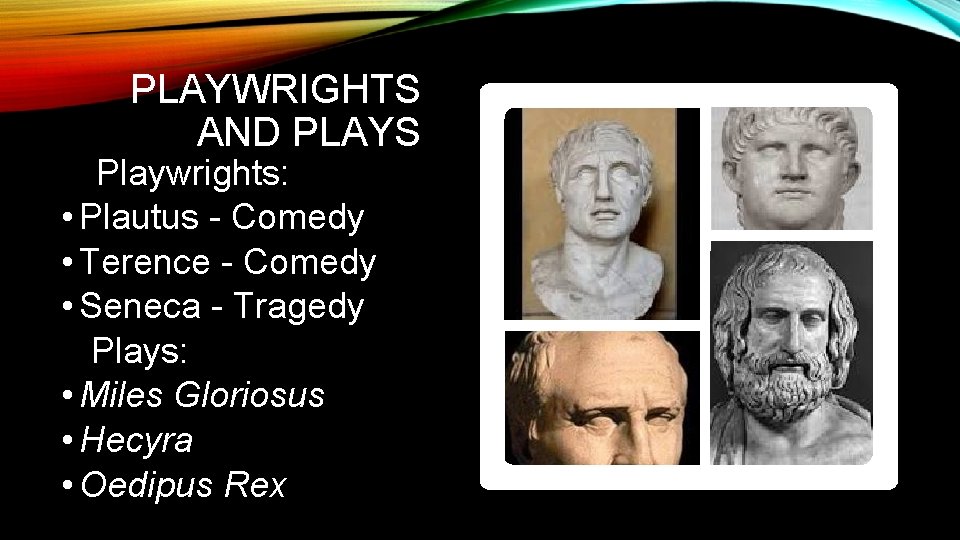
PLAYWRIGHTS AND PLAYS Playwrights: • Plautus - Comedy • Terence - Comedy • Seneca - Tragedy Plays: • Miles Gloriosus • Hecyra • Oedipus Rex
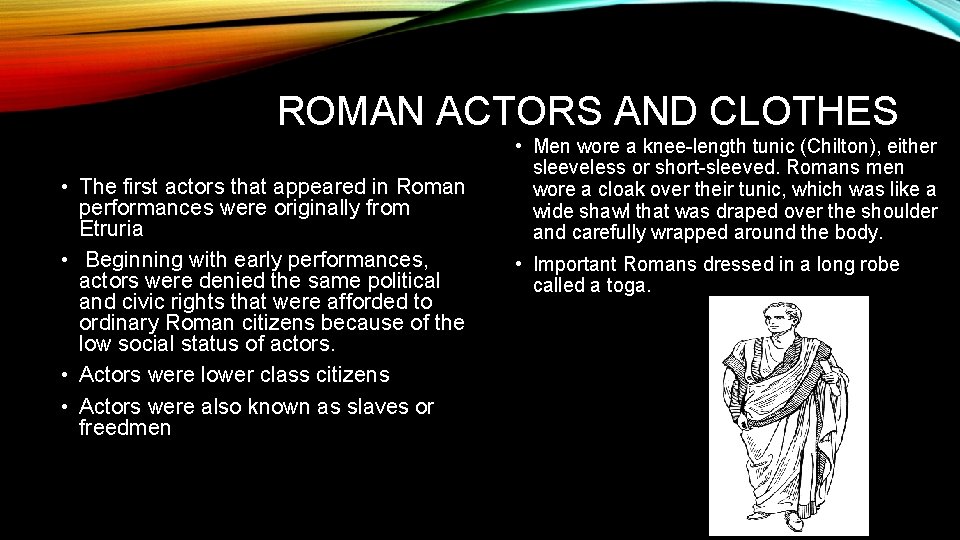
ROMAN ACTORS AND CLOTHES • The first actors that appeared in Roman performances were originally from Etruria • Beginning with early performances, actors were denied the same political and civic rights that were afforded to ordinary Roman citizens because of the low social status of actors. • Actors were lower class citizens • Actors were also known as slaves or freedmen • Men wore a knee-length tunic (Chilton), either sleeveless or short-sleeved. Romans men wore a cloak over their tunic, which was like a wide shawl that was draped over the shoulder and carefully wrapped around the body. • Important Romans dressed in a long robe called a toga.
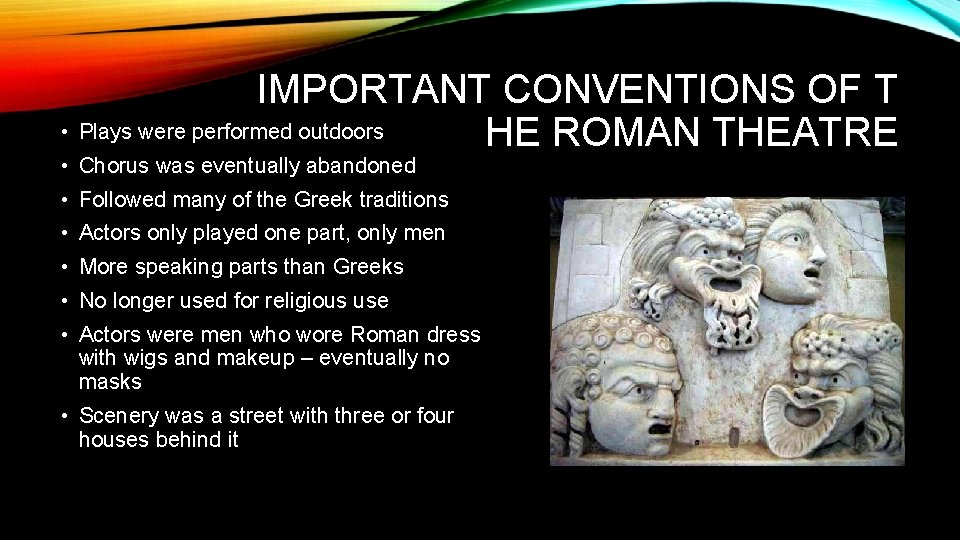
IMPORTANT CONVENTIONS OF T • Plays were performed outdoors HE ROMAN THEATRE • Chorus was eventually abandoned • Followed many of the Greek traditions • Actors only played one part, only men • More speaking parts than Greeks • No longer used for religious use • Actors were men who wore Roman dress with wigs and makeup – eventually no masks • Scenery was a street with three or four houses behind it
FUN FACTS ABOUT THE ROMAN THEATRE • Roman theatre was influenced by both Etruscan and Greek precedents • There were 175 festival a year in ancient Rome, 101 of the days was devoted to theater • The first standing Roman theater was the Theater of Pompey, Pompey the Great was the first person who undertook the building of a secure theater • A gladiator slave named Spartacus led a slave revolt in 73 BC • Chariot races took place in the stadium. The stadium had a central platform and the crowd watched the chariots race around it • The comedies we watch today still uses the same plot and humor as the Ancient Roman plays • The main attraction in the arena was the gladiators • The Romans invented the mime. This is where acting was performed with only body movement rather than speaking
BIBLIOGRAPHY James. "Roman Entertainment Facts. " Primary Facts, primaryfacts. com/1184/romanentertainment-facts/. Muscato, Christopher. "Ancient Roman Theatre: History & Performance. " Study. com, study. com/academy/lesson/ancient-roman-theatre-history-performance. html. "Roman Theatre. " Roman Theatre, Weebly, romantheaterproject. weebly. com/funfacts. html. Trumbell, Eric W. , Dr. "roman theatre and drama. " NOVA, Northern Virginia Community College , 16 Nov. 2007, novaonline. nvcc. edu/eli/spd 130 et/roman. htm. Accessed 15 Nov. 2019.
- Slides: 10