
The Roman Republic the Roman Empire and Christianity
The Roman Republic, the Roman Empire and Christianity
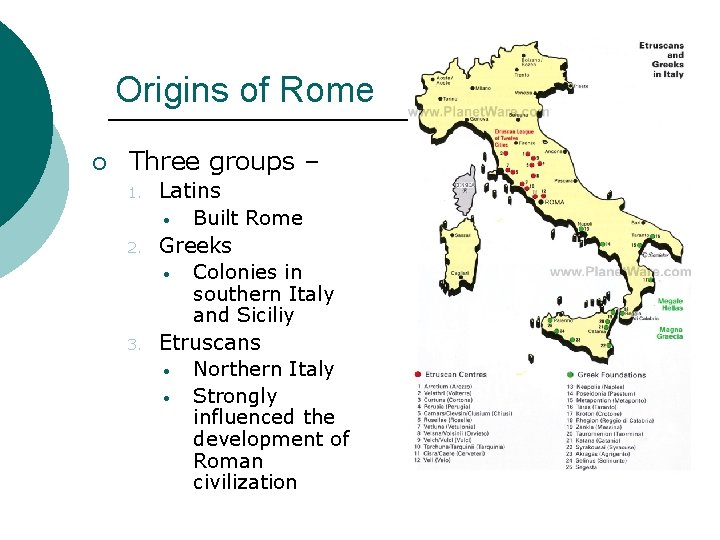
Origins of Rome ¡ Three groups – 1. 2. 3. Latins • Built Rome Greeks • Colonies in southern Italy and Siciliy Etruscans • Northern Italy • Strongly influenced the development of Roman civilization
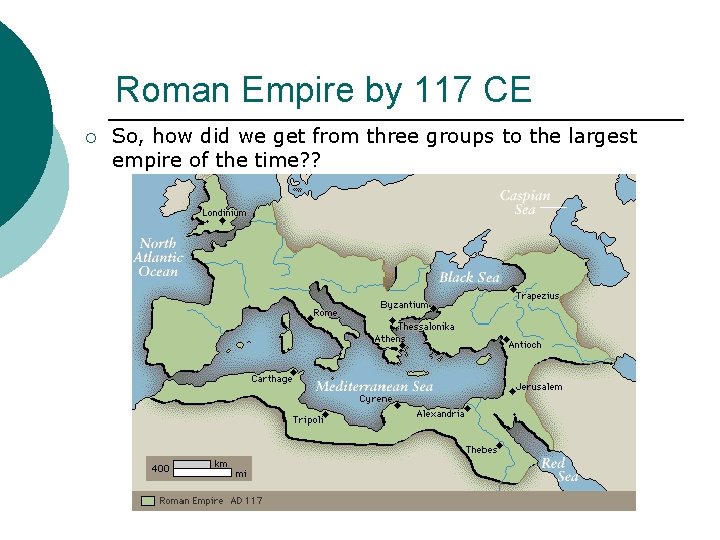
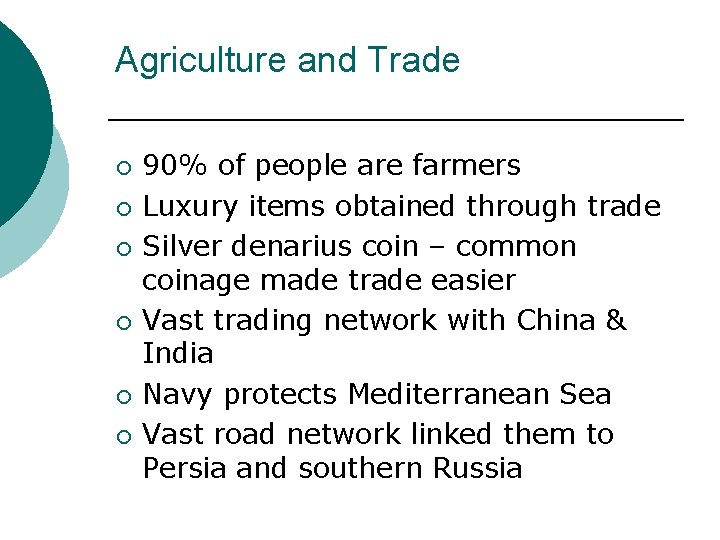
Roman Empire by 117 CE ¡ So, how did we get from three groups to the largest empire of the time? ?
Early Republic ¡ The Forum, heart of political life in Rome. ¡ Established a republic. ¡ Two groups - patricians and plebeians l Patricians inherited their power and social status l The plebeians were citizens of Rome with just the right to vote (not hold office)
Early Republic ¡ Creation of a written law code. l l ¡ The Twelve Tables Free citizens had a right to the protection of the law Created a balance of government. l l Rome had two officials called consuls The senate was an aristocratic branch of Rome’s government The assemblies represented the more democratic side of the government In times of crisis, the republic could appoint a dictator
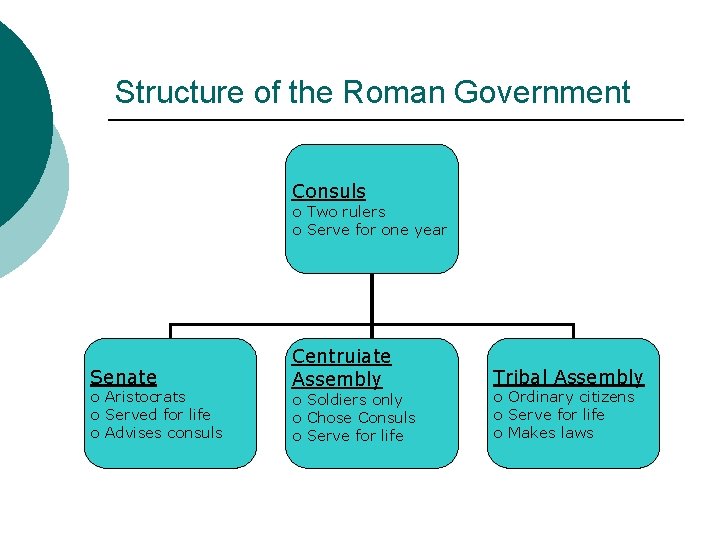
Structure of the Roman Government Consuls o Two rulers o Serve for one year Senate o Aristocrats o Served for life o Advises consuls Centruiate Assembly o Soldiers only o Chose Consuls o Serve for life Tribal Assembly o Ordinary citizens o Serve for life o Makes laws
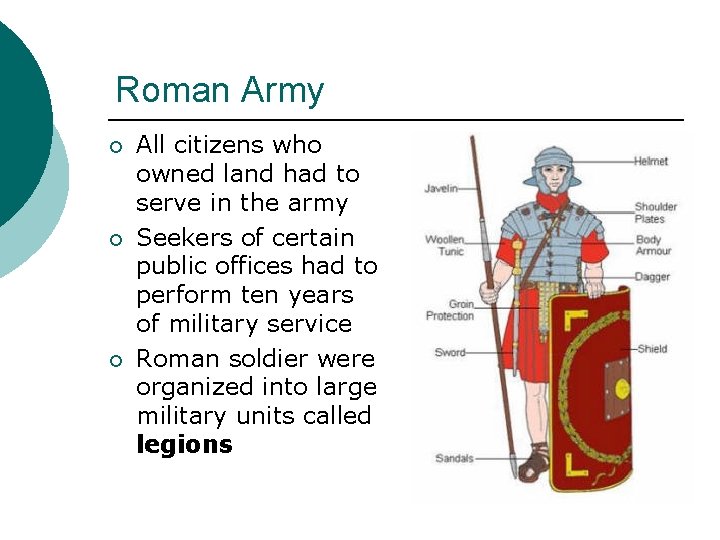
Roman Army ¡ ¡ ¡ All citizens who owned land had to serve in the army Seekers of certain public offices had to perform ten years of military service Roman soldier were organized into large military units called legions
Rome Spreads its Power Rome conquers Italy ¡ Built a long-lasting empire ¡ l ¡ Due to their lenient policy Location l Easy access around the Mediterranean

Punic Wars In 264 BCE, Rome and Carthage went to war ¡ First war was fought for control of Sicily and the western Mediterranean ¡ It ended in defeat of Carthage ¡
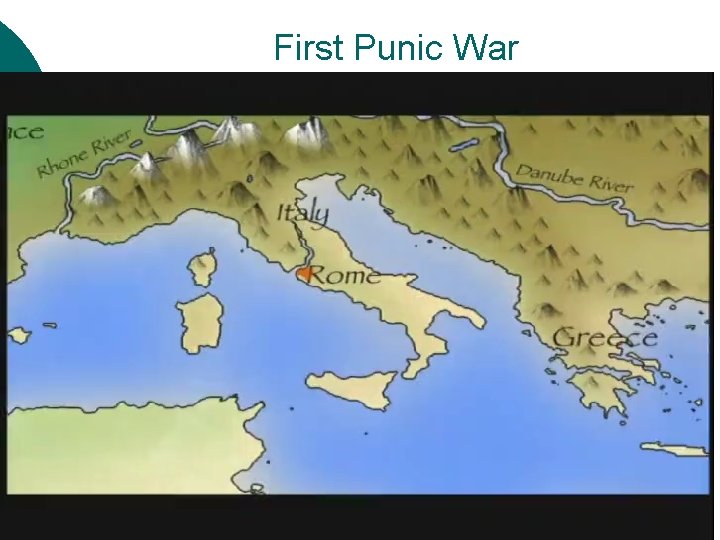
First Punic War
Second Punic War ¡ The Second Punic War began in 218 BCE l l l Hannibal (Carthage military leader) Scipio devised a plan to attack Carthage The Romans defeated Hannibal

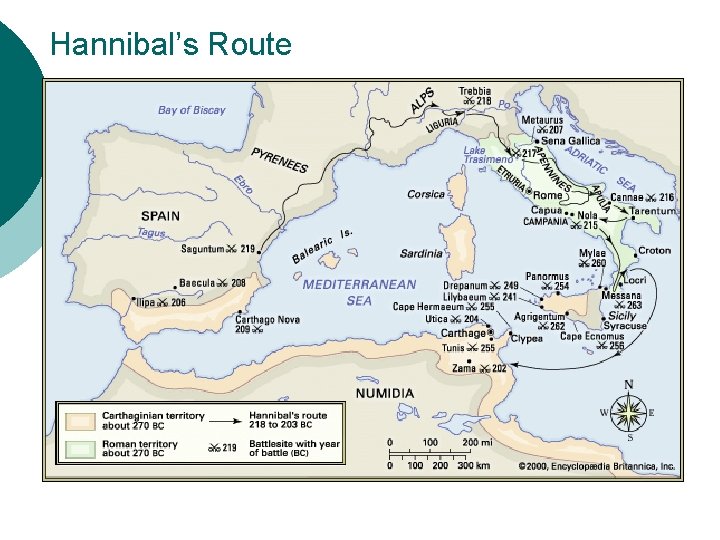
Hannibal’s Route
Third Punic War During the Third Punic War, Rome laid siege to Carthage ¡ Rome’s victories in the Punic Wars gave it dominance over the western Mediterranean ¡ Romans went on to conquer the eastern half ¡

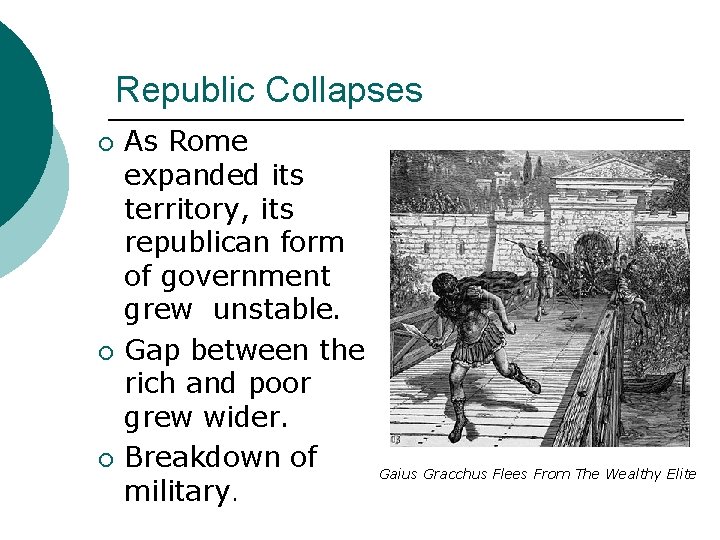
Republic Collapses ¡ ¡ ¡ As Rome expanded its territory, its republican form of government grew unstable. Gap between the rich and poor grew wider. Breakdown of military. Gaius Gracchus Flees From The Wealthy Elite
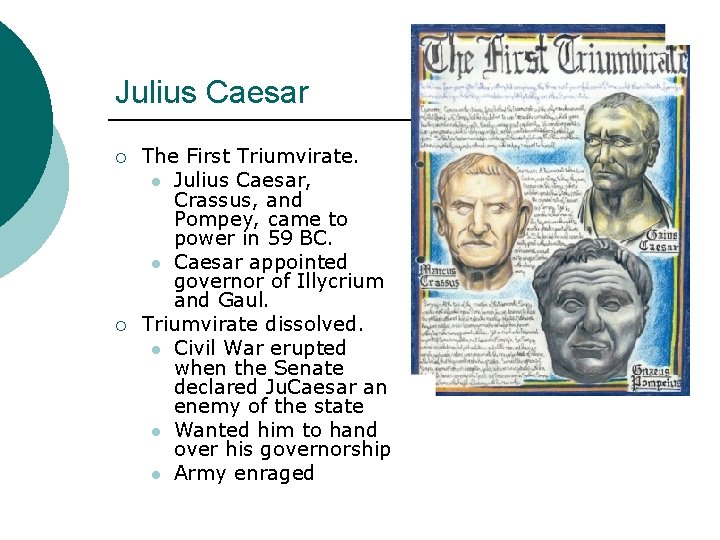
Julius Caesar ¡ ¡ The First Triumvirate. l Julius Caesar, Crassus, and Pompey, came to power in 59 BC. l Caesar appointed governor of Illycrium and Gaul. Triumvirate dissolved. l Civil War erupted when the Senate declared Ju. Caesar an enemy of the state l Wanted him to hand over his governorship l Army enraged
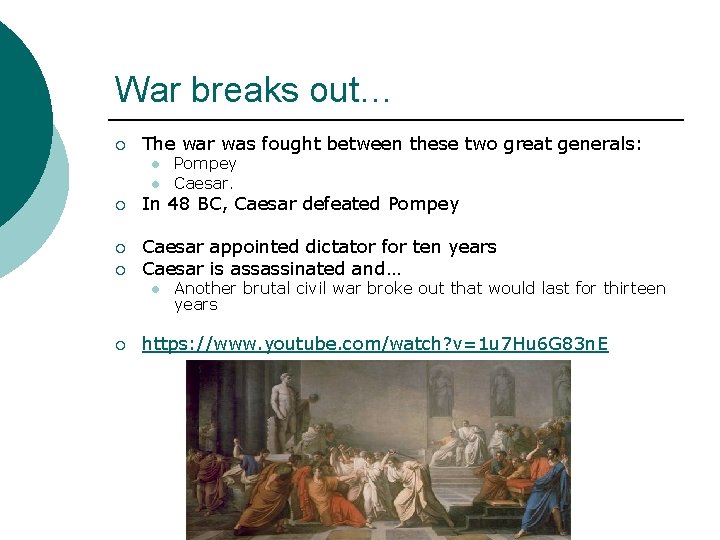
War breaks out… ¡ The war was fought between these two great generals: l l Pompey Caesar. ¡ In 48 BC, Caesar defeated Pompey ¡ Caesar appointed dictator for ten years Caesar is assassinated and… ¡ l ¡ Another brutal civil war broke out that would last for thirteen years https: //www. youtube. com/watch? v=1 u 7 Hu 6 G 83 n. E
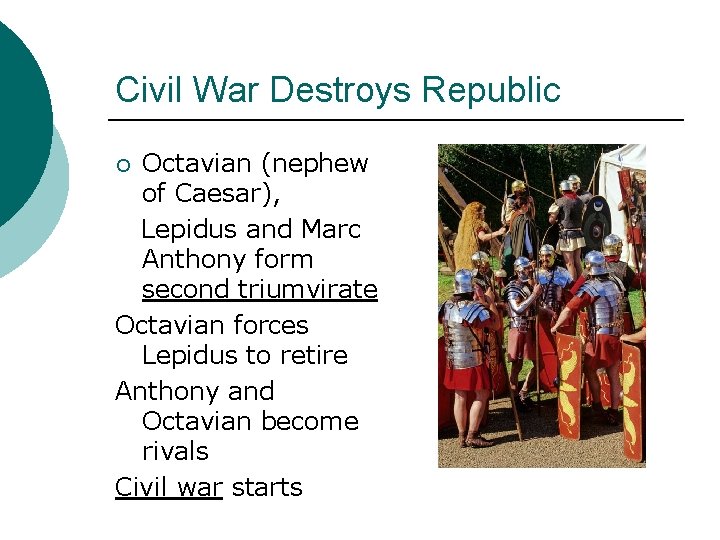
Civil War Destroys Republic Octavian (nephew of Caesar), Lepidus and Marc Anthony form second triumvirate Octavian forces Lepidus to retire Anthony and Octavian become rivals Civil war starts ¡
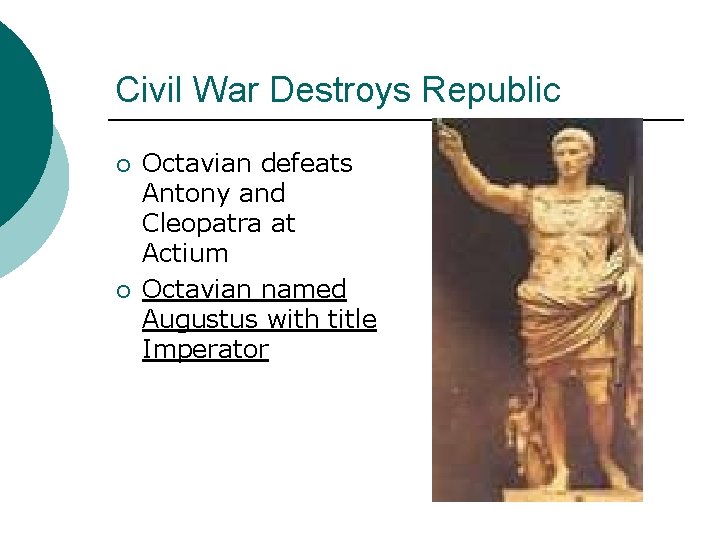
Civil War Destroys Republic ¡ ¡ Octavian defeats Antony and Cleopatra at Actium Octavian named Augustus with title Imperator
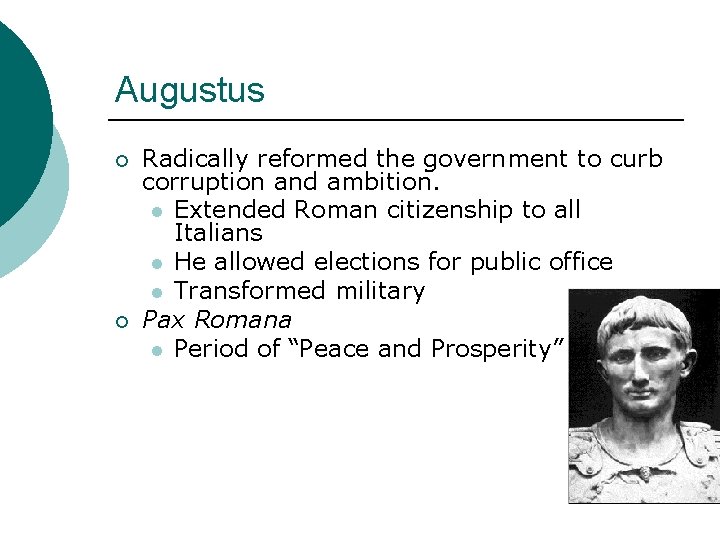
Augustus ¡ ¡ Radically reformed the government to curb corruption and ambition. l Extended Roman citizenship to all Italians l He allowed elections for public office l Transformed military Pax Romana l Period of “Peace and Prosperity”
Pax Romana Peace for 207 years ¡ 27 BC – 180 AD ¡ 3 million sq. miles ¡ 60 -80 million people in the Roman Empire ¡ 1 million in Rome ¡

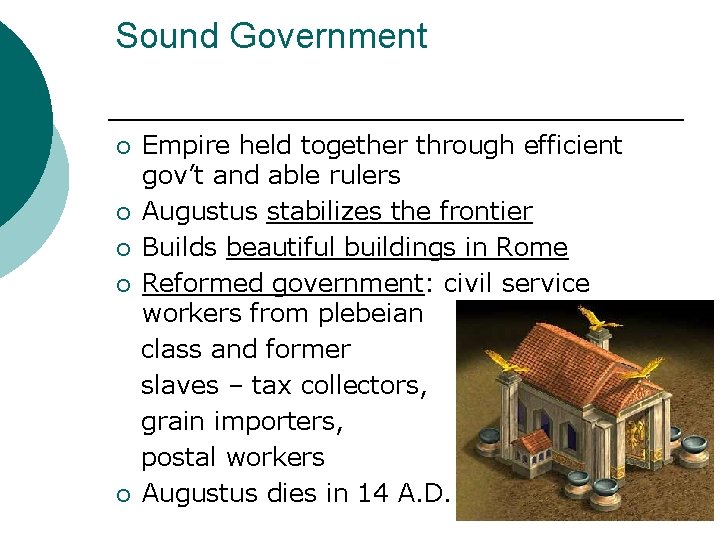
Sound Government ¡ ¡ ¡ Empire held together through efficient gov’t and able rulers Augustus stabilizes the frontier Builds beautiful buildings in Rome Reformed government: civil service workers from plebeian class and former slaves – tax collectors, grain importers, postal workers Augustus dies in 14 A. D.
Agriculture and Trade ¡ ¡ ¡ 90% of people are farmers Luxury items obtained through trade Silver denarius coin – common coinage made trade easier Vast trading network with China & India Navy protects Mediterranean Sea Vast road network linked them to Persia and southern Russia
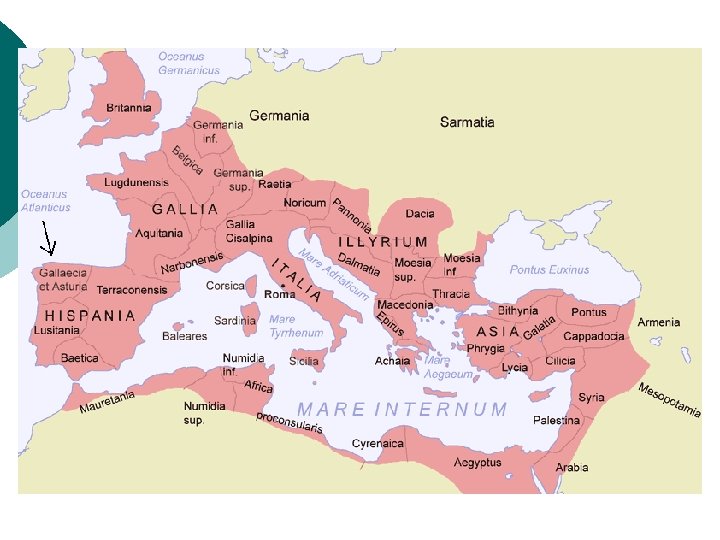
Slaves and Captivity ¡ ¡ 1/3 of population Mostly conquered men, women and children Seen as property – bought and sold Occasional rebellions – none succeeded - a million died trying
Rome and Slavery
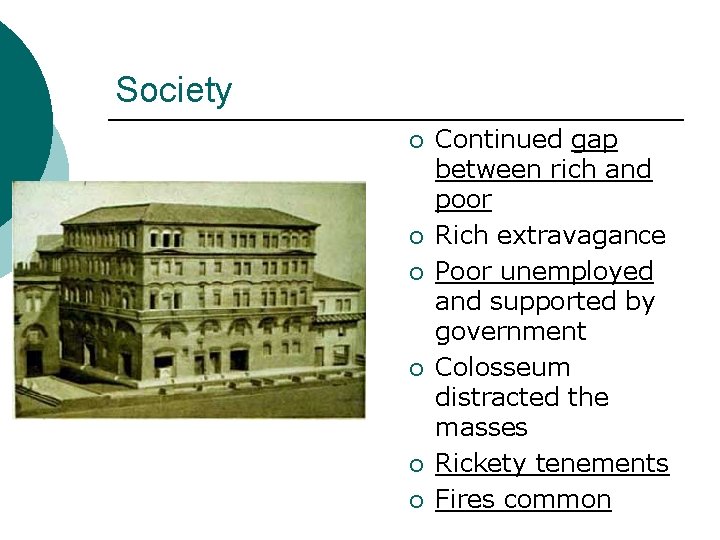
Society ¡ ¡ ¡ Continued gap between rich and poor Rich extravagance Poor unemployed and supported by government Colosseum distracted the masses Rickety tenements Fires common
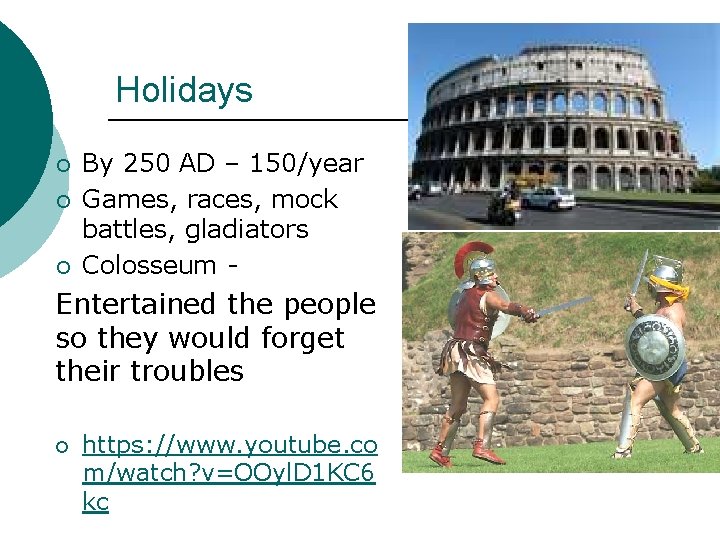
Holidays ¡ ¡ ¡ By 250 AD – 150/year Games, races, mock battles, gladiators Colosseum - Entertained the people so they would forget their troubles ¡ https: //www. youtube. co m/watch? v=OOyl. D 1 KC 6 kc

Roman Technology
Rise of Christianity ¡ ¡ ¡ Emphasized a more personal relationship between God and people. Jesus l New Testament of the Bible. Fame grew - ignored wealth and status - greatly appealed to the poor. Not popular with Roman and Jewish leaders. Teachings were blasphemy and defied the authority of Rome. Sentenced to death. Crucified. His body was placed in a tomb l According to the Gospels, three days later his body was gone and a living Jesus began appearing to his followers l He then ascended to heaven.
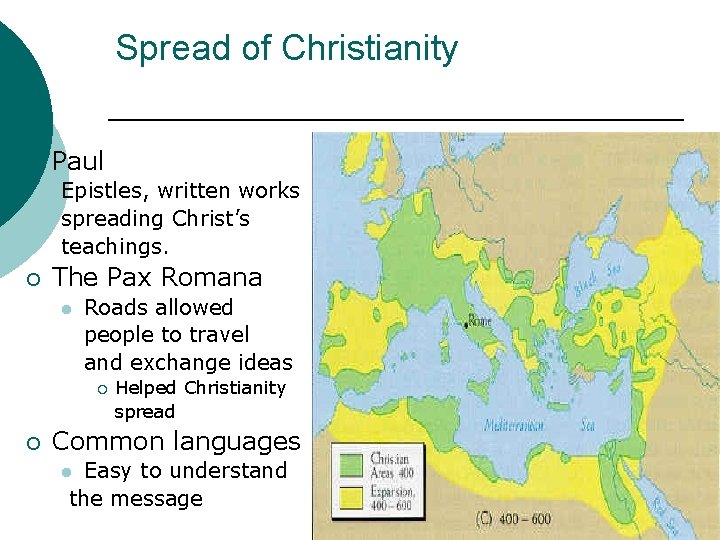
Spread of Christianity ¡ Paul Epistles, written works spreading Christ’s teachings. ¡ The Pax Romana l Roads allowed people to travel and exchange ideas ¡ ¡ Helped Christianity spread Common languages Easy to understand the message l

The Rise of Christianity
World Religion ¡ Christianity was appealing because: l l l ¡ (1) embraced all people, men and women, enslaved people, the poor, and nobles (2) gave hope to the powerless (3) appealed to those who were resentful of the extravagances of rich Romans (4) offered a personal relationship with a loving God (5) promised eternal life after death. Constantine makes Christianity an official religion.
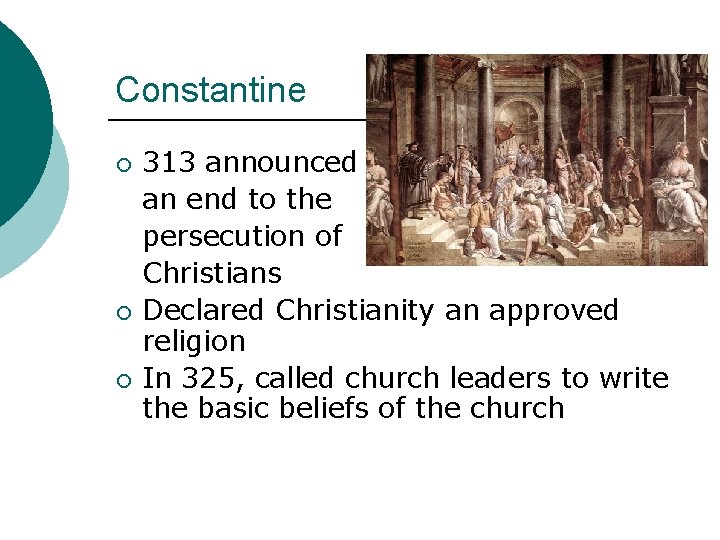
Constantine ¡ ¡ ¡ 313 announced an end to the persecution of Christians Declared Christianity an approved religion In 325, called church leaders to write the basic beliefs of the church
- Slides: 37