
The Roman Republic and Empire 753 BC If
The Roman Republic and Empire 753 BC “If I’d lived in Roman times, I’d have lived in Rome. Today, America is the Roman empire, and New York is Rome itself. New York is the center of the earth. ” John Lennon
Poccia’s Points to Understanding Rome Ü Location, Location- Midpoint of Europe and Mediterranean sea made location perfect for empire building Ü Roman Law-Twelve Tables established fair law for governing empire Ü Central Government- Central authority based around city of Rome allowed for great expansion Ü Engineering and Architecture- Best
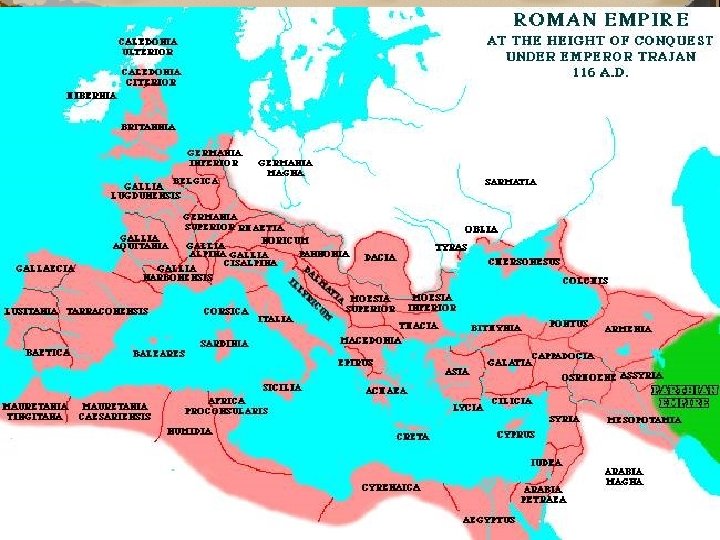
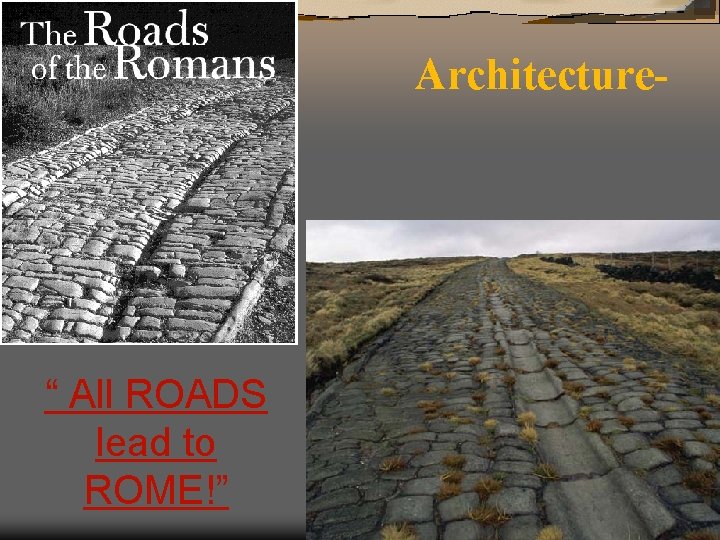
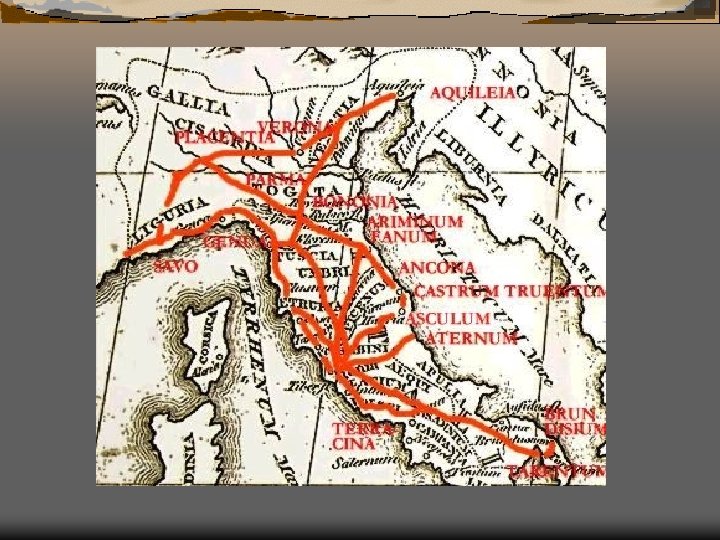
ArchitectureÜ Roads “ All ROADS lead to ROME!”
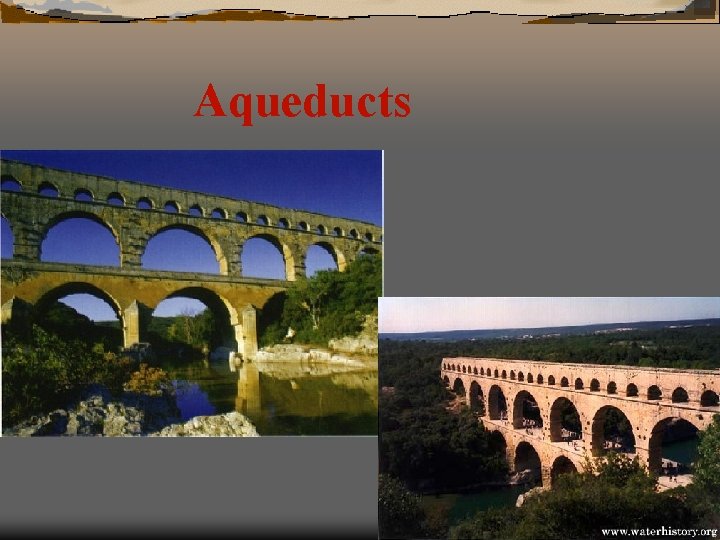
Aqueducts
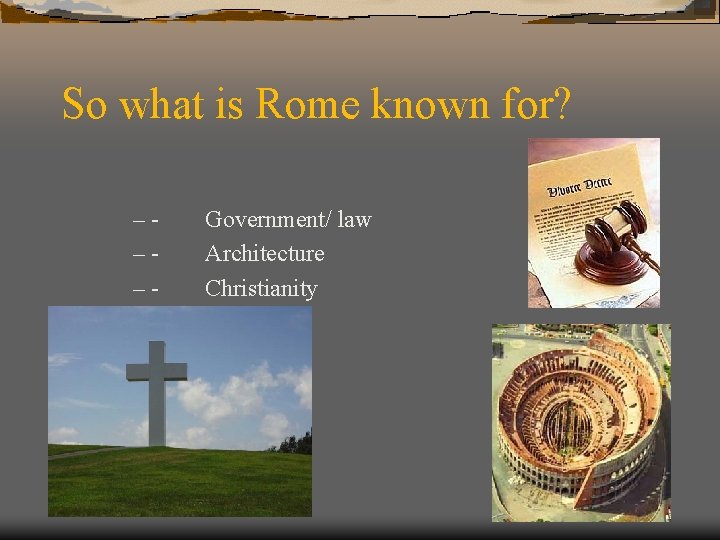
So what is Rome known for? –––- Government/ law Architecture Christianity
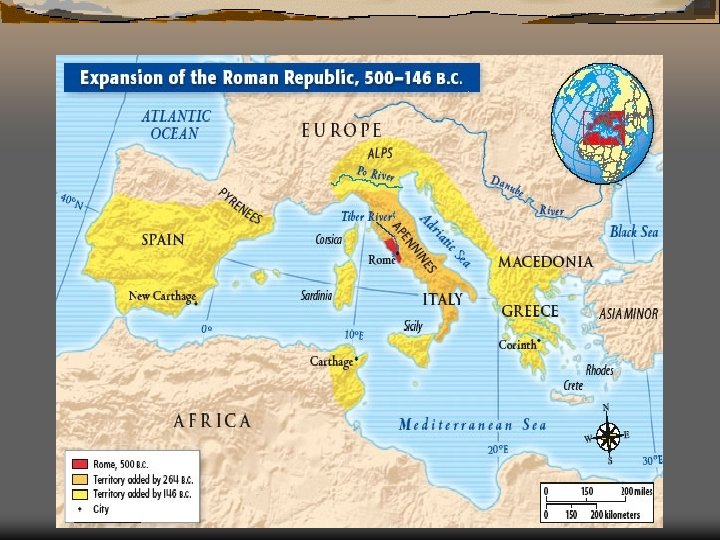
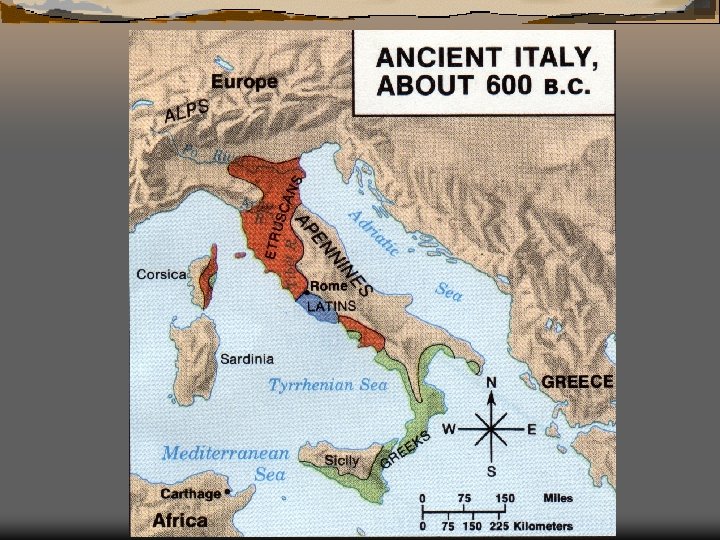
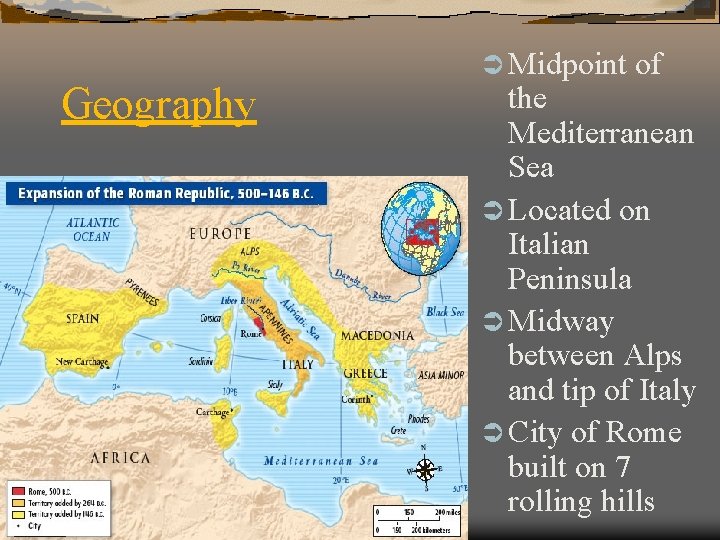
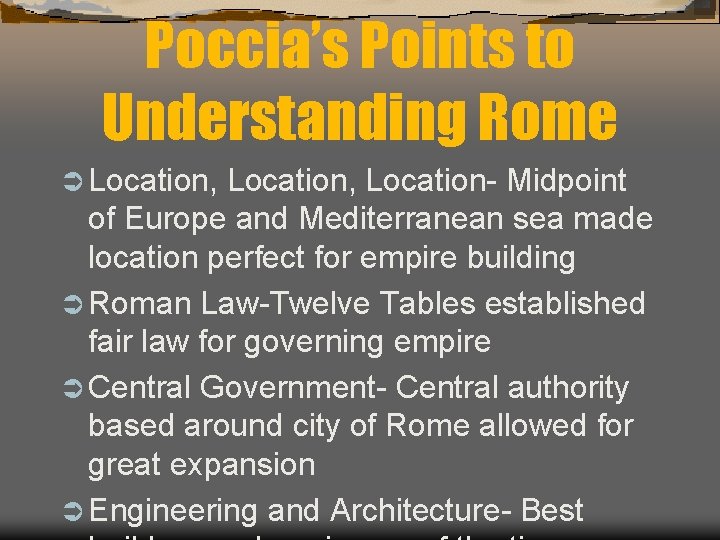
Geography Ü Midpoint of the Mediterranean Sea Ü Located on Italian Peninsula Ü Midway between Alps and tip of Italy Ü City of Rome built on 7 rolling hills
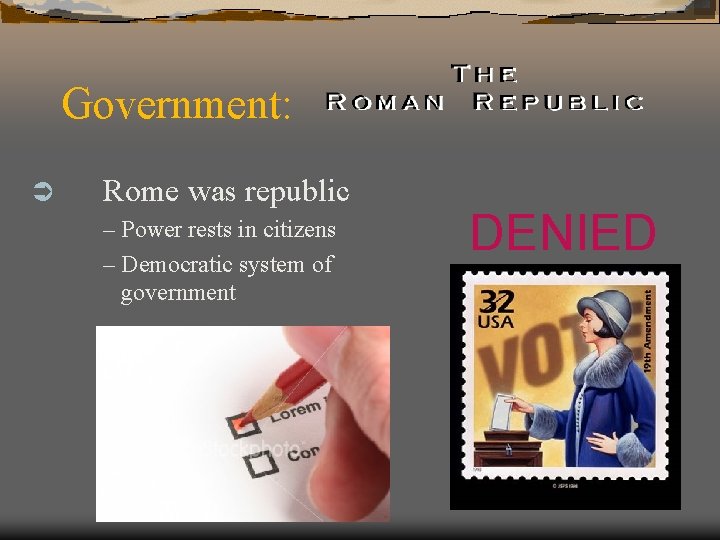
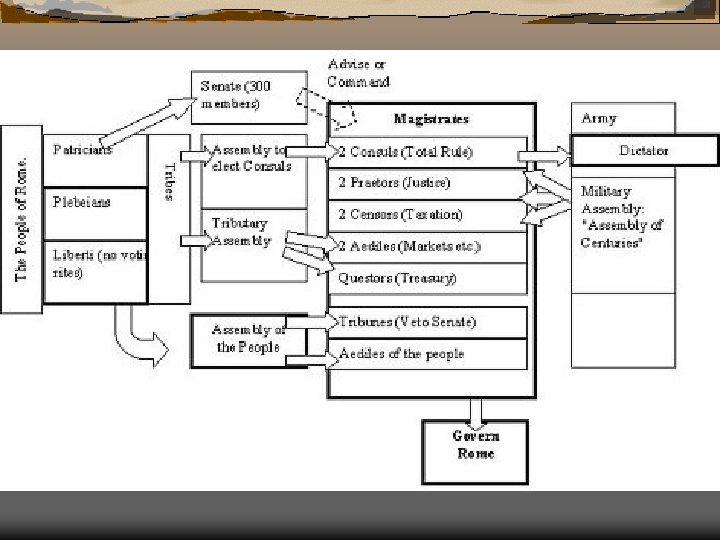
Government: Ü Rome was republic – Power rests in citizens – Democratic system of government w o Only males could vote DENIED
What is the difference between a republic and a Direct Democracy?
A Republican Government In Rome ÜA form of government in which power rests with citizens who have the right to vote Ü Different from Direct Democracy as people do not directly vote on government decisions Ü Vote for representatives to represent their voice Ü Rome citizens with the right to vote
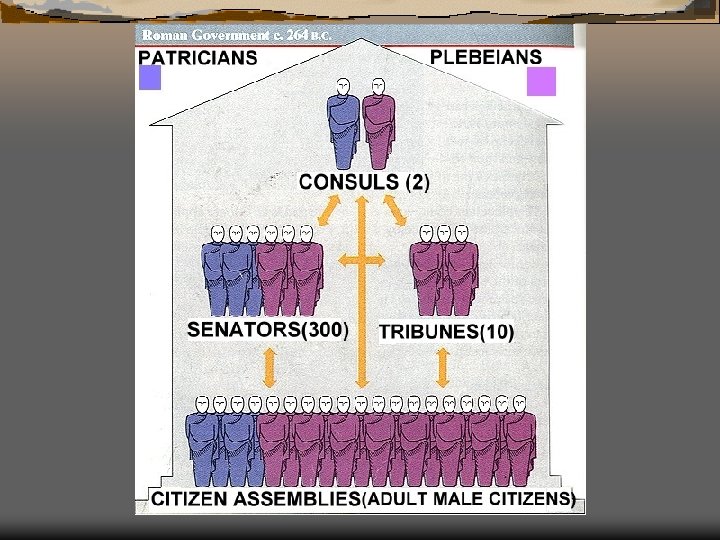
Organization of Government: THREE BRANCHES: Ü Consuls (2) – controlled army Ü Senate – created law and policies Ü TribuneÜ Dictator- only in case of emergency, one ruler with absolute power
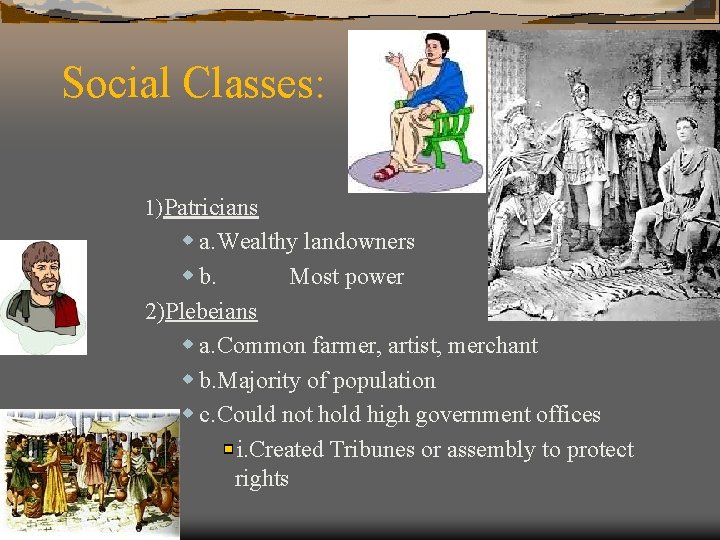
Social Classes: 1)Patricians w a. Wealthy landowners w b. Most power 2)Plebeians w a. Common farmer, artist, merchant w b. Majority of population w c. Could not hold high government offices i. Created Tribunes or assembly to protect rights
Law (12 Tables)Ü Twelve Tables Ü System of Law, equality under law, rights of the accused ( Codified Law) Ü Principles all later codes of law would be based on
Roman Law: Ü Historians consider Roman Law to be most significant contribution to western world. Ü Roman law was based on the concept of JUSTICE and the RIGHTS OF THE INDIVIDUAL Ü Beliefs: People should not be accused anonymously The law should be applied to everyone, rich and poor alike People should not be punished for what he thinks People are considered innocent until proven guilty.
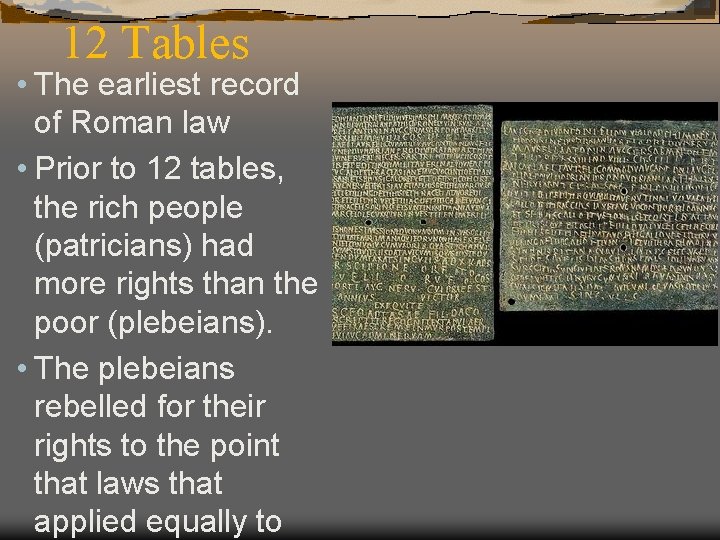
12 Tables • The earliest record of Roman law • Prior to 12 tables, the rich people (patricians) had more rights than the poor (plebeians). • The plebeians rebelled for their rights to the point that laws that applied equally to
Examples If you are called to appear in court you have to go. If you don't you can be arrested and forced to go. Ü If you need a witness in court and they refuse to go you can stand in front of their house and shout how they are refusing to do their duty as a citizen. You can do this once every three days. Ü Should a tree on a neighbor's farm be bent by the wind and lean over onto your farm, you can go to court and get the tree cut down. If fruit falls from your trees it is yours no matter where it falls. Ü If you lied in court you would be thrown off of the Tarpeian Rock. Ü You could not hold a political or business meeting at night. Dinner parties and religious festivals at night were ok. Ü
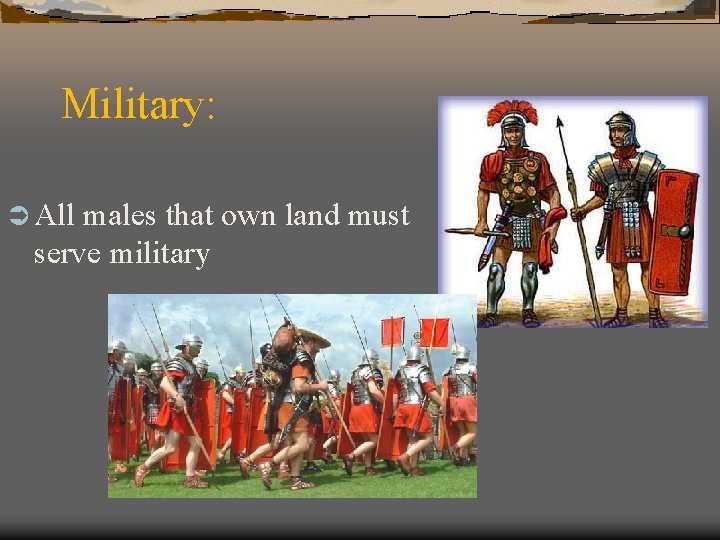
Military: Ü All males that own land must serve military
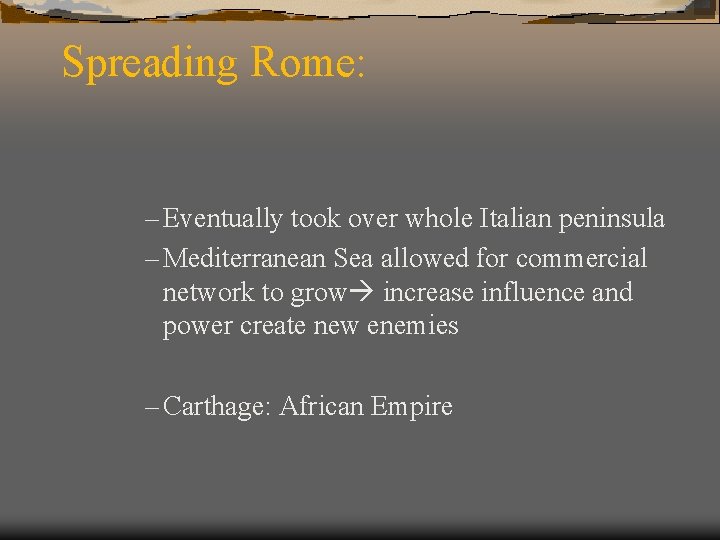
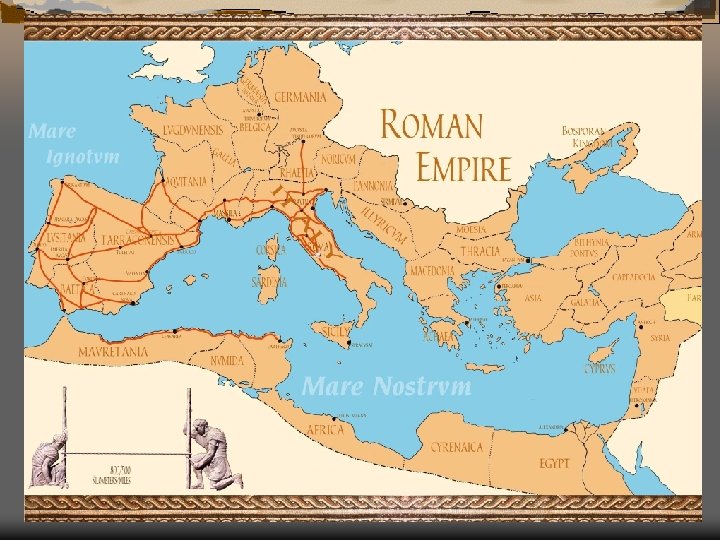
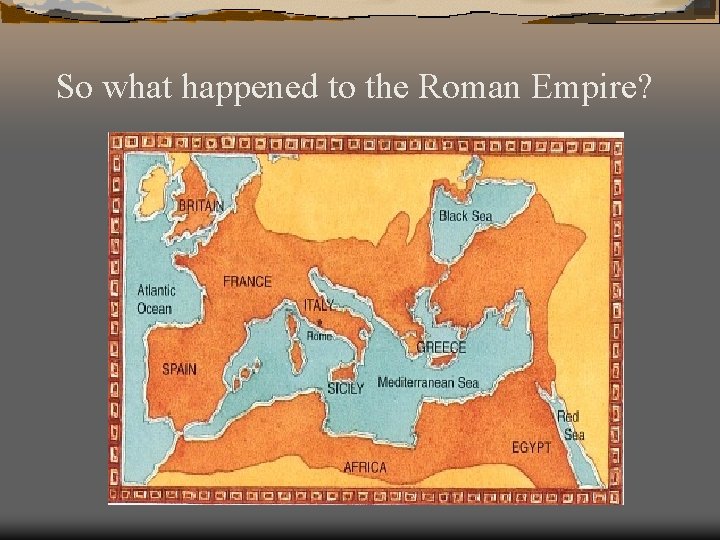
Spreading Rome: – Eventually took over whole Italian peninsula – Mediterranean Sea allowed for commercial network to grow increase influence and power create new enemies – Carthage: African Empire
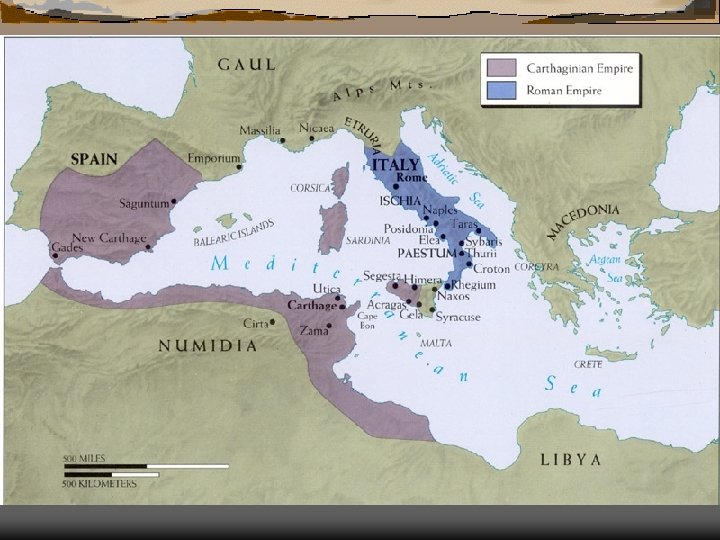
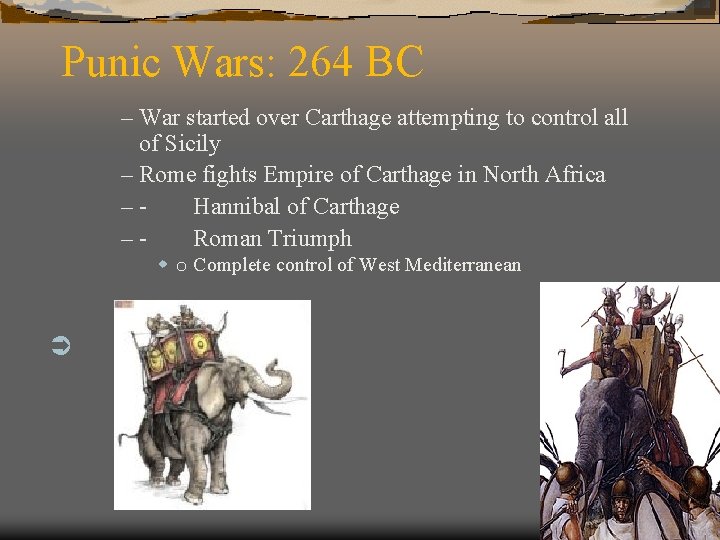
Punic Wars: 264 BC – War started over Carthage attempting to control all of Sicily – Rome fights Empire of Carthage in North Africa –Hannibal of Carthage –Roman Triumph w o Complete control of West Mediterranean Ü
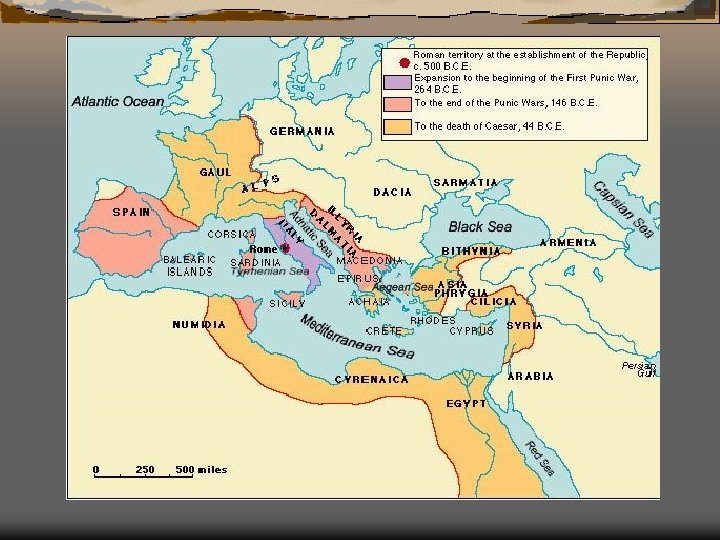
End of the Republic had spread all across Mediterranean region – Battle between rich and poor created problems – High taxes had lead to numerous rebellions throughout the republic – They had to be stopped or republic would fall
Triumvirate - 3 major leaders of Council will select a dictator Ü Julius Caesar, Ü Marcus Licinius Crassus, Ü Gnaeus Pompeius Magnus (Pompey)
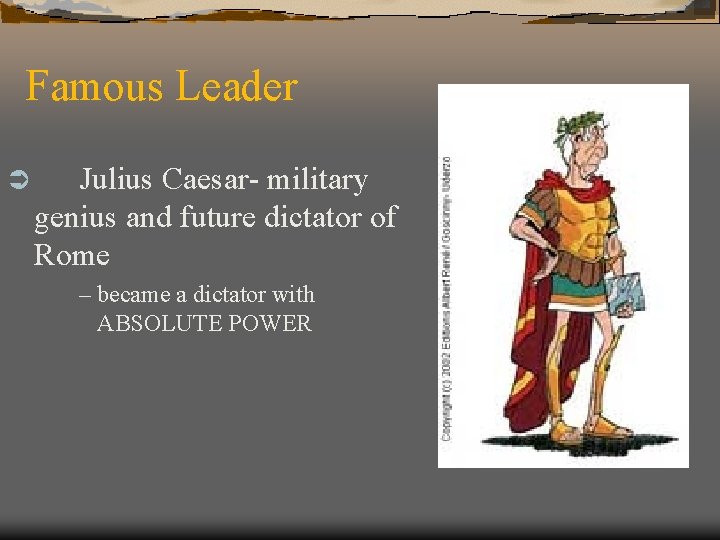
Famous Leader Ü Julius Caesar- military genius and future dictator of Rome – became a dictator with ABSOLUTE POWER
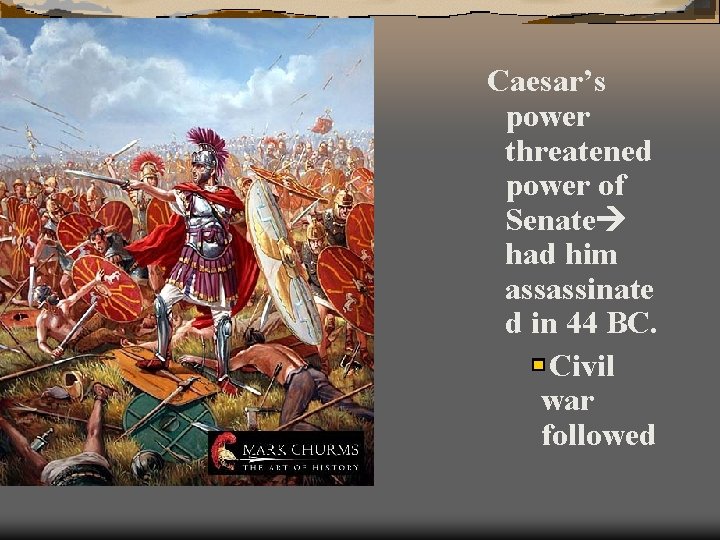
Caesar’s power threatened power of Senate had him assassinate d in 44 BC. Civil war followed
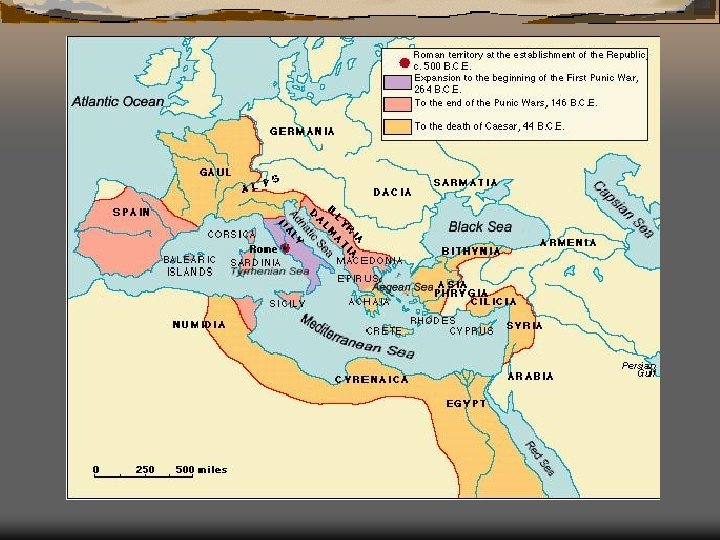
Who will come out on top?
nd 2 Triumvirate : Octavian vs Marc Anthony vs Marcus Aemilius Lepidus
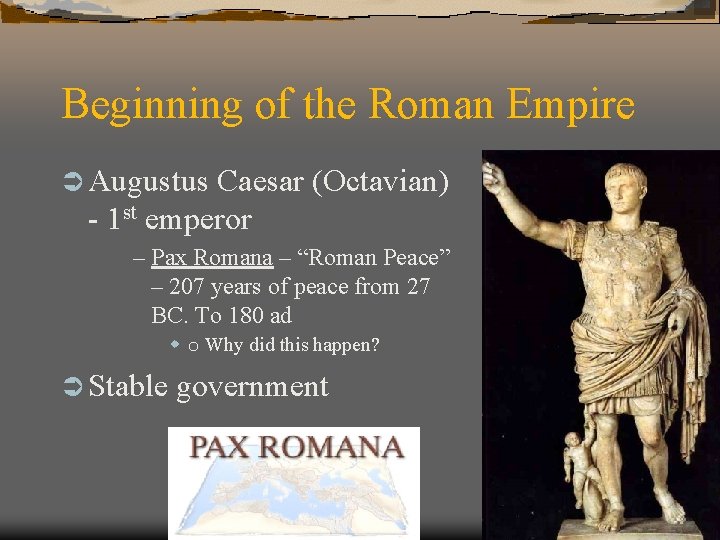
Beginning of the Roman Empire Ü Augustus Caesar (Octavian) - 1 st emperor – Pax Romana – “Roman Peace” – 207 years of peace from 27 BC. To 180 ad w o Why did this happen? Ü Stable government
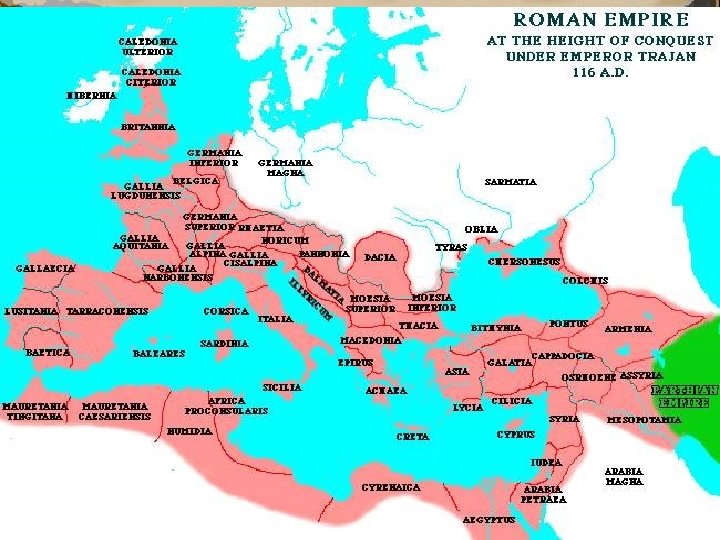
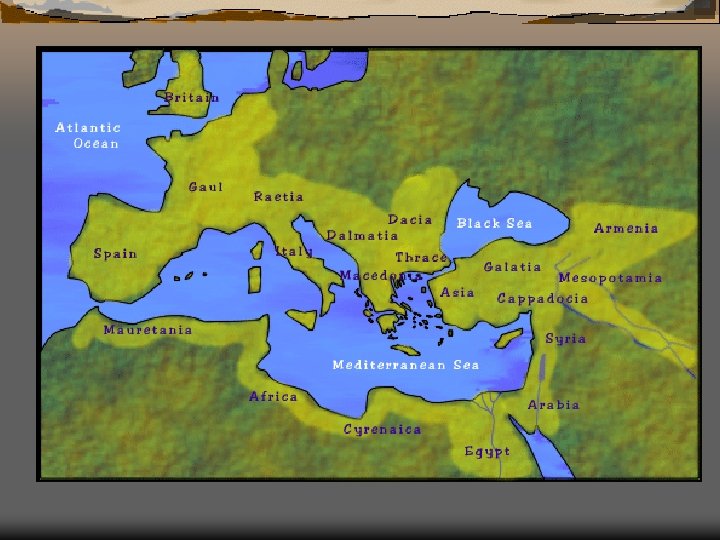
Economy: Ü Most Ü were tradesman or farmers 90% were farmers
Slavery: Ü Remember Ü Ü the movie Gladiator? Most were conquered people Made up one third of empire
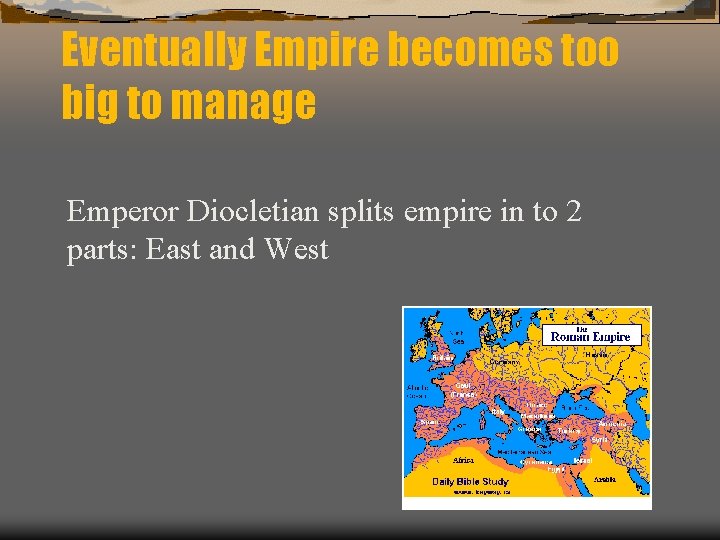
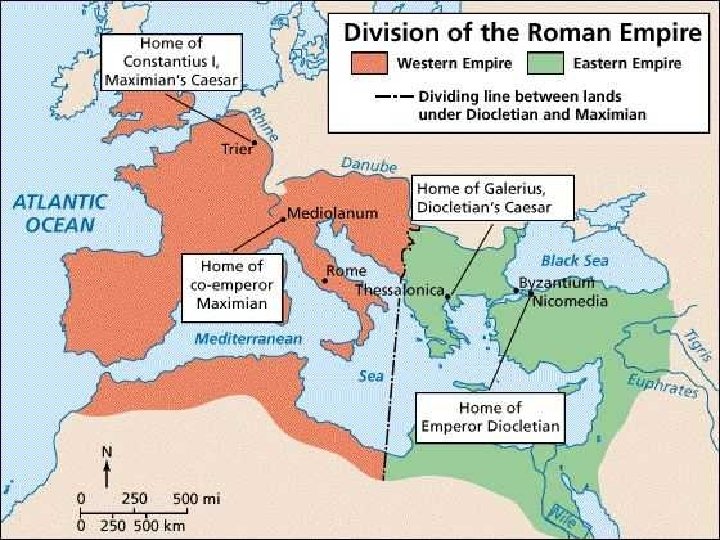
Eventually Empire becomes too big to manage Emperor Diocletian splits empire in to 2 parts: East and West
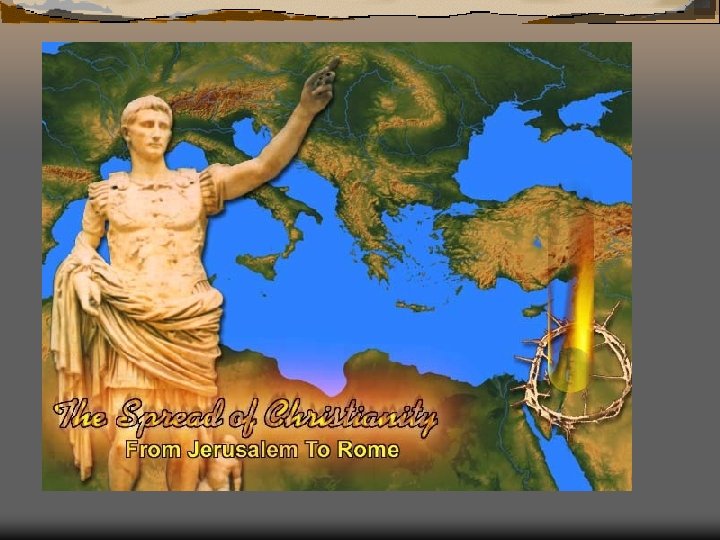
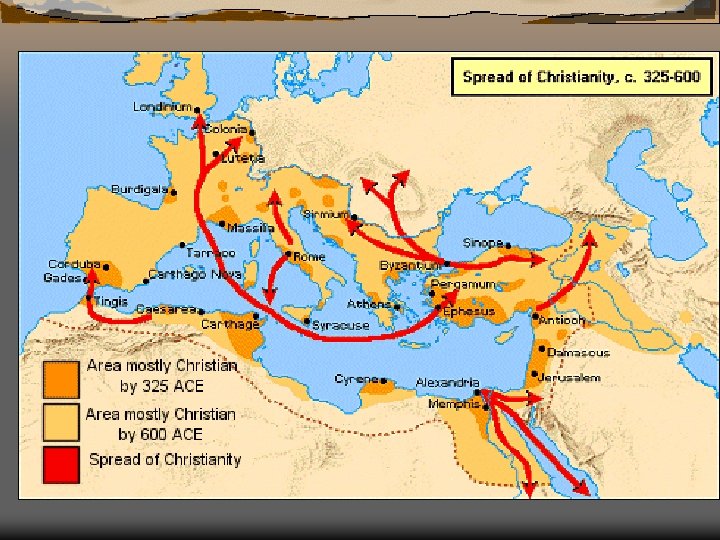
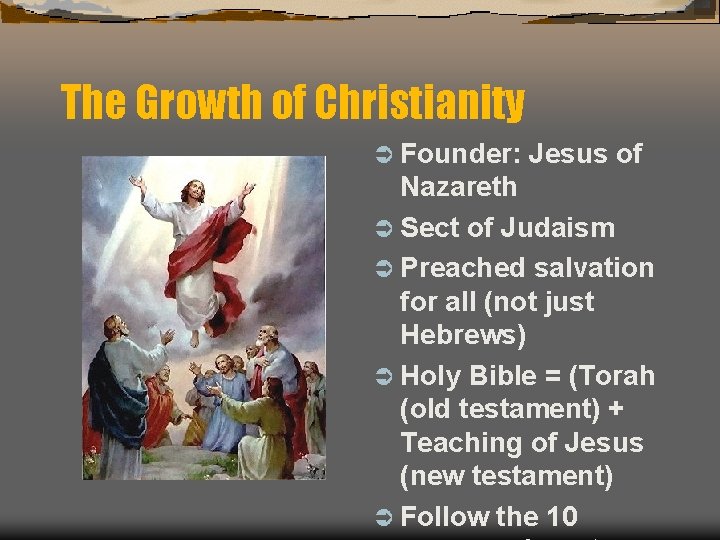
The Growth of Christianity Ü Founder: Jesus of Nazareth Ü Sect of Judaism Ü Preached salvation for all (not just Hebrews) Ü Holy Bible = (Torah (old testament) + Teaching of Jesus (new testament) Ü Follow the 10
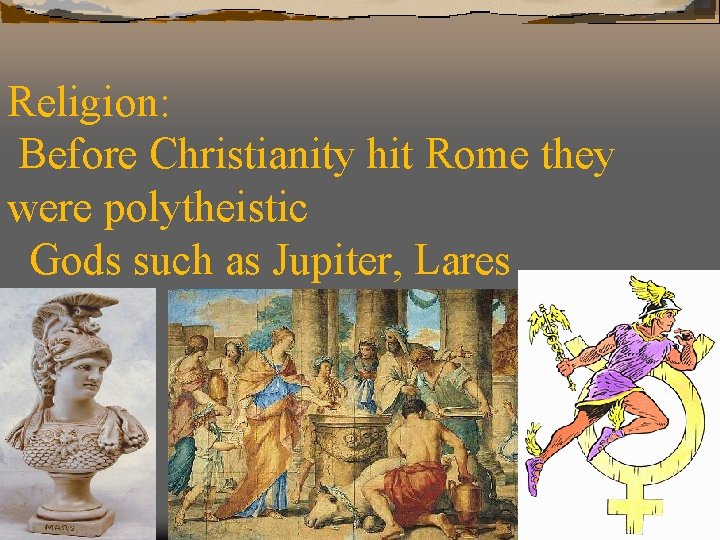
Religion: Before Christianity hit Rome they were polytheistic Gods such as Jupiter, Lares
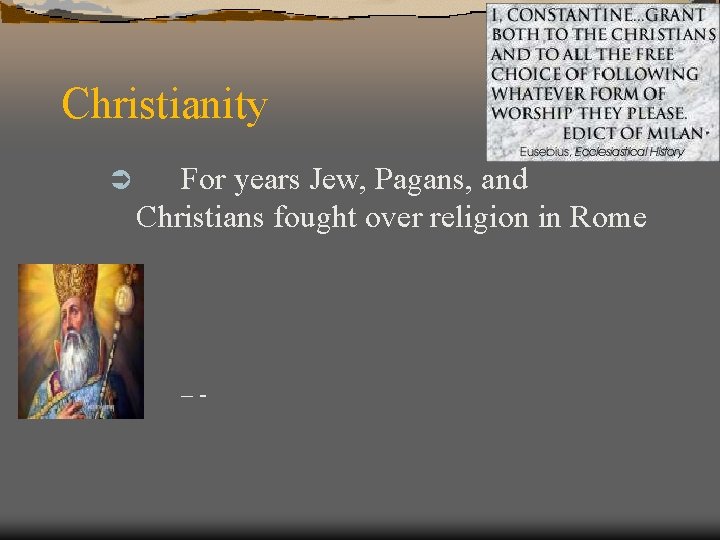
Christianity Ü For years Jew, Pagans, and Christians fought over religion in Rome –-
Edict of Milan – 313 ad As Christianity grew, the traditional Pagan Romans and Christians clashed In order to save his empire, Constantine proclaimed religious tolerance
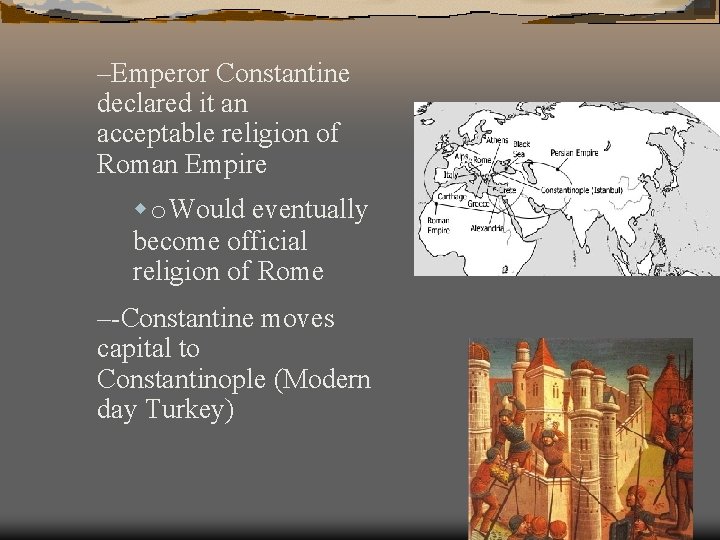
–Emperor Constantine declared it an acceptable religion of Roman Empire wo. Would eventually become official religion of Rome –-Constantine moves capital to Constantinople (Modern day Turkey)
Arguments begin between east and West Ü At one time there was 3 popes!
Decline of the Empire – Over time, soldier became less loyal to Rome and more to commanders w Empire was too big to control and monitor – Government had become corrupt - Food Shortages/ bad harvests - Gap between rich and poor – Western half of Empire falls to Germanic invasions in 476 AD – Eastern half will eventually become Byzantine Empire
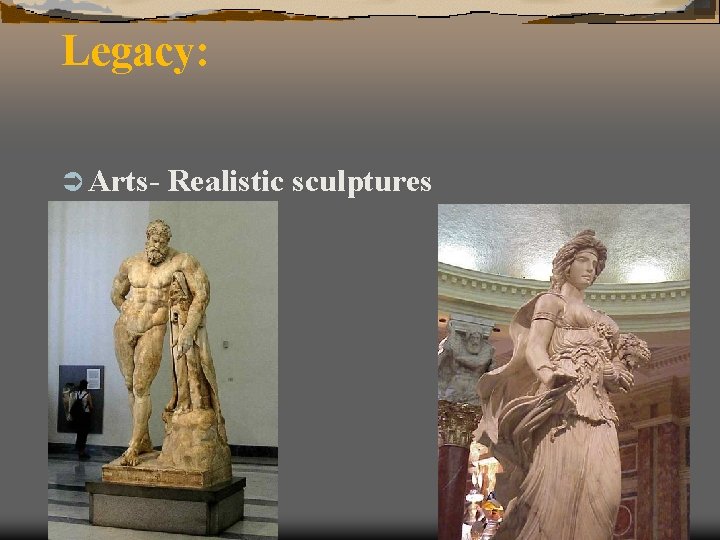
Legacy: Ü Arts- Realistic sculptures
Language – Latin
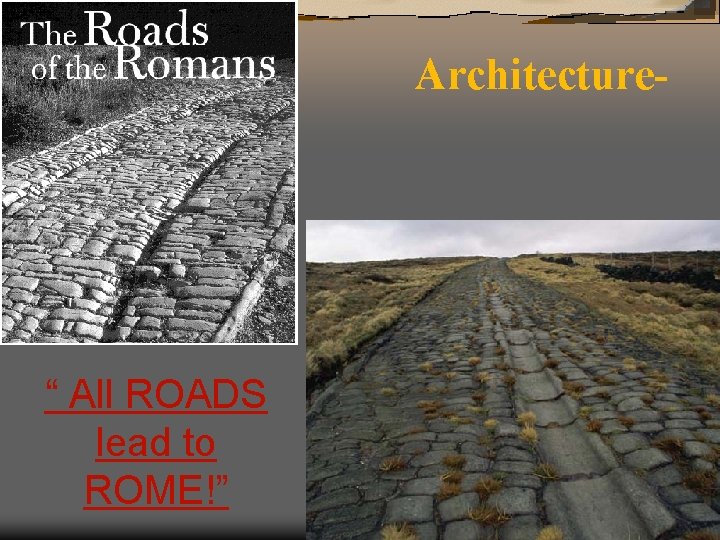
ArchitectureÜ Roads “ All ROADS lead to ROME!”
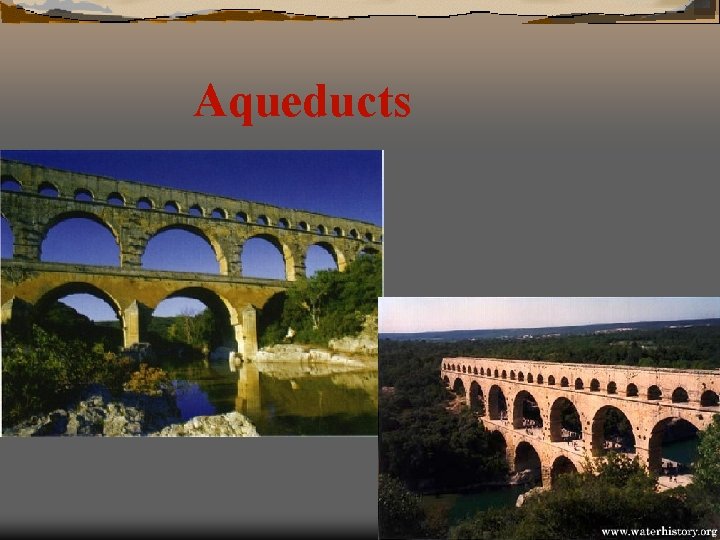
Aqueducts
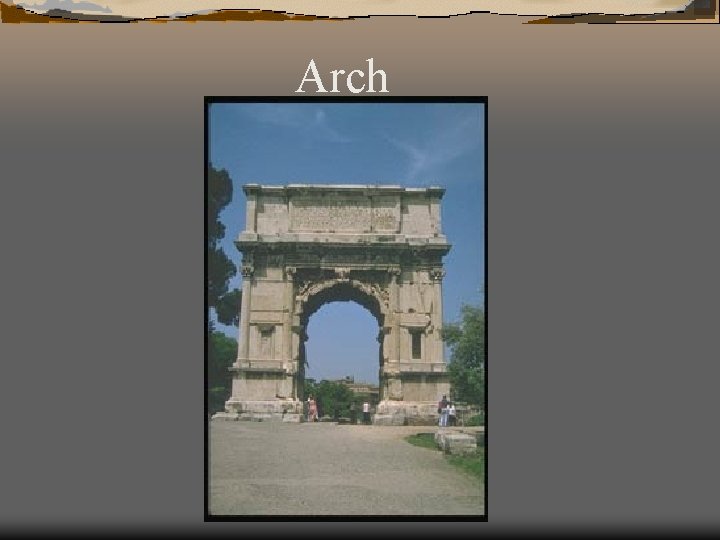
Arch
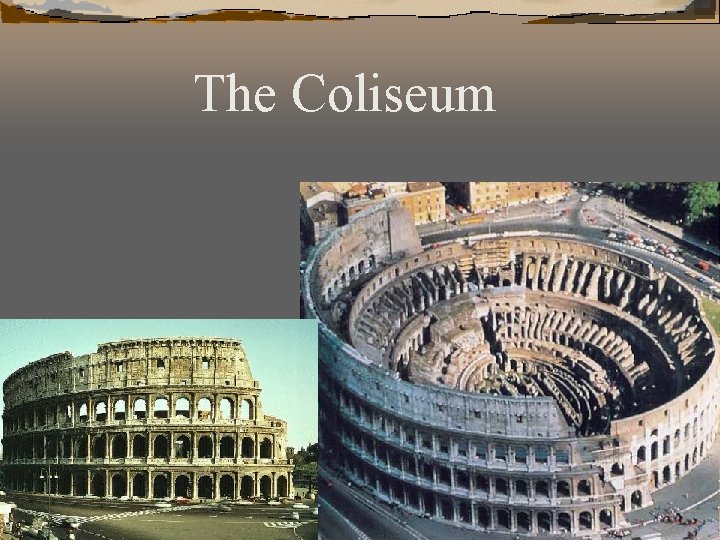
The Coliseum
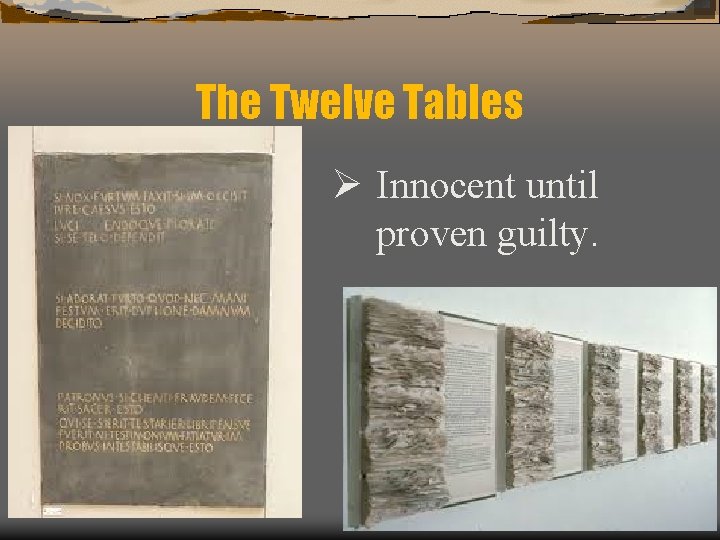
The Twelve Tables Ø Innocent until proven guilty.
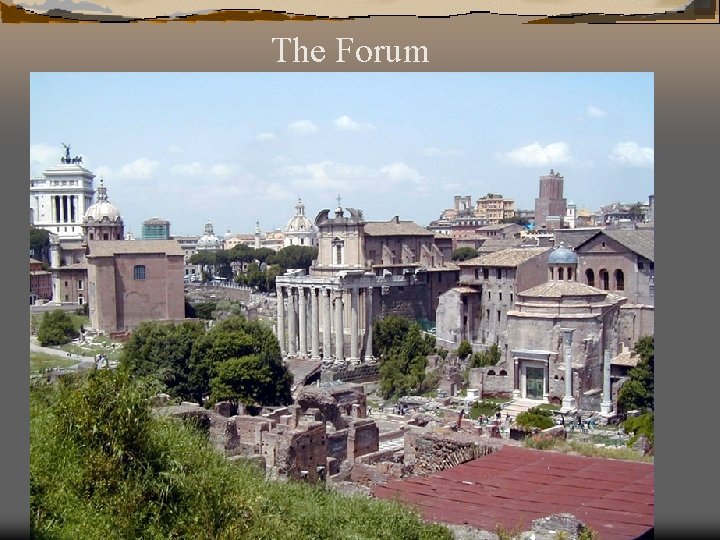
The Forum
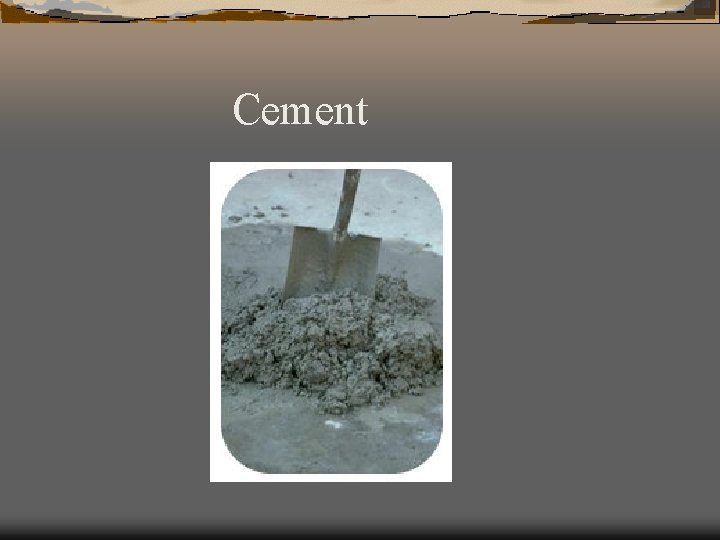
Cement
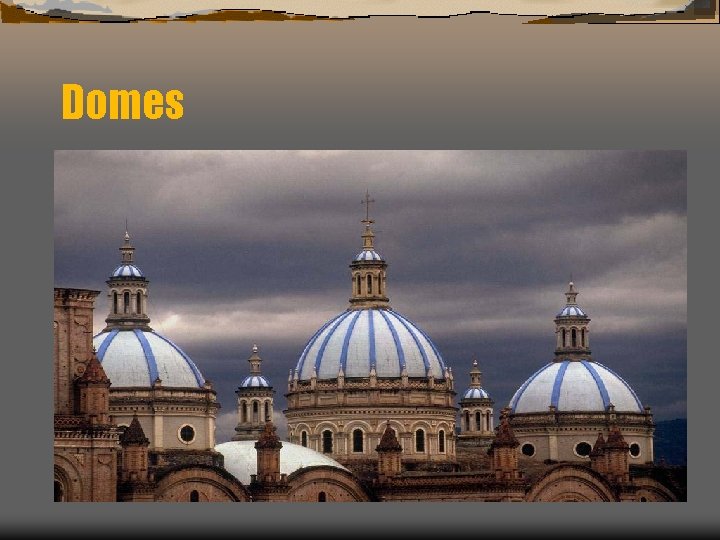
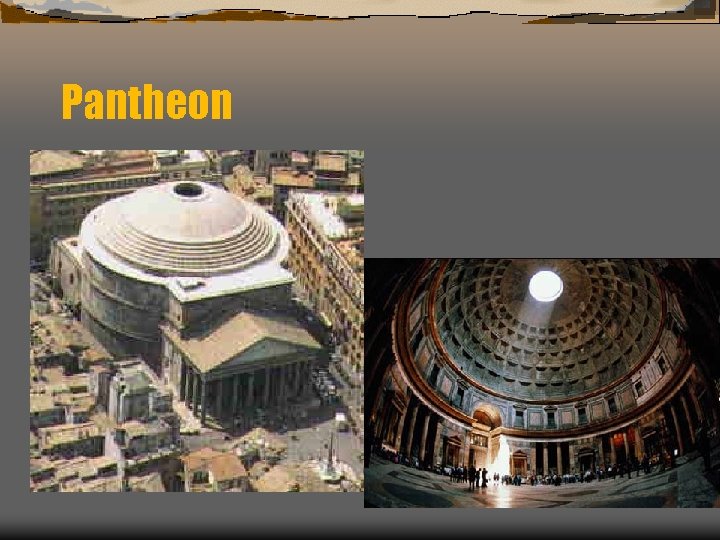
Domes
Law (12 Tables)Ü system of Law, equality under law, rights of the accused ( Codified Laws) Ü (12 Tables)
Circus Maximus
Pantheon
So what happened to the Roman Empire?
Greece vs. Rome Ü Ü Ü Ü Ü Column Direct Democracy (Athens) Sculptures Alexander’s Empire Polytheistic Astronomy Pericles Hellenistic Culture Astronomy Math Ü Arch, Dome, Aqueducts Ü Representative Democracy (Republic) Ü Roman Empire Ü Anatomically correct sculptures Ü Christianity Ü 12 Tables Ü Latin
In the end, the civilization of ancient Rome is known for several things: • the hugeness of the Empire; • the success of the well-trained armies; • the massive, impressive structures and construction, such as roads, aqueducts, baths, the Forum, and temples; • the struggle with and then embracement of Christianity; • the spreading of Roman writing, laws, trade practices and ideals and, especially, of Greek ideals to the rest of the known world; • the terrible tragedies of slavery and conquest on which the civilization was ultimately based; • the dramatic way in which the Empire collapsed, serving as an example for generations afterward
- Slides: 66