
THE ROMAN REPUBLIC 509 4427 BCE WORLD HISTORY
THE ROMAN REPUBLIC (509 – 44/27 BCE) WORLD HISTORY
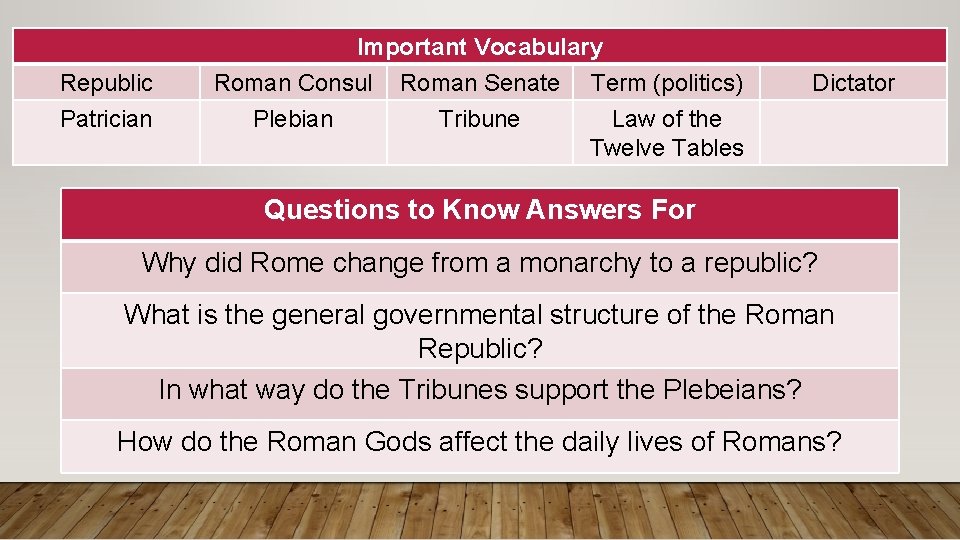
Republic Patrician Important Vocabulary Roman Consul Roman Senate Term (politics) Plebian Tribune Law of the Twelve Tables Dictator Questions to Know Answers For Why did Rome change from a monarchy to a republic? What is the general governmental structure of the Roman Republic? In what way do the Tribunes support the Plebeians? How do the Roman Gods affect the daily lives of Romans?
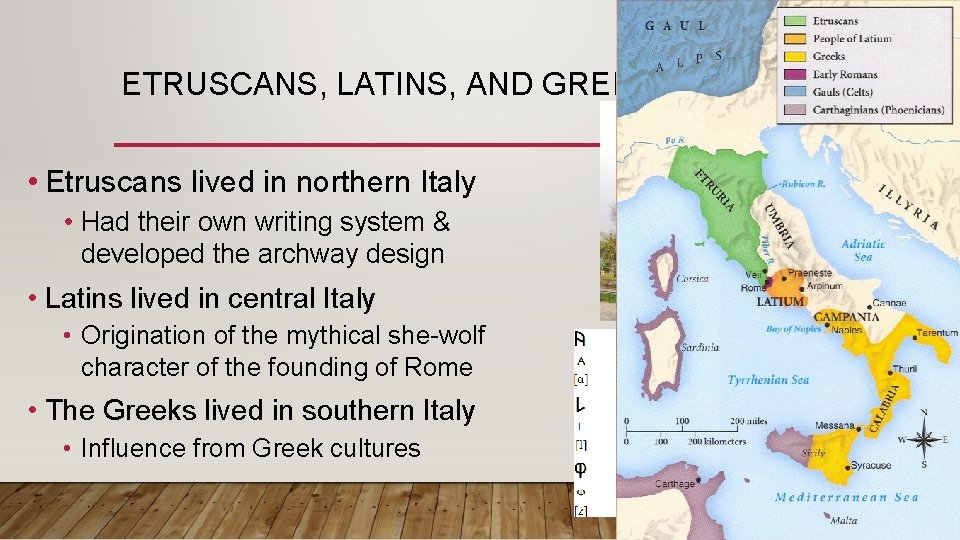
ETRUSCANS, LATINS, AND GREEKS • Etruscans lived in northern Italy • Had their own writing system & developed the archway design • Latins lived in central Italy • Origination of the mythical she-wolf character of the founding of Rome • The Greeks lived in southern Italy • Influence from Greek cultures

FORMATION OF THE ROMAN REPUBLIC • Rome was founded in 753 BCE along the river Tiber Senatus Populus. Que Romanus “The Roman Senate and It’s People” • After a series of tyrannical kings, though, the people revolted and instituted a Republic rule instead in 509 BCE • Republic: • A government where citizens vote for their leaders • In Rome, only free-born citizens could vote (no women, no slaves, no children)
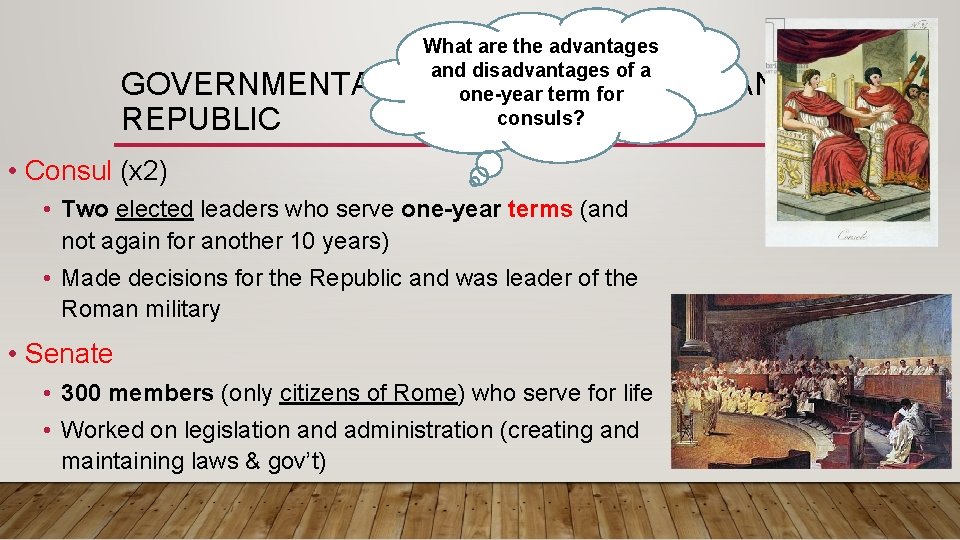
What are the advantages and disadvantages of a one-year term for consuls? GOVERNMENTAL STRUCTURE OF ROMAN REPUBLIC • Consul (x 2) • Two elected leaders who serve one-year terms (and not again for another 10 years) • Made decisions for the Republic and was leader of the Roman military • Senate • 300 members (only citizens of Rome) who serve for life • Worked on legislation and administration (creating and maintaining laws & gov’t)
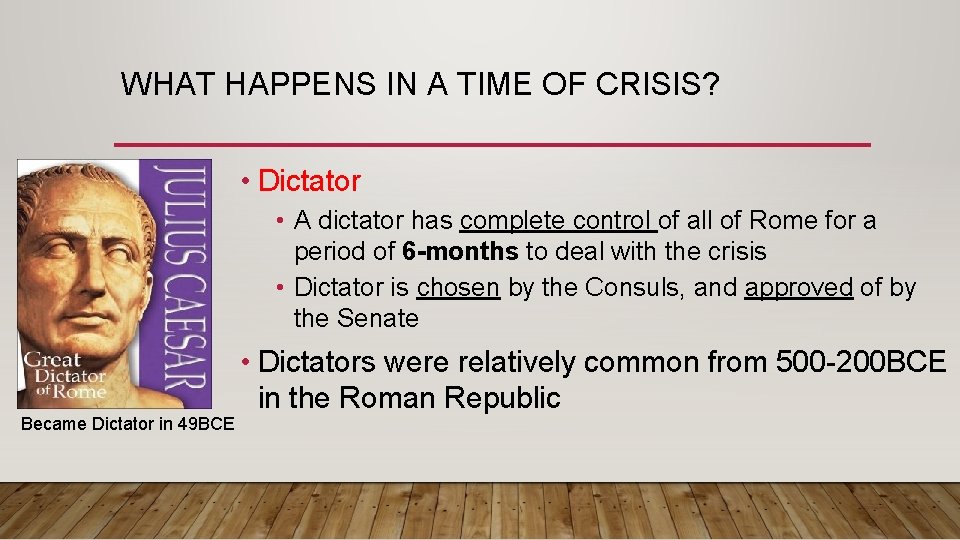
WHAT HAPPENS IN A TIME OF CRISIS? • Dictator • A dictator has complete control of all of Rome for a period of 6 -months to deal with the crisis • Dictator is chosen by the Consuls, and approved of by the Senate Became Dictator in 49 BCE • Dictators were relatively common from 500 -200 BCE in the Roman Republic
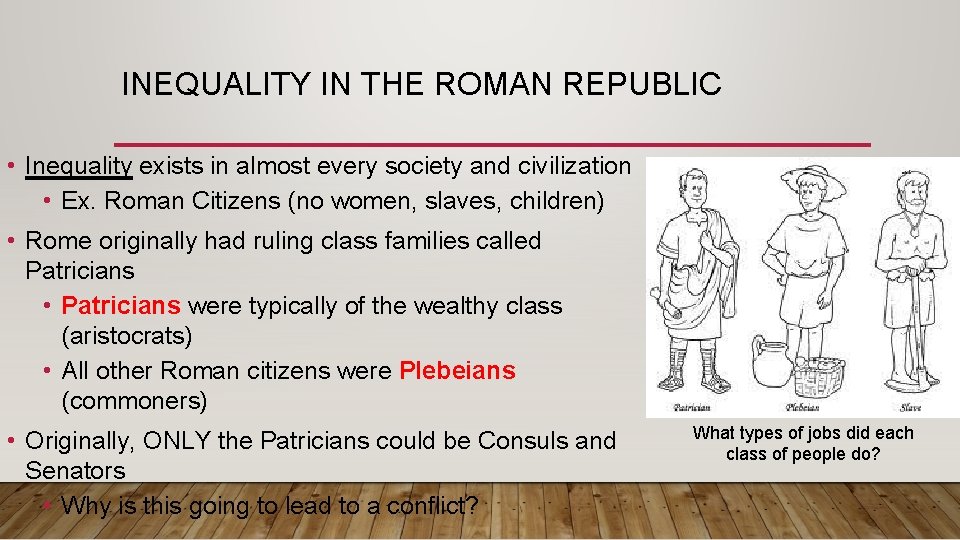
INEQUALITY IN THE ROMAN REPUBLIC • Inequality exists in almost every society and civilization • Ex. Roman Citizens (no women, slaves, children) • Rome originally had ruling class families called Patricians • Patricians were typically of the wealthy class (aristocrats) • All other Roman citizens were Plebeians (commoners) • Originally, ONLY the Patricians could be Consuls and Senators • Why is this going to lead to a conflict? What types of jobs did each class of people do?
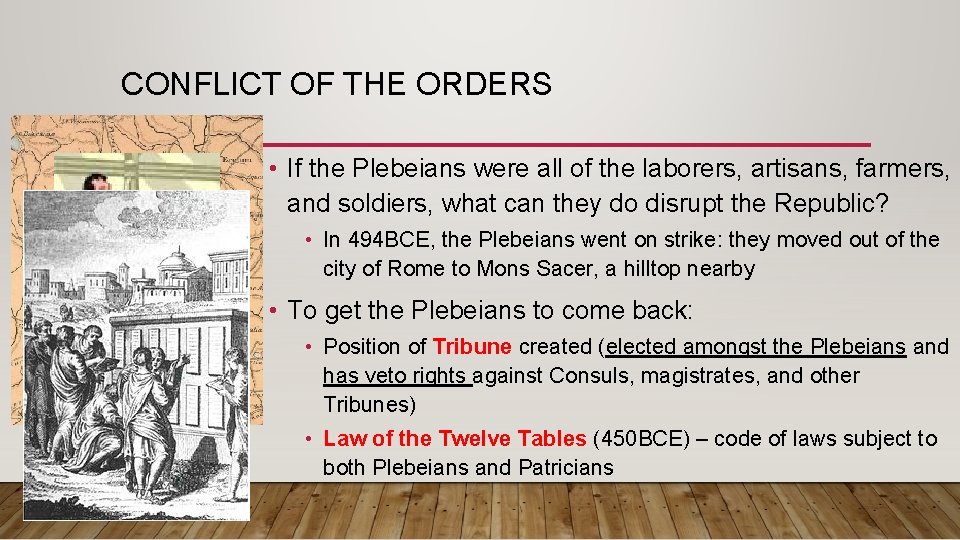
CONFLICT OF THE ORDERS • If the Plebeians were all of the laborers, artisans, farmers, and soldiers, what can they do disrupt the Republic? • In 494 BCE, the Plebeians went on strike: they moved out of the city of Rome to Mons Sacer, a hilltop nearby • To get the Plebeians to come back: • Position of Tribune created (elected amongst the Plebeians and has veto rights against Consuls, magistrates, and other Tribunes) • Law of the Twelve Tables (450 BCE) – code of laws subject to both Plebeians and Patricians
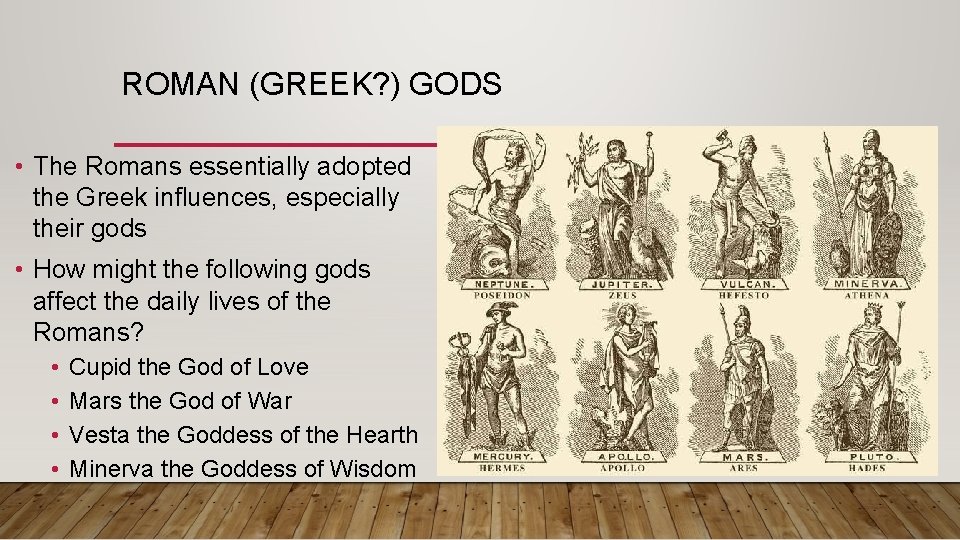
ROMAN (GREEK? ) GODS • The Romans essentially adopted the Greek influences, especially their gods • How might the following gods affect the daily lives of the Romans? • • Cupid the God of Love Mars the God of War Vesta the Goddess of the Hearth Minerva the Goddess of Wisdom
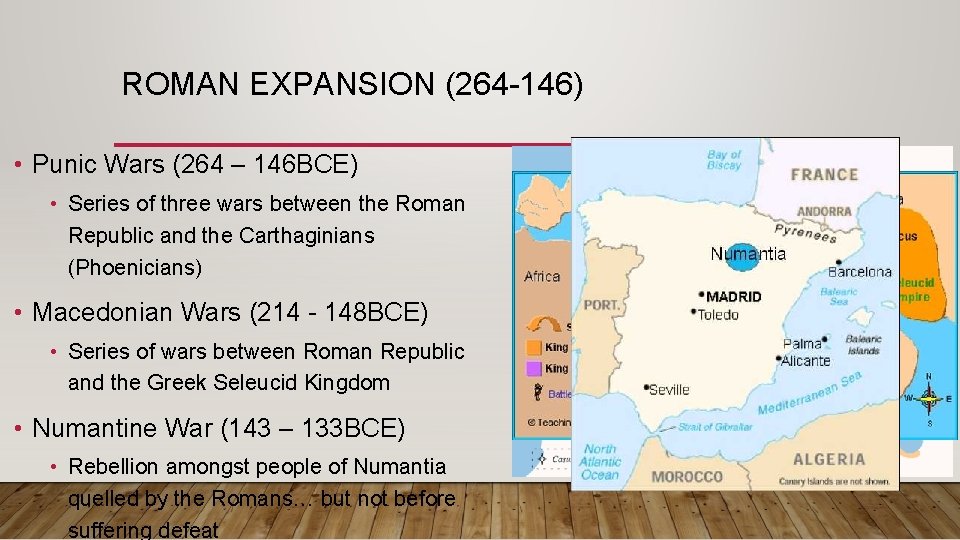
ROMAN EXPANSION (264 -146) • Punic Wars (264 – 146 BCE) • Series of three wars between the Roman Republic and the Carthaginians (Phoenicians) • Macedonian Wars (214 - 148 BCE) • Series of wars between Roman Republic and the Greek Seleucid Kingdom • Numantine War (143 – 133 BCE) • Rebellion amongst people of Numantia quelled by the Romans… but not before suffering defeat

ROMAN MILITARY STRUCTURE
- Slides: 11