
The Roman House Domus et Villa et Aedes


- Slides: 49
The Roman House Domus et Villa et Aedes
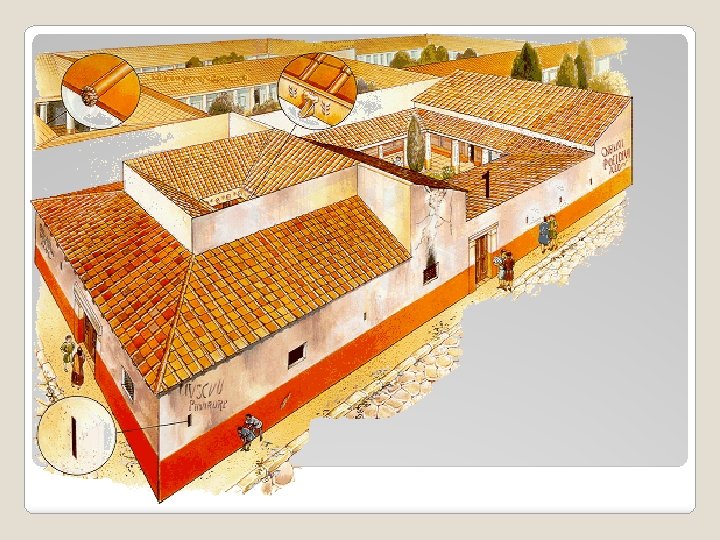
�Outside: ◦ Usually white or beige ◦ Sometimes red (7 feet) ◦ covered in stucco (plaster) ◦ Domus and villa rustica ◦ Very few windows. ◦ Hard to tell which house was yours. Extra Domum
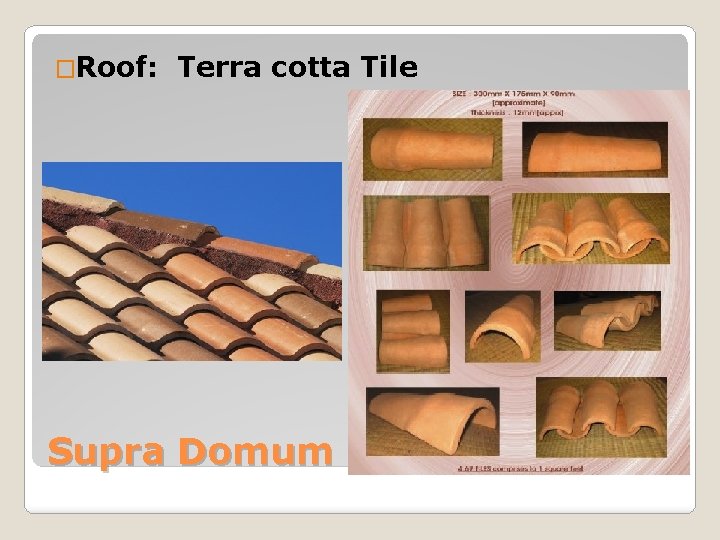
�Roof: Terra cotta Tile Supra Domum
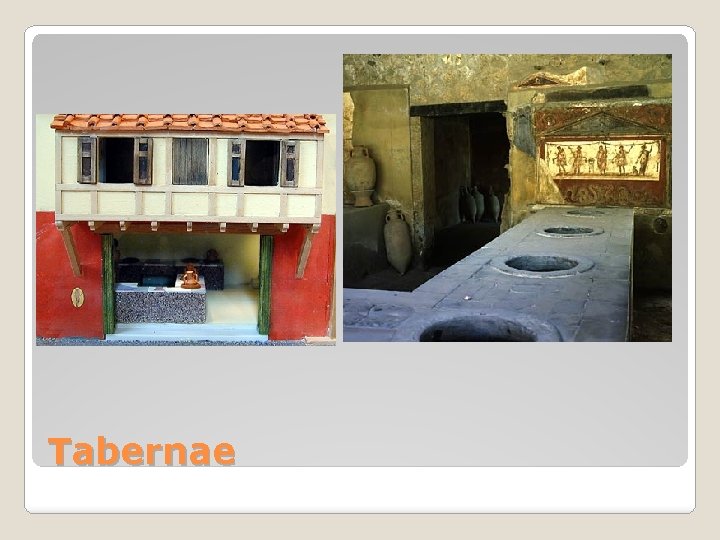
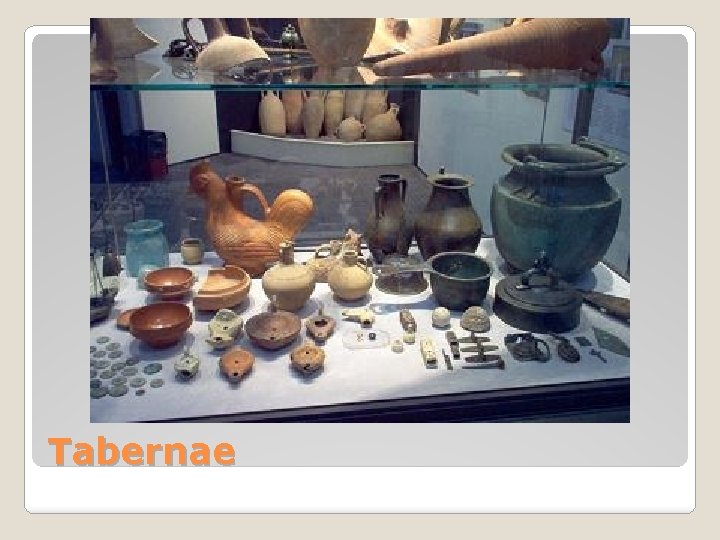
�Taberna: City houses had two rooms at the street which were rented out as a store. �Sold all kinds of things: clothing, fruit, nuts, vegetables, clothing and accessories, phones, pots, lamps �Most popular: Bread and wine Tabernae
Tabernae
Tabernae
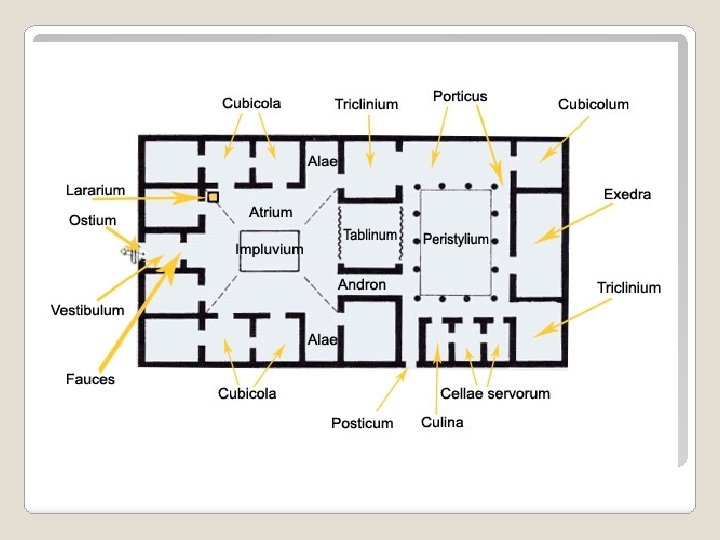
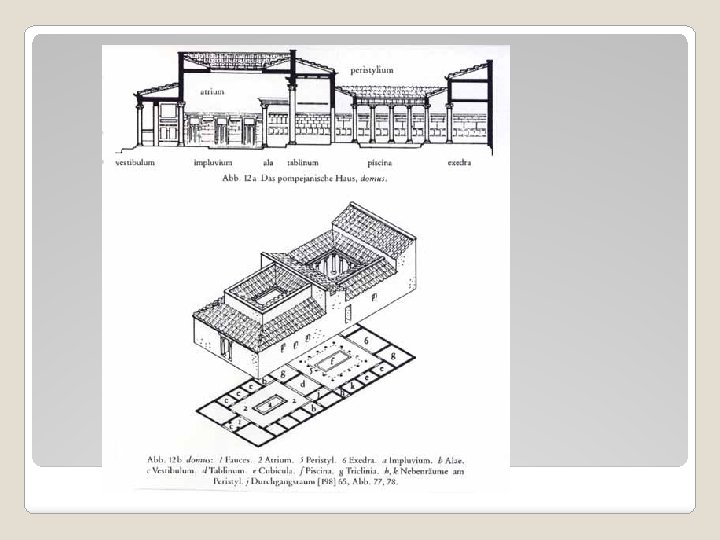
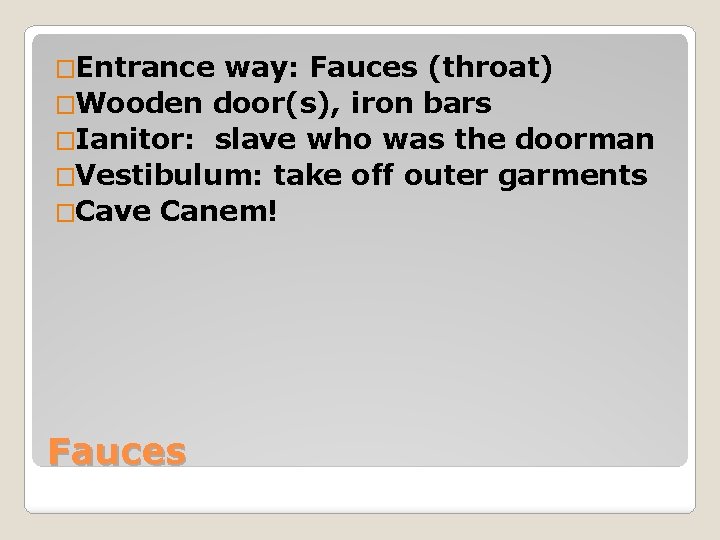
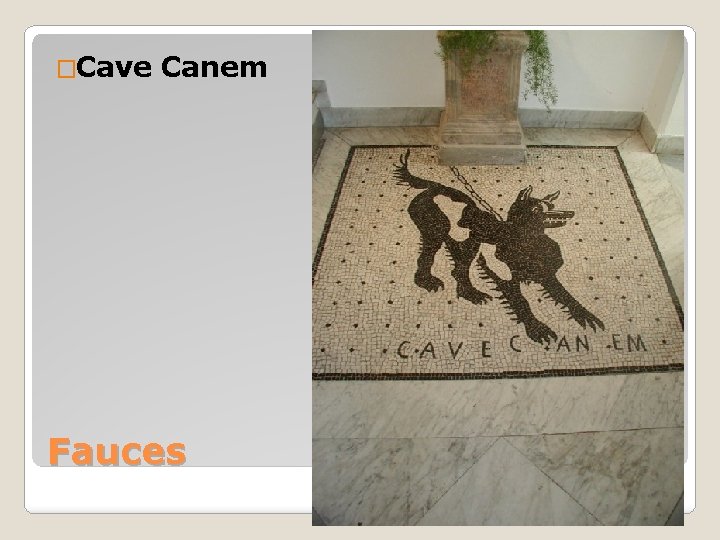
�Entrance way: Fauces (throat) �Wooden door(s), iron bars �Ianitor: slave who was the doorman �Vestibulum: take off outer garments �Cave Canem! Fauces
�Cave Canem Fauces
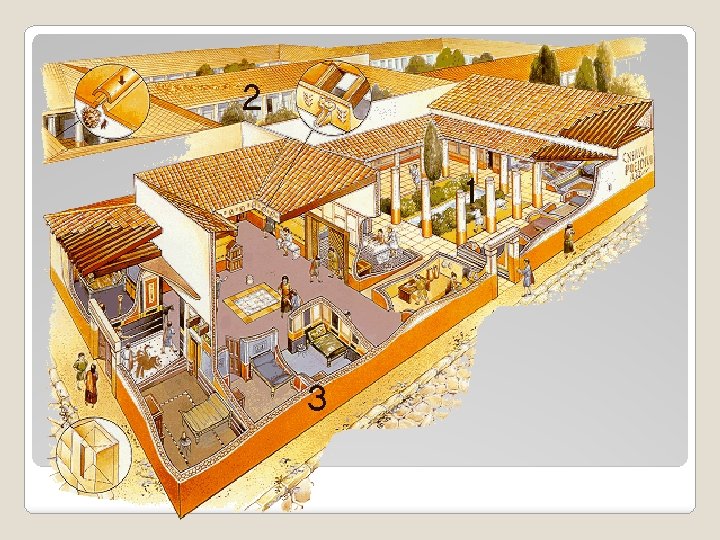
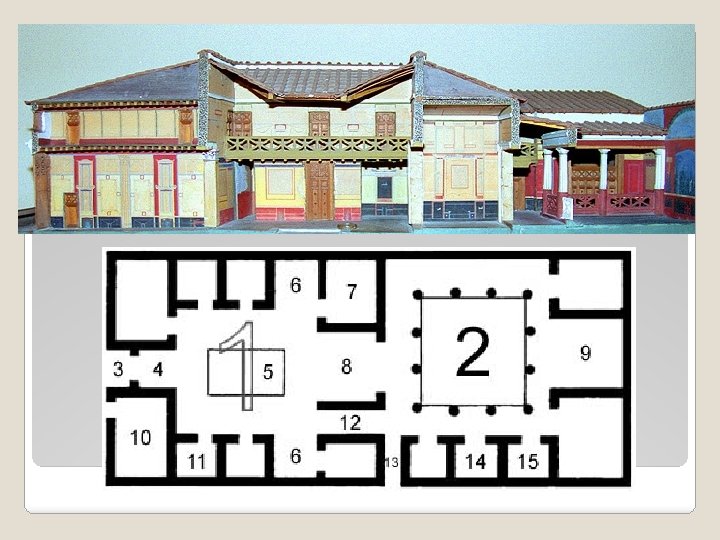
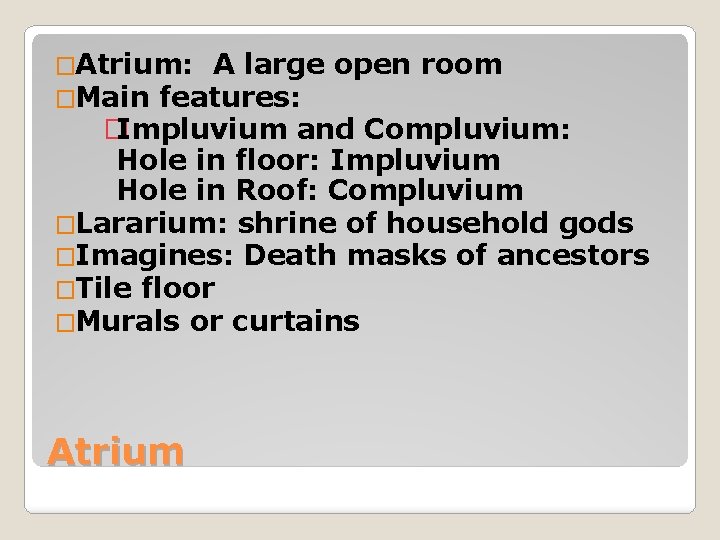
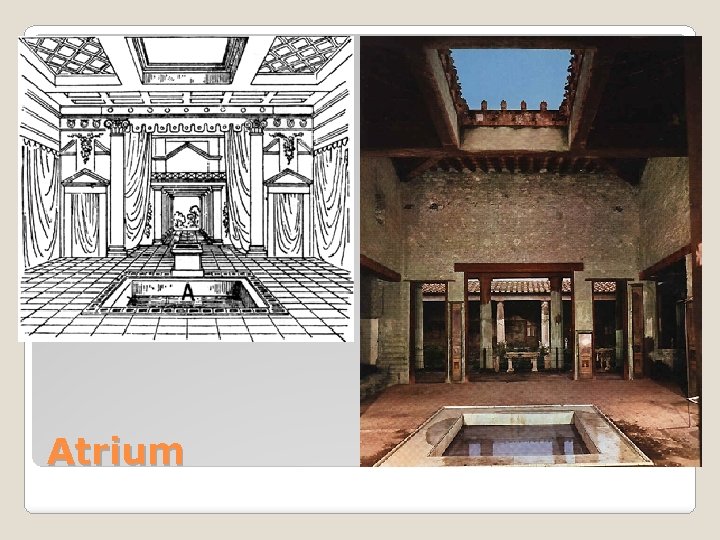
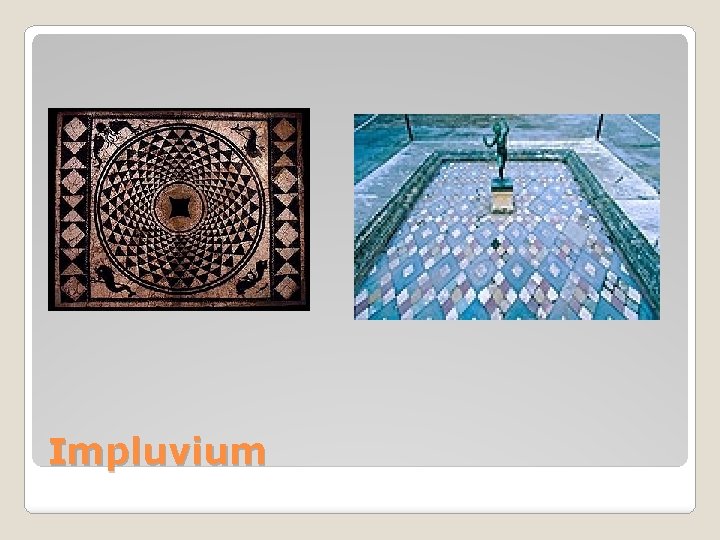
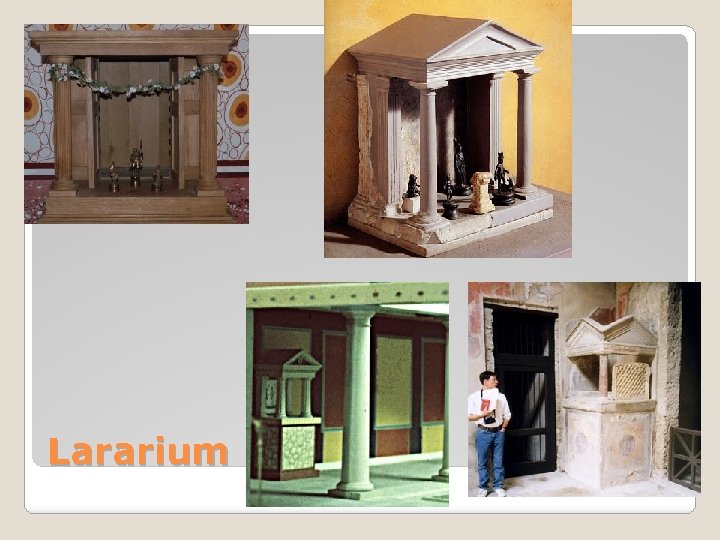
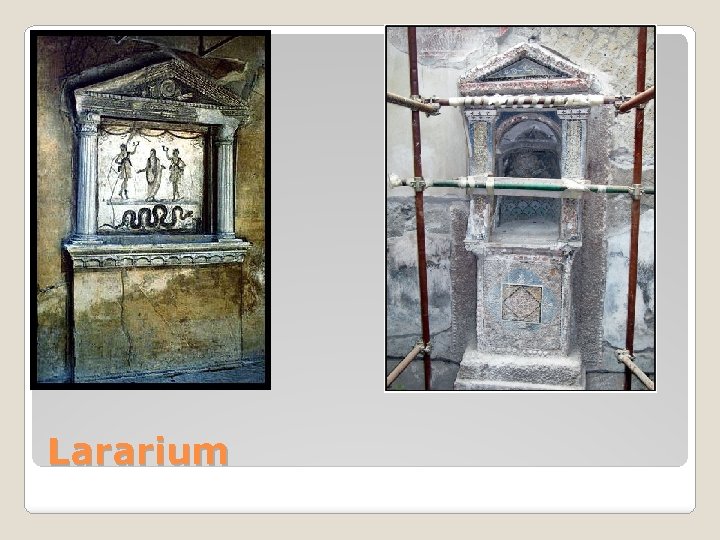
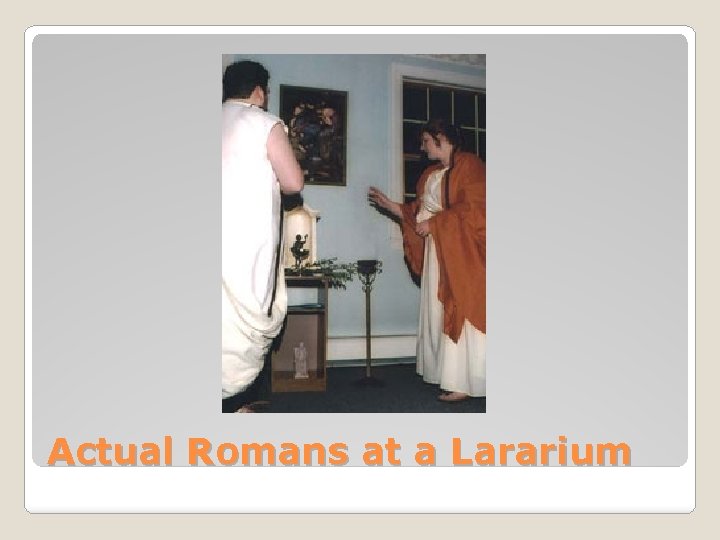
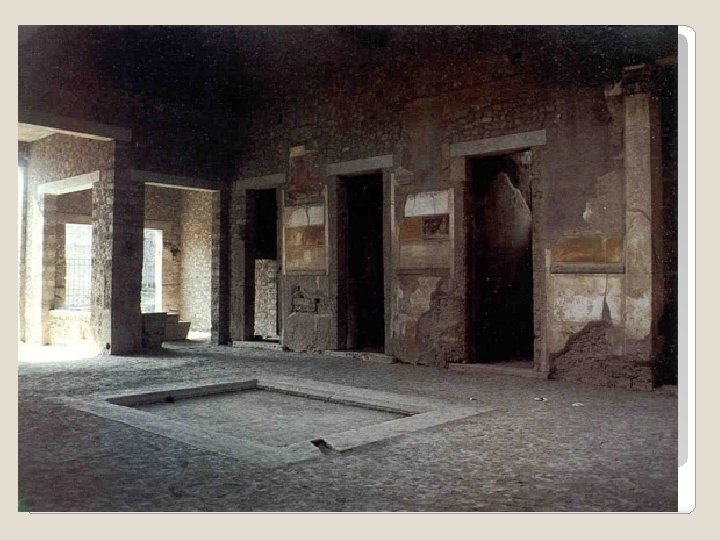
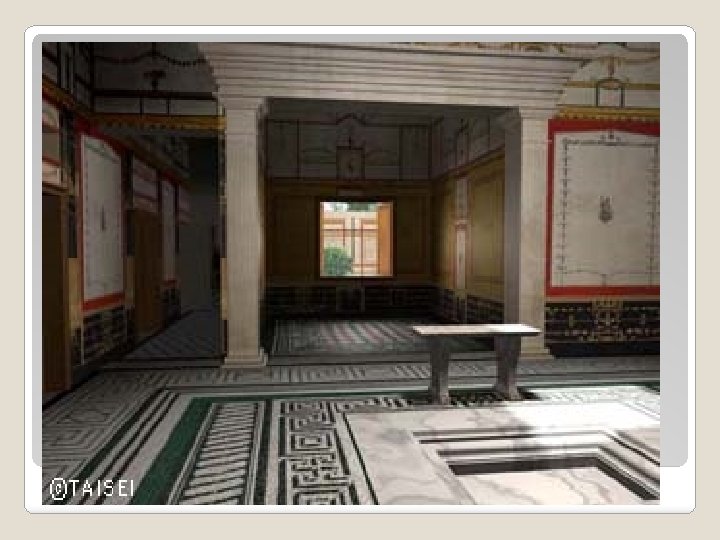
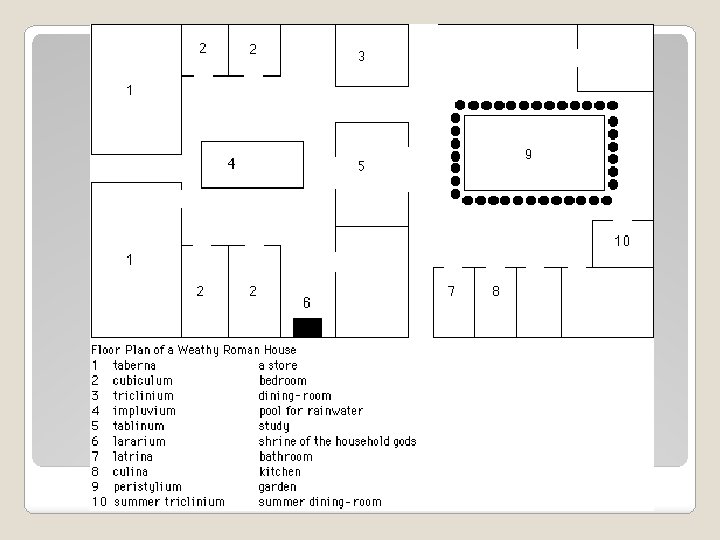
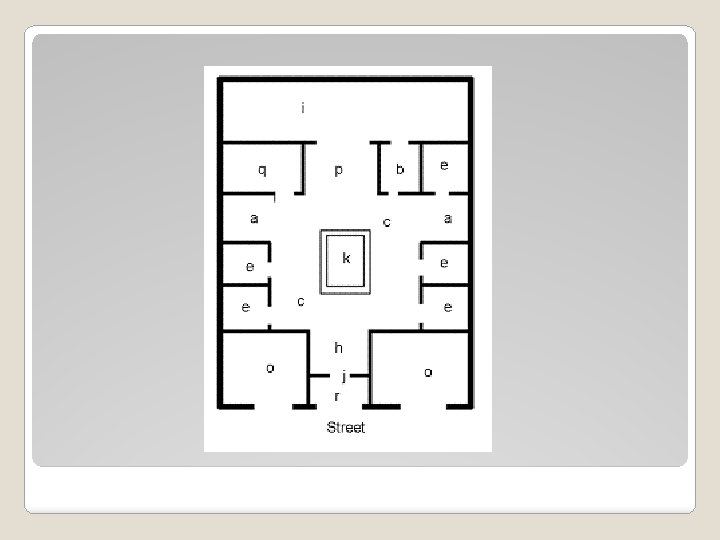
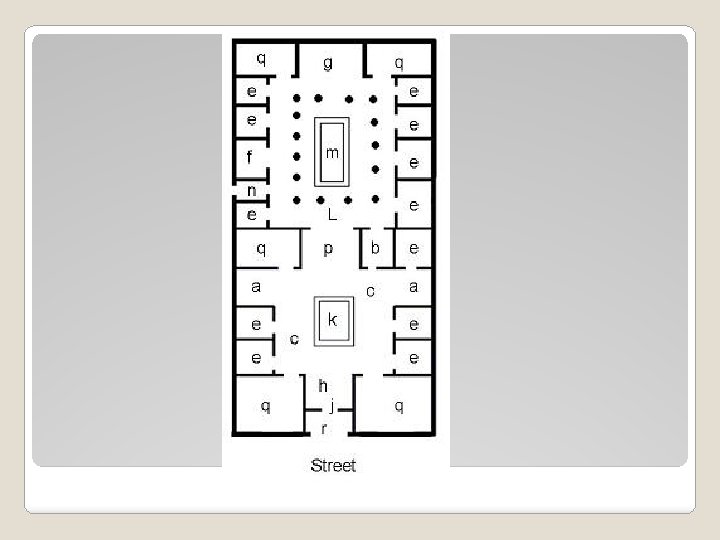
�Atrium: A large �Main features: open room �Impluvium and Compluvium: Hole in floor: Impluvium Hole in Roof: Compluvium �Lararium: shrine of household gods �Imagines: Death masks of ancestors �Tile floor �Murals or curtains Atrium
Atrium
Impluvium
Lararium
Lararium
Actual Romans at a Lararium
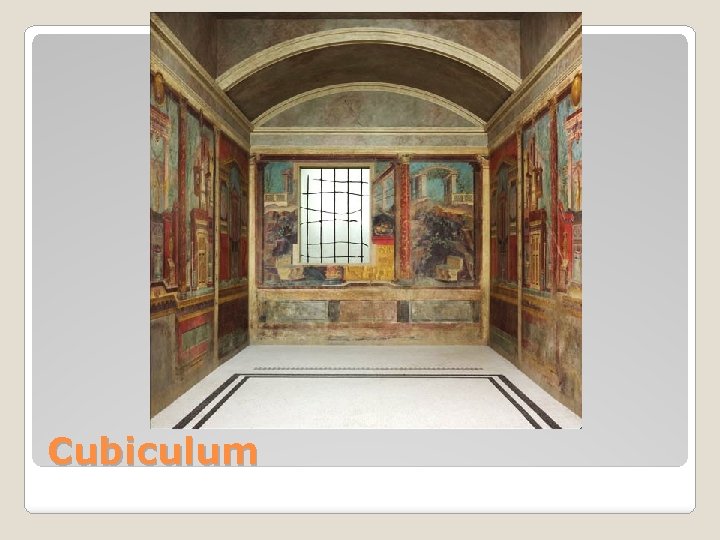
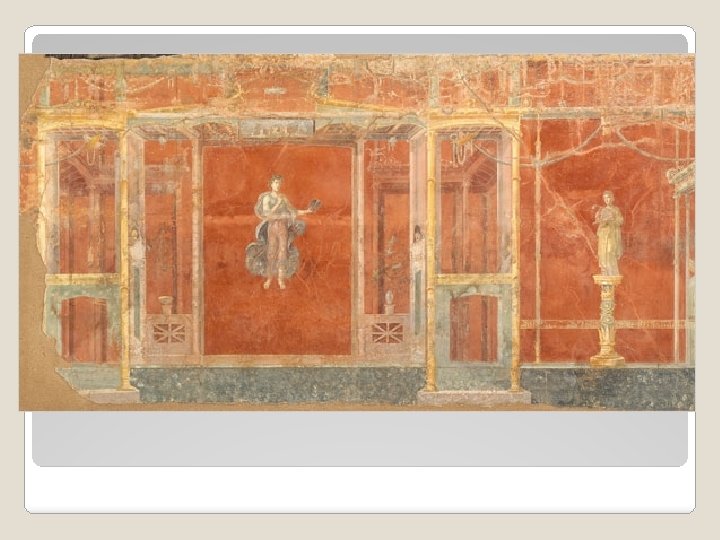
�Rooms off to the sides of Atrium: �Alae: open multi purpose rooms, no wall. May be library, storage. �Cubiculum: Bedrooms. Many had tiled floor with the tile showing where the bed went. Some divided in ¼ + ¾. Personal slave slept there. �Murals: gods resting or being amorous. Ala Cubiculum
Cubiculum
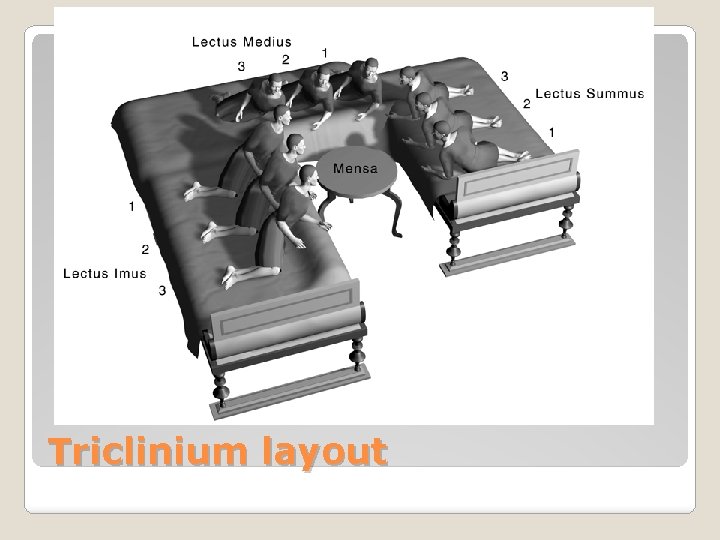
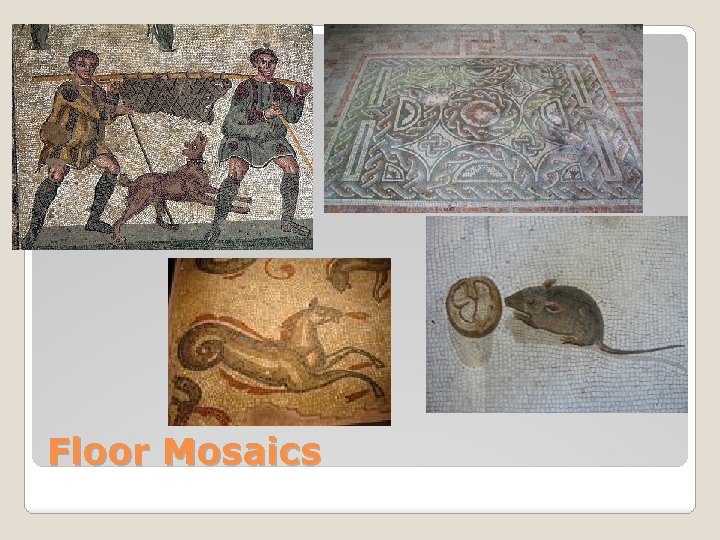
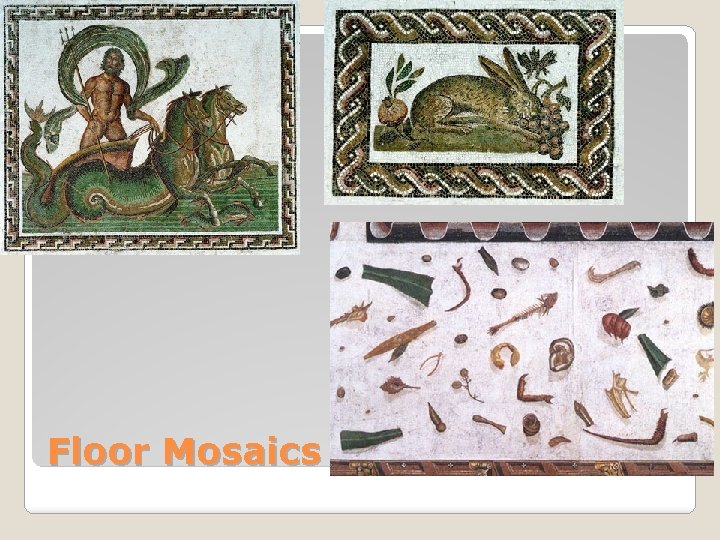
�Rooms off to the sides of Atrium: �Triclinium (corner room) dining room to accommodate 9 people (3 couches of three). Romans ate lying down on couches. Table in the middle. �Murals: bucolic scenes, food production, cows, sheep food, gods banqueting �Floor mosaic: food, fish, bones. Triclinium
Triclinium layout
�Tablinum: Paterfamilias main office �Directly between Atrium and Peristylum at back of house. �Enclosed by curtain (atrium side) and wooden doors (peristylum side) Tablinum
Floor Mosaics
Floor Mosaics
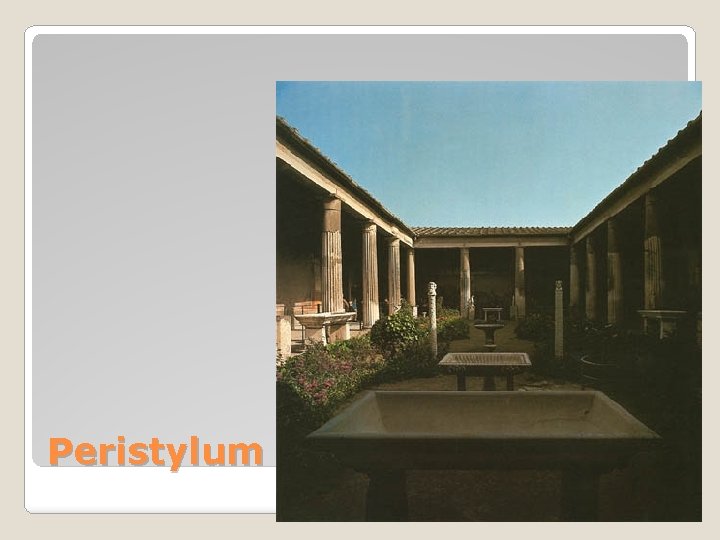
�Use andron to pass to the back of the house: �Main feature: Peristylum: an open roofed courtyard with columns and with a garden and maybe water feature �Peristylum surrounded by rooms: �More cubicula: Bigger and cooler Back of the house
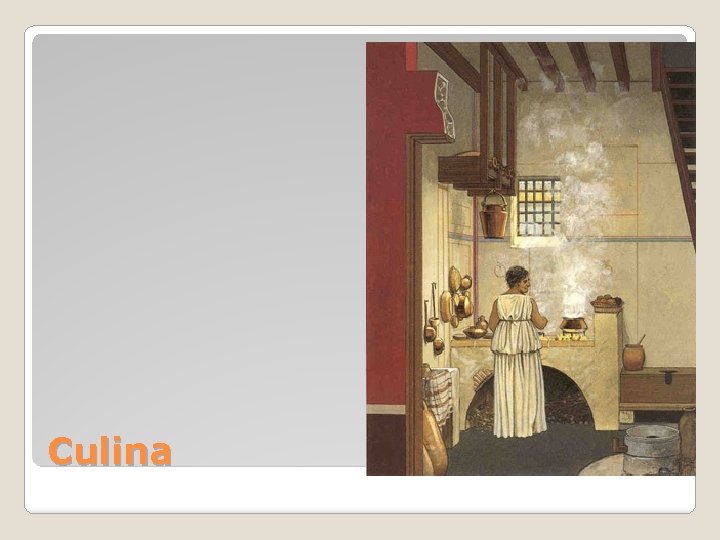
�Culina: Kitchen: wood burning stove, pots, pans and toilet and (stairs to 2 nd floor) Only room normally to have window. (no chimney) �Maybe 2 nd triclinium �Posticum: 2 nd entrance to the house: for slaves and unimportant guests. �Backwall: mural of garden. Back of the house
Culina
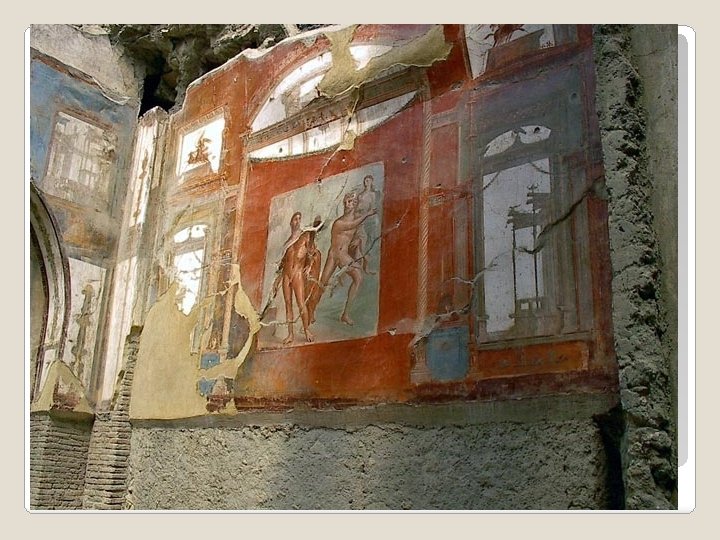
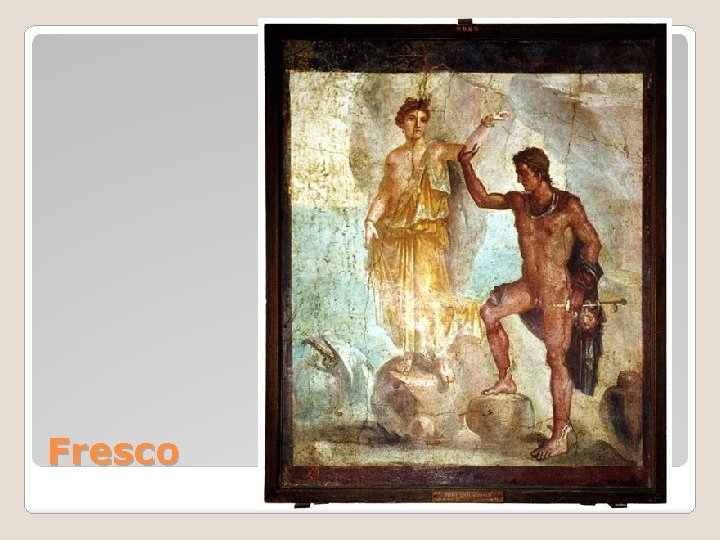
Fresco
Peristylum
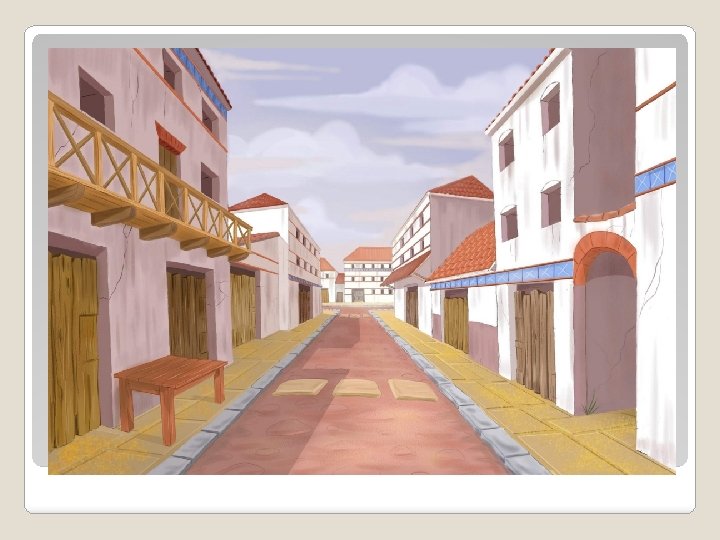
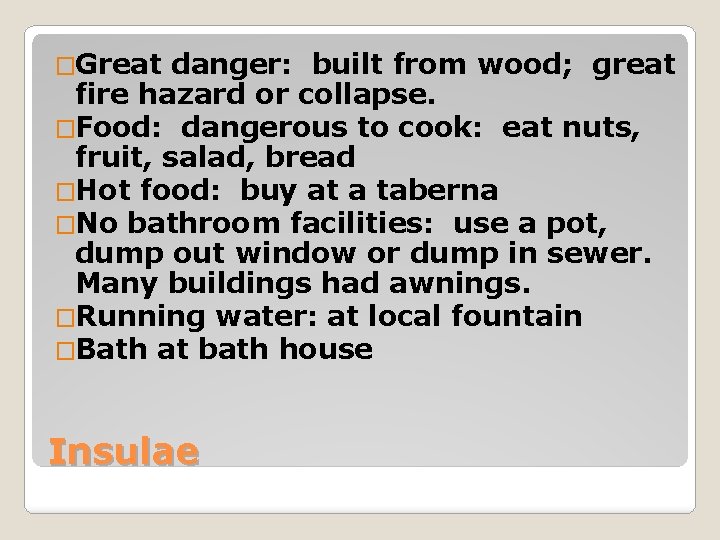
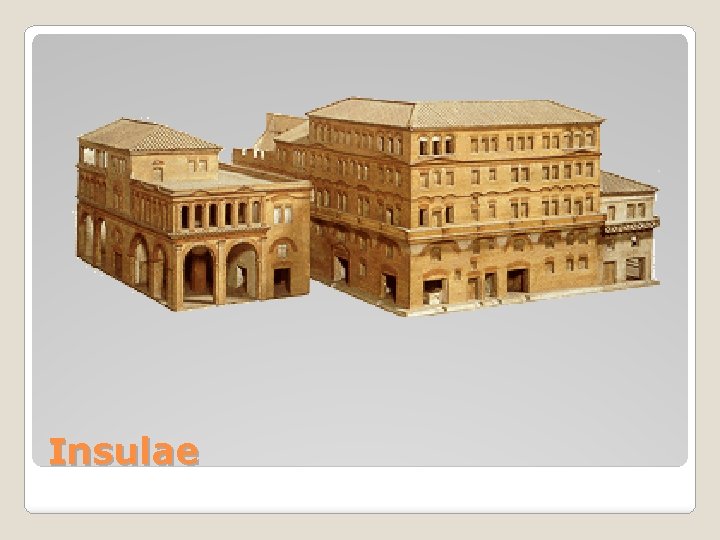
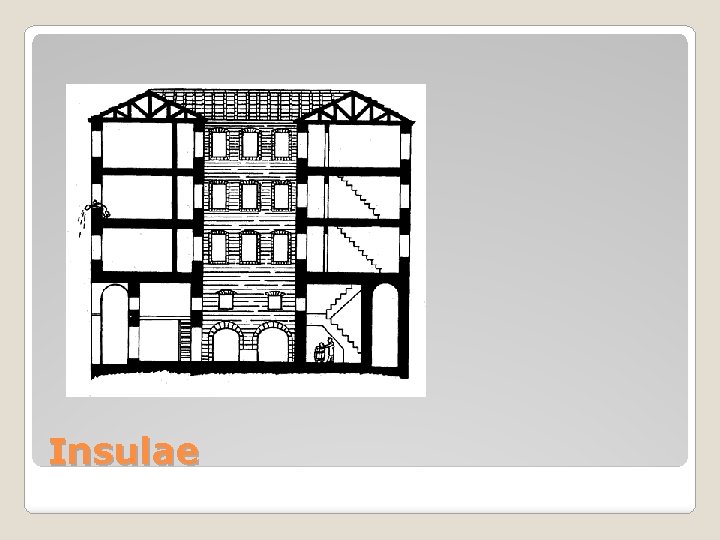
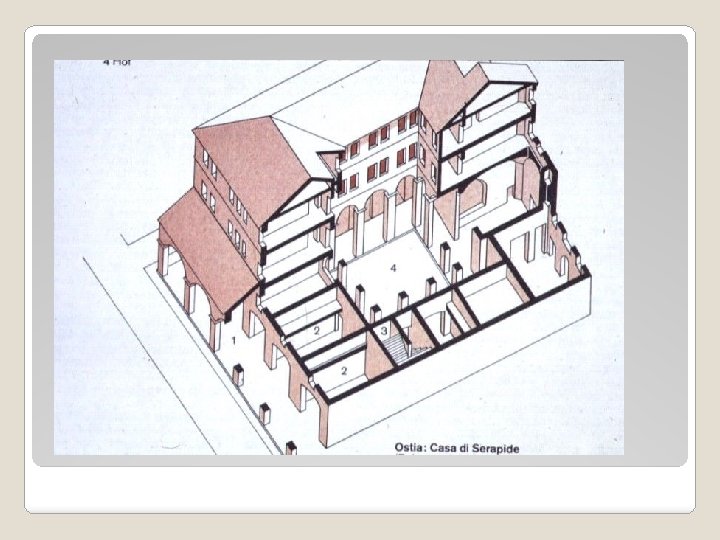
�Insulae: Apartment bulidings �Ground floor: tabernae � 2 nd floor: bigger more expensive apartments �All had steep steps � 3, 4, 5 th floor: smaller apartments: one room for whole family Insulae
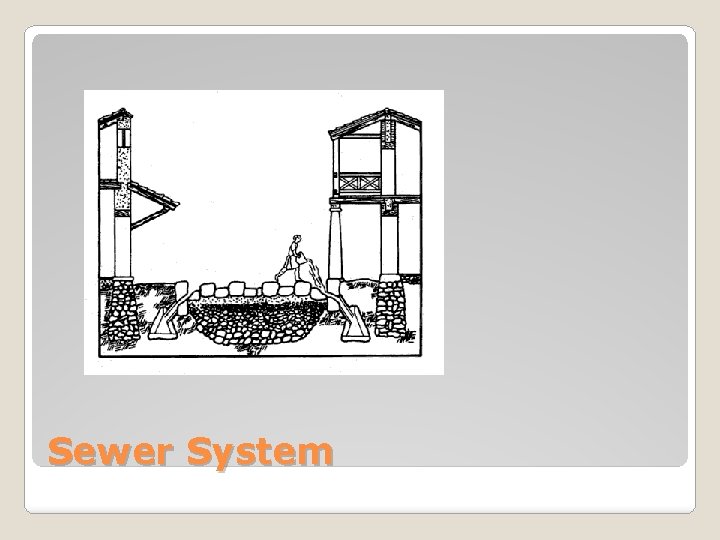
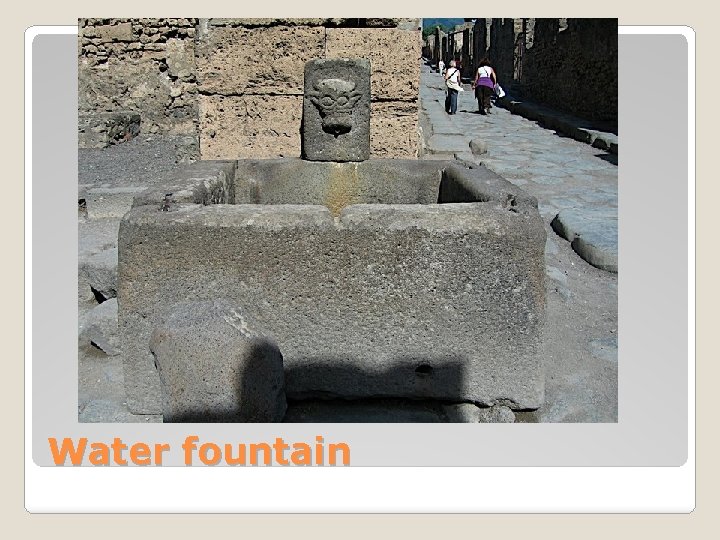
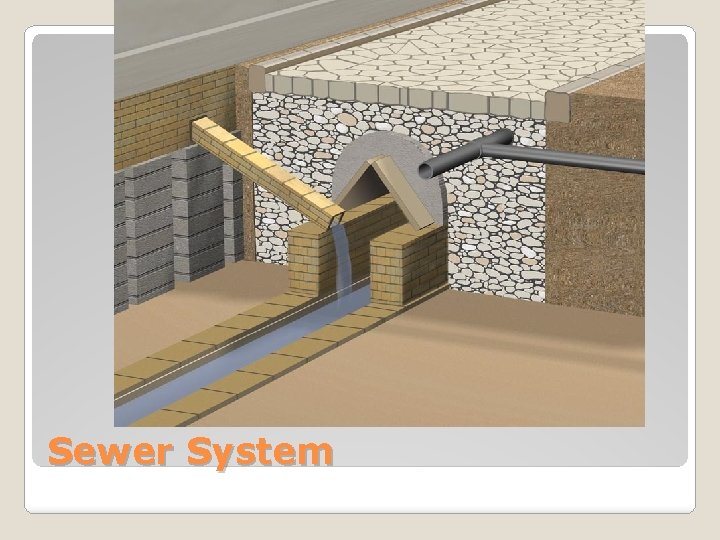
�Great danger: built from wood; great fire hazard or collapse. �Food: dangerous to cook: eat nuts, fruit, salad, bread �Hot food: buy at a taberna �No bathroom facilities: use a pot, dump out window or dump in sewer. Many buildings had awnings. �Running water: at local fountain �Bath at bath house Insulae
Insulae
Insulae
Sewer System
Water fountain
Sewer System