
The Role of the Immune System 303 Health
- Slides: 23
The Role of the Immune System 303 Health and Husbandry
Aim: Understand the immune system and its level of defense Objectives • To describe each of the immune barriers • To explain where immunity can come from
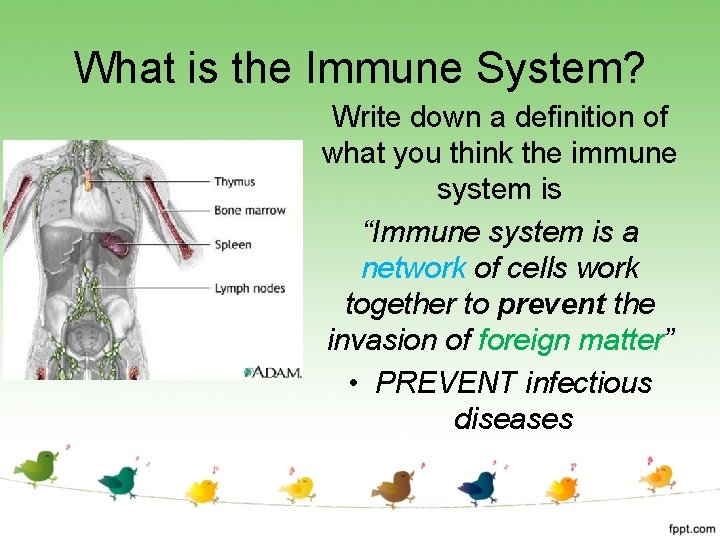
What is the Immune System? Write down a definition of what you think the immune system is “Immune system is a network of cells work together to prevent the invasion of foreign matter” • PREVENT infectious diseases
The Three Musketeers • We have three barriers to defend our bodies 1. External defences • Skin, tear ducts, hair, etc. 2. Non-specific defences • Cilia and mucous membranes. 3. Immune system • Cells that target specific pathogens.
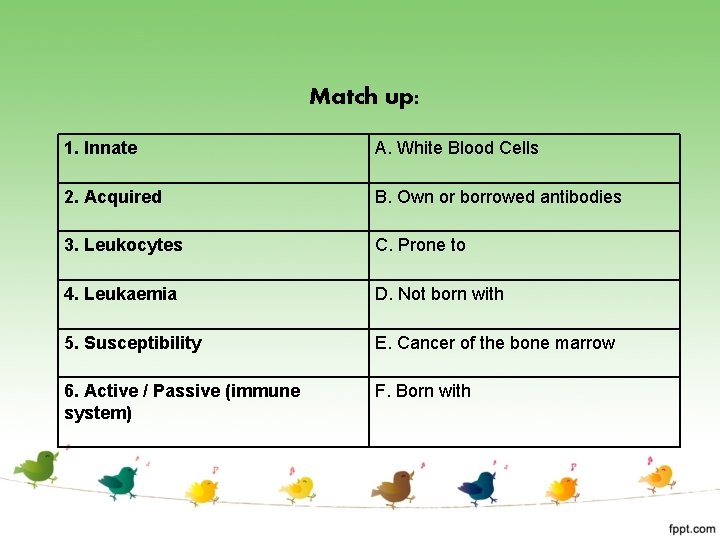
Match up: 1. Innate A. White Blood Cells 2. Acquired B. Own or borrowed antibodies 3. Leukocytes C. Prone to 4. Leukaemia D. Not born with 5. Susceptibility E. Cancer of the bone marrow 6. Active / Passive (immune system) F. Born with
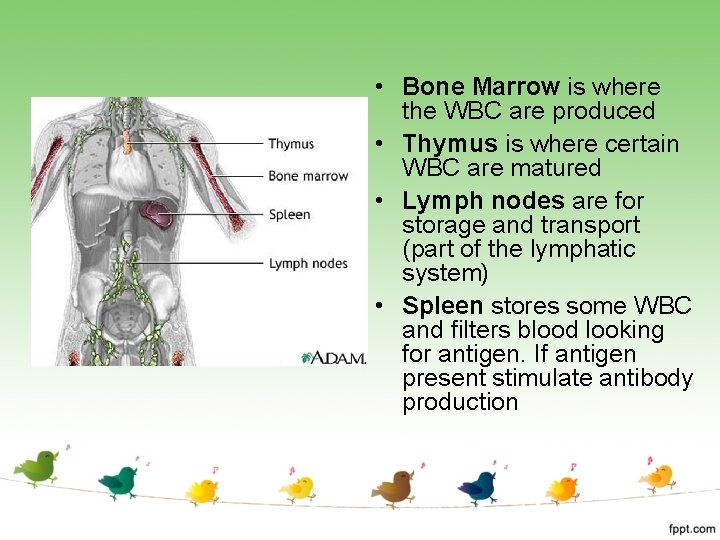
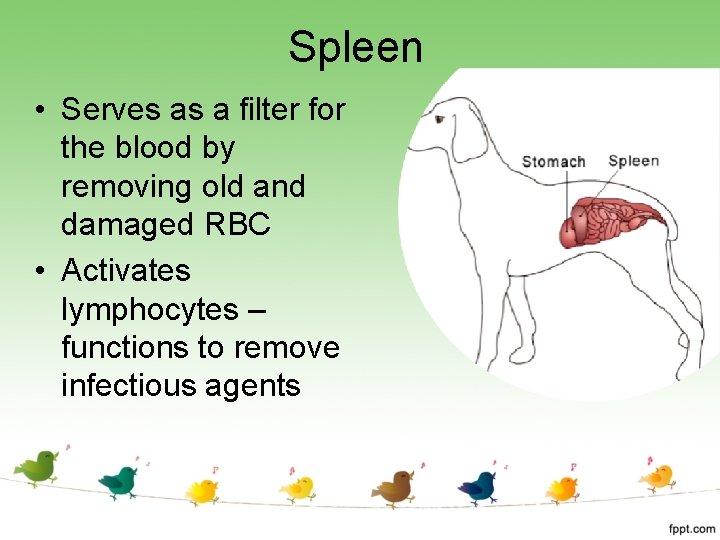
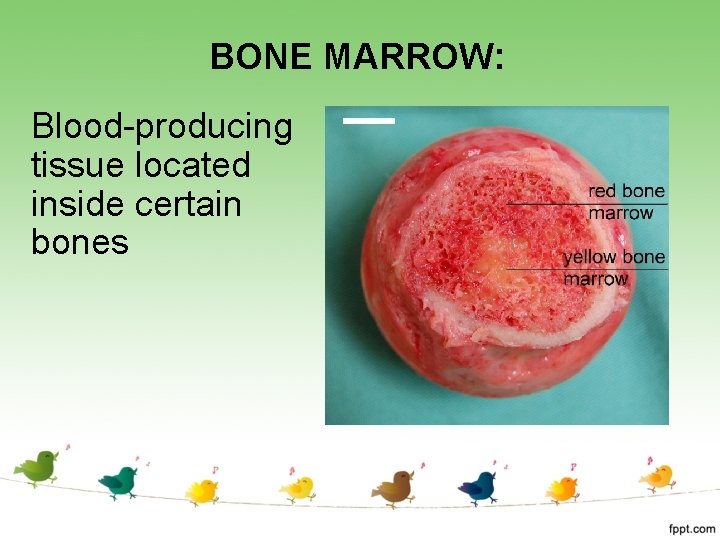
• Bone Marrow is where the WBC are produced • Thymus is where certain WBC are matured • Lymph nodes are for storage and transport (part of the lymphatic system) • Spleen stores some WBC and filters blood looking for antigen. If antigen present stimulate antibody production
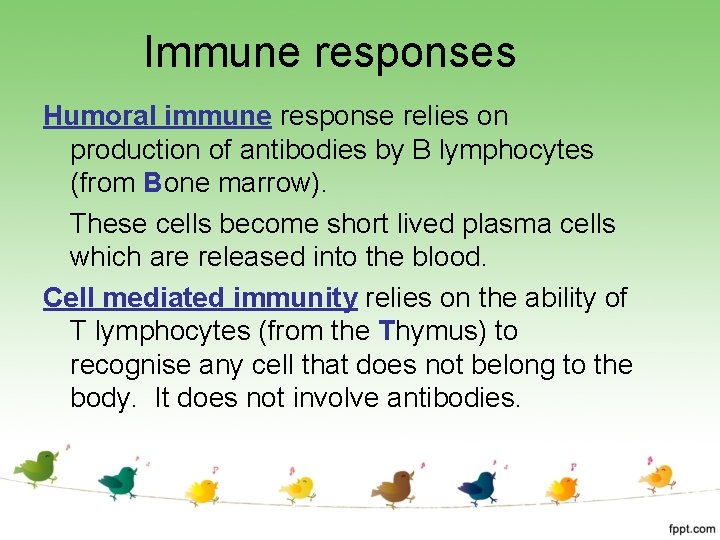
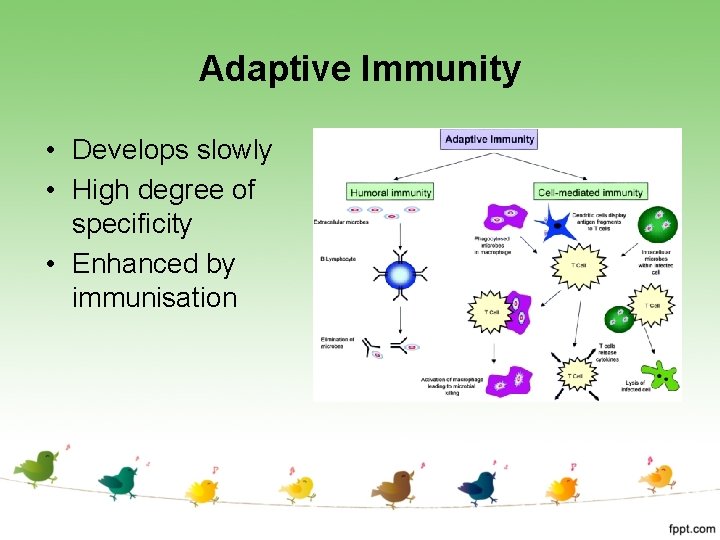
Immune responses Humoral immune response relies on production of antibodies by B lymphocytes (from Bone marrow). These cells become short lived plasma cells which are released into the blood. Cell mediated immunity relies on the ability of T lymphocytes (from the Thymus) to recognise any cell that does not belong to the body. It does not involve antibodies.
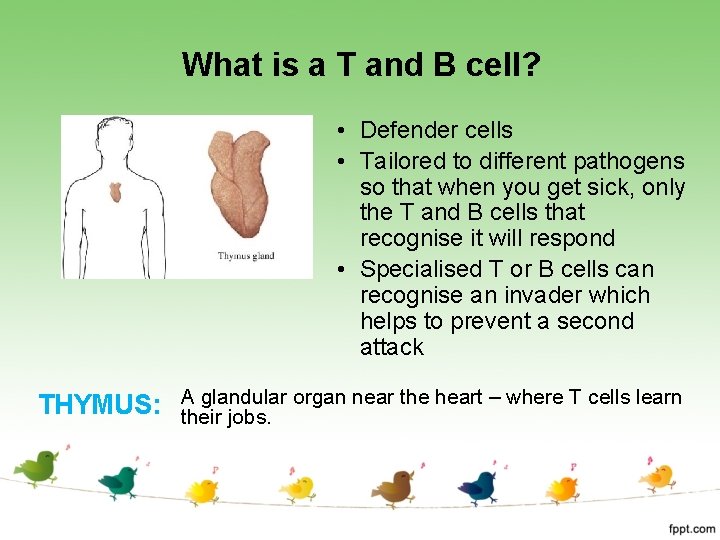
What is a T and B cell? • Defender cells • Tailored to different pathogens so that when you get sick, only the T and B cells that recognise it will respond • Specialised T or B cells can recognise an invader which helps to prevent a second attack THYMUS: A glandular organ near the heart – where T cells learn their jobs.
Spleen • Serves as a filter for the blood by removing old and damaged RBC • Activates lymphocytes – functions to remove infectious agents
BONE MARROW: Blood-producing tissue located inside certain bones
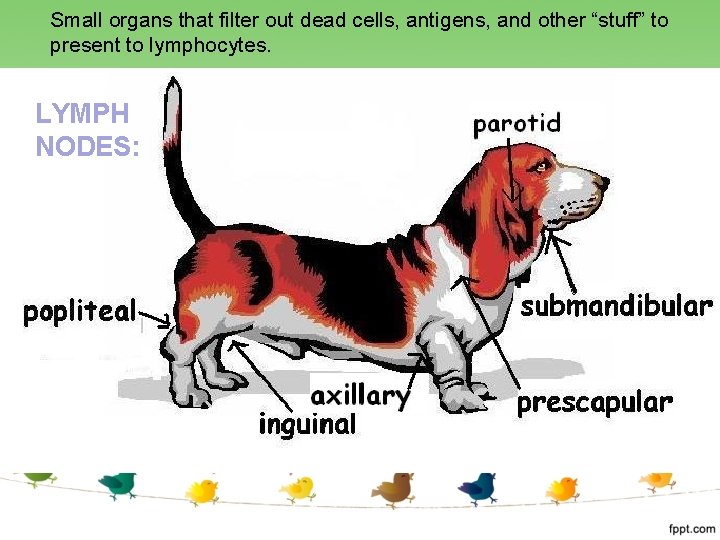
Small organs that filter out dead cells, antigens, and other “stuff” to present to lymphocytes. LYMPH NODES:
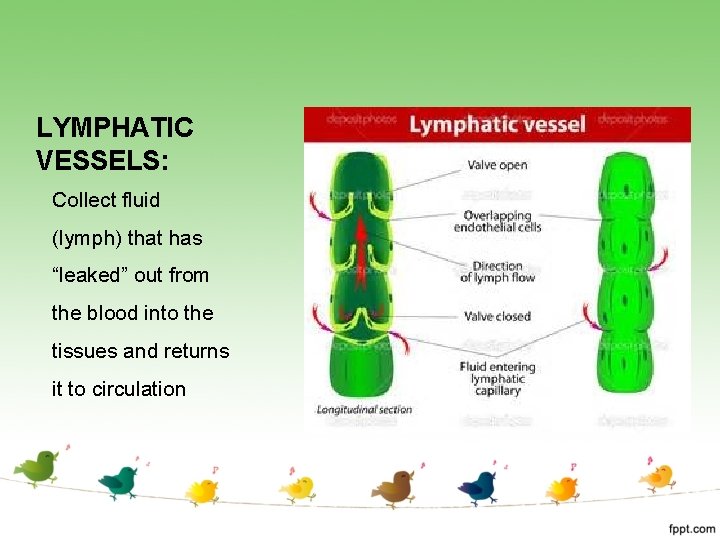
LYMPHATIC VESSELS: Collect fluid (lymph) that has “leaked” out from the blood into the tissues and returns it to circulation
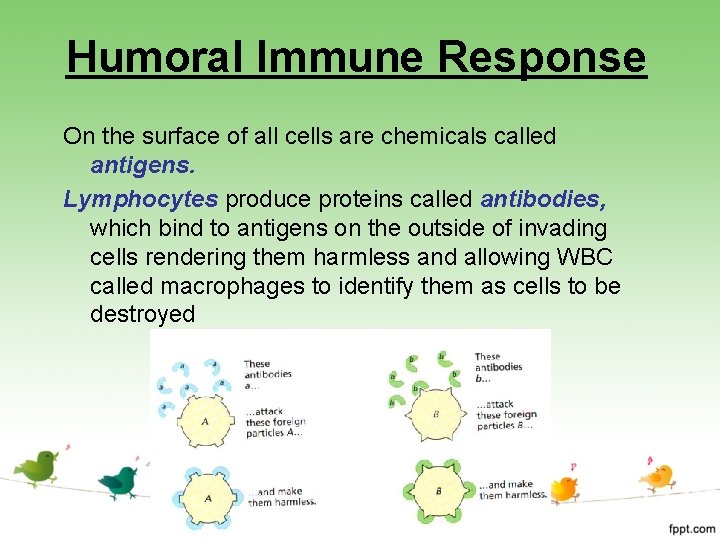
Humoral Immune Response On the surface of all cells are chemicals called antigens. Lymphocytes produce proteins called antibodies, which bind to antigens on the outside of invading cells rendering them harmless and allowing WBC called macrophages to identify them as cells to be destroyed
Cell Mediated Immunity • • • An immune response that does not involve antibodies but rather involves a range of Tlymphocyte cells One type, called killer T cells attack ‘foreign’ or infected cells within the tissues Memory T cells are ready to react rapidly to another invasion by the same antigen
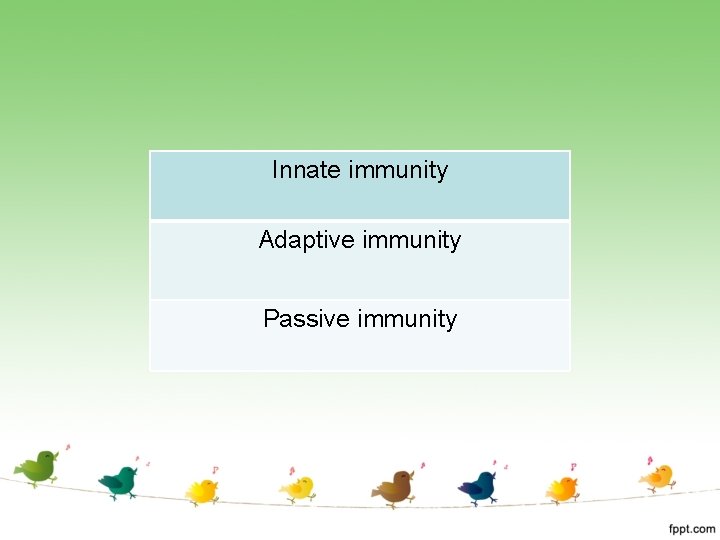
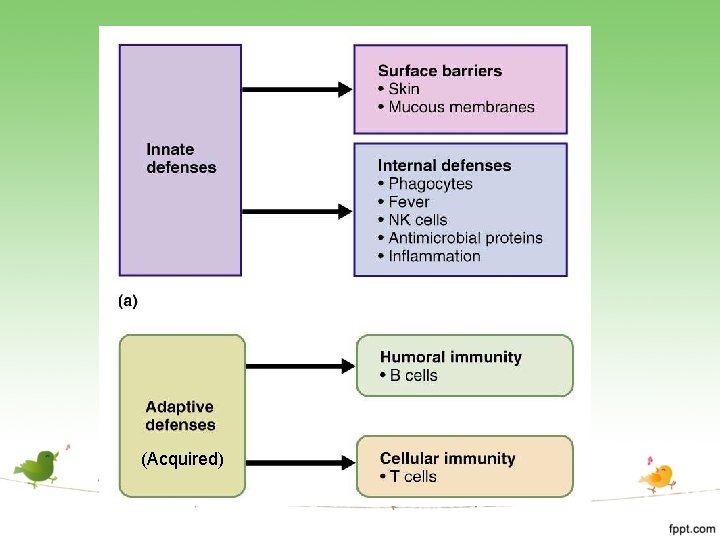
Innate immunity Adaptive immunity Passive immunity
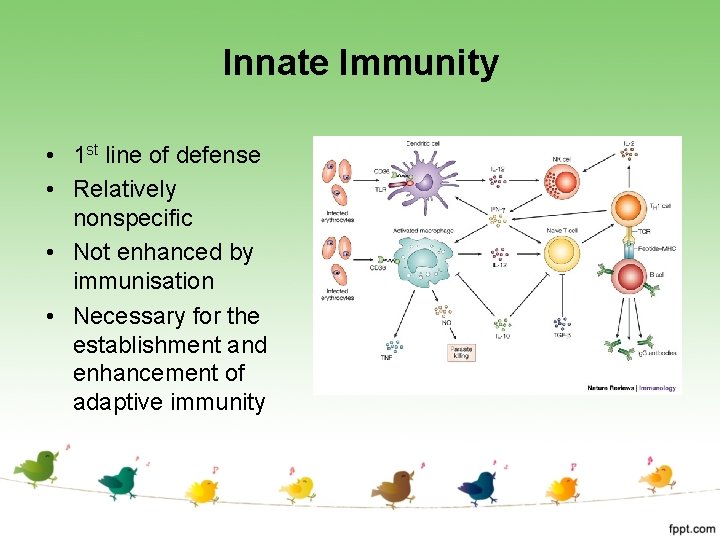
Innate Immunity • 1 st line of defense • Relatively nonspecific • Not enhanced by immunisation • Necessary for the establishment and enhancement of adaptive immunity
Adaptive Immunity • Develops slowly • High degree of specificity • Enhanced by immunisation
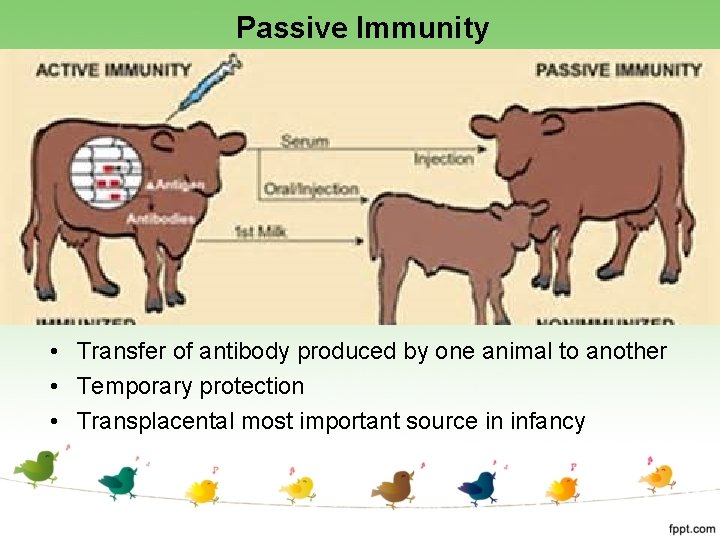
Passive Immunity • Transfer of antibody produced by one animal to another • Temporary protection • Transplacental most important source in infancy
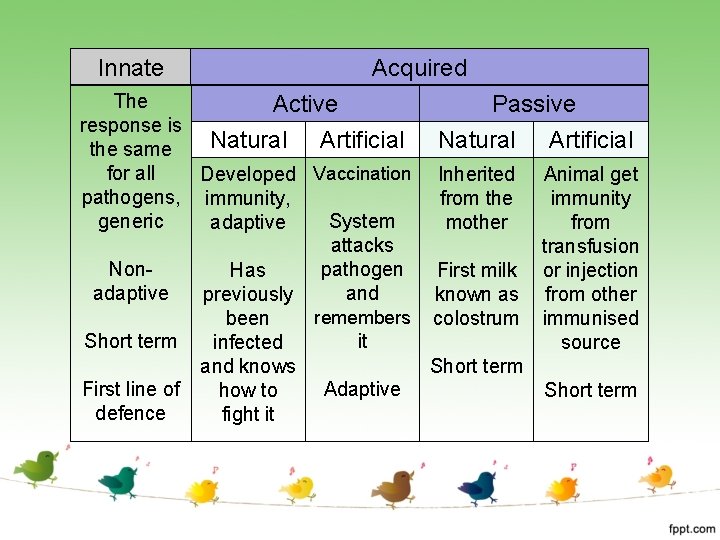
Innate Acquired The Active Passive response is Natural Artificial the same for all Developed Vaccination Inherited Animal get pathogens, immunity, from the immunity System generic adaptive mother from attacks transfusion pathogen Non. Has First milk or injection and adaptive previously known as from other remembers colostrum immunised been it Short term infected source and knows Short term Adaptive First line of how to Short term defence fight it l l L
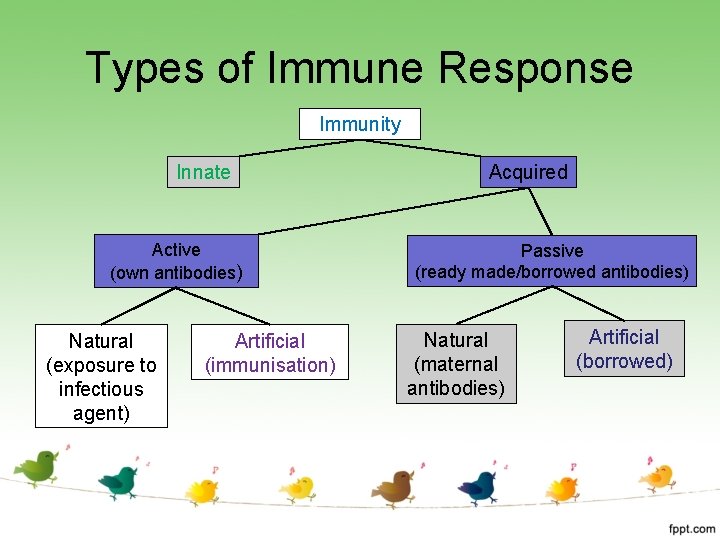
Types of Immune Response Immunity Innate Active (own antibodies) Natural (exposure to infectious agent) Artificial (immunisation) Acquired Passive (ready made/borrowed antibodies) Natural (maternal antibodies) Artificial (borrowed)
• https: //youtu. be/PSRJfa. AYk. W 4
(Acquired)
Aim: Understand the immune system and its level of defense Objectives • To describe each of the immune barriers • To explain where immunity can come from