
The Role of the HPA Axis in Anxiety

- Slides: 17
The Role of the HPA Axis in Anxiety Disorders Alireza Farnam MD Professor of psychiatry TUOMS
The interconnection between Psyche and Soma • Autonomic nervous system • HPA axis • Immune system
Two important factors of HPA in anxiety disorders • Glucocorticoids • Corticotropin-releasing hormone (CRH)
Cortisol • a glucocorticoid synthesized in the adrenal glands. • It contributes to increased arousal, vigilance, focused attention and memory formation, • inhibition of the growth and reproductive systems, and containment of the immune response. • facilitate the encoding of emotion-related memory
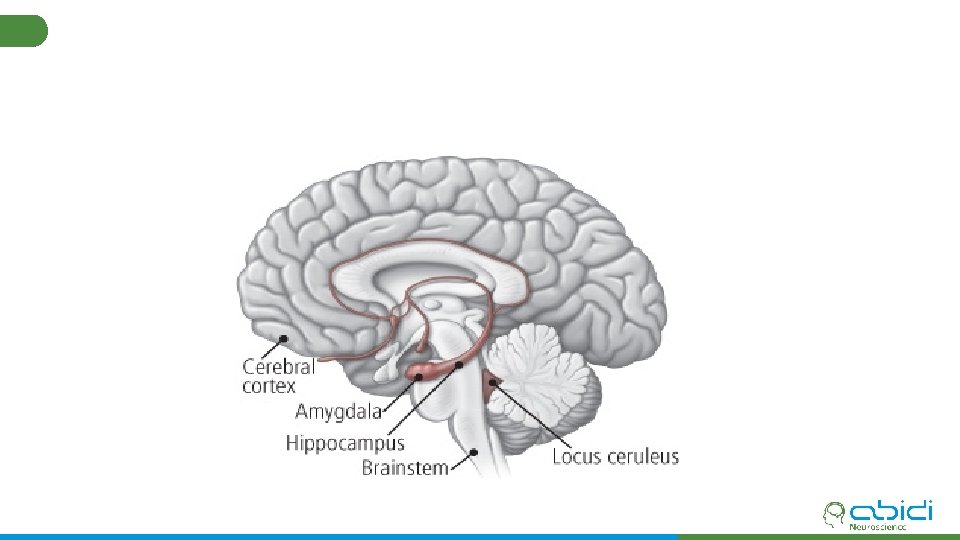
• The hippocampus is particularly sensitive to many types of insults. • High glucocorticoid levels impair cell survival, alter cell metabolism, and induce changes in cell morphology. • The stress-related impairment in hippocampal-dependent cognitive and memory function may be a consequence of this cellular damage.
• The amygdala may play an important role in mediating the negative effects of stress on the hippocampus.
• If stress-induced cortisol secretion is not contained, persistently elevated cortisol levels can cause diverse harmful effects both peripherally and in the CNS.
• Peripheral adverse effects include • • hypertension, osteoporosis, immunosuppression, insulin resistance, dyslipidemia, dyscoagulation, and ultimately atherosclerosis and cardiovascular disease.
• In preclinical and clinical studies, glucocorticoids have been shown to block the recall of traumatic memories. • Cortisol was also found to reduce the activation of fear responses in patients with SAD and spider phobia.
• In preclinical studies, RU-486 (mifepristone), a GR antagonist, impaired the recall of stressful memories in rats. • In a recent pilot study conducted in older adults with anxiety disorder and co-occurring cognitive dysfunction, administration of RU-486 (mifepristone) was associated with • improvements in memory, executive functions, and severity of worry in patients with elevated cortisol levels at baseline.
CRF • Preclinical studies have demonstrated that basal cerebrospinal fluid (CSF) CRH is higher in primates that have experienced early-life stress. • Exposure to excessive levels of CRH in early life is associated with hippocampal damage later in life.
• the activation of CRH-1 receptors may contribute to increased anxietylike responses, • whereas the stimulation of CRH-2 may be pivotal in mediating anxiolytic behavior. • Maintaining the appropriate functional equilibrium in the contribution of each of the two CRH receptor subtypes to brain CRH pathways might be essential to maintaining the protective and adaptive psychological and physiologic response to stressors.
• Hyperactivity of the HPA axis has been observed in certain subgroups of patients with anxiety and mood disorders. • In addition, the effects of different anti-anxiety agents on various components of the HPA axis has been investigated, including benzodiazepines, tricyclic antidepressants (TCAs), and selective serotonin reuptake inhibitors (SSRIs).
• benzodiazepines, including clonazepam and alprazolam, have been demonstrated to reduce the activity of corticotrophin releasing factor (CRF) neurons in the hypothalamus. • TCAs and SSRIs are also effective anti-anxiety agents and these may act, in part, by modulating the HPA axis. • In this regard, the SSRI escitalopram inhibits CRF release in the central nucleus of the amygdala, • while increasing glucocorticoid receptor (GRs) density in the hippocampus and hypothalamus.
• The role of the HPA axis in the pathophysiology of depression and chronic anxiety disorders has been extensively studied, including the particular role played by their different components, including CRH neurotransmission, cortisol, and their specific receptors, and the genes coding for each of these molecules.
• It remains unclear, however, how important the effects of anti-anxiety agents on the HPA axis activity are in mediating their therapeutics benefits and moreover whether further modulation of CRH and related systems might augment our currently available agents.