
The Role of the Actin Cytoskeleton in PlantPathogen


- Slides: 16
The Role of the Actin Cytoskeleton in Plant/Pathogen Interactions Meesha Peña Dr. Jeff Chang Botany and Plant Pathology
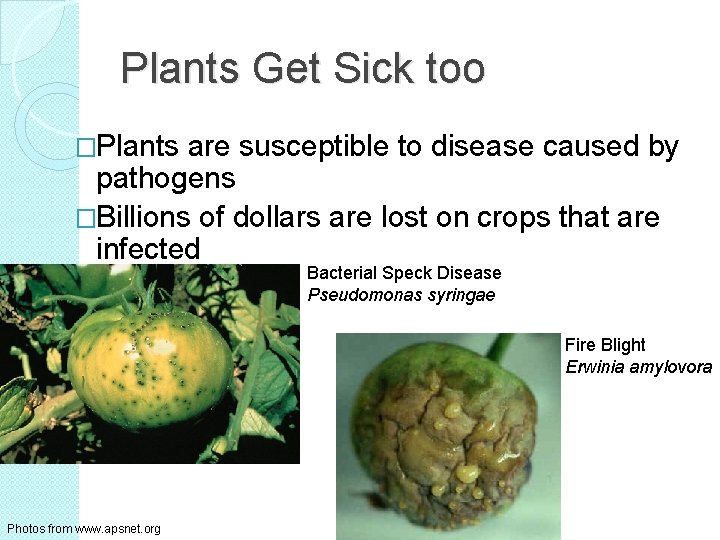
Plants Get Sick too �Plants are susceptible to disease caused by pathogens �Billions of dollars are lost on crops that are infected Bacterial Speck Disease Pseudomonas syringae Fire Blight Erwinia amylovora Photos from www. apsnet. org
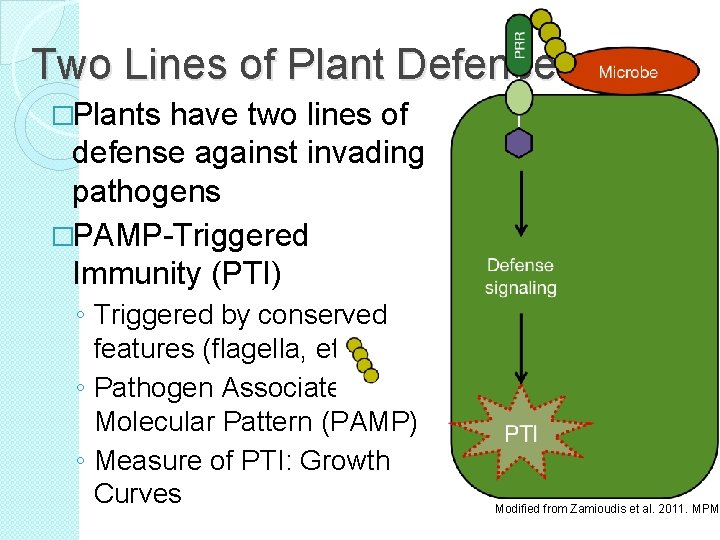
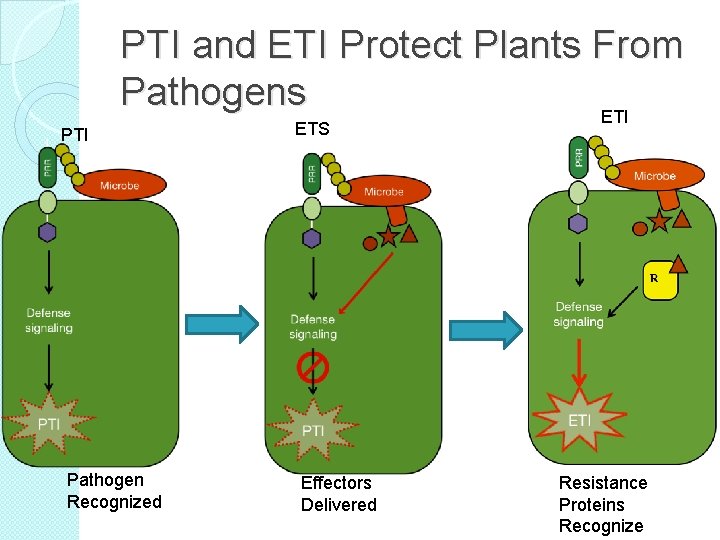
Two Lines of Plant Defense �Plants have two lines of defense against invading pathogens �PAMP-Triggered Immunity (PTI) ◦ Triggered by conserved features (flagella, etc) ◦ Pathogen Associated Molecular Pattern (PAMP) ◦ Measure of PTI: Growth Curves Modified from Zamioudis et al. 2011. MPMI
Type Three Secretion System � Plant pathogens inject proteins (effectors) into the plant cell to help overcome the plant immune system ◦ Up to hundreds � Bacteria use a Type Three Secretion System (T 3 SS), a syringe system Büttner and He. 2009. Plant Phy
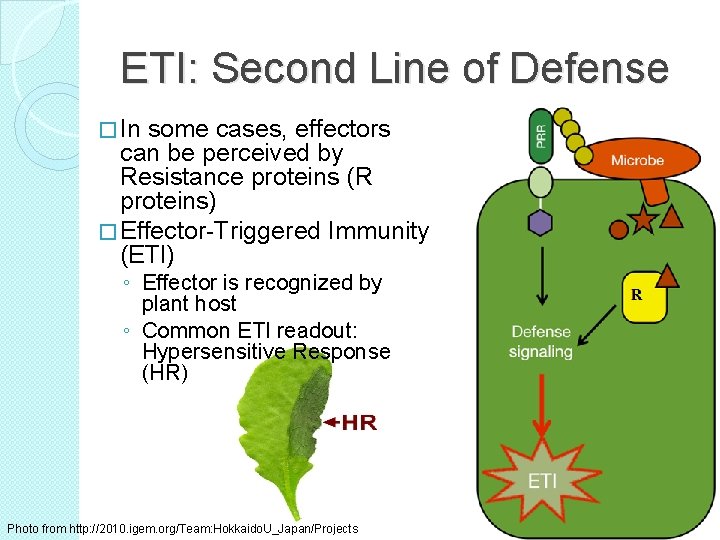
ETI: Second Line of Defense � In some cases, effectors can be perceived by Resistance proteins (R proteins) � Effector-Triggered Immunity (ETI) ◦ Effector is recognized by plant host ◦ Common ETI readout: Hypersensitive Response (HR) Photo from http: //2010. igem. org/Team: Hokkaido. U_Japan/Projects
PTI and ETI Protect Plants From Pathogens ETI Pathogen Recognized ETS Effectors Delivered Resistance Proteins Recognize
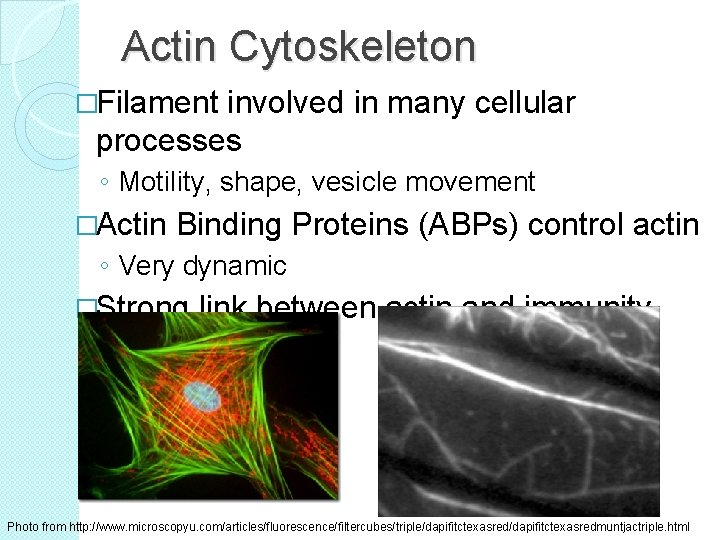
Actin Cytoskeleton �Filament involved in many cellular processes ◦ Motility, shape, vesicle movement �Actin Binding Proteins (ABPs) control actin ◦ Very dynamic �Strong link between actin and immunity Photo from http: //www. microscopyu. com/articles/fluorescence/filtercubes/triple/dapifitctexasredmuntjactriple. html
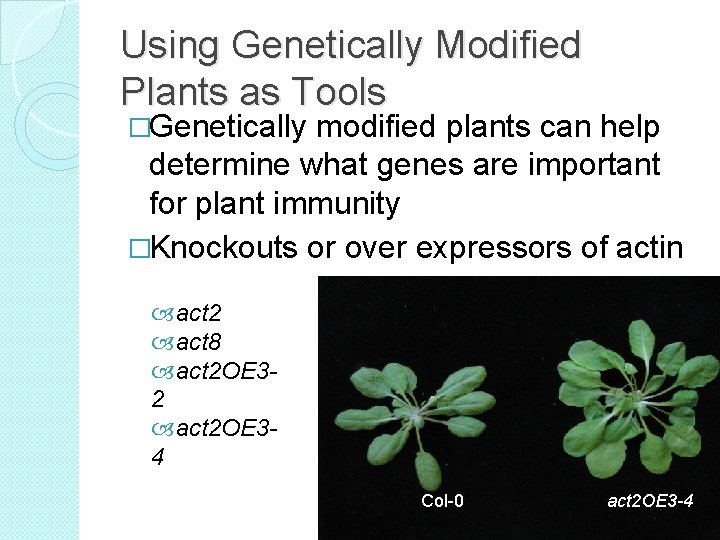
Using Genetically Modified Plants as Tools �Genetically modified plants can help determine what genes are important for plant immunity �Knockouts or over expressors of actin act 2 act 8 act 2 OE 32 act 2 OE 34 Col-0 act 2 OE 3 -4
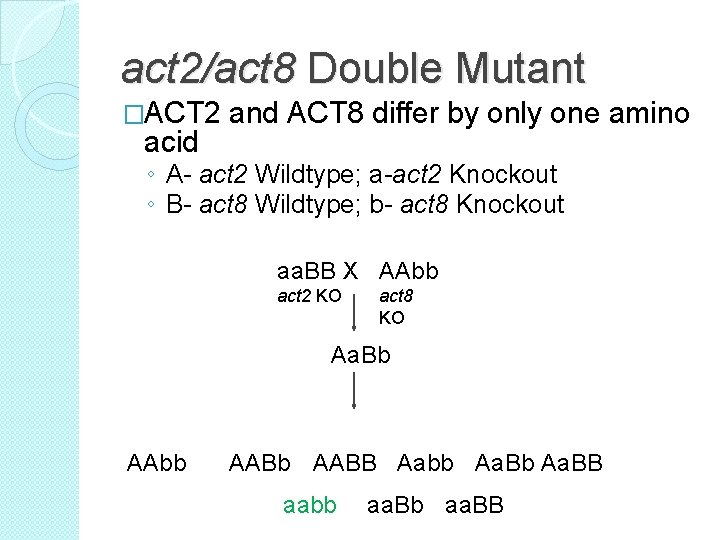
act 2/act 8 Double Mutant �ACT 2 acid and ACT 8 differ by only one amino ◦ A- act 2 Wildtype; a-act 2 Knockout ◦ B- act 8 Wildtype; b- act 8 Knockout aa. BB X AAbb act 2 KO act 8 KO Aa. Bb AAbb AABB Aabb Aa. BB aabb aa. BB
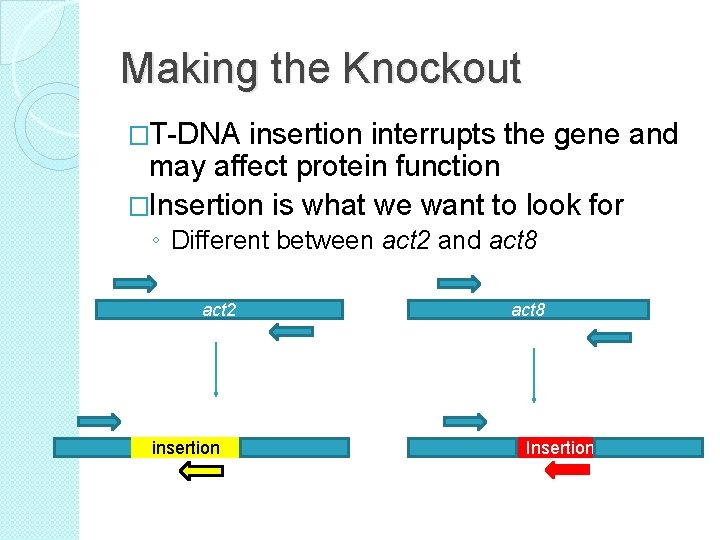
Making the Knockout �T-DNA insertion interrupts the gene and may affect protein function �Insertion is what we want to look for ◦ Different between act 2 and act 8 act 2 insertion act 8 Insertion
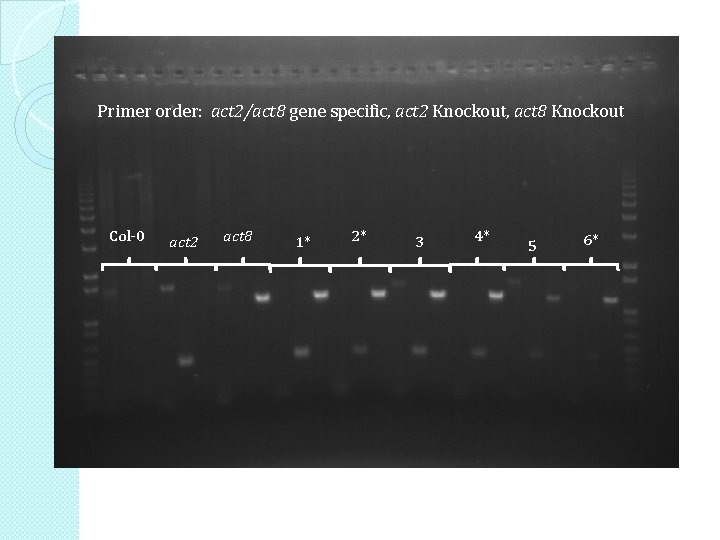
Primer order: act 2/act 8 gene specific, act 2 Knockout, act 8 Knockout Col-0 act 2 act 8 1* 2* 3 4* 5 6*
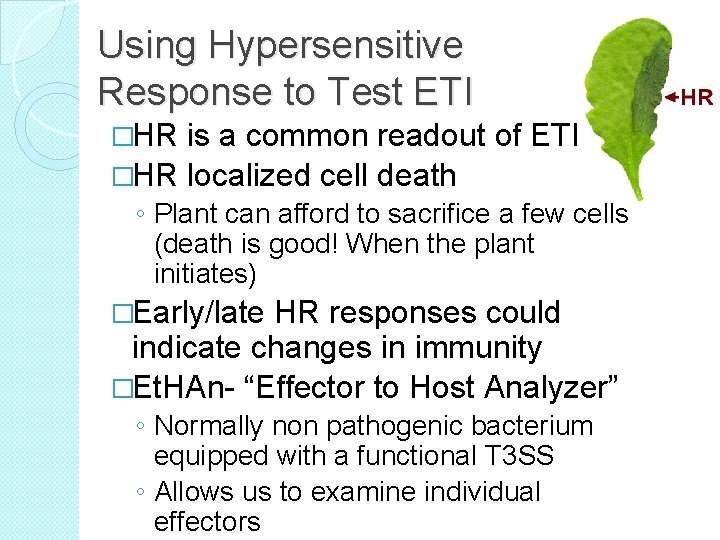
Using Hypersensitive Response to Test ETI �HR is a common readout of ETI �HR localized cell death ◦ Plant can afford to sacrifice a few cells (death is good! When the plant initiates) �Early/late HR responses could indicate changes in immunity �Et. HAn- “Effector to Host Analyzer” ◦ Normally non pathogenic bacterium equipped with a functional T 3 SS ◦ Allows us to examine individual effectors
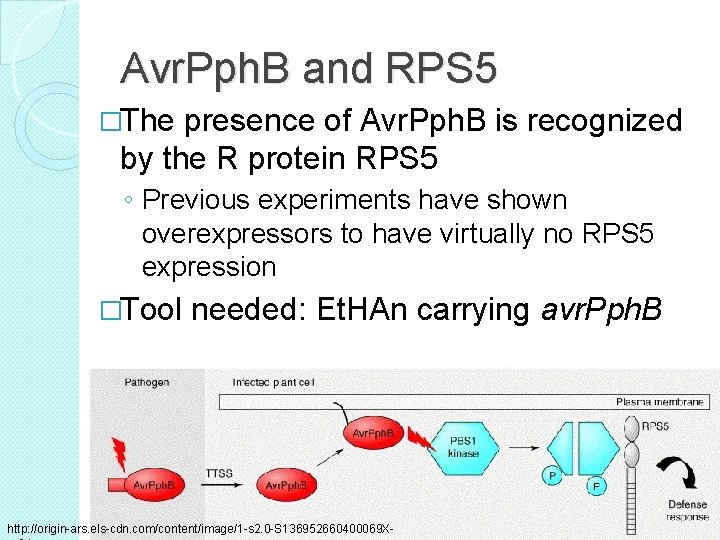
Avr. Pph. B and RPS 5 �The presence of Avr. Pph. B is recognized by the R protein RPS 5 ◦ Previous experiments have shown overexpressors to have virtually no RPS 5 expression �Tool needed: Et. HAn carrying avr. Pph. B http: //origin-ars. els-cdn. com/content/image/1 -s 2. 0 -S 136952660400069 X-
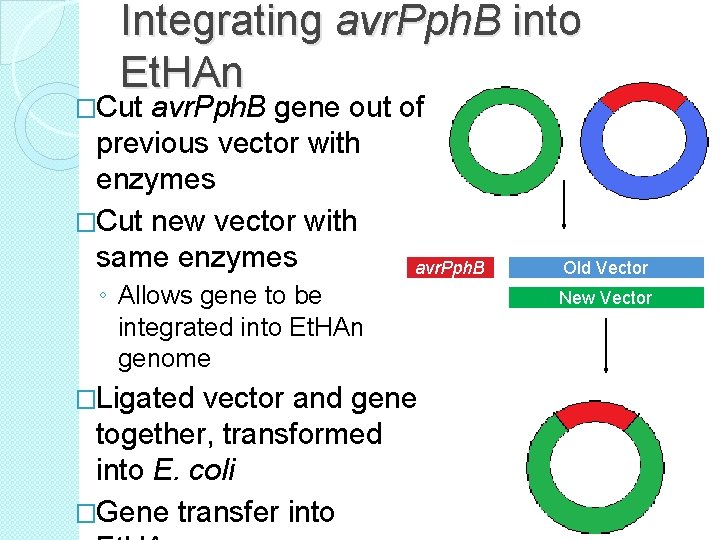
Integrating avr. Pph. B into Et. HAn �Cut avr. Pph. B gene out of previous vector with enzymes �Cut new vector with same enzymes avr. Pph. B ◦ Allows gene to be integrated into Et. HAn genome �Ligated vector and gene together, transformed into E. coli �Gene transfer into Old Vector New Vector
Future Directions �Finish mating avr. Pph. B into Et. HAn ◦ Start HR experiments on actin overexpressor plants �Start immunity experiments on act 2/act 8 double mutant ◦ HR, growth curves, gene expression measures �Genotype triple mutants
Acknowledgements �Dr. Jeff Chang �Chang Lab Members �Allison Creason �Dr. Brad Day, Michigan State University �SURE Science �National Science Foundation �Dr. Kevin Ahern