
The role of Sustainable Urban Mobility in the
The role of Sustainable Urban Mobility in the Sustainable Development Goals Stefanie Holzwarth, Urban Mobility Unit, UN-Habitat
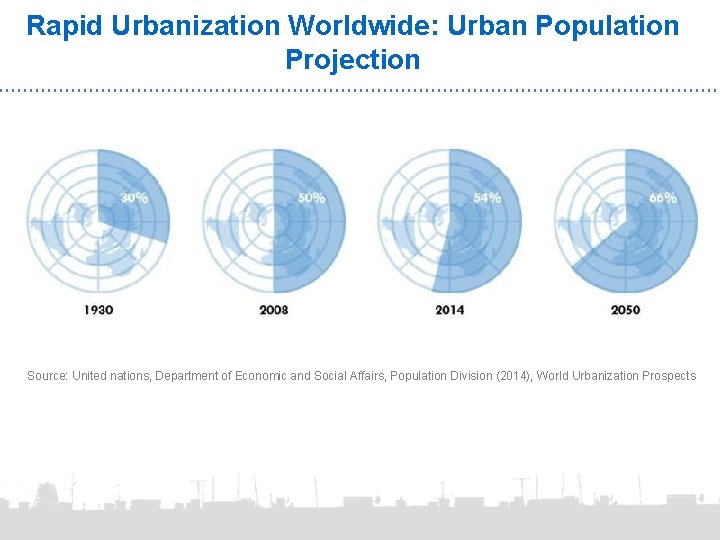
Rapid Urbanization Worldwide: Urban Population Projection Source: United nations, Department of Economic and Social Affairs, Population Division (2014), World Urbanization Prospects
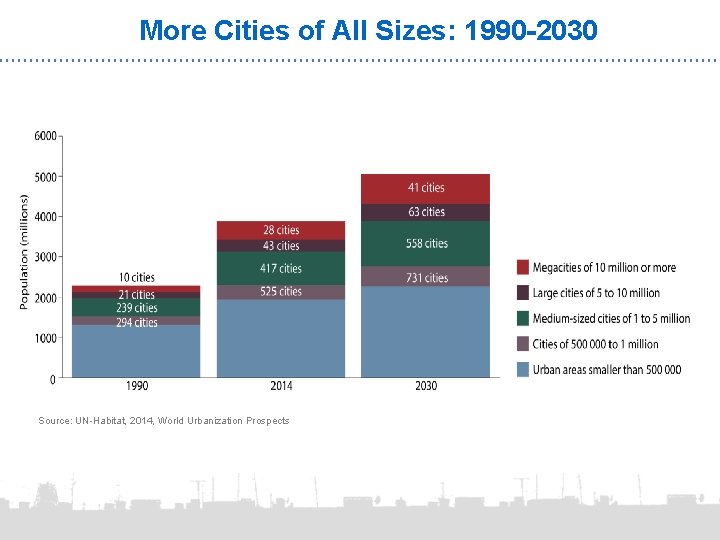
More Cities of All Sizes: 1990 -2030 Source: UN-Habitat, 2014, World Urbanization Prospects
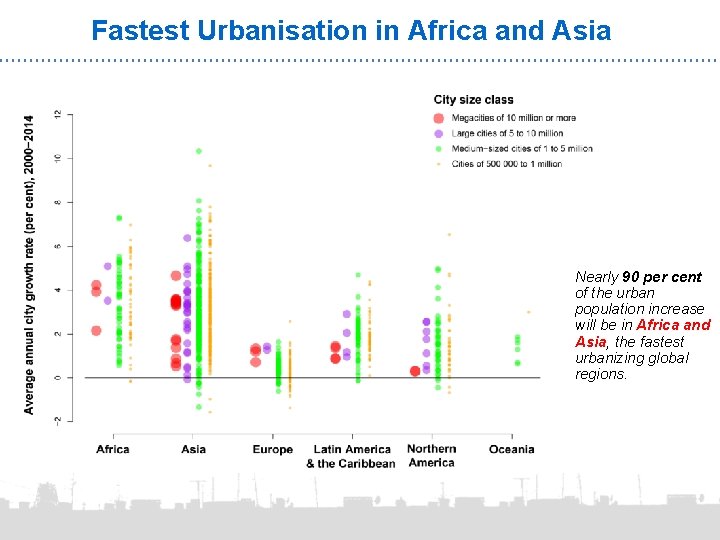
Fastest Urbanisation in Africa and Asia Nearly 90 per cent of the urban population increase will be in Africa and Asia, the fastest urbanizing global regions.
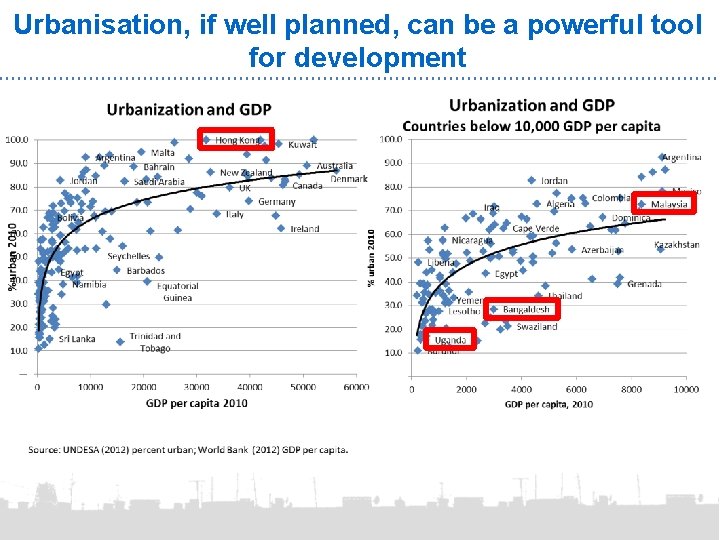
Urbanisation, if well planned, can be a powerful tool for development
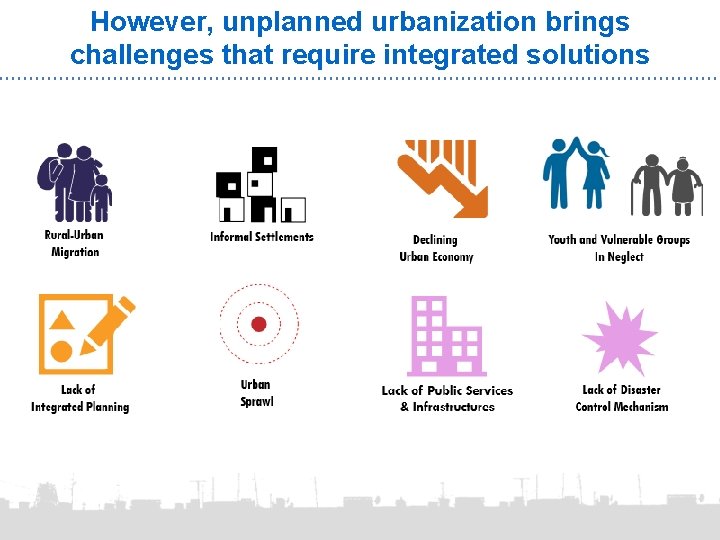
However, unplanned urbanization brings challenges that require integrated solutions
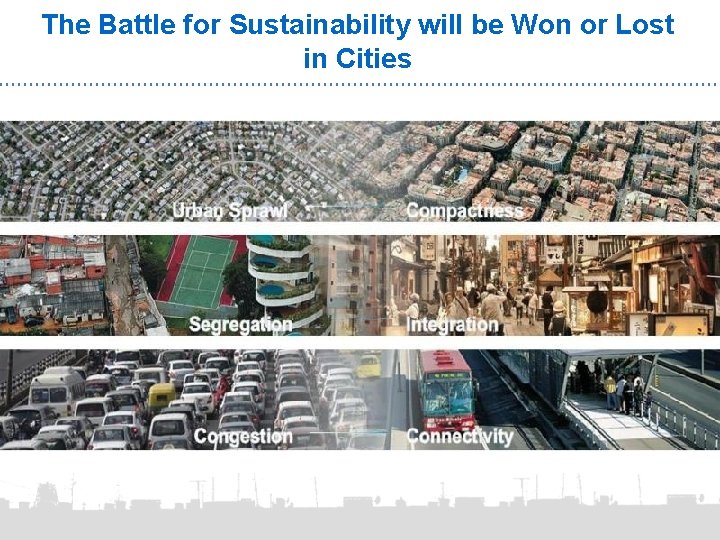
The Battle for Sustainability will be Won or Lost in Cities
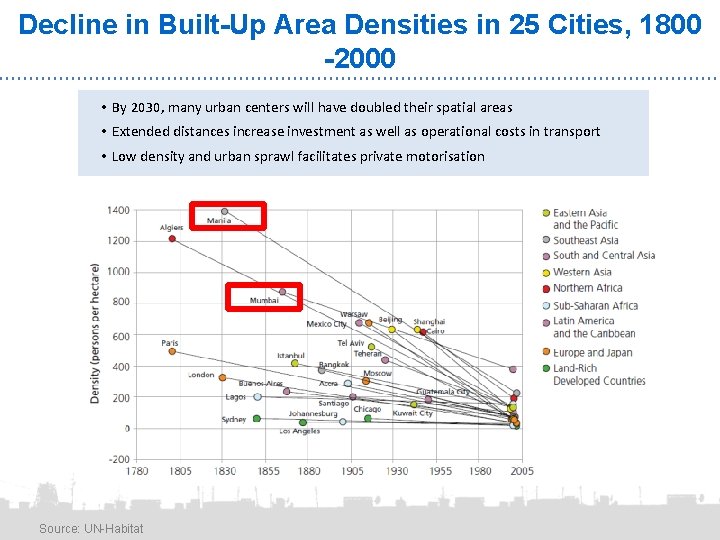
Decline in Built-Up Area Densities in 25 Cities, 1800 -2000 • By 2030, many urban centers will have doubled their spatial areas • Extended distances increase investment as well as operational costs in transport • Low density and urban sprawl facilitates private motorisation Source: UN-Habitat
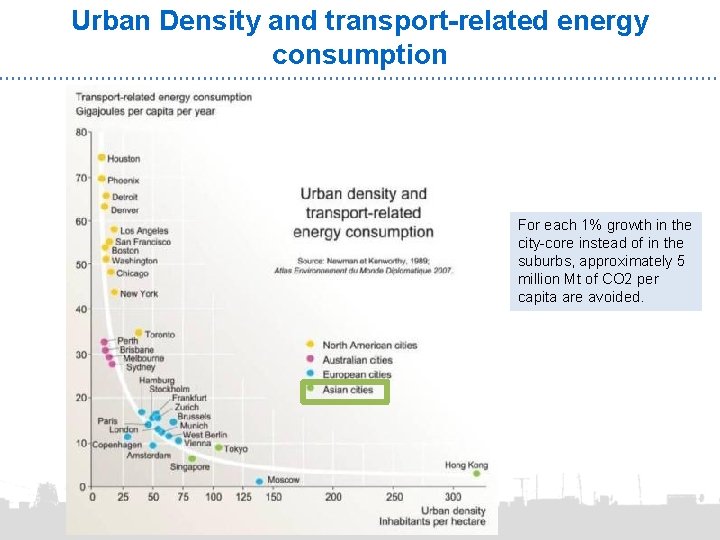
Urban Density and transport-related energy consumption For each 1% growth in the city-core instead of in the suburbs, approximately 5 million Mt of CO 2 per capita are avoided.
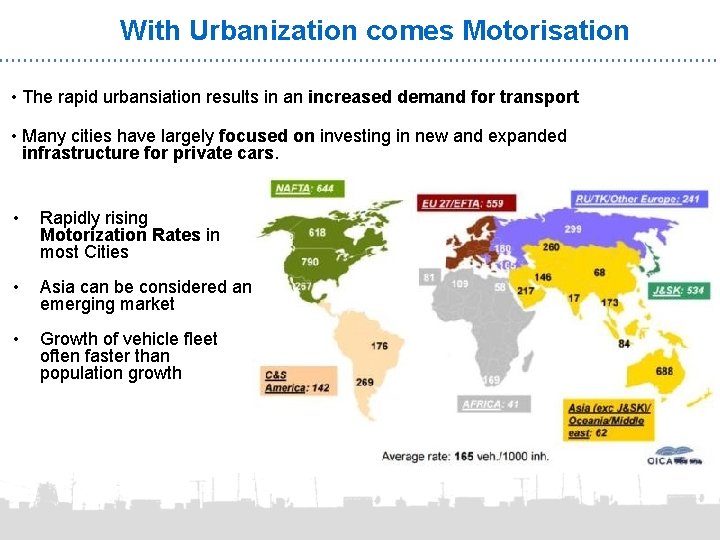
With Urbanization comes Motorisation • The rapid urbansiation results in an increased demand for transport • Many cities have largely focused on investing in new and expanded infrastructure for private cars. • Rapidly rising Motorization Rates in most Cities • Asia can be considered an emerging market • Growth of vehicle fleet often faster than population growth
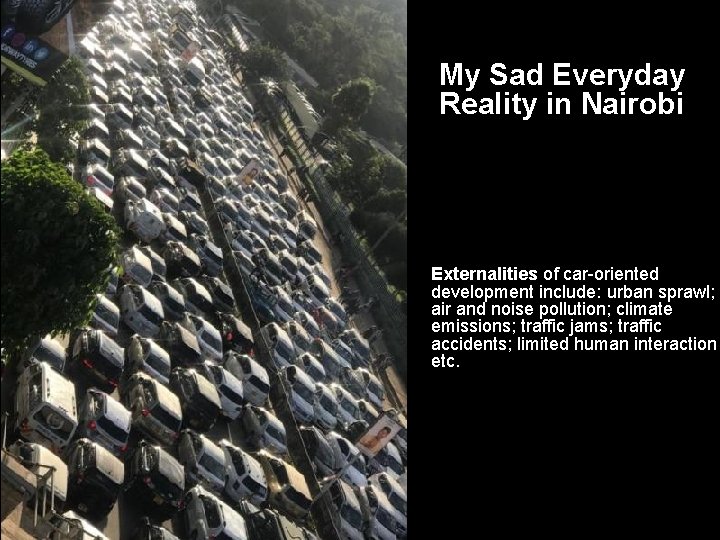
11 Externalities My Sad Everyday Reality in Nairobi Externalities of car-oriented development include: urban sprawl; air and noise pollution; climate emissions; traffic jams; traffic accidents; limited human interaction etc.
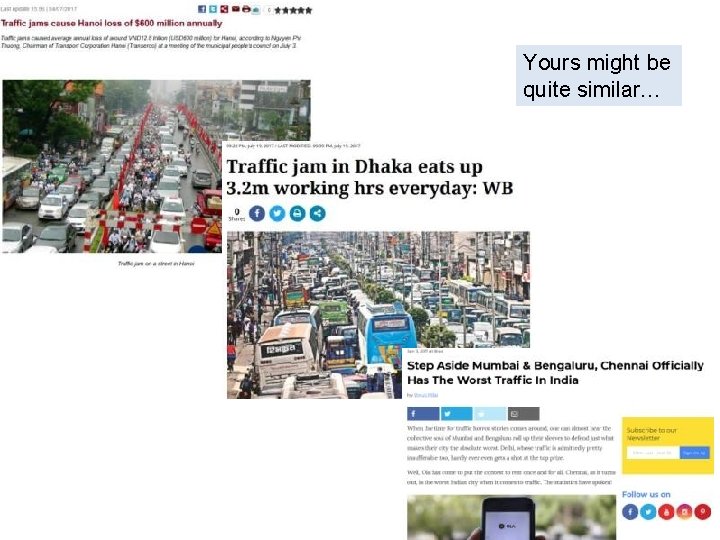
Yours might be quite similar…
How can urban development and growth be achieved without compromising accessibility and exposing urban residents to negative externalities such as traffic, air pollution, emissions, road accidents, etc. ?
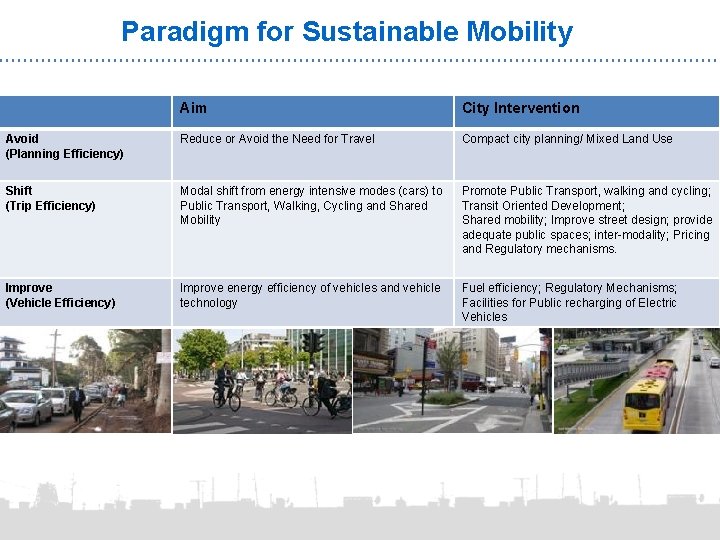
Paradigm for Sustainable Mobility Aim City Intervention Avoid (Planning Efficiency) Reduce or Avoid the Need for Travel Compact city planning/ Mixed Land Use Shift (Trip Efficiency) Modal shift from energy intensive modes (cars) to Public Transport, Walking, Cycling and Shared Mobility Promote Public Transport, walking and cycling; Transit Oriented Development; Shared mobility; Improve street design; provide adequate public spaces; inter-modality; Pricing and Regulatory mechanisms. Improve (Vehicle Efficiency) Improve energy efficiency of vehicles and vehicle technology Fuel efficiency; Regulatory Mechanisms; Facilities for Public recharging of Electric Vehicles
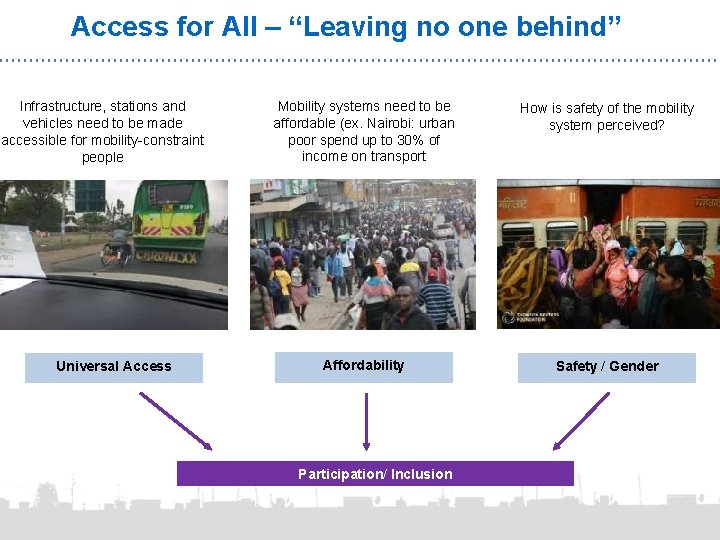
Access for All – “Leaving no one behind” Infrastructure, stations and vehicles need to be made accessible for mobility-constraint people Universal Access Mobility systems need to be affordable (ex. Nairobi: urban poor spend up to 30% of income on transport How is safety of the mobility system perceived? Affordability Safety / Gender Participation/ Inclusion

Sustainable Urbanisation at the Heart of Global Agendas

17
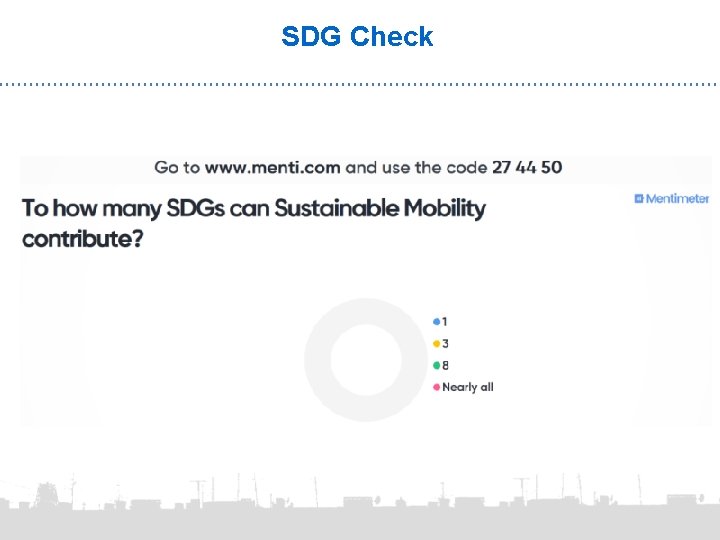
SDG Check
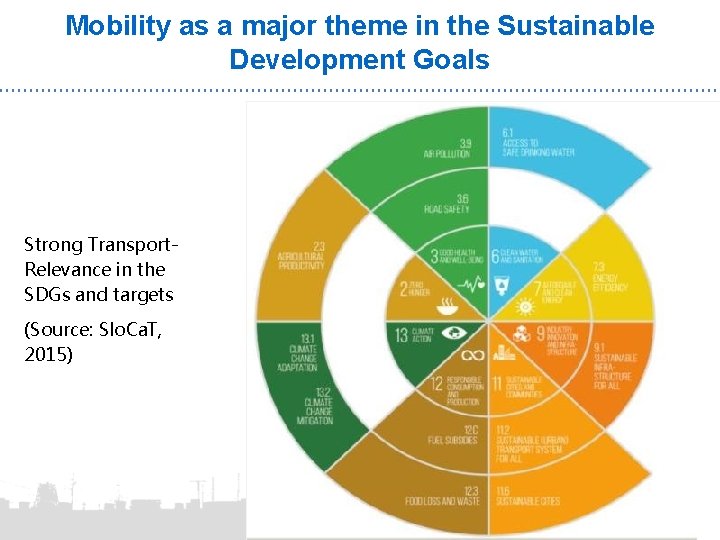
Mobility as a major theme in the Sustainable Development Goals Strong Transport. Relevance in the SDGs and targets (Source: Slo. Ca. T, 2015)
SDG Check
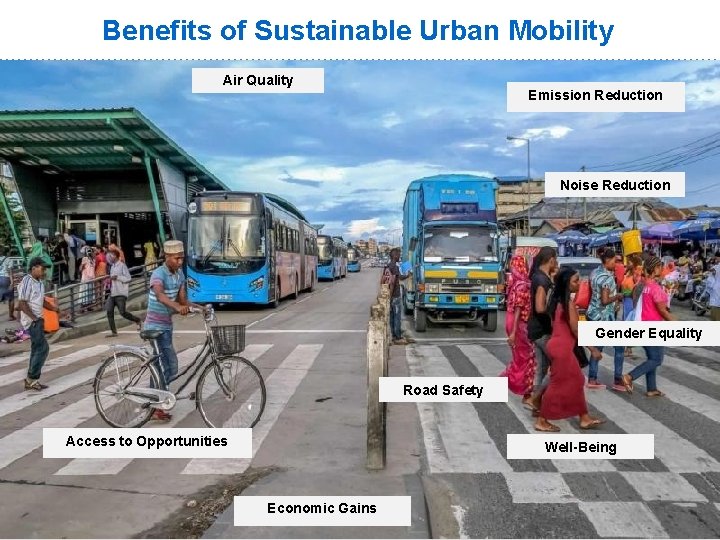
Benefits of Sustainable Urban Mobility Air Quality Emission Reduction Noise Reduction Gender Equality Road Safety Access to Opportunities Well-Being Economic Gains
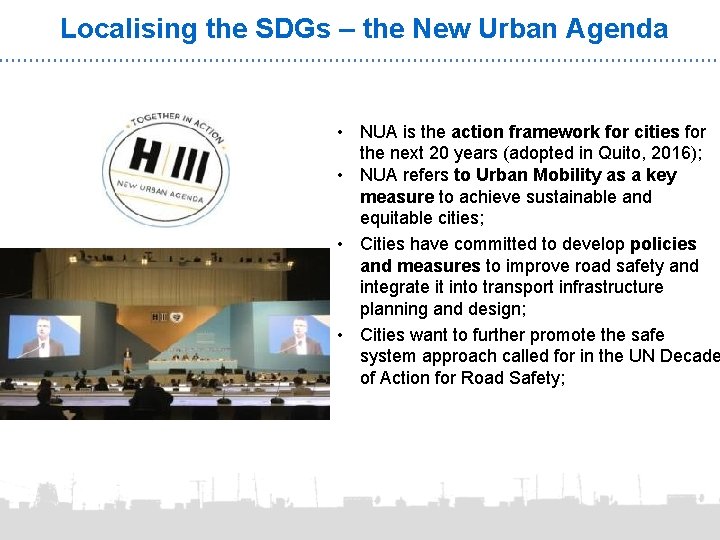
Localising the SDGs – the New Urban Agenda • NUA is the action framework for cities for the next 20 years (adopted in Quito, 2016); • NUA refers to Urban Mobility as a key measure to achieve sustainable and equitable cities; • Cities have committed to develop policies and measures to improve road safety and integrate it into transport infrastructure planning and design; • Cities want to further promote the safe system approach called for in the UN Decade of Action for Road Safety;
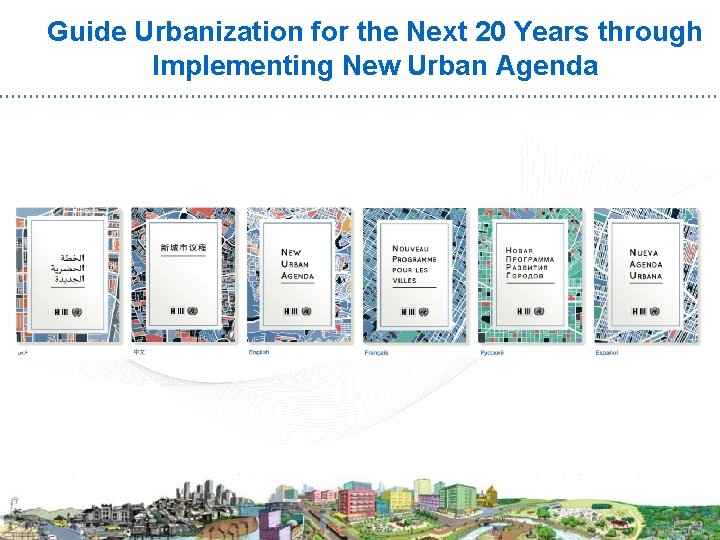
Guide Urbanization for the Next 20 Years through Implementing New Urban Agenda
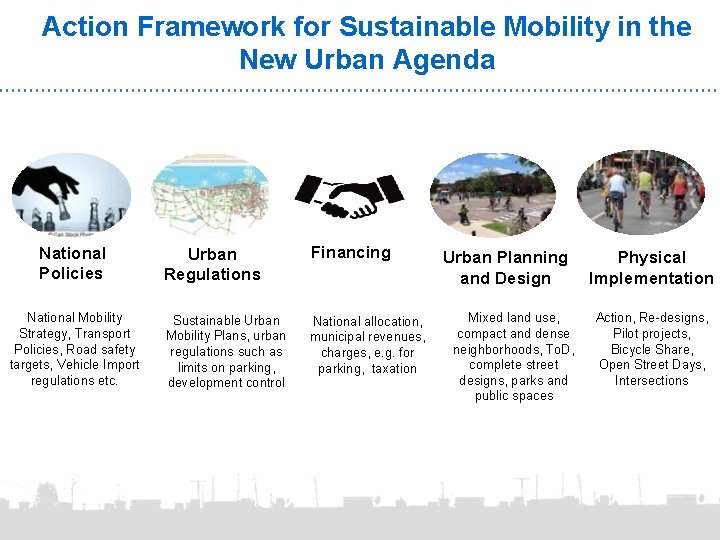
Action Framework for Sustainable Mobility in the New Urban Agenda National Policies National Mobility Strategy, Transport Policies, Road safety targets, Vehicle Import regulations etc. Urban Regulations Financing Sustainable Urban Mobility Plans, urban regulations such as limits on parking, development control National allocation, municipal revenues, charges, e. g. for parking, taxation Urban Planning and Design Mixed land use, compact and dense neighborhoods, To. D, complete street designs, parks and public spaces Physical Implementation Action, Re-designs, Pilot projects, Bicycle Share, Open Street Days, Intersections
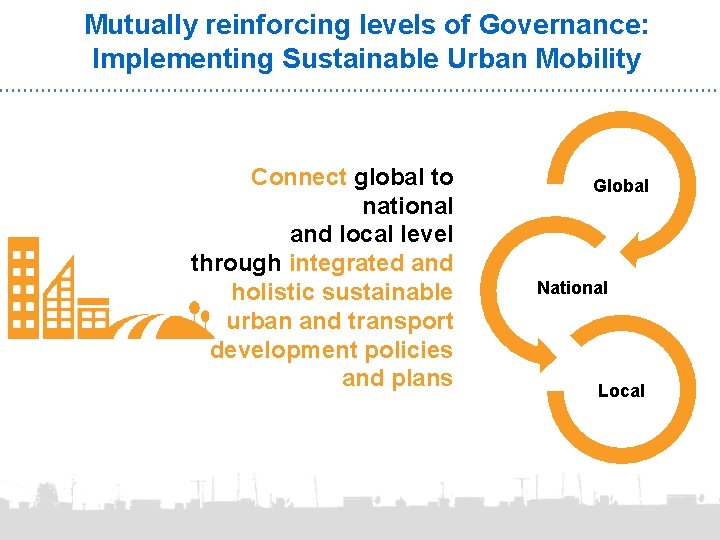
Mutually reinforcing levels of Governance: Implementing Sustainable Urban Mobility Connect global to national and local level through integrated and holistic sustainable urban and transport development policies and plans Global National Local
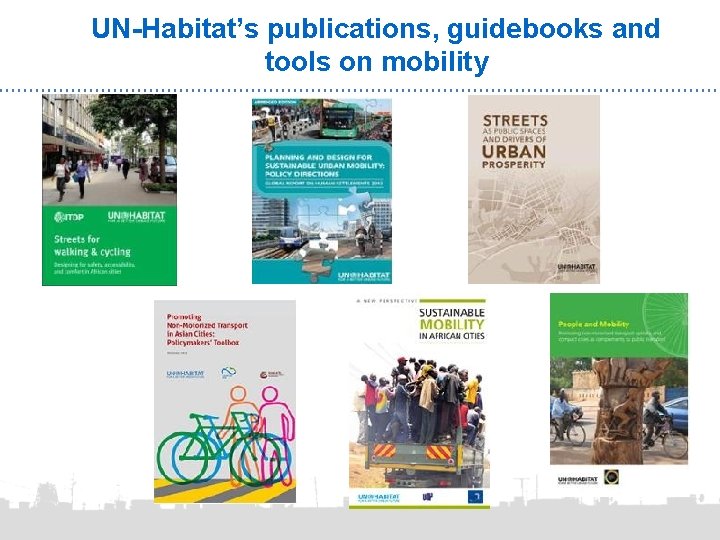
UN-Habitat’s publications, guidebooks and tools on mobility

What is your vision for future mobility?
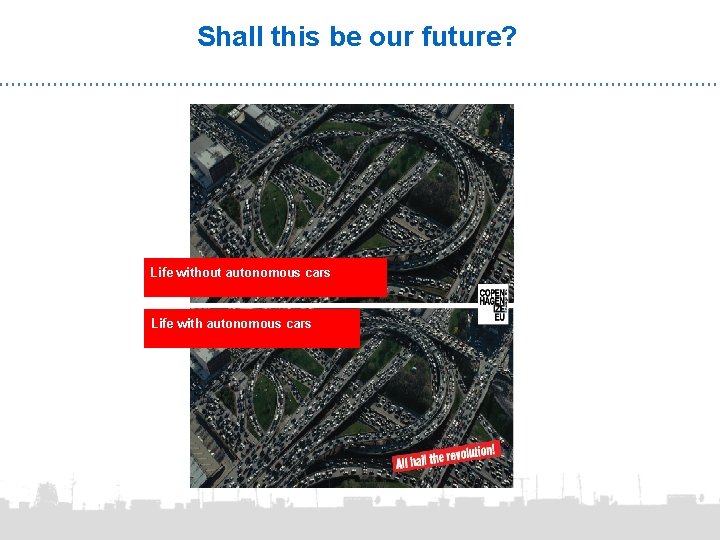
Shall this be our future? Life without autonomous cars Life with autonomous cars
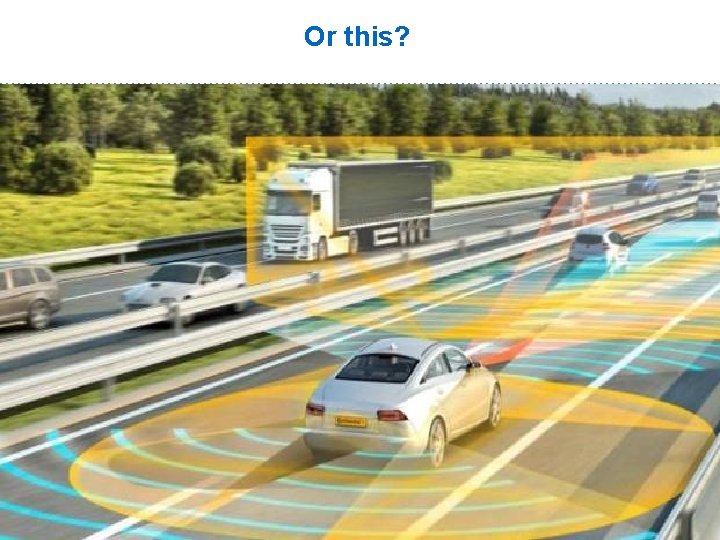
Or this?

Or this?

Maybe this?
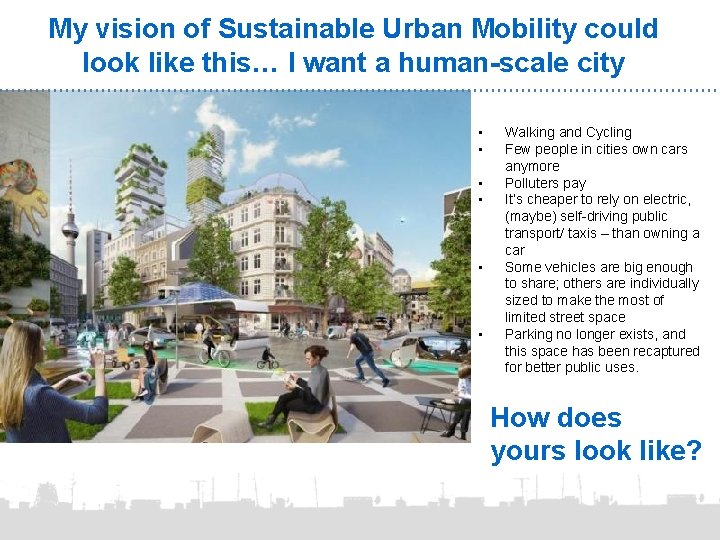
My vision of Sustainable Urban Mobility could look like this… I want a human-scale city • • • Walking and Cycling Few people in cities own cars anymore Polluters pay It’s cheaper to rely on electric, (maybe) self-driving public transport/ taxis – than owning a car Some vehicles are big enough to share; others are individually sized to make the most of limited street space Parking no longer exists, and this space has been recaptured for better public uses. How does yours look like?
33 Thank you! Stefanie Holzwarth stefanie. holzwarth@un. org +254702721027 Urban Mobility Unit, UN-Habitat
- Slides: 33